

- Outdoor workouts involve physical activities performed in natural settings, such as parks, trails, or open spaces.
- Engaging in outdoor exercise reduces stress and boosts happiness by combining physical activity with the calming effects of nature.
- Group activities and exposure to sunlight during outdoor workouts foster social connections and release mood-enhancing endorphins.

An outdoor workout refers to physical activity conducted in natural or open-air settings such as parks, trails, or beaches, which often combines the physical benefits of exercise with the mental rejuvenation provided by exposure to nature. (1)
Engaging in outdoor workouts has been scientifically linked to numerous mood-boosting benefits, making it a preferred choice for improving mental health. The natural settings of these workouts contribute to reduced stress levels by lowering cortisol and enhancing emotional well-being. (2) Regular exposure to sunlight during outdoor exercise stimulates vitamin D production, which plays a crucial role in combating depression and anxiety. (1) Additionally, the diverse environments associated with outdoor workouts, such as green spaces or water bodies, offer sensory stimulation that boosts serotonin levels, fostering a more positive outlook. (2) The integration of physical activity and nature has also been shown to enhance cognitive functions and social connections, providing a comprehensive approach to mood improvement.
The Science of Mood and Exercise
Regular exercise triggers the release of mood-enhancing chemicals such as endorphins, serotonin, and dopamine, promoting overall emotional well-being. (3) Outdoor workouts amplify these effects by engaging the senses with nature’s stimuli, reducing stress, and fostering mindfulness. (4) Studies further link exercise to reduced anxiety and enhanced mental clarity. (5) Long-term benefits include improved emotional regulation and cognitive function. (6)
What are the benefits of outdoor workouts?
Outdoor workouts offer a unique blend of physical activity and nature’s restorative power. Exercising outdoors not only strengthens the body but also improves mental well-being by reducing stress, boosting mood, and enhancing overall health. Whether it’s a brisk walk in the park or a yoga session under the sun, outdoor workouts provide countless benefits that go beyond the gym.
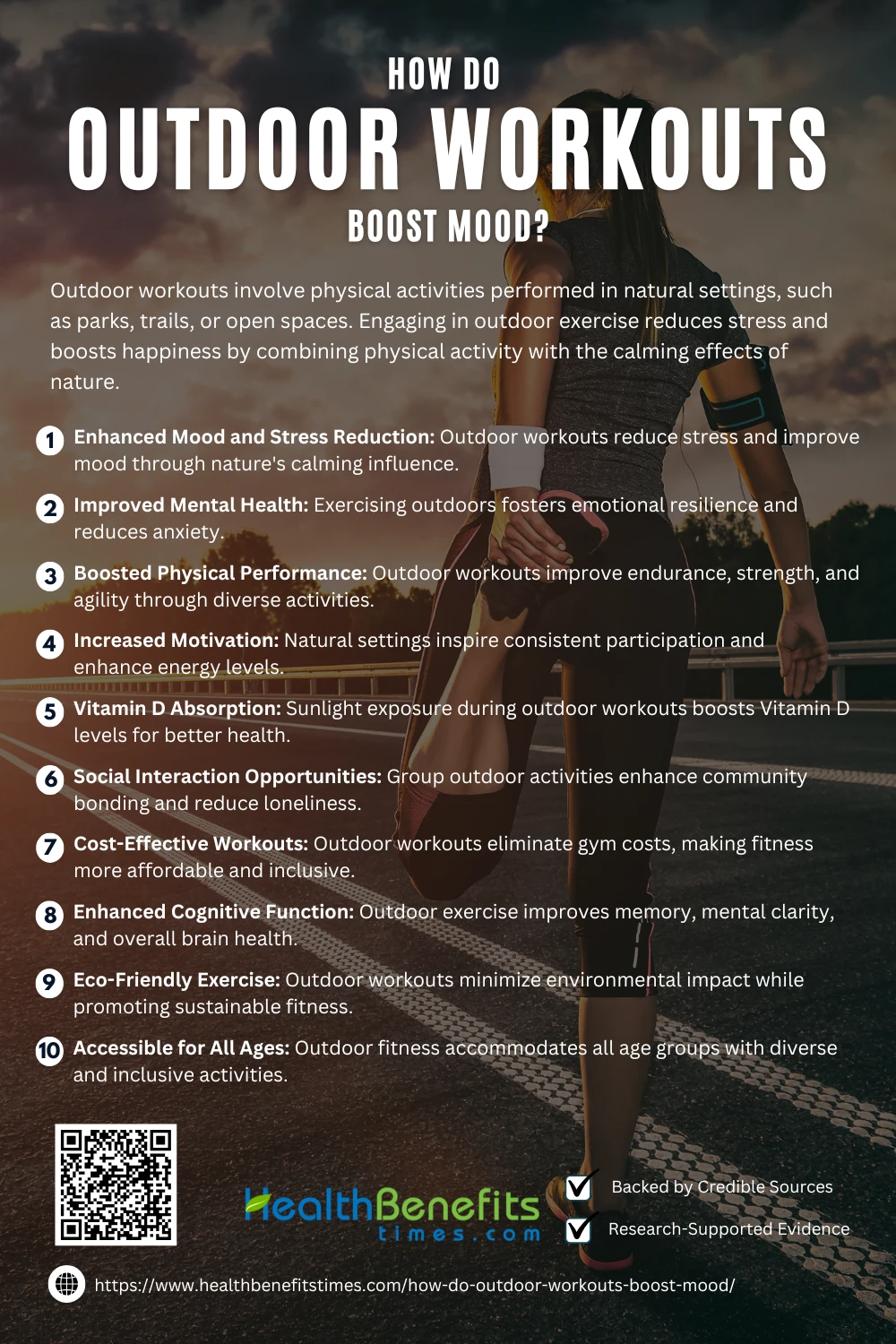 1. Enhanced Mood and Stress Reduction
Outdoor workouts offer significant benefits for mental well-being by reducing stress and enhancing mood. A study highlights that exercising amidst nature lowers cortisol levels and fosters emotional resilience. (1) Evidence also suggests that outdoor physical activities counter pandemic-induced stress. (7) Additionally, mental health professionals endorse these exercises for mitigating emotional strain. (8) Thus, incorporating outdoor workouts fosters holistic mental health.
2. Improved Mental Health
Outdoor workouts play a vital role in enhancing mental health by reducing stress and promoting well-being. Studies show that green exercise improves emotional resilience and overall mood. (9) Additionally, physical activities outdoors aid in mitigating anxiety. (10) Team sports in natural settings further contribute to mental stability. (11) Such practices also encourage mindfulness and stress relief, fostering holistic mental health benefits. (12)
3. Boosted Physical Performance
Outdoor workouts significantly boost physical performance by improving endurance, strength, and agility. Research demonstrates that engaging in outdoor physical education promotes high levels of moderate to vigorous activity, enhancing stamina and cardiovascular health. (13) Recreational team sports outdoors not only improve fitness but also mitigate chronic disease risks. (9) Supplementary outdoor training optimizes muscle performance in athletes. (14) These benefits are enhanced by integrating resistance workouts and natural movement. (15)
4. Increased Motivation
Outdoor workouts significantly increase motivation by fostering an engaging and stimulating environment. Research shows that exercising in natural settings improves emotional well-being and inspires consistent participation. (16) Outdoor activities are especially effective in enhancing motor activity and energy levels. (17) Furthermore, regular exposure to outdoor environments builds resilience and encourages physical effort. (18) These findings highlight the motivational boost derived from integrating outdoor settings into workout routines.
5. Vitamin D absorption
Outdoor workouts play a crucial role in enhancing Vitamin D absorption as exposure to sunlight stimulates the production of this essential nutrient. Studies have shown that physical activities under natural light effectively boost Vitamin D levels, promoting bone health and immune function Books Google. Moreover, such workouts improve overall well-being, counteracting Vitamin D deficiencies caused by indoor lifestyles.
6. Social Interaction Opportunities
Outdoor workouts provide excellent opportunities for social interaction, fostering community and camaraderie. Participating in group activities like team sports enhances interpersonal skills and creates inclusive spaces for shared experiences. (9) Such interactions have been shown to reduce loneliness and improve mental well-being. (19) Moreover, collaborative outdoor activities align personal and social goals, encouraging skill-sharing and communication. (20) These interactions also help reconnect with nature and foster emotional resilience. (21)
7. Cost-Effective Workouts
Outdoor workouts are highly cost-effective, eliminating expenses like gym memberships while utilizing accessible natural spaces. They promote fitness through simple activities like running, cycling, or calisthenics, proving to be an economical alternative for achieving health goals. (22) Research highlights that these exercises reduce financial barriers to physical activity, fostering inclusivity. (23) Moreover, outdoor setups integrate naturally with community initiatives, enhancing affordability. (24)
8. Enhanced Cognitive Function
Outdoor workouts significantly enhance cognitive function by promoting blood flow and stimulating brain activity. Research indicates that engaging in physical activities outdoors improves memory and executive function. (12) Additionally, outdoor exercise reduces stress and enhances mental clarity, vital for cognitive health. (9) Incorporating mindfulness during outdoor workouts further boosts focus and resilience. (11) These findings underscore the importance of outdoor exercise for maintaining cognitive vitality.
9. Eco-Friendly Exercise
Outdoor workouts are an eco-friendly exercise option that minimizes environmental impact by eliminating the need for energy-intensive facilities. Engaging in outdoor activities like running, yoga, or cycling reduces carbon footprints while promoting physical and mental well-being. These activities leverage natural spaces, fostering a connection with the environment and encouraging sustainable habits. (25) Outdoor fitness aligns with green initiatives, making it an ideal choice for eco-conscious individuals.
10. Accessible for All Ages
Outdoor workouts are accessible for all ages, providing diverse activities that cater to various fitness levels and health needs. From children enjoying playgrounds to seniors engaging in low-impact exercises, these environments promote inclusivity and lifelong fitness. (9) Studies highlight their effectiveness in improving physical and mental health for older adults. (26) Additionally, outdoor exercise fosters community connections, enhancing participation across generations. (27)
Biological Mechanisms behind Mood Boosts
Biological mechanisms behind mood boosts involve neurotransmitter regulation, such as increased serotonin and dopamine levels, which enhance emotional well-being. (28) Exercise-induced endorphin release acts as a natural antidepressant. (29) Additionally, reduced inflammation through physical activity supports brain health Frontiers in Neuroscience, while cold exposure improves mental clarity and mood via stress adaptation. (28)
Outdoor Exercise Activities That Boost Mood
Outdoor exercise activities not only improve physical health but also have a profound impact on mental well-being. Engaging in activities like walking, yoga, or cycling in natural settings boosts mood, reduces stress, and fosters a sense of happiness through the release of endorphins and exposure to rejuvenating outdoor environments.
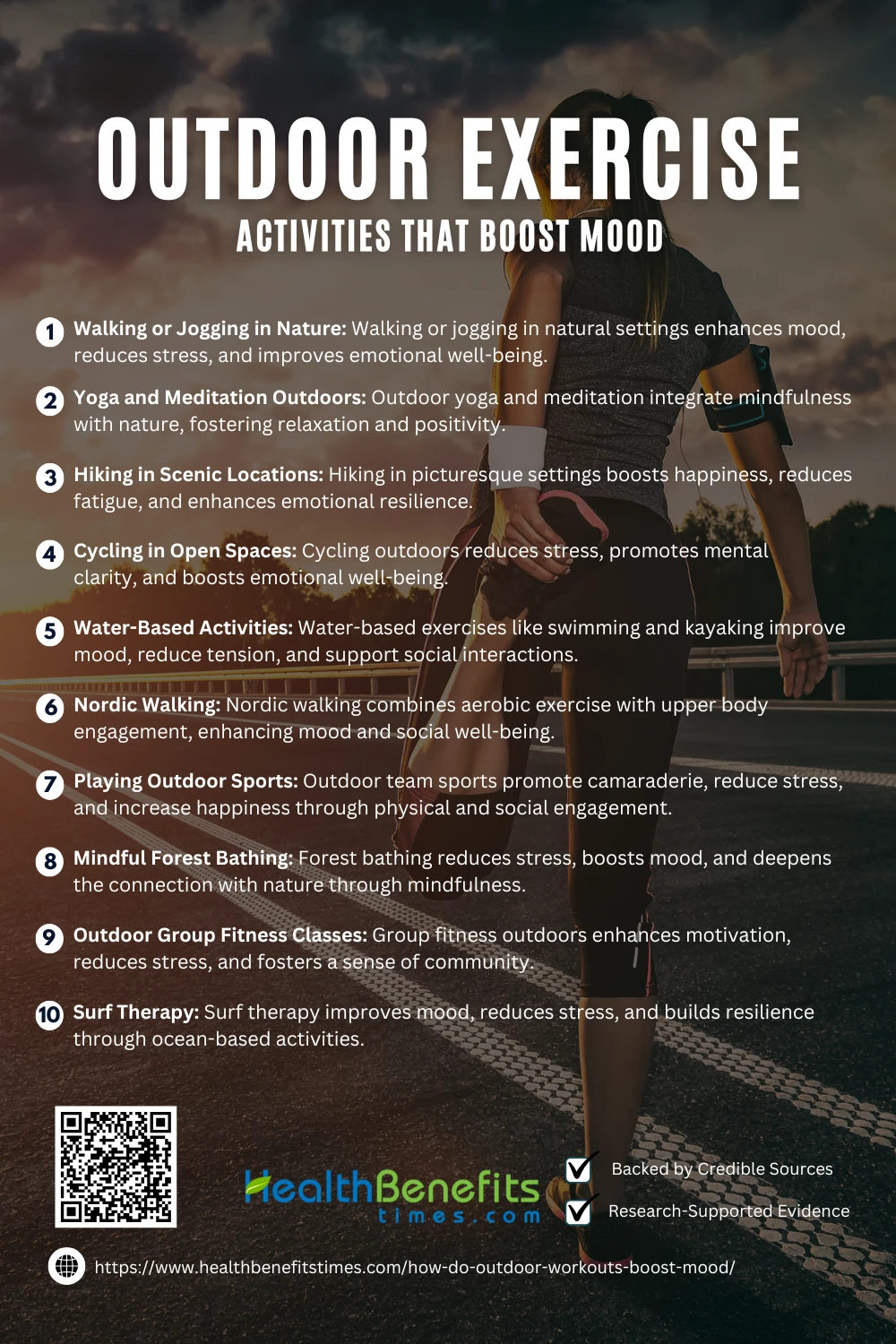 1. Walking or Jogging in Nature
Walking or jogging in nature provides a dual benefit of physical exercise and mental rejuvenation. Research highlights the stress-reducing and mood-enhancing effects of such activities, attributed to immersion in green environments. (30) Studies have also linked nature-based walking to improvements in emotional well-being and cognitive function. (31) Compared to indoor settings, exercising outdoors amplifies psychological benefits, fostering positive emotional states. (32)
2. Yoga and Meditation Outdoors
Practicing yoga and meditation outdoors integrates the benefits of mindfulness with nature’s calming influence, significantly enhancing emotional well-being. Research indicates that outdoor meditation reduces anxiety and fosters relaxation, amplifying mood improvement. (33) Similarly, outdoor yoga combines physical postures and breathing techniques with the sensory stimulation of nature, which has been shown to alleviate stress and boost positivity. (34)
3. Hiking in Scenic Locations
Hiking in scenic locations enhances mood and reduces stress by immersing participants in nature’s tranquil beauty. Studies show that natural environments stimulate mindfulness and emotional resilience, promoting mental well-being. (35) Additionally, exposure to scenic landscapes during hikes fosters positive emotions, reducing fatigue and boosting overall happiness. (36)
4. Cycling in Open Spaces
Cycling in open spaces provides significant mood-enhancing benefits by combining physical activity with exposure to natural environments. Studies reveal that cycling outdoors reduces stress and fosters mental clarity by engaging sensory perceptions. (37) Additionally, the dynamic experience of navigating open areas boosts emotional resilience and overall happiness. (38)
5. Water-Based Activities
Water-based activities such as swimming, paddleboarding, and kayaking offer both physical and psychological benefits, enhancing mood and reducing stress levels. Studies show that the calming properties of water combined with physical movement improve emotional resilience and reduce tension. (39) Additionally, these activities support social interactions and contribute to overall mental well-being. (40)
6. Nordic Walking
Nordic walking combines the benefits of aerobic exercise with upper body engagement, promoting both physical and mental well-being. Studies reveal that Nordic walking enhances mood by reducing tension and improving emotional states through outdoor activity. (41) Additionally, it fosters social connections, improving the overall quality of life for participants. (42)
7. Playing Outdoor Sports
Playing outdoor sports enhances mood by combining physical activity with the social and psychological benefits of group engagement. Research highlights that team sports foster camaraderie, reduce stress, and promote positive emotions through physical exertion and social interaction. (43) Activities like soccer, basketball, and tennis stimulate endorphin release, further boosting emotional well-being. (44)
8. Mindful Forest Bathing
Mindful forest bathing, also known as Shinrin-yoku, is a therapeutic practice that involves immersing oneself in the calming environment of a forest while engaging in mindfulness. Research shows it significantly reduces stress and enhances mood by lowering cortisol levels and improving emotional resilience. (45) Additionally, forest bathing fosters a deeper connection to nature, which contributes to overall mental well-being. (46)
9. Outdoor Group Fitness Classes
Outdoor group fitness classes combine physical activity with social interaction, offering significant mental health benefits. Research highlights that exercising in a group fosters motivation, reduces stress, and promotes a sense of community, all of which contribute to improved mood. (47) Additionally, outdoor environments enhance the psychological effects of exercise by reducing cortisol levels and encouraging mindfulness.
10. Surf Therapy
Surf therapy combines physical activity with the calming influence of water to improve mental health and emotional well-being. Research highlights its effectiveness in reducing stress, enhancing mood, and fostering resilience through engagement with the ocean environment. (48) Additionally, surf therapy promotes mindfulness and self-esteem, making it a holistic approach to mental health care. (49)
Overcoming Barriers to Outdoor Workouts
Here is a listicle on “Overcoming Barriers to Outdoor Workouts” to help you tackle common challenges and make the most of exercising outside:
 1. Plan around Weather Conditions
Weather often deters outdoor workouts, but planning ahead can alleviate these issues. Dressing appropriately for the climate, such as layering for colder temperatures or wearing lightweight, moisture-wicking fabrics in hot weather, helps maintain comfort. Scheduling exercise during optimal times of the day, like early morning or evening, avoids extreme heat or cold, ensuring a safer and more enjoyable experience.
2. Choose Convenient Locations
Proximity to workout locations plays a key role in overcoming barriers. Selecting parks, trails, or open spaces nearby reduces the time and effort required to travel. Familiarizing yourself with these locations enhances comfort and safety, making it easier to establish a routine and stay consistent with your outdoor workouts.
3. Start Small to Build Consistency
Building a habit starts with manageable steps. Initiating workouts with shorter, less demanding sessions allows your body to adapt and reduces the intimidation of starting. High-intensity interval training (HIIT) offers an efficient alternative for those with limited time, making it easier to maintain regular outdoor exercise without overwhelming commitments.
4. Invest in Portable Equipment
Portable fitness equipment adds versatility and convenience to outdoor workouts. Lightweight options such as resistance bands, jump ropes, or small dumbbells allow you to perform a wide range of exercises without needing a gym. These tools are easy to carry and make it simpler to customize your routine based on location and available space.
5. Address Safety Concerns
Safety is paramount during outdoor activities. Choosing well-lit, populated areas or bringing along a workout buddy can enhance your sense of security. Staying informed about local conditions, such as trail closures or weather advisories, ensures you can exercise without unexpected risks or interruptions.
6. Overcome Motivation Barriers
Staying motivated for outdoor workouts often requires an intentional approach. Fitness apps, online challenges, and tracking progress provide tangible incentives to keep going. Setting clear and achievable goals helps maintain focus, while celebrating small milestones boosts confidence and keeps enthusiasm high.
7. Adapt Workouts to Your Skill Level
Outdoor workouts should align with your current fitness abilities to prevent injuries and build confidence. Selecting exercises tailored to your level and gradually increasing their intensity ensures steady progress. This approach not only boosts physical strength but also enhances your comfort and enjoyment of outdoor activities.
8. Leverage Technology
Modern technology can simplify outdoor fitness planning and tracking. Weather apps help anticipate favorable conditions, while fitness trackers and workout streaming platforms offer guidance and accountability. Leveraging these tools ensures a more efficient and engaging workout experience tailored to your needs.
9. Incorporate Social Engagement
Social connections can make outdoor workouts more enjoyable and sustainable. Joining a local fitness group or exercising with friends fosters accountability and creates a supportive community. Social interaction during workouts also adds an element of fun, making it easier to stick with your fitness goals.
10. Focus on Benefits Beyond Fitness
Outdoor workouts provide more than just physical health advantages. The connection with nature helps reduce stress, improve mood, and enhance mental well-being. Exploring scenic environments while exercising transforms workouts into a holistic experience, offering both rejuvenation and a sense of accomplishment.
Tips to Get Started with Outdoor Workouts
Here’s a listicle of practical tips to get started with outdoor workouts:
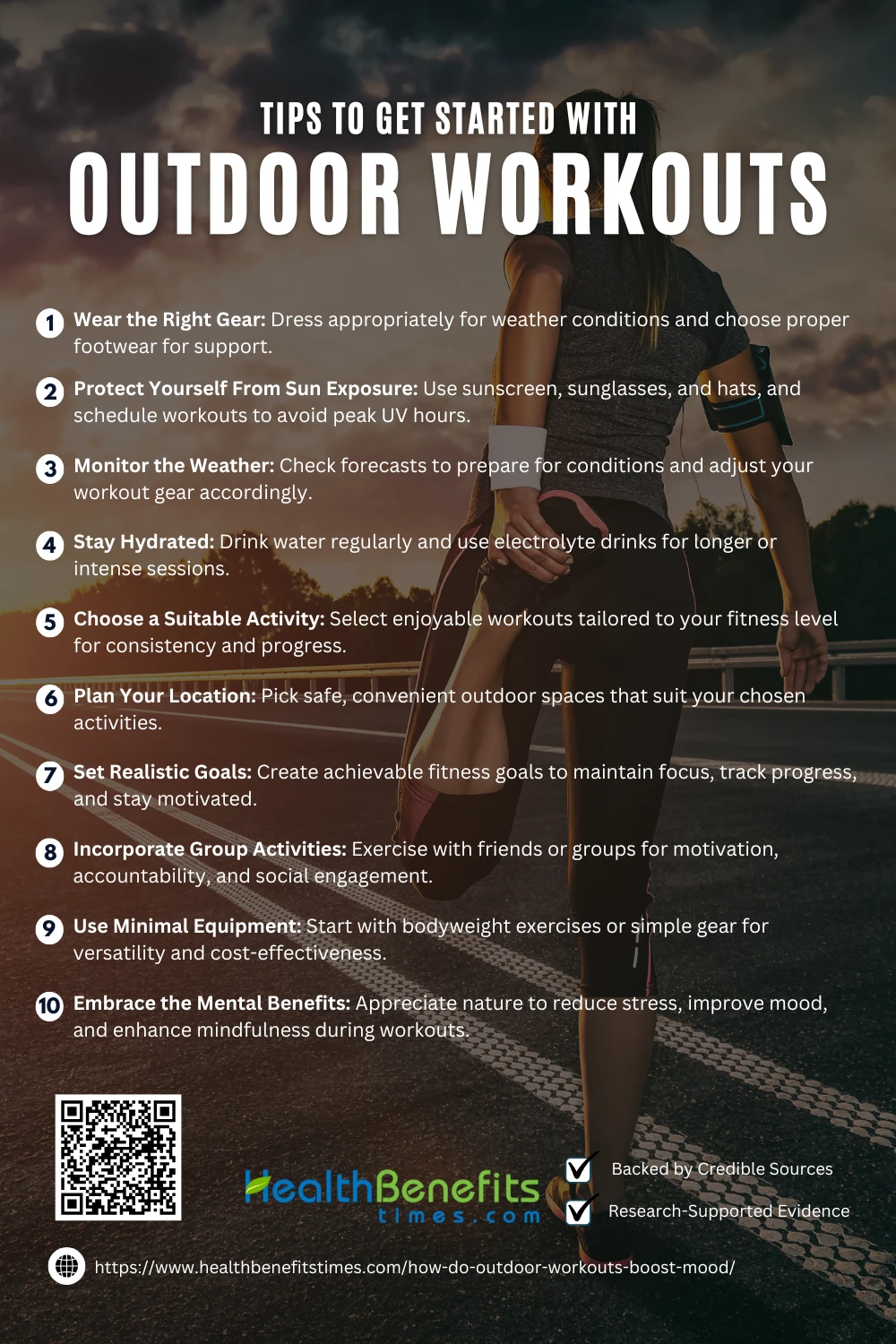 1. Wear the Right Gear
Choosing the right clothing and equipment is essential for outdoor workouts. Dressing in layers during colder months ensures you stay warm but allows you to adjust as your body heats up. In hot weather, lightweight, moisture-wicking fabrics keep you cool and comfortable. Proper footwear designed for your chosen activity, such as running shoes or hiking boots, helps prevent injuries and provides the necessary support for varied terrains.
2. Protect Yourself From Sun Exposure
Sun protection is crucial for outdoor fitness, especially during midday when UV rays are strongest. Applying sunscreen, wearing sunglasses, and using a wide-brimmed hat can shield your skin and eyes from harmful rays. Planning your workouts for early mornings or late afternoons reduces exposure and ensures a safer exercise experience under the sun.
3. Monitor the Weather
Staying informed about the weather forecast helps you prepare for outdoor workouts and avoid potential discomfort or danger. Check for temperature, wind, and precipitation before heading out. Adjust your schedule to align with ideal conditions and make use of appropriate gear, such as rain jackets or insulated gloves, if needed.
4. Stay Hydrated
Hydration is key to maintaining energy levels and preventing fatigue during outdoor workouts. Bring a water bottle and drink regularly, especially on hot days. For longer sessions, consider beverages with electrolytes to replenish salts lost through sweat, ensuring optimal performance and recovery.
5. Choose a Suitable Activity
Picking the right workout activity depends on your fitness level and preferences. Whether it’s walking, running, yoga, or bodyweight exercises, selecting something you enjoy ensures consistency. Start with manageable goals and gradually increase intensity as your endurance and strength improve to keep the activity challenging and effective.
6. Plan Your Location
The location of your outdoor workout can significantly impact your experience. Parks, trails, or backyards offer diverse options for activities and varying levels of intensity. Ensure the area is safe, with even terrain for balance and space to move freely. Familiarizing yourself with the location boosts confidence and convenience.
7. Set Realistic Goals
Establishing achievable fitness goals helps you stay focused and motivated. Whether aiming to improve endurance, lose weight, or enhance flexibility, setting small, attainable milestones allows for steady progress. Tracking your achievements through a journal or app helps maintain accountability and provides a sense of accomplishment.
8. Incorporate Group Activities
Working out in groups or with friends adds a social element to outdoor fitness, making it more enjoyable and less solitary. Joining a running club, yoga class, or other group activity fosters accountability and motivation. The camaraderie and shared experience can make the journey toward fitness goals more engaging and rewarding.
9. Use Minimal Equipment
Starting with minimal equipment allows for versatility and ease in outdoor workouts. Bodyweight exercises like push-ups, squats, or lunges require no tools, while lightweight items like resistance bands or jump ropes add variety. These options make it easier to stay consistent without investing heavily in gear.
10. Embrace the Mental Benefits
Outdoor workouts offer a refreshing change from indoor routines by providing mental health benefits. Being in nature reduces stress, improves mood, and fosters mindfulness. Taking time to appreciate the surroundings during your workout enhances the experience, making fitness more enjoyable and holistic.
Conclusion
Outdoor workouts boost mood by combining physical activity with the psychological benefits of being in natural environments. The release of endorphins during exercise, coupled with sunlight exposure and fresh air, reduces stress and enhances emotional well-being. Activities like walking, yoga, or group fitness in green spaces also promote social interaction and a sense of achievement, further lifting spirits. These multifaceted benefits make outdoor workouts an effective, accessible, and enjoyable strategy for improving mental health and overall happiness.