Papery appearance with a membranous look and has four slender carpels that contain the seeds.
Bryophyllum pinnatum commonly known as Miracle Leaf, air plant, cathedral bells, life plant and Goethe plant native to Madagascar which is a popular houseplant and has become naturalized in tropical and subtropical areas. It belongs to the Crassulaceae family. The plant parts are thick and fleshy which tends to preserve water in dry climates or soil conditions. The plant has antibacterial, antiviral, antimicrobial, antifungal, antihistamine and anaphylactic properties. It is good for almost any ailments like high blood pressure, headaches, abscess, and swellings. Tea made from stem and leaves is used for menstrual cramps, asthma and helps with sinus issues as well as increasing energy levels. It is also consumed to clean the bladder and get rid of harmful toxins from the intestines.
Plant description
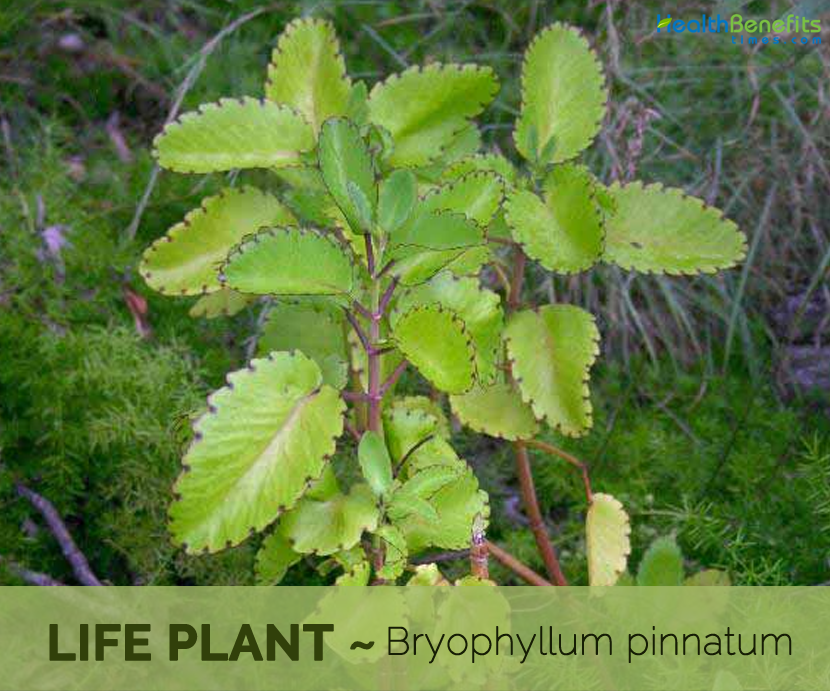
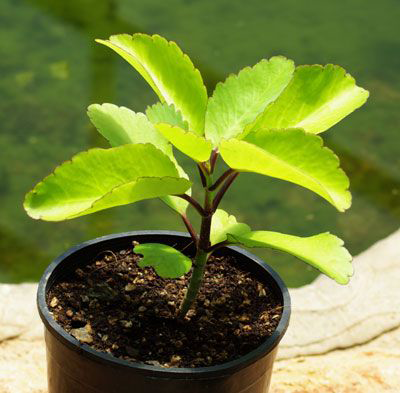
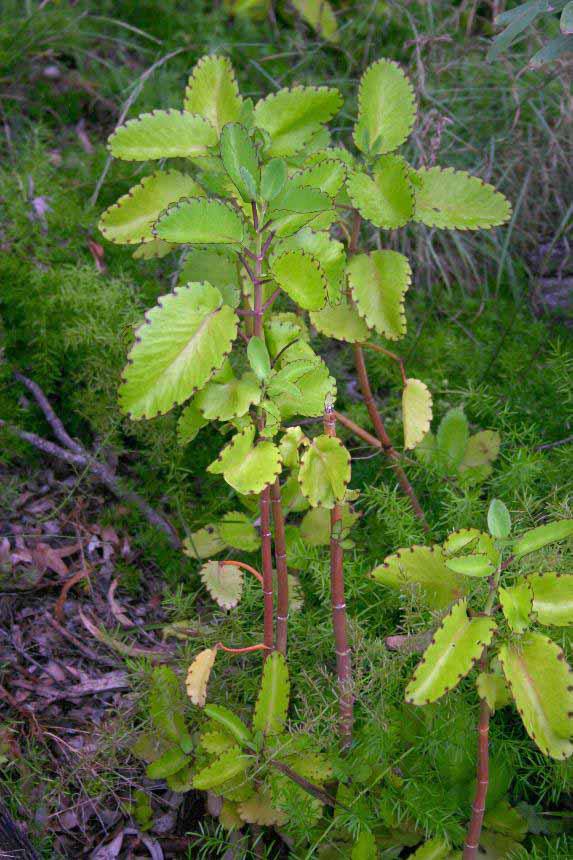
Life plant is a tall, erect, succulent perennial herb about 1m- 2m in height. It is an herb that appears commonly throughout India, but also is found in other parts of the world, such as Pakistan, Nepal, Brazil and the United States. Various medicinal uses are associated with the leaf of life. Plant grows well in tropical, sub-tropical and warm temperate climatic zone and does well in ordinary soil, enriched soil and mildly acidic to mildly alkaline soil. The plant has hollow stem, red or green in color, thick, flexible and short, glabrous and succulent.
Leaves
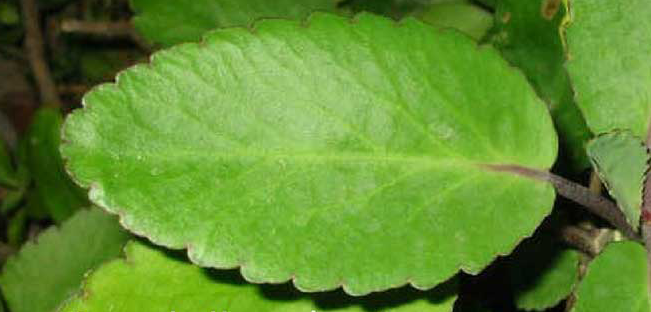
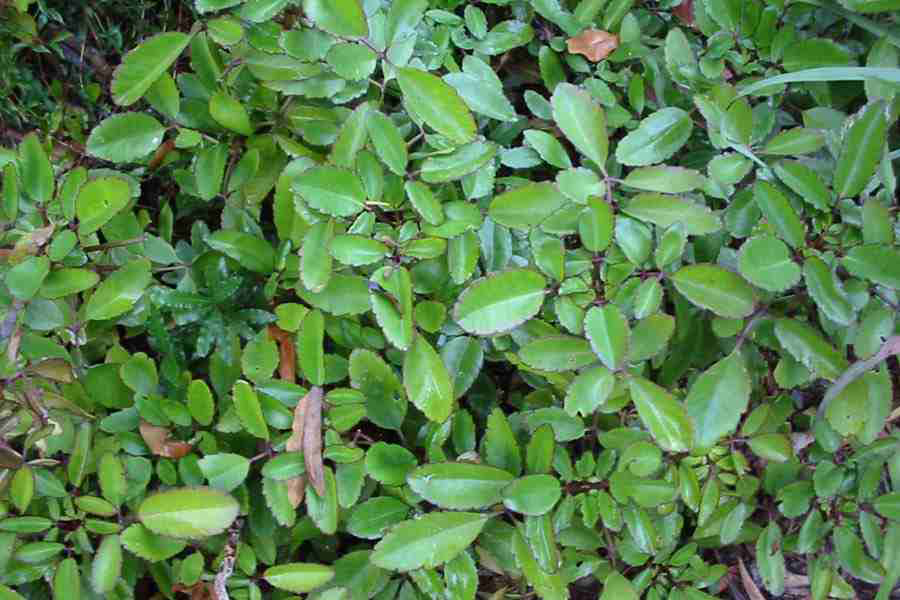
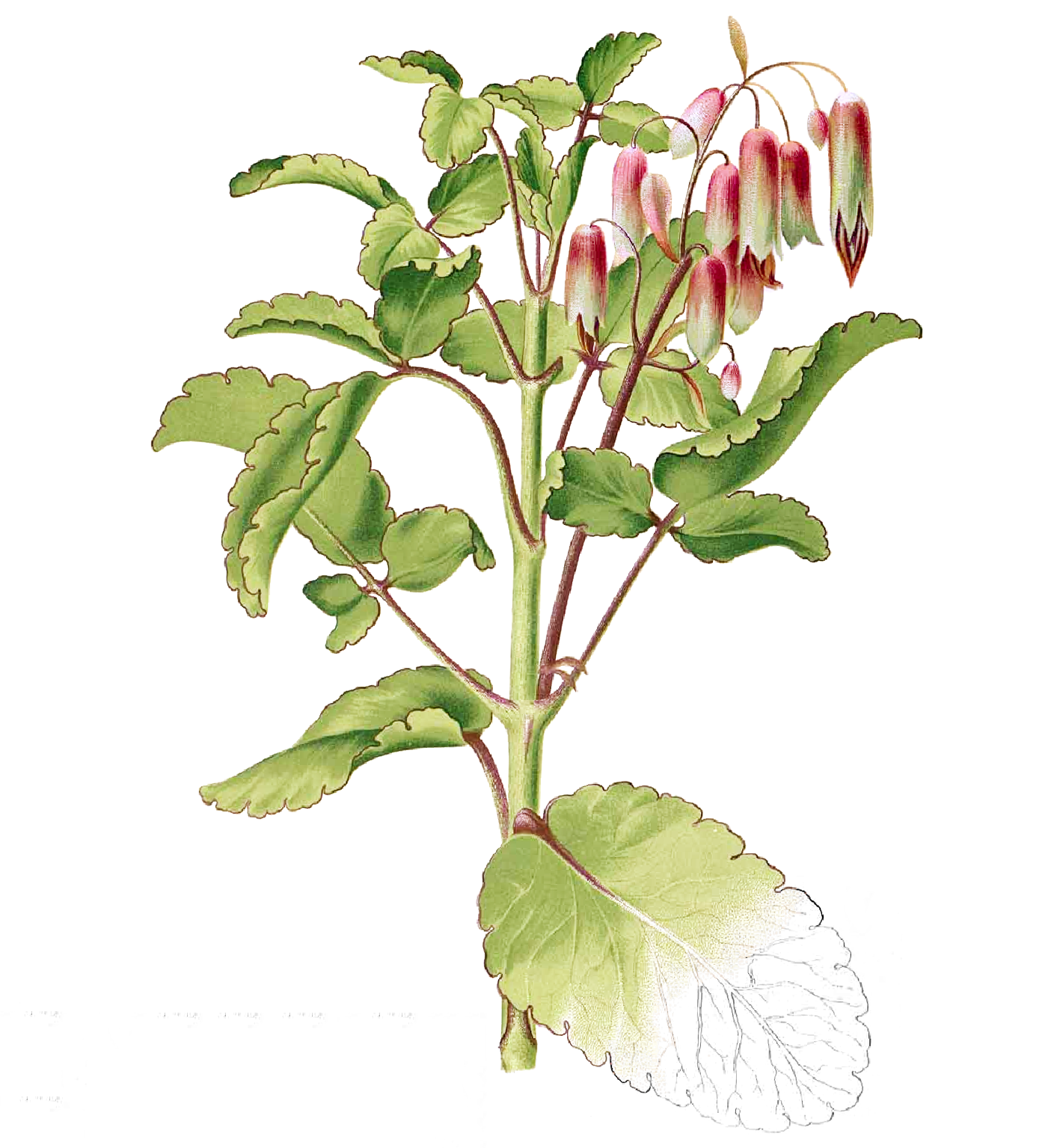
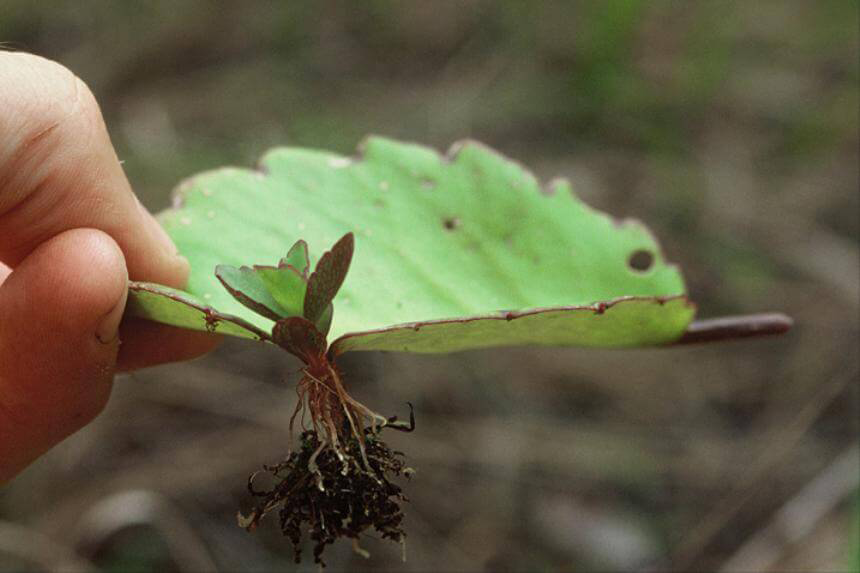
The leaves are 5-25 cm long and 2-12cm broad. Lower parts have simple leaves and upper parts have complex joint leaves, having 6-7 leaves in opposite pattern. The stalks (petioles) are 2-10 cm long. These leaves have an oval or narrowly oval shape and rounded tips (obtuse apices). The terminal leaflet is significantly larger than the others. From the scalloped margins of the leaves, new plants form often on becoming detached from the plant.
Flower
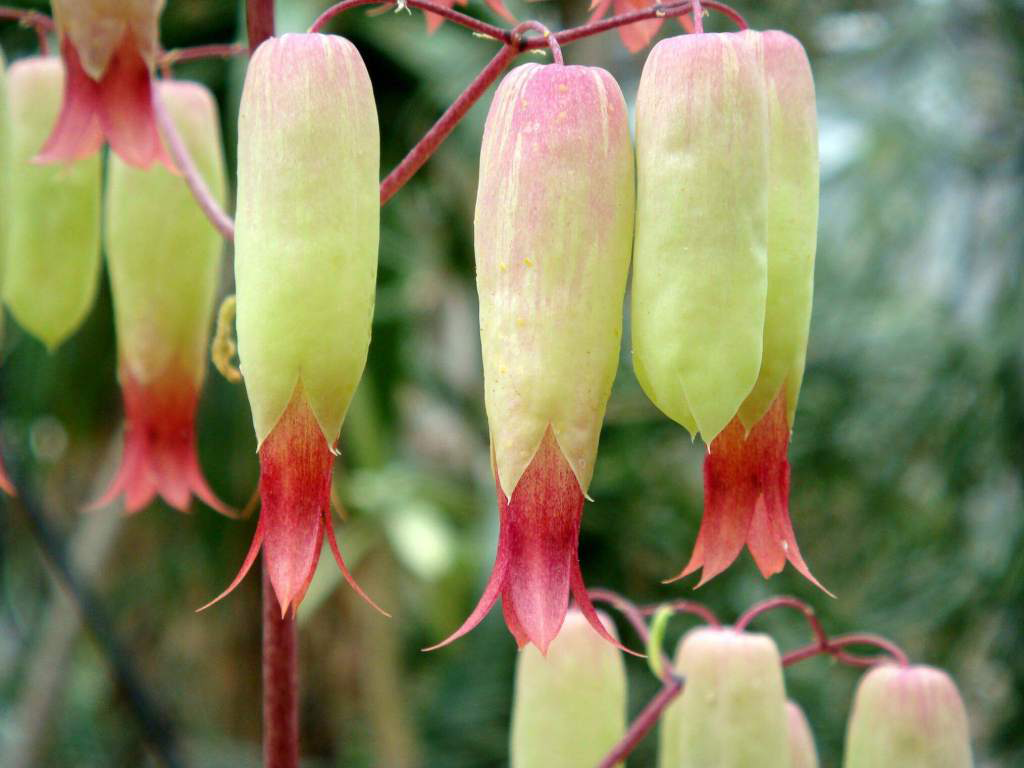
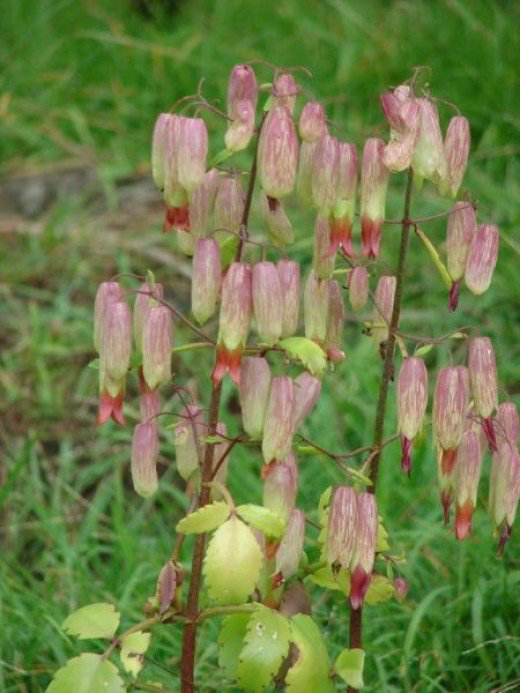
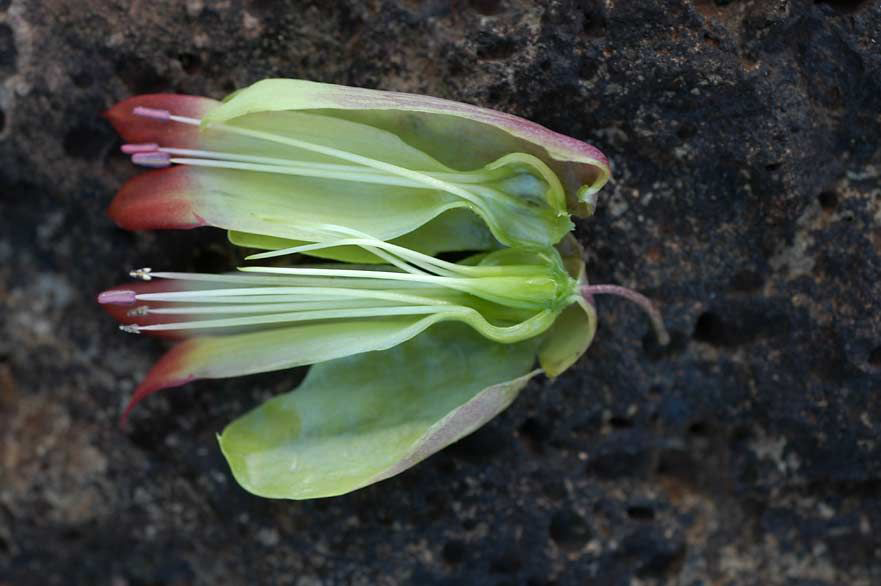
Flowers bloom at the top of its stems in branched clusters. The color of the flowers is greenish-yellow to pinkish-red. The pendulous, tubular flowers are 7 cm long and form cymose panicle. They remain arranged in terminal inflorescence in branched clusters. The stalks (pedicle) are 10-25 mm long. They are partially fused into a calyx tube that supports the four lobes of the petal (corolla). Flowering occurs in winter and spring.
Fruit
Fruits have a papery appearance with a membranous look. It has four slender carpels that contain the seeds. These seeds are small, oblong-ellipsoid, less than 1 mm in size and remain enclosed within the old flowers. Reproduction is from the leaves or the seed.
History
Bryophyllum pinnatum is a native to Madagascar. It also grows in southern Africa. It grows in other parts of the world such as Macaronesia, New Zealand, parts of Asia, Nepal, Thailand, Pakistan, Egypt, Brazil, Polynesia, Galapagos Islands, West Indies, Australia, Hawaii, Melanesia, and Mascarenes. In India, it grows in the Khasi Hills of Assam, Kashmir, and the Himalayan region. Cultivation of the plant occurs in Karnataka, Andhra, Kerala, and Tamil Nadu. Due to its wonderful health benefits it is grown throughout the world.
Ayurvedic benefits of Life plant (Bryophyllum Pinnatum)
Treats Kidney stones: In case of kidney stones, give 40-50 ml decoction of whole plant twice a day. You can also give the decoction with 500 mg shilajit and 2 gm. of honey mixed in it. Give this twice a day, it cures bile stone easily.
Useful in Urinary disorders: Give 5 ml juice of its leaves to the patient suffering from thirst and any disorder related to urinary system. It is a very good and effective cure. In case of urine related disorder in men, give 40-60 ml of its decoction with 2 gm. honey mixed in it. Give this twice a day.
Helpful in Boils: Slightly warm its leaves and crush them. Tie it as poultice on the affected area. It cures boils, redness and swelling too.
For Hypertension: Give 5-10 drops of the extract of its aerial parts. It is beneficial in controlling blood pressure.
Curbs Leukemia: Give 5-10 drops of the extract of its aerial part, twice a day. It is beneficial in blood cancer.
For Vaginal disorders: In case of vaginal flow in women, give 40-60 ml decoction with 2 gm. honey mixed in it. Give this twice a day.
Treats Headache: Crush its leaves and apply on the forehead. It cures headache.
Aids in Eye pain: Extract the juice of its leaves and apply all around the eyes. It cures pain in the white part of eyes.
Treatment for Wounds: Slightly warm the leaves and then crush them and tie on the wound. It helps the wound heal faster and also eliminates the scar.
Cures bleeding diarrhea: Give 3-6 gm. juice of its leaves with cumin seeds and double amount of ghee mixed in it. Give this to the patient thrice a day. It controls the blood flow in diarrhea.
Manage leucorrhoea: For women who suffer from leucorrhoea ailment, use the decoction of the leaves twice daily. It helps delay the flow of blood within the blood vessels.
Treat piles at home: Drink the extract of the leaves twice daily to get an effective cure for piles.
Good for the liver: Bryophyllum pinnatum promotes the health of the liver. You can cure jaundice fast.
Treat ear pain: Get a fast cure for your ear pain by applying the juice of the leaves.
Cure boils: Crush a few leaves and form a poultice. Apply this on the boils. You can use this on redness and swelling of the skin.
Helps heart health: It improves the health of the heart.
Treat colds and coughs: For common cold and coughs, the juice of the leaves along with sugar candy will help. This can help people suffering from asthma also.
Anti-inflammatory property: By applying the paste of the leaves on the place of the swelling, you can reduce it significantly.
Relieves stomach ache: If you have a stomach ache, you can get relief by having the decoction of the leaves.
Diuretic action: You can cure urinary disorders with the juice of the Bryophyllum pinnatum leaf. This is good for curing excessive thirst. Drink a potion of 40-60 ml every day in the morning and evening.
Teething problems: Babies who are cutting their first teeth will have relief from the pain.
Anthelmintic action: Bryophyllum pinnatum helps remove worms in the intestine effectively. Have the decoction of the leaves twice a day with honey.
Antipyretic property: If you have a fever, the miracle leaf will help relieve your symptoms.
Corrects dysentery: Have the leaf extract with honey to get relief from dysentery.
Helps with weight management: You can lose weight by using the Bryophyllum pinnatum leaves.
Prevents grey hair: Regular use of the miracle leaf will help prevent the greying of hair. It promotes the health of the scalp too.
Good anti-oxidant property: Make tea with the dried leaves and have it twice or thrice a day. This will help you fight free radicals better.
Helpful for diabetics: Control your diabetes with the Bryophyllum pinnatum leaves. Have the decoction twice every day and see your blood sugar levels drop significantly.
Cures constipation: You can get relief from your constipation by having the tea made from the dried powder of the Bryophyllum pinnatum.
Purifies blood: Miracle leaf has a purifying action on the blood. It removes the toxins and helps improve your health.
Juice for chest cold: Warm 3 leaves and juice them. This should yield 2-3 tablespoon of leaf of life juice. Add a pinch of salt. Take one tablespoon three times a day for as long as needed.
Poultice for skin ulcer, sprains and insect stings: Grind 7 fresh leaves into a poultice. Apply the poultice evenly to the affected area. Apply a fresh poultice twice a day, morning and night, as often as needed.
Pounded leaves are applied as poultices to the soles of the feet to stop hemorrhages.
Leaves are used as topical in dislocation, ecchymoses, callosities.
It is widely used as an herbal remedy for many different types of ailments, especially bronchial conditions.
An herbal tea made from this herb is useful to treat conditions such as shortness of breath, kidney failure, menstrual problems, asthma, coughs, bronchitis, as well as chest cold.
Crushed medicinal leaves of this herb will bring relief from insect bites, bruises, boils, and also skin ulcers.
Poultice of the crushed leaves can also be applied to the outer body for sprains, pains, as well earaches.
Placing the back of the leaves on open sores, cuts and wounds will promote healing, stops bleeding as well as prevents infection.
Stem as well as the leaves can be placed in water and taken daily to rid the body of mucous and waste matter.
Fresh leaves of leaf of life can also be eaten raw as a medicinal remedy for asthma, bronchitis and intestinal problems.
Leaf extract is taken on an empty stomach for treatment of urinary bladder stones and fever in children in Arunachal Pradesh.
Cough medicine is made from the roots in Sierra Leon
Heated leaves used for swellings and abscesses in Jamaica.
It is used for rheumatoid arthritis, bruises, burns and ulcers in China.
In the KwaZulu-Natal Province, South Africa, leaves used in combination with Opuntia stricta and Euphorbia hypericifolia to treat gonorrhea.
How to Make Leaf of Life Tea
To make an easy and quick cup of leaf of life tea:
Bring one cup of water to boil then add 3 leaves of life leaves; let simmer for 3 minutes.
Remove from heat and allow to sit for 2 to 3 minutes.
Remove leaves from the tea, pour in cup and sweeten with 1 to 2 teaspoons of organic honey.
If you are making more than one cup, increase serving size of boiling water and amount of leaves added.
Traditional medicinal uses
It cures stones and purifies abdominal area.
It is purgative and cures piles, pacifies tridosha, flatulence, dysuria, ulcers, and wounds and purifies blood.
It is very famous medicine to cure kidney stones and similar other problems.
Bryophyllum pinnatum is given for the treatment of a cough, asthma, cold with candy sugar.
It is used against dysentery.
The plant root is used to treat high blood pressure.
It is also used to prevent any kind of cardiac problem.
Bryophyllum pinnatum is used for the treatment of fever.
Rhizome powdered is used for the treatment of constipation.
The extract of Bryophyllum pinnatum is used for the treatment of roundworms (clotrimazol).
The extract of the plant is used for the treatment of antipyretic activity.
Using juice of this as ear drop heals the ear pain. Its natural remedy for ear pain.
Root of this plant is believed to protect the liver and proved useful for the treatment of hepatitis.
It is proved diuretic. So, it cures difficult urination.
Because of its antioxidant property, the plant is used in the mixture of herbal green tea.
It is used as one of home remedies for piles (Hemorrhoids).
The leaf juice is used for the treatment of stomach ache.
Extract is used for the nourishment of the hair and treating gray hair.
Leaves are used against intestinal disorder.
The paste is used against leucorrhoea.
Fresh juice of Patharchur can be used to treat jaundice.
Other Facts
It also makes a very decorative addition to the garden.
The leaves can be picked and stored for days without withering.
It is grown in the garden for ornamental purposes.
Precautions
Patients under ‘Aspirin’ medication should take care to take the decoction or fresh juice of the Bryophyllum pinnatum as it may interact or reduce the efficacy of Aspirin.
Life plant Facts
Bryophyllum Pinnatum, more popularly known leaf of Life, is a succulent plant that can be found all throughout the island and its main use is to cure colds, fevers, bronchial and any other respiratory issues. It is said that you can chew the leaves to extract the juices by adding salt. Leaf of Life is a member of the Crassulaceae family. Leaf of Life plant has antibacterial, antiviral, antimicrobial, antifungal, antihistamine and anaphylactic properties. It is an herb that appears commonly throughout India, but also is found in other parts of the world, such as Pakistan, Nepal, Brazil and the United States. Various medicinal uses are associated with the leaf of life. The Leaf of Life juice is also used to treat the cold, coughs and even hypertension. The herb can also be used to make herbal tea, which is said to be effective in the treatment of shortness of breath, asthma and menstrual problems. The freshly picked leaf may also be eaten raw to bring relief from certain ailments.
Name
Life plant
Scientific Name
Bryophyllum pinnatum
Native
Native to Madagascar
Common Names
Air Plant, Cathedral Bells, Miracle Leaf, Life Plant, Leaf of Life, Love Bush, Live Forever, Goethe plant, Couelus, Katakataka, air bells, curtain plant, green mother of millions, Couelus and resurrection plant
Grows in tropical, sub-tropical and warm temperate climatic zone.
Soil
Does well in ordinary soil, enriched soil and mildly acidic to mildly alkaline soil
Plant Size
1m- 2m in height.
Stem
Hollow stem, red or green in color, thick, flexible and short, glabrous and succulent.
Leaf
5-25 cm long and 2-12cm broad, Lower parts have simple leaves and upper parts have complex joint leaves, having 6-7 leaves in opposite pattern. The stalks (petioles) are 2-10 cm long. These leaves have an oval or narrowly oval shape and rounded tips (obtuse apices). The terminal leaflet is significantly larger than the others.
Flower
Flower is greenish-yellow to pinkish-red. The pendulous, tubular flowers are 7 cm long and form cymose panicle. The stalks (pedicle) are 10-25 mm long.
Fruit Shape & Size
Papery appearance with a membranous look and has four slender carpels that contain the seeds.
Seed
Small, oblong-ellipsoid, 1 mm in size and remain enclosed within the old flowers.