Health Benefits
    Facebook Twitter Instagram
    Friday, December 5
    Facebook Twitter Pinterest
    Health Benefits
    • Home
    • Dental Health
    • Mental Health
    • Weight Loss
    • Health Wiki
    • Nutrition
    • Healthy Recipe
    • BMI Calculator
    Health Benefits
    Home»Fruits»Health Benefits of Barbary fig
    Fruits

    Health Benefits of Barbary fig

    By s mDecember 3, 2019Updated:December 3, 2019No Comments2 Mins Read
    Facebook Twitter Pinterest LinkedIn Tumblr Email

    Scientifically known as Opuntia monacantha  has other common names such as Barbary fig, Cochineal Fig, Barbary Fig, Cochineal Prickly-Pear, Common Prickly Pear, Indian Fig, Drooping Prickly Pear, Prickly Pear, Drooping pear, Drooping tree pear, Smooth tree pear, Smooth-leaf tree pear, Spiny prickly pear and Spreading prickly pear. It belongs to family Cactaceae and usually grown in tropical and subtropical regions. It is cultivated under restricted growth conditions which are not suitable for the growth of other fruits and vegetables. It is inherent to South America- Argentina, Uruguay, Paraguay and Brazil. It is widely introduced and naturalized in tropical and subtropical regions around the world.

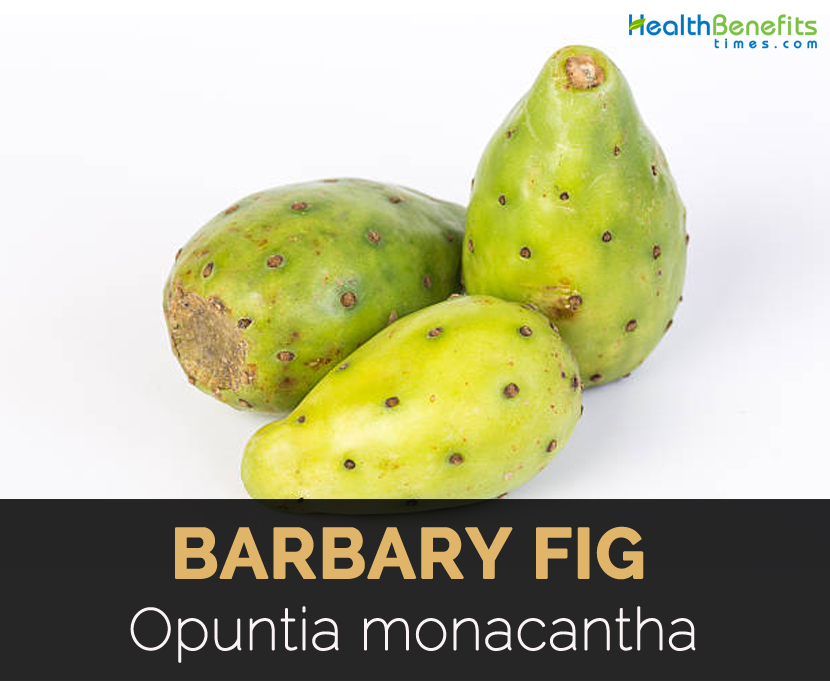
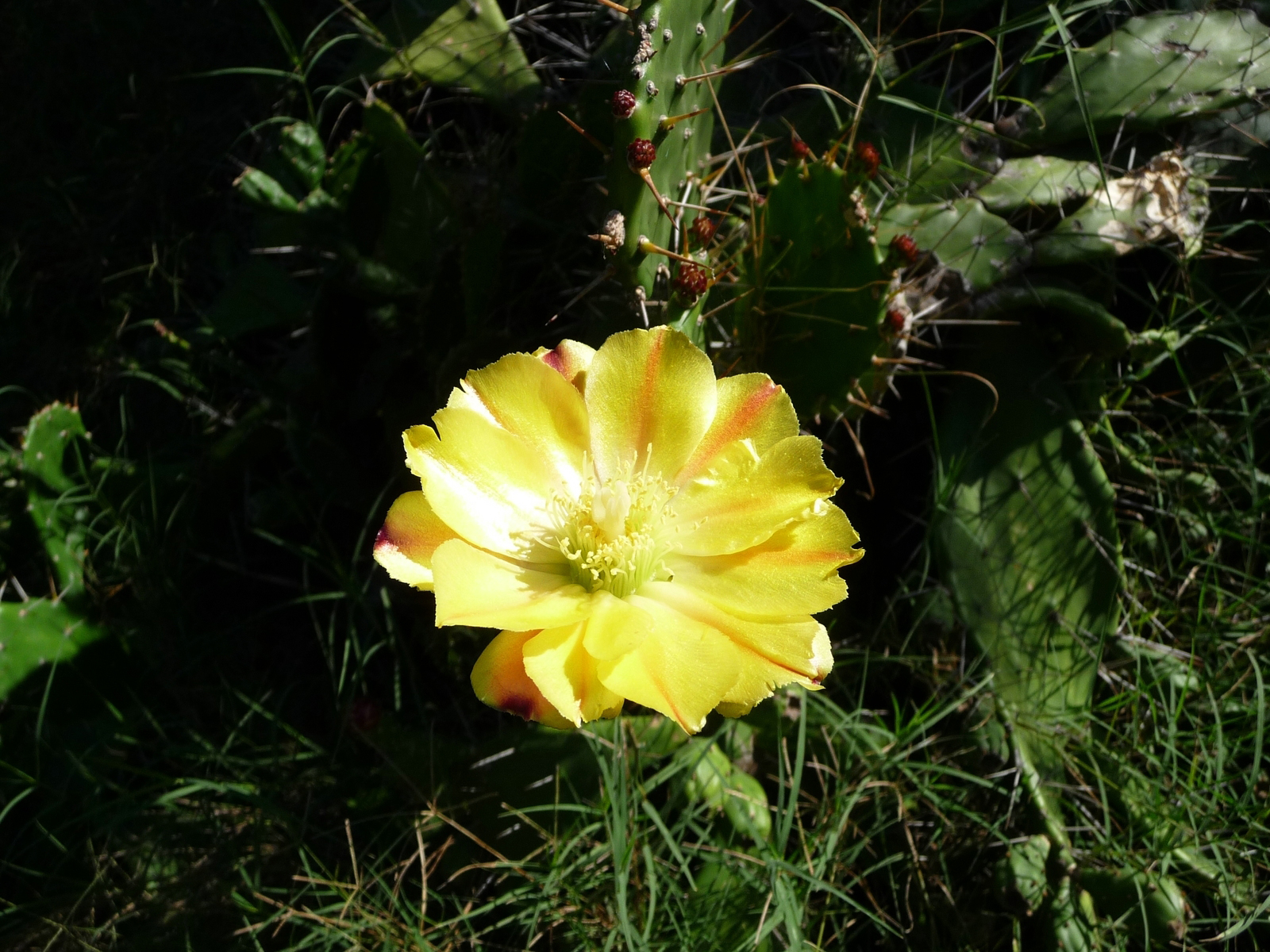
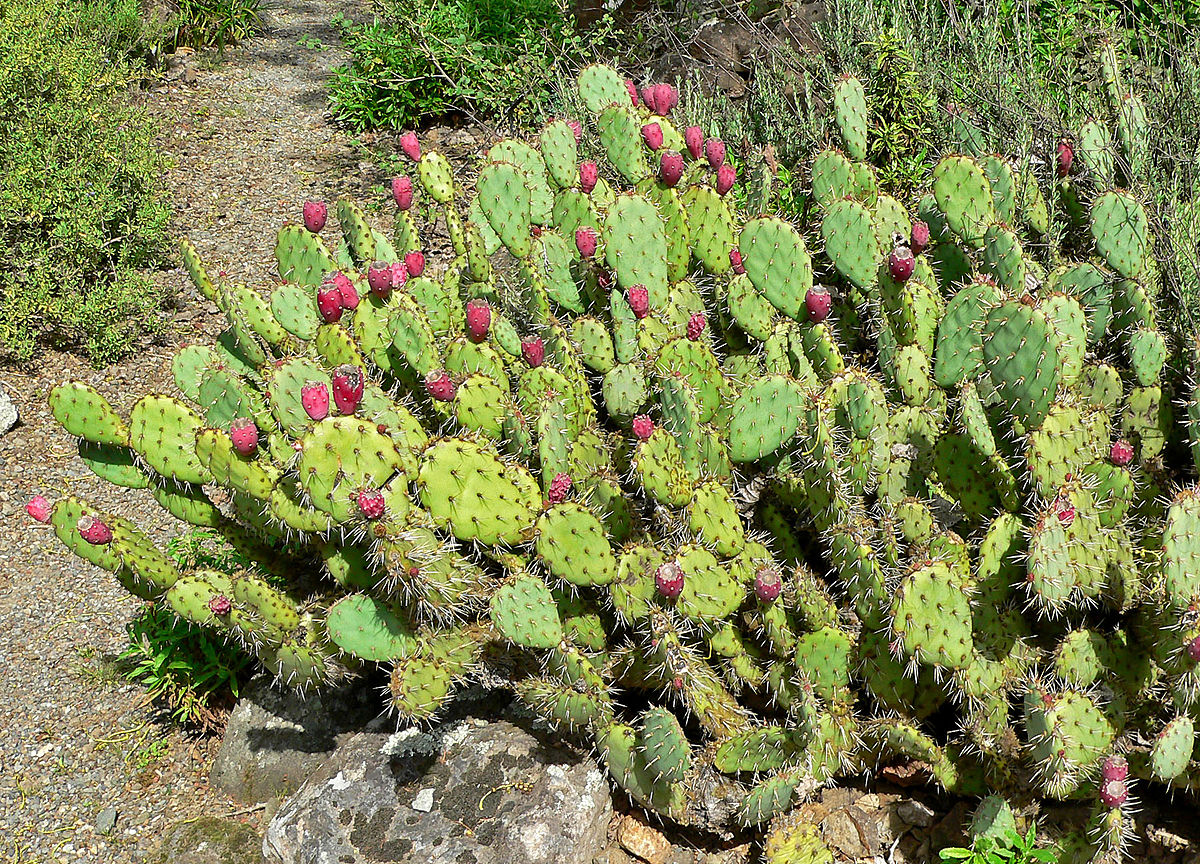
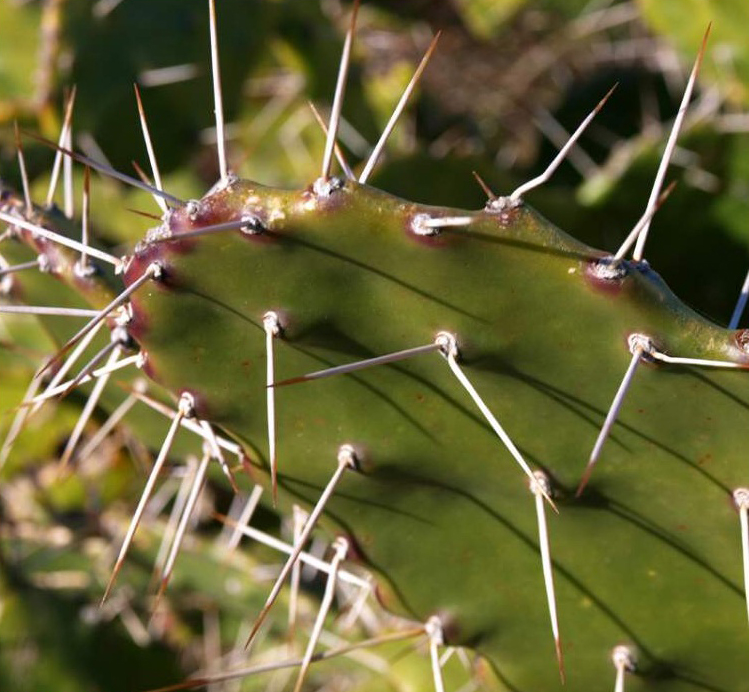
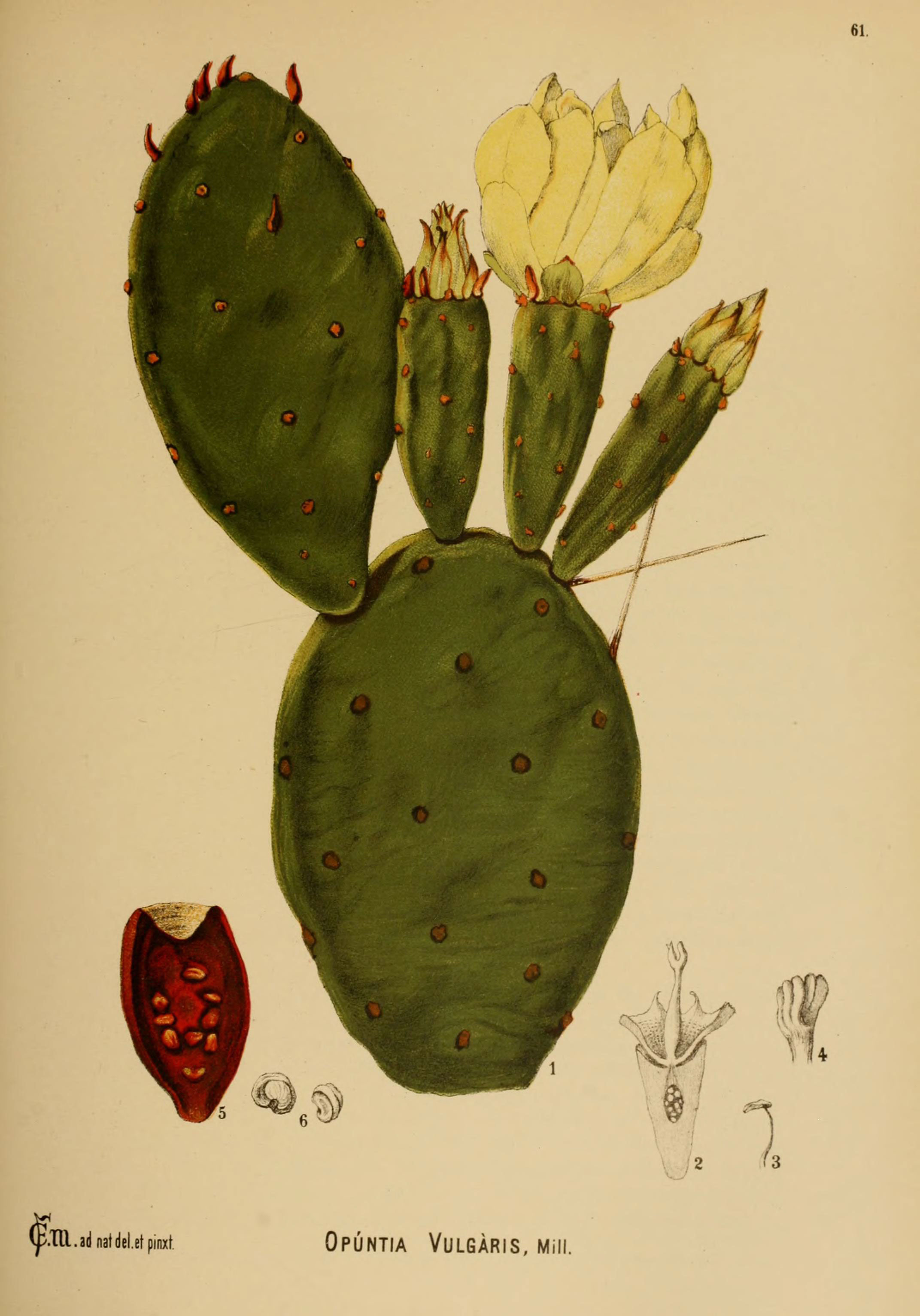
    Opuntia monacantha   is a fast growing shrubby or tree like cactus which reaches to the height of 20 feet with short trunk upto 8 inches in diameter. The stem segments are oblong to obovate which is tapered towards the base, has irregular margin upto 12 inches long and 5 inches wide. Spines are slender, brown, grey and unequal upto 1.6 inches long. Flowers are yellow to deep orange-brown having reddish outer perianth segments upto 3 inches and 4 inches wide. Fruits are reddish purple, pear shaped upto 3 inches long and 2 inches in diameter.

    Barbary fig Image Gallery
    Barbary-fig-flower Barbary-fig-flower
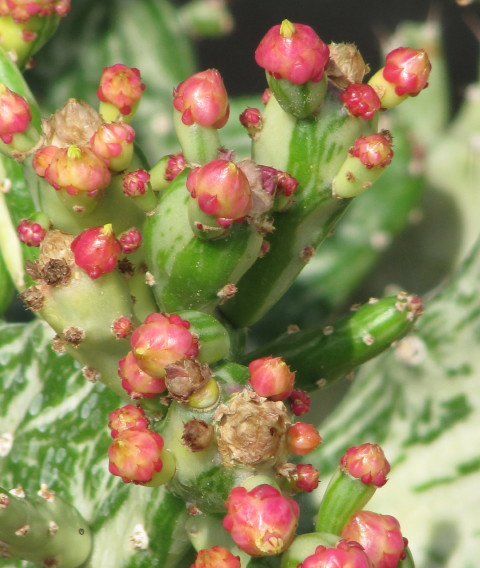
    Barbary-fig-flower-buds Barbary-fig-flower-buds
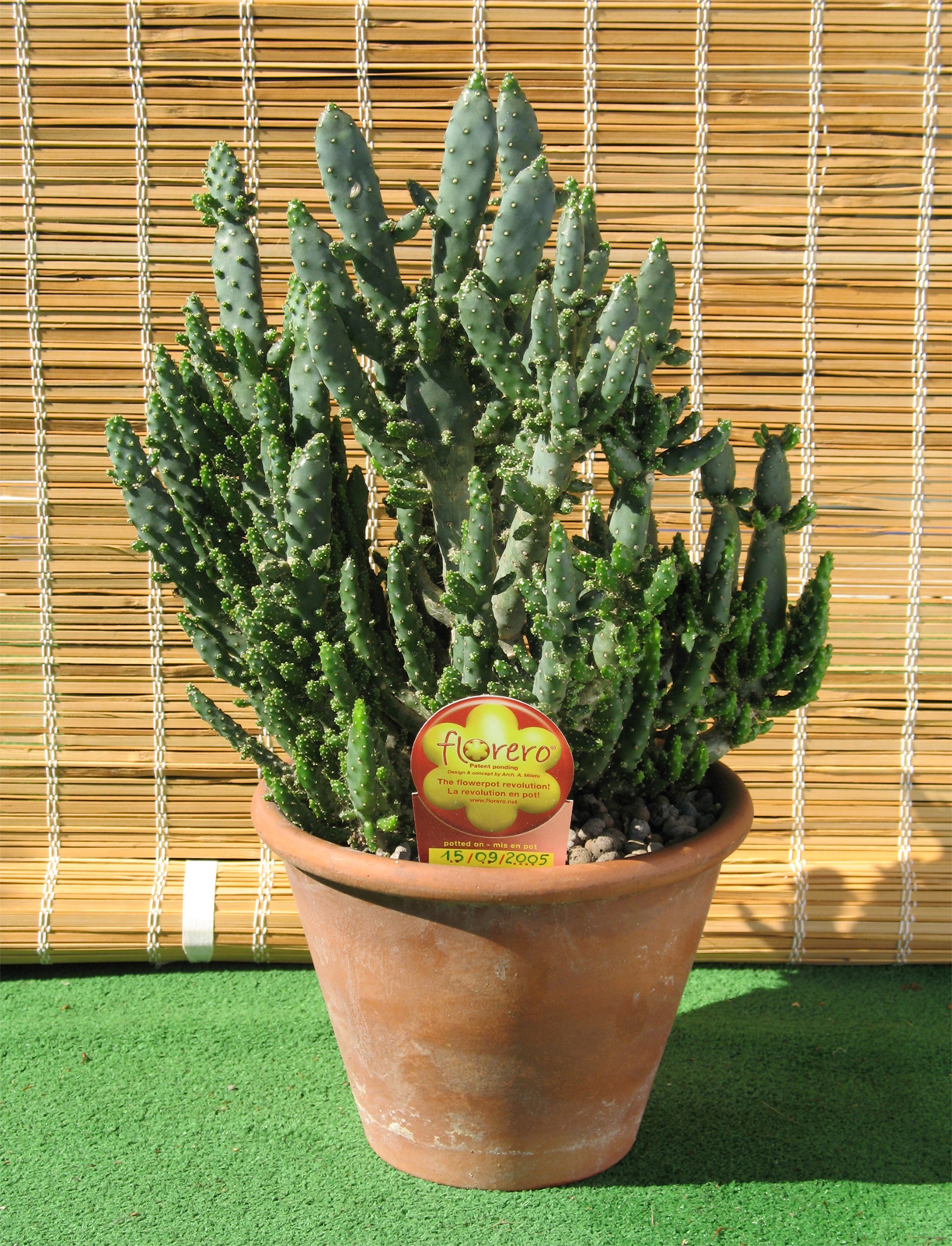
    Barbary-fig-plant Barbary-fig-plant
    Barbary-fig-plantations Barbary-fig-plantations
    Barbary-fig-thorns Barbary-fig-thorns
    Plant-illustration-of-Barbary-fig Plant-illustration-of-Barbary-fig
    Plant description

    The shrub is erect, succulent with shallow fibrous roots but can reach 4 meters. Stems are grey green to light green. The one main stem is woody at base having many side branches which is made up of fleshy, glossy green, jointed, obovate, oblong or oblanceolate segments upto 45 cm long by 15 cm wide and 1.5 cm thick. Leaves are small and scale like form beneath areoles. Flowers are 6 cm in diameter borne on margins of segments. Fruits are obovoid, 5–7.5 × 4–5 cm and green which turns yellow to reddish purple. Seeds are smooth, irregularly elliptic, 4 × 3 mm, pale brown which is embedded in reddish and pulpy flesh.

    Medicinal uses

    It is used to treat diabetes, bronchial asthma, burns and indigestion.

    Culinary uses

    It is used in jellies, juices, teas, candies, alcoholic drinks.

    References:

    https://www.itis.gov/servlet/SingleRpt/SingleRpt?search_topic=TSN&search_value=504041#null

    https://keyserver.lucidcentral.org/weeds/data/media/Html/opuntia_monacantha.pdf

    https://worldofsucculents.com/opuntia-monacantha-drooping-prickly-pear/

    75%
    75%
    Awesome

    Comments

    comments

    B Fruits
    Share. Facebook Twitter Pinterest LinkedIn Tumblr Email
    Previous ArticleWhat You Need to Know About Hormone Replacement Therapy
    Next Article 6 Tips for Getting Rid of Bad Breath

    Related Posts

    Health benefits of Bicolor Skullcap

    March 1, 2024

    Facts about Buckthorn bully

    February 13, 2024

    Facts about Saffron Plum

    February 11, 2024

    Comments are closed.


    Barbary fig Quick Facts
    Name: Barbary fig
    Scientific Name: Opuntia monacantha
    Origin South America – Paraguay, Argentina, Uruguay and Brazil
    Colors Yellow to reddish purple
    Shapes Obovoid, 5–7.5 × 4–5 cm
    Flesh colors Reddish
    Name Barbary fig
    Scientific Name Opuntia monacantha
    Native South America – Paraguay, Argentina, Uruguay and Brazil
    Common/English Name Barberry Fig, Cochineal Fig, Barbary Fig, Cochineal Prickly-Pear, Common Prickly Pear, Indian Fig, Drooping Prickly Pear, Prickly
    Pear, Drooping pear, Drooping tree pear, Smooth tree pear, Smooth-leaf tree pear, Spiny prickly pear, Spreading prickly pear, tuna
    Name in Other Languages Afrikaans: Luisiesturksvy, Suurturksvy;
    Brazil: Cardo-Palmático Palmatória;
    Ascension, Saint Helena: Opuntia, Red Tungi, Prickly Pear, Red Tungy, Round Red Prickly Pear;
    Chinese: Dan Ci Xian Ren Zhang;
    India: Nag Phena (Hindu), Naga Kulli (Kannada);
    Samoan: Lauaufai Va;
    Portuguese: Monducuru, Arumbeva, Urumbeba;
    Somalia: Tiin, Quecis, Tiin-Hindi
    Italian: Fico d’India (nome genere);
    French: Oponce;
    Portuguese: Palmatória, Urumbeba, Monducuru;
    Spanish: Chumbera, Tuna;
    English: Cochineal prickly-pear, Drooping prickly-pear, Drooping tree-pear
    Plant Growth Habit Erect succulent shrub
    Plant Size 4 m
    Branches Up to 45 cm long by 15 cm wide and 1.5 cm thick
    Stem Grey green to light green
    Flower 6 cm diameter
    Fruit shape & size Obovoid, 5–7.5 × 4–5 cm
    Fruit color Yellow to reddish purple
    Flesh color Reddish
    Seed Pale brown, irregularly elliptic, 4 × 3 mm

    Barbary fig Scientific Classification

    Scientific Name: Opuntia monacantha

    Rank Scientific Name & (Common Name)
    Kingdom Plantae (Plants)
    Subkingdom Viridiplantae  (Green plants)
    Infrakingdom Streptophyta  (Land plants)
    Superdivision Embryophyta
    Division Tracheophyta  (Vascular plants, tracheophytes)
    Class Magnoliopsida
    Order Caryophyllales
    Family Cactaceae Juss. (Cactus, cacti)
    Genus Opuntia Mill. (Figues de Barbarie, pricklypear, cholla)
    Species Opuntia monacantha (Willd.) Haw. (Common pricklypear)
    Synonyms
    • Cactus indicus Roxb.
    • Cactus monacanthos Willd.
    • Cactus monacanthos Willd. ex Schltdl., 1813
    • Cactus urumbeba Vell., 1829
    • Opuntia brunneogemmia (F.Ritter) C.Schlindwein
    • Opuntia lemaireana Console ex F. A. C. Weber
    • Opuntia lemaireana Console, 1898
    • Opuntia monacantha subsp. brunneogemmia (F.Ritter) P.J.Braun & Esteves
    • Opuntia monocantha (Willd.) Haw.
    • Opuntia vulgaris auct. mult. Non P.Mill.,
    • Opuntia vulgaris var. lemaireana (Console ex F. A. C. Weber) Backeb.
    • Platyopuntia brunneogemmia F.Ritter
    Categories
    • Beverages (78)
    • Dairy (28)
    • Dental Health (15)
    • Equipment (5)
    • Essential OIls (196)
    • Facts (2,939)
    • Foods (255)
    • Fruits (516)
    • Giveaway (1)
    • Grains and Cereals (36)
    • Health & Beauty (763)
    • Herbs and Spices (1,249)
    • Medicines (9)
    • Mental Health (19)
    • Nutritional value (27)
    • Nuts and seeds (73)
    • Oils (81)
    • Pets (4)
    • Poultry & Seafoods (67)
    • Pulses and Beans (16)
    • Reviews (25)
    • supplement (2)
    • Vegetables (304)
    • Weight Loss (22)

    What is Lupin Bean Flour?

    Science Backed Health Benefits of Durian (Durio zibethinus)

    Science Backed Health Benefits of Feijoa (Pineapple Guava) (Acca sellowiana)

    Science Backed Health Benefits of Gac Fruit (Momordica cochinchinensis)

    Science Backed Health Benefits of Amaranth Leaves (Amaranthus spp)

    Science Backed Health Benefits of Arrowhead (Sagittaria sagittifolia)

    ABOUT
    Home
    About us
    Contact us
    Privacy Policy
    Terms & conditions
    Disclaimer
    Direct Communication
    e-mail: [email protected]
    Gmail: [email protected]
    Whatsapp: +977-9841146511
    Viber: +977-9841146511
    Useful
    Health Wiki
    Nutrition
    Facebook Twitter Pinterest
    © 2025 www.healthbenefitstimes.com All rights reserved.

    Type above and press Enter to search. Press Esc to cancel.

    ×

    Log In

    Forgot Password?

    Not registered yet? Create an Account