

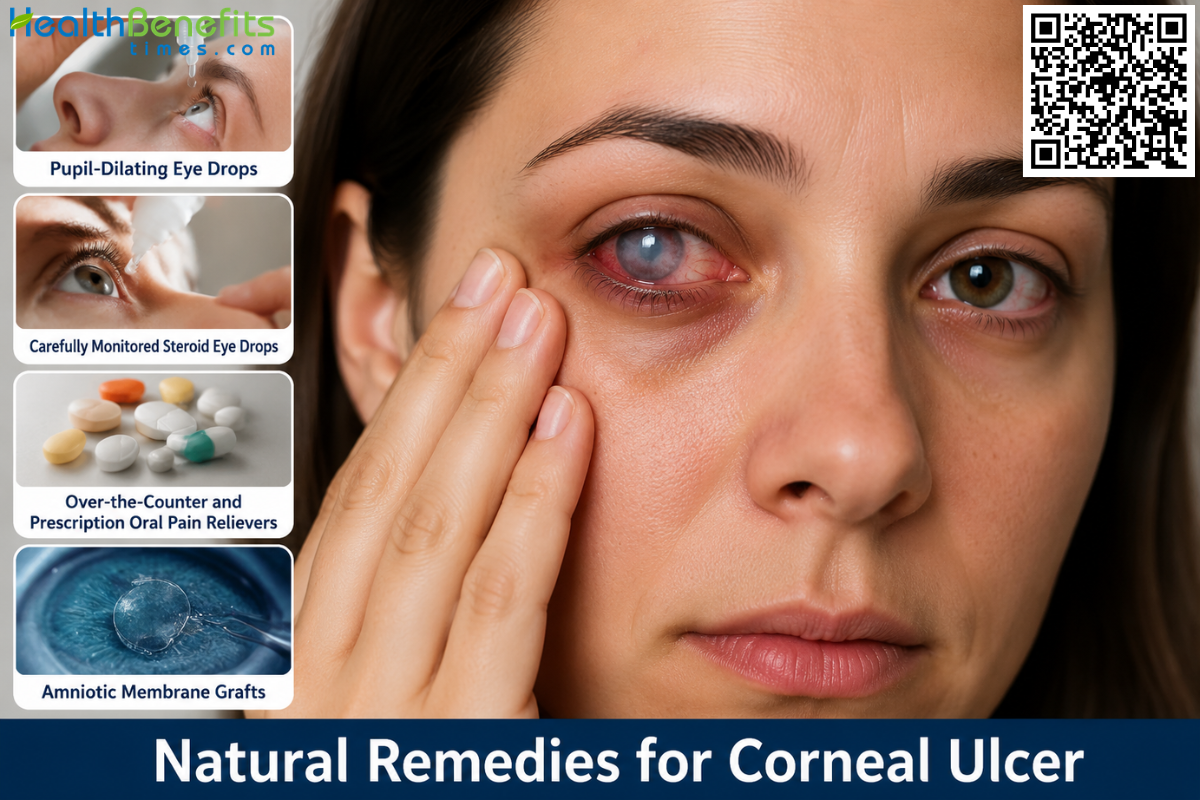
A corneal ulcer is a serious, open sore that forms on the cornea, which is the clear, protective outer layer at the front of the eye 1. Often starting as an inflammation called keratitis, this condition most commonly develops from bacterial, viral, or fungal infections that invade the eye’s surface 2. While anyone can get a corneal ulcer, people who wear contact lenses especially those who sleep in them face a significantly higher risk due to trapped bacteria and minor surface scratches 3. Other common causes include severe dry eyes, physical eye injuries, and certain autoimmune diseases. If you develop a corneal ulcer, you will likely experience severe eye pain, intense redness, excessive tearing, and blurred vision. Because untreated ulcers can rapidly cause permanent scarring or blindness, they are considered medical emergencies that require prompt evaluation and targeted treatment with prescription antimicrobial eye drops.
Causes of Corneal Ulcer
- Bacterial Infections: Bacteria are the most frequent cause of corneal ulcers, particularly among people who wear contact lenses. Poor lens hygiene, leaving lenses in overnight, or using contaminated lens solutions allows bacteria to multiply and break down the protective surface of the eye 1.
- Viral Infections: Viruses that cause cold sores, such as the herpes simplex virus, can infect the eye and lead to recurrent corneal ulcers. Other viruses, including the varicella-zoster virus responsible for chickenpox and shingles, can also trigger these sores during periods of high stress or when the immune system is weakened 4.
- Fungal Infections: Fungi can invade the clear layer of the eye and cause highly destructive ulcers. This condition most frequently develops after the eye is accidentally scratched by plant material, such as a tree branch or twig, or from heavily contaminated contact lenses 5.
- Parasitic Infections: A microscopic organism called Acanthamoeba, commonly found in tap water, hot tubs, swimming pools, and soil, can cause a severe and difficult-to-treat ulcer. This infection almost exclusively affects contact lens wearers who expose their lenses to tap water or wear them while swimming and showering 6.
- Physical Eye Injuries: Direct damage to the eye from tiny foreign objects, deep scratches, cuts, or chemical burns creates an immediate opening on the eye’s surface. These unhealed wounds bypass the cornea’s natural defenses, allowing infectious agents to easily enter and form an ulcer 7.
- Severe Dry Eye and Eyelid Disorders: Natural tears contain antibodies that wash away germs and keep the eye lubricated. Conditions that cause severe chronic dryness, or nerve disorders (like Bell’s palsy) that prevent the eyelids from closing completely, leave the cornea exposed and highly susceptible to tissue breakdown and ulceration 1.
Symptoms of Corneal Ulcer
- Severe Eye Pain: The most prominent indicator of a corneal ulcer is intense, constant aching or severe pain in the affected eye. Because the clear surface of the eye contains a highly dense network of nerve endings, any breakdown or infection of this tissue triggers immediate and significant pain 1.
- Intense Eye Redness: The white portion of the eye typically becomes deeply bloodshot. This extensive redness occurs because local blood vessels rapidly expand to deliver immune cells to the site of the infection and tissue damage 1.
- Foreign Body Sensation: Individuals frequently report a highly uncomfortable, persistent feeling that a piece of sand, dirt, or an eyelash is trapped under the eyelid, even when no physical object is actually present in the eye 2.
- Extreme Light Sensitivity (Photophobia): The inflamed eye often becomes highly sensitive to natural and artificial light. Exposure to bright environments can cause a sharp increase in pain, forcing the individual to squint or close the eye entirely 1.
- Excessive Tearing and Discharge: The eye will reflexively water in an attempt to wash away the infection. Furthermore, bacterial and fungal ulcers often produce a thick, yellowish or greenish pus-like discharge that can cause the eyelids to stick together, especially after waking up 2.
- Blurred or Diminished Vision: The cornea functions as the eye’s primary window, responsible for clearly focusing light. When an ulcer damages and clouds this normally transparent layer, it directly interferes with light transmission, resulting in hazy, blurred, or significantly reduced vision 3.
- Visible White or Gray Spot: As the infection progresses and tissue breaks down, the ulcer can often be seen with the naked eye. It typically appears as a distinct, cloudy, white or grayish spot directly over the colored part of the eye (the iris) 1.
Best Treatment for Corneal Ulcer
1. Prescription Antibiotic Eye Drops
How it may help
Prescription antibiotic eye drops clear the bacterial infection responsible for the ulcer. By stopping bacteria from multiplying and destroying tissue, these medications prevent the infection from spreading deeper into the eye, which allows the open sore on the clear protective layer to begin healing naturally.
What research says
Clinical studies confirm that broad-spectrum topical antibiotics, particularly fluoroquinolones and fortified antibiotic drops, successfully resolve most bacterial corneal ulcers. Research demonstrates that initiating these aggressive treatments rapidly eliminates bacteria, significantly reducing the risk of severe scarring and permanent vision loss 1.
How to use it safely
Wash your hands thoroughly before applying the drops. Pull down your lower eyelid, place the drop inside, and close your eye gently. Never touch the dropper tip to your eye. Apply the medication exactly as scheduled sometimes every hour initially and complete the entire prescription to prevent recurrence.
Potential precautions or side effects
These drops often cause temporary stinging, burning, or blurry vision upon application. Contact your doctor immediately if you experience increased pain, worsening redness, or severe eyelid swelling 1.
2. Antiviral Eye Drops and Oral Pills
How it may help
Antiviral eye drops and oral pills treat corneal ulcers caused by viral infections, such as the herpes simplex virus. These medications work by stopping the virus from copying itself and spreading. This halts the destruction of the eye tissue, allowing the ulcer to heal and preventing the infection from reaching deeper layers of the eye.
What research says
Research concludes that topical antiviral medications, such as trifluridine or ganciclovir, effectively heal the surface of the eye in most viral ulcer cases. Additionally, studies confirm that combining these drops with oral antiviral pills significantly reduces the chance of the virus returning and causing future eye damage 4.
How to use it safely
Wash your hands before applying antiviral eye drops. Place the drop inside the lower eyelid without letting the bottle touch your eye. If prescribed oral pills, take them exactly as directed at the same times each day. Never stop the medication early, even if your vision improves.
Potential precautions or side effects
Antiviral drops may cause mild stinging, redness, or watery eyes right after use. Oral pills can sometimes cause minor stomach upset, fatigue, or headaches 4.
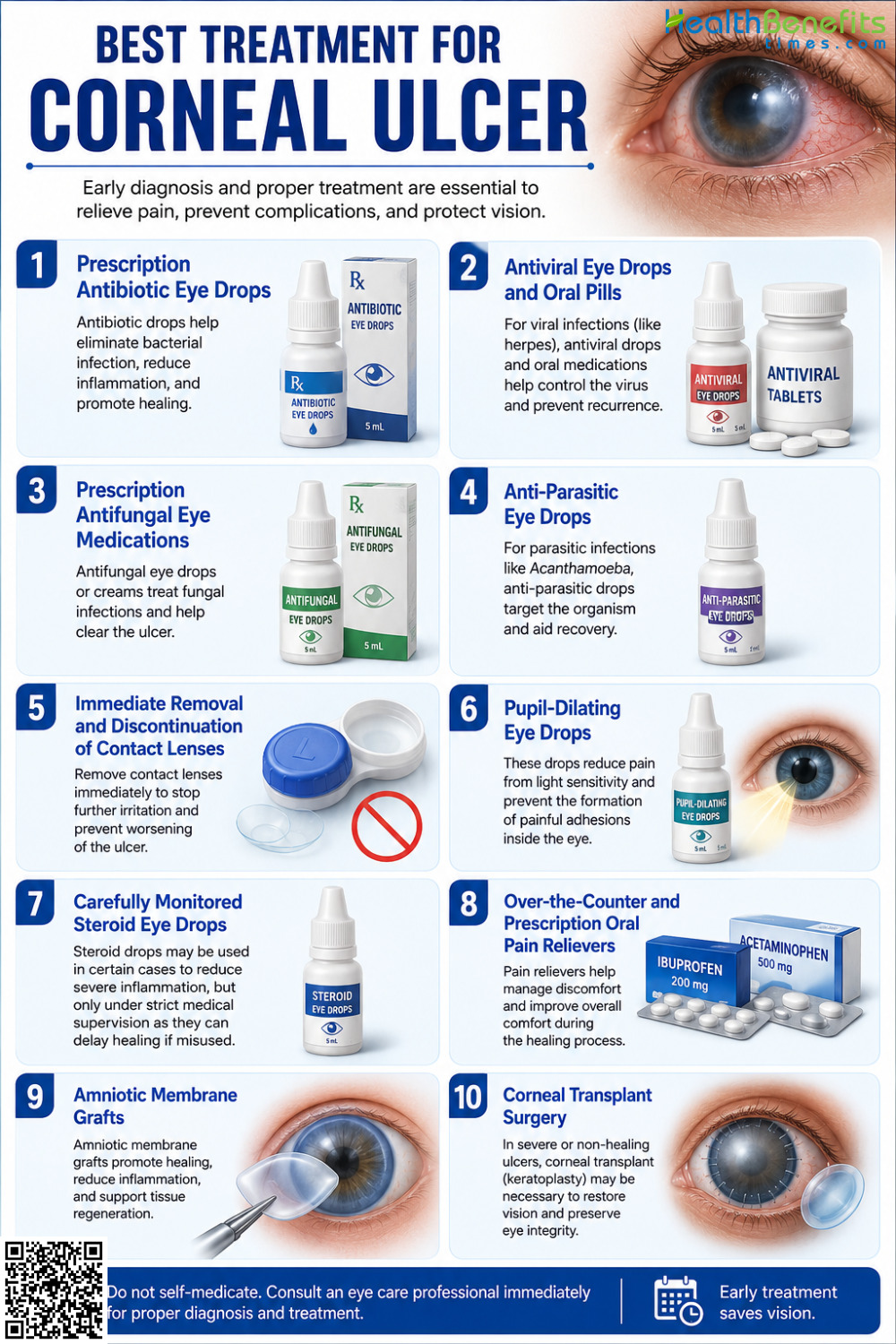
3. Prescription Antifungal Eye Medications
How it may help
Prescription antifungal eye drops directly target and eliminate fungal organisms that invade the eye after a physical injury or contact lens contamination. By destroying the fungal cell walls, these medications stop the infection from spreading, which allows the open sore on the clear surface of the eye to heal properly.
What research says
Clinical studies demonstrate that topical antifungal medications, particularly natamycin, are highly effective as a primary treatment for fungal corneal ulcers. Research confirms that promptly administering these medications significantly improves healing rates, prevents the fungus from penetrating deeper tissues, and reduces the need for severe surgical interventions like corneal transplants 8.
How to use it safely
Wash your hands thoroughly before handling the medication. Pull down your lower eyelid and carefully squeeze a drop into the space, ensuring the bottle tip never touches your eye. Fungal infections require long-term treatment, so apply the drops exactly as scheduled and complete the entire prescription without skipping doses.
Potential precautions or side effects
These medications often cause temporary blurred vision, eye redness, and a stinging or burning sensation upon application. Report any worsening pain or severe swelling to your doctor immediately 5.
4. Anti-Parasitic Eye Drops
How it may help
Anti-parasitic eye drops treat corneal ulcers caused by microscopic organisms like Acanthamoeba, which are often found in water. These specialized drops actively kill both the active parasites and their protective cysts, stopping them from eating away at the eye tissue and allowing the surface to heal.
What research says
Clinical research shows that early and aggressive use of topical anti-parasitic medications, such as chlorhexidine or polyhexamethylene biguanide, is highly effective at curing these infections. Experts conclude that prolonged treatment—often lasting several months—is necessary to completely eliminate the resilient parasitic cysts and prevent severe vision loss 6.
How to use it safely
Wash your hands thoroughly before applying the drops. Because treatment often requires using multiple types of medications around the clock, carefully follow the exact schedule provided by your doctor. Do not touch the dropper to your eye, and never expose your eyes to tap water during recovery.
Potential precautions or side effects
These strong medications frequently cause severe eye irritation, stinging, and redness. Because treatment is lengthy, doctors must closely monitor the eye for toxic reactions or surface damage 6.
5. Immediate Removal and Discontinuation of Contact Lenses
How it may help
Taking out your contact lenses immediately eliminates the primary source of trapped bacteria, fungi, and microscopic scratches. This crucial step stops further irritation, allows oxygen to reach the injured tissue, and gives prescribed medical treatments direct access to heal the open sore on the eye.
What research says
Clinical guidelines establish that stopping contact lens wear is the critical first intervention for lens-associated ulcers. Research confirms that continuing to wear lenses during an active infection significantly worsens tissue damage, shields microbes from medications, and rapidly increases the risk of permanent vision loss 1.
How to use it safely
With thoroughly washed and dried hands, carefully remove your contact lenses as soon as you experience severe eye pain or notice redness. Place the lenses in their case and bring them to your doctor, as testing the lenses can help identify the exact germ causing the infection.
Potential precautions or side effects
Never throw away your lenses or case until a doctor evaluates them. Do not resume wearing contact lenses until your eye specialist officially clears you to do so 3.
6. Pupil-Dilating Eye Drops
How it may help
Pupil-dilating eye drops help manage the severe pain associated with a corneal ulcer. They work by temporarily relaxing the muscles inside the eye, which stops painful muscle spasms triggered by the infection. Additionally, these drops prevent the colored part of the eye from sticking to the underlying lens 1.
What research says
Clinical guidelines recommend using pupil-dilating medications, such as cyclopentolate, as a supportive therapy for eye ulcers. Experts confirm that these drops effectively relieve internal eye aching caused by muscle spasms and significantly reduce the risk of permanent, vision-altering scar tissue forming inside the inflamed eye 1.
How to use it safely
Wash your hands before handling the medication. Gently pull down your lower eyelid and apply one drop, ensuring the bottle tip never touches your eye. Because these drops keep your pupil wide open, always wear dark sunglasses in bright environments to protect your sensitive eyes.
Potential precautions or side effects
These medications temporarily cause blurred near vision and extreme light sensitivity. You should avoid driving or operating dangerous machinery until your eyesight completely returns to normal 1.
7. Carefully Monitored Steroid Eye Drops
How it may help
Steroid eye drops help manage a corneal ulcer by suppressing severe inflammation. While they do not kill the underlying infection, eye specialists may carefully prescribe them to reduce tissue swelling and prevent excessive scarring, which helps preserve clear vision after the open sore heals.
What research says
Clinical trials demonstrate that adding topical corticosteroids to antibiotic treatments may reduce permanent scarring for severe, centrally located bacterial ulcers. However, experts strongly conclude that steroids can worsen tissue destruction and must never be used for fungal or parasitic eye infections 9.
How to use it safely
Only use steroid drops under the strict supervision of an eye specialist. Wash your hands thoroughly before applying the medication inside your lower eyelid. Never use these drops without simultaneously taking your prescribed antimicrobial treatments, as steroids temporarily weaken your eye’s natural defenses.
Potential precautions or side effects
Incorrect steroid use can severely worsen infections, increase eye pressure, or cause cataracts. Stop use and seek immediate medical help if pain intensifies or vision suddenly worsens 1.
8. Over-the-Counter and Prescription Oral Pain Relievers
How it may help
Oral pain relievers manage the severe discomfort associated with a corneal ulcer. Because the eye’s clear surface contains a highly dense network of nerve endings, ulcers cause intense aching. Oral medications reduce this pain and inflammation, allowing individuals to rest while primary antimicrobial eye drops heal the infection.
What research says
Clinical guidelines establish that managing pain is a critical component of treating corneal ulcers. Experts recommend oral analgesics, such as acetaminophen or nonsteroidal anti-inflammatory drugs (NSAIDs), to effectively control eye pain. Research strongly emphasizes using oral medications rather than numbing eye drops, as topical anesthetics severely delay tissue healing 1.
How to use it safely
Take oral pain relievers exactly as directed by your doctor or the package instructions. Swallow these medications with a full glass of water, and consume them with food to prevent stomach upset. Never use pain relievers as a substitute for your prescribed antimicrobial eye drops.
Potential precautions or side effects
Common side effects include stomach upset or nausea. Do not exceed the recommended daily dosage, as excessive use can cause severe liver damage or serious gastrointestinal bleeding 10.
9. Amniotic Membrane Grafts
How it may help
An amniotic membrane graft acts as a biological bandage over a severe, slow-healing corneal ulcer. Placed directly onto the eye, this thin layer of tissue protects the open wound, intensely reduces inflammation, and supplies natural healing factors that encourage the eye’s clear surface to repair itself.
What research says
Clinical studies demonstrate that applying an amniotic membrane significantly accelerates tissue healing and reduces severe pain. Experts conclude that using these specialized grafts for deep or stubborn ulcers effectively prevents structural thinning, minimizes permanent scarring, and frequently saves the eye from requiring more invasive transplant surgeries 11.
How to use it safely
Because an eye specialist must apply the graft, your role involves safe aftercare. Do not rub your eye or remove the underlying protective contact lens. Continue applying all prescribed antimicrobial eye drops exactly as your doctor directs to prevent secondary infections.
Potential precautions or side effects
You may experience blurry vision and a mild foreign body sensation while the graft is present. Contact your doctor immediately if the protective membrane shifts or falls out 11.
10. Corneal Transplant Surgery
How it may help
Corneal transplant surgery treats the most severe corneal ulcers that do not respond to medications. By removing the severely infected or damaged tissue and replacing it with healthy, clear donor tissue, this procedure restores the eye’s physical structure, saves the eye from rupturing, and helps recover lost vision.
What research says
Clinical guidelines indicate that therapeutic corneal transplantation is highly effective for rapidly deteriorating ulcers that threaten to perforate the eye. Experts conclude that while the surgery successfully removes the active infection and stabilizes the eye structure, long-term visual recovery depends heavily on preventing post-surgery graft rejection 1.
How to use it safely
After surgery, strictly follow your doctor’s recovery plan. You must use prescribed anti-rejection and antibiotic eye drops precisely as scheduled to prevent complications. Wear a protective eye shield while sleeping, avoid strenuous activities, and attend all follow-up appointments to monitor healing.
Potential precautions or side effects
The most significant risk is your body rejecting the donor tissue. Seek immediate emergency medical care if you experience sudden vision loss, increased pain, or severe eye redness after the procedure 1.
Foods to Avoid When You suffer from Corneal Ulcer
While direct medical treatment is critical for curing a corneal ulcer, avoiding foods that suppress the immune system or promote inflammation supports tissue healing and infection recovery.
1. High-Sugar Foods
Excessive refined sugar increases systemic inflammation and suppresses white blood cell function, which can significantly delay the body’s ability to heal infected eye tissue 12.
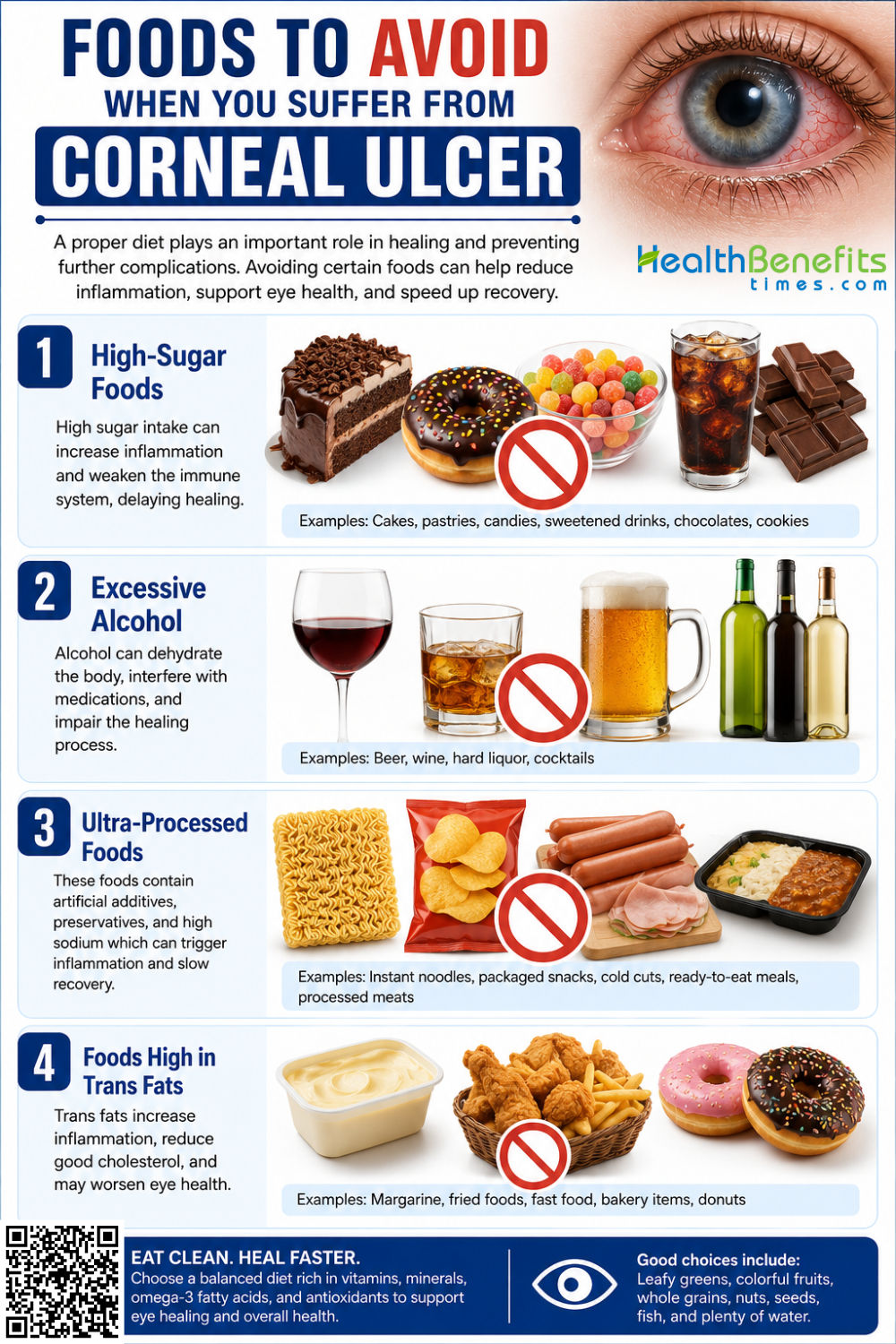
2. Excessive Alcohol
Heavy alcohol consumption impairs immune defenses and contributes to systemic dehydration, which can worsen dry eye conditions and complicate the healing of the clear corneal surface 13.
3. Ultra-Processed Foods
Diets heavily reliant on ultra-processed foods lack the essential vitamins and antioxidants required for cellular repair, potentially prolonging your recovery from severe ocular infections 14.
4. Foods High in Trans Fats
Consuming artificial trans fats promotes chronic inflammatory responses within the body, which may hinder the natural resolution of inflammation needed to heal a corneal ulcer effectively 15.
When to see Doctor when you suffer from Corneal Ulcer
A corneal ulcer is always considered a medical emergency because it can rapidly cause permanent scarring or blindness. You must seek immediate ophthalmological evaluation if you develop any of the following warning signs.
1. Sudden and Severe Eye Pain
Intense or worsening eye pain signals that the infection is rapidly destroying the protective surface layer and deeply irritating the underlying nerves 1.
2. Noticeable Vision Changes
Seek emergency care if you experience sudden blurred vision or decreased sight, as this indicates the ulcer is directly blocking or clouding your visual axis 1.
3. Visible White Spot
Immediately consult a doctor if you observe a distinct white or grayish patch over the colored part of your eye, confirming advanced tissue breakdown 1.
4. Thick Eye Discharge
The sudden appearance of thick, yellow, or green pus-like discharge strongly indicates a highly active bacterial or fungal infection requiring urgent prescription treatment 2.
5. Extreme Light Sensitivity
If standard indoor lighting suddenly causes sharp, intense pain, the surface infection has likely triggered severe secondary inflammation deep within the internal eye structures 1.