

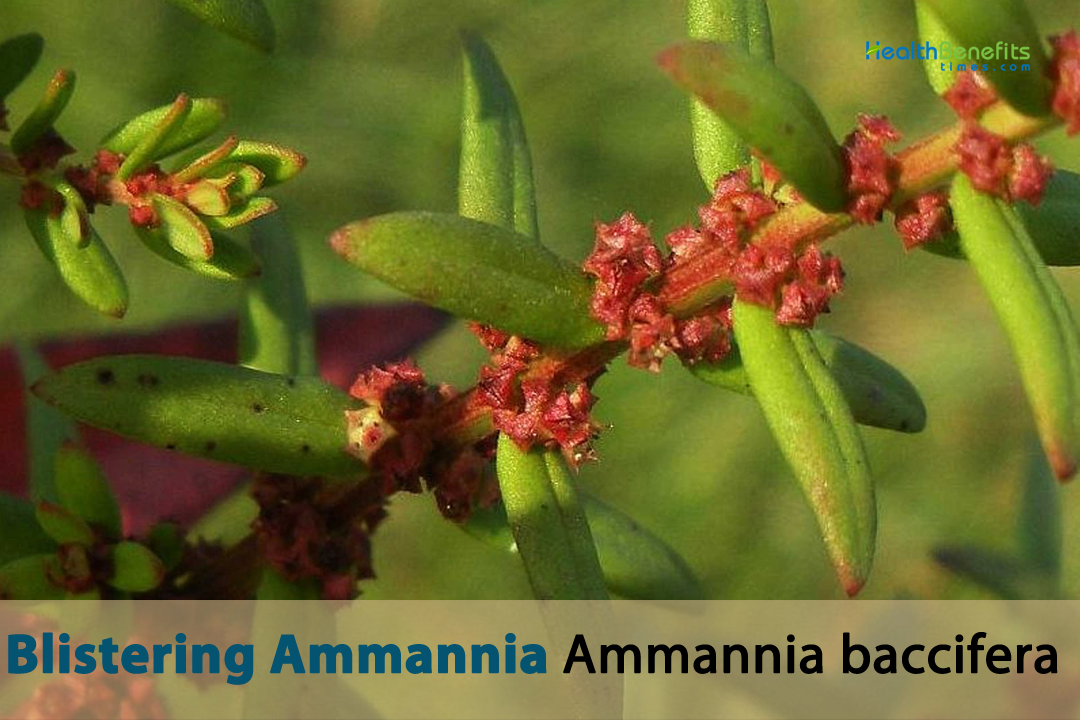
| Blistering Ammannia Quick Facts | ||||
|---|---|---|---|---|
| Name: | Blistering Ammannia | |||
| Scientific Name: | Ammannia baccifera | |||
| Origin | Tropical and subtropical Asia and Africa but widely distributed throughout India | |||
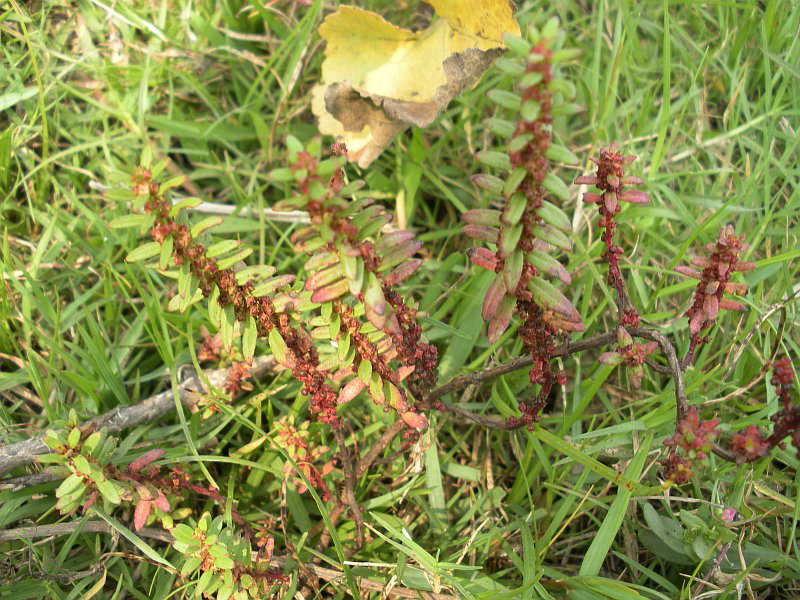
| Colors | Initially green, but as they age, they turn brown | |||
| Shapes | Capsules are nearly spherical, depressed, about 1.2 millimeters in diameter | |||
| Taste | Pungent, bitter | |||
| Health benefits | Anti-inflammatory properties, Wound healing, Anti-fungal properties, Anti-bacterial properties, Pain relief, Gastrointestinal issues, Anti-cancer properties, Treatment of skin disorders, Management of respiratory problems, Control bleeding, Treatment of urinary disorders | |||
| Name | Blistering Ammannia |
|---|---|
| Scientific Name | Ammannia baccifera |
| Native | Tropical and subtropical Asia and Africa but widely distributed throughout India and also found in Greece, Australia, north to Formosa in the pacific, Europe, Bhutan, Myanmar, Nepal, Ceylon, Afghanistan, Pakistan and China. In India, the species spread in Darjeeling, Gujarat, Goa, Uttar Pradesh, Karnataka, Andhra Pradesh and Tamil Nadu |
| Common Names | Tooth cup, Delta ammania, Blistering joy weed, Red toothcup, Red ammania, Red Rotala, Blistering Ammannia, Acrid weed, Monarch redstem, Tooth cup, Red Toothbrush Plant, Pink Ammannia and Delicate Ammannia |
| Name in Other Languages | Arabic : Hannta bariya Assamese: Agnigarbha, Karna-sak Bengali: Dadmari, Banmarich (বনমরিচ) Benin: Worougboko, Worukoho Burmese: K nyhoet pain (ကညို့ပင်) Chinese: Shuǐ sī tong (水丝桐), Shuǐ xiàncài (水苋菜), Xi ye shui xian, Jiang guo shui xian, Shui xian cai Dutch: Brandende Ammannia English: Monarch redstem, Blistering Ammania, amania, acrid weed, toothcup French: Ammania brûlante German: Brennende Ammannia Gujarat : Jalmukhi, Jalaagiyo Hebrew: Amanyah mitzrit, omnih mtsris (אָמַנְיָה מִצְרִית) Hindi: Aginbuti (अगिन बूटी), Ban Mirich (बन मिरिच), Jungli Mehendi (जंगली मेंहदी), dadmari (दादमारी), Italian: Ammannia vescicolosa Japanese: Hibiku amania (ヒビクアマニア), nagato-miso-hagi (ナガトミソハギ), shima-miso-hagi (シマミソハギ) Kannada: Kaadugida (ಕಾಡುಗಿಡ), Agnivendrapaaku (ಅಗ್ನಿವೇಂದ್ರಪಾಕು), Kallurive (ಕಲ್ಲುರಿವೆ), Agnivati (ಅಗ್ನಿವತಿ), Agnivaya (ಅಗ್ನಿವಯ) Konkani: Dadmaria (दादमार्या) Korean: Bultaneun ammania (불타는 암마니아) Malayalam: Kalluruvi (കല്ലുരുവി), Kallur vanchi, Nirumelneruppu Marathi: Aginbuti (अगीनबुटी ), Bharajambhula (भरजांभूळ), Dadmari (दादमारी) Nepali: Ambar (अम्बार) Oriya : Dadmari, Ramdauni Philippines: Bias-pugo, apoy-apoyan, parapit-angit Portuguese: Ammannia vesiculosa Punjabi: Dadarbootie Russian: Puzyrchatka pylayushchaya (Пузырчатка пылающая), ammaniya yagodonosnaya (аммания ягодоносная) Sanskrit: Agnigarbha (अग्निगार्भ), Agnigarbha, Brahmasoma (ब्राह्मसोम), Kshetrabhusha (क्षेत्रभूषा), Kshetravashini (क्षेत्रवशिनी), Pasanabheda (पाषाणभेद), Mahasyama (महाश्याम) Spanish: Ammannia abrasadora Tamil: Nīrmēl neruppu (நீர்மேல் நெருப்பு), Kalluruvi (கல்லுருவி), Nirumelneruppu Telugu: Agnivendapaku (అగ్నివేండపాకు), Agnivendra, Agnivendramu, Agnijawala Thailand: Kaeo raknaa, mafai nok khum, yaa raknaa Vietnam: MùI chó |
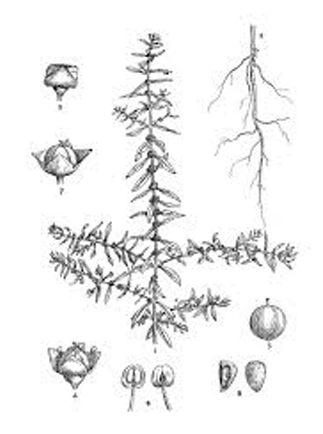
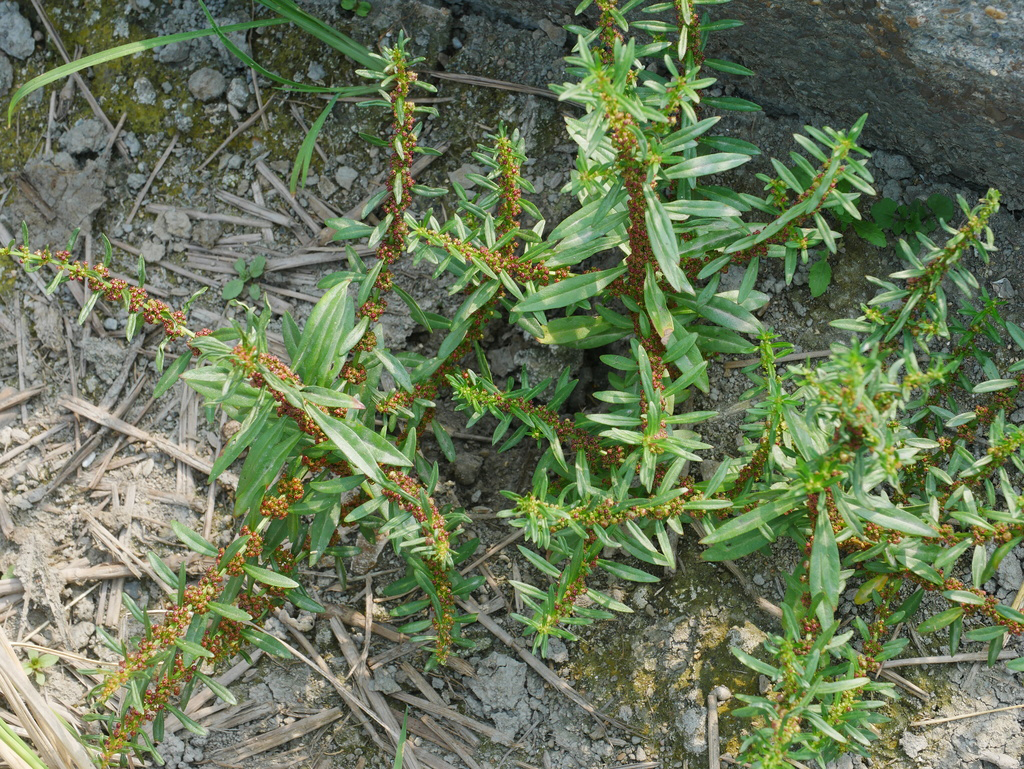
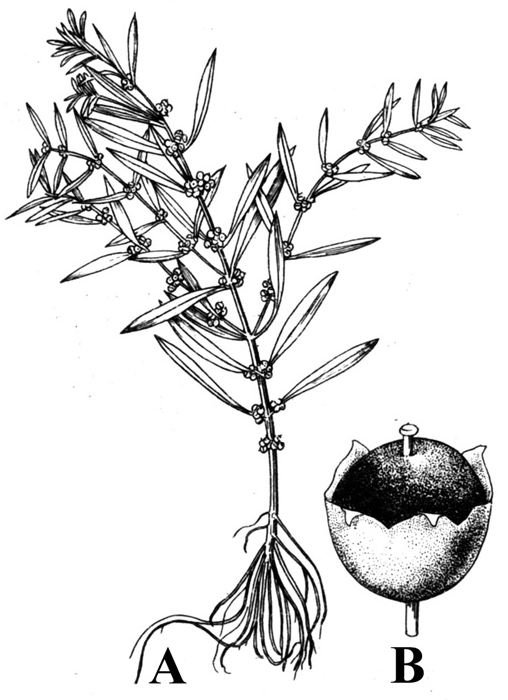
| Plant Growth Habit | Erect, branched, smooth, slender, annual, more or less purplish herb |
| Growing Climates | Prefers wetlands, such as marshes, pond, ditches, puddle, wet places, streams, swamps, riverbanks, and can also grow in shallow water bodies |
| Soil | Can also grow in soil, but it prefers to be partially submerged in water |
| Plant Size | 10 – 50 cm tall with occasional specimens to 100 cm |
| Root | Roots aren’t very strong. The roots of the plant are small, thin, and flexible |
| Stem | Somewhat 4-angled, thin, slightly woody, reddish-brown and flexible |
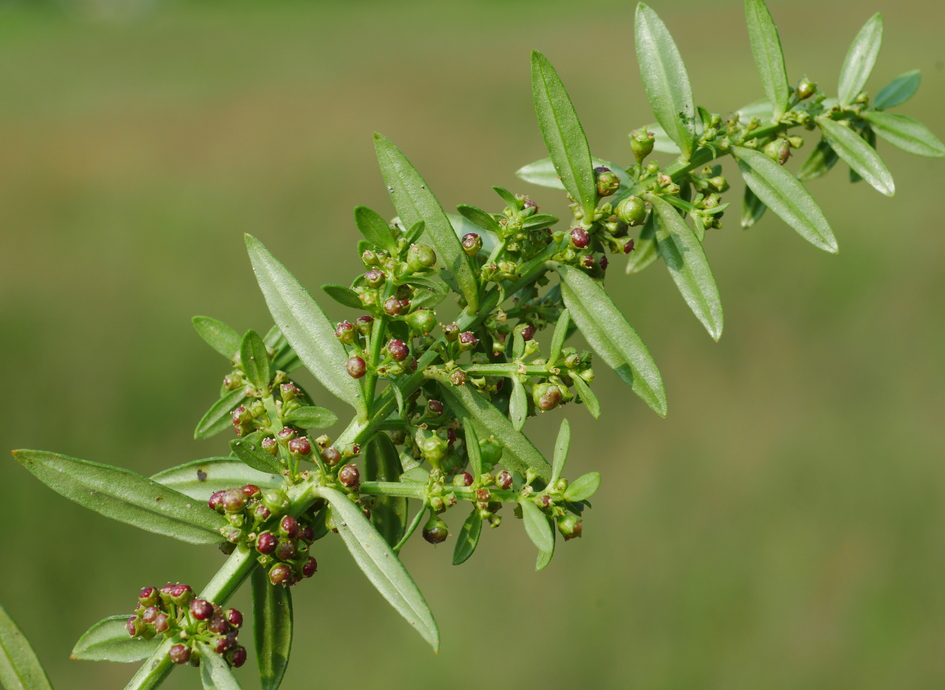
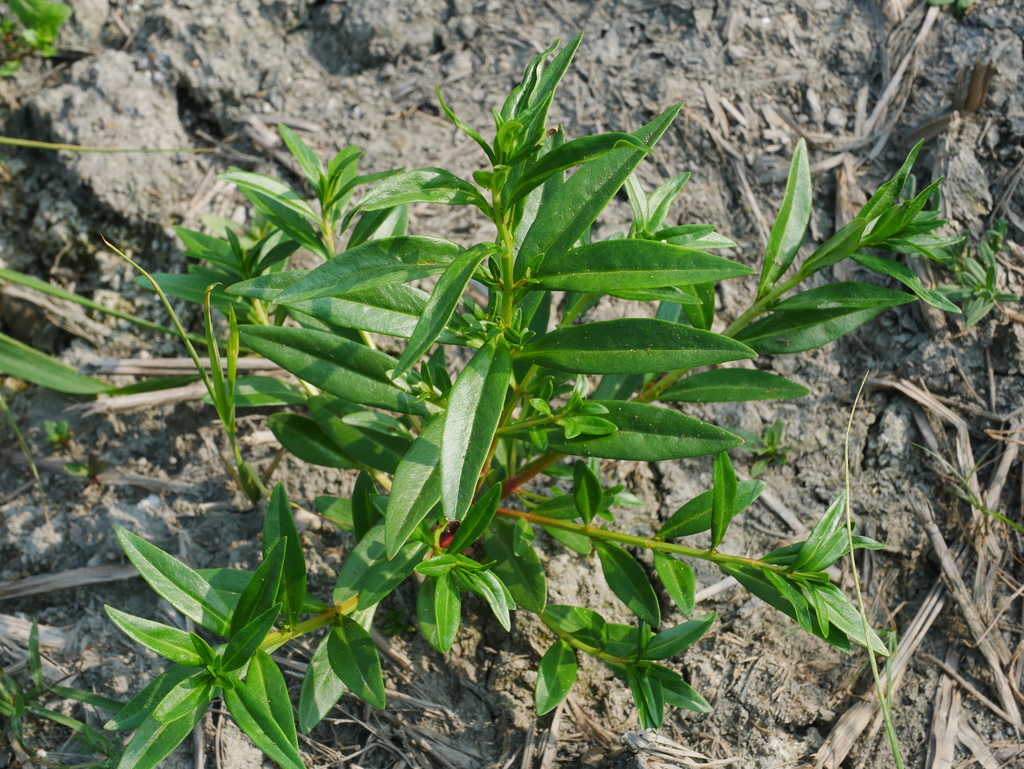
| Leaf | Oblong, oblanceolate, or narrowly elliptic, about 3.5 centimeters long, those on the branches very numerous, small, 1 to 1.5 centimeters long, with narrowed base and pointed or somewhat rounded tip |
| Flowering season | August to October |
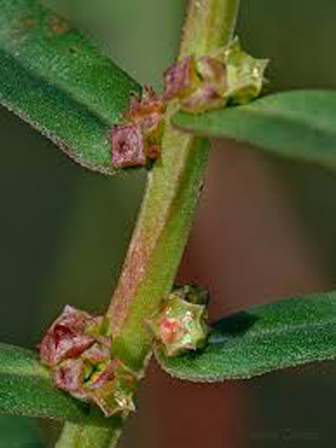
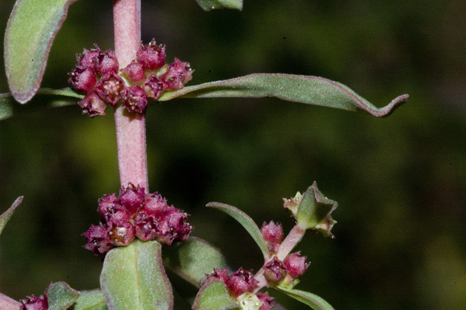
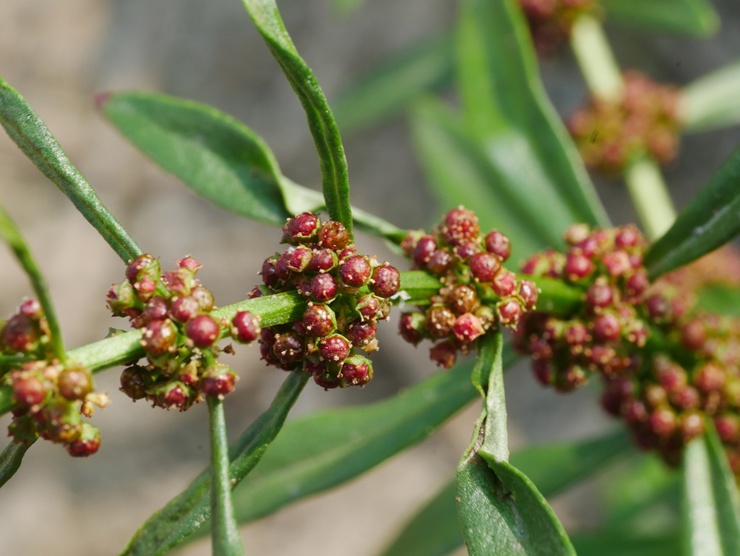
| Flower | Plant produces small, reddish-pink flowers that are arranged in clusters at the tip of the stem. |
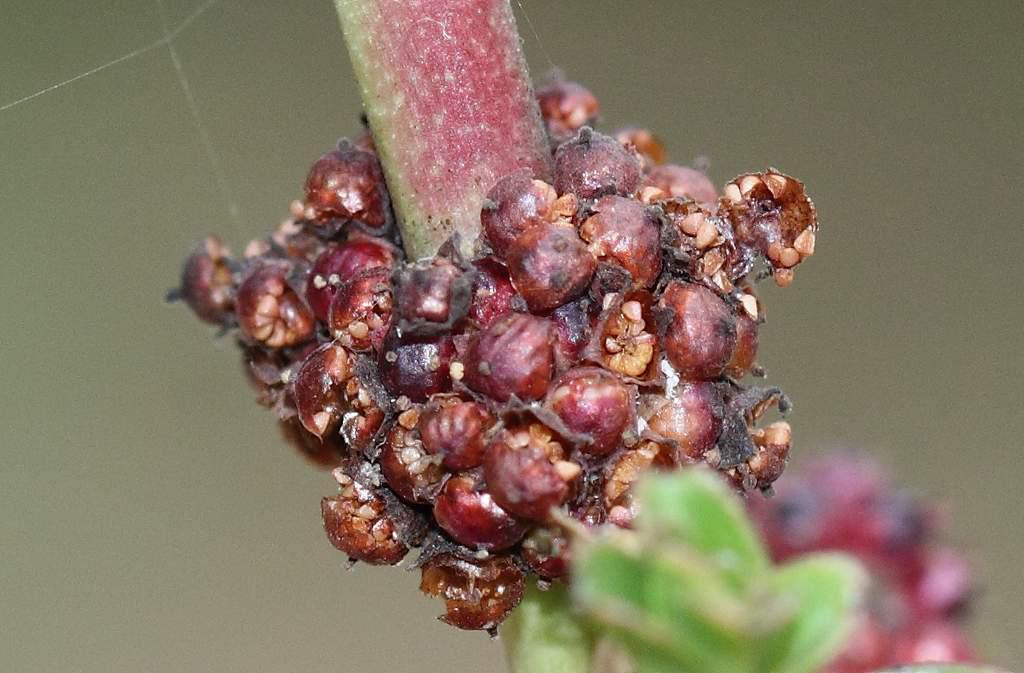
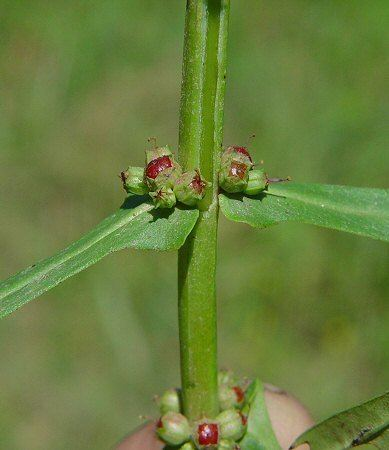
| Fruit Shape & Size | Capsules are nearly spherical, depressed, about 1.2 millimeters in diameter, purple, and irregularly circumsciss above the middle. Seeds are black. |
| Fruit Color | Initially green, but as they age, they turn brown |
| Seed | Super-hemisheric, numerous, small, semi-ovoid to obovoid, 0.3-1.0x 0.2mm and dark brown color |
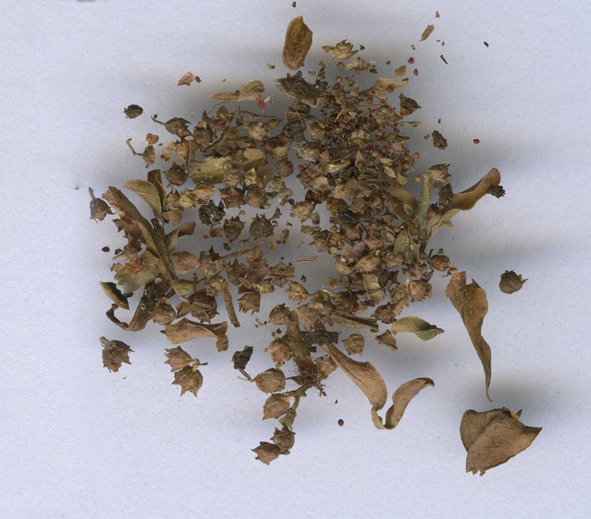
| Flavor/Aroma | Earthy scent when crushed |
| Taste | Pungent, bitter |
| Plant Parts Used | Leaf |
| Propagation | By stem cuttings or by replanting the side shoots |
| Season | September to December |
| Health benefits |
|
Plant Description
Blistering Ammannia is a unique, purple-colored annual plant that can grow up to 100 cm tall, though it usually stays between 10 and 50 cm tall. This thin plant grows best in wet areas like marshes, ponds, ditches, and streams. It can also do well in shallow amounts of water. It can grow in dirt, but it does best when it is partly covered by water. The plant’s roots aren’t very well-developed, and the stems are thin, slightly woody, reddish-brown, bendable, and have a shape that looks like four angles. This plant is interesting because it can make a lot of spongy aerenchymatous phellem on roots that are underwater. The stem doesn’t have septate fibers, and young stalks are green and square. This interesting plant is considered rare in Israel, but it grows everywhere else and is common, so the IUCN says it is of “Least Concern.”
Roots
Blistering Ammannia is a water plant that mostly lives off of its stems and leaves because its roots aren’t very strong. The roots of the plant are small, thin, and flexible. They hold the plant in place and take in nutrients from the water. Most of the time, these thin roots start at the base of the stem and grow down into the soil, making a small mat-like structure. The main job of these roots is to keep the plant steady when it is in water. As an aquatic plant, it gets most of its nutrients from the water through its roots and leaves, which soak up dissolved nutrients. So, the roots don’t do much to help the plant take in nutrients. Even though Blistering Ammannia only has a few roots, it is still able to live and grow in water, which shows how well it can change and be resilient.
Stems
Blistering Ammannia has a straight, cylindrical stem that can grow up to 60 cm tall. It grows branches and is smooth and green, with a few tiny hairs on the younger parts. The bark on the stem is thin and easy to peel off. But it’s important to remember that a broken or damaged stem can be dangerous. When this happens, the plant lets out a clear, watery liquid that can irritate and burn the skin. Because of this, the plant is often called “Blistering Ammannia,” which is a nickname for it. So, it’s important to be careful with this plant and not touch any broken or damaged parts of the stem, which could cause skin irritation or harm.
Leaves
Blistering Ammannia has small, narrow, long leaves that can grow up to 3 centimeters long and 1 centimeter wide. These leaves are in pairs on opposite sides of the stem, and the tips of each leaf are pointy. The color of the leaves can change based on how the plant grows, but most are bright green and some have a reddish tint. The leaves are smooth and shiny, which adds to the beauty of the plant as a whole.
At the base of each leaf of Blistering Ammannia, there are small, reddish-brown extensions that look like ears. These are called auricles. These protrusions can be seen with the naked eye and are a good way to tell this plant apart from other watery plants. Blistering Ammannia is a unique aquatic plant that will add beauty and interest to any tank or water garden with its thin, long leaves and unusual ears.
Flowers
Blistering Ammannia has tiny, unremarkable flowers that are only a few millimeters across. Most of the time, these flowers grow in groups at the end of the stems or in the spaces between the leaves. They are surrounded by small green bracts. Each flower has four or five bright pink or deep red petals that are grouped in a star shape and look a little bit wrinkled. The flowers also have a single pistil in the middle and several pink or red stems. Every flower only lasts a few days before it starts to die.
The plant flowers from late summer to early fall, and it might keep doing so as long as the growing conditions are good. Even though the flowers aren’t very showy, they do add a nice splash of color to the plant as a whole. More importantly, the flowers are necessary for the plant to reproduce because they are where fertilization and seed making happen. Blistering Ammannia is self-fertile, which means it can make good seeds without needing to be pollinated by another plant. So, even though they are small and don’t looks like much, this plant’s flowers are an important part of its life cycle.
Fruits
Blistering Ammannia makes small shells that are about 2-3 mm long and have an oval shape. When they are young, these shells are green, but as they age, they turn brown. The small bumps on the capsule give it a blistered look. This is where the popular name of the plant comes from. When the shell is ready, it splits open along four seams, letting the small brown seeds inside out. The water spreads these seeds, which can go long distances. The plant usually makes a lot of capsules that grow in groups on the roots.
Overall, the fruit of the Blistering Ammannia is one of the most interesting and unique parts of this watery plant. Because of how it looks and what it can do for you, it is a very important plant in traditional African medicine. Blistering Ammannia is a standout plant that is sure to catch the eye and add interest to any aquatic setting with its unusual seeds and blistered capsules.
Seeds
The seeds of the Blistering Ammannia are small, cylinder-shaped, and brown. They are about 1–2 mm long. The soft seed inside is protected by a hard, smooth seed coat. The seeds are made in small pods that grow on the plant’s stem. Most of the time, the plant is spread by taking the mature seeds out of the capsules and planting them in a wet, nutrient-rich medium. With the right conditions, the seeds will sprout and grow into healthy plants that can add beauty and interest to any aquatic setting.
Traditional uses and extract preparations
| S.N | Geographical region/State | Tribes/Village | Plant Parts/Preparations | Ethno-medicinal Uses |
|
1. |
Orissa | Jhara, Keuta, Dhivara | 5-6 Shoots are grinded with 7 fruits of Piper nigrum, the mixture applied to cure ring worm with in half to one hour. | Ringworm |
| Orissa Eastern ghat region) | Kutia Kandha | Leaf juice with honey in empty stomach. Plant leaves with common salt was also used to cure. | Typhoid Skin disease ring worm, | |
| 2. | Western ghats | Kanikkars | 10 gm. mixed with citrus aurantifolia single juice applied 2 times a day for a week. | Eczema |
|
3. |
Andra Pradesh |
Sugali | Oral administration of 20g whole plant powder for every four hours with hot cow milk works against Bungarus fasciatus (banded krait) bite. | Snake bite |
| Chenchus, Yerukulas and Yanadis or Irulas | A.baccifera and Andrographis paniculata leaf powder in equal quantities administered orally for every 1 hour up to 10 min works against Scorpion sting | Scorpion Sting | ||
| 4. | Kerala | Muthuvas | Leaf Juice | Poisonous bites |
|
5. |
North- west Himalaya |
Gujjars and Bhotiyas |
The decoction prepared from 10g of fresh leaves with 10g of Cyperus rotundus roots and 5g of fresh ginger is used. | Intermittent fever |
| Whole plant is burned and ashes are mixed with til oil and the ashes of whole Skin plant mixed with til oil.
|
Skin Eruptions | |||
| Leaf infusion with warm water | Decrease sexual desire in axon | |||
| 6. | Gujarat | Maher | Two spoonful decoction of entire plant is taken orally twice a day for a week. | Gonorrhea |
| 7.
|
Rajasthan Shekhawati | Decoction of whole plant is taken twice a day | Fever | |
| Leaf paste and inflorescence to skin | Itching | |||
| 8. | Jaipur | Santal Kantabania | Leaves bruised and applied externally | Ringworm, parasitic skin infection |
| 9. | Benin | Bariba and Wama ethnic groups | Leaves | Jaundice, fever, malaria, eliminate blood clots |
Health benefits of Blistering Ammannia
Blistering Ammannia is a plant that is known to be good for your health. It comes from warm and subtropical parts of Africa and Asia and has been used as medicine for hundreds of years. Here are some of the health benefits of Blistering Ammannia:
1. Anti-inflammatory properties
Blistering Ammannia is used to treat a wide range of inflammatory diseases, such as arthritis, asthma, and skin inflammations, because it has anti-inflammatory properties.
2. Wound healing
Blistering Ammannia has been used for years to treat wounds and cuts because it speeds up mending and keeps infections from happening.
3. Anti-fungal properties
Research has shown that Blistering Ammannia has anti-fungal qualities, which makes it a good natural way to treat fungal infections like ringworm.
4. Anti-bacterial properties
Researchers have also found that Blistering Ammannia has antibacterial qualities that make it useful for treating bacterial infections like urinary tract infections.
5. Pain relief
It has been found that blistering ammannia has analgesic qualities, which means it can help relieve pain.
6. Gastrointestinal issues
Because it is astringent, blistering ammannia has been used for a long time to treat stomach problems like diarrhea and dysentery.
7. Anti-cancer properties
It has been shown that the plant has anti-cancer properties because it can stop harmful cells from multiplying.
8. Treatment of skin disorders
People think that Blistering Ammannia has properties that can reduce inflammation and fight microorganisms. This makes it useful for treating eczema, psoriasis, and acne, among other skin problems.
9. Management of respiratory problems
People think that Blistering Ammannia has bronchodilator qualities, which could help treat lung diseases like asthma and bronchitis.
10. Control bleeding
People think that the plant has blood-clotting qualities that can stop wounds from bleeding.
11. Treatment of urinary disorders
Blistering Ammannia has been used for a long time to treat problems with the urinary system, such as infections and kidney stones.
Traditional uses and benefits of Blistering Ammannia
- The bitter plant can help with digestive problems like biliousness, indigestion, stomach pain, constipation, and too much flatulence.
- The plant has antibacterial, antifungal, and anti-inflammatory qualities that can help treat skin infections, wounds, and inflammation.
- It is also known for having anti-diabetic qualities that may help control blood sugar levels.
- People have also used the plant to treat fever, diarrhea, and lung illnesses.
- It has been used in medicine for a long time to treat skin diseases, fever, and stomach problems, among other things.
- In traditional medicine, it has been used to treat malaria, fever, diarrhea, dysentery, hepatitis, and respiratory illnesses, among other things.
- People have also used the plant’s stem to treat fever and other health problems.
- It can be used instead of catharides when making burning plasters.
- In India, it is put on the skin for 30 minutes or more to make the skin boil.
- Leaves or ashes of the plant is mixed with oil and applied to herpetic eruptions.
- Freshly crushed leaves are used to treat skin diseases, ringworm, and skin illnesses caused by parasites.
- To treat typhoid fever, a blend of leaf juice and honey is given to a person when they are hungry.
- Skin diseases like pruritus, scabies, and ringworm can be treated with a paste made from the leaves and regular salt.
- In Tamil Nadu, the seeds are used to treat fever and pain from rheumatism.
- It is used to help heal wounds in India and China.
- In China, it is often used in traditional plant medicines to treat things like female infertility, hemorrhoids, gastro-enteropathy, urethritis, abscesses, spinal disease, the common cold, skin diseases, and many others.
- The Santal tribe in Bangladesh’s Naogaon district uses ash from the whole plant mixed with mustard oil to treat skin diseases and pain from rheumatism.
- Leaves can help get rid of mucus in the lungs and airways.
- Ayurvedic experts say that the plant extract can help treat tuberculosis and typhoid fever.
- When the juice of the plant is mixed with ginger powder, it can help cure fevers.
- The tribes’ people think that the herb is a good cure for all blood diseases.
- In India, the leaves are used to make animals less interested in sexual activity.
- The plant is used to treat fevers, malaria, and jaundice, and to stop blood clots from forming.
- The root is brewed into a decoction and used to treat urinary stones and difficulty in urination.
- Dried leaves are used to treat diseases of the genital area, and they are also a part of mixtures that people use to chew betel leaves.
- The syphilis can be treated with the oral injection.
Different uses of Blistering Ammannia
- Aquatic ornamental plant: Because it has pretty pink or purple flowers and thin leaves, Blistering Ammannia is often used in water gardens and ponds.
- Water quality improvement: Blistering Ammannia is known to take in extra nutrients like nitrates and phosphates from the water. This stops algae from growing and makes the water better. Heavy metals can be taken out of polluted water with the help of Ammannia baccifera.
- Medicinal properties: Different parts of the Blistering Ammannia plant are used in traditional medicine to treat stomachaches, diarrhea, and fever. The plant’s leaves, stems, and sap are often used in herbal medicines.
- Natural habitat for aquatic animals: Small fish and snails live in Blistering Ammannia because it is a natural home for them.
- Soil conservation: The roots of the plant help stop soil erosion in water parks and other places where water is present because they grow quickly and stop erosion.
- Livestock feed: People know that the plant is a good source of food for animals, especially in dry places where there may not be much else to eat.
- Biological indicator: Blistering Ammannia can be used to tell how good the water is from a biological point of view. It can tell when the water quality is getting worse because it is sensitive to changes in the pH and chemical levels of the water.
- Aquatic weed control: Blistering Ammannia is a nice plant for aquariums and water parks, but it can take over natural bodies of water if it is not kept in check. When this happens, it can be used as a natural way to get rid of other marine weeds by outcompeting them for food.
Culinary Uses
- In some parts of India, leaves are used to make a dish called “tambdi bhaji,” which is a type of stir-fry that usually includes a range of local vegetables and spices.
- The leaves add flavor and structure to the dish. They are said to taste a little bit bitter.
- In some places of Africa, the leaves and stems are sometimes cooked and eaten as a vegetable. They can also be used to fill savory pastries.
- Sometimes the young leaves are cooked and eaten as a veggie.
Other Facts
- The plant is sometimes grown in yards and parks as an ornamental plant because its red berries and leaves look nice.
- It can help get rid of pollutants in soil and water.
- Some people think it kills insects, which could make it useful for pest control.
- It is a beautiful plant that can grow in both ponds and tanks.
- The plant can also grow in dirt, but it grows best when its roots are partly in water.
References:
https://www.itis.gov/servlet/SingleRpt/SingleRpt?search_topic=TSN&search_value=182100#null
http://www.hear.org/pier/species/ammannia_baccifera.htm
https://www.cabidigitallibrary.org/doi/10.1079/cabicompendium.4884
https://gd.eppo.int/taxon/AMMBA
http://www.stuartxchange.com/Bias-pugo.html
http://www.theplantlist.org/tpl/record/kew-2633666
https://indiabiodiversity.org/species/show/228716#distribution
https://en.wikipedia.org/wiki/Ammannia_baccifera
http://www.flowersofindia.net/catalog/slides/Blistering%20Ammannia.html
https://www.efloraofgandhinagar.in/herb/ammannia-baccifera
https://tropical.theferns.info/viewtropical.php?id=Ammannia+baccifera
https://uses.plantnet-project.org/en/Ammannia_baccifera_(PROSEA)#Uses
https://plants.usda.gov/home/plantProfile?symbol=AMBA3