

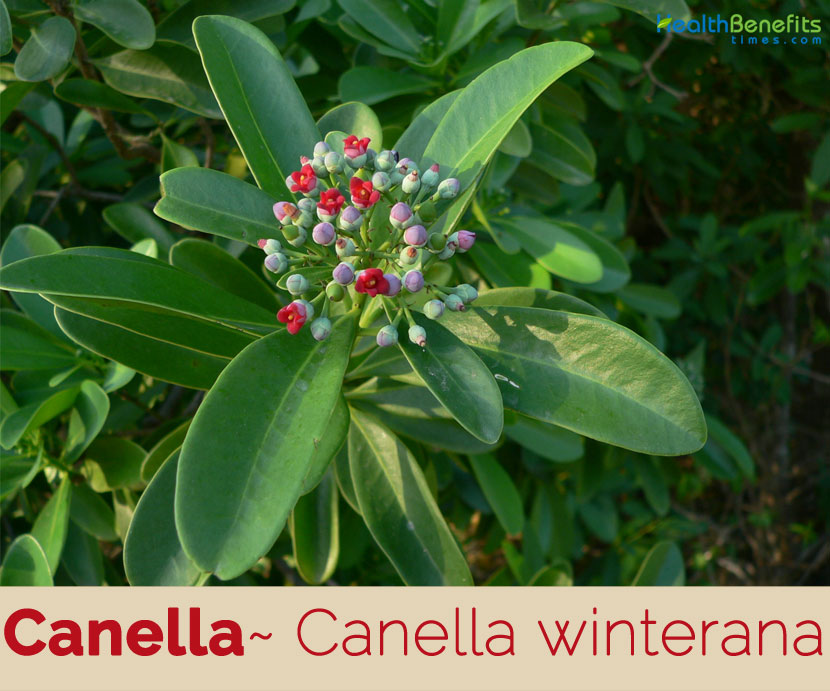
| Canella Quick Facts | |
|---|---|
| Name: | Canella |
| Scientific Name: | Canella winterana |
| Origin | Caribbean from the Florida Keys to Barbados |
| Colors | Green when young turning to purplish red as they mature |
| Shapes | Berry that is about 3/8 inch in diameter. The seeds are black |
| Taste | Acrid |
| Health benefits | Cures Cancer, Anti-Fungal Action, Regulate Sugar Levels, Relieves Pain, Heals Arthritis, Good for Hair, Healthy Heart, Heals Wounds, Treats Headaches, Aids in Digestion, Prevent Neurological Disorders, Heals Cold, Beneficial In Menstruation, Freshen Up Your Breath |
| Name | Canella |
|---|---|
| Scientific Name | Canella winteranam |
| Native | Caribbean from the Florida Keys to Barbados |
| Common Names | Barbasco, Canella, Cinnamon-bark, Wild cinnamon, pepper cinnamon, cillament bush, bastard cinnamon, Bahama white wood, White Wood Bark, Pepper Cinnamon, Caneel, Winter Cinnamon |
| Name in Other Languages | English: Barbasco, Canella, Cinnamon-bark, Wild cinnamon, pepper cinnamon, cillament bush, bastard cinnamon, Bahama white wood, Cinnamon-bark, cúrbana, malambo, palo malambo Español: Canelero de Cuba Finnish: Kanellapuu French: Cannelle blanche, kannel a pis, bois cannelle German: Weißer Zimtrindenbaum, Weißer Kaneelbaum Malayalam: Kanella (കനെല്ല) Polish: Korzybiel biały Russian: Kanella (Канелла) Spanish: Curbana, Macambo, canela, barbasco Swedish: Vit kanel |
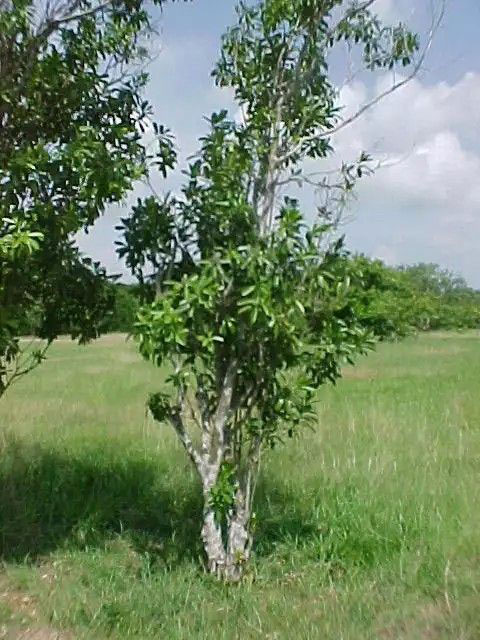
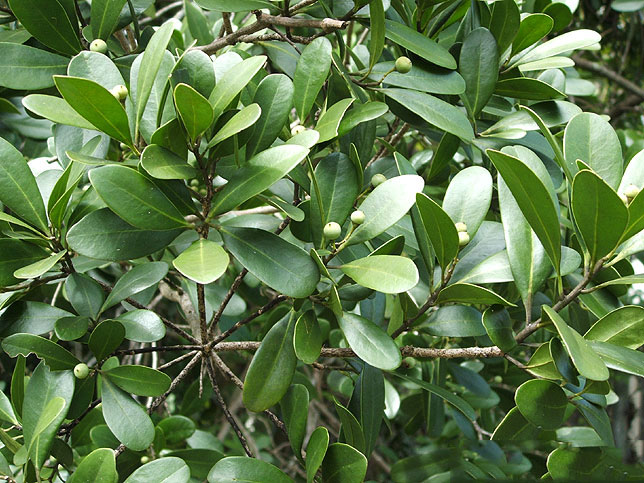
| Plant Growth Habit | Attractive, small to medium-sized, very slow-growing evergreen shrub or tree |
| Growing Climates | Coastal thickets, hammocks, coastal swamps, scrubland, woodland |
| Soil | Likes moist, well drained, rocky soil, moderately tolerant to salt and drought |
| Plant Size | 25 to 30 feet, with a straight trunk eight to 10 inches in diameter |
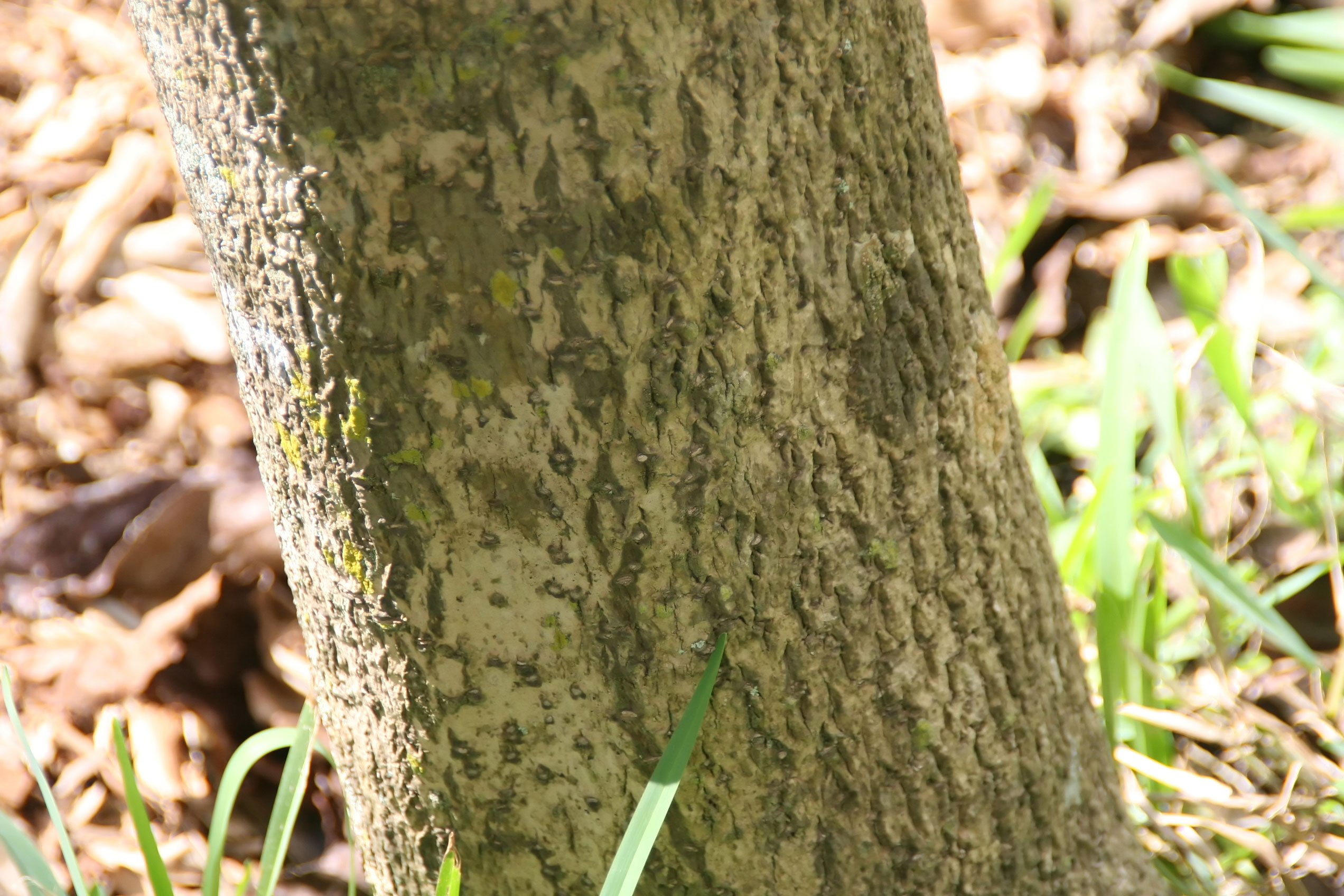
| Bark | Thin scaly bark, light gray in color, sometimes fissured and highly aromatic |
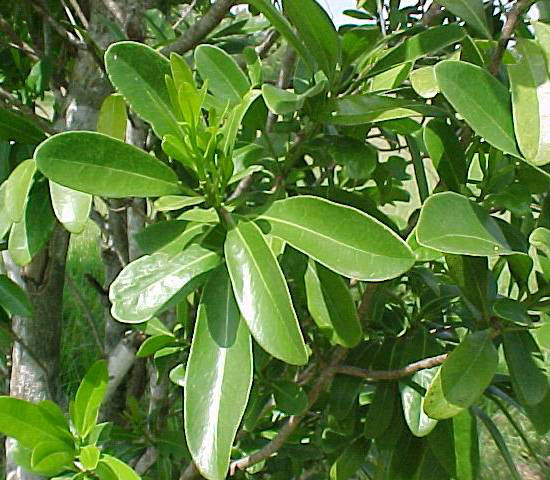
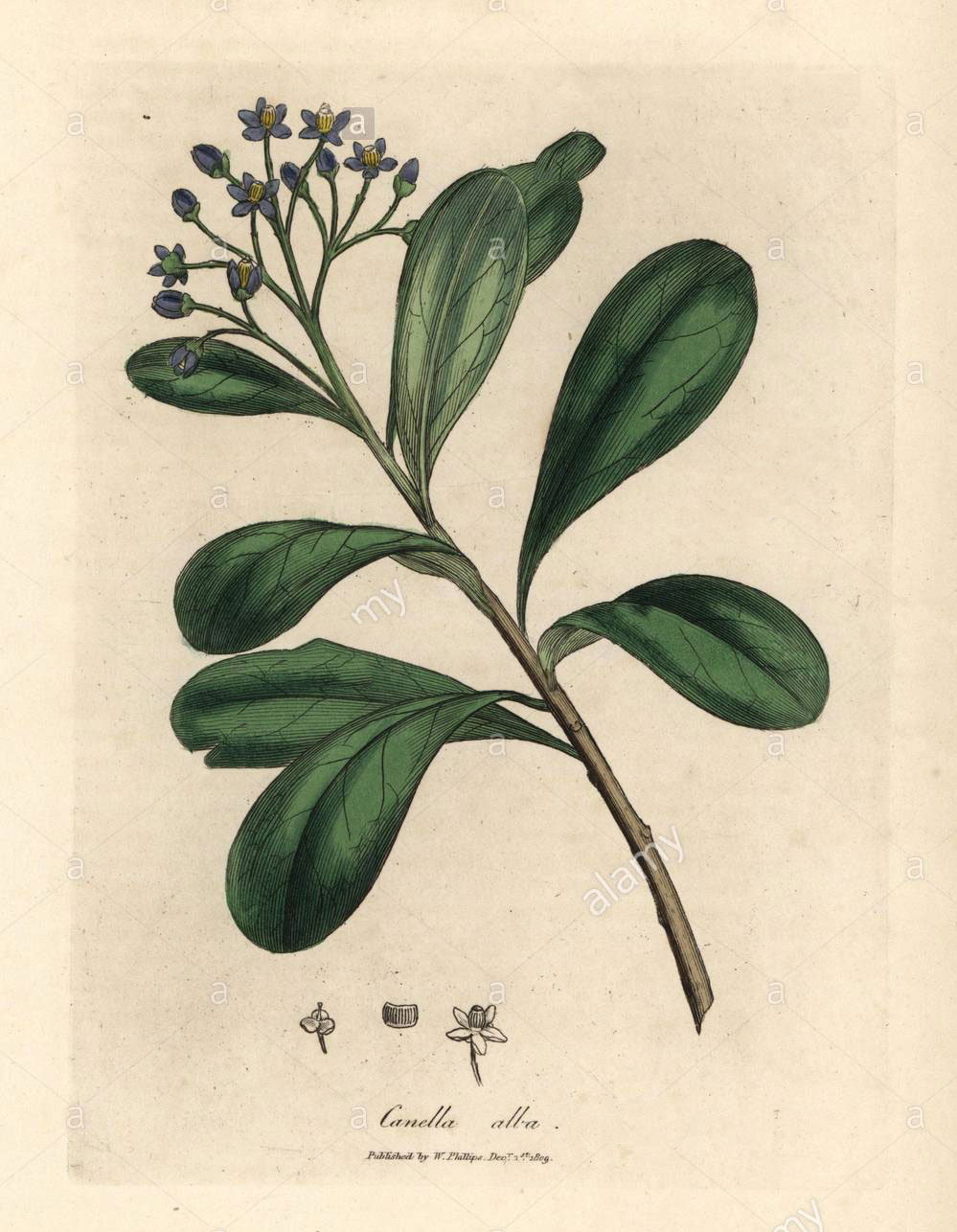
| Leaf | Dark green, lustrous, leathery and borne alternately or clustered toward the branch tips. The leaves are 10 cm in length, 4 cm in width, obovate to oblanceolate in shape |
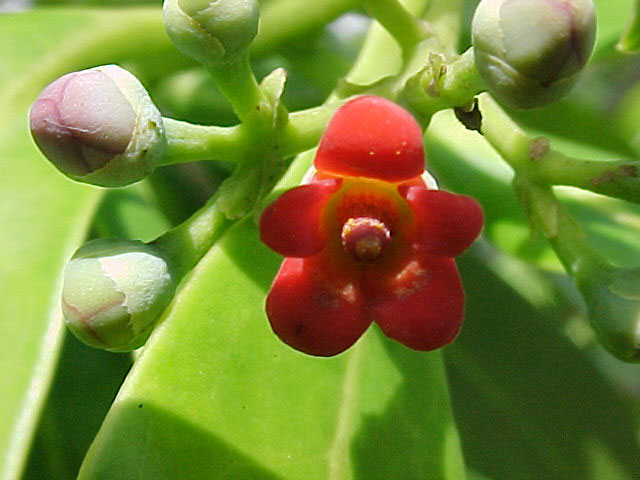
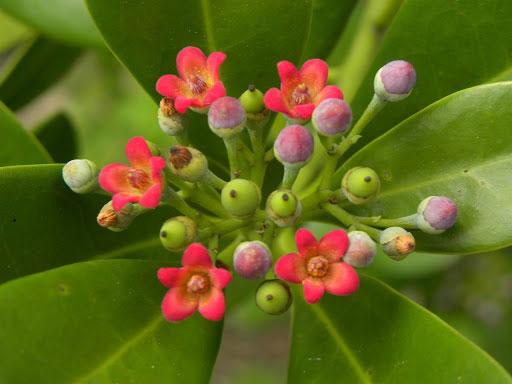
| Flower | Complete, perfect, actinomorphic flowers are arranged in panicles. The calyx has 3 greenish sepals. The corolla has 5 bright red petals with a yellow base. There are numerous stamens forming a staminal column that is red turning yellow with age. The ovary is superior with a single locule |
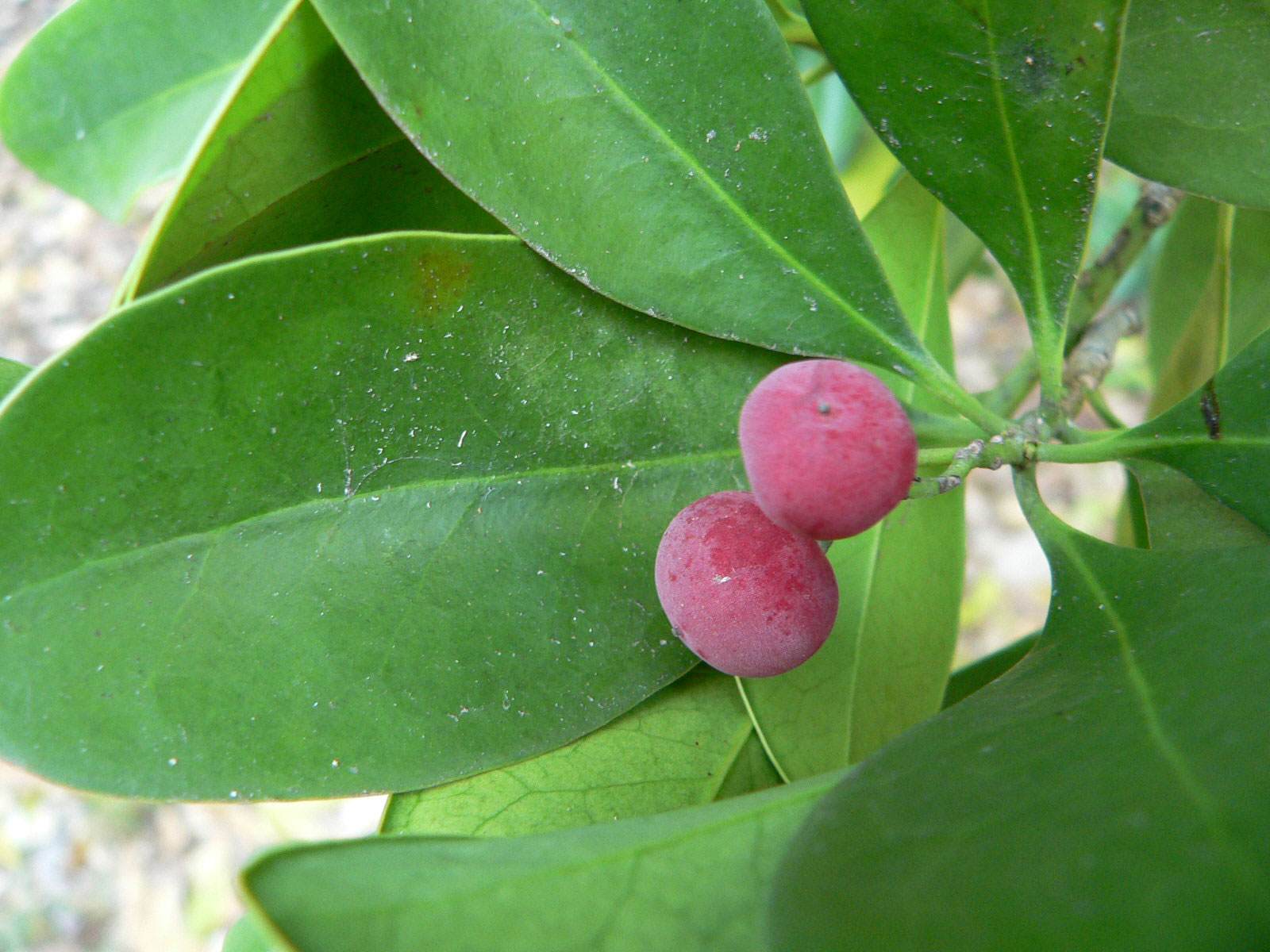
| Fruit Shape & Size | Berry that is about 3/8 inch in diameter |
| Fruit Color | Green when young turning to purplish red as they mature |
| Propagation | By Seed |
| Plant Parts Used | Bark |
| Seed | Seeds are black |
| Taste | Acrid |
| Season | March and April |
| Health Benefits |
|
Leaves
Leaves are dark green, lustrous, leathery and borne alternately or clustered toward the branch tips. The leaves are 10 cm in length, 4 cm in width, obovate to oblanceolate in shape with an obtuse leaf apex and an entire leaf margin. The leaves and bark are aromatic.
| Leaf arrangement | Alternate |
| Leaf type | Simple |
| Leaf margin | Entire |
| Leaf shape | Obovate |
| Leaf venation | None, or difficult to see |
| Leaf type and persistence | Evergreen |
| Leaf blade length | 3 to 5 inches |
| Leaf color | Dark green and shiny on top, paler green underneath |
| Fall color | No fall color change |
| Fall characteristic | Not showy |
Flowers
The complete, perfect, actinomorphic flowers are arranged in panicles. Blooms are small, about 1/2 inch wide. The calyx has 3 greenish sepals. The corolla has 5 bright red petals with a yellow base. There are numerous stamens forming a staminal column that is red turning yellow with age. The ovary is superior with a single locule. Flowers are mildly fragrant and rich in nectar, attracting insects, including wasps.
| Flower color | Red |
| Flower characteristic | Lightly fragrant; emerges in clusters on 1” long corymbs |
| Flowering | Primarily spring to late summer, but also year-round |
Fruits
Fertile flowers are followed by a berry that is about 3/8 inch in diameter. Fruits are initially green turning to purplish red at maturity with black seeds which are used for propagation. The fruits are soft and fleshy and are eaten by several birds. The bark, fruits and leaves are used in herbal medicine.
| Fruit shape | Round |
| Fruit length | ¼ inch |
| Fruit cover | Fleshy berry |
| Fruit color | Turns from green to red with maturity |
| Fruit characteristic | Attracts birds; aromatic |
Health Benefits of Canella
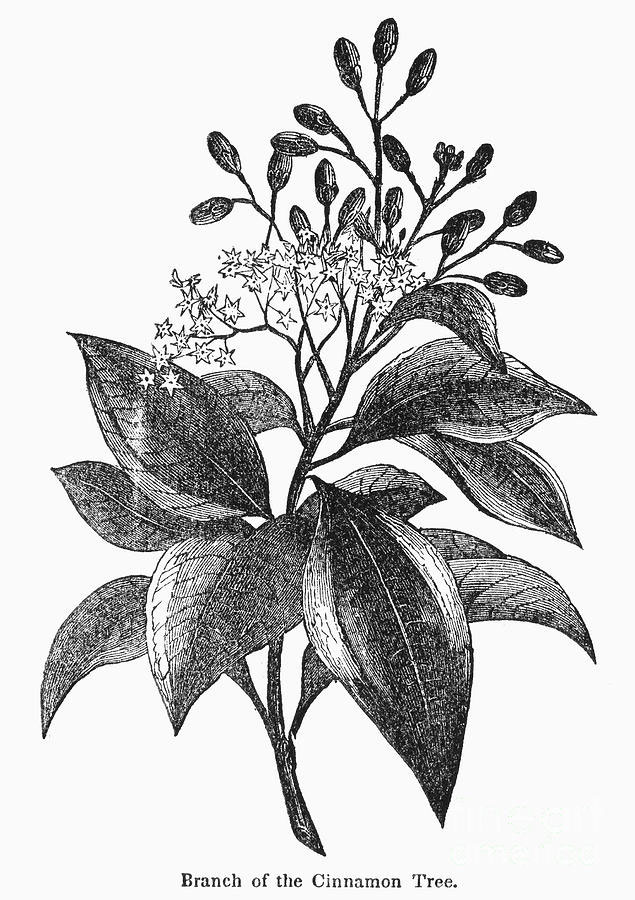
Canella is also popularly called as cinnamon bark. This herb has low amounts of sodium, saturated fats and cholesterol. It has plenty of vitamins and minerals such as manganese, fiber and calcium. Its rich aroma has been used by various beauty and health industries in production of herbal products. Its anti-fungal and anti-bacterial property is utilized in skin and hair care products. Listed below are some of the popular health benefits of using canella
1. Cures Cancer
Canella is an effective cure for wide range of cancer. According to the research conducted on canella in the past it has been discovered that this herb helps cancer patients by lowering the multiplying of cancer prone cells in the body. Consumption of this herb helps to lowers the signs of cancer and assists in quick recovery of people who have undergone or undergoing radiation therapy and chemotherapy.
2. Anti-Fungal Action
Canella is anti-fungal in nature. Its bark is used in anti-dandruff shampoos to get rid of those irritating white flakes naturally and efficiently.
3. Regulate Sugar Levels
Canella is significant in reducing LDL cholesterol in the blood efficiently. It is devoid of cholesterol so keeps blood sugar levels in right amounts in the body. It greatly reduces risky levels of LDL to promote a healthy heart and a fit body.
4. Relieves Pain
Canella is considered to be very beneficial for curing painful sensations in different parts of the body. The various parts of this herb are often used by homeopaths in the preparation of medicines that gives relief from pain. It is again used to treat pain arising due to arthritis.
5. Heals Arthritis
Arthritis is a disease that leads to pain and swelling in the body joints. This is a very common problem seen in people mainly in old age. Canella is proved to be a wonderful remedy to naturally and easily alleviate the difficult symptoms of arthritis. When canella powder is added in lukewarm water with honey and cinnamon it gives an effective relief from arthritic pain.
6. Good for Hair
Beneficial powder and concoctions made using this herb helps in improving the texture of skin and hair. When it is applied on the scalp it makes your hair smooth and radiant. Canella paste when applied on the skin gives a natural glow to it which is sure to grab compliments.
7. Healthy Heart
Canella is free from cholesterol and fat. In addition to this intake of canella along with honey protects heart from cardio vascular diseases such as heart attack etc.
8. Heals Wounds
Canella help in healing the wounds and limit the growth of malarial parasite efficiently. It is an anti-fungal agent. When applied on wounds in the form of paste, it removes several types of fungal infections.
9. Treats Headaches
Canella has a powerful aroma which when applied on the forehead gives quick and effective relief from headache. Also, its aromatic smell improves mood and calms your nerves.
10. Aids in Digestion
Canella leaves are found to be very helpful in boosting digestive system in the body. Tea made with the leaves of canella encourages healthy metabolism and digestion.
11. Prevent Neurological Disorders
Canella is proven to be useful in treating and preventing many of neurological disorders such as meningitis, Parkinson’s and Alzheimer’s disease. This nerve tonic is free from chemical and does not cause any side effects.
12. Heals Cold
Canella is best known for its warm and soothing nature. Its warmth is used to combat cold and flu symptoms. When it is used in the combination of ginger tea or honey then it makes a very powerful recipe to beat the cold.
13. Beneficial In Menstruation
Most of the women suffer from irregular periods, excessive bleeding and other difficult symptoms of menstruation. Consumption of canella helps in reducing the severity of these symptoms. This is the reason why it is known to be herbal remedy for PMS symptoms.
14. Freshen Up Your Breath
Chewing canella leaves or gargling with its essence helps in combating bad breath efficiently.
Traditional uses and benefits of Canella
- Bark is aromatic, stimulant, stomachic and tonic.
- Canella is cyto-toxic (kills cells), anti-fungal, and repels insects.
- The infusion is drunk both for its pleasant flavor and tonic effect.
- Canella is also used for stomach problems and indigestion.
- Crushed leaves can be used to numb the pain of toothaches by placing them near the tooth.
- Tonics of the bark are also used to treat gastrointestinal issues.
- Bark and berries are dried and crushed and used commercially as a spice.
- Bark has also been used to flavor tobacco.
Culinary Uses
- Inner bark, which has an aroma of cinnamon and cloves, is used locally as a substitute for cinnamon or as a condiment in its own right.
- The aromatic leaves are used as a flavoring.
Other Facts
- The plant is harvested from the wild for local use as a food flavoring and medicine.
- It is occasionally grown as an ornamental, valued especially for the numerous bright red berries it bears.
- The wood is very hard and very heavy.
- It has been used elsewhere for ploughs, poles, and beams.
- Stems and leaves are said to be toxic to chickens, and a repellent to cockroaches.
References:
https://www.itis.gov/servlet/SingleRpt/SingleRpt?search_topic=TSN&search_value=897265#null
https://www.cabi.org/isc/datasheet/11156
https://npgsweb.ars-grin.gov/gringlobal/taxonomydetail.aspx?id=8848
https://plants.usda.gov/core/profile?symbol=CAWI
https://edis.ifas.ufl.edu/fp101
https://en.wikipedia.org/wiki/Canella
http://tropical.theferns.info/viewtropical.php?id=Canella+winterana
http://www.theplantlist.org/tpl1.1/record/kew-2696452
https://gd.eppo.int/taxon/CBNAL
http://www.levypreserve.org/Plant-Listings/Canella-winterana