

| Hiptage (Helicopter Flower) Quick Facts | |
|---|---|
| Name: | Hiptage (Helicopter Flower) |
| Scientific Name: | Hiptage benghalensis |
| Origin | Eastern India, Sri Lanka, Burma (Myanmar), Indo-China, southern China, Taiwan, Thailand, Peninsular Malaysia, Sumatra, Java, the Lesser Sunda Islands, Borneo, the Philippines (Palawan) and Sulawesi |
| Colors | Initially green or reddish-green in color, but eventually turn pale brown when mature |
| Shapes | Three-winged samara about 2 to 6 cm long and one of them is usually slightly longer than the other two |
| Taste | Bitter, acrid, astringent |
| Health benefits | Support for scabies, rheumatism, asthma, leprosy, skin diseases, cough, cardiac debility, obesity, diabetes, biliousness, ulcers, jaundice and urethral discharges |
| Name | Hiptage (Helicopter Flower) |
|---|---|
| Scientific Name | Hiptage benghalensis |
| Native | Eastern India, Sri Lanka, Burma (Myanmar), Indo-China, southern China, Taiwan, Thailand, Peninsular Malaysia, Sumatra, Java, the Lesser Sunda Islands, Borneo, the Philippines (Palawan) and Sulawesi. It has been introduced in islands of the Pacific, where it is considered an aggressive invasive species |
| Common Names | Helicopter Flower, Adimurtte, Adirganti, Atimukta, Chandravalli, Haldavel, Kampti, Kamuka, Madhalata, Madhavi Lata, Madhavi, Madhumalati, Madmalati, Ragotpiti, Vasantduti |
| Name in Other Languages | Assamese: Madhabi lata, Madhoi lata, Madhoilota, Kerek lata Bengali: Madhobi lata (মাধবীলতা), Madhavi lata, Haldabel, Madhabilata Central Khmer: Krabei bei (ក្របីបី) Chinese: Feng zheng guo (风筝果), Hóng lóng (红龙), Yuènán fēngzhēng guǒ (越南风筝果), Fēngchē téng (风车藤) English: Hiptage, helicopter flower, clustered hipstage, Madhavi latha Finnish: Intiankolmisiipi French: Liana de cerf, Hiptage du bengale, Liane papillon, Liane rouge, liane de cerf German: Benghalenliane, Helikopterblume Gujarati: Ragathpitho, madavi lata Hindi: Madhavilata, Madhumalati, Kampti, Madhmalti, Aneta, maadhavee pushp (माधवी पुष्प), Madhavi Lata (माधवी लता), adimurtte, adirganti, atimukta, chandravalli, haldavel, kampti, kamuka, madhalata, madhavi, madhumalati, madmalati, ragotpiti, vasantduti Indonesian: Jaranan, Kakas, Areuy beurit Japanese: Hozakirunoo, Hozakisarunoo (ホザキサルノオ) Kannada: Mādhavīlate (ಮಾಧವೀಲತೆ), Madhvi, Madhavivasantadhuti, Madhavi (ಮಾಧವಿ), Vasantadooti (ವಸಂತದೂತಿ) Adirganti (ಅದಿರ್ಗಂತಿ), Adirganchi (ಅದಿರ್ಗಂಚಿ), Adirmutte (ಅದಿರ್ಮುತ್ತೆ), Kurukatti (ಕುರುಕತ್ತಿ) Malayalam: Mādhavi (മാധവി), Chittilakody, Njarambodal, Pongapoo, Seethambu, Sitampu Manipuri: Madhabi (মাধবী) Marathi: Madhumaalati, Halalwail Mauritius: liane de Cythère, liane de fleurs d’oranger, liane rouge Mizo: Raisentur Myanmar: Bein-nwe, nwe-nathan-gwin Nepali: Charpate laharo (चारपाते लहरो) Oriya: Boromali, gorunda Portuguese: Don-jorge Russian: Banistierija bienhaĺskaja (банистерия бенгальская) Sanskrit: Madhumadhavi, Madhavilata, Latamadhavi, Madhavi, Vasantaduti, Madhumadhavi (मधुमाधवी), Madhavilata (माधवीलता), Latamadhavi (लतामाधवी), Madhavi (माधवी), Vasantaduti (वसन्तदूती) Saudi Arabia: Liane papillon Sundanese: Areuy beurit Tamil: Kurukkathi (குருக்கத்தி), Karipakkukodi, Kurkatikodi, Vasantakaala Malligai (வசந்தகால மல்லிகை), Adigam Telugu: Madavatoge, Madhavi tige, Maadhavi, Kurukkathi Thai: Noraa (โนรา), Haen pik, Kamlang chang phuek Vietnamese: To manh Others: Mathavikodi |
| Plant Growth Habit | Large, perennial, woody, much-branched, straggling or climbing evergreen, vine-like shrub |
| Growing Climates | Open forests, secondary forest, forest edges, disturbed sites, along river banks in semi-evergreen and evergreen forests, in sacred groves, clearings, forest margins and on a wide range of soils |
| Plant Size | Can reach a height of 10-15 m |
| Stem | Young branches are greyish-green in color and have numerous tiny whitish raised spots (i.e. lenticels). Older stems are greyish-brown and can be quite woody in nature or twisted into very long and thick vines |
| Leaf | Simple leaves are oppositely arranged along the stems and borne on short stalks (i.e. petioles) up to 1 cm long. These leaves are relatively large about 6-20 cm long and 4-9 cm wide |
| Flower | The highly fragrant, pink to white flowers have a yellow throat, are strongly zygomorphic, 2-3 cm in diameter, borne in erect, pubescent, axillary racemes of 10-20 cm length |
| Fruit Shape & Size | Three-winged samara about 2 to 6 cm long and one of them is usually slightly longer than the other two |
| Fruit Color | Green or reddish-green in color, but eventually turn pale brown when mature |
| Taste | Bitter, acrid, astringent |
| Plant Parts Used | Bark, stem, leaves, flowers, seed |
| Propagation | By Seeds or cuttings |
| Precautions |
|
Plant Description
Hiptage (Helicopter Flower) is a large, perennial, woody, much-branched, straggling or climbing evergreen, vine-like shrub with white or yellowish hairs on the stem. The plant normally can reach a height of 10-15 m. The plant is found growing in open forests, secondary forest, forest edges, disturbed sites, along river banks in semi-evergreen and evergreen forests, in sacred groves, clearings, forest margins and on a wide range of soils. Its habitat is variable and prefers climates ranging from warm temperate to tropical. In Hawaii, where H. benghalensis is considered a weed, as it is in Australia, Mauritius and Réunion, it grows from sea level to 1,000 m (3,281 ft). H. benghalensis is cultivated for its white-pink scented flowers.
Stems
The tips of its branches are usually greenish in color and covered in tiny whitish or yellowish coloured hairs. Young branches are greyish-green in color and have numerous tiny whitish raised spots (i.e. lenticels). Older stems are greyish-brown and can be quite woody in nature or twisted into very long and thick vines (i.e. lianas).
Leaves
The simple leaves are oppositely arranged along the stems and borne on short stalks (i.e. petioles) up to 1 cm long. These leaves are relatively large about 6-20 cm long and 4-9 cm wide and are usually somewhat elongated in shape (i.e. lanceolate to ovate-lanceolate), and have long-pointed tips (i.e. acute or acuminate apices). Their upper surfaces are bright green and somewhat glossy in appearance, while their undersides are somewhat duller and paler in color.
Flowers
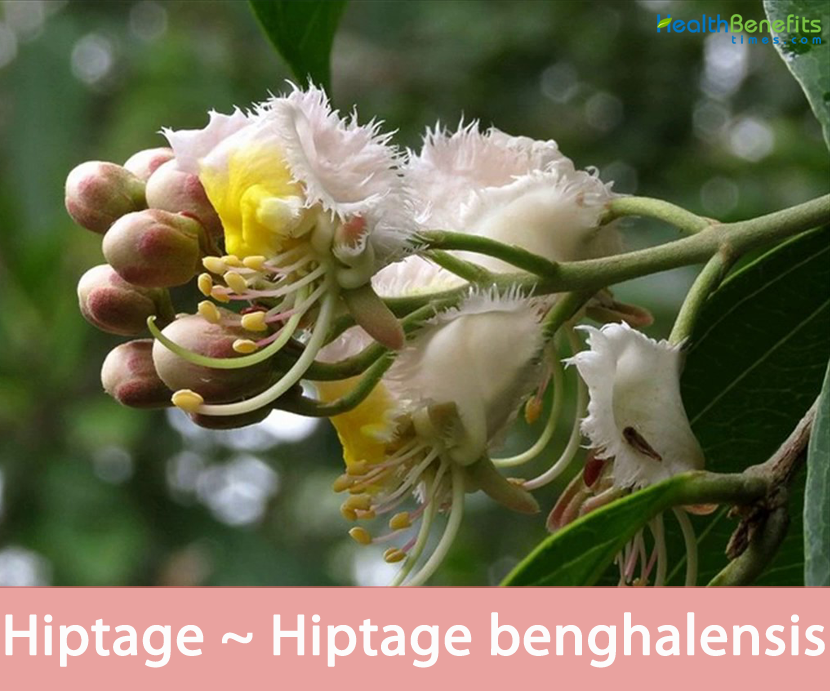
Flowers are fragrant and borne in clusters in the forks of the upper leaves (i.e. in axillary racemes) or at the tips of the branches (i.e. in terminal racemes). Each flower cluster consists of 10-30 flowers and can be up to 20 cm long. The individual flowers are borne on short stalks (i.e. pedicels) 15-25 mm long, which have some small bracts on them (each about 3 mm long). The flowers have five sepals about 8 mm long that are partially fused together at their bases (i.e. into a calyx tube) and there is a reddish-brown colored gland about 4 mm long near the base of one of these sepals. They also have five rounded (i.e. sub-orbicular to obovate) petals (1-2 cm long) with fringed margins. These petals are white, cream or tinged with pink, but one is slightly larger and has a bright yellow center.
Each flower also has ten stamens that are arranged in two rows. Nine of these stamens have relatively short stalks (i.e. filaments) about 5 mm long, while the other one is much longer (10-12 mm long) and is almost as long as the style (13-15 mm long). Flowering may occur throughout the year, but is most abundant during spring in south-eastern Queensland. Flowers have very interesting shape and look like a decorative accessory, with fluffy-toothed edges. The fragrance is very strong and pleasant, resembles fruity perfume. Make sure to provide lots of light for profuse blooming.
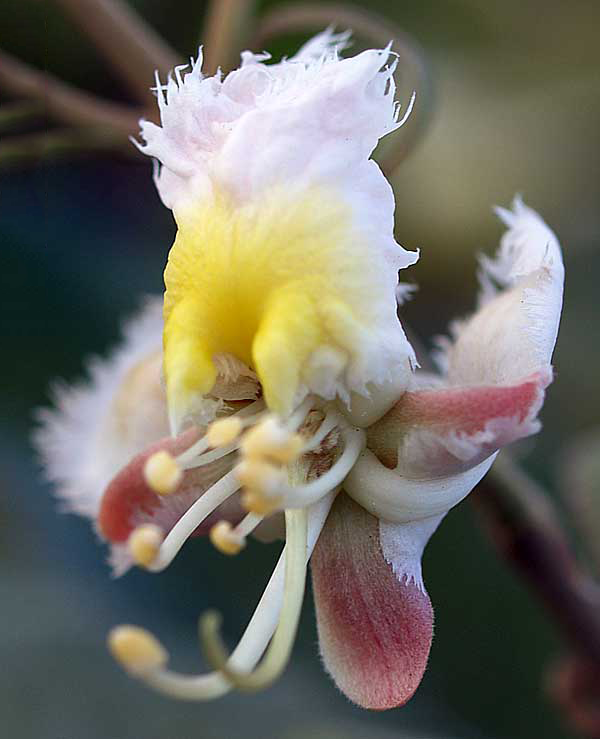 Closer-view-of-flower-of-Hiptage
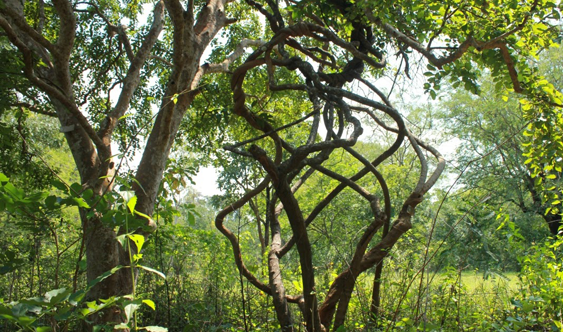 Hiptage-tree-growing-wild
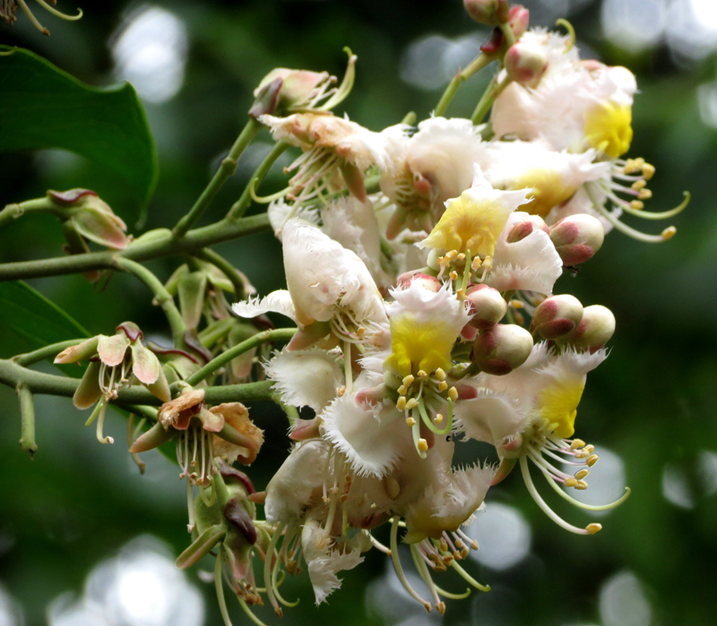 Flowers-of-Hiptage
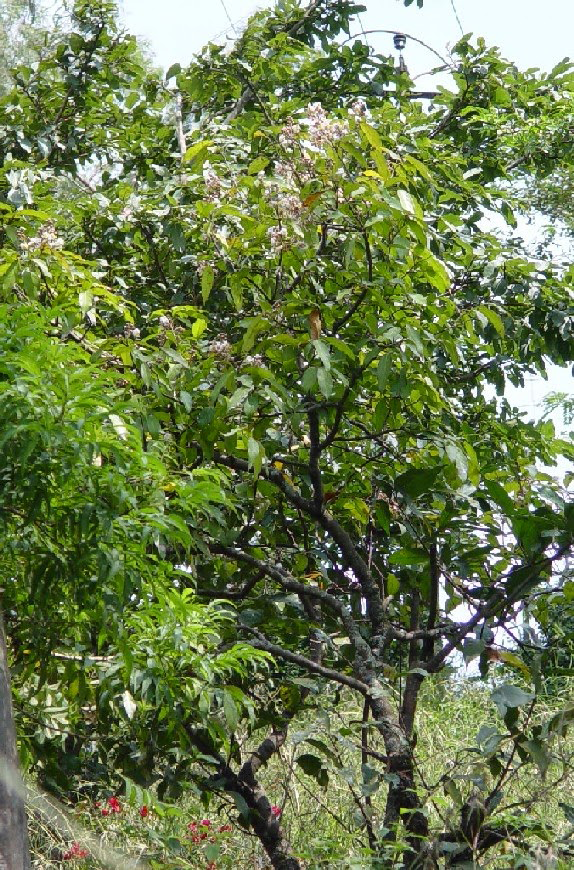 Hiptage-tree
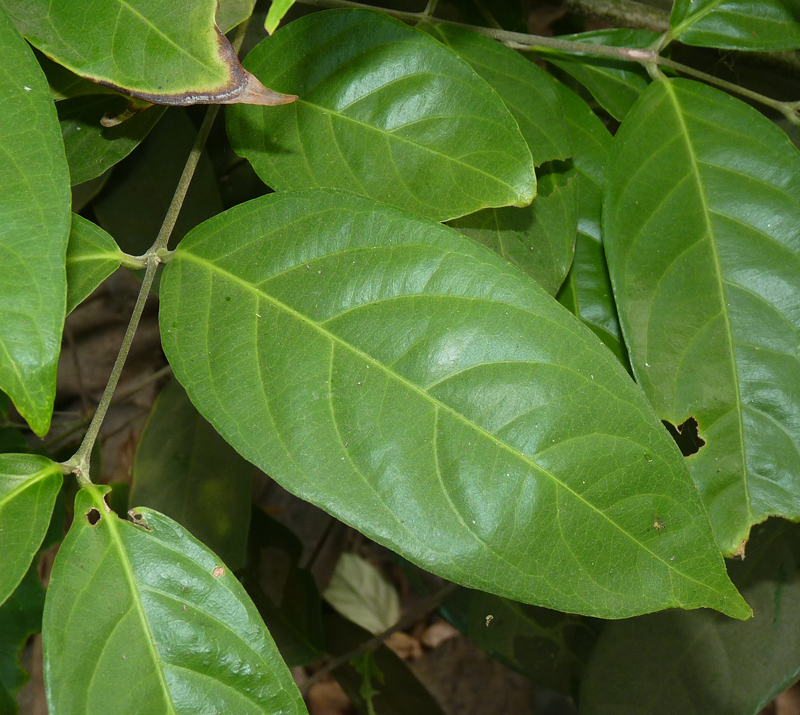 Leaves-of-Hiptage
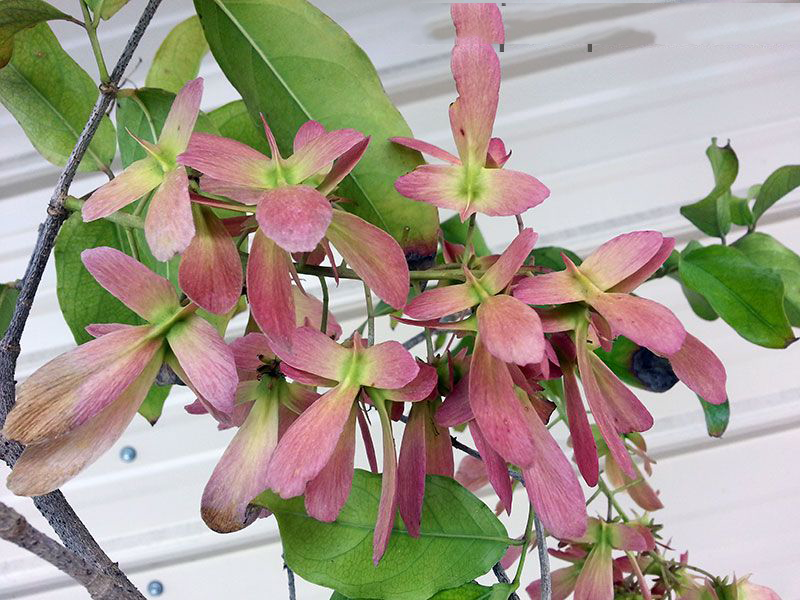 Maturing-fruits-of-Hiptage
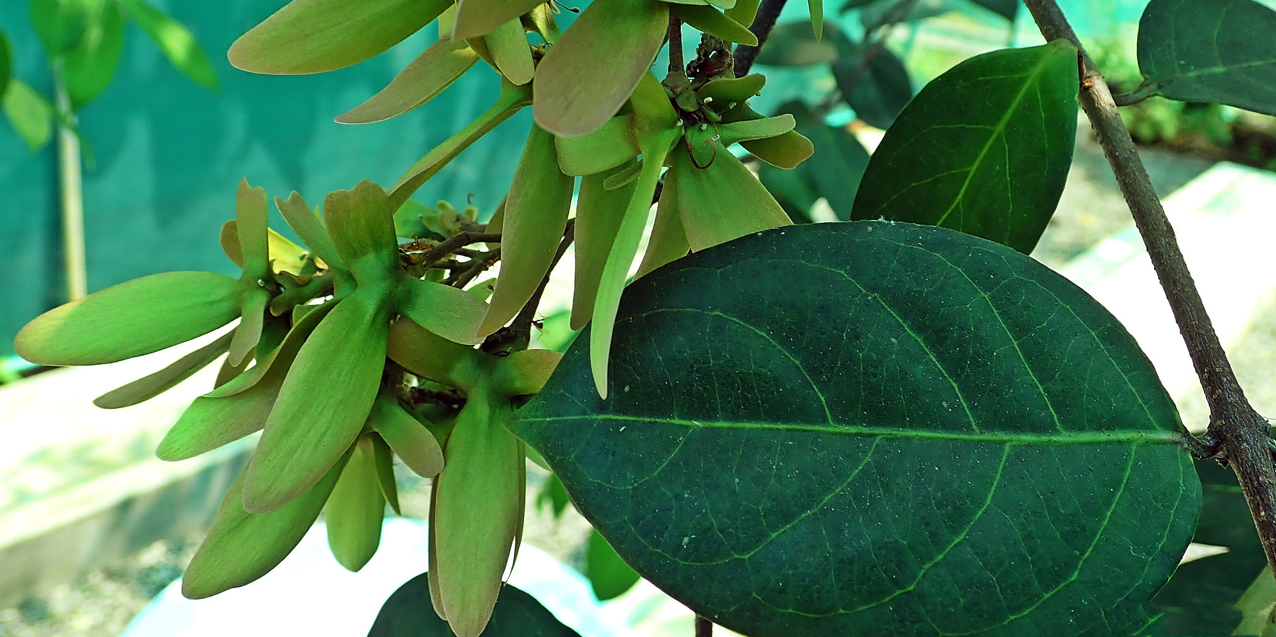 Immature-fruits-of-Hiptage
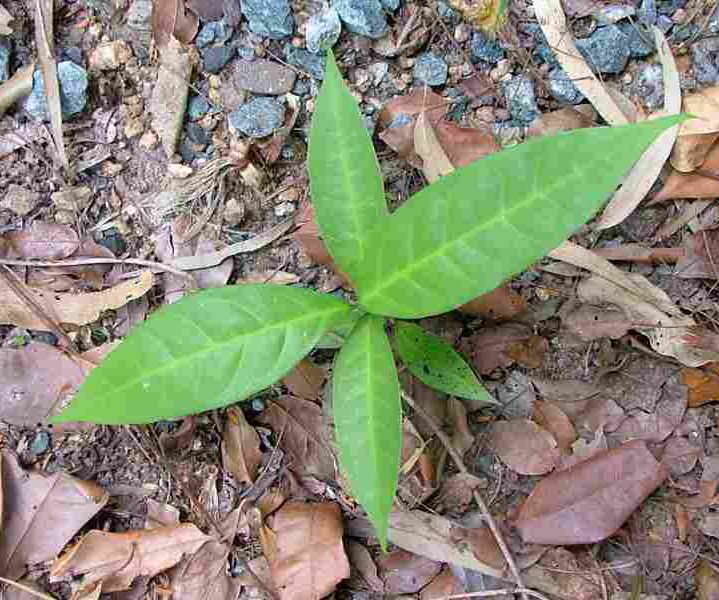 Sapling-of-Hiptage
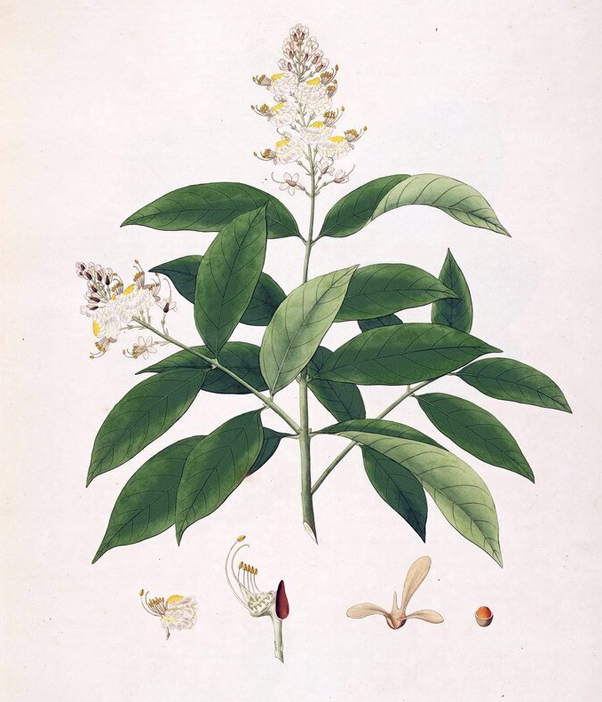 Plant-illustration-of-Hiptage
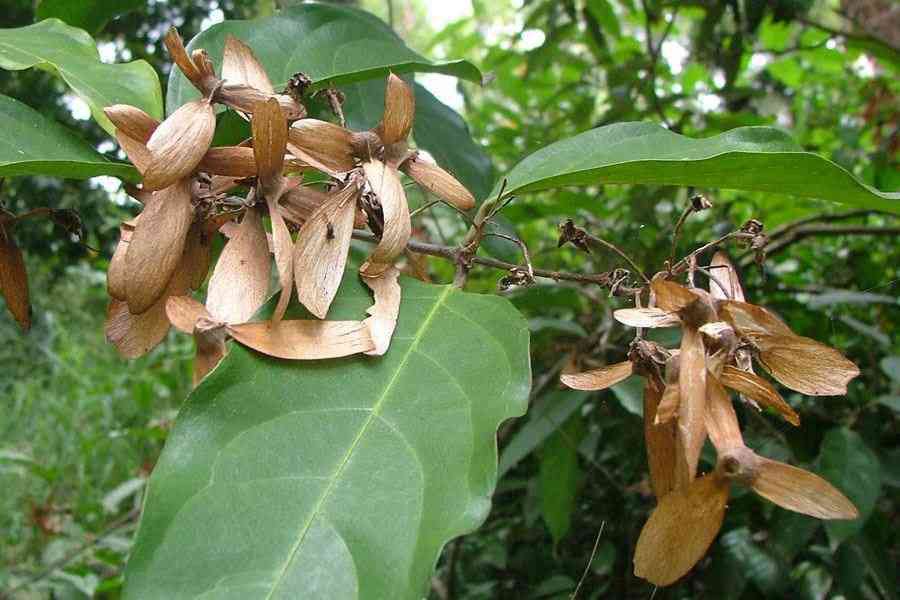 Mature-fruits-of-Hiptage
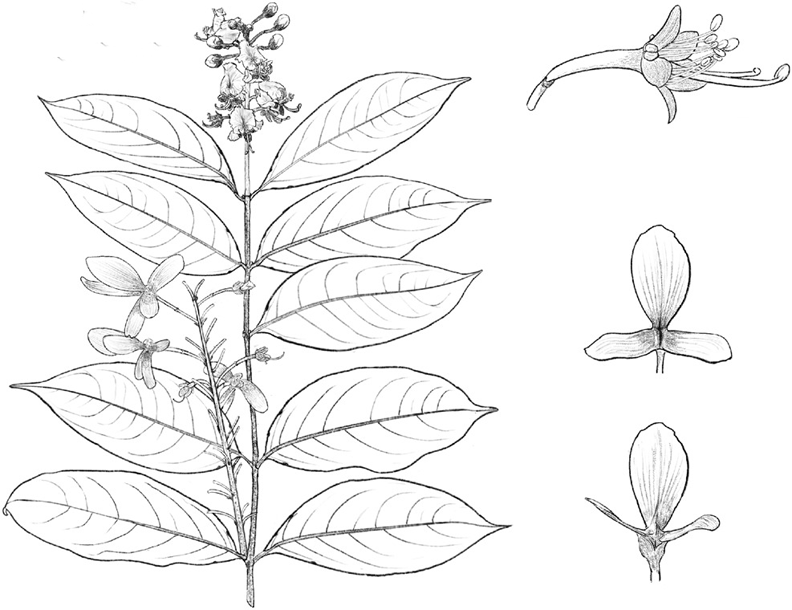 Sketch-of-Hiptage
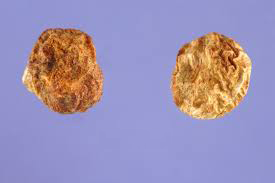 Seeds-of-Hiptage
Fruits
Fertile flowers are followed by three-winged fruit that are very distinctive (i.e. the fruit is a samara). The wings on the fruit are elongated in shape about 2 to 6 cm long and one of them is usually slightly longer than the other two. The developing fruit are green or reddish-green in color, but eventually turn pale brown when mature. Each fruit consists of 1-3 rounded (i.e. sub-globose) seeds.
Habitat
Hiptage (Hiptage benghalensis) is most commonly naturalized in closed forests and along waterways, and prefers moist and shady habitats. However, it has also been found growing in suburban gardens, in hedges, and in waste areas (apparently where it has not been deliberately planted). While its distribution is currently quite limited, this species is thought to have the potential to be a problem weed throughout the wetter tropical, sub-tropical and warmer temperate regions of Australia.
Traditional uses and benefits of Hiptage (Helicopter Flower)
- Leaf is used as a remedy for skin diseases.
- In Lesser Sunda Islands, the bark is pounded and applied to fresh wounds.
- In Thailand, the wood is an appetizer and considered anti-flatulent, carminative, and aphrodisiac; believed to relieve fatigue and to promote longevity.
- In Vietnam, wood is used to relieve fatigue and treat nocturnal emission of sperm.
- In India, leaves are used for cutaneous diseases.
- Leaf juice used to treat scabies.
- Plant is also sued for rheumatism and asthma.
- According to Ayurveda, the plant is cooling, vulnerary, astringent, expectorant, cardio tonic, anti-inflammatory, insecticidal, wound healing, antipruritic, and used in scabies, leprosy, skin diseases, cough, asthma, cardiac debility, obesity, etc.
- In Bangladesh, flowers and roots are used for treatment of diabetes and colds.
- In Assam, juice of flower is used for ear pain.
- The Kanikkars of Western Ghats apply paste of leaves and flowers twice daily for treatment of ringworm infection.
- Leaves and bark are hot, acrid, bitter, insecticidal, vulnerary and useful in the treatment of biliousness, cough, burning sensation, thirst and inflammation.
- It is traditionally used in the treatment of burning sensation, obesity, wounds, rheumatism, inflammation, ulcers, skin diseases etc.
- Leaf paste applied externally cures scabies.
- Bark is used in indigestion, asthma and rheumatoid arthritis.
- To reduce belly fat, it is used with buttermilk or the seed kernel is given with honey.
- Plant decoction is given to women after childbirth.
- Flowers are taken with drinking water as a coolant.
- Heart wood is used internally in obesity, jaundice, urethral discharges and externally in chronic skin diseases.
- Seed oil is given internally for flatulence, biliousness and for increase slimy secretions of the body.
- It is also used in asthma and cough.
- Leaves are useful in treatment of cough, thirst and inflammation.
- The leaf juice is used to treat scabies, apparently for its insecticidal properties.
- Bark is used as an aromatic bitter.
- Whole plant powder is used as an analgesic in babies suffering from high fever.
- Water boiled plant decoction is administrated orally in case of weak mothers after childbirth.
- Leaves are used as a temporary cure in asthmatic problems.
- In Bhaava prakasha the seed kernel is taken with honey checks the growth of abdomen due to obesity.
- Vegetable curies prepared from the leaves of Ficus benghalensis, Hiptage benghalensis and Vitex negundo with ghee is given in intrinsic hemorrhage.
- Bark is used in case of rheumatoid arthritis and dyspnea.
- Flowers use as a good coolant taken with drinking water.
- Root with buttermilk was also given for reducing the waist girth.
- Sushruta recommended heart wood internally in obesity, jaundice, urethral discharges and externally in chronic skin diseases.
Other Facts
- Hiptage has been extensively cultivated throughout the world as a garden ornamental, including in the coastal districts of northern and eastern Australia.
- Leaf juice is considered insecticidal.
- It is extensively cultivated throughout South-East Asia for its attractive, fragrant flowers.
Prevention and Control
Due to the variable regulations around (de)registration of pesticides, your national list of registered pesticides or relevant authority should be consulted to determine which products are legally allowed for use in your country when considering chemical control. Pesticides should always be used in a lawful manner, consistent with the product’s label.
Mechanical Control
Mechanical control without a follow-up chemical treatment is not effective. Branches should be cut before flowering to reduce seed production, but herbicide stump treatments are required to prevent regrowth and to ensure plant kill.
Chemical Control
Several screening trials have been conducted to investigate and assess herbicides to control H. benghalensis, in Hawaii, USA and Queensland, Australia. Treatment of cut stumps was used in La Réunion with branches cut at ground level and glyphosate applied, and basal bark applications of triclopyr leading to 50% plant kill. Survivors were plants with larger diameter stems in which the treatment did not cover the circumference of the stem completely.
Biological Control
There have been no known efforts at biological control of H. benghalensis.
References:
https://www.itis.gov/servlet/SingleRpt/SingleRpt?search_topic=TSN&search_value=565966#null
http://www.hear.org/pier/species/hiptage_benghalensis.htm
https://npgsweb.ars-grin.gov/gringlobal/taxon/taxonomydetail?id=19180
https://gd.eppo.int/taxon/HTGBE
http://www.theplantlist.org/tpl1.1/record/tro-19500008
https://keyserver.lucidcentral.org/weeds/data/media/Html/hiptage_benghalensis.htm
http://www.stuartxchange.com/Hiptage
https://indiabiodiversity.org/species/show/32219
https://en.wikipedia.org/wiki/Hiptage_benghalensis
https://www.cabidigitallibrary.org/doi/10.1079/cabicompendium.27228
https://uses.plantnet-project.org/en/Hiptage_benghalensis_(PROSEA)#Synonyms
http://www.flowersofindia.net/catalog/slides/Madhavi%20Lata.html
https://davesgarden.com/guides/pf/go/125418/#b
https://plants.usda.gov/home/plantProfile?symbol=HIBE2