


A blocked tear duct, clinically known as nasolacrimal duct obstruction, occurs when the passage responsible for draining tears from the eye into the nose becomes narrowed or completely closed. Under normal conditions, tears produced by the lacrimal glands flow across the eye’s surface and exit through small openings near the inner corner of the eyelid, eventually moving through the tear duct. When this pathway is obstructed, tears cannot drain effectively, leading to excessive watery eyes, medically referred to as epiphora. This stagnation of fluid can cause persistent tearing, ocular discomfort, and, in some cases, the buildup of mucoid discharge or secondary infections such as dacryocystitis 1. While this condition is highly prevalent in infants due to incomplete development of the drainage system, it can also manifest in adults as a result of inflammation, trauma, or other structural blockages 2.
Causes of Blocked Tear Duct
1. Congenital Blockage (Present at Birth)
In newborn infants, the most frequent cause of a blocked tear duct is the failure of a thin tissue membrane at the lower end of the duct to completely open during fetal development.
2. Age-Related Narrowing
The bony structures enclosing the tear drainage system naturally narrow over time, an anatomical change that is particularly common in females over the age of 40 due to hormonal shifts and bone density loss.
3. Bacterial Infections
Severe or chronic bacterial infections caused by common strains, such as Staphylococcus and Streptococcus, can trigger significant tissue swelling and inflammation that damages or permanently closes the tear passages.
4. Tumors and Growths
Cancerous and non-cancerous tissue growths originating in the eyelid, sinus cavities, nasal passages, or the tear sac itself can exert direct mechanical pressure that physically compresses the tear duct 3.
5. Facial Trauma
Direct physical injuries, especially fractures involving the bones of the nose or eye socket, can structurally crush or sever the tear drainage system, resulting in a partial or total blockage.
6. Medical Treatments
Exposure to localized radiation therapy, systemic chemotherapy medications (such as docetaxel or fluorouracil), and the prolonged use of specific medicated eye drops can induce chronic inflammation and tissue scarring that eventually seals the duct 4.
7. Physical Obstructions
The gradual accumulation of mineral deposits, hardened cellular debris, or fungal material can form solid formations known as tear stones (dacryoliths) that lodge within the pathway and physically plug the drainage flow.
Symptoms of Blocked Tear Duct
1. Excessive Tearing
The most frequent indicator of an obstruction is a continuous or intermittent overflow of tears running down the cheek, which happens because the fluid cannot drain naturally and backs up onto the surface of the eye.
2. Mucus or Pus Discharge
When tears pool and stagnate in the drainage system, it creates an environment that promotes bacterial overgrowth, leading to the buildup of a thick, yellowish, or greenish sticky fluid within the eye.
3. Crusting of the Eyelids
The abnormal mucus and discharge often dry on the surface of the eye while a person is sleeping, causing the eyelids and eyelashes to become heavily crusted and securely stuck together upon waking.
4. Painful Swelling Near the Nose
If the blocked tear sac becomes actively infected, a condition known as dacryocystitis, a painful, red, and warm lump can rapidly develop on the side of the nose directly adjacent to the inner corner of the eye.
5. Persistent Eye Redness
The continuous presence of excess tears, combined with the physical irritation of frequently wiping the eyes and potential low-grade infections, often causes the white portion of the eye to appear red and bloodshot.
6. Temporary Blurred Vision
The abnormal, thickened film of stagnant tears and mucous resting over the cornea can physically scatter incoming light, resulting in moments of blurry or cloudy vision that usually clear after blinking or wiping the eye.
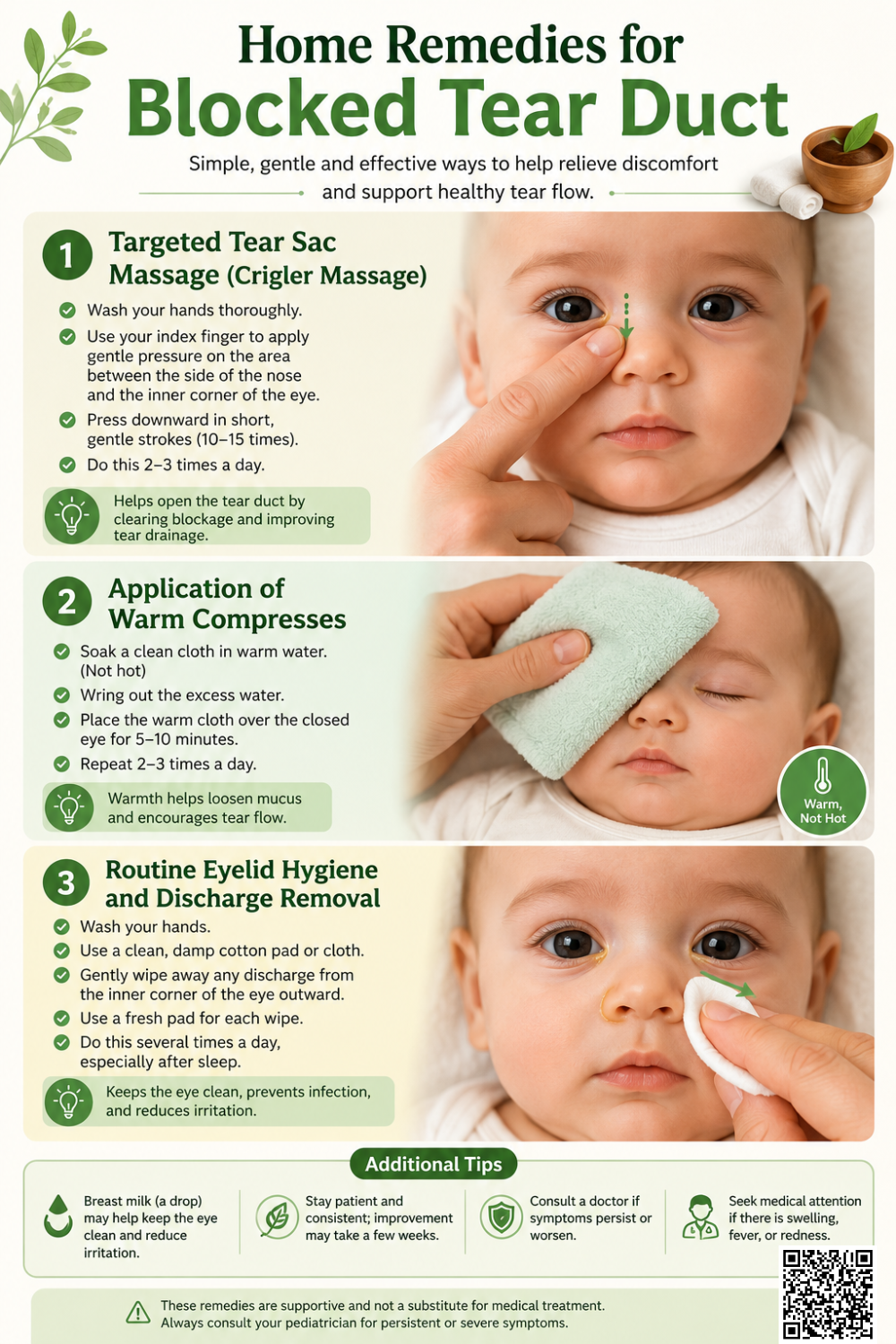 Home Remedies for Blocked Tear Duct
1. Targeted Tear Sac Massage (Crigler Massage)
How it may help
Targeted massage creates downward pressure inside the tear drainage system. This fluid pressure forces trapped tears against the thin tissue causing the blockage, helping to gently stretch or break it open. By clearing this physical barrier, tears can resume normal flow from the eye into the nasal passages.
What research says
Clinical studies demonstrate that conservative management, heavily relying on daily tear sac massage, successfully resolves congenital tear duct blockages in approximately 90% of infants during their first year. Researchers conclude it is a highly effective primary treatment that frequently eliminates the need for invasive surgical procedures 5.
How to use it safely
Thoroughly wash your hands with soap and water. Place your clean index finger between the inner corner of the affected eye and the bridge of the nose. Apply firm pressure against the bone and slide your finger downward. Repeat this motion two to three times, twice a day.
Potential precautions or side effects
Stop massaging and consult a healthcare provider immediately if the area becomes red, hot, or visibly swollen, as these indicate an active infection requiring antibiotic treatment rather than physical pressure.
2. Application of Warm Compresses
How it may help
A warm compress applies gentle heat to the eye area, which helps liquefy hardened mucus and crusts caused by stagnant tears. This warmth encourages local blood circulation and relaxes the surrounding tissues, making it easier for trapped fluids to drain and reducing mild swelling around the tear duct.
What research says
Clinical guidelines support using warm compresses alongside tear sac massage as a primary conservative treatment for blocked tear ducts. Research concludes this routine effectively clears daily discharge, minimizes the risk of bacterial overgrowth, and manages symptoms while waiting for the duct to open naturally or prior to surgical intervention.
How to use it safely
Wash your hands thoroughly. Soak a clean, soft washcloth in warm—not hot—water and wring out the excess moisture. Gently place the damp cloth over your closed eye for five to ten minutes. Wipe away loosened discharge gently, and wash the cloth after a single use.
Potential precautions or side effects
Always test the water temperature on your wrist to prevent eyelid skin burns. Use a separate, freshly cleaned cloth for each eye to avoid spreading potential bacterial infections.
3. Routine Eyelid Hygiene and Discharge Removal
How it may help
Routine eyelid hygiene physically clears sticky mucus, dried crusts, and bacterial buildup caused by stagnant tears. Keeping the eyelid margins clean prevents eyelashes from sticking together, reduces surface irritation, and minimizes the risk of secondary infections developing in the pooled fluid.
What research says
Clinical guidelines emphasize conservative management, including daily eyelid cleansing, as a standard first-line approach. Research concludes that the consistent removal of discharge lowers infection rates and maintains eye health while awaiting the natural opening of the duct, which resolves most infant cases.
How to use it safely
Wash your hands well with soap. Moisten a clean cotton ball or sterile gauze with warm water. Gently wipe the closed eyelid, starting from the inner corner near the nose outward to the edge. Discard the cotton after one single swipe.
Potential precautions or side effects
Never wipe back and forth or reuse a cotton ball, as this spreads bacteria. Avoid harsh rubbing, which can scratch the eye and cause severe skin irritation.
 Foods to Avoid When You suffer from Blocked Tear Duct
1. Refined Sugars
High blood sugar levels can suppress immune cell function, reducing your body’s ability to defend against the bacterial overgrowth that often occurs in stagnant tear fluid.
2. Ultra-Processed Foods
These foods contain additives and unhealthy fats that promote systemic inflammation, which can hinder the natural healing process if the tear sac becomes swollen and infected.
3. Excessive Alcohol
Drinking large amounts of alcohol weakens natural immune defenses, making it much harder for your body to fight off sudden, painful eye infections related to the blockage.
4. High-Sodium Foods
A diet excessively high in salt promotes fluid retention, which can slightly increase general tissue swelling and worsen the sensation of pressure around the blocked eye.
When To see Doctor when you suffer from Blocked Tear Duct
1. Severe Pain and Swelling
Seek immediate care if a hot, red, and painful lump develops near the inner corner of the eye, indicating an active bacterial infection requiring prompt antibiotics.
2. Thick Discolored Discharge
Consult a doctor if the eye constantly produces heavy, green, or dark yellow pus, which signals a worsening infection that home hygiene cannot safely resolve.
3. High Fever
A fever accompanying severe eye redness and swelling requires emergency medical evaluation to prevent the localized infection from spreading into surrounding facial tissues or the bloodstream.
4. Changes
Report any persistent blurred vision, severe light sensitivity, or physical damage to the eye’s surface, as these complications require specialized ophthalmic treatment to protect long-term sight.
5. Lack of Improvement
You should schedule a clinical evaluation for infants if persistent tearing and discharge continue beyond their first birthday, as surgical probing is often necessary at this stage.