

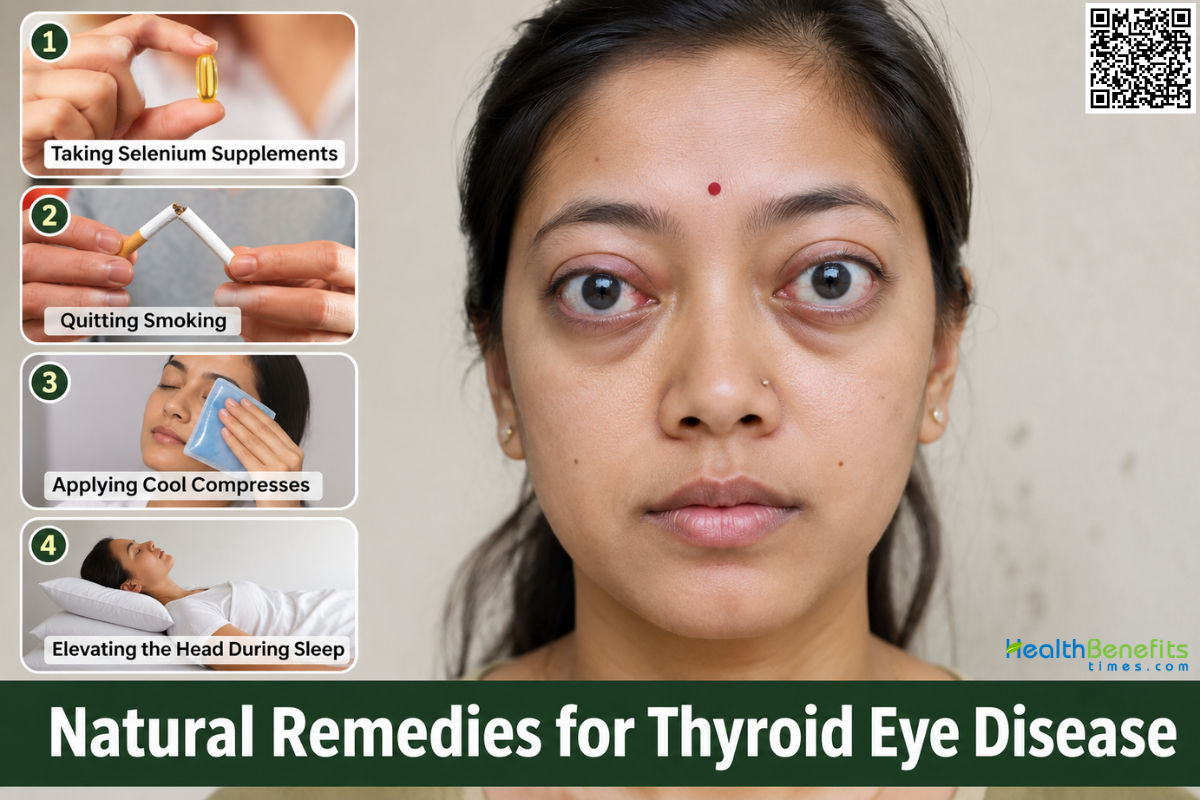
Thyroid Eye Disease (TED) is a complex autoimmune condition that affects the muscles and fatty tissues surrounding the eyes. Also known as Graves’ ophthalmopathy, the disorder occurs when the immune system mistakenly attacks the eye socket, triggering a cycle of inflammation and tissue expansion 1. While TED is most frequently linked to Graves’ disease and an overactive thyroid, clinical data shows it can also develop in individuals with normal or underactive thyroid function 2. As orbital tissues swell, they push the eyes forward, creating a characteristic bulging appearance and causing persistent dryness, redness, and double vision 3. The disease generally follows a predictable timeline, starting with an active inflammatory phase lasting up to two years before settling into a stable, inactive state 4. Because severe swelling can compress the optic nerve and threaten vision, you should seek prompt evaluation from an eye specialist if you develop symptoms to prevent permanent damage 5.
Causes of Thyroid Eye Disease
- Autoimmune System Dysfunction: The primary cause is an abnormal immune response where the body produces antibodies that mistakenly attack healthy tissues. These antibodies target specific receptors found in both the thyroid gland and the fat and muscle tissues behind the eyes, leading to intense inflammation, tissue expansion, and swelling 6.
- Graves’ Disease: This specific autoimmune disorder is the most common underlying trigger. The vast majority of people who develop this eye condition have Graves’ disease, a condition that overstimulates the thyroid gland and shares the exact same disease-causing antibodies that attack the eye socket 7.
- Cigarette Smoking: Tobacco use is the most significant preventable risk factor for the condition. Smoking restricts oxygen delivery to tissues and severely worsens the autoimmune attack on the eyes, making smokers significantly more likely to develop the disease and experience severe vision complications than nonsmokers 8.
- Genetics and Heredity: Inherited genetic variations play a critical role in determining susceptibility to the disease. Individuals who have blood relatives with thyroid disorders or other immune system conditions are at a substantially higher risk of developing the same misplaced immune response 9.
- Radioactive Iodine Therapy: This common medical procedure used to cure an overactive thyroid can sometimes provoke or worsen the eye condition. As the radiation destroys thyroid cells, it can release a surge of proteins into the bloodstream, temporarily elevating the levels of antibodies that attack the tissues around the eyes 10.
Symptoms of Thyroid Eye Disease
- Bulging Eyes: As the immune system attacks the socket, inflammation causes the fat and muscle tissues behind the eye to swell, forcefully pushing the eyeball forward. This abnormal protrusion gives the eyes a wide, staring appearance and changes the overall facial structure 1.
- Dryness and Gritty Sensation: Because the eyes bulge outward and the eyelids pull backward, the eye cannot close completely during regular blinking or sleep. This constant exposure to the air dries out the protective surface of the eye, causing irritation and a persistent feeling of having sand or grit caught under the lids 7.
- Double Vision: The ongoing inflammation causes the muscles that control eye movement to become enlarged, stiff, and eventually scarred. When these damaged muscles fail to coordinate smoothly, the eyes point in slightly different directions, creating confusing or overlapping double images 4.
- Eyelid Swelling and Redness: The active phase of the disease triggers intense fluid buildup in the delicate tissues surrounding the eyes. This congestion leaves the eyelids noticeably puffy, chronically red, and highly sensitive to bright lights 2.
- Deep Eye Pain and Pressure: The bony structure of the eye socket cannot expand to accommodate the growing, swollen tissues inside it. This confined swelling creates a deep, aching pressure behind the eyes that becomes distinctly sharper when trying to look up, down, or to the side 11.
- Vision Loss: In the most dangerous cases, heavily swollen muscles at the back of the socket compress the optic nerve, cutting off the vital connection between the eye and the brain. If you experience fading vision, blurry spots, or colors appearing washed out, you must go to an eye specialist immediately to prevent permanent blindness 3.
Natural remedies for Thyroid Eye Disease
1. Taking Selenium Supplements
How it may help
Selenium is an essential mineral that acts as a powerful antioxidant. In mild Thyroid Eye Disease, it reduces inflammation and swelling in the eye socket by neutralizing harmful molecules that damage healthy tissues during an autoimmune attack 11.
What research says
Clinical trials confirm that taking 200 micrograms of selenium daily for six months significantly improves mild eye symptoms, prevents the condition from worsening, and drastically enhances a patient’s overall quality of life compared to inactive treatments 12.
How to use it safely
You should take no more than 200 micrograms daily for a six-month period, strictly following your doctor’s instructions 1. Always consult your endocrinologist before starting, because combining supplements with a naturally selenium-rich diet can quickly lead to unsafe mineral buildup 13.
Potential precautions or side effects
You must avoid excessive doses, as selenium poisoning causes unexpected hair loss, brittle nails, garlic-scented breath, digestive issues, and irreversible nerve damage 14.
2. Quitting Smoking
How it may help
Cigarette smoke contains toxins that restrict oxygen to the eye socket and aggressively stimulate the immune system to attack healthy tissues. Stopping smoking eliminates this constant chemical irritation, immediately reducing severe inflammation and preventing the worsening of swelling, eye bulging, and vision damage 8.
What research says
Clinical studies prove that smokers are significantly more likely to develop severe thyroid eye disease than nonsmokers. Research concludes that quitting smoking drastically lowers the risk of the condition worsening and significantly improves the effectiveness of medical treatments for the eyes 7.
How to use it safely
You should work closely with your doctor to create a structured quitting plan. Safely managing nicotine withdrawal often involves using medical support, such as prescribed nicotine replacement therapies or non-nicotine medications, combined with behavioral counseling to ensure long-term success 15.
Potential precautions or side effects
You may experience temporary nicotine withdrawal symptoms, including intense cravings, irritability, anxiety, difficulty sleeping, and mild weight gain during the first few weeks of quitting 16.
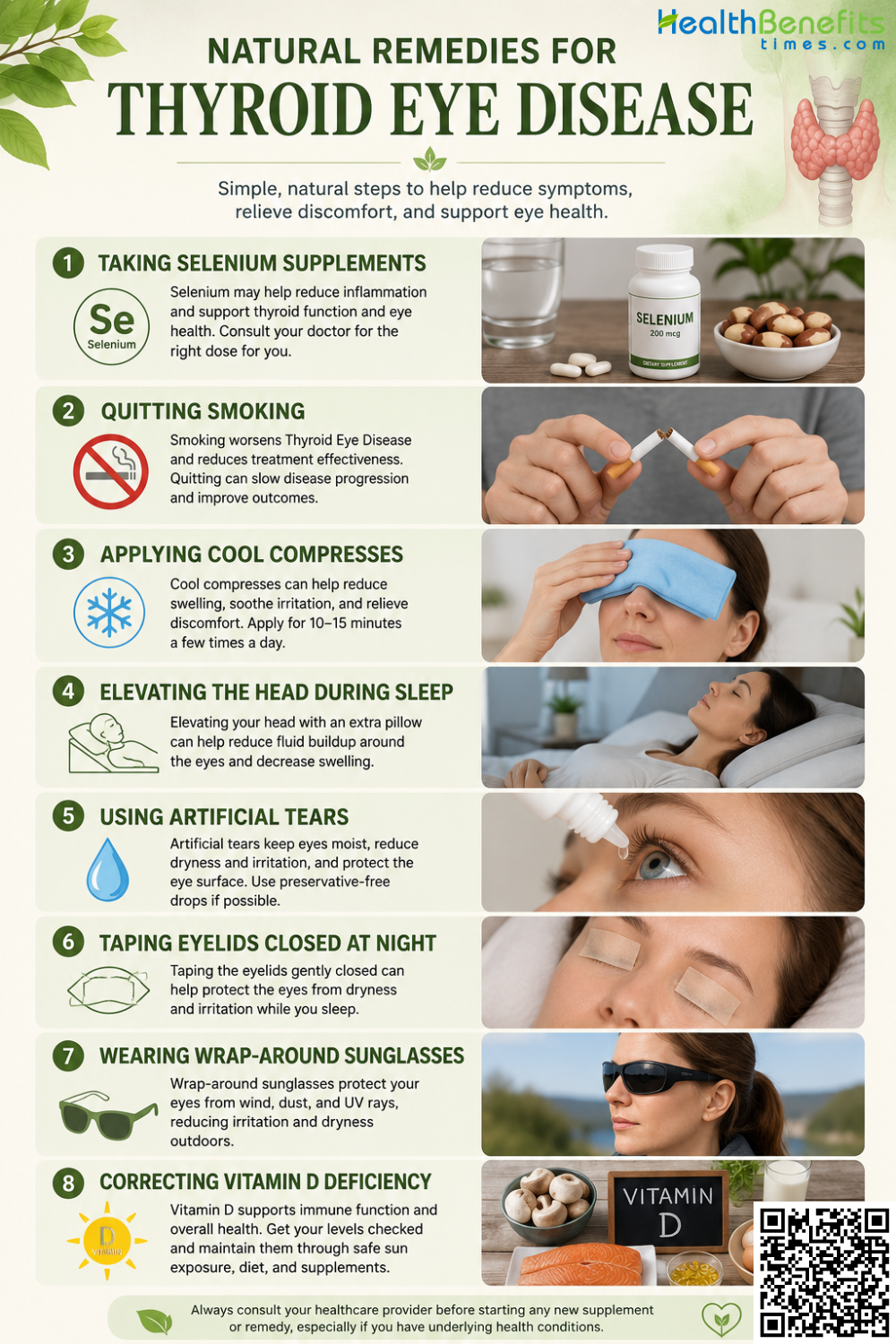
3. Applying Cool Compresses
How it may help
Applying cool compresses provides immediate, soothing relief by constricting the superficial blood vessels around the eyes. This localized temperature drop reduces blood flow, which effectively decreases the uncomfortable heat, redness, and swelling in the severely inflamed tissues of the eyelid and conjunctiva 17.
What research says
Clinical guidelines recommend using cool compresses as a supportive, non-invasive treatment to manage the acute, active phase of thyroid eye disease. Research indicates that while cold therapy does not cure the underlying autoimmune dysfunction, it significantly improves daily comfort, relieves surface pain, and manages persistent eyelid edema 1.
How to use it safely
You should soak a clean, soft cloth in cool water, wring out the excess fluid, and gently place it over your closed eyelids for ten to fifteen minutes 17. You can safely repeat this soothing process multiple times throughout the day whenever you feel persistent irritation or pressure.
Potential precautions or side effects
You must never apply ice directly to your eyelids, as extreme freezing temperatures can quickly cause severe skin damage, frostbite, and worsen overall eye irritation 18.
4. Elevating the Head During Sleep
How it may help
Elevating the head uses gravity to prevent fluid from pooling in the delicate tissues around the eyes overnight. By keeping the head higher than the heart, this physical position significantly reduces the uncomfortable morning puffiness, eyelid swelling, and deep eye pressure associated with active thyroid eye disease 19.
What research says
Clinical guidelines strongly support head elevation as a fundamental, non-invasive general treatment for managing the condition. Studies confirm that using gravity to improve fluid drainage effectively alleviates periorbital edema, providing measurable relief from daily swelling and overall discomfort during the active inflammatory phase of the disease 4.
How to use it safely
You should raise the head of your bed slightly or use a firm wedge pillow to keep your head elevated above your chest while sleeping 20. Ensure your neck and shoulders remain properly aligned to avoid straining your muscles overnight.
Potential precautions or side effects
You must ensure proper spinal support, as simply stacking soft pillows instead of using a firm wedge can easily cause neck stiffness, upper back pain, or poor sleep posture.
5. Using Artificial Tears
How it may help
Because thyroid eye disease often causes the eyes to bulge and the eyelids to retract, the eyes cannot close fully or stay naturally lubricated. Artificial tears replace missing moisture, instantly relieving the gritty, burning sensation and preventing severe dryness that damages the front surface of the eye 1.
What research says
Clinical treatment guidelines consistently recommend artificial tears and lubricating ointments as the essential first-line therapy for managing the surface symptoms of the condition. Studies confirm that regular lubrication effectively heals microscopic surface damage and prevents sight-threatening complications like corneal ulcers caused by chronic exposure to the air 7.
How to use it safely
You should choose preservative-free eye drops and apply them frequently throughout the day to maintain comfort 21. For maximum overnight protection when your eyelids may not close completely, apply a thicker lubricating gel or ointment directly into the eye right before you go to sleep 1.
Potential precautions or side effects
You must avoid drops containing chemical preservatives if you apply them more than four times daily, as these harsh chemicals can further irritate and damage your eye surface 21.
6. Taping Eyelids Closed at Night
How it may help
Thyroid eye disease often causes upper eyelid retraction and bulging eyes, preventing complete eye closure during sleep. Taping the eyelids shut prevents the protective tear film from evaporating overnight, keeping the front of the eye safely lubricated and stopping the severe pain associated with constant air exposure 22.
What research says
Clinical studies and management guidelines endorse nocturnal eyelid taping as a highly effective, non-surgical method for preventing severe surface damage. Research confirms that physically securing the eyelids closed during sleep protects the vulnerable front layer of the eye from dangerous ulceration, scarring, and permanent vision loss 4.
How to use it safely
You should apply a thick, preservative-free lubricating ointment into the eye right before bed. Gently pull the upper eyelid down to completely cover the eye, and secure it using a small strip of hypoallergenic, medical-grade paper or silicone tape applied diagonally from the eyelid to the cheek 23.
Potential precautions or side effects
You must use tape designed for sensitive skin, as standard adhesives can cause allergic reactions, tearing of delicate eyelid skin, or painful eye scratches if the tape slips inward 23.
7. Wearing Wrap-Around Sunglasses
How it may help
Because thyroid eye disease causes the eyes to bulge outward, a larger surface area is constantly exposed to the environment. Wrap-around sunglasses act as a physical shield, blocking harsh wind, dust, and intense sunlight, which significantly reduces severe glare sensitivity and prevents the tear film from evaporating rapidly 1.
What research says
Clinical management guidelines classify wrap-around tinted lenses as an essential conservative therapy for the disease. Studies show that protecting the enlarged ocular surface from ultraviolet radiation and wind effectively minimizes painful corneal drying, reduces debilitating light sensitivity, and prevents further irritation of the inflamed eye tissues 7.
How to use it safely
You should choose sunglasses that feature broad frames curving completely around the sides of your face. Verify that the lenses offer 100% protection against UVA and UVB rays, and wear them consistently whenever you are outdoors, driving, or in environments with harsh, blowing air 24.
Potential precautions or side effects
You must remove heavily tinted sunglasses when walking in dimly lit indoor areas or driving at night, as the darkened lenses drastically impair your vision and increase fall risks.
8. Correcting Vitamin D Deficiency
How it may help
Vitamin D plays a crucial role in regulating the body’s immune system. Because thyroid eye disease is an autoimmune condition, correcting low levels of this essential nutrient helps stabilize immune function. This stabilization calms the abnormal immune response, decreasing inflammation in the tissues surrounding the eyes 25.
What research says
Clinical studies confirm that individuals with active thyroid eye disease consistently show significantly lower vitamin D levels than healthy people. Researchers conclude that restoring adequate vitamin D through targeted supplementation effectively reduces orbital inflammation and visibly improves the severity of eye bulging and swelling 26.
How to use it safely
You must ask your doctor for a blood test to accurately measure your current levels before starting supplements 27. Based on these specific lab results, you should take only the exact daily dosage your physician prescribes to safely correct the deficiency.
Potential precautions or side effects
You must never exceed prescribed doses, as extreme vitamin D intake dangerously spikes blood calcium levels, causing irregular heartbeats, severe vomiting, and permanent kidney damage 28.
Foods to Avoid When You Suffer from Thyroid Eye Disease
1. High-Sodium Foods
Consuming excessive salt forces the body to retain water, significantly worsening the painful fluid buildup and eyelid puffiness associated with active thyroid eye disease 7.
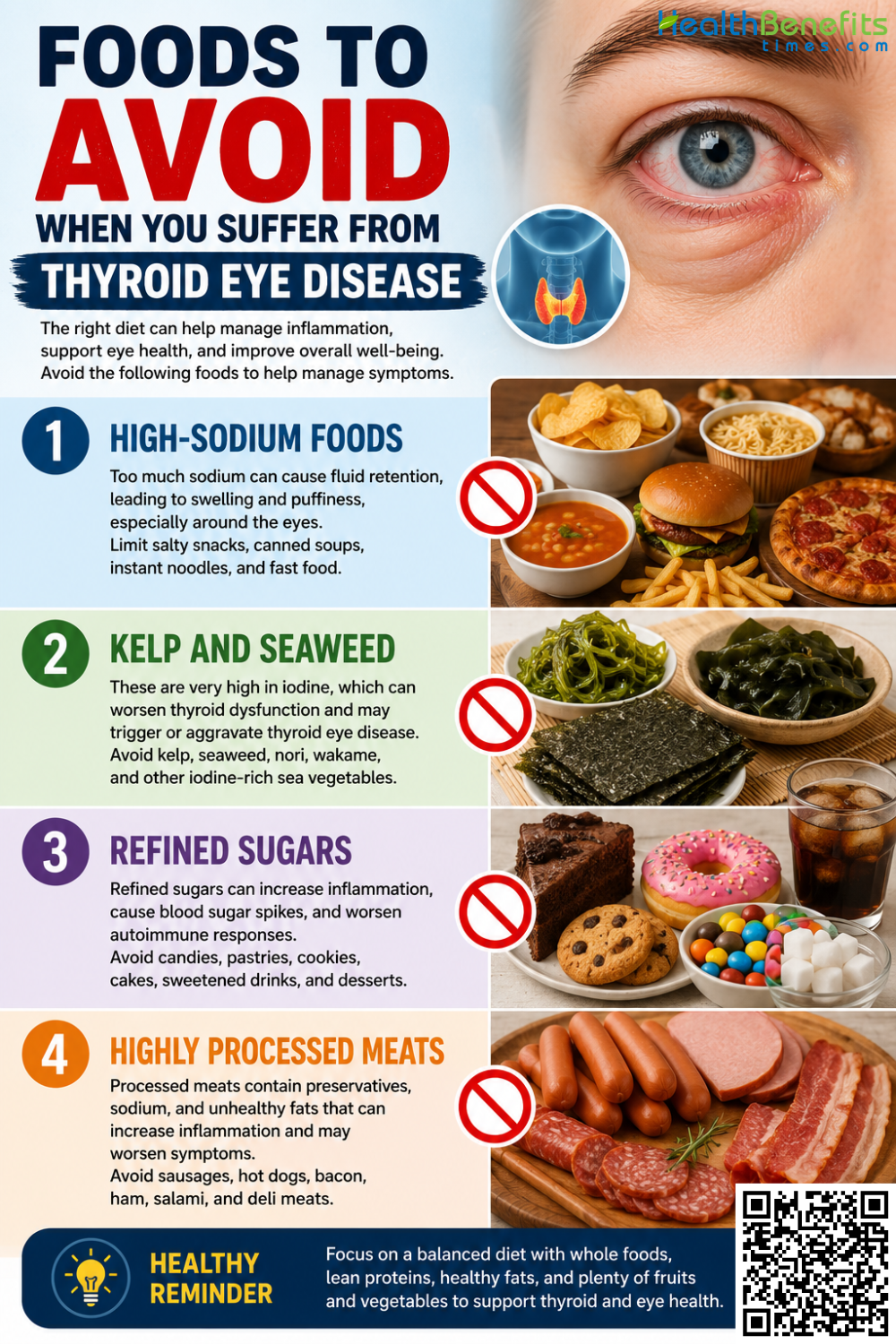
2. Kelp and Seaweed
These seaweeds contain massive amounts of iodine, which can trigger dangerous thyroid hormone surges and severely worsen the underlying autoimmune attack driving the eye condition 6.
3. Refined Sugars
High intakes of added sugars trigger widespread inflammation throughout the body, accelerating the severe autoimmune response and intensifying tissue swelling within the eye socket 29.
4. Highly Processed Meats
Manufactured meats contain harsh preservatives and hidden sodium that promote chronic immune system dysfunction, directly aggravating the intense inflammatory swelling behind the eyes 30.
When to See a Doctor When You Suffer from Thyroid Eye Disease
1. Fading or Blurry Vision
You must seek immediate emergency care if your vision fades, as this strongly indicates that inflamed tissues are dangerously crushing your optic nerve 7.
2. Washed-Out Colors
You should see a doctor immediately if bright colors suddenly look dull, because this early warning sign indicates severe, potentially blinding damage to the optic nerve 11.
3. New or Worsening Double Vision
You must contact an eye specialist promptly if you see overlapping images, which means severe inflammation is actively scarring and restricting your eye muscles 4.
4. Inability to Close Eyelids
You need urgent medical intervention if your eyelids cannot fully close, because constant air exposure quickly causes painful ulcers and irreversible surface scarring 3.
5. Intense Deep Eye Pain
You should seek prompt evaluation if you experience severe aching behind the eyes that worsens with movement, signaling dangerously high pressure inside the eye socket 2.