

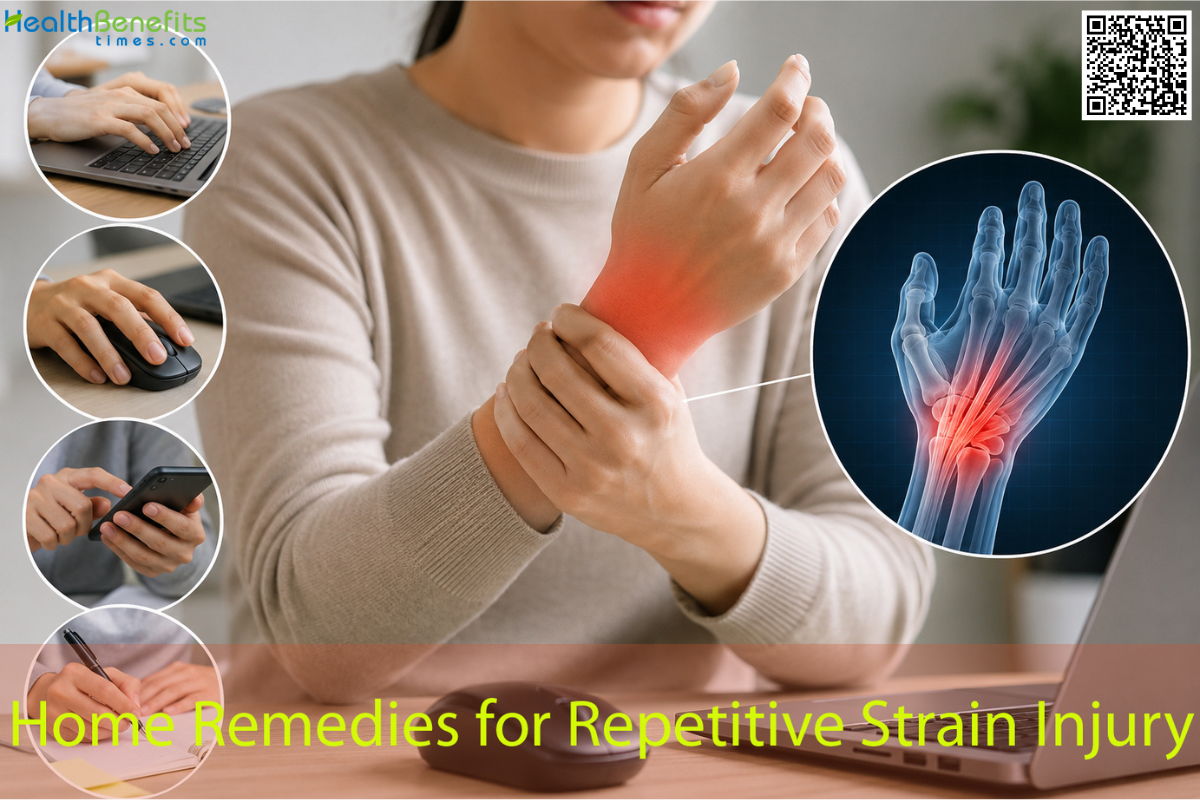
Repetitive strain injury (RSI) is an umbrella term for a group of physical conditions that damage the body’s soft tissues, such as muscles, tendons, and nerves. Unlike injuries caused by a single, sudden impact, an RSI develops gradually from repeated physical stress, forceful motions, and awkward postures that do not give the affected tissues enough time to recover. This continuous physical overload creates small tissue tears and widespread inflammation, ultimately leading to chronic pain and reduced motor function. While these injuries frequently affect the hands, wrists, elbows, and shoulders, they can occur throughout the body. Common examples of repetitive strain injuries include carpal tunnel syndrome, where a nerve in the wrist becomes compressed, and tendonitis, which involves the painful swelling of a tendon.
Causes of Repetitive Strain Injury
- Accumulation of repeated, small micro-traumas from continuous or repetitive motions
- Sustained awkward, strained, or fixed body postures
- Forceful physical exertions, such as heavy lifting, tight gripping, or manual handling of heavy loads
- Prolonged duration of repetitive activities without adequate rest or recovery time
- Direct mechanical tissue compression or continuous pressure against hard surfaces
- Prolonged exposure to localized vibration, often from operating hand-held tools or machinery
- Working in uncomfortable or extreme environmental conditions, such as severe cold or wet settings
- Psychosocial workplace stressors, including intense job stress, high psychological demands, low job control, and lack of social support
- Individual pre-existing risk factors, including previous localized trauma or chronic medical conditions (e.g., arthritis, diabetes) that lower the body’s threshold for tissue recovery 1, 2, 3, 4
Symptoms of Repetitive Strain Injury
- Local pain, aching, or soreness
- Tenderness in the affected area
- Stiffness in the muscles or joints
- Tingling or numbness
- Muscle weakness or loss of strength
- Clumsiness or loss of coordination
- Inflammation and swelling
- Limited function or restricted mobility
- Skin discoloration
- Temperature differences in the affected tissue
- References and Citations 5, 6
Home Remedies for Repetitive Strain Injury
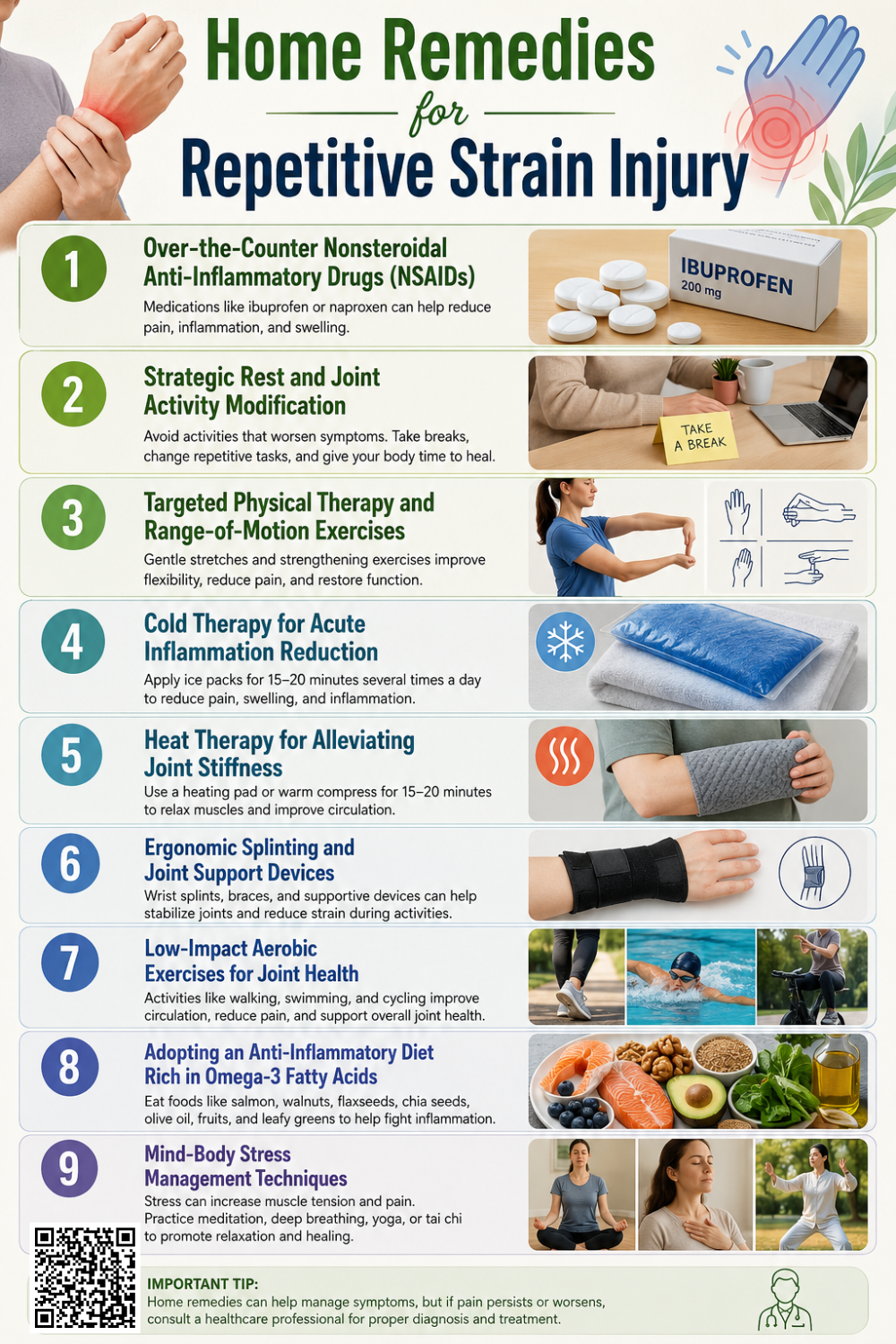
1. Over-the-Counter Nonsteroidal Anti-Inflammatory Drugs (NSAIDs)
How it may help
Nonsteroidal anti-inflammatory drugs assist in managing repetitive strain injury by blocking specific enzymes called cyclooxygenases. 7 This action stops the body from producing prostaglandins, which are chemicals that trigger swelling in damaged tissues. 8
What research says
Clinical studies indicate that while these medications relieve acute symptoms, their extended use can actually delay the natural tissue healing process. 9 Research demonstrates that suppressing the necessary inflammatory response disrupts tendon repair and increases the likelihood of developing stress fractures. 10
How to use it safely
You should take the lowest effective dose for the shortest duration necessary to control symptoms. 11 Always consume these medications with food or milk to protect your stomach lining from direct irritation. 12 Do not exceed the maximum daily limit indicated on the packaging. 13
Potential precautions or side effects
Common side effects include indigestion, stomach ulcers, and increased blood pressure. 14 Extended usage significantly elevates the risk of severe gastrointestinal bleeding and serious cardiovascular complications. 15
 2. Strategic Rest and Joint Activity Modification
How it may help
Strategic rest involves temporarily reducing mechanical loads on affected tissues to prevent further microtrauma. 16 Altering daily activities limits repetitive stress, providing the necessary biological environment for cellular healing and collagen repair. 17 This functional unloading decreases ongoing tissue inflammation without completely halting physical movement. 18
What research says
Clinical evidence demonstrates that relative rest combined with activity modification yields superior pain relief compared to complete joint immobilization. 19 Studies confirm that continuing modified, pain-free movements accelerates tendon recovery and preserves structural integrity. 20 Furthermore, implementing workplace ergonomic adjustments significantly lowers the recurrence rate of musculoskeletal disorders. 21
How to use it safely
You should implement frequent micro-breaks during repetitive tasks to allow vulnerable tissues time to recover. 22 Adjust your workspace to maintain neutral joint positions and avoid forceful gripping motions. 23 Continue performing gentle daily activities that do not provoke pain, gradually increasing your workload as symptoms improve. 24
Potential precautions or side effects
You must avoid prolonged or absolute immobilization of the affected joint. 25 Complete rest can lead to rapid muscle wasting, reduced blood circulation, and severe joint stiffness that complicates recovery. 26
3. Targeted Physical Therapy and Range-of-Motion Exercises
How it may help
Targeted physical therapy helps repair damaged tissues by stimulating blood flow and promoting proper collagen alignment. 27 Specific range-of-motion exercises restore joint flexibility and prevent restrictive scar tissue formation. 28 This structured movement strengthens surrounding muscles, reducing the ongoing mechanical burden on injured tendons. 29
What research says
Clinical investigations show that customized exercise programs significantly decrease pain and improve functional capacity in repetitive strain injuries. 30 Evidence indicates that eccentric muscle contractions are highly effective at reversing chronic tendon degeneration. 31 Furthermore, early controlled mobilization prevents the long-term joint stiffness commonly associated with strict resting protocols. 32
How to use it safely
You should begin with gentle stretches that do not elicit sharp or sudden pain. 33 Always warm up the affected area before starting your exercise routine to increase local tissue elasticity. 34 Progressively increase the resistance and duration only as your personal comfort level allows. 35
Potential precautions or side effects
Pushing through acute pain can worsen microscopic tissue tearing and trigger severe inflammation. 36 Improper technique during resistance movements may transfer dangerous stress to vulnerable joints, ultimately delaying recovery. 37
4. Cold Therapy for Acute Inflammation Reduction
How it may help
Cold therapy restricts local blood vessels, significantly decreasing blood flow to the micro-traumatized tissues. 38 This targeted cooling prevents excessive fluid accumulation and limits initial swelling. 39 Furthermore, the lowered tissue temperature temporarily numbs peripheral nerve endings, rapidly disrupting pain signaling pathways to alleviate discomfort. 40
What research says
Clinical evidence demonstrates that immediate topical cooling effectively mitigates secondary tissue damage by lowering cellular metabolic demand. 41 Studies confirm that utilizing ice interventions during the initial forty-eight hours of acute strain yields substantial reductions in inflammatory markers. 42 Sustained trials validate its efficacy as a primary, non-pharmacological analgesic intervention. 43
How to use it safely
You should always wrap cold packs in a protective cloth to prevent direct dermal contact. 44 Apply the cooling treatment for strictly fifteen to twenty minutes per session to optimize therapeutic benefits. 45 Allow your skin temperature to fully return to normal before initiating any subsequent cold applications. 46
Potential precautions or side effects
You must avoid prolonged exposure, as excessive cooling causes superficial frostbite and permanent peripheral nerve damage. 47 Discontinue use immediately if the targeted skin area turns unusually pale or numb. 48
5. Heat Therapy for Alleviating Joint Stiffness
How it may help
Heat therapy dilates local blood vessels, which significantly increases oxygen and nutrient delivery to the affected tissues. 49 This enhanced circulation relaxes tense muscles and improves the elasticity of connective tissues like tendons and ligaments. 50 Consequently, the application of heat effectively relieves joint stiffness and restores mobility. 51
What research says
Clinical evidence indicates that continuous low-level heat wrap therapy effectively reduces muscular stiffness and provides significant pain relief for chronic musculoskeletal conditions. 52 Studies confirm that warming tissues before physical activity substantially increases joint range of motion and decreases mechanical resistance. 53 Furthermore, superficial heat treatments promote cellular metabolism, accelerating the tissue healing process. 54
How to use it safely
You should apply a warm compress or heating pad to the stiff joint for fifteen to twenty minutes at a time. 55 Always place a cloth barrier between the heat source and your skin to prevent burns. 56 Ensure the temperature remains comfortably warm to protect delicate epidermal layers. 57
Potential precautions or side effects
Do not apply heat to visibly swollen joints, as it can dangerously exacerbate inflammation. 58 You must also avoid using heat therapy while sleeping to prevent severe thermal burns. 59
6. Ergonomic Splinting and Joint Support Devices
How it may help
Ergonomic splints and support devices stabilize affected joints, effectively restricting excessive or repetitive movements that cause tissue irritation. By maintaining joints in a neutral anatomical position, these tools redistribute mechanical stress away from overused tendons and ligaments. This immobilization allows inflamed structures to rest, preventing further cumulative micro-trauma. 60
What research says
Clinical evidence shows that wearing specialized splints significantly reduces pain and improves functional grip strength in repetitive strain patients. 61 Research confirms that utilizing wrist-hand orthoses during sleep and activity provides superior symptom management for chronic musculoskeletal inflammation. 62 Furthermore, consistent device use reduces the frequency of symptom flare-ups in high-risk occupational tasks.
How to use it safely
You should ensure the device fits snugly without restricting circulation or causing skin numbness. Wear your support only during activity or as specifically directed by a healthcare professional to avoid dependency. 63 Clean the device regularly to prevent skin irritation and bacterial accumulation.
Potential precautions or side effects
Prolonged or constant reliance on splints can lead to muscle atrophy and reduced range of motion. Improper sizing risks causing pressure sores or severe nerve compression.
7. Low-Impact Aerobic Exercises for Joint Health
How it may help
Low-impact aerobic activities, such as swimming or stationary cycling, improve joint health by increasing blood flow to surrounding tissues without applying high mechanical stress. 64 This consistent, gentle movement aids in synovial fluid distribution, which provides essential nutrients to joint cartilage. Additionally, these exercises promote the release of natural anti-inflammatory compounds throughout the body.
What research says
Scientific findings indicate that regular low-impact aerobic exercise significantly reduces chronic pain and stiffness in individuals with musculoskeletal conditions. Research demonstrates that such conditioning improves muscle endurance, which helps stabilize joints and prevents future repetitive strain injuries. Furthermore, this type of activity has been shown to enhance overall joint range of motion and functional performance.
How to use it safely
You should choose activities that do not involve repetitive, jarring impact on the affected area. 65 Begin at a low intensity and gradually increase the duration over several weeks. Ensure you maintain proper posture to avoid placing unnecessary tension on compromised joints during your routine.
Potential precautions or side effects
Cease activity immediately if you experience sharp or radiating pain. Overtraining can lead to excessive fatigue and increased risk of stress-related tissue damage.
8. Adopting an Anti-Inflammatory Diet Rich in Omega-3 Fatty Acids
How it may help
Omega-3 fatty acids, primarily eicosapentaenoic acid (EPA) and docosahexaenoic acid (DHA), function by inhibiting the production of inflammatory proteins and enzymes. 66 This biochemical process effectively modulates the systemic inflammatory response, thereby reducing localized tissue irritation associated with repetitive strain. 67 Furthermore, these healthy fats support structural cell membrane integrity and promote overall musculoskeletal recovery. 68
What research says
Clinical evidence suggests that regular consumption of omega-3 fatty acids significantly reduces joint pain and enhances mobility in chronic inflammatory conditions. 69 Studies indicate that these fatty acids effectively lower levels of circulating inflammatory markers, contributing to decreased tissue tenderness. 70 Additionally, consistent intake is linked to reduced dependency on non-steroidal anti-inflammatory medications for symptom control. 71
How to use it safely
You should prioritize consuming oily fish, such as salmon or mackerel, twice per week to obtain high concentrations of omega-3s. 72 If utilizing supplements, always consult a healthcare professional to determine the appropriate dosage tailored to your health requirements. 73 Ensure your chosen supplements undergo independent quality testing for purity. 74
Potential precautions or side effects
High doses of omega-3s can increase bleeding risks, especially if you are taking blood-thinning medications. 75 Mild gastrointestinal discomfort, such as nausea or indigestion, may occur. 76
9. Mind-Body Stress Management Techniques
How it may help
Mind-body techniques, such as mindfulness meditation and progressive muscle relaxation, reduce physical tension by lowering the body’s chronic stress response. 77 Lowering psychological stress decreases the subconscious muscle guarding and bracing that often perpetuate pain in damaged tissues. 78 This calming effect facilitates a nervous system shift that supports tissue healing and long-term discomfort management. 79
What research says
Clinical studies demonstrate that structured stress management programs significantly reduce perceived pain intensity and disability in patients with chronic strain injuries. Research confirms that mindfulness-based interventions alter pain processing in the brain, leading to improved functional outcomes. 80 Furthermore, these practices effectively decrease the use of pain-relieving medications over extended periods. 81
How to use it safely
You should practice these techniques in a quiet, comfortable environment for ten to twenty minutes daily. 82 Begin by focusing on deep, slow breathing to help calm your nervous system. 83 Remain patient with yourself, as these mental skills require consistent practice to be effective for pain management. 84
Potential precautions or side effects
Avoid forcing deep breathing if it causes lightheadedness or hyperventilation. 85 If techniques evoke strong emotional distress, consult a mental health professional for guidance. 86
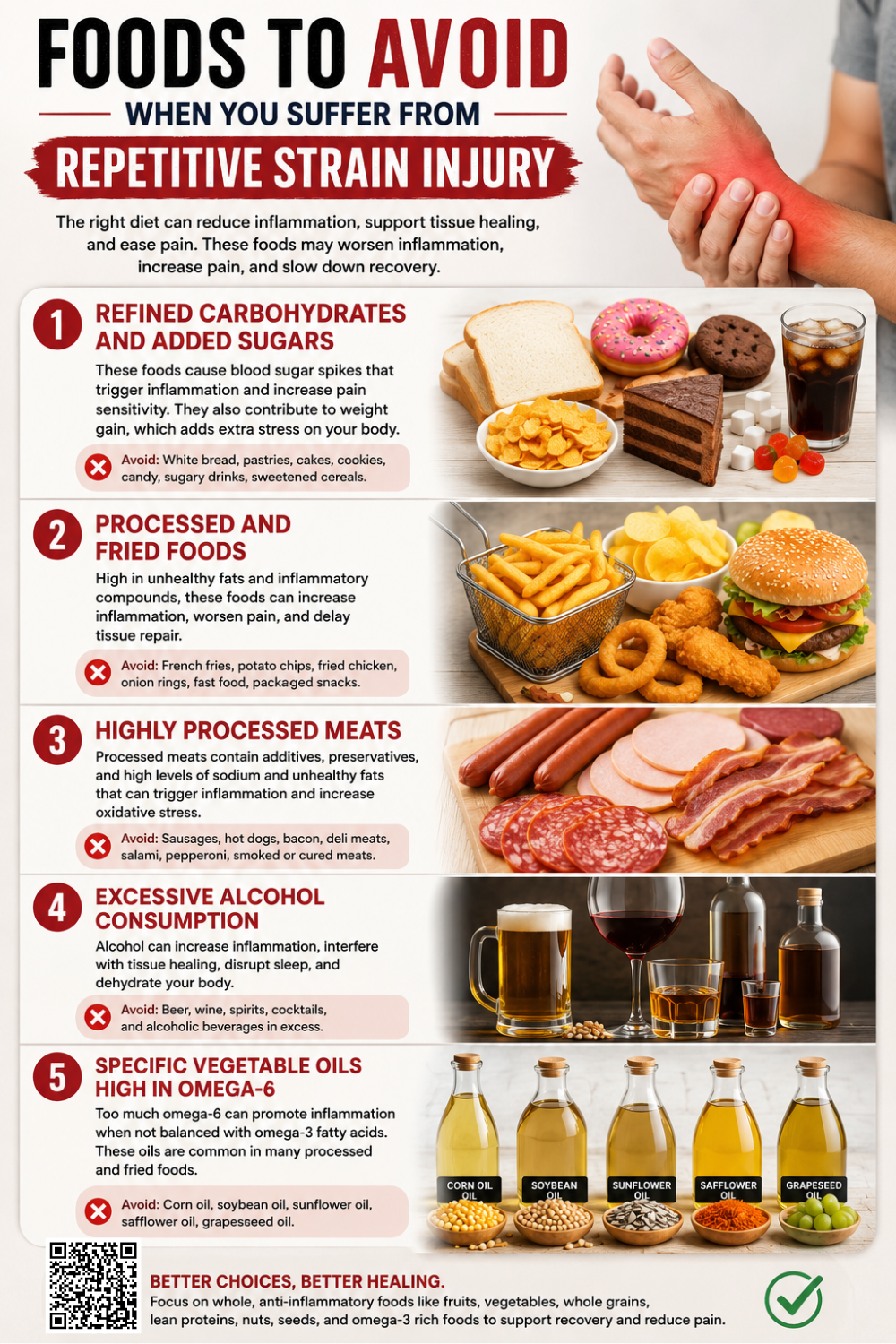 Foods to Avoid When You Suffer from Repetitive Strain Injury
1. Refined Carbohydrates and Added Sugars
High sugar intake triggers the release of inflammatory proteins known as cytokines. Excessive consumption contributes to chronic systemic inflammation, which can worsen pain in overused tendons and tissues. 87, 88
2. Processed and Fried Foods
These foods often contain high levels of trans fats and omega-6 fatty acids, which promote inflammatory responses throughout the body. These fats may hinder the body’s natural tissue repair process. 89, 90
3. Highly Processed Meats
Processed meats contain additives, nitrates, and high sodium levels that are linked to increased markers of inflammation. These components may interfere with blood flow and joint recovery. 85
4. Excessive Alcohol Consumption
Alcohol disrupts the body’s ability to regulate inflammatory pathways and can dehydrate tissues. This physiological stress complicates the healing of micro-trauma in tendons and muscles. 91, 92
5. Specific Vegetable Oils High in Omega-6
While essential in moderation, an imbalance of excessive omega-6 fats from corn or soybean oils can promote inflammation if not balanced by sufficient omega-3 intake. 93, 94
When to See a Doctor for Repetitive Strain Injury
1. Persistent or Worsening Pain
Seek medical evaluation if pain remains constant, increases in intensity, or fails to improve after two weeks of consistent rest and home-based symptom management.
2. Presence of Neurological Symptoms
Consult a professional if you experience numbness, tingling, “pins and needles” sensations, or significant weakness in the affected limb, as these suggest potential nerve compression. 95
3. Loss of Joint Function or Range of Motion
Professional assessment is necessary if you notice visible joint deformity, significant locking, or an inability to perform routine daily movements that were previously pain-free. 28
4. Signs of Acute Localized Infection
Immediate medical attention is required if the affected area becomes extremely red, hot to the touch, or if you develop a fever alongside localized joint swelling. 96
5. Symptoms Disrupting Sleep or Daily Tasks
See a doctor if injury symptoms are severe enough to interrupt your sleep patterns or consistently prevent you from performing essential work and personal activities.