

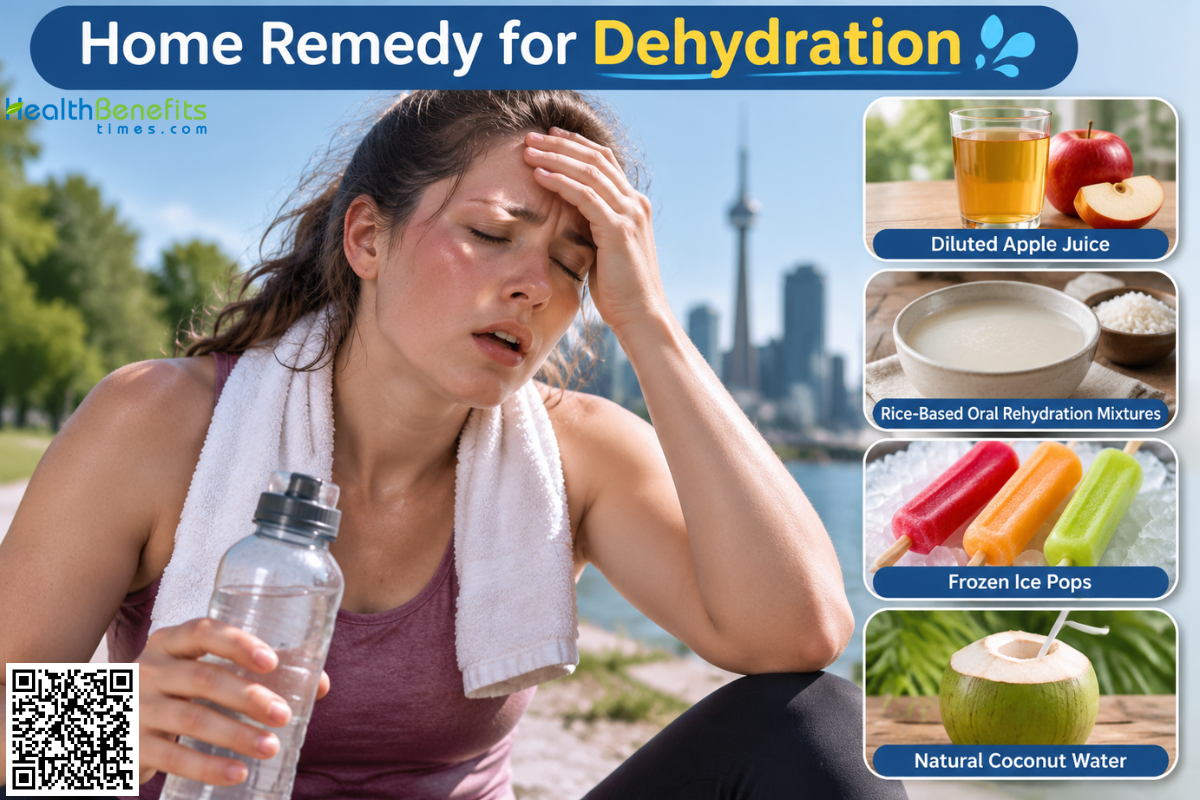
Dehydration is a clinical condition that occurs when the human body loses more fluids than it takes in, preventing normal physiological functions. Because water comprises approximately 60% of adult body weight, maintaining proper fluid balance is essential for regulating core temperature, protecting delicate tissues, and removing cellular waste 1. Mild dehydration begins when an individual loses just 1.5% to 2% of their total body water volume, a deficit that actively impairs cognitive performance, reduces energy levels, and causes noticeable physical fatigue 2. This fluid deficit typically results from inadequate water consumption, excessive sweating during physical activity, or acute illnesses that cause severe vomiting and diarrhea 3. If you experience early warning signs like extreme thirst, dry mouth, or dark-colored urine, you should promptly increase your fluid intake to prevent serious systemic complications.
Causes of Dehydration
1. Severe Diarrhea and Vomiting
Acute gastrointestinal infections cause a sudden, massive loss of water and essential electrolytes. This rapid fluid depletion makes it the leading cause of dangerous and life-threatening dehydration, particularly in young children and infants 4.
2. Fever
An elevated core body temperature increases the overall metabolic rate and accelerates invisible fluid loss through the surface of the skin and rapid breathing. Generally, the higher the fever, the greater the risk of severe fluid depletion 5.
3. Excessive Sweating
Engaging in vigorous physical activity or spending time in hot, humid environments forces the body to produce large amounts of sweat to cool down. If you do not actively replace these lost fluids while sweating heavily, your total body water volume will drop to harmful levels 6.
4. Increased Urination
Certain medical conditions, such as poorly managed diabetes, cause the kidneys to draw excess water into the urine to expel high levels of blood sugar, resulting in rapid fluid loss 7. Additionally, prescription medications like diuretics (water pills) intentionally force the body to excrete extra fluid and sodium.
5. Inadequate Fluid Intake
A simple failure to drink enough water can occur during illnesses that cause a sore throat or nausea, or due to a lack of access to safe drinking water. Furthermore, older adults naturally experience a diminished sense of thirst as they age, making them highly susceptible to accidental, gradual fluid deficits even when otherwise healthy 8.
Symptoms of Dehydration
1. Changes in Urination
One of the earliest and most reliable indicators of fluid depletion is a significant decrease in daily urine output. When the body lacks sufficient water, the kidneys actively conserve remaining fluids, which causes urine to become highly concentrated, resulting in a dark yellow or amber color and a strong odor 3.
2. Dry Mouth and Extreme Thirst
As total body water drops, saliva production immediately decreases, leading to a dry, sticky feeling inside the mouth and throat. Simultaneously, the brain triggers an intense sensation of thirst to encourage immediate fluid consumption 4.
3. Fatigue, Dizziness, and Confusion
Substantial fluid loss causes a drop in overall blood volume and blood pressure. This limits adequate oxygen and blood flow to the brain, which leads to sudden physical exhaustion, lightheadedness when standing up, and in severe cases, altered mental states or confusion, particularly in older adults 8.
4. Specific Signs in Infants and Children
Babies and young toddlers exhibit distinct physical symptoms when they experience fluid deficits. These clinical signs include crying without producing visible tears, unusually sunken eyes or cheeks, going three or more hours without a wet diaper, and a sunken soft spot on the top of the skull 5.
5. Rapid Heart Rate and Breathing
During advanced or severe dehydration, the heart must beat much faster to compensate for the heavily reduced blood volume in a final attempt to supply vital organs. If you or someone you are caring for experiences a racing heart, rapid breathing, severe confusion, or an inability to keep fluids down, you should seek immediate emergency medical care to prevent organ damage 4.
Home Remedy for Dehydration
1. Standard Oral Rehydration Solutions (ORS)
How it may help
An oral rehydration solution (ORS) contains a precise mixture of water, essential salts, and sugar. This specific ratio activates a biological mechanism in the intestines that rapidly pulls water and electrolytes directly into the bloodstream, restoring fluid balance much more effectively than plain drinking water 9.
What research says
Clinical evidence demonstrates that ORS safely treats mild to moderate dehydration caused by diarrhea. The World Health Organization confirms that prompt use of these solutions prevents dehydration from becoming severe, drastically reducing the need for intravenous fluids and lowering hospital admissions 10.
How to use it safely
You should mix commercial ORS powder exactly as the package directs, using only clean, safe drinking water. Drink small, frequent sips rather than gulping large amounts, especially if you feel nauseous. Never boil the prepared liquid, and discard any unused solution after 24 hours 11.
Potential precautions or side effects
Never mix ORS powder with milk, juice, or broth, as this alters the essential chemical balance 12. People with kidney disease must consult a doctor before using these solutions.
2. Frequent Sips of Plain Drinking Water
How it may help
Plain drinking water rapidly replaces basic fluid volume lost during daily activities, light exercise, or mild heat exposure. By absorbing directly into the bloodstream, it helps restore normal circulation, regulate core body temperature, and improve basic cellular function during the earliest stages of mild dehydration 13.
What research says
Clinical guidelines indicate that plain water effectively corrects mild, everyday fluid deficits in healthy adults. However, research concludes it is insufficient for treating moderate to severe dehydration caused by acute diarrhea or heavy sweating, because it lacks the sodium and potassium required to fully restore chemical balance 1.
How to use it safely
You should take small, continuous sips of room-temperature water rather than gulping large amounts at once, which can trigger stomach cramps or vomiting. Aim to drink steadily throughout the day to gradually rebuild your overall fluid levels without overwhelming your digestive system 12.
Potential precautions or side effects
You should avoid drinking massive quantities of plain water rapidly, as this can dangerously dilute blood sodium levels, leading to a severe condition known as water intoxication or hyponatremia 14.
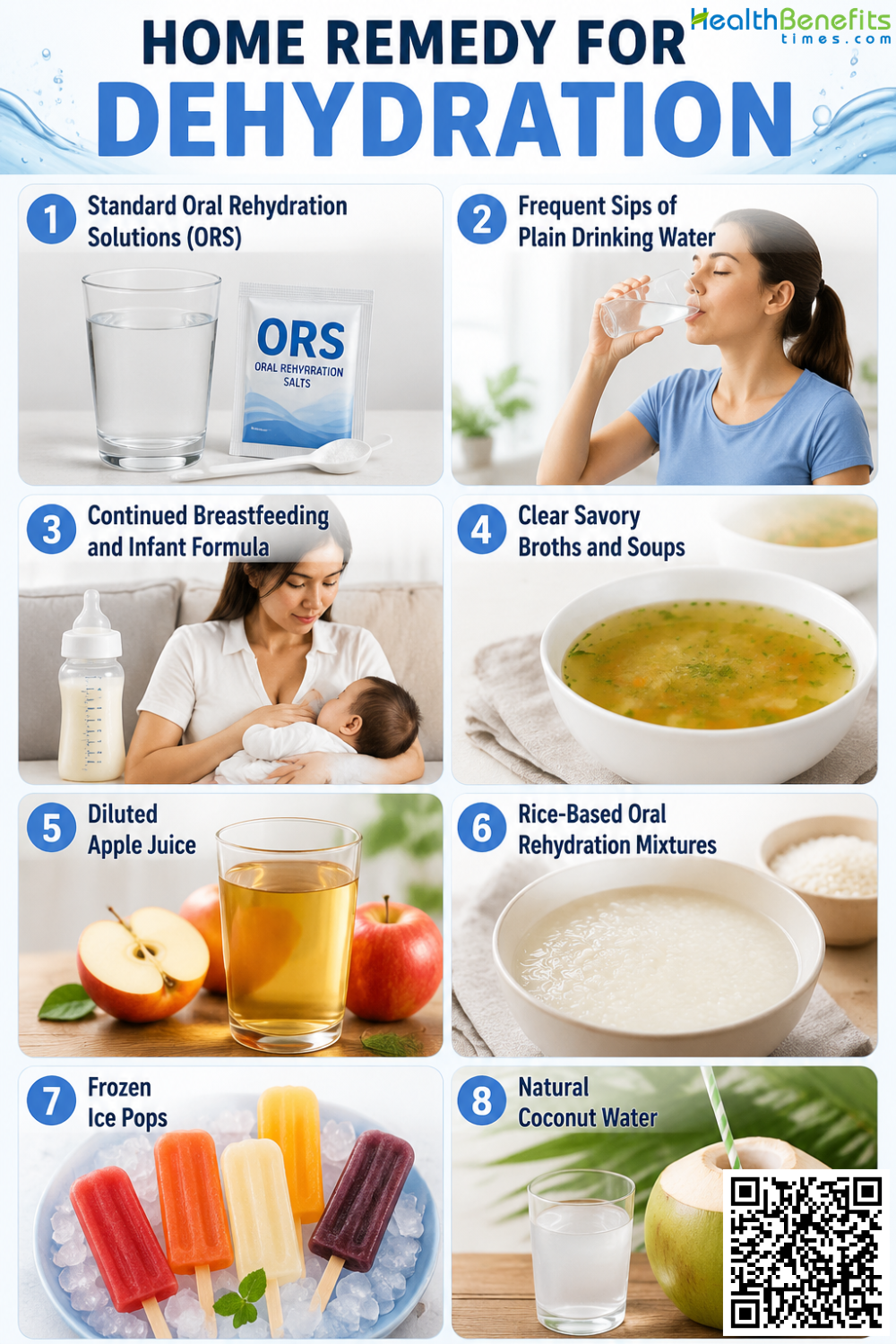
3. Continued Breastfeeding and Infant Formula
How it may help
Breast milk and standard infant formula provide an optimal balance of water, essential nutrients, and natural electrolytes. Continuing these regular feedings directly replaces fluids lost through gastrointestinal illness while simultaneously supplying the necessary calories to maintain an infant’s energy levels and support recovery 5.
What research says
Pediatric clinical guidelines strictly advise against pausing breastfeeding or formula feeding during digestive illnesses. Evidence confirms that maintaining a standard milk diet does not prolong diarrhea and actively accelerates the healing of the intestinal lining compared to restricting a sick infant to clear fluids alone 10.
How to use it safely
If your baby is vomiting, you should offer shorter, more frequent feeding sessions to help their stomach process the liquid. Never dilute infant formula with extra water, as this causes dangerous chemical imbalances. Instead, prepare formula exactly as directed on the packaging 15.
Potential precautions or side effects
You must seek emergency medical care if your infant refuses to nurse, cannot produce tears, or has not had a wet diaper in three hours 5.
4. Clear Savory Broths and Soups
How it may help
Clear savory broths supply both essential fluids and sodium, a critical mineral depleted during heavy sweating or diarrhea. Because they are easily absorbed by the digestive tract, these liquids quickly restore basic blood volume and stabilize electrolyte levels without placing extra stress on an upset stomach 12.
What research says
Clinical guidelines classify clear broths as acceptable early interventions for preventing mild fluid loss in adults. However, medical research concludes that because broths lack precise, scientifically balanced ratios of potassium and carbohydrates, they cannot safely replace standard oral rehydration solutions when treating moderate or severe dehydration 10.
How to use it safely
You should consume lukewarm, clear broths slowly in small sips to avoid triggering nausea. Select simple chicken or vegetable broths and strictly avoid heavy, cream-based soups or those with high fat content, as fat is harder to digest and can worsen existing diarrhea 12.
Potential precautions or side effects
You should avoid commercial broths with excessive sodium if you have high blood pressure. Furthermore, clear broths lack adequate calories and cannot sustain long-term nutritional needs during extended illnesses 16.
5. Diluted Apple Juice
How it may help
Diluted apple juice provides a palatable source of water and natural carbohydrates to quickly replenish fluid deficits. Because the taste is highly familiar and appealing, children who refuse medicinal electrolyte drinks are much more likely to consume adequate fluid volumes when offered a diluted juice mixture 17.
What research says
Clinical research demonstrates that offering half-strength apple juice to children with mild gastrointestinal dehydration results in fewer treatment failures than using standard oral rehydration solutions. Experts conclude this approach safely prevents severe dehydration and reduces the need for intravenous hospital fluids in mildly ill pediatric patients 17.
How to use it safely
You should strictly mix one part pure apple juice with one part clean water to create a half-strength solution. Offer this mixture in small, frequent sips to young children experiencing mild fluid loss, but never use it as a primary treatment for severe symptoms 17.
Potential precautions or side effects
You must never serve undiluted fruit juice for dehydration. High sugar concentrations pull excess water into the intestines, which actively worsens diarrhea and accelerates dangerous fluid loss 12.
6. Rice-Based Oral Rehydration Mixtures
How it may help
Rice-based mixtures replace simple sugars with complex carbohydrates. As the digestive system breaks down the rice powder, it slowly releases glucose, which actively draws water and vital salts back into the bloodstream. This gradual process maximizes fluid absorption without pulling excess water into the gut 10.
What research says
Clinical studies conclude that rice-based oral rehydration solutions are highly effective at treating dehydration caused by severe diarrhea. Research demonstrates that these formulations significantly reduce total stool volume and shorten the overall duration of illness when compared to standard, glucose-based rehydration treatments 18.
How to use it safely
You should prepare commercial rice-based rehydration powders using strictly clean, purified water according to the exact package directions. Alternatively, you can consume the starchy water leftover from boiling rice. Drink the solution in small, steady sips throughout the day to gently restore lost fluids 11.
Potential precautions or side effects
You must refrigerate homemade rice water immediately and discard any unused portions after 24 hours to prevent dangerous bacterial growth. Never add excessive salt to homemade mixtures 9.
7. Frozen Ice Pops
How it may help
Frozen ice pops provide a highly effective method for gradually introducing fluids. Because they melt slowly, they deliver water at a controlled rate, which actively prevents sudden stomach stretching and reduces the reflex to vomit during gastrointestinal illnesses 5.
What research says
Clinical pediatric guidelines endorse the use of frozen fluids to manage mild fluid deficits in children who refuse traditional liquids. Experts conclude that the slow ingestion rate minimizes nausea, safely restoring hydration levels without triggering the vomiting associated with drinking large volumes quickly 4.
How to use it safely
You should offer ice pops specifically formulated with oral rehydration salts or freeze half-strength apple juice. Allow the person to consume the frozen fluid slowly over time, rather than biting off and quickly swallowing large, cold pieces 12.
Potential precautions or side effects
You must avoid standard, high-sugar commercial popsicles. Excessive sugar draws water directly into the gut, which actively worsens diarrhea and accelerates dangerous fluid loss 5.
8. Natural Coconut Water
How it may help
Natural coconut water provides a rich source of potassium alongside natural carbohydrates and trace sodium. This unique mineral composition allows it to effectively replenish basic fluids and essential electrolytes lost through moderate physical exertion or mild heat exposure, functioning similarly to commercial electrolyte beverages 19.
What research says
Clinical trials conclude that fresh coconut water is just as effective as commercial sports drinks for restoring hydration after mild exercise. However, researchers emphasize that it lacks the precise, high sodium levels required to safely treat moderate to severe fluid loss caused by acute diarrhea 19.
How to use it safely
You should choose unsweetened, pure coconut water to avoid consuming excess added sugars that can irritate the digestive tract. Drink it slowly in small, continuous sips to gently restore hydration levels following moderate sweating or mild daily activities 13.
Potential precautions or side effects
You must avoid excessive consumption of coconut water if you have advanced kidney disease, as its exceptionally high potassium levels can trigger dangerous blood imbalances and cardiovascular complications 20.
Foods to Avoid When You Suffer from Dehydration
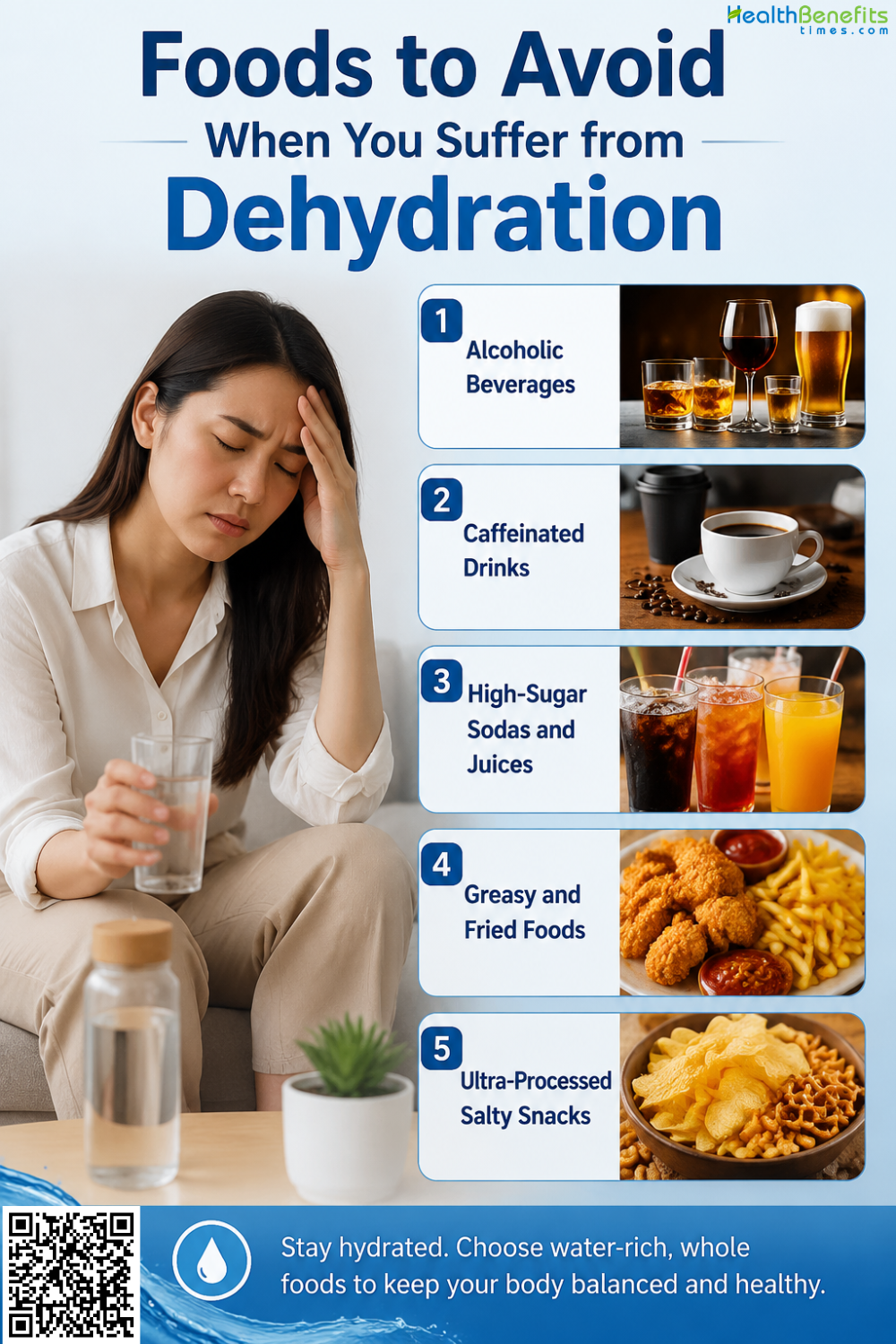
1. Alcoholic Beverages
Alcohol suppresses the antidiuretic hormone, forcing the kidneys to excrete excess water through increased urination, which rapidly accelerates dangerous fluid loss and worsens clinical dehydration 21.
2. Caffeinated Drinks
Coffee and energy drinks function as mild diuretics. Consuming high amounts of caffeine stimulates the kidneys to expel extra water, actively worsening existing fluid deficits 21.
3. High-Sugar Sodas and Juices
Excessive concentrated sugar draws water directly into the intestines. This biological process actively worsens diarrhea and accelerates dangerous fluid depletion during gastrointestinal illnesses 21.
4. Greasy and Fried Foods
High-fat foods are difficult to digest. They delay stomach emptying and frequently trigger severe nausea or intensify diarrhea, significantly complicating your ability to retain oral fluids 21.
5. Ultra-Processed Salty Snacks
Consuming heavy amounts of processed salt without adequate water forces the kidneys to draw upon already depleted fluid reserves to safely process and excrete the excess minerals 12.
When to See a Doctor When You Struggle from Dehydration
1. Inability to Retain Fluids
You should seek immediate medical care if you experience continuous vomiting and cannot keep any oral fluids down for more than 24 hours 5.
2. Extreme Lethargy or Confusion
Emergency intervention is necessary if you display extreme physical fatigue, sudden mental confusion, severe dizziness when standing up, or a complete loss of consciousness 4.
3. Significant Decrease in Urination
You must contact a healthcare provider immediately if you have not urinated in eight hours, or if an infant goes three hours without a wet diaper 5.
4. Bloody Stools and Severe Pain
Consult a physician immediately if your dehydration is accompanied by severe abdominal cramping or if you observe blood or black, tar-like material in your stool 22.
5. Visible Sunken Features in Children
You should bring infants to a doctor immediately if they cry without producing visible tears, or if they develop unusually sunken eyes, cheeks, or soft spots 5.