

Alzheimer’s disease is a progressive brain disorder and the most frequent underlying cause of dementia. It clinically manifests as a gradual but severe decline in memory, problem-solving abilities, and the capacity to perform routine daily tasks 1. At the cellular level, the condition is driven by the abnormal buildup of two specific structures: amyloid plaques that accumulate between nerve cells, and tangled bundles of tau protein fibers that form inside them 2. These microscopic deposits physically damage the brain by blocking communication across synapses, triggering harmful inflammation, and ultimately causing widespread nerve cell death 3. While the disease typically begins with mild forgetfulness, it relentlessly advances to a stage where affected individuals lose basic motor functions and the ability to recognize their surroundings, accounting for up to 80% of all clinical dementia cases 4.
Causes of Alzheimer’s disease
1. Advancing Age
Age is the most significant known risk factor for developing Alzheimer’s disease. While the condition is not a normal part of aging, the likelihood of diagnosis increases substantially as people get older. The majority of individuals with the disease begin showing symptoms after age 65, and the overall risk continues to double every five years beyond that point 5.
2. Genetics and Family History
An individual’s genetic makeup plays a major role in their risk. Having a biological parent or sibling with Alzheimer’s increases the likelihood of developing the condition. Specifically, carrying the APOE ε4 genetic variant strongly correlates with a higher risk of late-onset Alzheimer’s. Additionally, rare genetic mutations—such as APP, PSEN1, and PSEN2—directly cause early-onset Alzheimer’s, which typically affects people before age 65 6.
3. Abnormal Protein Accumulation
The direct biological cause of Alzheimer’s involves the toxic buildup of two specific proteins in the brain. Beta-amyloid fragments cluster together to form sticky plaques outside of nerve cells, while abnormal tau proteins form twisted tangles inside the cells. These structures physically disrupt cellular communication, trigger damaging inflammation, and ultimately cause the brain cells to die 7.
4. Cardiovascular Conditions
Brain health is heavily dependent on heart health. Medical conditions that damage the heart or blood vessels—such as high blood pressure, high cholesterol, and uncontrolled diabetes—reduce the flow of oxygen-rich blood to the brain. This vascular damage significantly increases the risk of developing dementia and Alzheimer’s disease 8.
5. Lifestyle and Environmental Factors
Daily habits consistently influence the risk of cognitive decline. Physical inactivity, a poor diet, smoking, and excessive alcohol consumption all contribute to a higher risk of Alzheimer’s disease. Conversely, maintaining a healthy lifestyle, correcting hearing loss, and staying socially and mentally active can help protect brain function and potentially delay the onset of the disease 9.
6. Traumatic Brain Injury (TBI)
Experiencing a moderate or severe head injury can increase the long-term risk of developing Alzheimer’s disease. Head injuries such as concussions, especially when they occur repeatedly or result in a loss of consciousness, can trigger structural changes in the brain that leave it more vulnerable to dementia later in life 10.
Symptoms of Alzheimer’s disease
1. Memory Loss Disrupting Daily Life
The earliest and most common clinical sign is the inability to retain newly learned information. Individuals frequently repeat questions, rely heavily on memory aids, and forget important dates or appointments that they previously managed independently 11.
2. Challenges in Planning and Problem-Solving
Affected individuals often experience a marked decline in their ability to make plans and work with numbers. They may struggle to follow a familiar recipe, keep track of monthly bills, or manage tasks that require following a sequential set of instructions 12.
3. Difficulty Completing Familiar Tasks
Routine daily activities become increasingly difficult to execute. This can manifest as getting lost while driving to a frequently visited location, forgetting the rules of a favorite game, or being unable to complete basic personal grooming routines such as bathing and dressing.
4. Confusion with Time or Place
Patients frequently lose track of dates, seasons, and the passage of time. They may forget where they are or how they arrived at their current location, which often leads to dangerous wandering behaviors as the disease progresses 13.
5. Visual and Spatial Difficulties
The disease damages areas of the brain responsible for processing visual information. This causes impairments such as difficulty determining color or contrast, judging distances, and accurately identifying objects, which significantly increases the risk of falls and driving accidents.
6. New Problems with Language
Communication skills steadily deteriorate as the brain’s language centers are physically compromised. Individuals may stop abruptly in the middle of a conversation, struggle to find the correct vocabulary words, or call familiar everyday objects by the wrong name.
7. Misplacing Objects and Losing Retracing Abilities
People with Alzheimer’s disease often put items in unusual or illogical places. As cognitive decline worsens, they lose the mental capacity to retrace their steps to find these missing items, sometimes leading to paranoia or false accusations of theft against their caregivers.
8. Impaired Judgment and Decision-Making
The condition significantly degrades a person’s ability to evaluate situations logically. This impaired reasoning can result in giving away large amounts of money to scams, neglecting physical hygiene, or behaving inappropriately in public social settings.
9. Withdrawal from Work and Social Activities
As memory and communication difficulties become more pronounced and overwhelming, individuals often retreat from hobbies, social engagements, and work projects. They may actively avoid social interactions to conceal their cognitive struggles from family and friends.
10. Changes in Mood and Personality
The physical destruction of brain tissue directly alters behavior and emotional regulation. Common personality changes include increased apathy, clinical depression, severe anxiety, spontaneous aggression, and unfounded suspicions toward close family members.
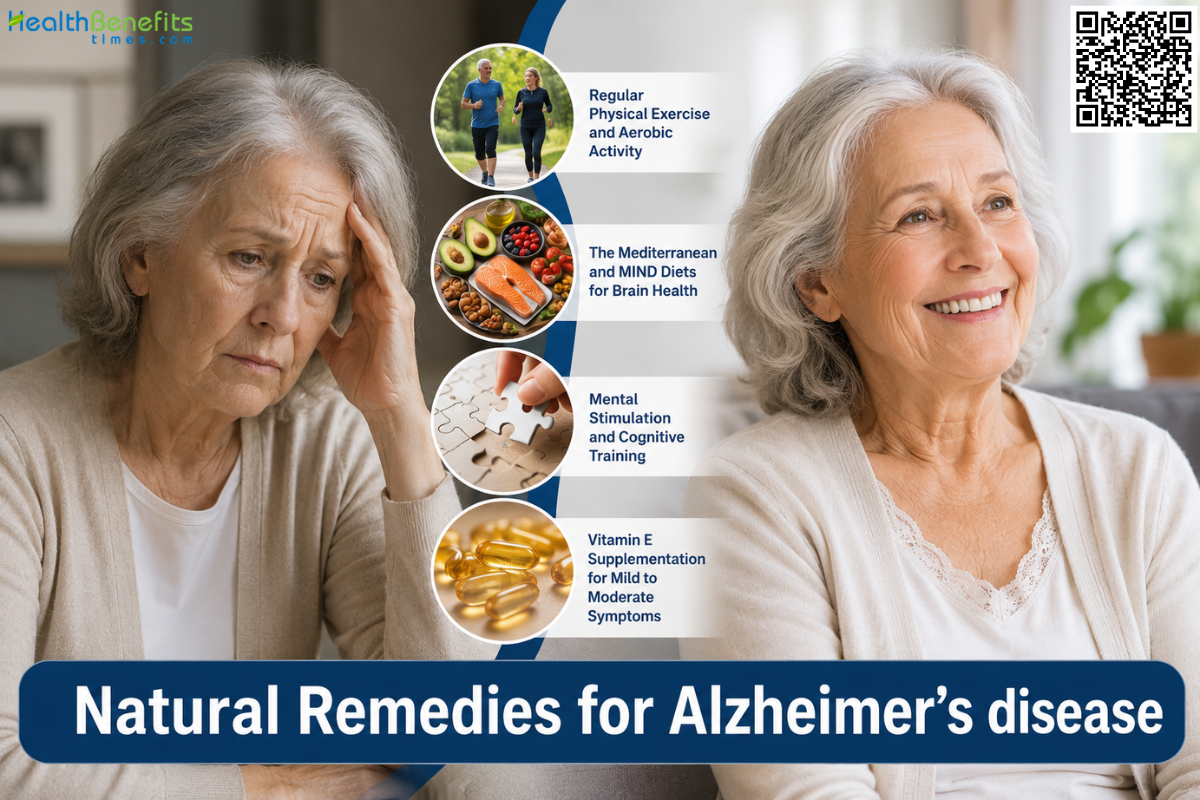
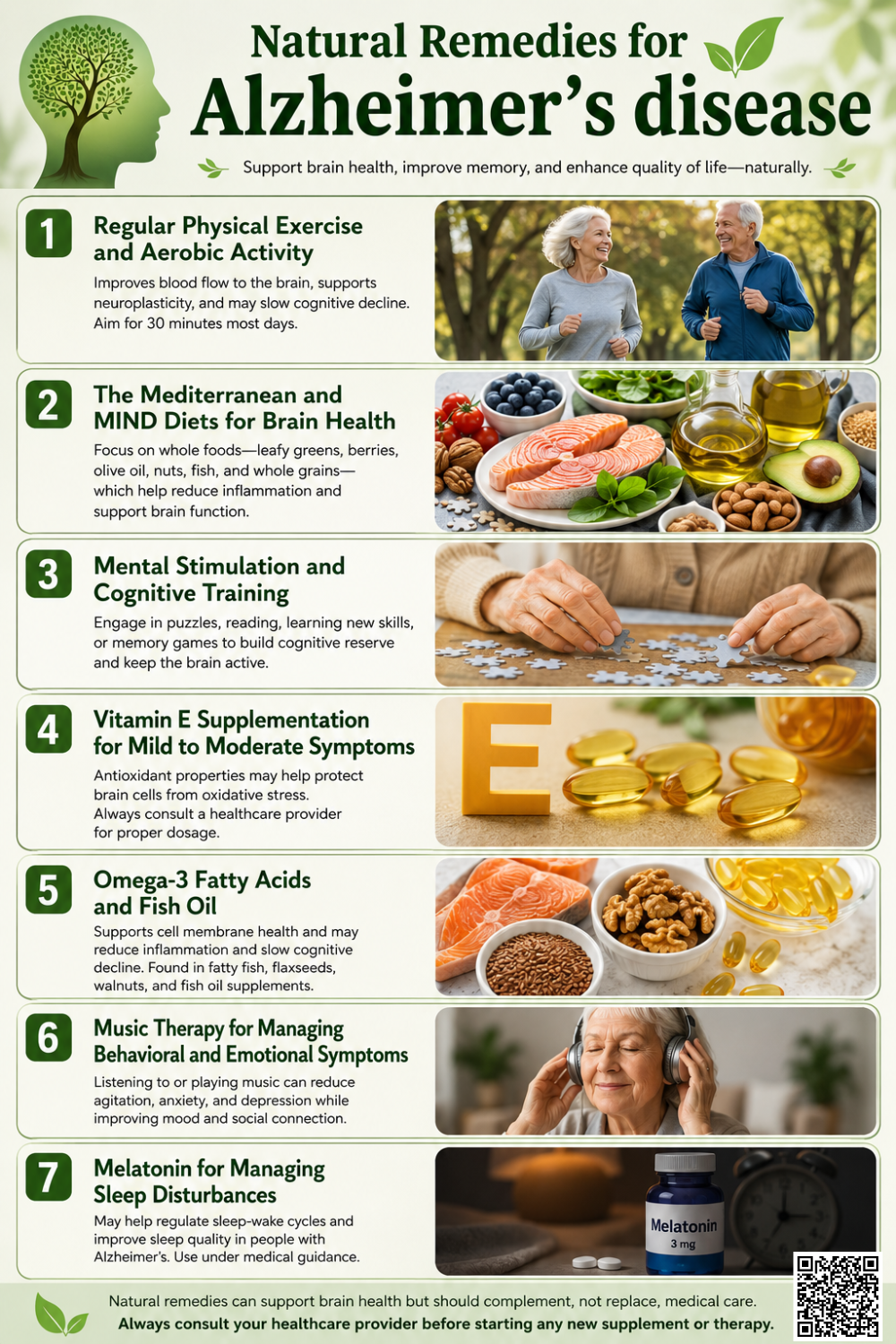 Natural Remedies for Alzheimer’s disease
1. Regular Physical Exercise and Aerobic Activity
How it may help
Physical activity increases blood flow to the brain, delivering essential oxygen and nutrients. This process supports the survival of existing brain cells and encourages the growth of new neural connections. Regular exercise also helps reduce brain inflammation and prevents the physical shrinkage of brain areas responsible for memory formation 14.
What research says
Clinical studies conclude that consistent physical activity significantly lowers the risk of developing cognitive decline and dementia. For individuals already diagnosed with Alzheimer’s disease, research indicates that maintaining a regular exercise routine can slow the progression of symptoms and preserve independent daily functioning for a longer period 15.
How to use it safely
You should aim for 150 minutes of moderate aerobic activity, such as brisk walking or swimming, each week 16. Break this into manageable 10- or 30-minute sessions. Always wear supportive footwear and exercise in well-lit, familiar environments to prevent disorientation and physical injuries.
Potential precautions or side effects
Always consult your healthcare provider before starting a new exercise routine. Stop immediately if you experience dizziness, chest pain, or severe shortness of breath during physical activity 17.
2. The Mediterranean and MIND Diets for Brain Health
How it may help
The MIND diet, a hybrid of the Mediterranean and DASH eating patterns, provides nutrients with powerful anti-inflammatory and antioxidant properties. By emphasizing plant-based foods and limiting saturated fats, these diets reduce harmful brain inflammation, protect against cellular oxidative stress, and support overall neural health to preserve cognitive function 18.
What research says
Clinical studies demonstrate that strict adherence to the MIND and Mediterranean diets significantly slows the overall rate of cognitive decline. Research indicates that individuals who closely follow the MIND diet can reduce their risk of developing Alzheimer’s disease by up to 53%, maintaining better memory and thinking skills.
How to use it safely
Focus your daily meals on vegetables, berries, whole grains, nuts, olive oil, and fish while limiting red meat, butter, and sweets. Always consult your healthcare provider before making major dietary changes to ensure the plan safely aligns with your personal medical history.
Potential precautions or side effects
Major dietary shifts can impact blood sugar levels or interact with medications. Discuss new nutritional plans with a doctor first, particularly if you manage pre-existing cardiovascular or metabolic conditions.
3. Mental Stimulation and Cognitive Training
How it may help
Engaging the brain in challenging activities helps build cognitive reserve, which is the brain’s ability to adapt and find alternative ways to complete tasks. This mental stimulation strengthens neural networks, potentially compensating for the cellular damage and nerve connection loss caused by Alzheimer’s disease.
What research says
Clinical trials indicate that formal cognitive training improves memory and reasoning skills in older adults, with benefits sometimes lasting up to a decade. While engaging in mentally stimulating activities delays the onset of cognitive decline, current evidence suggests it does not stop the underlying physical brain changes associated with the disease.
How to use it safely
You should incorporate mentally engaging activities into your daily routine, such as reading, learning a new language, playing musical instruments, or completing puzzles. Choose activities you find genuinely enjoyable and varied to prevent frustration and reduce performance-related stress.
Potential precautions or side effects
Avoid purchasing expensive, unproven commercial brain-training programs that promise to cure dementia. If an activity causes you extreme frustration, stop and switch to a more comfortable task.
4. Vitamin E Supplementation for Mild to Moderate Symptoms
How it may help
Vitamin E is a powerful antioxidant that protects brain cells from oxidative stress, a chemical process that causes cellular damage and accelerates cognitive decline. By neutralizing harmful free radicals, it may help preserve the structural integrity of neural membranes and slow the degradation of nerve cells 19.
What research says
Clinical trials indicate that high doses of vitamin E can moderately delay the decline of daily living skills in individuals with mild to moderate Alzheimer’s disease. However, research confirms it does not prevent the condition, reverse memory loss, or cure the underlying brain damage.
How to use it safely
You must only take high-dose vitamin E under strict medical supervision. Because the clinical dosages used for Alzheimer’s disease far exceed the standard daily recommended intake, a healthcare provider needs to monitor your treatment closely to prevent dangerous toxic accumulation in the body 20.
Potential precautions or side effects
High doses of vitamin E increase bleeding risks and interact dangerously with blood-thinning medications. Elevated intake is also linked to a higher risk of cardiovascular events and overall mortality.
5. Omega-3 Fatty Acids and Fish Oil
How it may help
Omega-3 fatty acids, specifically DHA, are essential building blocks for brain cell membranes. They promote healthy communication between neurons and reduce inflammation in brain tissue. Some evidence suggests these healthy fats may help clear the toxic beta-amyloid proteins that form destructive plaques in Alzheimer’s disease 21.
What research says
Observational studies show that consuming a diet rich in fatty fish correlates with a lower risk of cognitive decline. However, large clinical trials conclude that taking omega-3 or fish oil supplements does not slow the progression of cognitive impairment or treat existing Alzheimer’s disease 22.
How to use it safely
You should prioritize getting omega-3s from whole-food sources by eating fatty fish, such as salmon or sardines, twice a week 23. If you choose to take fish oil capsules, consult your doctor to determine the correct dosage and ensure they are safe for your specific health profile.
Potential precautions or side effects
High doses of fish oil supplements can cause gastrointestinal discomfort and significantly increase bleeding risks, especially if you take blood-thinning medications or have an upcoming surgery.
6. Music Therapy for Managing Behavioral and Emotional Symptoms
How it may help
The brain regions responsible for processing musical memories often remain undamaged even in the late stages of Alzheimer’s disease. Listening to familiar music stimulates these preserved neural pathways, which helps reduce severe anxiety, elevate depressed moods, and foster emotional connections when verbal communication becomes difficult 24.
What research says
Clinical research demonstrates that music therapy significantly decreases agitation, aggression, and disruptive behaviors in patients with dementia. While scientific studies conclude that musical interventions do not reverse memory loss or cure the disease, they consistently improve the overall quality of life for both patients and caregivers 25.
How to use it safely
You should play familiar songs from the person’s youth to trigger positive memories. Keep the volume moderate to avoid sensory overload. Play calming music during stressful daily routines, such as bathing, to create a soothing environment and reduce patient resistance 26.
Potential precautions or side effects
Watch closely for signs of overstimulation. Loud or chaotic music can increase agitation, and certain songs might accidentally trigger distressing memories instead of positive ones.
7. Melatonin for Managing Sleep Disturbances
How it may help
Alzheimer’s disease frequently damages the brain areas responsible for regulating the internal body clock, leading to severe nighttime wakefulness and evening agitation known as sundowning. Melatonin is a naturally occurring hormone that signals the body it is time to sleep, helping to reset these disrupted sleep-wake cycles 27.
What research says
Clinical studies yield mixed results regarding melatonin’s effectiveness for dementia patients. While some research indicates it can improve nighttime sleep duration and slightly reduce evening agitation, clinical trials conclude it does not improve cognitive function or slow the overall physical progression of Alzheimer’s disease 28.
How to use it safely
You should only use melatonin for an individual with Alzheimer’s under a doctor’s strict supervision. Start with the lowest possible dose shortly before bedtime. Combine this with maintaining a consistent daily schedule, increasing daytime sunlight exposure, and limiting late-afternoon naps.
Potential precautions or side effects
Melatonin can cause excessive daytime drowsiness, dizziness, and confusion, which increases fall risks. It also interacts dangerously with certain blood pressure medications, diabetes treatments, and blood thinners.
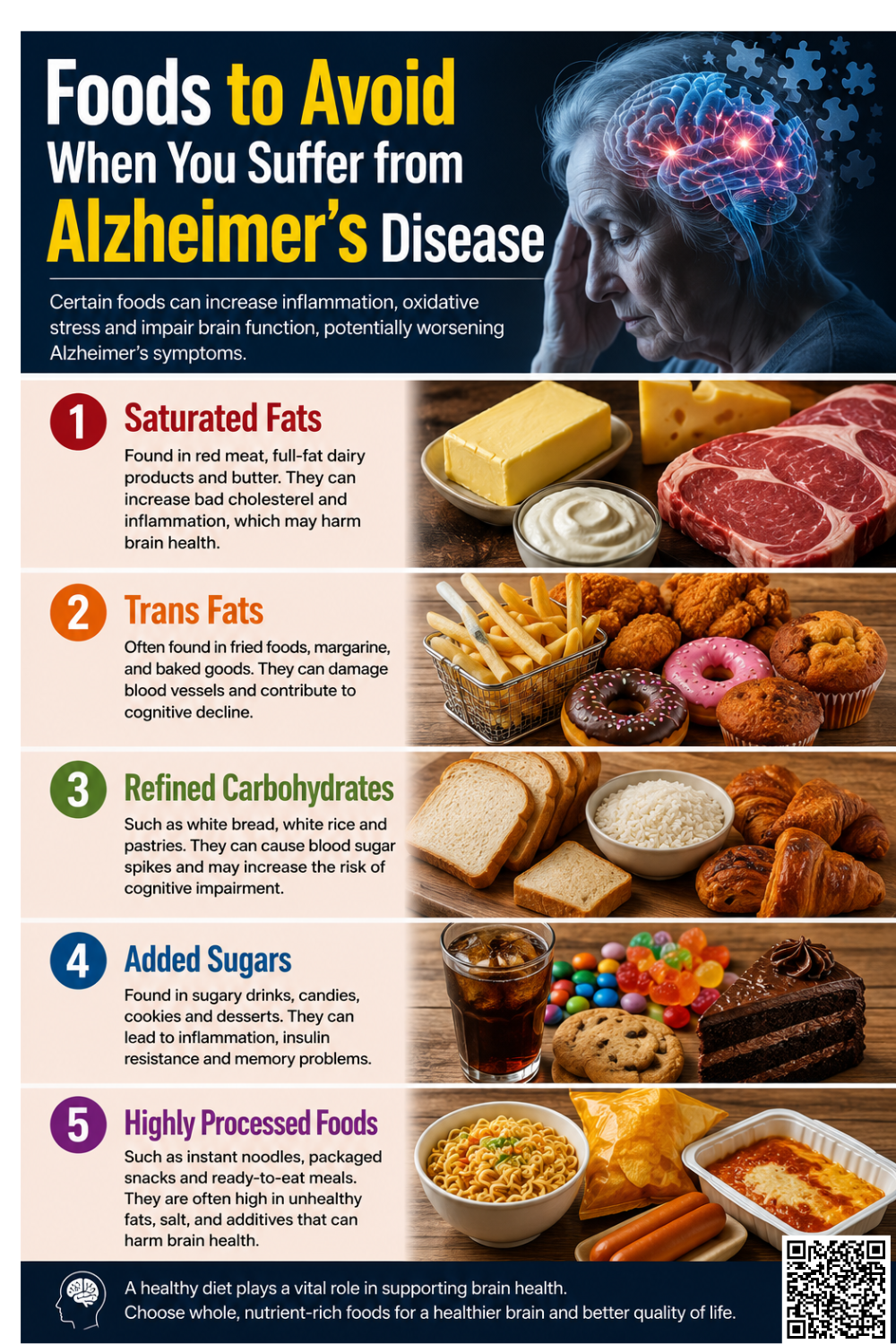 Foods to Avoid When You Suffer from Alzheimer’s Disease
1. Saturated Fats
Consuming excess saturated fats, such as butter and red meat, increases amyloid plaque formation in the brain, directly accelerating cognitive decline in Alzheimer’s patients 29.
2. Trans Fats
Found in partially hydrogenated oils and fried items, trans fats trigger severe inflammation and disrupt brain cell communication, making them highly detrimental to neurological health.
3. Refined Carbohydrates
White bread and white rice cause rapid spikes in blood sugar, contributing to insulin resistance which negatively impacts memory and accelerates the progression of dementia 30.
4. Added Sugars
Sugary beverages and desserts drive chronic inflammation and oxidative stress in the brain, conditions that actively worsen the neurodegenerative symptoms of Alzheimer’s disease 31.
5. Highly Processed Foods
Pre-packaged meals often contain hidden sugars, unhealthy fats, and excess sodium that damage vascular health, limiting vital blood flow to the brain and impairing cognitive function.
When To see Doctor when you suffer from Alzheimer’s disease
1. Rapid Cognitive Decline
Sudden worsening of memory or extreme confusion requires immediate medical evaluation to rule out reversible causes like systemic infections, vitamin deficiencies, or severe medication side effects.
2. Severe Behavioral Changes
Consult a physician if you observe sudden aggression, severe agitation, paranoia, or visual hallucinations, as these symptoms heavily compromise safety and require targeted clinical management.
3. New Physical Symptoms
Emerging physical issues, including severe muscle stiffness, trembling, unexplained falls, or a sudden loss of balance, indicate the need for a neurological examination to assess disease progression.
4. Inability to Manage Daily Tasks
When a patient abruptly loses the ability to safely perform essential daily activities, such as managing medications or preparing meals, a doctor must evaluate their functional capacity 32.
5. Significant Sleep Disturbances
Severe disruptions in routine sleep patterns, including wandering during the night or extreme daytime sleepiness, warrant a clinical assessment to prevent patient injury and manage neurological changes.