

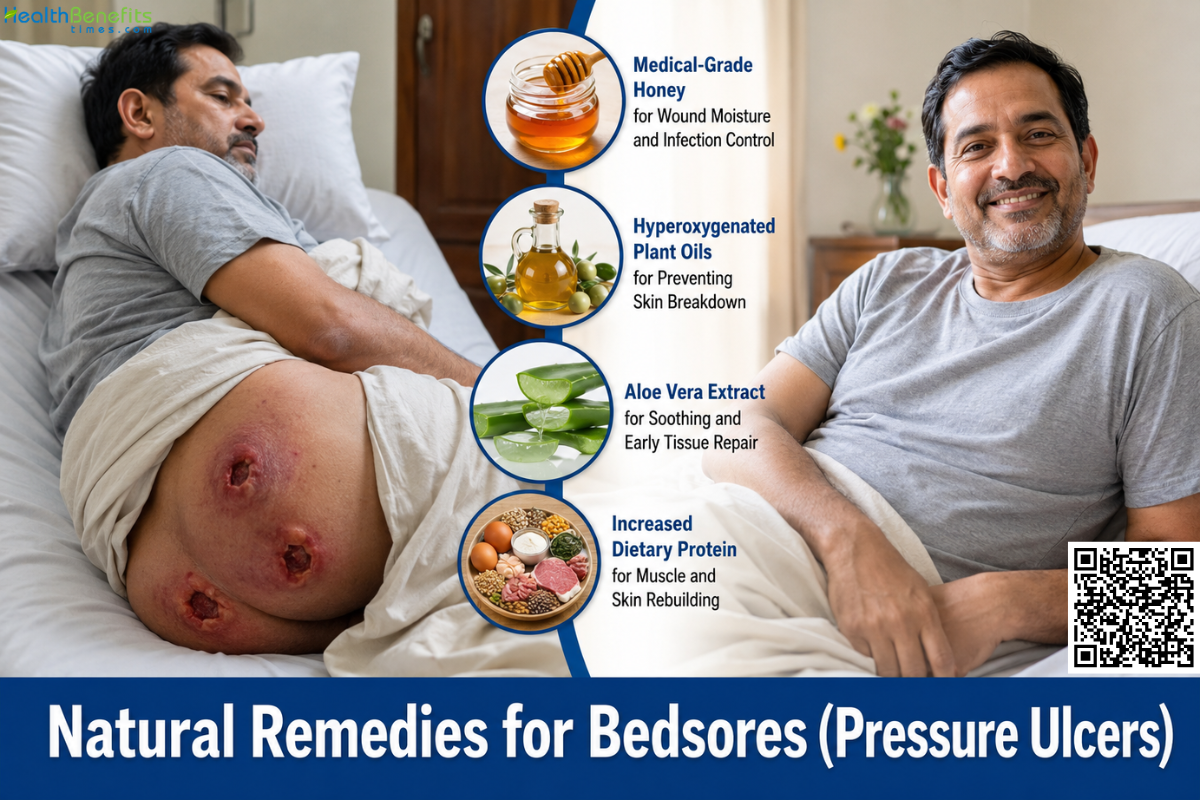
Bedsores, clinically known as pressure ulcers or decubitus ulcers, are localized injuries to the skin and underlying soft tissues. These wounds develop when prolonged pressure, often combined with friction or shear, compresses the skin against a hard surface and restricts normal blood flow 1. This constant compression pinches off tiny blood vessels, depriving the affected area of essential oxygen and nutrients, which ultimately causes the starved tissues to die and form open wounds 2. Pressure ulcers most frequently occur over bony areas with minimal padding, such as the heels, tailbone, hips, and elbows. Clinical guidelines identify that individuals who are bedridden, rely on a wheelchair, or experience significant mobility limitations face the highest risk of developing these lesions 3. Because this tissue damage can progress rapidly into deep muscle or bone, frequent repositioning and prompt pressure relief are critical to preventing severe medical complications.
Causes of Bedsores (Pressure Ulcers)
1. Continuous Pressure
The primary cause of a bedsore is constant weight placed on a specific area of the body, which compresses the skin and soft tissues against a hard surface like a mattress or wheelchair. This compression pinches the local blood vessels and cuts off circulation, starving the tissues of oxygen and vital nutrients, which ultimately causes the cells to die and a wound to form.
2. Shearing Forces
Shear happens when layers of tissue and bone slide in opposite directions, such as when a person rests in an inclined hospital bed and gravity pulls their skeleton downward while their outer skin remains stuck to the sheets. This internal sliding bends and severely kinks the blood vessels beneath the skin, cutting off the blood supply much faster and more easily than direct downward pressure alone.
3. Surface Friction
Friction occurs when the skin repeatedly rubs against coarse bedding, clothing, or medical equipment. While rubbing usually only strips away the top layer of the skin, it drastically weakens the skin’s protective outer barrier, making the area significantly more vulnerable to rapid tissue breakdown when combined with pressure or shear.
4. Profound Immobility
While not a direct mechanical force, severe immobility serves as an essential indirect cause that initiates the damage. When patients are comatose, paralyzed, or heavily sedated, they lose the normal bodily reflex to shift their weight in response to discomfort, allowing pressure-induced tissue starvation to persist for hours unhindered until necrosis (tissue death) occurs.
Symptoms of Bedsores (Pressure Ulcers)
1. Skin Discoloration (Non-Blanching Erythema)
The earliest visual symptom is a localized change in skin color that does not turn pale when pressed with a finger. In lighter skin tones, the area typically remains continuously red, whereas in darker skin tones, the affected patch may look purple, blue, or noticeably darker than the surrounding healthy tissue 4.
2. Changes in Texture and Temperature
Before the skin surface actually breaks, the damaged area often feels physically different from adjacent healthy skin. The injured spot may become unusually firm, hardened, or uncharacteristically soft and spongy, and it frequently radiates more heat or feels abnormally cool to the touch.
3. Localized Pain and Tenderness
Even without a visible open cut, the compressed skin and underlying tissue often become highly sensitive, painful, or itchy. This localized discomfort serves as a critical clinical warning sign of oxygen deprivation in the tissues and impending skin breakdown.
4. Open Blisters or Shallow Sores
As tissue death progresses through the top layers of the skin, the area develops into a shallow, pink or red open wound. It can also initially present as a fluid-filled blister, which may eventually rupture and leave the delicate underlying tissue exposed.
5. Deep Crater Formation
When the ulcer advances, the skin completely breaks down, creating a deep, crater-like cavity. At this stage, the underlying yellowish body fat becomes clearly visible within the wound bed, indicating full-thickness structural tissue loss.
6. Exposed Muscle, Tendon, and Bone
The most severe bedsores destroy all protective layers of skin and fat, creating a massive wound that exposes the deep internal anatomy. Tendons, muscles, ligaments, and bone become visible, making the patient highly susceptible to dangerous systemic or bone infections.
7. Pus, Odor, and Dead Tissue Scabs
Infected or rapidly deteriorating ulcers frequently secrete thick fluid, pus, or produce a distinctly foul odor. The wound base is also commonly covered by a layer of dead, dying tissue that appears as stringy yellow or green matter (slough) or forms a hard, dry, dark scab (eschar) that obscures the true depth of the injury.
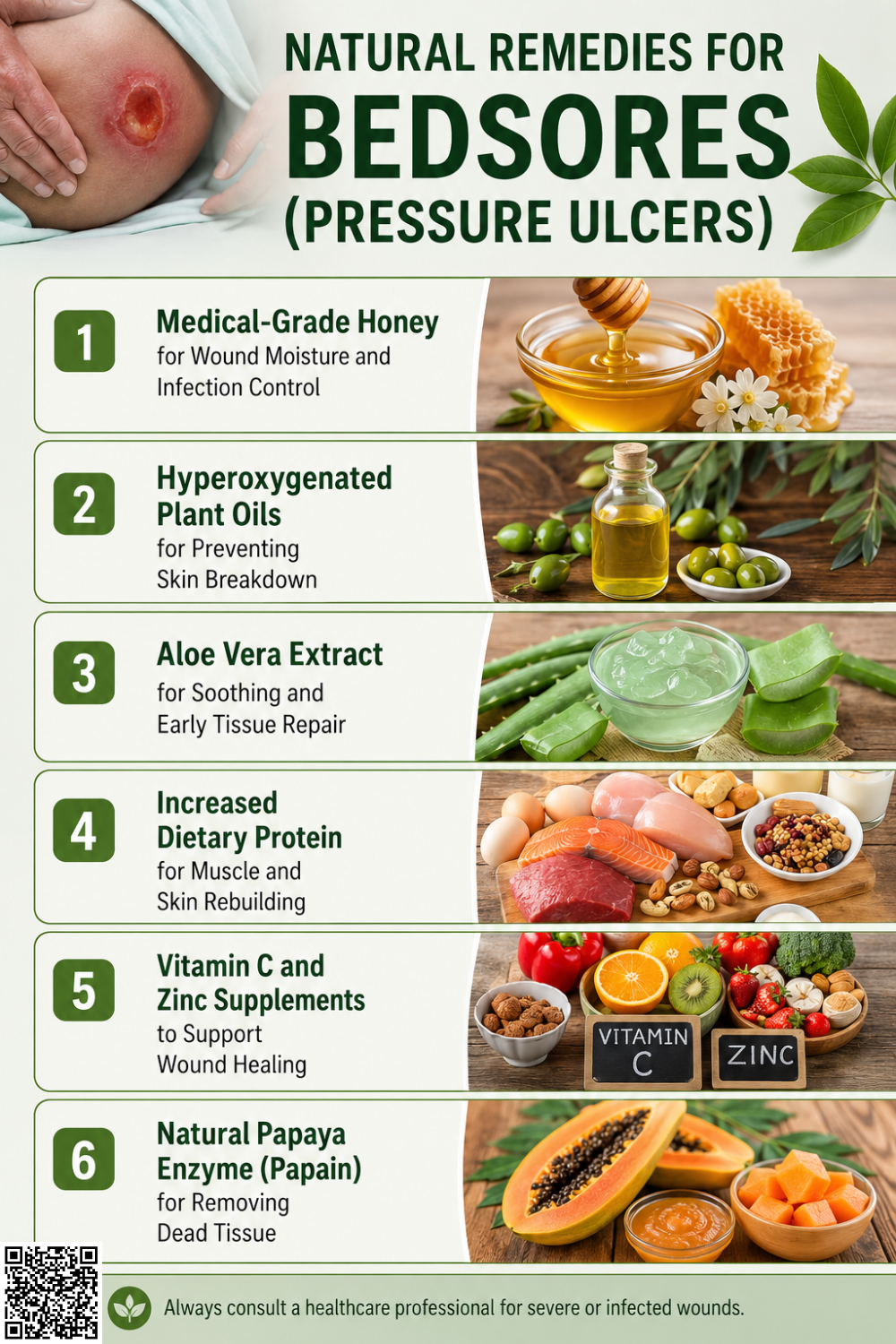 Natural Remedies for Bedsores (Pressure Ulcers)
1. Medical-Grade Honey for Wound Moisture and Infection Control
How It May Help
Medical-grade honey promotes healing by maintaining a moist environment necessary for tissue repair. It naturally draws fluid out of the wound, reducing local swelling. Additionally, it contains unique enzymes that provide antibacterial action to clear infections and help break down dead tissue within the bedsore.
What Research Says
Clinical studies demonstrate that medical-grade honey effectively controls bacterial infections and speeds up pressure ulcer healing. Researchers conclude that applying this honey significantly decreases wound size, reduces foul odors, and promotes the faster growth of new, healthy tissue compared to conventional wound dressings 5.
How to Use It Safely
You must exclusively use sterilized, medical-grade products rather than standard grocery store honey. Apply the honey directly to a sterile bandage or dressing instead of pouring it straight into the wound, and ensure you change the dressing regularly as directed by your doctor.
Precautions and Side Effects
You might experience temporary stinging or discomfort immediately after application. Do not use this remedy if you have known allergies to bees or pollen to prevent allergic reactions.
2. Hyperoxygenated Plant Oils for Preventing Skin Breakdown
How It May Help
Hyperoxygenated plant oils supply the skin with essential fatty acids that rebuild its natural protective barrier. These specialized oils increase local blood flow, reduce skin inflammation, and prevent tissue dehydration. By strengthening the skin’s overall resilience, they help protect vulnerable areas from the damaging effects of pressure and friction.
What Research Says
Clinical evidence indicates that applying hyperoxygenated plant oils significantly lowers the risk of developing pressure ulcers in bedridden or elderly patients. Researchers conclude that routine use of these oils improves skin hydration and elasticity, effectively delaying or preventing early-stage skin breakdown when combined with standard repositioning care 6.
How to Use It Safely
Apply the oil to intact, at-risk skin, such as your heels or tailbone, two to three times a day. Gently spread a small amount using light strokes. Do not vigorously rub or massage the oil into the skin, as deep massage can cause further tissue damage.
Precautions and Side Effects
These oils are generally safe but may occasionally cause mild skin irritation. Stop using the product immediately if you notice increased redness, itching, swelling, or a new rash.
3. Aloe Vera Extract for Soothing and Early Tissue Repair
How It May Help
Aloe vera extract contains natural compounds that reduce inflammation and keep the skin deeply moisturized. It creates a soothing, protective barrier over early-stage bedsores and stimulates collagen production. This process helps accelerate the repair of damaged outer skin layers and provides cooling relief to irritated tissues.
What Research Says
Clinical research demonstrates that applying aloe vera gel can significantly improve the healing rates of early-stage pressure ulcers. Studies conclude that its active ingredients effectively reduce skin redness, decrease wound size, and prevent early surface damage from progressing into deeper, more severe tissue injuries 7.
How to Use It Safely
Wash the affected area gently with mild soap and water. Apply a thin layer of pure, medical-grade aloe vera gel directly to unbroken, reddened skin or shallow surface sores. Do not massage the gel into the skin, and avoid putting it inside deep open wounds.
Precautions and Side Effects
Aloe vera may occasionally cause mild itching, redness, or a burning sensation. Stop using it immediately if you develop a rash or experience an allergic skin reaction.
4. Increased Dietary Protein for Muscle and Skin Rebuilding
How It May Help
Protein is the fundamental building block for human tissue. When the body attempts to heal a bedsore, it requires a higher amount of protein to repair damaged muscle and generate new skin layers. Adequate protein intake prevents muscle wasting and provides the nutrients necessary to close open wounds.
What Research Says
Clinical evidence shows that poor nutrition significantly delays wound healing. Researchers conclude that providing high-protein diets or specialized nutritional supplements effectively accelerates the healing of pressure ulcers and reduces the likelihood of new sores developing in bedridden or malnourished individuals 8.
How to Use It Safely
Incorporate high-quality protein sources like lean meats, poultry, fish, eggs, beans, and dairy into your daily meals. If you struggle to eat enough solid food, ask your healthcare provider about adding medical nutrition shakes or protein powders to your daily routine.
Precautions and Side Effects
If you have chronic kidney disease or severe liver problems, you must consult your doctor before increasing your protein intake, as excess protein can overwork these organs.
5. Vitamin C and Zinc Supplements to Support Wound Healing
How It May Help
Vitamin C is essential for producing collagen, the main structural protein needed to rebuild damaged skin. Zinc supports immune function and rapid cell division, helping the body fight off wound infections and generate new tissues. Together, these micronutrients strengthen the newly formed skin and accelerate wound closure.
What Research Says
Clinical trials demonstrate that specialized nutritional supplements enriched with high doses of vitamin C and zinc significantly improve pressure ulcer healing. Researchers conclude that patients receiving these targeted nutrients experience a much faster reduction in wound size and accelerated tissue repair compared to those consuming standard daily diets 9.
How to Use It Safely
First, aim to get these nutrients naturally through citrus fruits, berries, lean meats, and fortified cereals. If you have an active bedsore or poor appetite, ask your healthcare provider to recommend a clinically formulated oral nutritional shake or a specific daily supplement tailored for wound healing.
Precautions and Side Effects
Excessive vitamin C can cause stomach upset or diarrhea, while high zinc levels can interfere with certain antibiotics and block copper absorption. Always take these supplements exactly as your doctor directs.
6. Natural Papaya Enzyme (Papain) for Removing Dead Tissue
How It May Help
Papain is a powerful natural enzyme extracted from papaya that breaks down dead tissue in wounds. In a process called enzymatic debridement, papain digests hardened, dead skin and stringy tissue inside the bedsore without harming healthy tissue, creating a clean environment necessary for new tissue to grow.
What Research Says
Systematic reviews indicate that papain-based ointments effectively and rapidly remove necrotic (dead) material from pressure ulcers. Clinical evidence shows that using papain clears dead tissue from the wound bed faster than some conventional treatments, preparing the ulcer for healthy healing and reducing the risk of bacterial infection 10.
How to Use It Safely
Only use clinically formulated papain ointments prescribed by a healthcare provider. Apply a thin layer directly onto the dead tissue within the wound bed, strictly avoiding the surrounding healthy skin. Cover the area with a sterile dressing, and change it regularly as directed by your doctor.
Precautions and Side Effects
Papain can cause local burning, pain, or stinging. Do not use this enzyme if you are allergic to papaya or latex, as it may trigger severe allergic skin reactions.
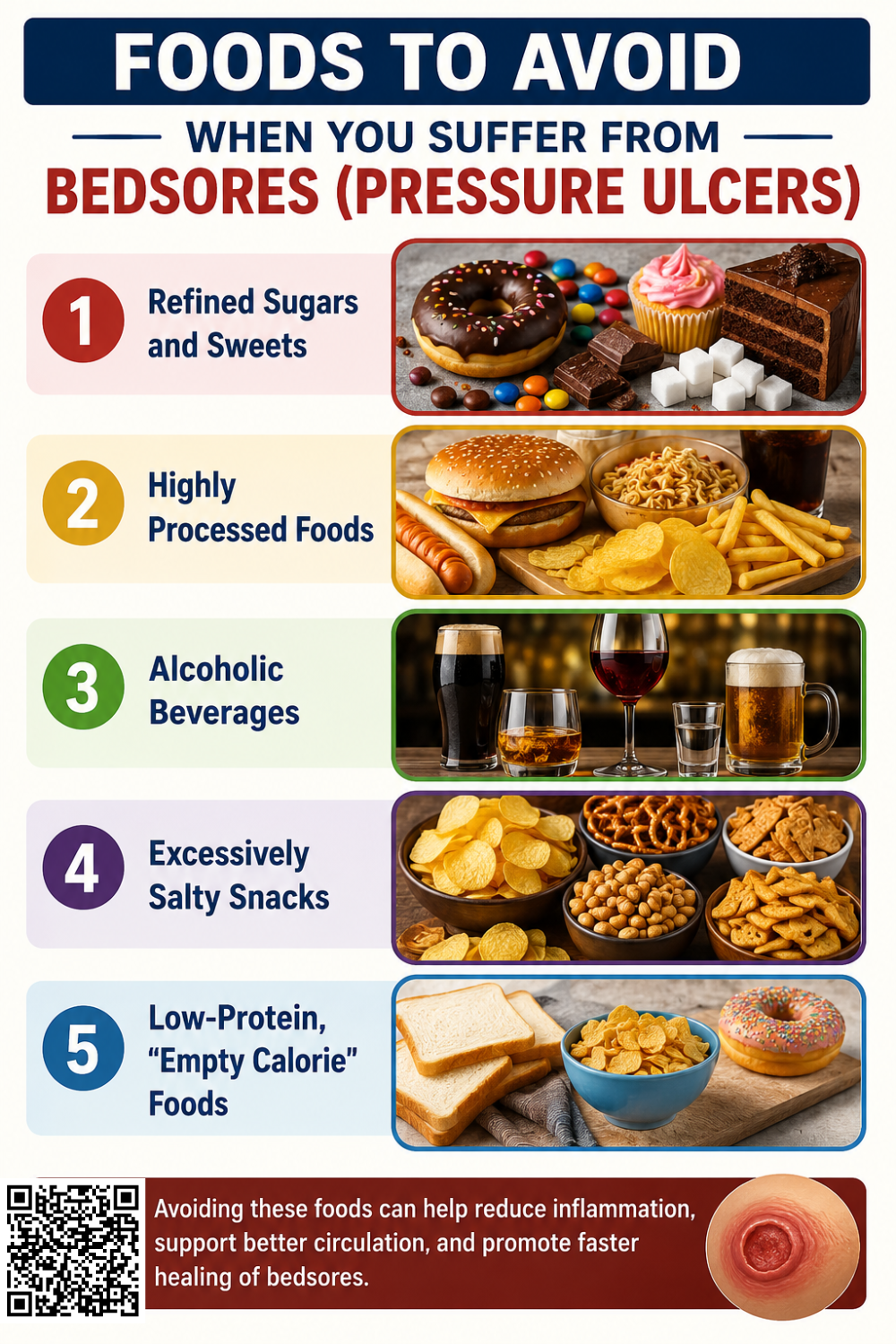 Foods to Avoid When You Suffer from Bedsores (Pressure Ulcers)
1. Refined Sugars and Sweets
High consumption of processed sugars can spike blood glucose levels, which may impair immune function and delay the body’s natural ability to repair damaged skin tissue.
2. Highly Processed Foods
These items often lack essential nutrients and are high in unhealthy fats, which provide little benefit for muscle maintenance and can contribute to systemic inflammation that hinders recovery.
3. Alcoholic Beverages
Alcohol acts as a diuretic, potentially leading to dehydration, which dries out skin and reduces its elasticity, making it more prone to further breakdown and pressure injury.
4. Excessively Salty Snacks
Consuming too much sodium can lead to fluid retention and poor circulation, which prevents vital oxygen and nutrients from reaching the tissues where pressure ulcers are present.
5. Low-Protein, “Empty Calorie” Foods
Relying on snacks that offer only calories without protein prevents the body from rebuilding muscle and collagen, essential components needed to close and heal deep pressure wounds.
When To See a Doctor When You Suffer from Bedsores (Pressure Ulcers)
1. Signs of Bacterial Infection
Seek immediate medical care if you observe pus draining from the wound, a foul odor, or skin that feels unusually hot, swollen, or increasingly painful.
2. Systemic Symptoms
Contact a healthcare professional if you develop a fever, chills, or confusion, as these may indicate that the infection has spread beyond the local wound site into the bloodstream.
3. Visible Deep Tissue Damage
See a doctor if you notice exposed muscle, tendons, or bone, as these Stage 3 or 4 pressure ulcers require specialized clinical debridement and advanced medical wound management.
4. Wound Stagnation
Consult a professional if the sore shows no signs of improvement, such as reducing in size or filling with healthy pink tissue, despite following proper repositioning and care routines for two weeks.
5. Spreading Redness
Seek evaluation if the skin surrounding the ulcer becomes increasingly red, looks streaky, or feels harder than the surrounding healthy tissue, as this suggests the injury is actively expanding.