

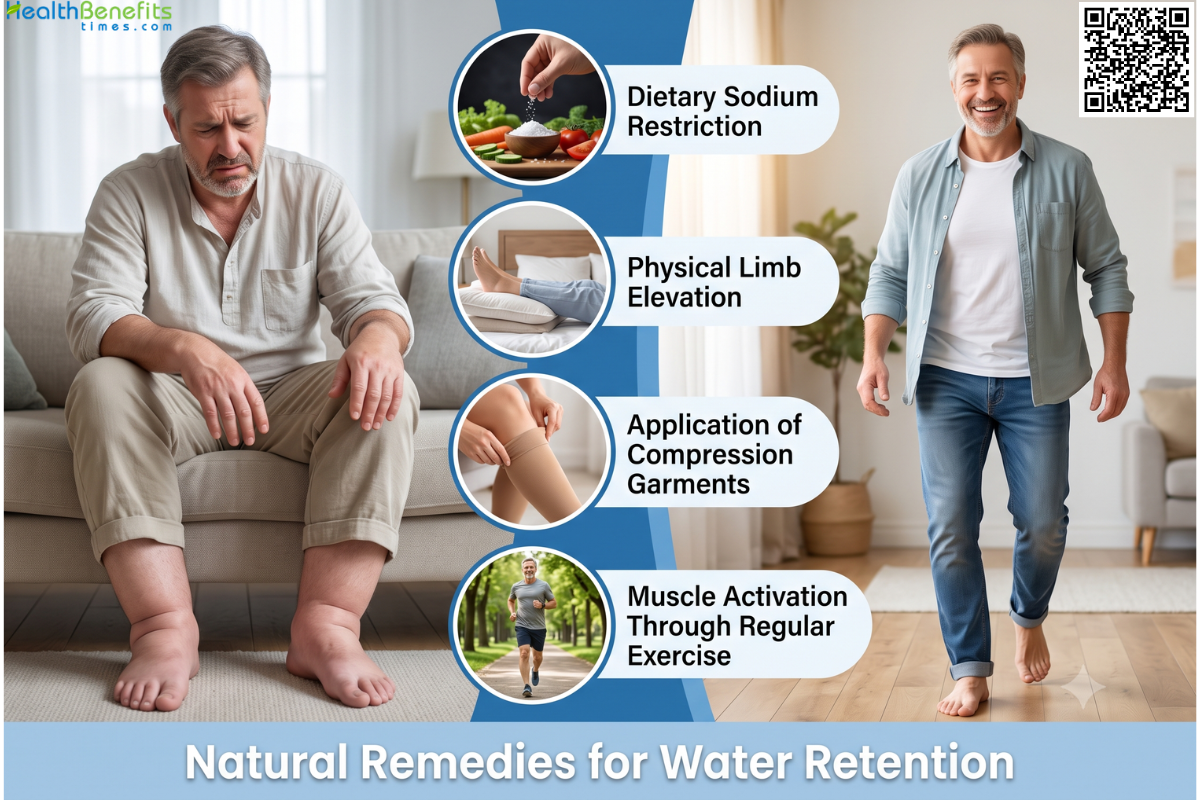
Water retention, medically known as edema, is a condition where excess fluid builds up inside the body’s tissues. Under normal circumstances, a delicate balance of pressure and lymphatic drainage maintains fluid levels in the bloodstream and surrounding areas. When this system is disrupted, fluid leaks into the interstitial space—the area between cells—causing localized or widespread swelling 1. This accumulation most frequently affects the lower extremities, such as the feet, ankles, and legs, though it can also occur in the hands, face, or abdomen. While minor swelling may result from physical inactivity, severe fluid retention often points to systemic dysfunction involving the heart, kidneys, liver, or lymphatic system 2. Because soft tissues can accommodate several liters of excess fluid before visible swelling becomes clinically evident, identifying the exact physiological trigger is essential for effective medical intervention and proper fluid management.
Causes of Water Retention
1. Congestive Heart Failure
When a weakened heart cannot pump blood efficiently, blood backs up in the veins. This creates high pressure inside the blood vessels, forcing fluid to leak into the surrounding tissues 3.
2. Kidney Disease
When the kidneys lose their ability to filter waste properly, they retain excess sodium and water. Additionally, certain kidney conditions cause the body to excrete too much protein in the urine, which impairs the blood’s ability to hold onto fluid, causing it to leak out into the body.
3. Liver Cirrhosis
Severe liver scarring reduces the liver’s ability to produce albumin, an essential blood protein that acts like a sponge to keep fluid inside the blood vessels. The condition also creates blockages in blood flow through the liver, pushing fluid into the abdomen and legs.
4. Chronic Venous Insufficiency
When the one-way valves inside the leg veins weaken or fail, blood struggles to travel upward against gravity back to the heart. This pooling of blood stretches the veins and forces fluid outward into the tissues of the lower legs and ankles.
5. Lymphatic System Damage (Lymphedema)
The lymphatic system acts as a drainage network that clears excess fluid from tissues. If lymph nodes are blocked, damaged, or removed—often due to surgery or cancer treatments—fluid gets trapped in the affected area, causing severe localized swelling.
6. Medications
Certain prescription drugs can trigger fluid retention as a side effect by relaxing blood vessels or signaling the kidneys to hold onto salt and water. Common culprits include high blood pressure medications (calcium channel blockers), steroids, diabetes medications, and nonsteroidal anti-inflammatory drugs (NSAIDs) 4.
7. Deep Vein Thrombosis (DVT)
A blood clot forming deep inside a vein, typically in the leg, completely or partially blocks normal blood flow. This sudden blockage causes blood to pool rapidly behind the clot, resulting in acute swelling that usually affects only one leg.
Symptoms of Water Retention
1. Visible Swelling
The most common indicator is noticeable puffiness and enlargement in the lowest parts of the body, specifically the feet, ankles, and lower legs, as gravity draws the excess fluid downward into these tissues.
2. Pitting Skin
When firm pressure is applied to the swollen area with a finger for several seconds, the underlying fluid is pushed aside. This leaves a visible indentation, or dimple, in the skin that takes several seconds or minutes to fill back in.
3. Skin Alterations
As water continuously accumulates and builds pressure in the soft tissues, the overlying skin stretches tightly. This stretching frequently causes the skin to look abnormally shiny, feel stiff, or become uncomfortably heavy.
4. Sudden Weight Gain
Because the body can store large volumes of heavy fluid before swelling becomes clinically obvious, individuals often experience rapid, unexplained weight increases over just 24 to 48 hours without any changes to their daily caloric intake.
5. Difficulty Breathing
If systemic fluid retention causes water to back up into the air sacs of the lungs, it disrupts the body’s ability to absorb oxygen. This results in shortness of breath, chronic coughing, and a sensation of breathlessness that usually worsens when lying flat on the back 5.
6. Abdominal Distension
When fluid retention is triggered by significant liver dysfunction, water frequently pools directly inside the abdominal cavity. This causes the stomach area to expand rapidly, feel rigid to the touch, and significantly increase a person’s waist circumference 6.
Natural Remedies for Water Retention
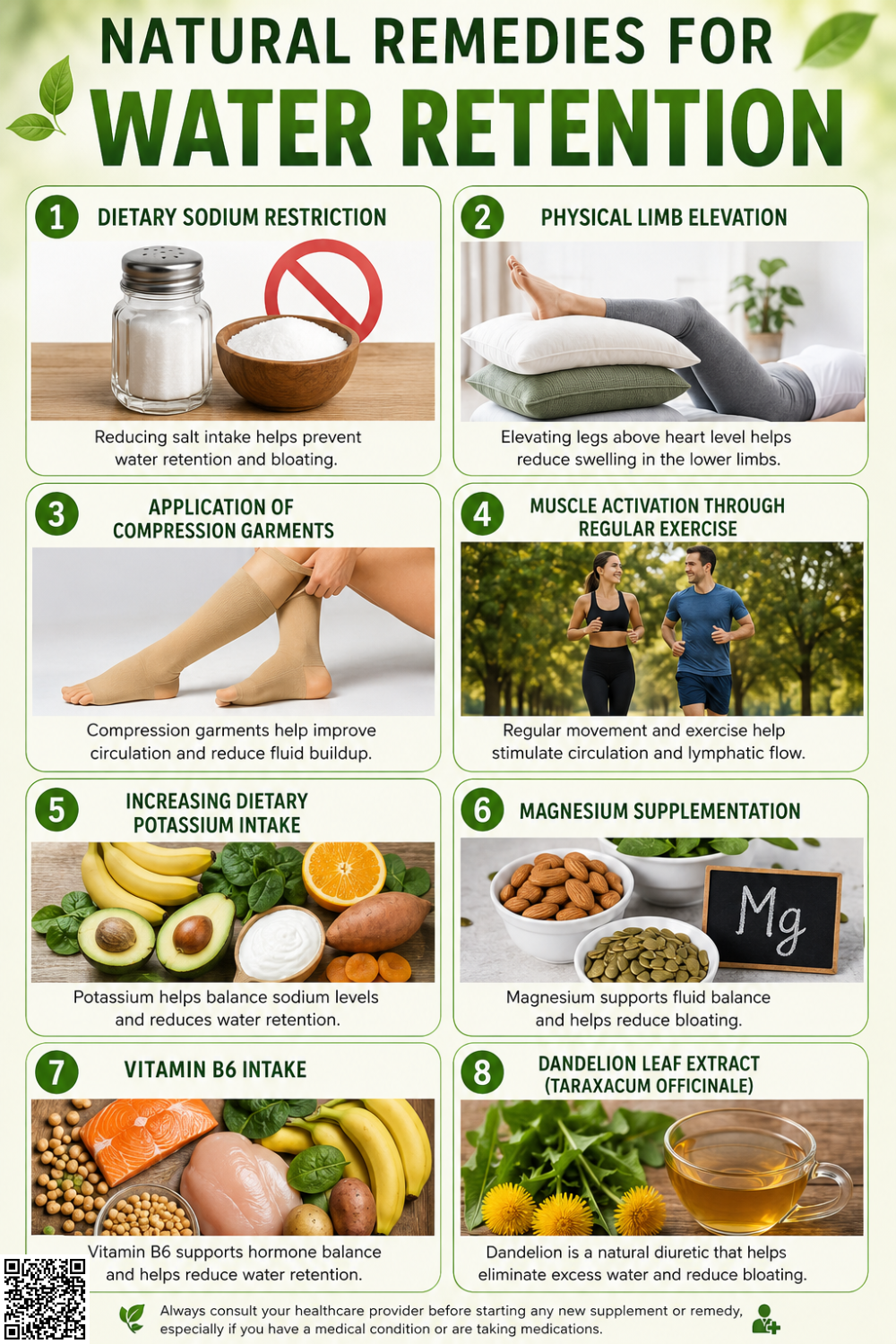
1. Dietary Sodium Restriction
How it may help
The body requires a precise balance of sodium and water. Consuming excess sodium forces the kidneys to retain additional water to dilute the salt, increasing overall fluid buildup in tissues. By restricting sodium intake, the body can successfully excrete excess fluid through urine, directly reducing tissue swelling.
What research says
Clinical research confirms that reducing dietary sodium is a primary and highly effective intervention for managing fluid accumulation. Medical guidelines emphasize that lowering salt intake directly decreases extracellular fluid volume, significantly improving chronic swelling caused by heart failure, kidney disease, and general fluid retention 7.
How to use it safely
To safely lower your intake, limit your daily sodium consumption to less than 2,300 milligrams 8. Focus on preparing fresh whole foods at home, avoid highly processed or packaged meals, and carefully read nutrition labels to identify hidden salt in canned goods.
Potential precautions or side effects
Extremely low sodium levels can cause hyponatremia, leading to dizziness, confusion, and muscle cramps. Consult a healthcare provider before severely restricting salt, especially if you take diuretic medications 9.
 2. Physical Limb Elevation
How it may help
Gravity naturally pulls fluid downward, causing water to pool in the tissues of the feet and lower legs. Elevating the affected limbs reverses this gravitational pull, which helps accumulated fluid drain out of the soft tissues and return to the main circulatory system.
What research says
Clinical evidence demonstrates that elevating the legs above the heart significantly reduces lower limb swelling. Medical guidelines confirm this physical intervention successfully decreases venous pressure, improves blood circulation, and enhances the drainage of trapped fluid, particularly in patients with chronic venous insufficiency 10.
How to use it safely
To achieve the best results, prop your legs up on firm pillows so they rest above the level of your heart. Try to maintain this elevated position for 30 minutes at least three to four times a day to effectively encourage fluid drainage.
Potential precautions or side effects
Avoid extreme or prolonged elevation without movement. Individuals with severe congestive heart failure or peripheral arterial disease must consult a doctor before routinely elevating their legs.
3. Application of Compression Garments
How it may help
Compression garments gently squeeze the legs, increasing pressure on the outside of the blood vessels. This sustained pressure prevents fluid from leaking out of the capillaries and into the surrounding tissues. It also helps weakened veins push blood upward against gravity, returning excess fluid to the heart.
What research says
Clinical guidelines establish compression therapy as a highly effective, first-line treatment for lower limb swelling. Research confirms that wearing graduated compression stockings significantly reduces tissue fluid volume, decreases leg aching, and prevents the progression of chronic venous insufficiency.
How to use it safely
Put your compression garments on first thing in the morning before you get out of bed, as this is when swelling is lowest. Ensure they fit snugly but do not fold or roll down, which can act as a tourniquet and cut off circulation.
Potential precautions or side effects
Improperly fitted stockings can cause skin irritation, blistering, or nerve damage. Do not use compression garments if you have severe peripheral arterial disease without prior medical supervision.
4. Muscle Activation Through Regular Exercise
How it may help
The leg muscles act as a natural pump for the circulatory system. When these muscles contract during movement, they squeeze the deep veins in the legs. This action forces pooled blood and trapped fluid to flow upward against gravity, returning it to the heart and reducing tissue swelling 11.
What research says
Clinical evidence shows that activating the calf muscle pump through physical activity significantly improves venous return. Research confirms that regular walking or targeted leg exercises effectively decrease fluid volume in the lower limbs and alleviate symptoms of chronic venous insufficiency.
How to use it safely
Incorporate low-impact aerobic activities, such as brisk walking, swimming, or cycling, into your daily routine. If you sit for long periods, perform simple ankle rotations and flex your calf muscles frequently to keep fluid moving and prevent it from accumulating 12.
Potential precautions or side effects
Avoid sudden, high-intensity workouts if you are unaccustomed to exercise. Consult a doctor before starting a new routine if you have an underlying heart condition or severe joint dysfunction 13.
5. Increasing Dietary Potassium Intake
How it may help
Potassium directly counters the effects of sodium in the body. It stimulates urine production and signals the kidneys to flush out excess sodium. By removing this trapped sodium, the body simultaneously eliminates the excess water attached to it, successfully decreasing fluid buildup in soft tissues 14.
What research says
Clinical guidelines establish that increasing dietary potassium effectively increases sodium excretion. Research confirms this biological process significantly lowers overall fluid volume in the circulatory system, preventing chronic water retention and reducing cardiovascular strain in individuals consuming high-sodium diets 15.
How to use it safely
Focus on consuming potassium-rich whole foods like sweet potatoes, spinach, bananas, and avocados. For most healthy adults, aiming for 2,600 to 3,400 milligrams daily through a balanced diet is the safest approach, as food sources rarely cause potassium overload 16.
Potential precautions or side effects
Excess potassium can cause severe heart rhythm abnormalities. Always consult a doctor before increasing intake if you have kidney disease or take blood pressure medications.
6. Magnesium Supplementation
How it may help
Magnesium is an essential mineral that helps control fluid balance by regulating how sodium and potassium move in and out of cells. By maintaining this proper balance of electrolytes, magnesium prevents extra water from accumulating in soft tissues, effectively reducing general bloating and swelling 17.
What research says
Clinical studies demonstrate that magnesium supplementation significantly reduces fluid retention, weight gain, and abdominal bloating associated with premenstrual syndrome (PMS). Researchers conclude that a daily intake of 200 milligrams of magnesium effectively relieves these cyclical swelling symptoms in adult women 18.
How to use it safely
First, incorporate more magnesium-rich foods into your diet, such as spinach, nuts, and whole grains. If you choose a supplement to manage cyclical fluid retention, taking 200 to 300 milligrams daily is generally recognized as safe for most healthy adults 19.
Potential precautions or side effects
Consuming excess magnesium from dietary supplements frequently causes diarrhea, nausea, and stomach cramps. You must avoid these supplements entirely without a doctor’s approval if you have kidney disease.
7. Vitamin B6 Intake
How it may help
Vitamin B6 helps regulate the body’s fluid balance by influencing hormones that control sodium and water. Specifically, it can suppress the activity of aldosterone, a hormone that signals the kidneys to retain salt and water, naturally promoting increased urine output and relieving mild tissue swelling 20.
What research says
Clinical evidence indicates that Vitamin B6 supplementation is a beneficial treatment for fluid retention associated with premenstrual syndrome (PMS). Studies confirm that B6 effectively reduces cyclical abdominal bloating, breast swelling, and water weight gain by acting as a mild, natural diuretic.
How to use it safely
You can safely increase your intake by eating B6-rich foods like poultry, fish, potatoes, and bananas. If you choose a daily dietary supplement to manage premenstrual swelling, medical professionals typically recommend restricting your dosage to 50 to 100 milligrams per day 21.
Potential precautions or side effects
Taking high doses of Vitamin B6 supplements long-term can cause severe nerve damage, resulting in progressive numbness, pain, and loss of physical control in your limbs.
8. Dandelion Leaf Extract (Taraxacum officinale)
How it may help
Dandelion leaf extract acts as a natural diuretic, stimulating the kidneys to increase urine output. This process helps the body flush out excess water and sodium from swollen tissues. Unlike many synthetic diuretics, dandelion leaves naturally contain potassium, helping maintain vital electrolyte balances during fluid loss 22.
What research says
Clinical research evaluating dandelion as a diuretic demonstrates its effectiveness in increasing fluid output. A human pilot study confirmed that ingesting an extract of Taraxacum officinale leaves caused a significant increase in the frequency and volume of urination within five hours of the first dose.
How to use it safely
You can consume dandelion leaf as a steeped herbal tea or take it as a standardized liquid extract. To ensure safety, always follow the manufacturer’s specific dosing instructions and purchase supplements that have been independently tested for purity to avoid unwanted contaminants 23.
Potential precautions or side effects
Avoid dandelion if you are allergic to ragweed, daisies, or marigolds. Consult a doctor before use, as it can dangerously interact with prescription diuretics, lithium, and certain antibiotics.
 Foods to Avoid When You Suffer from Water Retention
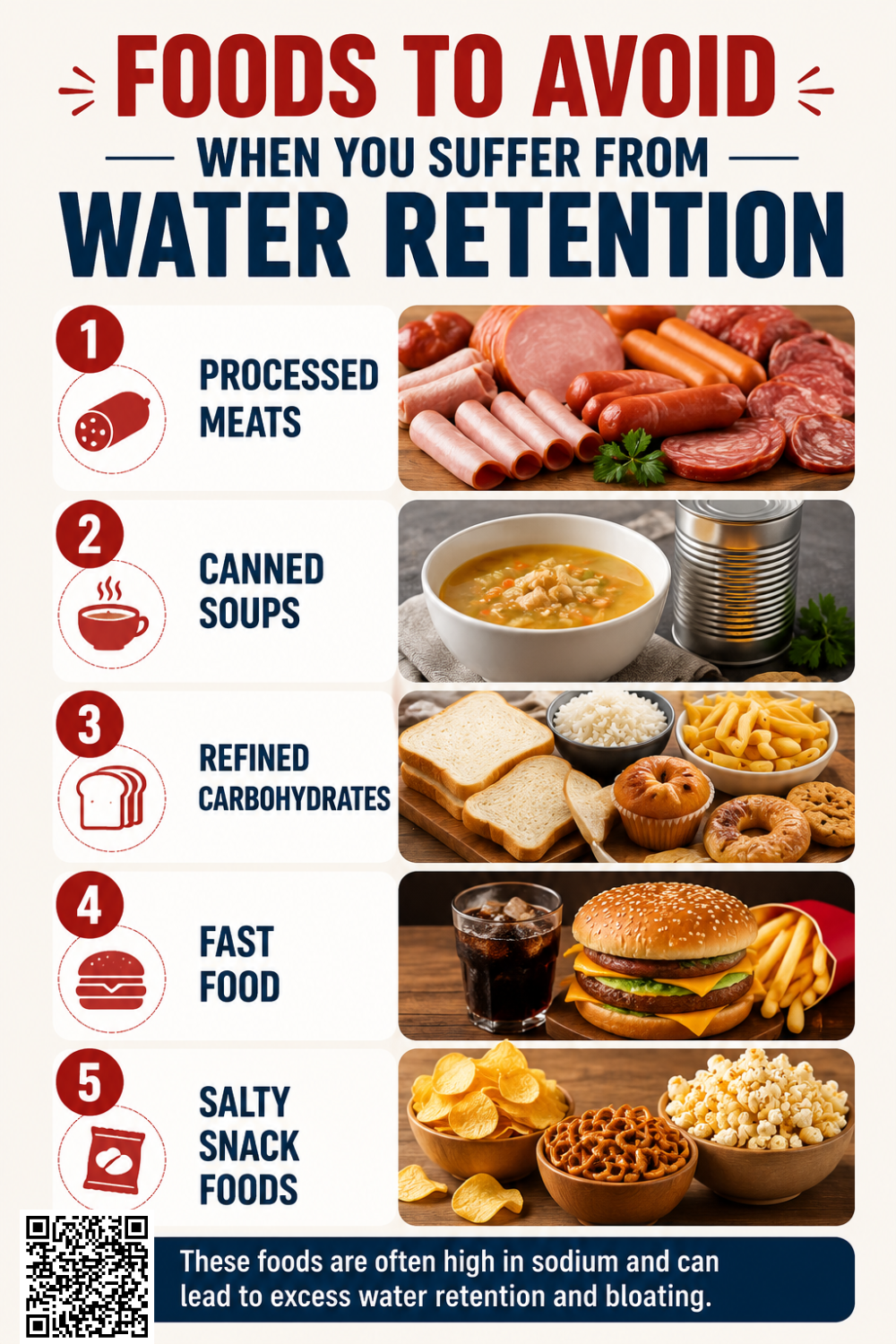
1. Processed Meats
Deli meats, bacon, and sausages contain extremely high levels of sodium for preservation. This excess salt directly forces the body to retain fluids to maintain safe blood concentrations 24.
2. Canned Soups
Commercially canned soups often contain massive amounts of hidden sodium to enhance flavor. Consuming these high-salt liquids rapidly increases fluid accumulation in the body’s soft tissues 25.
3. Refined Carbohydrates
White bread and sugary foods cause rapid insulin spikes. Elevated insulin directly signals the kidneys to reabsorb more sodium, which subsequently traps excess water within the tissues 26.
4. Fast Food
Most fast food meals are heavily salted and processed. Eating highly concentrated sodium loads overwhelms renal excretion, causing immediate and visible fluid pooling in the extremities.
5. Salty Snack Foods
Potato chips and pretzels provide massive doses of dietary sodium. This rapidly disrupts electrolyte balance, triggering acute water retention to naturally dilute the excess salt in the bloodstream.
When To See a Doctor When You Suffer from Water Retention
1. Sudden, Unexplained Swelling
If swelling appears abruptly without a clear cause, seek evaluation, as it often indicates acute kidney dysfunction or cardiovascular failure.
2. Breathing Difficulties or Chest Pain
Seek emergency care if swelling occurs alongside shortness of breath, signaling life-threatening fluid accumulation in the lungs or acute heart failure.
3. Asymmetrical Swelling
Consult a doctor immediately if severe swelling affects only one leg. This symptom strongly suggests a deep vein blood clot requiring urgent intervention 27.
4. Warmth, Redness, or Pain
Medical assessment is necessary if the swollen tissue becomes red, warm to the touch, or painful, as these are clinical markers of bacterial infection 28.
5. Persistent Symptoms
Schedule a clinical exam if swelling persists or worsens despite elevating limbs and reducing dietary sodium, indicating an underlying systemic medical condition.