

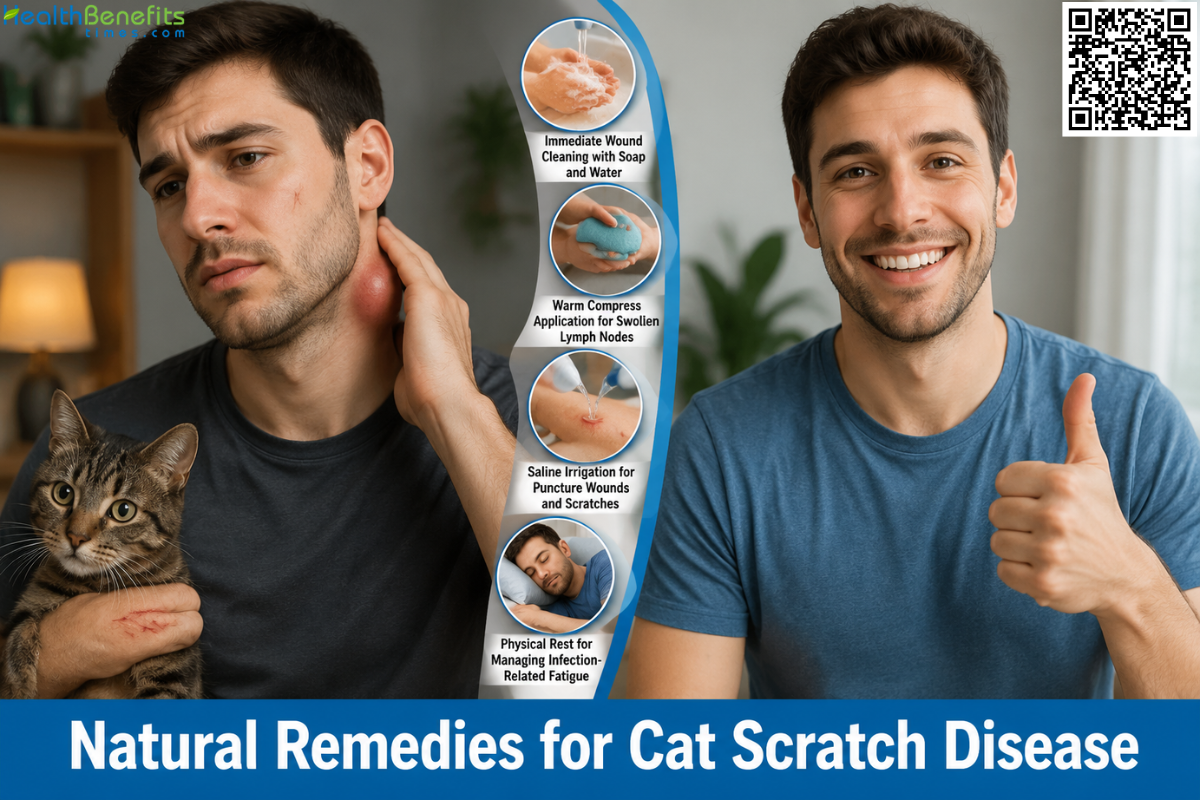
Cat scratch disease (CSD) is a bacterial infection caused primarily by the microorganism Bartonella henselae. It is typically transmitted to humans through the scratch, bite, or saliva of an infected cat, particularly kittens, which harbor the bacteria through flea exposure without showing outward signs of illness. The condition most commonly presents as a localized bump or blister at the injury site, followed one to three weeks later by tender, swollen lymph nodes in the draining region, such as the armpit or neck 1. Patients frequently experience accompanying symptoms like low-grade fever, fatigue, and muscle aches. In most healthy individuals, this is a benign, self-limiting illness that resolves completely within two to four weeks without the need for medical intervention 2. However, more severe, widespread complications—such as neuroretinitis, encephalitis, or organ involvement—can occasionally emerge, primarily affecting individuals with compromised immune systems 3.
Causes of Cat Scratch Disease
1. Bacterial Pathogen
The direct cause of cat scratch disease is an infection by a specific bacterium known as Bartonella henselae.
2. Cat Scratches and Bites
The bacteria are most commonly transmitted to humans when an infected cat—especially a kitten under one year of age—bites or scratches a person hard enough to break the skin 4.
3. Saliva Exposure to Wounds
Transmission can also occur without a new scratch or bite if an infected cat licks a person’s pre-existing open wound, scrape, or scab, allowing the bacteria to enter the body.
4. Flea Feces Contamination
Cat fleas are responsible for spreading the bacteria among the feline population. Fleas leave infected droppings on a cat’s fur. During normal grooming, the cat transfers these droppings to its claws and mouth, which then act as the delivery mechanism when the cat scratches or bites a human.
Symptoms of Cat Scratch Disease
1. Skin Bump or Blister
Within 3 to 10 days after the initial scratch or bite, a small, red bump or blister typically forms at the site of the injury. This primary lesion is often painless and may look similar to a bug bite.
2. Swollen Lymph Nodes
The hallmark symptom of the disease is the swelling of lymph nodes closest to the site of the scratch, usually appearing one to three weeks later. These nodes—most commonly located in the armpits, neck, or groin—often become noticeably enlarged, warm, red, and highly tender to the touch.
3. Fever
Many individuals develop a mild, low-grade fever that accompanies the swelling of the lymph nodes.
4. Fatigue and General Malaise
A profound feeling of exhaustion, lack of energy, and an overall sense of being unwell are frequently reported as the body’s immune system fights the infection.
5. Headaches and Muscle Aches
Patients may experience mild to moderate headaches, alongside generalized muscle and joint pain.
6. Decreased Appetite
A temporary loss of appetite or mild nausea often occurs during the active phase of the illness.
7. Atypical or Severe Symptoms
In rare cases, usually involving individuals with weakened immune systems, the bacteria can spread to cause more severe issues. This can include eye redness and swelling with a nearby swollen lymph node (Parinaud oculoglandular syndrome), sudden vision loss (neuroretinitis), or inflammation affecting the liver, spleen, or brain.
 Natural Remedies for Cat Scratch Disease
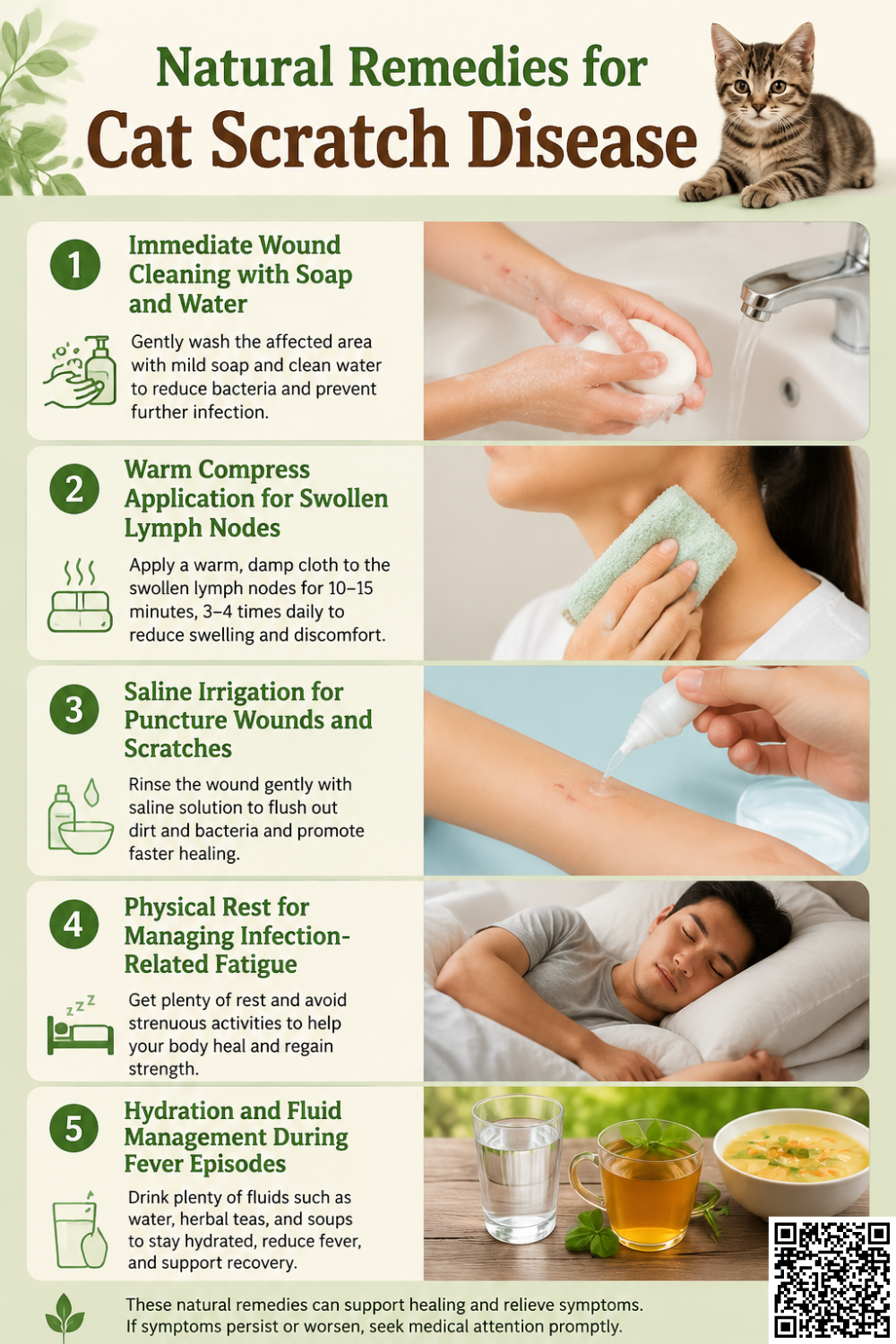
1. Immediate Wound Cleaning with Soap and Water
How It May Help
Washing a cat scratch or bite with soap and water physically removes saliva and flea feces that may carry Bartonella henselae bacteria. This immediate mechanical action significantly lowers the initial bacterial load, helping to prevent the pathogen from entering the body and establishing an active infection.
What Research Says
Public health guidelines consistently highlight prompt wound cleaning as a primary preventive measure against zoonotic infections. The Centers for Disease Control and Prevention (CDC) confirms that immediately washing animal bites and scratches with warm, soapy water is a critical first step to prevent cat scratch disease and other bacterial transmissions 5.
How to Use It Safely
As soon as a scratch or bite occurs, gently wash the affected area under warm running water with mild soap for several minutes. Do not scrub aggressively, as this can worsen tissue damage. Pat the wound dry with a clean towel and apply a sterile bandage.
Potential Precautions or Side Effects
While cleaning is essential, avoid applying harsh chemicals to open skin, as this can delay healing. Seek immediate medical attention if the wound becomes red, painful, or warm.
2. Warm Compress Application for Swollen Lymph Nodes
How It May Help
Applying a warm compress to swollen, tender lymph nodes helps increase local blood flow to the affected area. This gentle heat promotes natural fluid drainage, relaxes surrounding tissues, and significantly relieves the localized pain and inflammation that characteristically accompany cat scratch disease 6.
What Research Says
Clinical guidelines endorse conservative management, such as applying warm compresses, as a primary supportive therapy for inflammatory lymphadenitis and regional glandular swelling 7. Standard medical protocols confirm that this non-pharmacological approach safely accelerates localized recovery and alleviates symptomatic tenderness associated with bacterial infections.
How to Use It Safely
Soak a clean cloth in comfortably warm water. Wring out excess moisture and gently place it over the swollen lymph node for ten to fifteen minutes. You can repeat this process three to four times daily to relieve discomfort until the swelling subsides.
Potential Precautions or Side Effects
Avoid using excessively hot water to prevent thermal burns. If the lymph node rapidly hardens, expands, or begins draining pus, stop application and consult a healthcare provider immediately.
3. Saline Irrigation for Puncture Wounds and Scratches
How It May Help
Flushing a fresh cat scratch or bite with sterile saline helps mechanically dislodge and wash away Bartonella henselae bacteria and deep-seated debris. Because saline matches the body’s natural fluid balance, it thoroughly cleanses the wound bed without damaging exposed or healing tissues 8.
What Research Says
Clinical protocols establish normal saline as a standard, non-toxic solution for acute wound irrigation to decrease bacterial loads and lower the risk of subsequent infections. Evidence confirms that utilizing an isotonic saline flush safely cleanses puncture wounds without causing the cellular damage often associated with harsh chemical antiseptics 9.
How to Use It Safely
Using a clean medical syringe, gently flush the fresh puncture wound or scratch with sterile, over-the-counter normal saline solution to wash out contaminants. Do not forcefully inject the liquid deep into the tissues. After thorough irrigation, pat the surrounding skin dry and cover the area with a sterile bandage.
Potential Precautions or Side Effects
Avoid using homemade saltwater solutions, as non-sterile mixtures can introduce new bacteria. Deep puncture wounds, especially cat bites, frequently require immediate professional medical evaluation and prescription antibiotics.
4. Physical Rest for Managing Infection-Related Fatigue
How It May Help
Physical rest allows the body to redirect its energy toward the immune system to fight the bacterial infection. Because cat scratch disease frequently causes profound exhaustion, reducing physical exertion minimizes metabolic strain, enabling the immune system to recover and clear the illness more efficiently.
What Research Says
Medical guidelines classify cat scratch disease as a self-limiting infection in most healthy individuals, meaning it typically resolves naturally over time. Clinical protocols emphasize conservative, supportive management—primarily physical rest and pain relief—as the standard of care to aid the body’s natural immune response.
How to Use It Safely
Listen to your body and prioritize sleep during the active phase of the infection. Temporarily pause strenuous activities, heavy lifting, or vigorous exercise. Maintain a light daily routine and take frequent naps until your energy levels return to normal and the swollen lymph nodes subside.
Potential Precautions or Side Effects
Complete, prolonged bed rest can occasionally cause muscle stiffness. Try to incorporate light, gentle movement, such as brief walks around the house, to maintain healthy blood circulation.
5. Hydration and Fluid Management During Fever Episodes
How It May Help
Cat scratch disease frequently causes a low-grade fever, which increases the body’s fluid loss through sweating and a higher metabolic rate. Maintaining proper hydration replenishes these lost fluids, helps regulate core body temperature, and supports the immune system as it works to clear the bacterial infection.
What Research Says
Medical guidelines state that most cases of cat scratch disease are self-limiting and only require supportive care. Clinical protocols for managing infection-related fevers consistently recommend adequate fluid intake to prevent dehydration, reduce symptom severity, and support overall recovery during the active immune response 10.
How to Use It Safely
Drink plenty of clean water, clear broths, or oral rehydration solutions continuously throughout the day. Sip fluids slowly rather than consuming large amounts rapidly. Monitor your hydration by checking your urine color, which should remain pale yellow.
Potential Precautions or Side Effects
Avoid drinking excessive amounts of plain water without electrolytes, which can dangerously dilute blood sodium levels. Individuals with kidney or heart conditions must consult a doctor before increasing fluids.
 Foods to Avoid When You suffer from Cat Scratch Disease
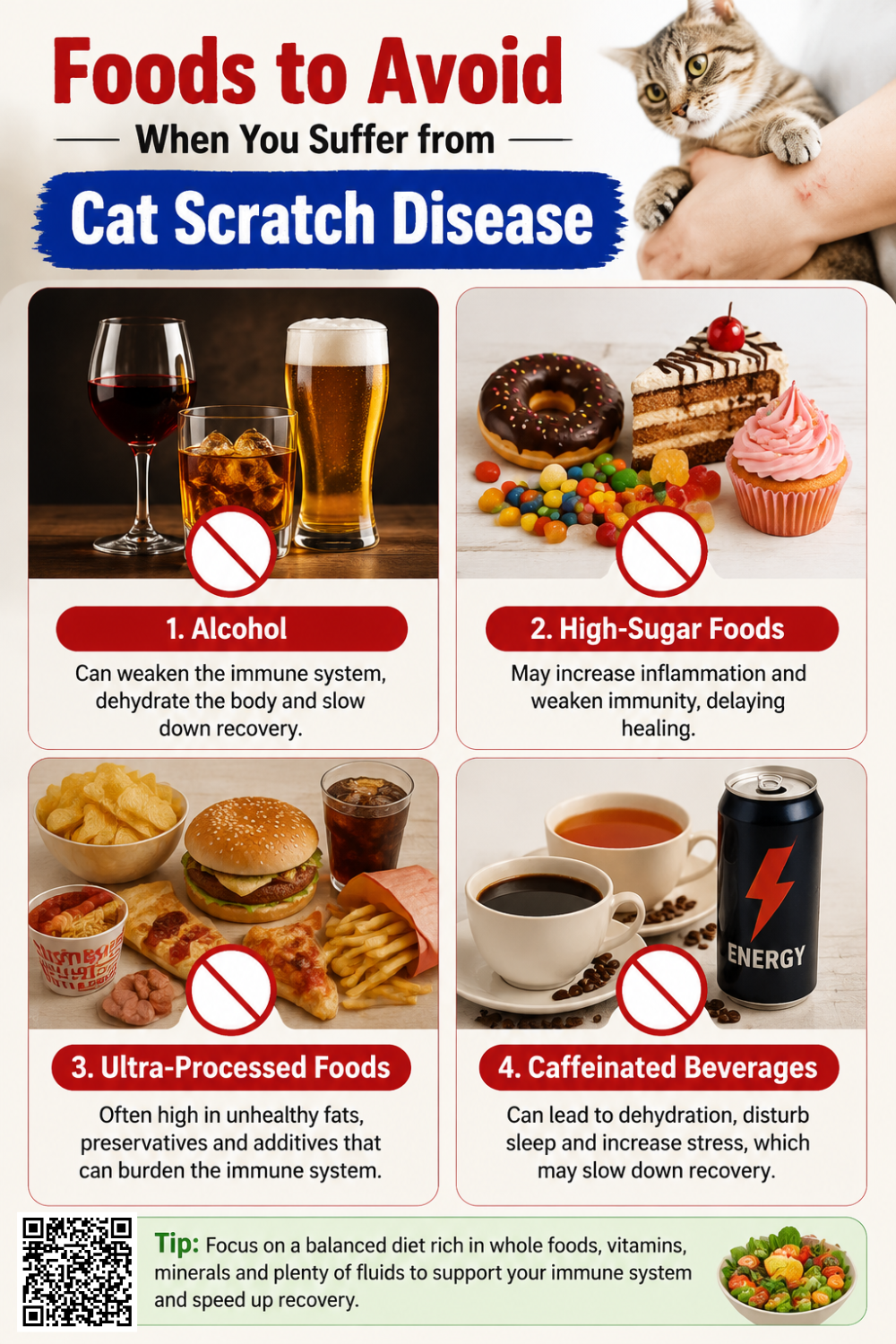
1. Alcohol
Alcohol impairs immune system function and increases fluid loss, which can worsen dehydration during fever episodes associated with bacterial infections 11.
2. High-Sugar Foods
Consuming large amounts of added sugars promotes systemic inflammation and can impair healthy immune system responses needed to clear infections efficiently 12.
3. Ultra-Processed Foods
These foods lack essential vitamins and contain additives that trigger inflammation, potentially delaying recovery from infectious illnesses and prolonging physical exhaustion.
4. Caffeinated Beverages
High caffeine intake acts as a diuretic, accelerating fluid loss. This can exacerbate dehydration and complicate fluid management when experiencing a fever.
When To see Doctor when you suffer from Cat Scratch Disease
1. Expanding Redness
See a doctor if the red area around the initial scratch or bite continually expands or fails to heal after several weeks.
2. Worsening Lymph Node Swelling
Seek medical attention if your swollen lymph nodes become increasingly painful, unusually large, or remain enlarged for more than two months.
3. Persistent High Fever
Consult a healthcare provider if you develop a high fever or if a mild fever persists for more than a few days.
4. Compromised Immunity
If you have a weakened immune system, seek prompt medical care, as you face a significantly higher risk of severe systemic complications.
5. Vision or Neurological Changes
Immediate intervention is required if you experience sudden vision loss, severe headaches, or confusion, which indicate the infection may have spread.