

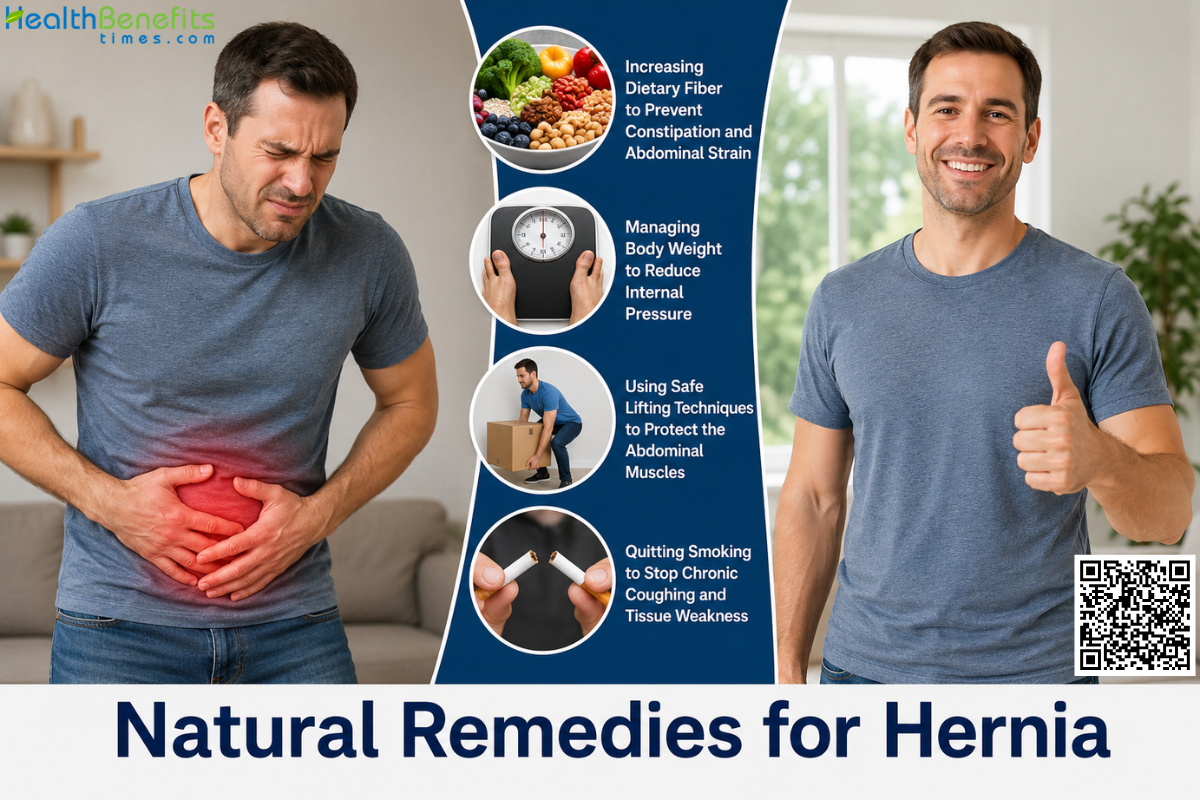
A hernia is a structural physical defect that requires medical attention. This condition occurs when an internal organ, intestine, or fatty tissue abnormally protrudes through a weakened area or tear in the surrounding muscle and connective tissue, clinically known as the fascia 1. These defects most frequently manifest in the abdominal wall, although they can also develop in the groin, diaphragm, or upper thigh regions 2. The condition typically produces a visible bulge and localized discomfort that often worsens during physical exertion, heavy lifting, or coughing. Hernias do not heal spontaneously; they are either congenital, arising from incomplete anatomical closure before birth, or acquired over time due to fascial tissue degeneration and chronically elevated intra-abdominal pressure 3. While often initially stable, untreated hernias present significant clinical risks, including bowel obstruction or life-threatening tissue strangulation, which necessitate prompt surgical evaluation.
Causes of Hernia
1. Elevated Intra-Abdominal Pressure
Activities or medical conditions that chronically increase internal pressure exert profound mechanical strain on the abdominal wall and pelvic floor. Repetitive heavy lifting, persistent coughing from respiratory illnesses, and chronic straining during bowel movements due to constipation force intra-abdominal contents against connective tissues, prompting fascial disruption and herniation 4.
2. Obesity
The accumulation of excess intra-abdominal fat physically separates muscle fibers and widens natural anatomical openings. This continuous physiological burden impairs the structural integrity of the aponeuroses, making individuals with elevated body mass significantly more susceptible to developing primary abdominal and hiatal hernias 5.
3. Pregnancy
Gestation introduces profound physical alterations, including an enlarging uterus that progressively elevates intra-abdominal pressure and stretches the abdominal musculature. This sustained internal tension commonly separates the overlying connective tissues, which facilitates the formation of new hernias or exposes preexisting anatomical defects 6.
4. Prior Abdominal Surgery or Trauma
Surgical incisions and blunt or penetrating abdominal trauma permanently compromise the native strength of the abdominal wall. The resulting post-operative scar tissue lacks the elasticity and durability of healthy fascia, creating localized structural deficits where organs can easily protrude, leading directly to incisional hernias 7.
5. Advanced Age
The natural aging process involves a progressive decline in muscular density and a marked loss of collagen elasticity within connective tissues. This cellular degeneration weakens vital anatomical barriers, such as the phrenoesophageal ligament and the pelvic floor, strongly predisposing older adults to spontaneous tissue displacement 8.
6. Congenital Structural Defects
Numerous hernias result from incomplete anatomical development during fetal gestation rather than acquired tissue damage. When essential fusion points, such as the diaphragm or the umbilical ring, fail to close entirely before birth, they leave permanent structural gaps that allow internal organs to migrate outward into incorrect anatomical spaces 9.
Symptoms of Hernia
1. Visible Bulge or Lump
A physical protrusion commonly forms under the skin in the belly, groin area, or scrotum. This lump typically becomes much larger or more noticeable when standing up, coughing, or tensing the muscles, and it often flattens or disappears completely when lying down flat 10.
2. Localized Pain or Burning
People often feel an aching, burning, or sharp pinching sensation directly at the site of the protrusion. This discomfort typically worsens during actions that place strain on the body, such as bending over, coughing, or lifting heavy objects 11.
3. Heavy or Dragging Sensation
A continuous feeling of fullness, pressure, or dragging often develops in the lower stomach or groin. This sensation typically intensifies toward the end of the day or after walking and standing for long periods.
4. Acid Reflux and Digestive Issues
When a hernia occurs internally through the breathing muscle, known as the diaphragm, it changes how the stomach sits. This type of defect frequently causes chronic heartburn, stomach acid flowing back into the mouth, chest discomfort, and difficulty swallowing.
5. Emergency Warning Signs
If the protruding tissue becomes stuck or its blood supply is cut off, it creates a medical emergency. Critical warning signs include sudden, severe pain that worsens rapidly, a bulge that turns red, purple, or dark, fever, nausea, vomiting, and being completely unable to pass gas or have a bowel movement.
 Natural Remedies for Hernia
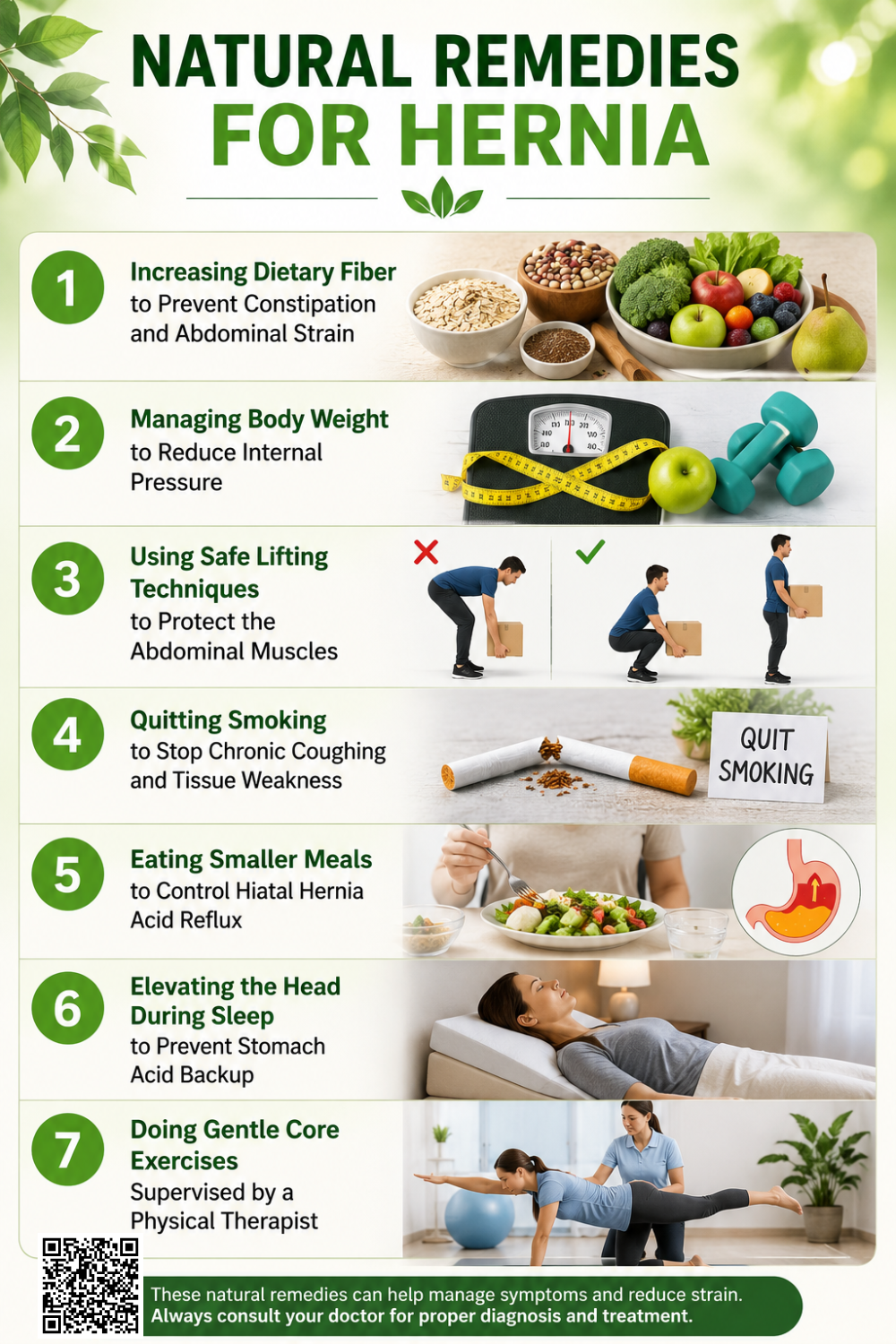
1. Increasing Dietary Fiber to Prevent Constipation and Abdominal Strain
How It May Help
Consuming enough dietary fiber softens bowel movements and allows them to pass easily. This directly prevents constipation and eliminates the need to strain on the toilet. Because straining forcefully pushes internal organs against the weakened abdominal wall, maintaining soft stools through fiber intake prevents existing hernias from worsening 12.
What Research Says
Medical research confirms that chronic constipation significantly increases the physical pressure inside the belly, which directly drives hernia development and progression. Clinical guidelines emphasize that managing bowel habits through adequate fiber and fluid intake serves as a primary conservative strategy to reduce daily physical strain and control symptoms.
How to Use It Safely
To safely increase your fiber intake, gradually add foods like oats, beans, fruits, and vegetables to your daily meals over several weeks. You must drink plenty of water daily, because fiber requires adequate hydration to soften your stool effectively without causing internal blockages 13.
Potential Precautions or Side Effects
Adding fiber too quickly often causes painful gas, bloating, and stomach cramps. If you experience severe abdominal pain or cannot pass gas, seek immediate medical care.
2. Managing Body Weight to Reduce Internal Pressure
How It May Help
Excess fat around the stomach creates constant physical weight that pushes against the muscles of the abdominal wall. Losing this extra weight directly lowers this internal pressure. This reduction in physical stress prevents existing hernias from pushing outward further and significantly reduces daily discomfort.
What Research Says
Clinical studies show that obesity is a primary risk factor for hernia development. Researchers conclude that individuals with a high body mass index experience significantly greater internal belly pressure. Maintaining a healthy weight is proven to relieve strain on connective tissues and lower the risk of hernia complications.
How to Use It Safely
To lose weight safely, you should focus on a balanced diet of vegetables, lean proteins, and whole grains. Engage in gentle, low-impact exercises like walking or swimming. Avoid heavy weightlifting or intense core workouts, as these can severely worsen your hernia 14.
Potential Precautions or Side Effects
Do not attempt rapid weight loss through crash diets or extreme workouts. Severe physical exertion greatly increases belly pressure and can quickly trigger a dangerous hernia emergency.
3. Using Safe Lifting Techniques to Protect the Abdominal Muscles
How It May Help
Lifting incorrectly places massive force directly on weakened stomach muscles. Proper lifting mechanics shift this physical burden to the stronger leg muscles. This prevents sharp spikes in internal belly pressure, keeping internal organs from pushing further outward through the existing muscular defect.
What Research Says
Medical guidelines confirm that heavy lifting directly elevates intra-abdominal pressure, which is a primary physical trigger for hernia progression. Occupational health data demonstrates that avoiding heavy loads and utilizing ergonomic lifting techniques significantly reduces mechanical stress on the abdominal wall, preventing further tissue tearing.
How to Use It Safely
When lifting, you must bend your knees and keep your back straight. Hold the object close to your chest and push upward using your legs, not your waist. If an item feels heavy, always ask for help rather than straining your core muscles.
Potential Precautions or Side Effects
Never hold your breath while lifting, as this instantly spikes internal belly pressure. Stop immediately and seek emergency medical care if you feel sudden, sharp pain at the hernia site 15.
4. Quitting Smoking to Stop Chronic Coughing and Tissue Weakness
How It May Help
Quitting smoking eliminates chronic coughing, which forcefully spikes pressure inside the belly and pushes outward against hernias. Furthermore, stopping tobacco use halts the chemical breakdown of collagen, allowing connective tissues in the abdominal wall to maintain their structural strength and resist further tearing 16.
What Research Says
Clinical studies identify tobacco smoking as a primary risk factor for hernia development. Researchers conclude that nicotine and toxic chemicals impair collagen formation and degrade tissue elasticity. Consequently, smokers experience significantly higher rates of abdominal wall defects due to this combined cellular damage and mechanical coughing strain.
How to Use It Safely
To quit safely and effectively, you should consult a doctor about proven cessation methods. You can utilize nicotine replacement therapies, such as patches or gums, or prescribed medications to manage cravings. Joining a medical support program greatly increases your long-term success 17.
Potential Precautions or Side Effects
Nicotine withdrawal frequently causes temporary anxiety, irritability, and increased appetite. You must manage any temporary weight gain carefully, as excess body fat can subsequently increase internal pressure on your hernia 18.
5. Eating Smaller Meals to Control Hiatal Hernia Acid Reflux
How It May Help
Eating large amounts of food expands the stomach, which forcefully pushes upward against the diaphragm. Consuming smaller meals reduces this physical expansion and prevents excess stomach acid production. This directly stops acid from leaking backward into the throat, relieving the chronic heartburn associated with hiatal hernias 19.
What Research Says
Clinical guidelines state that changing eating habits is the primary non-surgical treatment for hiatal hernias. Medical research confirms that reducing meal size significantly decreases internal stomach pressure and limits upward stomach movement. As a result, patients experience a major reduction in severe acid reflux symptoms.
How to Use It Safely
You should divide your daily food intake into four or five smaller meals rather than three large ones. Eat slowly and chew your food thoroughly. Additionally, remain sitting upright for at least three hours after eating to keep stomach contents completely settled 20.
Potential Precautions or Side Effects
Ensure your smaller meals remain nutritionally balanced so you do not miss vital nutrients. You should consult a healthcare provider immediately if severe heartburn persists despite changing your dietary habits.
6. Elevating the Head During Sleep to Prevent Stomach Acid Backup
How It May Help
When lying flat, stomach acid easily flows backward through the weakened opening of a hiatal hernia into the throat. Elevating the head uses gravity to keep stomach contents down in the belly. This simple physical change prevents nighttime acid backup, directly stopping heartburn, chest pain, and throat irritation.
What Research Says
Clinical studies demonstrate that elevating the head during sleep is a highly effective lifestyle change for managing hiatal hernia symptoms. Medical researchers conclude that nighttime elevation significantly reduces the time acid spends in the throat, leading to much better sleep quality and fewer acid reflux episodes 21.
How to Use It Safely
To safely raise your sleeping angle, you should elevate the head of your bed by 6 to 8 inches using sturdy blocks under the bed frame or a solid wedge pillow. You must avoid stacking regular pillows, because this only bends the neck and increases stomach pressure.
Potential Precautions or Side Effects
Improper elevation using standard pillows causes severe neck pain and worsens acid reflux by crushing the stomach. Ensure the bed blocks are perfectly stable to prevent falls.
7. Doing Gentle Core Exercises Supervised by a Physical Therapist
How It May Help
Specific, gentle movements strengthen the muscles surrounding the stomach area without causing dangerous internal pressure. By building up healthy tissue around the defect, the stomach wall becomes more stable. This added physical support helps keep internal organs in place and reduces daily aching.
What Research Says
Clinical guidelines indicate that while intense workouts rapidly worsen hernias, supervised physical therapy is beneficial. Researchers conclude that guided abdominal wall rehabilitation improves muscle function and reduces discomfort in patients pursuing conservative management, provided the specific movements carefully avoid sudden spikes in belly pressure.
How to Use It Safely
You must only perform core exercises directly approved by a licensed physical therapist. Focus on deep breathing and gentle pelvic movements. You should completely avoid sit-ups, heavy weightlifting, and intense abdominal routines, because these actions forcibly push the hernia outward.
Potential Precautions or Side Effects
Exercising without professional guidance can easily tear the weakened muscle further. Stop exercising immediately and seek medical care if you feel sudden pain or notice the lump enlarging.
 Foods to Avoid When You Suffer from Hernia
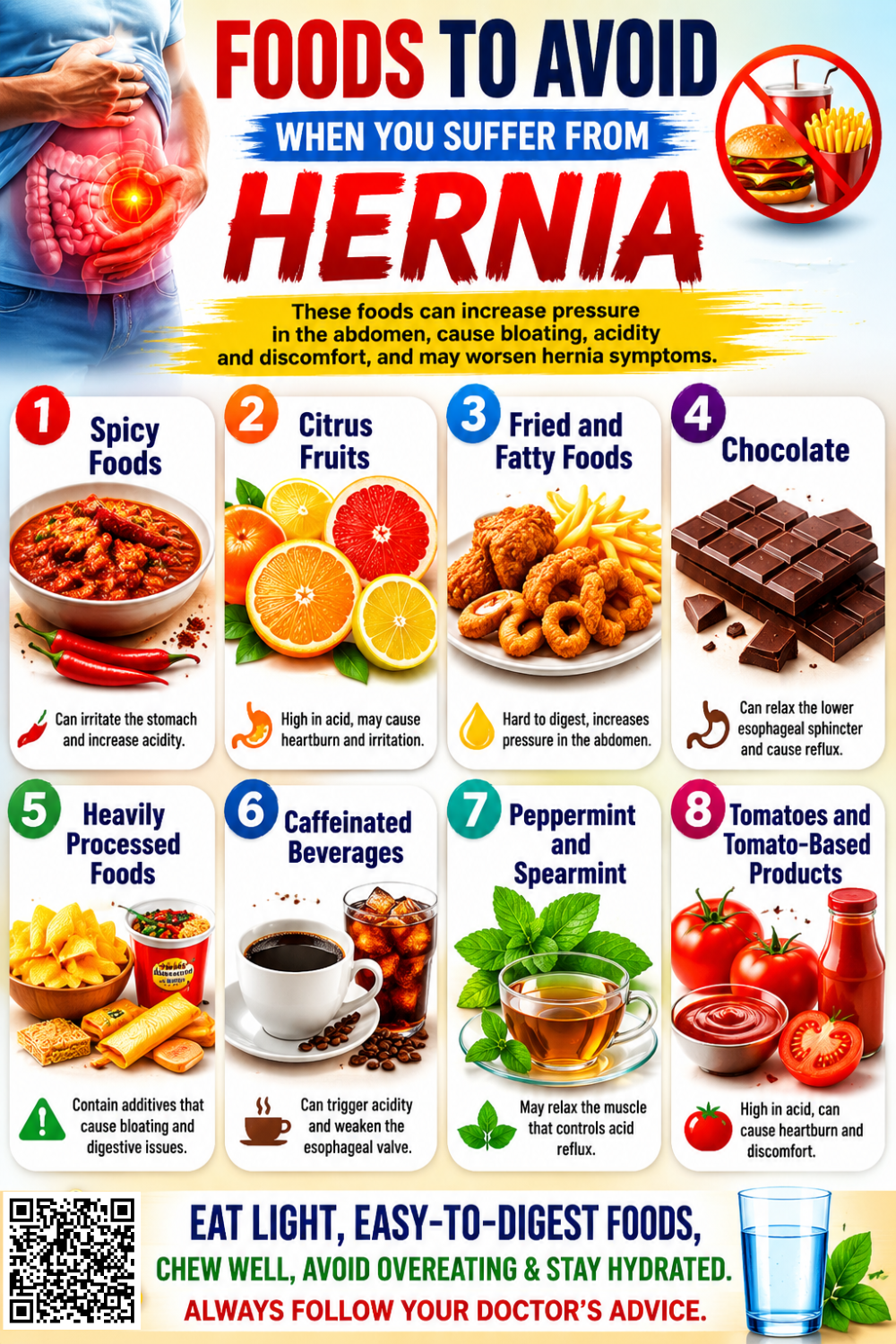
1. Spicy Foods
Spicy dishes irritate the stomach lining and trigger severe acid reflux, worsening the heartburn associated with hiatal hernias by relaxing the lower esophageal sphincter.
2. Citrus Fruits
Oranges, lemons, and grapefruits contain high acid levels that directly aggravate the esophagus, causing painful burning sensations for individuals with hiatal hernias.
3. Fried and Fatty Foods
High-fat meals delay stomach emptying and increase internal pressure. This forces digestive acids upward, severely aggravating hiatal hernia symptoms.
4. Chocolate
Chocolate contains chemical compounds that relax the muscle valve separating the stomach and esophagus, allowing acid to leak upward and trigger painful reflux.
5. Heavily Processed Foods
Foods lacking dietary fiber, such as fast food, frequently cause severe constipation. This leads to heavy physical straining that physically worsens abdominal hernias.
6. Caffeinated Beverages
Coffee and energy drinks stimulate excess stomach acid production while weakening the esophageal valve, directly intensifying acid reflux in hiatal hernia patients.
7. Peppermint and Spearmint
Although often used for digestion, mint flavorings relax the esophageal sphincter. This allows stomach acid to escape upward, worsening hiatal hernia discomfort.
8. Tomatoes and Tomato-Based Products
Tomatoes are highly acidic. Consuming tomato sauce or juice directly irritates the esophageal lining and rapidly triggers heartburn for people with hiatal hernias.
When To See a Doctor When You Suffer from Hernia
1. Sudden or Severe Pain
If you experience intense, sudden pain at the hernia site, seek emergency care. This indicates that trapped tissue has lost its blood supply, requiring urgent surgery.
2. Discoloration of the Bulge
Go to a hospital immediately if the hernia bulge turns red, purple, or dark. Discoloration physically signals tissue death caused by a completely blocked blood supply.
3. Nausea and Vomiting
Unexplained nausea and persistent vomiting combined with a hernia bulge suggest a severe bowel obstruction. This trapped intestine cannot clear waste and requires prompt emergency surgical intervention.
4. Inability to Pass Gas or Stool
Failing to have a bowel movement or pass gas signifies a completely blocked intestine. This life-threatening mechanical obstruction requires immediate medical evaluation and emergency surgical repair.
5. Inability to Push the Bulge Back
If a previously flattening bulge becomes permanently stuck outward, the tissue is trapped. This condition requires swift medical assessment before the tissue completely loses vital blood flow.
6. Developing a Fever
Experiencing a high fever alongside hernia pain indicates a spreading internal infection or severe tissue death. You must treat this combination as a critical, life-threatening medical emergency.