

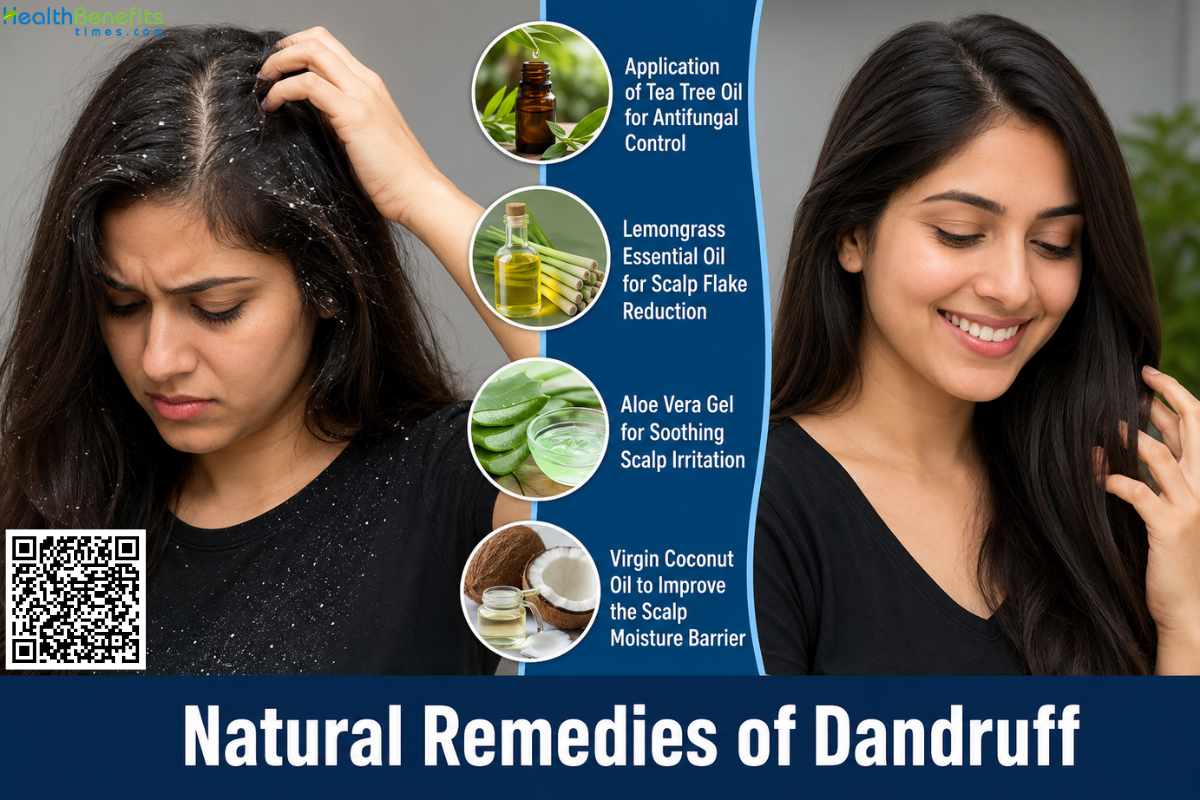
Dandruff is a common scalp condition characterized by the continuous shedding of dead skin cells in the form of white or grayish flakes, typically accompanied by mild itching. Clinically, it is classified as a mild, non-inflammatory form of seborrheic dermatitis that remains strictly confined to the scalp 1. The underlying cause is multifactorial, relying on an interaction between excess sebum (scalp oil) production, an individual’s skin barrier susceptibility, and the presence of Malassezia, a naturally occurring yeast on the skin 2. As this yeast digests lipids in scalp oils, it provokes an accelerated rate of skin cell shedding in sensitive individuals. Research confirms that the condition is neither contagious nor caused by poor hygiene; however, it affects up to half of the global adult population and typically emerges after puberty when sebaceous glands become more active.
Causes of Dandruff
1. Malassezia Yeast Activity
A primary cause of dandruff is a reaction to Malassezia, a natural yeast that lives on the scalp of most adults. This fungus feeds on scalp oils and leaves behind a byproduct called oleic acid. In sensitive individuals, this acid triggers an immune response that forces the skin cells to shed at an abnormally fast rate.
2. Excess Sebum (Scalp Oil) Production
The Malassezia yeast depends entirely on sebum—the natural oil produced by the scalp’s sebaceous glands—to survive and multiply. Consequently, individuals with naturally oily skin or those experiencing hormonal fluctuations that increase oil production are significantly more likely to develop flaking.
3. Skin Barrier Susceptibility
Because almost all adults have both scalp oil and Malassezia but do not all develop dandruff, a weakened skin barrier is considered a critical underlying cause. An impaired outer layer of skin allows irritants to penetrate more deeply, which triggers the inflammation and rapid skin cell turnover characteristic of the condition.
4. Contact Dermatitis
Sensitivity to specific chemical ingredients found in shampoos, styling gels, or hair dyes can cause an allergic or irritant reaction on the scalp. This condition, known as contact dermatitis, leads to localized redness, itching, and scaling that closely mimics standard dandruff.
5. Underlying Medical Skin Conditions
Persistent scalp flaking is often driven by seborrheic dermatitis, a more severe and inflammatory version of dandruff that can also affect the face and chest. Other chronic skin disorders, such as scalp psoriasis or eczema, prompt a rapid buildup and subsequent shedding of dead skin cells that present as prominent flakes.
Symptoms of Dandruff
1. Visible Skin Flaking
The most defining characteristic is the continuous shedding of white or grayish flakes of dead skin, which are easily seen scattered throughout the hair, directly on the scalp, or resting on the shoulders and clothing.
2. Scalp Itching
A persistent, mild to moderate itch on the scalp frequently accompanies the visible flakes, driven by the underlying skin irritation and accelerated cell shedding process.
3. Greasy or Dry Scales
The skin flakes can vary in texture; they may appear as fine, dry, powdery dust or present as slightly greasy, yellowish clusters that stick closely to the hair shafts and scalp surface.
4. Mild Scalp Irritation
The surface of the scalp may feel tight or slightly irritated. However, significant redness, swelling, or severe inflammation are generally absent in standard dandruff and indicate a progression to seborrheic dermatitis.
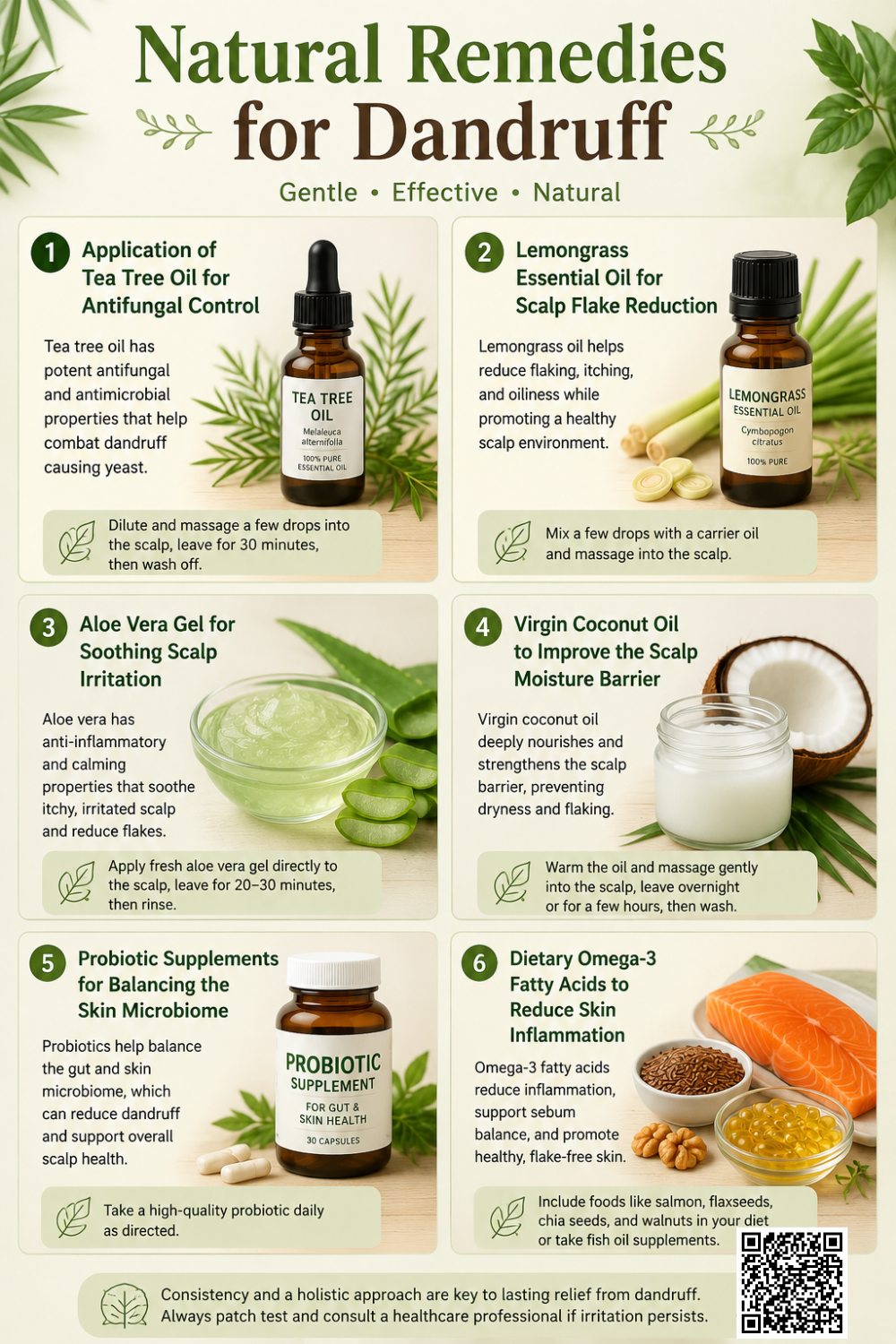 Natural Remedies of Dandruff
1. Application of Tea Tree Oil for Antifungal Control
How it may help
Tea tree oil possesses natural antifungal properties that directly target Malassezia, the yeast primarily responsible for dandruff 3. By inhibiting the overgrowth of this fungus on the scalp, the essential oil effectively reduces the inflammation, greasiness, and rapid skin cell shedding that lead to visible flaking 4.
What research says
Clinical trials confirm its effectiveness in managing scalp conditions. Research demonstrates that individuals using a 5 percent tea tree oil shampoo daily for four weeks experienced a 41 percent reduction in overall dandruff severity 5. Participants also reported significant improvements in scalp itchiness and greasiness compared to those using a placebo.
How to use it safely
Never apply pure tea tree oil directly to your scalp. Dilute it by mixing a few drops into a gentle carrier oil, such as coconut or jojoba oil. Alternatively, you can add two to three drops directly into your regular shampoo before massaging it into your hair.
Potential precautions or side effects
Topical application can trigger contact dermatitis, redness, or itching in sensitive individuals. You should always perform a patch test on a small area of skin before widespread scalp application.
2. Lemongrass Essential Oil for Scalp Flake Reduction
How it may help
Lemongrass essential oil contains potent anti-inflammatory and antifungal compounds that help suppress the growth of Malassezia yeast on the scalp. By neutralizing this fungus and calming irritation, the oil prevents the rapid shedding of dead skin cells, thereby reducing the formation of visible dandruff flakes 6.
What research says
Clinical studies indicate that hair formulations containing lemongrass oil effectively manage scalp flaking. Research demonstrates that individuals applying a 10 percent lemongrass oil solution experienced a significant reduction in dandruff severity in as little as one to two weeks of consistent daily application.
How to use it safely
Because pure essential oils are highly concentrated, you must dilute lemongrass oil before applying it. Mix two or three drops into a gentle carrier oil, such as jojoba oil, or your daily shampoo. Gently massage the mixture into your scalp and rinse it out thoroughly.
Potential precautions or side effects
Lemongrass oil can cause local skin irritation or allergic contact dermatitis. You should always perform a patch test on a small skin area before applying it to your scalp.
3. Aloe Vera Gel for Soothing Scalp Irritation
How it may help
Aloe vera possesses natural moisturizing, anti-inflammatory, and mild antifungal properties that soothe a dry, irritated scalp. By repairing the skin barrier and calming localized inflammation, it helps decrease the itching, redness, and rapid skin cell shedding associated with dandruff and seborrheic dermatitis 7.
What research says
Scientific reviews indicate that plant-derived treatments like aloe vera effectively reduce the Malassezia yeast load on the scalp. Clinical evaluations show that applying aloe vera gel significantly improves symptoms of seborrheic dermatitis, leading to noticeable reductions in scaling, itching, and overall scalp inflammation 8.
How to use it safely
Apply pure, additive-free aloe vera gel directly to your scalp, focusing on the skin rather than the hair strands. Leave the gel on for 30 minutes before washing it out with a gentle shampoo. You can repeat this process two to three times a week.
Potential precautions or side effects
While generally safe, aloe vera can cause contact dermatitis, redness, or a stinging sensation in sensitive individuals. You should perform a patch test on your skin before widespread scalp application.
4. Virgin Coconut Oil to Improve the Scalp Moisture Barrier
How it may help
Virgin coconut oil deeply hydrates the skin and helps repair the natural scalp moisture barrier. Its primary component, lauric acid, possesses mild antimicrobial properties. By preventing excessive water loss and suppressing harmful fungal activity, it effectively reduces the dry flaking and itching that contribute to dandruff outbreaks 9.
What research says
Clinical studies on the scalp microbiome demonstrate that consistent application of coconut oil significantly improves overall scalp health. Research confirms it decreases moisture loss, reduces fungal disease pathways associated with Malassezia, and enriches beneficial bacteria that naturally maintain a balanced scalp environment.
How to use it safely
Warm a small amount of pure, unrefined virgin coconut oil between your palms until it melts. Gently massage the oil directly into your scalp. Leave it on for a few hours before washing it out thoroughly with a mild shampoo to prevent greasy buildup.
Potential precautions or side effects
Leaving heavy oils on the scalp too long can worsen seborrheic dermatitis or clog hair follicles, causing scalp acne. Always wash the oil out completely to prevent yeast overgrowth.
5. Probiotic Supplements for Balancing the Skin Microbiome
How it may help
Probiotic supplements introduce beneficial bacteria that help restore the natural balance of microorganisms on the skin. By modulating the immune response and reinforcing the skin’s protective barrier, these helpful microbes suppress fungal overgrowth and calm the localized scalp inflammation responsible for persistent flaking.
What research says
Clinical trials demonstrate that regular intake of specific probiotic strains significantly improves scalp conditions. Research shows that individuals consuming Lactobacillus paracasei daily for 56 days experienced a measurable reduction in overall dandruff severity, scalp redness, and excess oil production by successfully restoring the scalp’s microbial balance 10.
How to use it safely
You can incorporate probiotics by taking a daily oral supplement containing Lactobacillus strains, closely following the package’s dosage instructions. Alternatively, look for specialized anti-dandruff shampoos formulated with heat-killed probiotics, applying the product directly to your scalp and leaving it on briefly before rinsing.
Potential precautions or side effects
Oral probiotics are generally safe but may initially cause mild, temporary digestive bloating. Individuals with severely compromised immune systems must consult a healthcare provider before starting any live supplement.
6. Dietary Omega-3 Fatty Acids to Reduce Skin Inflammation
How it may help
Dietary Omega-3 fatty acids manage cellular inflammation and are essential for maintaining the skin’s lipid barrier. By reducing systemic inflammation and preventing excessive moisture loss from the skin, these nutrients help calm the dry, itchy, and irritated scalp environment that often worsens visible dandruff flaking.
What research says
Clinical reviews confirm that Omega-3 fatty acids significantly decrease the production of inflammatory compounds in the body 11. Research indicates that regular consumption improves skin barrier function and hydration, which indirectly reduces the severity of inflammatory skin disorders, including those that trigger excessive scalp flaking.
How to use it safely
You can increase your intake naturally by eating fatty fish, such as salmon or mackerel, twice a week. Alternatively, take a daily fish oil or algae-based Omega-3 supplement. Always follow the specific dosage instructions on the product label and take supplements with meals to improve absorption.
Potential precautions or side effects
High doses of Omega-3 supplements can increase bleeding risks or cause mild stomach upset. You should consult a healthcare provider before starting, especially if taking blood-thinning medications.
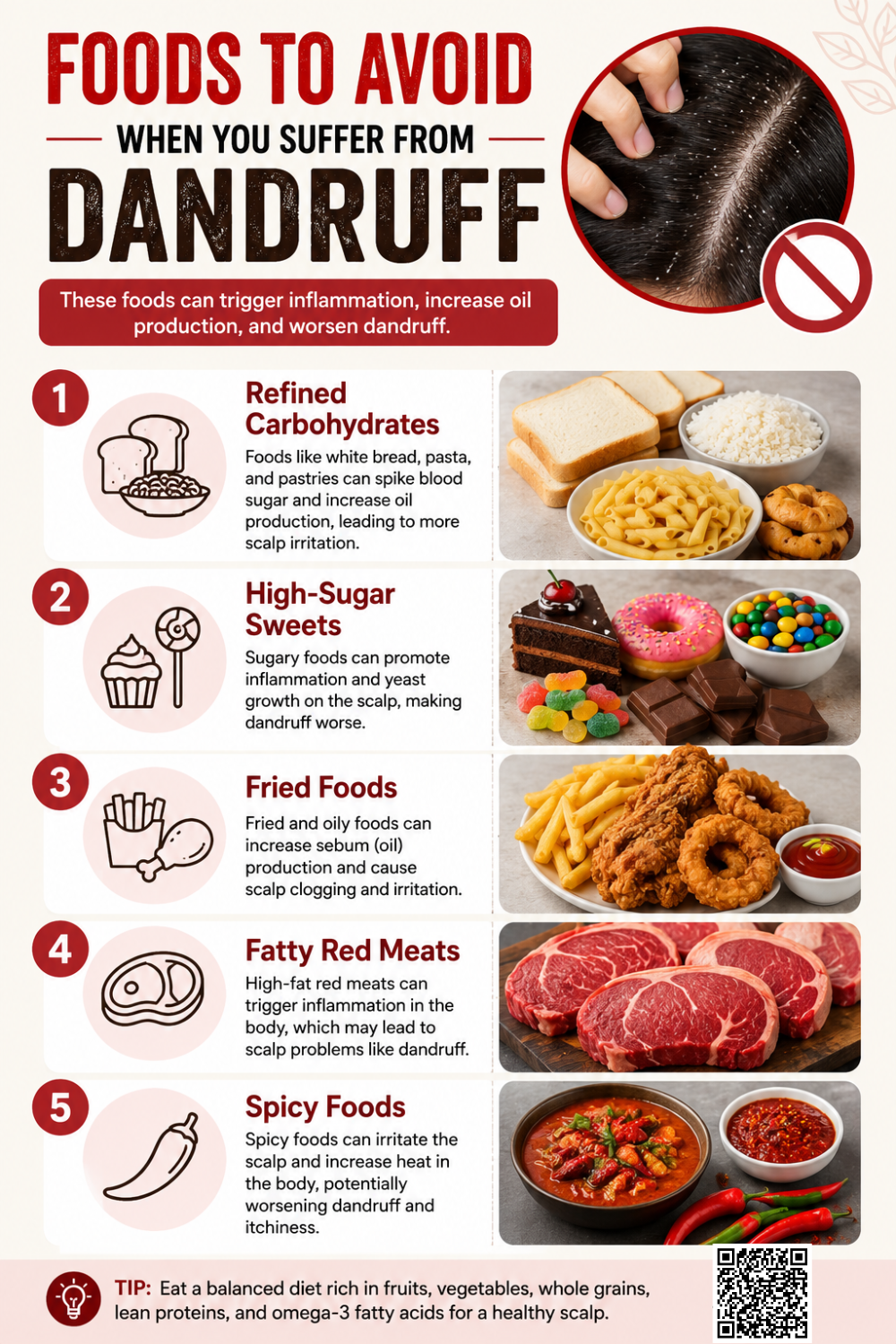 Foods to Avoid When You Suffer From Dandruff
1. Refined Carbohydrates
Foods like white bread and pasta rapidly spike insulin levels, stimulating excessive sebum production that creates an ideal environment for dandruff-causing yeast to thrive 12.
2. High-Sugar Sweets
Diets high in added sugars promote systemic inflammation and accelerate skin cell turnover, increasing scalp oiliness and exacerbating overall dandruff severity 13.
3. Fried Foods
Consuming foods cooked in heavy oils increases saturated fat intake, triggering inflammatory skin responses and significantly aggravating seborrheic dermatitis symptoms 14.
4. Fatty Red Meats
Meats with high animal fat content contribute to poor skin lipid composition and systemic inflammation, directly worsening scalp scaling and chronic itching.
5. Spicy Foods
Clinical reviews confirm that frequent consumption of highly spiced meals is associated with symptom exacerbations, often leading to increased scalp irritation and active flaking.
When To See a Doctor for Dandruff
1. Persistent Symptoms
If flaking, itching, or redness remains unchanged after two to four weeks of using medicated shampoos, you may require stronger prescription-strength antifungal or anti-inflammatory treatments.
2. Signs of Infection
Seek medical attention if you notice oozing, crusting, or yellow fluid on the scalp, which may indicate a secondary bacterial infection requiring antibiotics 15.
3. Severe Inflammation
If the scalp becomes intensely red, swollen, or painful, these symptoms may indicate conditions like psoriasis or severe contact dermatitis that require specialized dermatological intervention.
4. Widespread Rash
If scaling or redness spreads beyond the scalp to the face, ears, or chest, it suggests seborrheic dermatitis that necessitates a tailored, multi-site treatment plan.
5. Weakened Immune System
Individuals with compromised immune systems should consult a doctor promptly, as they are at higher risk for severe or recurring fungal scalp infections 16.