

If you’ve ever walked into a damp basement and immediately started sneezing or felt your eyes water, your body may have been reacting to mold spores in the air. Mold allergies are among the most common and frequently misunderstood respiratory conditions affecting millions of people worldwide. According to the American Academy of Allergy, Asthma & Immunology (AAAAI), a mold allergy occurs when your immune system overreacts to mold spores inhaled into the lungs, triggering a cascade of symptoms that can range from mild discomfort to serious respiratory distress.
Mold itself is a type of fungus that reproduces by releasing tiny, lightweight spores into the air. These spores are virtually invisible to the naked eye yet potent enough to activate an immune response in sensitive individuals. The Centers for Disease Control and Prevention (CDC) confirms that molds can be found both indoors and outdoors in virtually every environment on Earth, thriving in moist, warm, and humid conditions year-round.
What makes mold allergies particularly tricky is that they often masquerade as ordinary seasonal allergies or even the common cold. The Mayo Clinic explains that when you inhale mold spores, your immune system identifies them as foreign invaders and produces antibodies, specifically immunoglobulin E (IgE), to fight them. 1 This immunological chain reaction is what produces all those uncomfortable symptoms you experience each time you’re exposed.
Unlike seasonal pollen allergies that spike for a few months, mold allergies can persist throughout the entire year, especially if you live or work in environments with persistent moisture issues. The Asthma and Allergy Foundation of America (AAFA) reports that mold is one of the top triggers for asthma attacks, making it especially dangerous for people with pre-existing respiratory conditions. 2 Understanding this condition fully is the first step toward managing it naturally and effectively.
Major Environmental Conditions That Cause Mold Allergies
Your surroundings play a massive role in determining your mold exposure risk. Certain environmental conditions are not just mold-friendly, they’re practically mold incubators. Here are the key culprits you need to be aware of:
1. High Humidity and Indoor Dampness
Humidity levels above 60% create the perfect breeding ground for mold colonies to develop on walls, ceilings, and furniture. The Environmental Protection Agency (EPA) recommends keeping indoor humidity below 50% to inhibit mold growth. When moisture accumulates from cooking, showering, or poor ventilation, spore counts in the air rise dramatically, aggravating allergy symptoms in sensitive individuals. 3
2. Water-Damaged Buildings and Leaking Pipes
Any building that has experienced flooding, roof leaks, or persistent plumbing problems is at extremely high risk for harboring hidden mold colonies beneath drywall, flooring, and insulation. The National Institute of Environmental Health Sciences (NIEHS) highlights that water-damaged buildings are among the most significant sources of indoor mold exposure. 4 Even after the visible water has dried, structural dampness can sustain mold growth for months or even years if left untreated.
3. Poor Ventilation and Air Circulation
Homes and offices with inadequate airflow trap moisture and stale air, allowing mold spores to settle and multiply on surfaces. The American Lung Association states that proper ventilation, especially in bathrooms, kitchens, and laundry areas, is critical to reducing mold growth. 5 Without adequate air exchange, spore concentrations build up indoors, far exceeding outdoor levels, and prolonged exposure can lead to chronic mold allergy symptoms.
4. Outdoor Environments: Leaf Piles, Compost, and Soil
Decomposing organic matter, such as fallen leaves, garden compost heaps, and damp soil, is a rich natural habitat for mold species. The Allergy & Asthma Network notes that outdoor mold spore counts peak in late summer and fall when leaf decomposition is at its highest. Raking leaves, gardening, or simply walking through woodland areas can expose you to billions of mold spores in a single outing.
5. Basements and Crawl Spaces
Underground and semi-underground spaces naturally accumulate moisture from ground seepage and condensation, making them persistent mold hotspots in residential buildings. According to WebMD, basements and crawl spaces are among the highest-risk areas in any home for mold proliferation. Even without obvious visible mold, these areas can release enough spores into the general living space to trigger ongoing allergic reactions.
6. HVAC Systems and Air Ducts
Heating, ventilation, and air conditioning systems can become conduits for mold spore distribution throughout an entire building when filters are not regularly cleaned or replaced. The EPA Indoor Air Quality Guide warns that mold growing inside HVAC units and ductwork can spread spores into every room whenever the system runs. This makes HVAC maintenance one of the most critical yet overlooked factors in managing mold allergy risks at home.
7. Damp Clothing, Carpets, and Upholstery
Textiles and fabrics that retain moisture, especially carpets in humid climates or upholstered furniture near leaky windows, provide the organic material and moisture that mold needs to thrive. The Cleveland Clinic notes that carpeting is particularly problematic in basements and bathrooms where moisture levels fluctuate. Washing and thoroughly drying fabrics, or replacing carpet with hard flooring, can significantly reduce indoor mold spore counts and alleviate allergy burden.
Mold Allergy Facts
| Symptoms |
|
| Common Causes |
|
| Types of Mold Causing Allergies |
|
| How Mold Spreads |
|
| Age Groups Most Affected |
|
| Higher Risk Factors |
|
| How Doctors Diagnose |
|
| Natural Remedies Overview |
|
| Prevention Tips |
|
| Mold vs. Seasonal Allergy |
|
Natural Remedies for Mold Allergies
Managing mold allergies doesn’t always mean reaching for prescription medications, many people find significant relief through time-tested, research-backed natural approaches. The following remedies work best as part of a holistic strategy that combines environmental control with internal immune support. Always consult your doctor before starting any new supplement or remedy.
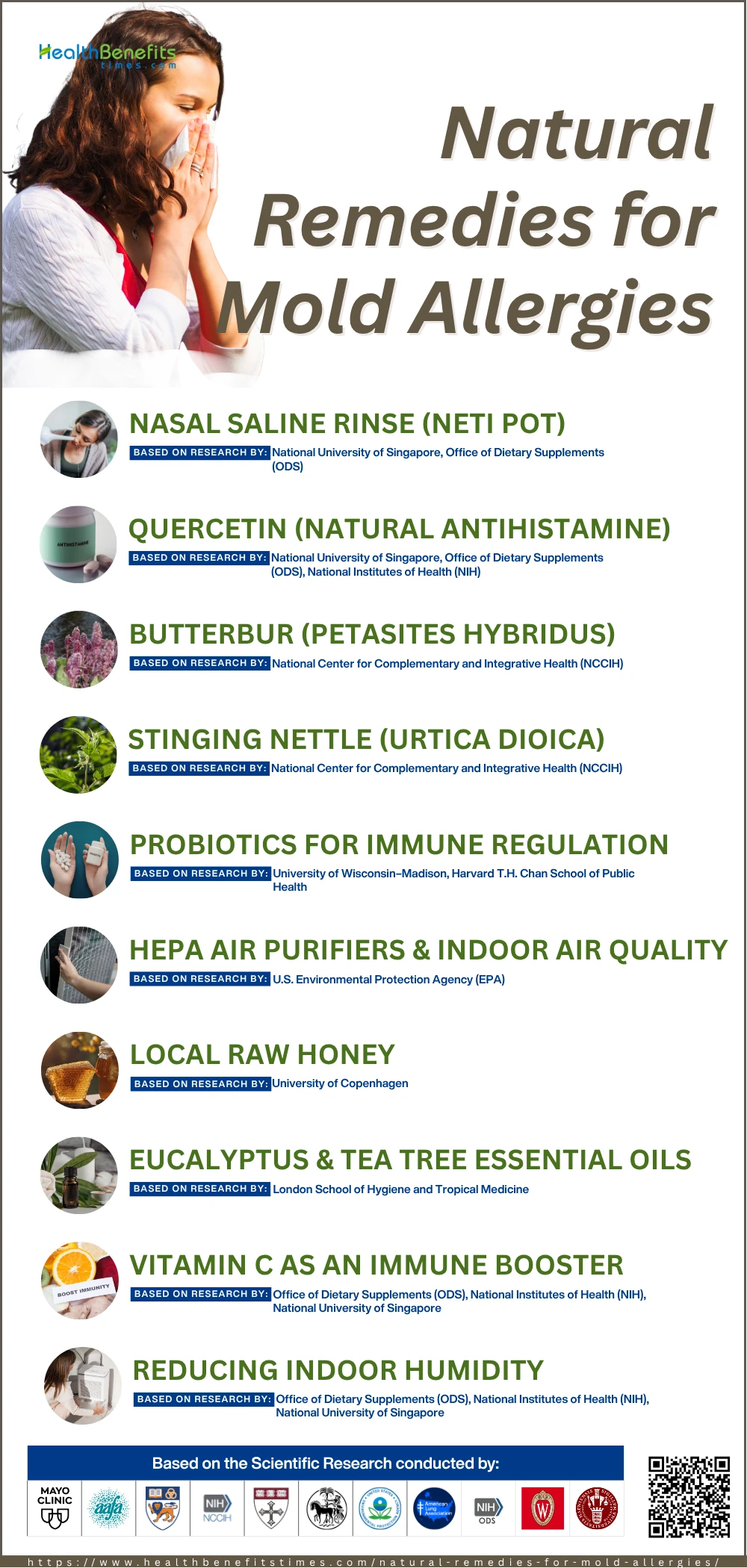
1. Nasal Saline Rinse (Neti Pot)
One of the simplest and most effective natural interventions you can start today is nasal irrigation with a saline solution. Rinsing your nasal passages flushes out trapped mold spores, allergens, and excess mucus before they trigger a deeper allergic response. A systematic review published by the American Academy of Family Physicians found that saline nasal irrigation significantly reduces allergy symptoms and improves quality of life. Use sterile, distilled water and a pre-packaged saline rinse kit to minimize infection risk, tap water is never safe for nasal rinsing.
 2. Quercetin (Natural Antihistamine)
Quercetin is a powerful plant-based flavonoid found abundantly in onions, apples, capers, and berries that functions as a natural antihistamine by stabilizing mast cells and blocking histamine release. According to research published in the journal Molecules, quercetin demonstrates significant anti-allergic properties and anti-inflammatory effects in multiple cell-based and animal studies. 6 You can boost your quercetin intake through diet, or take supplements typically ranging from 500–1,000 mg per day, though you should always verify the appropriate dose with your healthcare provider (NIH Office of Dietary Supplements). 7
3. Butterbur (Petasites hybridus)
Long used in European herbal medicine, butterbur is one of the most well-researched herbal remedies for allergic rhinitis, and its effectiveness against histamine-driven symptoms is quite remarkable. A landmark clinical trial published in the British Medical Journal (BMJ) found that butterbur extract was as effective as the antihistamine cetirizine in managing seasonal allergic rhinitis, without the drowsiness side effect. 8 It’s critical to use only PA-free (pyrrolizidine alkaloid-free) butterbur products, as raw, unprocessed butterbur contains compounds that can harm the liver, notes the National Center for Complementary and Integrative Health (NCCIH). 9
4. Stinging Nettle (Urtica dioica)
Stinging nettle leaf, when freeze-dried into a supplement or brewed as a tea, acts as a natural anti-inflammatory and mild antihistamine that many allergy sufferers swear by. A pilot study referenced by the NCCIH suggests that freeze-dried nettle may inhibit several key inflammatory events involved in seasonal allergies, including the production of prostaglandins and histamines. Drinking stinging nettle tea two to three times daily during high-mold-spore seasons can be a comforting, gentle way to keep symptoms manageable.
5. Probiotics for Immune Regulation
Your gut microbiome plays a far more significant role in your allergy susceptibility than most people realize. An imbalanced gut microbiome can contribute to an overactive immune system, which is fundamentally what an allergy is. A comprehensive meta-analysis published in the International Forum of Allergy & Rhinology found that probiotic supplementation significantly improved overall quality of life and symptom scores in patients with allergic rhinitis. 10 Strains such as Lactobacillus rhamnosus and Lactobacillus acidophilus appear particularly beneficial, according to findings highlighted by the Harvard T.H. Chan School of Public Health. 11
6. HEPA Air Purifiers and Indoor Air Quality
While not a supplement or remedy in the traditional sense, a high-quality HEPA air purifier is arguably the single most impactful natural intervention you can make against mold allergies at home. HEPA filters, by definition, capture 99.97% of airborne particles as small as 0.3 microns, including mold spores. The EPA’s Guide to Air Cleaners in the Home confirms that portable air cleaners with true HEPA filters are effective at reducing airborne mold spore concentrations in individual rooms. 12 Pair your air purifier with regular filter replacement and reduced-humidity practices for maximum benefit.
7. Local Raw Honey
There’s a popular theory, and some supportive evidence, that consuming small amounts of local raw honey regularly helps desensitize your immune system to local environmental allergens, including outdoor mold spores. A study in the International Archives of Allergy and Immunology found that birch pollen honey reduced allergic symptoms and allowed for lower antihistamine use in study participants. 13 While evidence specifically for mold allergies remains limited, raw honey also contains antimicrobial and anti-inflammatory compounds like royal jelly and propolis that support immune health in general.
8. Eucalyptus and Tea Tree Essential Oils
Essential oils, particularly eucalyptus and tea tree oil, carry evidence-based antimicrobial and anti-inflammatory properties that can support symptom relief when used properly, typically via steam inhalation or diluted diffusers. A study in the journal Clinical Microbiology & Infection demonstrated that tea tree oil exhibits strong antifungal activity against common mold species including Aspergillus and Penicillium. 14 Adding a few drops of eucalyptus oil to a bowl of hot water and inhaling the steam can help open congested nasal passages and ease breathing, though you should never apply undiluted essential oils directly to skin or ingest them.
9. Vitamin C as an Immune Booster
High-dose vitamin C has long been studied as a natural antihistamine and immune system modulator that can reduce the severity of allergic reactions. According to the NIH Office of Dietary Supplements, vitamin C supports the integrity of epithelial barriers, including the nasal mucous membranes, which act as the first line of defense against airborne allergens like mold spores. 15 A study in the journal Nutrients found that intravenous and oral vitamin C supplementation significantly reduced allergy-related respiratory symptoms, suggesting a clear dose-dependent benefit for mold allergy sufferers. 16
10. Reducing Indoor Humidity with Dehumidifiers
Controlling environmental moisture is the single most important upstream intervention for anyone dealing with mold allergies, without it, no remedy will provide lasting relief. A mechanical dehumidifier that maintains indoor humidity between 30–50% effectively inhibits mold growth at the source, cutting off spore production before it begins. The AAAAI Mold Allergy Management Guide specifically recommends the use of dehumidifiers in damp areas like basements and crawl spaces as a cornerstone of mold allergy management. Empty and clean the dehumidifier reservoir regularly, as standing water inside the unit can itself become a mold source.
Important Precautions Before Using Natural Remedies
Natural doesn’t automatically mean safe for everyone, and that’s a distinction you should take seriously before diving into any new remedy. Here are the key precautions you must keep in mind:
- Consult your doctor first: Always speak with a licensed allergist or physician before starting herbal supplements, especially if you’re pregnant, breastfeeding, or managing a chronic condition. The American College of Allergy, Asthma & Immunology (ACAAI) recommends professional guidance for all allergy management plans.
- Supplement-drug interactions: Remedies like butterbur and quercetin can interact with blood-thinning medications, antihistamines, and other common drugs. The Mayo Clinic Drug Interaction Checker and your pharmacist are your best resources for identifying these risks before they become a problem. 17
- PA-free butterbur only: Raw or unprocessed butterbur contains pyrrolizidine alkaloids that can cause severe liver damage. Always purchase certified PA-free products from reputable manufacturers, as the NCCIH safety data explicitly warns against using unprocessed butterbur in any form. 9
- Essential oil safety: Essential oils must always be diluted in a carrier oil (such as coconut or jojoba oil) before any skin application. They should never be ingested. Children, pregnant women, and people with asthma should use them with particular caution, as some oils can trigger bronchospasm in sensitive individuals.
- Saline rinse water safety: Using tap water for nasal irrigation can introduce dangerous microorganisms directly into your sinuses. The FDA strongly advises using only distilled, sterile, or previously boiled and cooled water for any nasal rinse device.
- Natural remedies are complementary, not curative: The World Allergy Organization (WAO) is clear that allergen avoidance and clinically proven treatments remain the gold standard. Natural remedies work best as complementary strategies alongside, not instead of professional medical care.
When You Should See a Doctor
Knowing when to step beyond natural remedies and into professional medical care is essential. While mild mold allergy symptoms can often be managed at home, certain warning signs demand immediate attention. The Mayo Clinic advises you to seek medical attention promptly if your symptoms are severe enough to interfere with sleep, work, or daily activities. Persistent coughing, severe asthma attacks, shortness of breath at rest, or symptoms that don’t improve despite home management all warrant a visit to a licensed allergist. 18
Medical Disclaimer: This article is for informational purposes only and does not constitute medical advice, diagnosis, or treatment. Always consult a licensed healthcare professional before starting any new health regimen or supplement.
Comments
This article is based on Scientific Research Conducted by following Research Organization:
- Mold allergy–Mayo Clinic, United States
- Mold Allergy–Asthma and Allergy Foundation of America, United States
- Mold Course Chapter 2–U.S. Environmental Protection Agency (EPA), United States
- Mold–National Institute of Environmental Health Sciences (NIEHS), United States
- Mold–American Lung Association, United States
- Dietary Antioxidants and Health Promotion–National University of Singapore, Singapore
- Dietary Supplements for Weight Loss–Office of Dietary Supplements (ODS), National Institutes of Health (NIH), United States
- Randomised controlled trial of butterbur and cetirizine for treating seasonal allergic rhinitis
- Butterbur–National Center for Complementary and Integrative Health (NCCIH), United States
- Exploring land developer perspectives on conservation subdivision design and environmentally sustainable land development–University of Wisconsin–Madison, United States
- Vitamin D–Harvard T.H. Chan School of Public Health, United States
- Air Cleaners and Air Filters in the Home–U.S. Environmental Protection Agency (EPA), United States
- Birch pollen honey for birch pollen allergy--a randomized controlled pilot study–University of Copenhagen, Denmark
- Handwashing and risk of respiratory infections: a quantitative systematic review–London School of Hygiene and Tropical Medicine, United Kingdom
- Vitamin C–Office of Dietary Supplements (ODS), National Institutes of Health (NIH), United States
- Vitamin C and Immune Function–National University of Singapore, Singapore
- Drugs and Supplements–Mayo Clinic, United States
- Mold allergy–Mayo Clinic, United States