

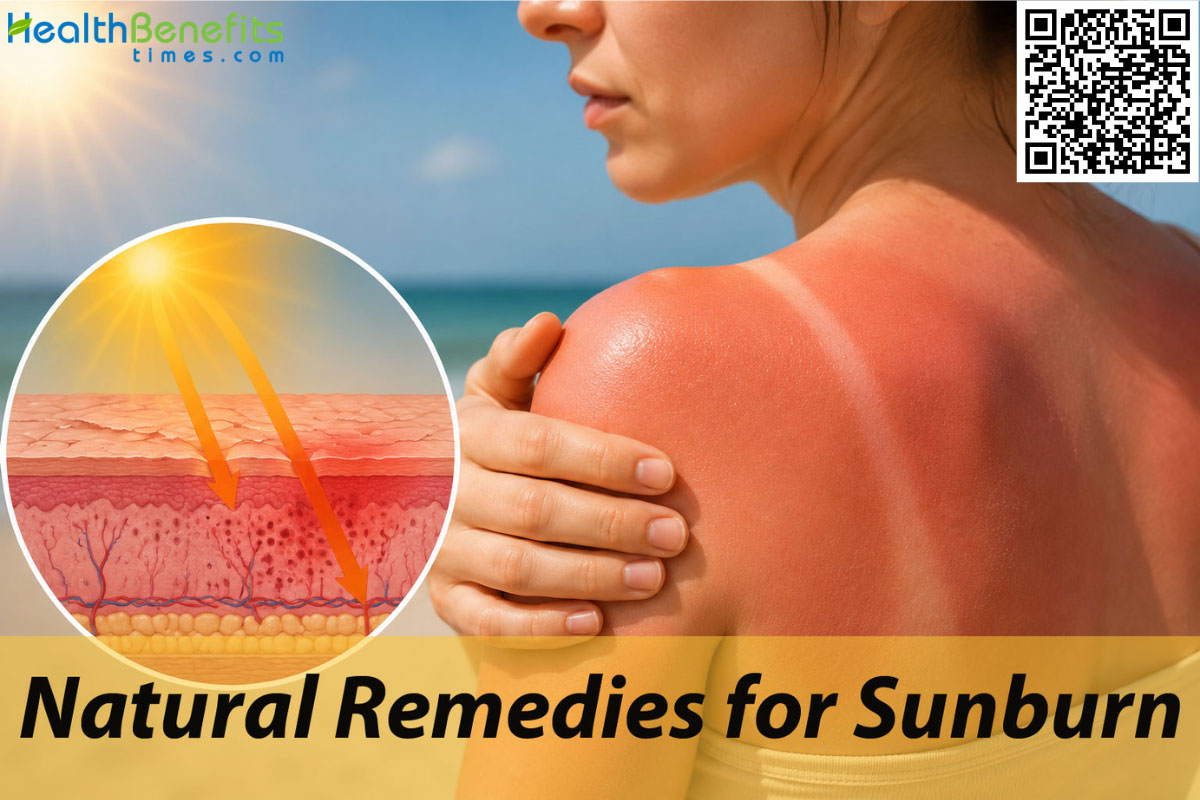
Sunburn is a form of skin damage caused by overexposure to ultraviolet (UV) radiation from the sun or artificial sources like tanning beds. When UV rays penetrate the skin, they cause direct damage to the DNA inside skin cells. The body responds to this injury by sending more blood to the affected area to help with the healing process. This increased blood flow is what causes the skin to turn red, feel hot to the touch, and become painful. Severe sunburns can also lead to swelling and fluid-filled blisters. While the damaged outer layer of skin eventually peels away, repeated sunburns cause long-term harm and significantly raise the risk of developing skin cancer later in life. To protect yourself, you should limit direct sun exposure during peak hours, wear protective clothing, and consistently apply a broad-spectrum sunscreen. 1, 2
Causes of Sunburn
- Natural Sunlight: Direct exposure to the sun’s ultraviolet (UV) rays, mainly UVB rays which damage the outer layer of the skin, and UVA rays which reach deeper into the skin.
- Artificial Tanning Devices: Using indoor tanning beds, sunbeds, and sunlamps that give off concentrated UV rays.
- Reflected Sunlight: Exposure to UV rays that bounce off bright or reflective surfaces like snow, water, and light-colored sand. Snow, for example, can reflect up to 80% of UV rays back onto the skin.
- Workplace UV Sources: Accidental exposure to artificial UV light from tools like welding equipment, bacteria-killing lamps, and broken or unshielded fluorescent light bulbs.
- High UV Environments: Spending time in places where UV rays are naturally stronger, such as high mountain altitudes, areas close to the equator, or outdoors during peak sunlight hours (typically between 10:00 AM and 4:00 PM).
- Lack of Sun Protection: Staying outside for long periods without using broad-spectrum sunscreen, wearing wide-brimmed hats, or covering up with protective clothing.
- Sun-Sensitizing Products: Taking certain medications or using specific skincare cosmetics that make the skin extra sensitive to sunlight, causing it to burn much faster than normal. 3, 4, 5, 6, 7
Symptoms of Sunburn
- Red, pink, or discolored skin
- Skin that feels noticeably warm or hot to the touch
- Pain, tenderness, or general discomfort in the affected areas
- Swelling around the sunburned skin
- Small, fluid-filled blisters that may break open and leak
- Itchy, tight, or dry-feeling skin
- Peeling of the top layer of skin as the burn begins to heal
- Signs of a severe, whole-body reaction (sometimes called sun poisoning), which can include:
- Fever and chills
- Nausea or vomiting
- Headache
- Dizziness, weakness, or extreme tiredness 8, 9, 10
Natural Remedies for Sunburn
1. Cool Water Compresses and Showers
How It May Help
Applying cool water directly to sunburned skin helps lower the surface temperature and quickly relieves pain and burning sensations. This cooling action causes blood vessels to narrow, which reduces inflammation and minimizes the swelling associated with ultraviolet radiation damage. 11
What Research Says
Clinical evidence confirms that immediate cooling therapies effectively decrease skin inflammation and slow down the progression of burn damage. Applying cool water limits the release of inflammatory chemicals in the skin, resulting in significantly faster pain relief and a reduced risk of deeper tissue injury. 12
How to Use It Safely
Soak a soft cloth in cool water and gently apply it to your sunburn for 10 to 15 minutes several times a day. Alternatively, take frequent cool showers. Pat your skin gently, leaving it slightly damp before applying a moisturizer to trap the water. 13
Potential Precautions or Side Effects
Never apply ice directly to your sunburn, as extreme cold causes additional tissue damage and delays healing. Avoid using harsh, drying soaps while taking cool showers. 14
2. Pure Aloe Vera Gel Applications
How It May Help
Aloe vera gel contains active compounds like aloin and antioxidants that provide natural cooling and soothing effects on damaged skin. 15 It helps reduce skin redness and inflammation caused by ultraviolet radiation by limiting the production of pain-causing chemicals in the body. 16 Furthermore, the gel creates a protective barrier over the skin, locking in moisture to prevent severe dryness. 17
What Research Says
Clinical studies demonstrate that pure aloe vera extract significantly promotes skin healing and reduces recovery time for superficial burns compared to standard treatments. 18 Evidence confirms its potent anti-inflammatory properties effectively decrease swelling and stimulate cellular repair mechanisms in UV-damaged tissue. 19 Additionally, researchers note its natural antibacterial benefits help prevent secondary skin infections during recovery. 20
How to Use It Safely
Apply a thick layer of 100% pure, chilled aloe vera gel directly to your sunburned skin multiple times daily. 21 You should gently spread the gel without rubbing aggressively to avoid further irritation. For best results, use products containing no added fragrances, colors, or alcohol. 22
Potential Precautions or Side Effects
Stop use immediately if you experience itching, rash, or increased redness, as some individuals develop allergic skin reactions. 23 Do not apply aloe vera to open blisters or severe burns. 24
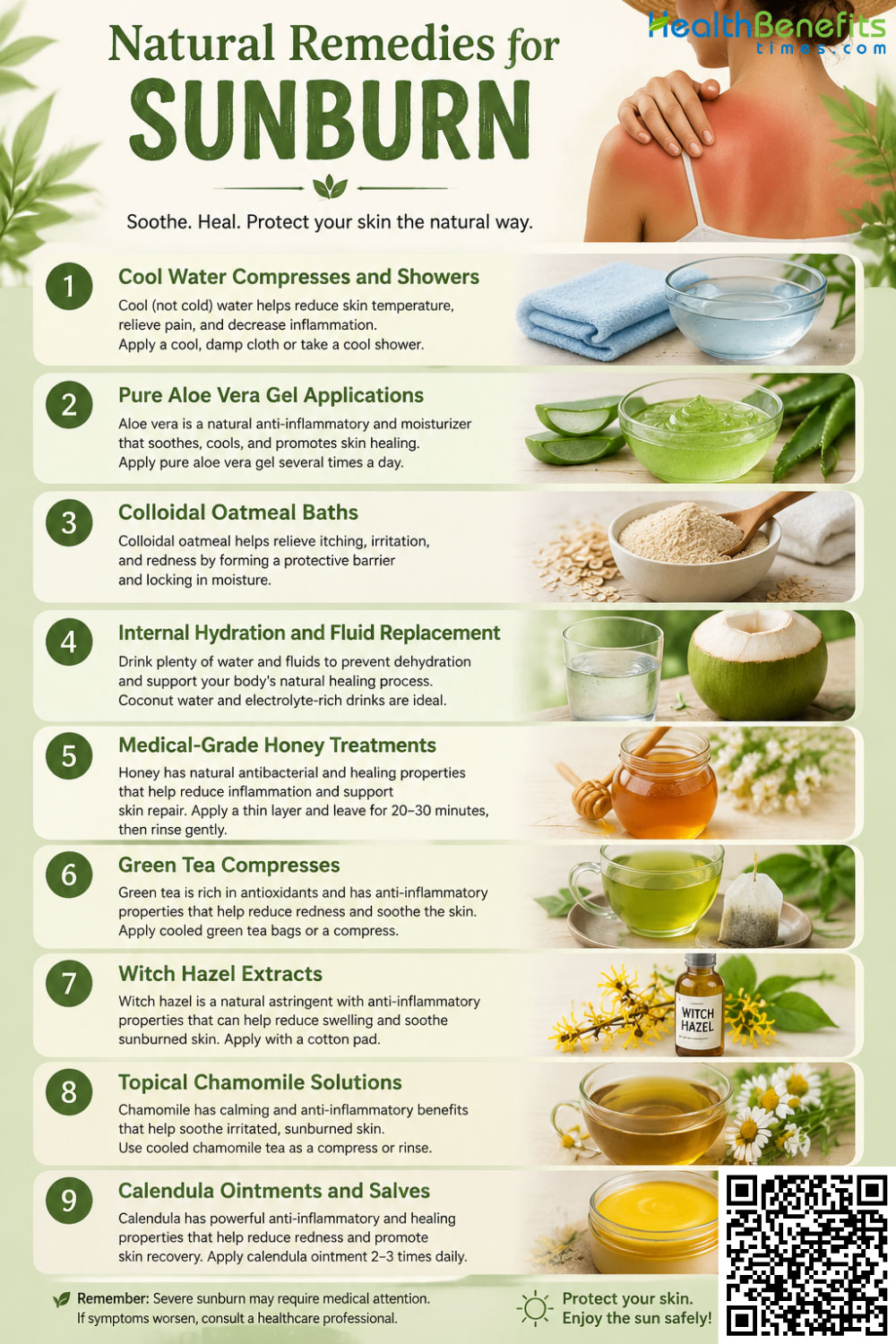
3. Colloidal Oatmeal Baths
How It May Help
Colloidal oatmeal contains finely milled oats that bind to the skin, creating a protective barrier that locks in moisture. 25 This natural ingredient contains specialized compounds that actively soothe irritation, relieve extreme itching, and lower the skin inflammation caused by ultraviolet radiation. 26
What Research Says
Scientific evidence confirms that specific plant chemicals in oats, known as avenanthramides, directly block the release of proteins that cause skin inflammation. 27 Studies demonstrate that bathing in colloidal oatmeal significantly improves skin barrier function, rapidly decreases intense itching, and lowers skin redness associated with burn injuries. 28
How to Use It Safely
Sprinkle one cup of unflavored, finely ground colloidal oatmeal into a tub of lukewarm water. 29 Soak your body for 10 to 15 minutes, as longer baths can dry out your skin. Afterward, gently pat yourself dry and immediately apply a soothing moisturizer. 30
Potential Precautions or Side Effects
Oatmeal makes bathtub surfaces extremely slippery, so you must step out carefully to prevent accidental falls. 31 Discontinue use immediately if you develop an unexpected rash or allergic reaction. 32
4. Internal Hydration and Fluid Replacement
How It May Help
Severe sunburn draws fluids away from the rest of the body toward the skin surface to support the healing process. 13 This sudden fluid shift often causes total body dehydration and disrupts essential bodily functions. 33 Actively increasing fluid intake restores normal hydration levels and supports tissue repair. 34
What Research Says
Clinical guidelines indicate that adequate fluid replacement is critical for treating thermal and radiation skin injuries. 35 Medical evidence shows that maintaining proper hydration levels prevents systemic complications like heat exhaustion and speeds up the cellular regeneration needed to heal damaged skin barriers. 36
How to Use It Safely
You should drink extra plain water or electrolyte-enhanced fluids for several days after getting a severe sunburn. 37 Monitor your hydration by checking your urine, which should remain pale yellow. 38 Avoid consuming alcoholic beverages, as they can significantly worsen existing dehydration. 39
Potential Precautions or Side Effects
Consuming extreme amounts of water too rapidly can cause a dangerous sodium imbalance. 40 Seek immediate medical care if you experience continuous vomiting and cannot retain fluids. 41
5. Medical-Grade Honey Treatments
How It May Help
Medical-grade honey provides a moist healing environment that soothes damaged skin and prevents severe dryness. 42 It possesses natural antibacterial and anti-inflammatory properties that actively reduce redness and protect compromised tissue from infection while it recovers from ultraviolet radiation injury. 43
What Research Says
Clinical research indicates that applying medical-grade honey to superficial burns accelerates tissue regeneration and significantly shortens overall healing time. 44 Evidence demonstrates that honey effectively clears bacteria from the burn site and strongly suppresses the bodily inflammatory responses that cause pain and swelling. 45
How to Use It Safely
You should apply a thin layer of sterilized, medical-grade honey onto a sterile gauze pad rather than directly touching the sensitive burn. 46 Cover the sunburned skin lightly with this bandage, and change the dressing daily to maintain a hygienic healing environment. 47
Potential Precautions or Side Effects
Do not use regular grocery store honey, as unsterilized products can introduce dangerous bacteria into damaged skin. 48 Avoid this treatment completely if you have a bee pollen allergy. 49
6. Green Tea Compresses
How It May Help
Green tea contains high levels of specific antioxidants, known as polyphenols, which actively soothe irritated tissue and limit skin inflammation. 50 When applied to ultraviolet-damaged skin, these compounds neutralize harmful molecules that cause pain and redness. 51 The natural plant tannins present in the tea also provide a mild cooling and tightening effect. 52
What Research Says
Clinical studies demonstrate that topical application of green tea extracts significantly decreases skin redness and cellular damage following severe sun exposure. 53 Evidence indicates that the main active compound, epigallocatechin gallate (EGCG), effectively suppresses the body’s immune pathways that trigger dangerous swelling and tissue breakdown. 54
How to Use It Safely
Brew several bags of pure green tea and chill the liquid in the refrigerator until it is completely cold. 55 Dip a clean, soft washcloth into the liquid and gently press it against your sunburn for 10 to 15 minutes. 21 Repeat this process multiple times daily.
Potential Precautions or Side Effects
Never apply warm or hot tea to a sunburn, as it will worsen the thermal injury. 11 Discontinue use immediately if you develop an unexpected allergic skin rash. 56
7. Witch Hazel Extracts
How It May Help
Witch hazel extract functions as a natural astringent, meaning it temporarily tightens skin tissues and reduces localized swelling. 57 It contains high concentrations of plant compounds called tannins, which actively draw out excess heat from ultraviolet-damaged skin. 58 This natural cooling effect quickly relieves burning sensations and decreases visible skin redness. 59
What Research Says
Scientific evaluations demonstrate that topically applying witch hazel significantly suppresses the specific skin inflammation triggered by severe ultraviolet exposure. 60 Clinical evidence indicates these extracts work effectively to reduce persistent skin redness when applied directly after a burn injury. 61 Furthermore, researchers confirm its potent antioxidant properties help neutralize harmful cellular damage. 62
How to Use It Safely
You should strictly select a high-quality witch hazel extract that contains zero alcohol. 63 Chill the liquid in your refrigerator, soak a sterile cotton pad, and gently press it over your sunburned skin for several minutes. 21 Reapply this soothing compress up to three times daily. 13
Potential Precautions or Side Effects
Avoid products containing rubbing alcohol, as they severely dry and irritate burned skin. 64 Stop using the extract entirely if you experience increased itching or an allergic skin rash. 65
8. Topical Chamomile Solutions
How It May Help
Chamomile contains natural plant compounds that actively soothe skin and reduce the persistent inflammation caused by overexposure to ultraviolet radiation. 66 These active substances work by calming the skin’s immune response, effectively lowering the pain and redness associated with sun-damaged tissue. 67 The extract also helps restore comfort to overheated skin. 68
What Research Says
Clinical evidence shows that topical chamomile preparations significantly decrease skin inflammation more effectively than some standard treatments. 69 Studies indicate that the herb’s potent antioxidants penetrate the skin to neutralize damaging molecules, which speeds up the recovery process for superficial burns. 70 Its regular application helps prevent chronic tissue irritation. 71
How to Use It Safely
Steep high-quality chamomile tea bags in boiling water, then chill the liquid in your refrigerator. 21 Soak a clean, sterile cloth in the cold solution and press it gently onto your sunburn for 15 minutes. 63 Repeat this cooling treatment multiple times throughout the day.
Potential Precautions or Side Effects
Avoid using chamomile if you have known allergies to ragweed or daisies, as this may trigger severe skin reactions. 72 Stop usage immediately if you experience hives. 73
9. Calendula Ointments and Salves
How It May Help
Calendula contains natural compounds that stimulate the production of new skin cells and boost collagen levels, which are essential for repairing ultraviolet-damaged skin. 74 Its anti-inflammatory properties soothe painful, red, and swollen areas by blocking pathways that trigger skin discomfort. 75 Additionally, it provides a protective coating that prevents skin moisture loss. 76
What Research Says
Clinical evidence indicates that applying calendula preparations significantly accelerates the healing of superficial skin injuries and reduces the duration of discomfort. 77 Studies show that its high concentration of antioxidants helps neutralize tissue-damaging molecules, preventing the progression of cell injury and promoting a faster, more effective skin recovery process. 78
How to Use It Safely
Apply a thin, even layer of medical-grade calendula ointment or salve directly to clean, dry, sunburned skin. 21 Gently massage the product into the area until absorbed, and repeat this application two to three times daily for ongoing protection and soothing relief. 63
Potential Precautions or Side Effects
Stop using calendula immediately if you notice itching, rash, or skin swelling, as these indicate an allergic reaction. 79 Avoid applying it to open wounds. 80
Foods to Avoid When You Suffer from Sunburn
1. Alcoholic Beverages
Alcohol acts as a diuretic, accelerating dehydration when your skin is already struggling to retain moisture. It also impairs the body’s natural inflammatory response and healing capacity. 81, 39
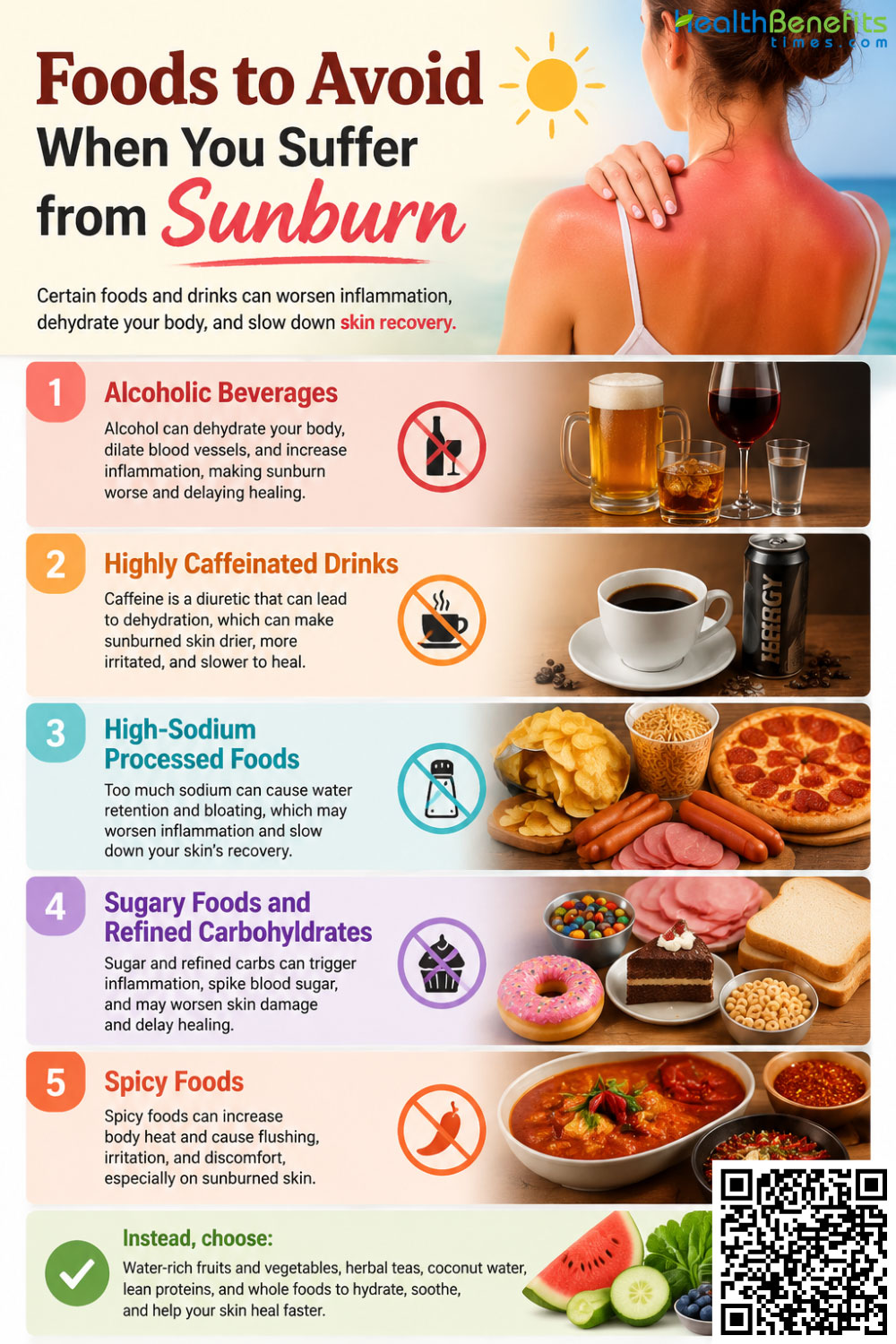
2. Highly Caffeinated Drinks
Excessive caffeine from coffee or energy drinks can further dehydrate the body. Since sunburn draws fluid to the skin, maintaining optimal systemic hydration is essential for recovery. 40, 38
3. High-Sodium Processed Foods
Salty snacks cause the body to lose water more rapidly. High sodium intake can strain your system when you need to maintain fluid balance to heal damaged tissues. 82, 83
4. Sugary Foods and Refined Carbohydrates
Diets high in refined sugar may promote systemic inflammation. Minimizing these foods can help the body prioritize its resources toward reducing skin redness and cellular repair. 84, 85
5. Spicy Foods
Spicy dishes can cause sweating and heat sensations that may irritate your already sensitive, inflamed skin. Keeping the body cool helps reduce discomfort during the initial recovery phase. 86, 33
When to See a Doctor When You Have Sunburn
1. Presence of Extensive Blistering
Seek medical attention if blisters cover a large portion of your body or if they become infected, indicated by pus, increased swelling, or red streaks. 11, 8
2. Severe Systemic Symptoms
Consult a healthcare provider if you experience high fever, intense chills, severe headache, confusion, or feelings of faintness, which may indicate systemic heat-related illness. 87, 88
3. Signs of Infection
If the skin shows increasing redness, warmth, or develops yellow crusts and drainage, see a doctor to evaluate for a secondary bacterial skin infection. 21, 9
4. No Improvement Over Time
Visit a professional if the sunburn pain does not begin to subside after a few days or if the skin shows no signs of improvement. 64, 89
5. Severe Eye Pain
If you experience intense pain, light sensitivity, or blurred vision following sun exposure, your eyes may have sustained damage requiring an urgent medical examination. 90, 91