| Nutmeg butter facts and usage Quick Facts |
| Name: |
Nutmeg butter facts and usage |
| Origin |
Nutmeg is inherent to Banda Islands of Indonesia. It was cultivated in new Guinea, Indonesia, South Florida and West Indies. |
| Colors |
Reddish to brown, light yellow or colorless |
| Taste |
Nutmeg |
| Calories |
1927 Kcal./cup |
| Major nutrients |
Total Fat (622.86%)
Vitamin E (2.93%)
|
| Health benefits |
Relieve rheumatic pain, Cure debility, Eliminates stress, Prevent pain and aches, Prevent bad breathe |
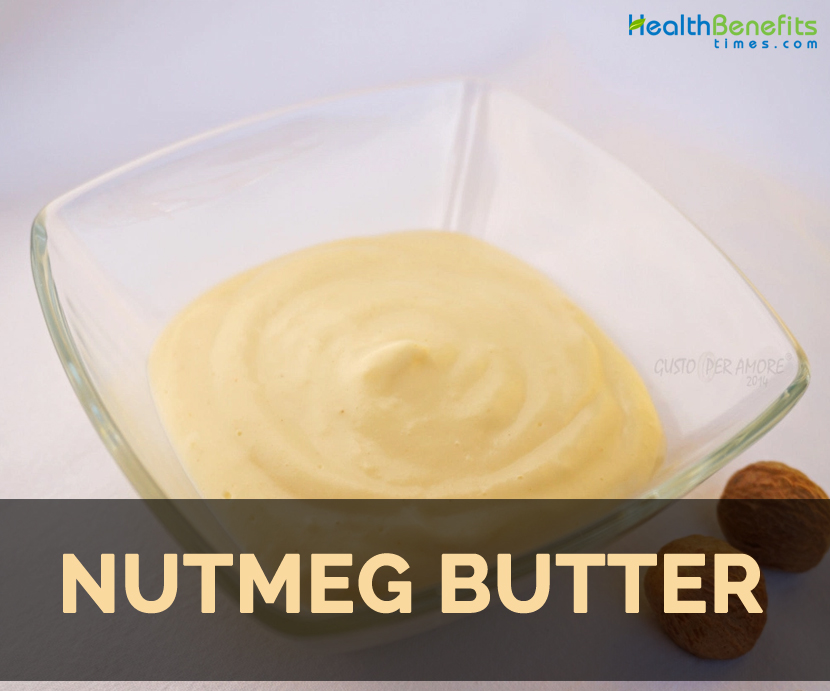
Nutmeg butter is being extracted from nutmegs. It is a semi-solid which is reddish brown in color having the smell and taste of nutmeg. About 75 percent is trimyristin in nutmeg butter that could be converted into myristic acid which is a 14-carbon fatty acid that is used as a substitute for cocoa butter and is also combined with fats such as palm oil or cottonseed oil. Traditionally after diluting, it is used to calm skin irritations and eradicate rheumatic pain. It is also used in creams, soaps, lip balms, creams, shampoo, body butters, conditioners and hair pomades. The excessive use of nutmegs results in psychoactive effects. Though the poisoning of nutmeg is rarely harmful but it could lead to palpitations, convulsions and pain.
History
Nutmeg is inherent to Banda Islands of Indonesia. It was cultivated in New Guinea, Indonesia, South Florida and West Indies.
Nutritional value
One cup of 218 grams of Nutmeg butter is loaded with 1927 calories, 218 g of Total lipid fat, 0.44 mg of Vitamin E, 196.2 g of total saturated fats, 6.758 g of lauric acid, 180.068 g of myristic acid, 9.374 g of palmitic acid, 10.464 g of total monounsaturated fats and 10.464 g of oleic acid.
Traditional uses
- It is used to eradicate rheumatic pain.
- It is used to cure nervous and digestive problems.
- It is also useful for chronic nervous disorders, vomiting, nausea and kidney ailments.
- It is used to inflammation, diarrhea, liver disease and abdominal pain.
- It is also useful for toothache.
- It provides relief from pain and aches.
- It also helps to cure debility.
- It increases circulation that assists in concentration and also eliminates stress and exhaustion.
- It helps to treat joint and muscular pain as well as menstrual cramps.
- It eliminates bad breath.
Precautions
- Being a neuro-stimulant, it could result in hallucinations and severe vomiting.
- Pregnant women and breast feeding women should avoid it due to abortificant properties.
- The excessive use of nutmeg butter is harmful.
- Side effects such as dizziness, dry mouth, flushes, temporary constipation, accelerated heartbeat, nausea, difficulty in urination, and panic might be caused.
- People allergic to nutmeg should avoid its use.
How to Eat
- It is used in baked goods.
- It is added to various culinary dishes.
Other Facts
- It has low melting point.
- It is used as a substitute for cocoa butter.
- It is also combined with palm oil or cottonseed oil.
Nutmeg butter facts
The creamy and yellowish semi-solid butter which is extracted from nutmeg fruit is Nutmeg butter. It has low melting point. Due to warm and spicy aroma, it is added to balms, body butters and hair products.
| Name |
Nutmeg butter facts and usage |
| Native |
Nutmeg is inherent to Banda Islands of Indonesia. It was cultivated in new Guinea, Indonesia, South Florida and West Indies. |
| Common/English Name |
Oil of mace |
| Type |
Semi-solid |
| Color |
Reddish to brown, light yellow or colorless |
| Taste |
Nutmeg |
| Major Nutritions |
Total Fat (lipid) 218 g (622.86%)
Vitamin E (alpha-tocopherol) 0.44 mg (2.93%) |
| Calories in 1 cup (218 gm) |
1927 Kcal. |
| Traditional uses |
- It provides relief from rheumatic pain.
- It cures nervous and digestive problems.
- It is useful for chronic nervous disorders, vomiting, nausea and kidney ailments.
- It is used to inflammation, diarrhea, liver disease and abdominal pain.
- It relieves toothache.
- It soothes pain and aches.
- It also cures debility.
- It assists concentration, eliminates stress and exhaustion.
- It treats joint and muscular pain and also eliminate menstrual cramps.
- It eliminates bad breath.
|
| Precautions |
- Being a neuro-stimulant, it could result in hallucinations and severe vomiting.
- Pregnant women and breast feeding women should avoid it due to abortificant properties.
- The excessive use of nutmeg butter is harmful.
- Side effects such as dizziness, dry mouth, flushes, temporary constipation, accelerated heartbeat, nausea, difficulty in urination, and panic might be caused.
- People allergic to nutmeg should avoid its use.
|
| How to Eat |
- It is added to culinary dishes.
- It is used in baked goods as well.
|
| Other Facts |
- The melting point is low.
- It is a substitute for cocoa butter.
- It is also mixed with palm oil or cottonseed oil.
|
References:
http://www.newworldencyclopedia.org/entry/Nutmeg
http://www.speedyremedies.com/nutmeg-jaiphal-benefits.html
http://www.seedguides.info/nutmeg/
https://www.newdirectionsaromatics.com/products/butters/nutmeg-butter.html
http://www.newworldencyclopedia.org/entry/Nutmeg
http://www.encyclopedia.com/plants-and-animals/plants/plants/nutmeg
http://www.spiceplace.com/about-nutmeg.php
https://en.wikipedia.org/wiki/Nutmeg#Nutmeg_butter
Comments
comments