

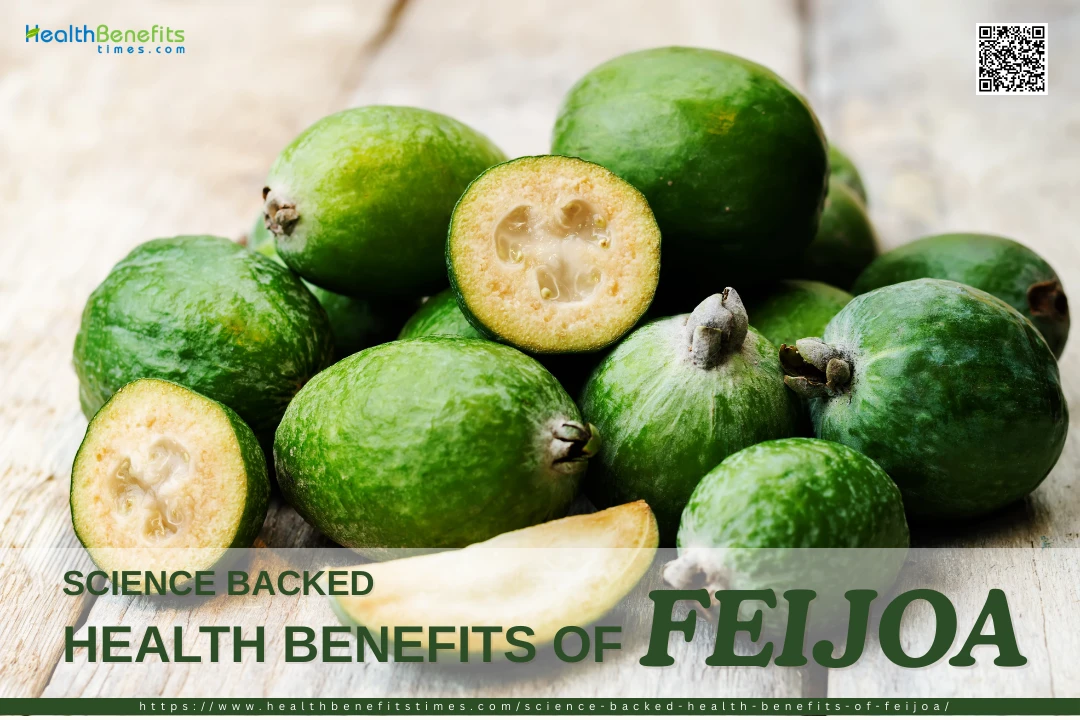
The Feijoa (Acca sellowiana), often referred to as the pineapple guava, is a hardy evergreen shrub native to South America that has found immense popularity in New Zealand. This egg-shaped fruit is celebrated for its distinctive aromatic profile, offering a complex flavor fusion reminiscent of pineapple, guava, and mint, with a slightly gritty, pear-like texture near the skin. Its succulent, jelly-like center is encased in a tart, green rind that remains green even when ripe. Beyond the fruit, the plant produces stunning red-and-white flowers with edible, sweet petals. Rich in vitamin C and dietary fiber, feijoas are a seasonal delicacy typically scooped out with a spoon or transformed into fragrant jams, crumbles, and refreshing juices.
Nutritional Profile of Feijoa (Acca sellowiana)
Serving Size: 1 fruit without peel (42 g) 1
| Nutrients | Amount | DV%* |
| Water | 35 g | — |
| Energy (Calories) | 25.6 kcal | 1.28% |
| Protein | 0.298 g | 0.60% |
| Total lipid (fat) | 0.176 g | 0.23% |
| Carbohydrate, by difference | 6.38 g | 2.32% |
| Fiber, total dietary | 2.69 g | 9.61% |
| Total Sugars | 3.44 g | — |
| Vitamin C, total ascorbic acid | 13.8 mg | 15.33% |
| Potassium, K | 72.2 mg | 1.54% |
| Folate, total | 9.66 µg | 2.42% |
| Phosphorus, P | 7.98 mg | 0.64% |
| Calcium, Ca | 7.14 mg | 0.55% |
| Magnesium, Mg | 3.78 mg | 0.90% |
| Sodium, Na | 1.26 mg | 0.05% |
| Niacin | 0.124 mg | 0.78% |
| Pantothenic acid | 0.098 mg | 1.96% |
Source: usda.gov
Percent Daily Values (%DV) are based on a 2,000-calorie diet2. Your daily values may be higher or lower depending on your calorie needs.
Science Backed Health Benefits of Feijoa (Acca sellowiana)
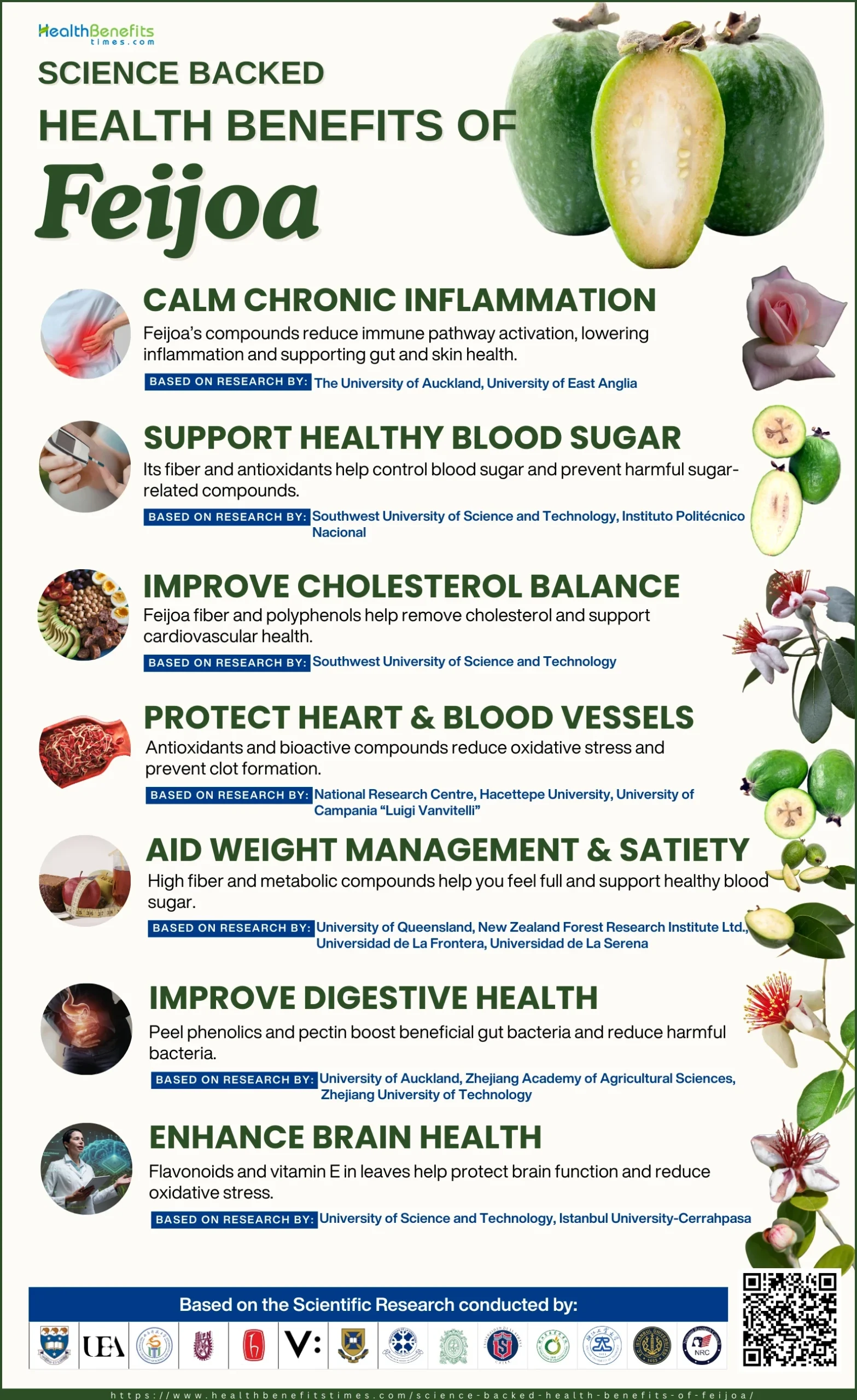 #1. Calm chronic inflammation
Feijoa is packed with bioactive compounds like flavones and ellagic acid, which are known for their anti-inflammatory effects. These compounds help reduce chronic inflammation by affecting certain immune pathways in the body. Specifically, they target the TLR2 and NOD2 pathways, which lowers the activation of NF-κB, a protein that controls inflammation. This process may help manage conditions like inflammatory bowel disease (IBD). When you eat Feijoa, its compounds interact with your body’s immune system to reduce unnecessary inflammation. If applied to the skin, Feijoa may help calm skin inflammation by working with local immune cells.
What Research Says:
- Research from the University of Auckland found that a part of Feijoa called F3 can reduce inflammation by blocking a specific immune pathway (TLR2), lowering inflammation by up to 86.6% in mouse cells. It also helps the body’s natural process for managing inflammation, called autophagy (1). 1
- Another study looked at four types of Feijoa and found that extracts, especially from the APOLLO variety, were very effective at reducing inflammation through the TLR2 pathway, even working better than ibuprofen in lowering inflammatory markers. Feijoa peel and the whole fruit also affect another pathway called NOD2, which is linked to Crohn’s disease. This suggests that Feijoa could potentially help with certain types of inflammatory bowel disease (IBD). 2
#2. Support healthy blood sugar control
Feijoa can help keep your blood sugar levels healthy due to its high amount of dietary fiber and helpful plant compounds. The fiber, which is mainly insoluble, slows down how quickly sugar is absorbed in your gut, stopping big spikes in blood sugar after meals. This helps improve blood sugar control, which is especially helpful for managing or preventing conditions like type 2 diabetes. 3 Feijoa also contains antioxidants that protect your body from the harmful effects of high blood sugar. These antioxidants stop the formation of advanced glycation end products (AGEs), which can cause damage to proteins and lead to problems like heart disease and kidney damage in diabetics. 4
What Research Says:
- Research from Southwest University of Science and Technology shows that adding feijoa fiber (IDF) to wheat bread can lower glucose release during digestion. It also helps the body absorb more bile acids and cholesterol, showing that feijoa may help lower blood sugar levels. 3
- Another study found that an extract from feijoa fruit reduced harmful compounds related to diabetes, such as fructosamine and protein carbonyls, and stopped the formation of advanced glycation end products (AGEs). This suggests that feijoa has both antiglycation and antioxidant properties that may be helpful for managing diabetes. 4
#3. Improve cholesterol balance
Feijoa fruit contains insoluble dietary fiber (IDF), which helps improve cholesterol balance by adsorbing bile acids in the digestive system. This reduces the reabsorption of cholesterol and promotes its excretion (1). {% %} The fiber, along with bioactive phenolic compounds like quercetin and ellagic acid, plays a role in supporting cardiovascular health. These nutrients may help prevent conditions like high cholesterol (hypercholesterolemia) and artery hardening (atherosclerosis). 5 When consumed, the fiber and compounds interact with cholesterol and bile salts, helping to remove them from the body and contribute to healthier blood lipid levels.
What Research Says:
- A study published in Foods (2023) found that feijoa insoluble dietary fiber (FJI) improved the ability of wheat bread to adsorb cholesterol, especially when tested under conditions similar to the intestines. The research also showed that FJI helped absorb more bile acids, which is linked to lower cholesterol levels.
- In tests, FJI was better at adsorbing cholesterol at a neutral pH (pH 7.0), which is similar to the environment in the intestines, compared to a more acidic pH (pH 2.0), which simulates the stomach. 5
#4. Protect heart and blood vessels
Feijoa contains important nutrients that may help protect your heart and blood vessels. This fruit is rich in polyphenols, flavonoids, and vitamin C, which are powerful antioxidants and anti-inflammatory agents. These nutrients may lower the risk of heart problems like thrombosis and stroke by reducing oxidative stress and inflammation. When you eat feijoa, compounds like gallic acid, ellagic acid, and catechins work together to boost your body’s antioxidant defense, lower harmful fats, and improve blood flow. This helps reduce the chances of blood clots and other related health issues. The nutrients in feijoa support healthy circulation and cardiovascular balance. 6 7 8
What Research Says:
- Research from the National Research Centre in Egypt showed that feijoa extracts made using biotechnology helped stop bleeding for a longer time, reduced thrombin, and stopped platelets from clumping together in rats. This effect was even stronger than the blood-thinning drug warfarin. 6
- Studies from Turkish universities also found that feijoa fruit extracts lowered harmful malondialdehyde levels and raised glutathione in important tissues, showing that feijoa has strong antioxidant effects that protect against damage to the heart and blood vessels. 7
- Experiments at Campania University in Italy found that feijoa peel and pulp extracts helped protect human red blood cells from damage caused by mercury. This protection helps prevent clotting problems that could lead to risks like strokes. 8
#5. Aid weight management and satiety
Feijoa can be helpful if you’re looking to manage your weight or feel full for longer. This is mainly due to its high dietary fiber, which helps you feel satisfied and supports good digestion. 9 Feijoa also contains polyphenols and abscisic acid, which are compounds that can help control blood sugar levels and improve how your body responds to insulin. This makes feijoa a good fruit for preventing or managing conditions like prediabetes and type 2 diabetes. 10 11 By including feijoa in your diet, you could improve your metabolism and lower the risk of obesity-related diseases. While more research is needed on its external use, feijoa’s anti-inflammatory compounds might be good for your skin when applied topically. 12
What Research Says:
- A study called the FERDINAND trial found that taking feijoa powder along with a low-calorie diet helped overweight adults with prediabetes improve their fasting blood sugar levels and systolic blood pressure more than a placebo did. 10
- Research from the University of Queensland showed that feijoa is a great source of dietary fiber, providing 6.8 grams per 100 grams of fresh fruit. Fiber is known to help you feel full and support weight management. 9
- The New Zealand Forest Research Institute found that feijoa contains a compound called abscisic acid, which may help control blood sugar levels. 11
- A study from Universidad de La Sabana showed that feijoa keeps up to 90% of its polyphenols even after drying, which helps preserve compounds that are important for metabolic health. 12
#6. Improve Digestive Health
Feijoa fruit, especially its peel, is rich in beneficial nutrients like phenolic compounds and pectin, which support digestive health. The phenolic compounds in feijoa peel help beneficial probiotics, such as Limosilactobacillus reuteri, stick to the gut lining. This strengthens the gut barrier and prevents harmful bacteria like E. coli and Bacillus cereus from causing problems. 13 Feijoa peel pectin also resists digestion in the stomach and small intestine, reaching the colon where it is broken down by gut bacteria. This process creates short-chain fatty acids that lower the pH in the gut, support the growth of good bacteria like Bifidobacterium, and reduce harmful bacteria. 14 Eating feijoa regularly may help reduce inflammation, maintain gut health, and may even help with conditions like inflammatory bowel disease and digestive infections.
What Research Says:
- A study from the University of Auckland showed that phenolic compounds in feijoa peel extract helped probiotics stick better to surfaces, clump together, and attach to mucus in the gut. This also reduced the growth of harmful bacteria by up to 74% in lab tests. 13
- Research from Zhejiang Province found that feijoa peel pectin wasn’t digested in the stomach but was broken down by gut bacteria, which increased the production of short-chain fatty acids and helped boost good bacteria like Lactiplanthacillus and Bifidobacterium. 14
#7. Enhance Brain Health
Feijoa leaves are good for brain health. They contain bioactive compounds like α-tocopherol (vitamin E) and primetin, which help manage Alzheimer’s disease by stopping harmful enzymes that break down brain chemicals. 15 Quercetin and other flavonoids are also found in Feijoa leaves. They have anti-tyrosinase effects that can help with Parkinson’s disease by controlling the production of a substance in the brain. These nutrients protect the brain by reducing oxidative stress and help keep your skin safe when applied topically.
What Research Says:
Study showed that Feijoa flavonoids interact with enzymes in the digestive system, which can help with diabetes and indirectly support brain health. 15
Health Risks and Precaution of Feijoa
Side Effects
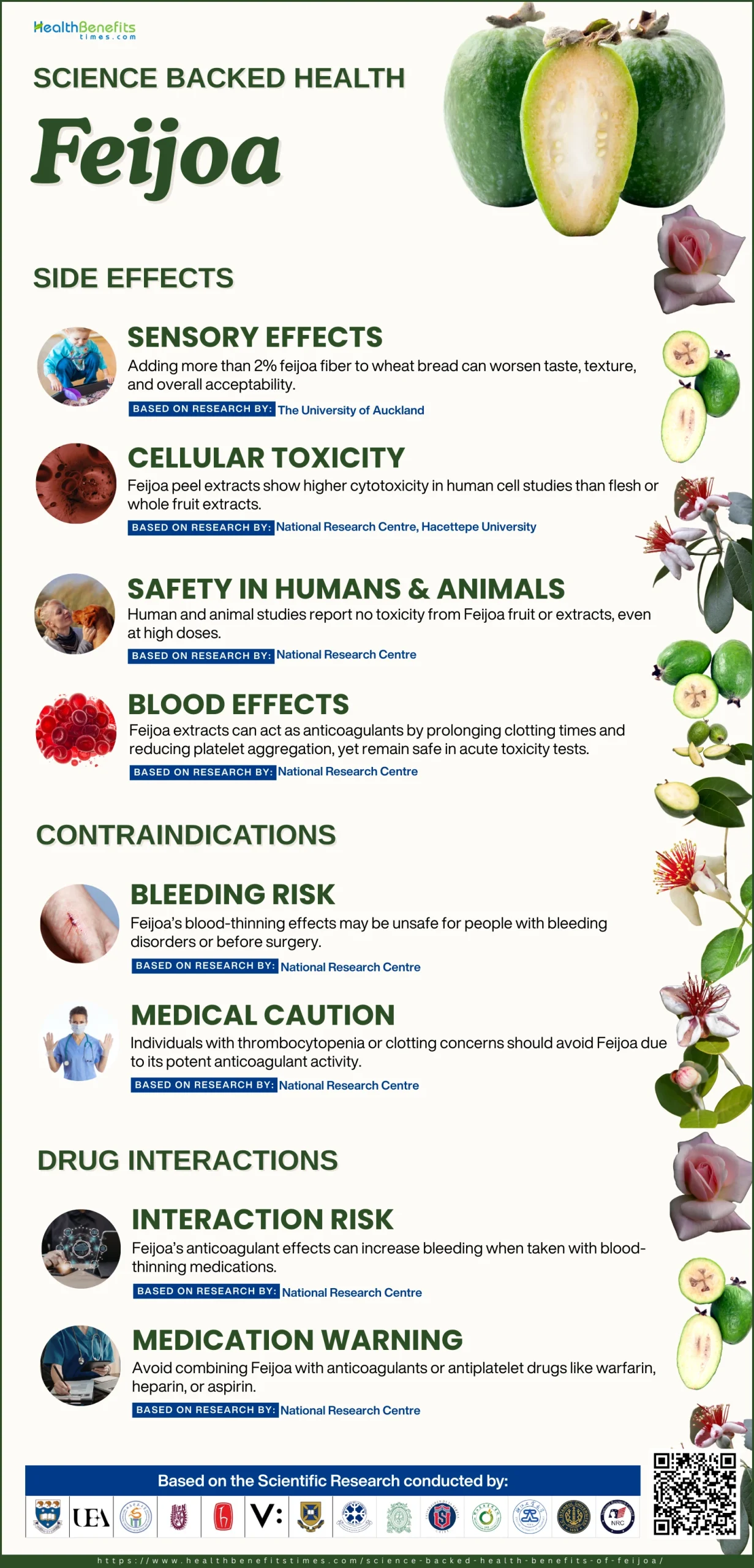
- The consumption of feijoa, particularly in processed forms, can lead to undesirable sensory properties. In wheat bread, the addition of more than 2% feijoa insoluble dietary fiber (FJI) resulted in an undesirable taste and texture, and higher addition levels (2% to 8%) progressively decreased sensory scores for appearance, flavor, taste, texture, and overall acceptability. Furthermore, in vitro studies on human cell lines indicate that extracts from feijoa peel induce higher cytotoxicity (cell damage) compared to extracts from the flesh or whole fruit. 2
- No adverse effects or toxicity were reported from the consumption of Feijoa fruit or its extracts in the provided human and animal studies. 6 7 Acute toxicity tests in mice showed that Feijoa extracts at doses up to 2000 mg/kg did not cause any signs of toxicity or death. 10
- Feijoa sellowiana extracts have demonstrated significant anticoagulant effects in vivo, including prolonged bleeding time, clotting time, prothrombin time (PT), and activated partial thromboplastin time (aPTT), as well as decreased platelet aggregation. However, an acute toxicity study in mice showed no signs of toxicity or mortality at doses up to 2000 mg/kg, indicating a high safety margin at the tested levels. 16
Contraindications
- Due to its demonstrated significant anticoagulant (blood-thinning) activity, which includes suppressing thrombin, extending bleeding and clotting times, and prolonging prothrombin time (PT) and activated partial thromboplastin time (aPTT), Feijoa consumption may be unsafe for individuals with bleeding disorders or those scheduled for surgery. 6
- Due to its potent anticoagulant activity, Feijoa consumption may be contraindicated for individuals with bleeding disorders, thrombocytopenia, or those scheduled for surgery. 16
Drug Interactions
- The extracts of Feijoa exhibit strong anticoagulant effects, reducing platelet aggregation and prolonging bleeding parameters. 6 Therefore, it may interact with and potentiate the effect of anticoagulant or antiplatelet medications (e.g., warfarin, heparin, aspirin), increasing the risk of bleeding. Concurrent use should be avoided.
- Feijoa extracts exhibit anticoagulant effects that prolong bleeding and clotting parameters; therefore, concurrent use with anticoagulant or antiplatelet medications (e.g., warfarin) should be avoided due to the potential for increased bleeding risk. 16
Comments
This article is based on Scientific Research Conducted by following Research Organization:
- Extracts of Feijoa Inhibit Toll-Like Receptor 2 Signaling and Activate Autophagy Implicating a Role in Dietary Control of IBD–The University of Auckland, New Zealand, University of East Anglia, United Kingdom
- Screening of Cytotoxicity and Anti-Inflammatory Properties of Feijoa Extracts Using Genetically Modified Cell Models Targeting TLR2, TLR4 and NOD2 Pathways, and the Implication for Inflammatory Bowel Disease–The University of Auckland, New Zealand
- Effect of Insoluble Dietary Fiber Extracted from Feijoa (Acca sellowiana (O. Berg) Burret.) Supplementation on Physicochemical and Functional Properties of Wheat Bread–Southwest University of Science and Technology, China
- In Vitro Inhibitory Activity of Acca sellowiana Fruit Extract on End Products of Advanced Glycation–Instituto Politécnico Nacional, Mexico
- Effect of Insoluble Dietary Fiber Extracted from Feijoa (Acca sellowiana (O. Berg) Burret.) Supplementation on Physicochemical and Functional Properties of Wheat Bread–Southwest University of Science and Technology, China
- Anticoagulant effect of Feijoa sellowiana extracts generated by different biotechnological techniques–National Research Centre (NRC), Egypt
- The effects of Feijoa sellowiana fruits on the antioxidant defense system, lipid peroxidation, and tissue morphology in rats–Hacettepe University, Turkey
- Phenol-Rich Feijoa sellowiana (Pineapple Guava) Extracts Protect Human Red Blood Cells from Mercury-Induced Cellular Toxicity–University of Campania “Luigi Vanvitelli”, Italy
- Nutritional Characteristics and Antimicrobial Activity of Australian Grown Feijoa (Acca sellowiana)–University of Queensland, Australia
- Evaluating whole fruit feijoa powder for type 2 diabetes risk prevention: the FERDINAND study
- Establishment of feijoa (Acca sellowiana) callus and cell suspension cultures and identification of arctigenin - a high value bioactive compound–New Zealand Forest Research Institute Ltd. (Scion), New Zealand
- Convective drying of feijoa (Acca sellowiana Berg): A study on bioactivity, quality, and drying parameters–Universidad de La Frontera, Chile, Universidad de Antioquia, Colombia, Universidad de La Serena, Chile
- Impact of phenolic-rich feijoa (Acca sellowiana 'Kakariki') peel extract on the mucin-adhesive properties of selected probiotic strains–University of Auckland, New Zealand
- In vitro gastrointestinal digestion and fecal fermentation behaviors of pectin from feijoa (Acca sellowiana) peel and its impact on gut microbiota–Zhejiang Academy of Agricultural Sciences, China, Zhejiang University of Technology, China
- Phytochemical profile, enzyme inhibition activity and molecular docking analysis of Feijoa sellowiana O. Berg–University of Science and Technology, Egypt, Istanbul University‑Cerrahpasa, Turkey
- Anticoagulant effect of Feijoa sellowiana extracts generated by different biotechnological techniques–National Research Centre (NRC), Egypt