

Living with food allergies can feel like navigating a minefield every time you sit down for a meal. A food allergy is an immune system reaction that happens soon after you eat a certain food even a tiny amount of the offending food can trigger symptoms such as hives, swollen airways, and digestive problems. 1 Your body essentially mistakes a harmless food protein for a dangerous invader and launches a full-scale immune defense against it. 2
Here’s something many people get confused about: a food allergy is not the same thing as food intolerance. When you have a food allergy, your immune system produces antibodies called immunoglobulin E (IgE) to fight the perceived threat. 3 Food intolerance, on the other hand, affects only your digestive system, it occurs when your body simply can’t break down certain foods properly and is generally not life-threatening. 4 Think of it this way: lactose intolerance gives you an upset stomach, but a milk allergy could send you to the emergency room. 5
The numbers might surprise you. More than 33 million people in the United States have food allergies, including roughly 5.8% of children and nearly 11% of adults. 6 What’s particularly alarming is that food allergy prevalence among children increased from 3.4% in the late 1990s to over 5% by 2011, and the trend has continued upward. 7 Every three minutes, a food allergy reaction sends someone to the emergency room in the U.S.
So what exactly happens inside your body during an allergic reaction? When you first eat a food you’re allergic to, your immune system creates IgE antibodies specific to that food protein. These antibodies attach to mast cells throughout your body. The next time you eat that food, the allergen binds to those IgE antibodies, telling the mast cells to release massive amounts of histamine and other chemicals, and that’s what causes your symptoms.
The major foods that trigger allergies
Not all foods are equally likely to cause allergic reactions. The U.S. FDA recognizes nine major food allergens, often called “The Big 9” that account for the vast majority of severe food allergic reactions in the country. 8 Sesame was added as the ninth allergen under the FASTER Act of 2021, effective January 1, 2023. 9
- Milk — Cow’s milk contains proteins like casein and whey that your immune system may identify as harmful invaders. Milk allergy is the most common food allergy in infants, affecting 2–3% of babies, though many children outgrow it.
- Eggs — The major allergens are found in egg whites, including a heat-resistant protein called ovomucoid that survives cooking. This is why some egg-allergic individuals react to both raw and cooked eggs, though about 70% of children with egg allergy can tolerate baked egg products. 10
- Peanuts — Peanuts contain at least 16 IgE-binding proteins, and sensitization to proteins like Ara h 2 is strongly associated with severe clinical reactions. Peanut allergy affects 1–2% of children and is one of the most common causes of food-induced anaphylaxis. 11
- Tree nuts — Walnuts, cashews, almonds, and other tree nuts contain seed storage proteins that trigger IgE-mediated reactions. Fewer than 10% of people ever outgrow a tree nut allergy, and it remains one of the allergens most frequently linked to anaphylaxis. 12
- Fish — The major fish allergen is parvalbumin, a calcium-binding protein that is heat-stable and resistant to digestion. Because parvalbumins are similar across many fish species, you may react to multiple types of fish if you’re allergic to one. 13
- Crustacean shellfish — Shrimp, crab, and lobster all contain tropomyosin, a muscle protein that triggers reactions in over 60% of shellfish-allergic individuals. Tropomyosin survives cooking and maintains its allergenic potential even after heat processing.
- Wheat — Wheat allergy is an IgE-mediated reaction to wheat proteins including gliadin, and it is distinct from celiac disease, which is an autoimmune condition. Reactions to wheat can range from hives and GI symptoms to exercise-induced anaphylaxis. 14
- Soybeans — Soy allergy primarily affects infants and children, with most cases resolving before adulthood. The key soy allergens are seed storage proteins, and while soy is a legume like peanuts, having one allergy does not automatically mean you’ll have the other.
- Sesame — The primary sesame allergen is a 2S albumin seed storage protein, and an estimated 500,000 adults in the U.S. have a sesame allergy. Sesame hides in many foods including breads and dressings, making avoidance particularly challenging. 15
| Symptoms |
|
| Causes 16 |
|
| Types |
|
| How it develops | First exposure triggers sensitization, your immune system creates IgE antibodies; subsequent exposures cause the allergen to bind to IgE on mast cells, triggering massive histamine release and symptoms. |
| Major trigger foods | Milk, eggs, peanuts, tree nuts, fish, crustacean shellfish, wheat, soybeans, and sesame. |
| Age groups affected |
|
| Higher risk factors |
|
| Diagnosis methods | Skin prick test, blood test measuring food-specific IgE, oral food challenge (gold standard) |
| Important facts | Food allergy prevalence has increased 18% among children since the late 1990s; 40% of allergic children react to multiple foods; about 20% of anaphylaxis cases involve a biphasic reaction (second wave hours later); early introduction of allergenic foods to infants can reduce allergy risk by up to 80%. |
Natural remedies for food allergies worth trying
Before you explore these remedies, understand one critical thing: no natural remedy can replace epinephrine during anaphylaxis or substitute for proper medical treatment of severe food allergies. 19 These approaches may help you manage mild allergy symptoms and support your body’s immune balance. Always talk to your doctor before starting any supplement.
1. Quercetin
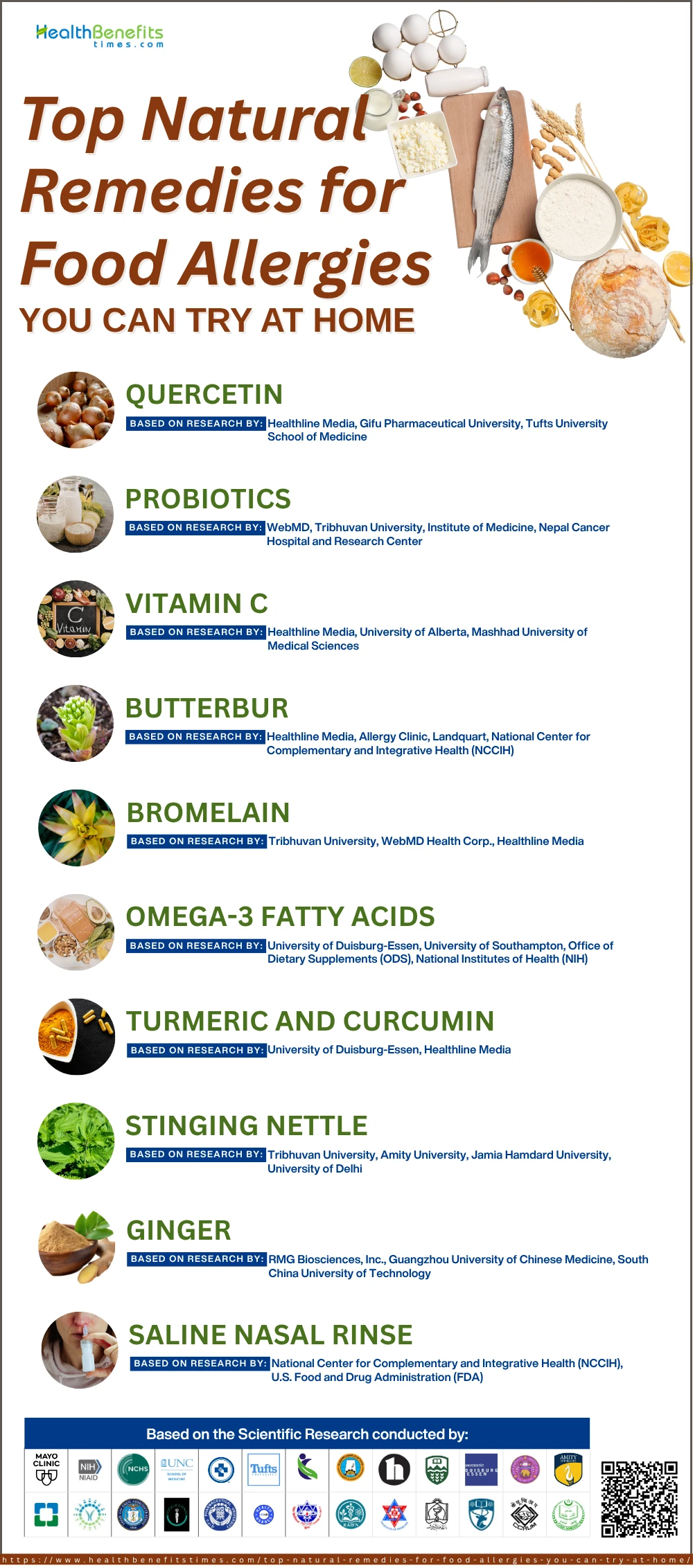
You’ve probably been eating quercetin without knowing it. This powerful flavonoid, found abundantly in onions, apples, berries, broccoli, and green tea, acts as a natural mast cell stabilizer. 20 Quercetin inhibits the release of histamine, leukotrienes, and prostaglandin D2 from human mast cells in a concentration-dependent manner. 21 It has been found more effective than cromolyn, a standard anti-allergy drug, at blocking human mast cell cytokine release. 22 Getting therapeutic amounts from food alone is tough, so many people take 500 mg supplements twice daily, which has been safely used for up to 12 weeks. 23
 2. Probiotics
Your gut holds the key to much of your immune function, and that’s where probiotics come in. These beneficial microorganisms modulate both your gut microbiota and immune system, helping maintain tolerance to food antigens. 24 Specific strains like Lactobacillus rhamnosus enhance immune tolerance by promoting regulatory T cells and modulating cytokine profiles. 25 Incorporating probiotic-rich fermented foods, yogurt, kefir, sauerkraut, kimchi, and miso, into your daily diet is the easiest starting point. Supplements with a minimum effective dose of 1 billion CFU per day are also an option. 26 Keep in mind that no major scientific society currently offers a positive recommendation for probiotics specifically for food allergy treatment, more research is still needed. 27
3. Vitamin C
Most people think of vitamin C for colds, but it’s actually a potent natural antihistamine. Unlike conventional antihistamines that block histamine receptors, vitamin C works by reducing your body’s histamine production at the source. 28 Supplementation with 2 grams daily has been shown to depress blood histamine levels by 38%. 29 Loading up on citrus fruits, bell peppers, strawberries, kiwi, and broccoli gives you a good dietary foundation. For stronger allergy support, you can supplement with up to 2,000 mg per day, the upper tolerable intake level for adults. Anything above that threshold can cause nausea, diarrhea, and stomach cramps, and high oral intake may also increase kidney stone risk. 30
4. Butterbur
Centuries of traditional medicine got this one right. Butterbur (Petasites hybridus) contains compounds called petasins that block leukotrienes and inhibit histamine, two major players in allergic reactions. 31 One randomized controlled trial found butterbur was similarly effective to cetirizine (Zyrtec) for treating allergic rhinitis, without causing drowsiness. 32 Only use butterbur products labeled PA-free (pyrrolizidine alkaloid-free). The raw plant contains PAs that can damage your liver and lungs and may cause cancer. 33 Typical dosing is 50 mg of standardized extract twice daily with meals. Avoid butterbur entirely if you’re allergic to ragweed, daisies, or marigolds, and don’t use it during pregnancy. 34
5. Bromelain
Straight from the pineapple plant, bromelain is a mixture of protein-digesting enzymes with impressive anti-inflammatory properties. It reduces levels of inflammatory cytokines including IL-1β, IL-6, and TNF-α, modulating your body’s inflammatory response at multiple levels. 35 Bromelain also inhibits allergic sensitization and has been shown to reduce antigen-specific IgE production in allergy models. 36 Supplements typically come in capsule form, with dosages ranging from 200–800 mg two to three times daily. 37 Never use bromelain if you’re allergic to pineapple, it’s a strong sensitizer that can cause IgE-mediated reactions including anaphylaxis. 38 It also slows blood clotting, so discontinue use two to three weeks before any scheduled surgery. 39
6. Omega-3 fatty acids
There’s good reason salmon keeps showing up on every “healthy foods” list. EPA and DHA, the omega-3 fatty acids found in fatty fish, generate specialized pro-resolving mediators called resolvins and protectins that actively counter-regulate inflammation and promote its resolution. 40 They also shift your immune response away from the allergy-promoting Th2 pathway and suppress IgE production. 41 Aim for at least two servings of fatty fish per week, salmon, mackerel, sardines, or herring are excellent choices. For supplements, 250–500 mg combined EPA and DHA daily supports general health, while anti-inflammatory benefits may require 1–4 grams daily. 42 The FDA recommends staying under 3 grams daily from supplements. 43 Be aware that omega-3s may increase bleeding risk, especially if you’re taking blood-thinning medications.
7. Turmeric and curcumin
Golden milk isn’t just a trendy drink, there’s real science behind turmeric’s allergy benefits. Curcumin, the active compound in turmeric, has been shown to inhibit histamine release from mast cells and reduce serum levels of leukotriene C4 and prostaglandin D2. 44 It also suppresses mast cell degranulation and reduces calcium uptake into mast cells in a dose-dependent manner. 45 Here’s the catch: curcumin is poorly absorbed on its own. Adding black pepper (piperine) boosts curcumin absorption by up to 2,000%. 46 Supplement dosages typically range from 500–2,000 mg of turmeric extract per day. 47 Since turmeric acts as a blood thinner, don’t combine it with anticoagulant medications, and avoid high supplemental doses during pregnancy. 48
8. Stinging nettle
Don’t let the name scare you off, stinging nettle (Urtica dioica) has a long history as a natural allergy fighter. Nettle extract acts as a histamine H1 receptor antagonist and inhibits mast cell tryptase, preventing degranulation and the release of pro-inflammatory mediators. 49 It also inhibits prostaglandin formation through COX-1 and COX-2 inhibition. 50 You can drink nettle as a tea or take it in capsule form. A clinical trial using 150 mg tablets showed significant improvement in allergic rhinitis symptom scores and reduced nasal eosinophil counts. 51 Stinging nettle is actually the most commonly used herbal supplement for allergic rhinitis among allergy patients. 52
9. Ginger
That spicy root in your kitchen does more than flavor stir-fry. Ginger suppresses prostaglandin synthesis through inhibition of COX-1 and COX-2, and uniquely also blocks leukotriene biosynthesis by inhibiting 5-lipoxygenase, a dual mechanism that sets it apart from standard anti-inflammatory drugs. 53 Its active compounds, gingerols and shogaols, demonstrate anti-allergic effects by suppressing mast cell histamine production and inhibiting Th2-mediated allergic response pathways. 54 Keep in mind that most evidence comes from animal studies, and more human research is needed before definitive dosage recommendations can be made. 55 Higher doses may increase bleeding risk and cause heartburn or abdominal discomfort. 56
10. Saline nasal rinse
Sometimes the simplest solutions work best. Rinsing your sinuses with saline using a neti pot can remove dust, pollen, and other debris while loosening thick mucus, and there is reasonably good evidence it provides relief from allergy symptoms. 57 The FDA specifically recommends nasal rinsing for relieving symptoms of sinus infections, allergies, colds, and flu. 58 Only use distilled, sterile, or previously boiled water (boiled for 3–5 minutes and cooled). Tap water is not safe for nasal rinsing because it may contain bacteria and amoebas that can cause potentially fatal infections in nasal passages.
Precautions you must take before using natural remedies
Jumping into natural remedies without proper caution can do more harm than good. Herbal supplements are not regulated by the FDA in the same way as prescription drugs, their safety, effectiveness, contents, and dosages are largely unknown, and “natural” does not always mean safe. 70 Some herbs, such as chamomile and echinacea, may cause allergic reactions themselves in people allergic to related plants.
Know when to put down the supplements and pick up the phone. If you experience symptoms of anaphylaxis, difficulty breathing, swelling of the throat, rapid pulse, severe drop in blood pressure, dizziness, or loss of consciousness, use your epinephrine auto-injector immediately and call 911. 60 Antihistamines, whether natural or over-the-counter, cannot stop the life-threatening symptoms of anaphylaxis. About 20% of anaphylaxis cases involve a biphasic reaction, a second wave of symptoms hours later, so always seek emergency follow-up care. 61
Drug-herb interactions are a real and underappreciated danger. About 70% of older adults use supplements, but only about 25% inform their healthcare providers. 62 Bromelain can increase the absorption of antibiotics like amoxicillin. Omega-3s and ginger increase bleeding risk when taken with anticoagulants. Piperine in turmeric supplements can significantly alter the absorption of certain prescription drugs. Always disclose every supplement you take to your doctor. 63
Special populations need extra vigilance. Children under 1 year must never consume honey due to botulism risk. 64 Pregnant and nursing women should avoid butterbur, high-dose quercetin, and high-dose turmeric supplements, as safety data during pregnancy is insufficient for most herbal remedies. 65 Children on elimination diets for food allergies face increased risk of nutrient deficiencies, always work with a dietitian. 66
Diet’s critical role in managing food allergies
Strict avoidance of your trigger food remains the only proven way to prevent an allergic reaction, and an epinephrine auto-injector is the only medicine to stop anaphylaxis once it starts. Even trace amounts of a food allergen can trigger a reaction in some highly sensitive individuals. Elimination diets, when supervised by a healthcare professional, can be effective tools for identifying and managing food allergies. However, removing multiple foods carries real nutritional risks, especially for growing children. When an elimination diet improves symptoms, systematic reintroduction of eliminated foods is essential to avoid unnecessary food avoidance. 67
What separates natural relief from medical treatment
Understanding this distinction could save your life. There is reasonably good evidence that some complementary practices, particularly saline nasal irrigation, can provide modest improvement of allergy symptoms. 68 Other approaches like acupuncture, probiotics, and butterbur show promise but have limited, conflicting, or safety-concerning evidence. 69
Natural remedies work best as complementary tools alongside conventional medical care, not replacements for it. No supplement, herb, or home remedy can substitute for epinephrine during a severe allergic reaction. If you suffer from diagnosed food allergies, keep your epinephrine auto-injector accessible at all times, wear medical identification, and work with an allergist to develop a comprehensive management plan.
Comments
This article is based on Scientific Research Conducted by following Research Organization:
- Food allergy–Mayo Clinic, United States
- Food Allergies–Cleveland Clinic, United States
- Causes and Prevention of Food Allergy–National Institute of Allergy and Infectious Diseases (NIAID), United States
- Food Intolerance–Cleveland Clinic, United States
- What is the difference between a food allergy and food sensitivity?–American College of Allergy, Asthma & Immunology (ACAAI), United States
- Facts and Statistics–Food Allergy Research & Education (FARE), United States
- Trends in Allergic Conditions Among Children: United States, 1997–2011–National Center for Health Statistics (NCHS), United States
- Food Allergies–U.S. Food and Drug Administration (FDA), United States
- Food Allergies: What You Need to Know–U.S. Food and Drug Administration (FDA), United States
- Common food allergens and cross-reactivity–University of North Carolina School of Medicine, United States, Journal of Food Allergy, United States
- Food Allergy–American College of Allergy, Asthma & Immunology (ACAAI), United States
- Tree Nut–American College of Allergy, Asthma & Immunology (ACAAI), United States
- Fish Allergens at a Glance: Variable Allergenicity of Parvalbumins, the Major Fish Allergens–PubMed Central (National Library of Medicine), United States
- Wheat–American College of Allergy, Asthma & Immunology (ACAAI), United States
- Adults with Food Allergies–Food Allergy Research & Education (FARE), United States
- Risk Factors for Food Allergy–National Institute of Allergy and Infectious Diseases (NIAID), United States
- Pathophysiology of Non-IgE-Mediated Food Allergy
- Diagnosing Food Allergy–National Institute of Allergy and Infectious Diseases (NIAID), United States
- Common Questions–Food Allergy Research & Education (FARE), United States
- Quercetin: Health Benefits, Foods to Increase Your Intake, and Supplement Safety–Healthline Media, United States
- Effects of luteolin, quercetin and baicalein on immunoglobulin E-mediated mediator release from human cultured mast cells–Gifu Pharmaceutical University, Japan
- Quercetin is more effective than cromolyn in blocking human mast cell cytokine release and inhibits contact dermatitis and photosensitivity in humans–Tufts University School of Medicine, United States
- What Is Quercetin?–WebMD, LLC, United States
- What Is Quercetin?–WebMD, LLC, United States
- Probiotics and other adjuvants in allergen-specific immunotherapy for food allergy: a comprehensive review–Tribhuvan University, Institute of Medicine, Nepal
- Probiotics as a Possible Strategy for the Prevention and Treatment of Allergies. A Narrative Review–Tribhuvan University, Institute of Medicine, Nepal
- Probiotics in food allergy–Nepal Cancer Hospital and Research Center, Nepal, Pokhara University, Nepal, Ajman University, United Arab Emirates, Nepal Health Research and Innovation Foundation, Nepal
- Is Vitamin C Effective for Managing Allergies? Uses and Precautions–Healthline Media, United States
- Antihistamine effect of supplemental ascorbic acid and neutrophil chemotaxis–University of Alberta, Canada
- The effects of vitamin C on respiratory, allergic and immunological diseases: an experimental and clinical-based review–Mashhad University of Medical Sciences, Iran
- Butterbur for Allergies–Healthline Media, United States
- Randomised controlled trial of butterbur and cetirizine for treating seasonal allergic rhinitis–Allergy Clinic, Landquart, Switzerland
- Butterbur–National Center for Complementary and Integrative Health (NCCIH), United States
- Butterbur - Uses, Side Effects, and More–WebMD Health Corp., United States
- Bromelain as a natural anti-inflammatory drug: a systematic review–Tribhuvan University, Institute of Medicine, Nepal
- Bromelain Inhibits Allergic Sensitization and Murine Asthma via Modulation of Dendritic Cells
- Bromelain–WebMD Health Corp., United States
- Asthma caused by bromelain: an occupational allergy
- Bromelain–Healthline Media, United States
- Role of omega-3 fatty acids and their metabolites in asthma and allergic diseases–University of Duisburg-Essen, Germany
- Exploring the Effects of Omega-3 and Omega-6 Fatty Acids on Allergy Using a HEK-Blue Cell Line
- Omega-3 Fatty Acids and Inflammatory Processes–University of Southampton, United Kingdom
- Omega-3 Fatty Acids–Office of Dietary Supplements (ODS), National Institutes of Health (NIH), United States
- Curcumin inhibits the activation of immunoglobulin e-mediated mast cells and passive systemic anaphylaxis in mice by reducing serum eicosanoid and histamine levels
- Inhibitory effects of curcumin on passive cutaneous anaphylactoid response and compound 48/80-induced mast cell activation–University of Duisburg-Essen, Germany
- Turmeric Dosage: How Much Should You Take Per Day?–Healthline Media, United States
- Turmeric Dosage: How Much Should You Take Per Day?–Healthline Media, United States
- Can You Use Turmeric to Treat Acid Reflux?–Healthline Media, United States
- Nettle extract (Urtica dioica) affects key receptors and enzymes associated with allergic rhinitis
- Nutritional and pharmacological importance of stinging nettle (Urtica dioica L.): A review–Tribhuvan University, Nepal
- Efficacy of Supportive Therapy of Allergic Rhinitis by Stinging Nettle (Urtica dioica) root extract: a Randomized, Double-Blind, Placebo- Controlled, Clinical Trial–Tribhuvan University, Nepal
- Complementary Therapies in Allergic Rhinitis–Amity University, India, Jamia Hamdard University, India, Central Council for Research in Unani Medicine (CCRUM), India, University of Delhi, India
- Ginger--an herbal medicinal product with broad anti-inflammatory actions–RMG Biosciences, Inc., United States
- Ginger-derived compounds exert in vivo and in vitro anti-asthmatic effects by inhibiting the T-helper 2 cell-mediated allergic response–Guangzhou University of Chinese Medicine, China, Guangdong Provincial Hospital of Chinese Medicine, China, South China University of Technology, China
- Ginger and its constituents in asthma: a mini-review–All India Institute of Medical Sciences (AIIMS), India, Banaras Hindu University, India, Indian Council of Medical Research (ICMR), India
- Herbal Supplements: Why To Check With a Healthcare Provider First–Cleveland Clinic, United States
- Seasonal Allergies at a Glance–National Center for Complementary and Integrative Health (NCCIH), United States
- Is Rinsing Your Sinuses With Neti Pots Safe?–U.S. Food and Drug Administration (FDA), United States
- Herbal Supplements & Surgery–Cleveland Clinic, United States
- Anaphylaxis–Mayo Clinic, United States
- Anaphylaxis–American College of Allergy, Asthma & Immunology (ACAAI), United States
- Herbal supplements and heart medicines may not mix–Mayo Clinic, United States
- Do kids need vitamin or herbal supplements? Are they safe?–Mayo Clinic Press, United States
- 6 Things To Know About Complementary Health Approaches for Seasonal Allergy Relief–National Center for Complementary and Integrative Health (NCCIH), United States
- Pregnancy: Using Alternative Therapies–Cleveland Clinic, United States
- Avoiding the Risks of Elimination Diets–American Academy of Allergy, Asthma & Immunology (AAAAI), United States
- What you need to know about the new guidelines for the diagnosis and management of food allergy in the U.S–American Academy of Allergy, Asthma & Immunology (AAAAI), United States
- Seasonal Allergies and Complementary Health Approaches–National Center for Complementary and Integrative Health (NCCIH), United States
- Seasonal Allergies and Complementary Health Approaches: What the Science Says–National Center for Complementary and Integrative Health (NCCIH), United States