


| Water fennel Quick Facts | |
|---|---|
| Name: | Water fennel |
| Scientific Name: | Oenanthe aquatica |
| Origin | Europe, Asia and northern Africa. It has escaped cultivation and naturalized in Ohio and Maryland. |
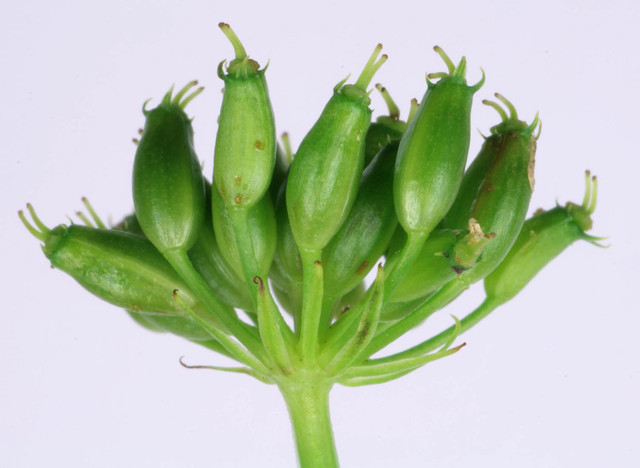
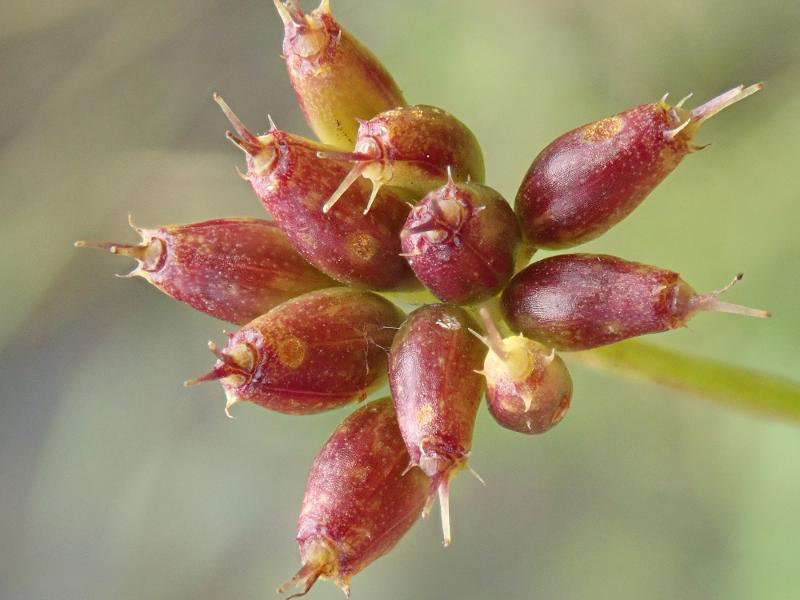
| Shapes | Fruits are ovoid-cylindric 3–5.5 mm long with prominent ridges |
| Taste | Sweet |
| Health benefits | Support chronic pectoral affections, dyspepsia, intermittent fevers, obstinate ulcers, bronchitis and digestive disorders, fever, coughs, intestinal gas, and water retention |
| Name | Water fennel |
|---|---|
| Scientific Name | Oenanthe aquatica |
| Native | Europe, Asia and northern Africa. It has escaped cultivation and naturalized in Ohio and Maryland |
| Common Names | Fineleaf water dropwort, Fine-leaved water dropwort, Water fennel, Water hemlock, horse-bane |
| Name in Other Languages | Albanian: Luledhri Belarusian: Amiežnik vadziany (Амежнік вадзяны) Bulgarian: vodno ĭonante (водно йонанте), sŭshtinski voden morach (същински воден морач), obiknoven voden morach (обикновен воден морач) Croatian: Vodena trbulja Czech: Halucha vodní Danish: Billebo-Klaseskærm, Vandfennikel, Billebo Dutch: Watertorkruid English: Fineleaf water dropwort, Fine-leaved water dropwort, Water fennel, Water hemlock, horse-bane Estonian: Harilik vesiputk Finnish: Pahaputki, Liejupahaputki, liejupahaputki French: Ciguë aquatique, Oenanthe safranée, Oenanthe aquatique, Phellandre, Oenanthe phellandre, Fenouil d’eau, fenouil aquatique German: Gemeiner Wasserfenchel, Gewöhnlicher Wasserfenchel, Großer Wasserrebendolde, Großer Wasserfenchel, Rebendolde, Rosskümmel, Wasser-Pferdesaat, Wasserrebendolde, Pferdesaat Wasserfenchel, Wasserpferdesaat, butte Mäusezahl, Roßfenchel, Roßkerbel Hungarian: Vízi borgyökér, Vízi mételykóró, mételykóró Italian: Finocchio acquatico, Finocchio acquatico cicutario, Fellandrio Irish: Táthabha bán, Greabhán mín, Nimh capaill Latvian: Udens padille Lithuanian: Vandeninė išnė Norwegian: Hestekjørvel Persian: آبچکان Polish: Kropidlo wodne Portuguese: Felândrio, felândrio-aquático Romanian: Mararaș Russian: Omezhnik vodyanoy (омежник водяной) Serbian: vodena trbulja (водена трбуља), obična trbulja (обична трбуља), trbulja (трбуља) Slovak: Halucha vodná, haluchovka vodná Slovene: Voidni sovec Spanish: Felandrio acuático, Milenrama de arroyos deshecha, Perejil de brujas Swedish: Stäkra, Vattenstäkra, Liejupahaputki Turkish: Deniz rezenesi Ukrainian: Omeh vodyanyy (омег водяний) Welsh: Cegid Manddail y Dŵr, Cegiden y Dŵr, Cegiden-y-Dŵr Fanddail |
| Plant Growth Habit | Fibrous-rooted, hairless, herbaceous, biennial to perennial aquatic flowering plant |
| Growing Climates | Still and slow moving, stagnant water, sides of streams, margins of shallow pools, ponds, ditches, marshes, sheltered lakes, reservoirs, canals, streams and rivers, and seasonally flooded wetlands |
| Plant Size | About 150 cm tall |
| Root | Root is straight, vertical, spindle-shaped, hairy and white |
| Stem | Stem is hollow and striated, normally about 1 cm in diameter but exceptionally reaching 8 cm,[2] erect or sprawling, rooting at the nodes of any submerged sections. Very large sprawling plants have been found to have stems up to 2 m long. |
| Leaf | The upper (aerial) leaves are 2- to 3-pinnate, finely divided into lanceolate (sword-shaped) to ovate leaflets up to 5 mm long. The lower leaves are 3–4 pinnate, with very narrow (thread-like) leaflets under water, but flat, ovate leaf segments if emergent. The leaf stalks form a sheath around the stem at the base |
| Flowering season | June to September |
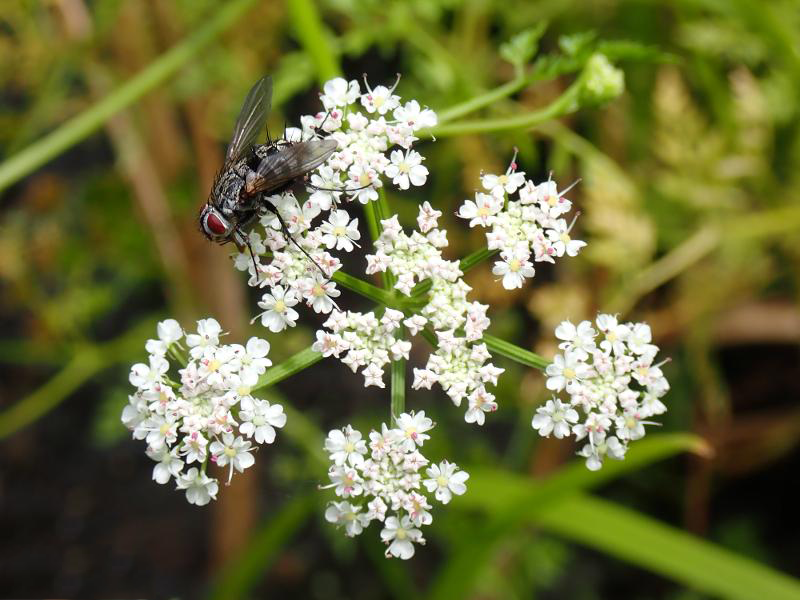
| Flower | Inflorescence arising from the leaf axils or at the tip of the stem. It consists of a compound umbel of 6–16 smaller rounded umbels about 1–2 cm in diameter, each of which has numerous white flowers. There are no bracts on the main umbel and 4–8 small, lanceolate bracteoles at the base of each of the secondary umbels. Plants are monoecious, with bisexual and male flowers in most umbels. |
| Fruit Shape & Size | Ovoid-cylindric 3–5.5 mm long with prominent ridges |
| Propagation | By seed |
| Taste | Sweet |
| Plant Parts Used | Fruit, seeds |
| Other Facts |
|
Plant Description
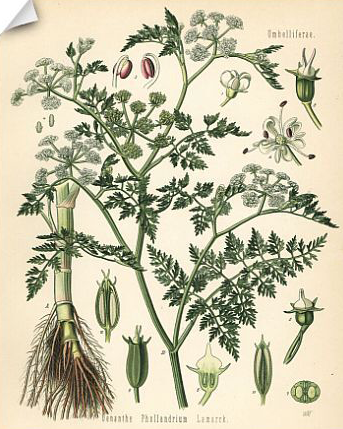
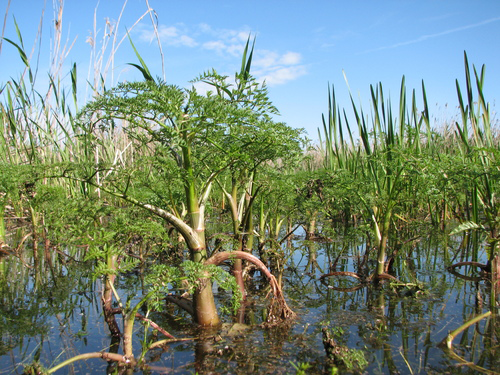
Water fennel is a fibrous-rooted, hairless, herbaceous, biennial to perennial aquatic flowering plant that normally grows about 150 cm tall. The plant is found growing in still and slow moving, stagnant water, sides of streams, margins of shallow pools, ponds, ditches, marshes, sheltered lakes, reservoirs, canals, streams and rivers, and seasonally flooded wetlands. It occurs mostly in open, nutrient-rich habitats with a thick layer of organic mud, but it can also inhabit less nutrient-rich waters and sandy substrates or saline soils. It occurs mainly in periodically flooded habitats, as during flooding it is able to develop and thrive as a submerged growth form in deep water. In the Czech Republic it is mainly found in fishpond-rich areas and large river floodplains from the lowlands to middle elevations.
The species is commonly distributed all over Czechoslovakia, from lowlands to the sub-montane belt, particularly in fishpond and river basins. It shows no special relationship to the chemical and physical soil properties, and is well adapted to habitats with a changing water level. The reproduction of O. aquatica depends on emerging of the bottom. The most developed populations are formed by biennial plants and arise in the year following summer or autumn drainage.
Root and Stem
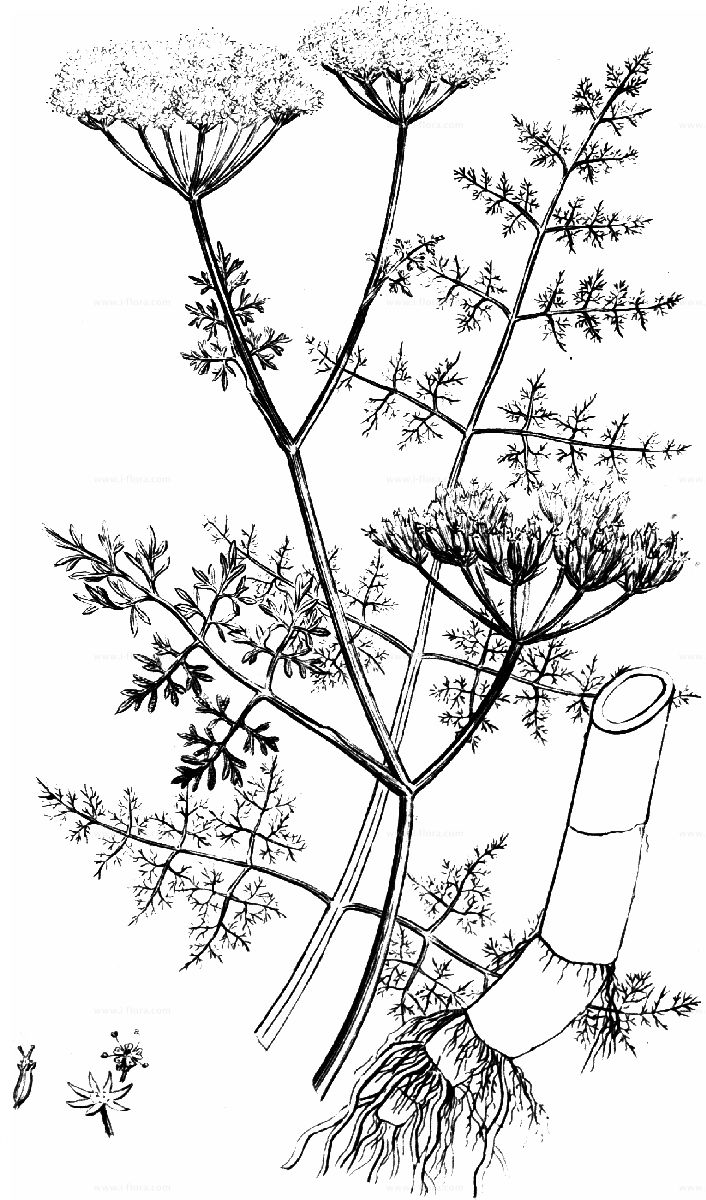
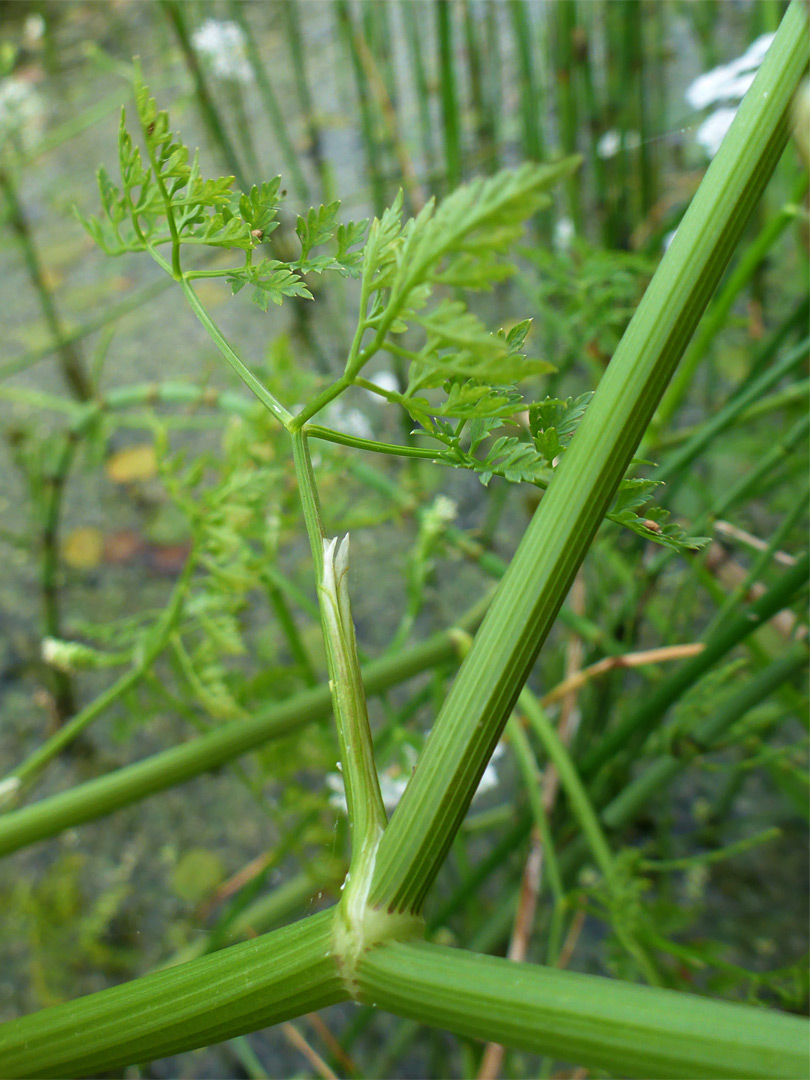
Root is straight, vertical, spindle-shaped, hairy and white. The stem is hollow and striated, normally about 1 cm in diameter but exceptionally reaching 8 cm, erect or sprawling, rooting at the nodes of any submerged sections. Very large sprawling plants have been found to have stems up to 2 m long.
Leaves
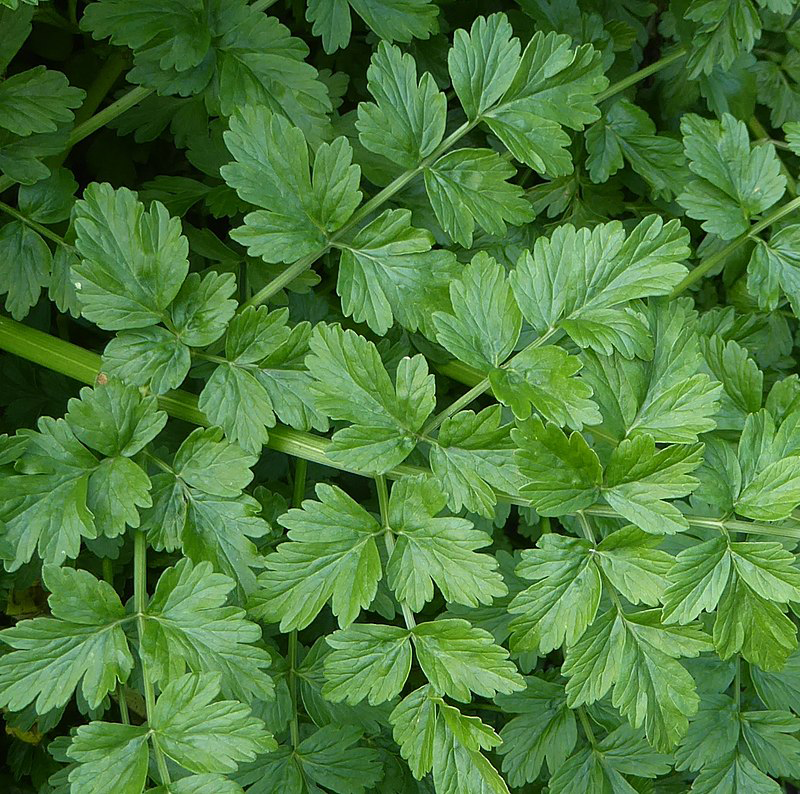
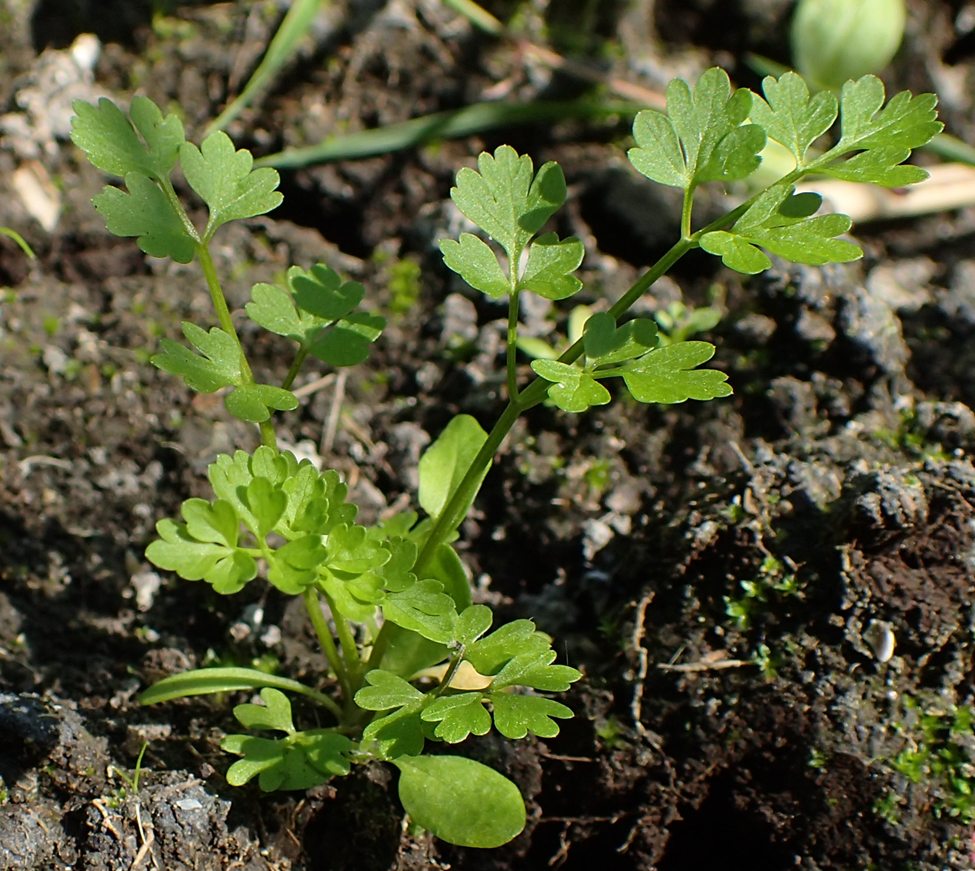
The upper (aerial) leaves are 2- to 3-pinnate, finely divided into lanceolate (sword-shaped) to ovate leaflets up to 5 mm long. The lower leaves are 3–4 pinnate, with very narrow (thread-like) leaflets under water, but flat, ovate leaf segments if emergent. The leaf stalks form a sheath around the stem at the base.
Flower
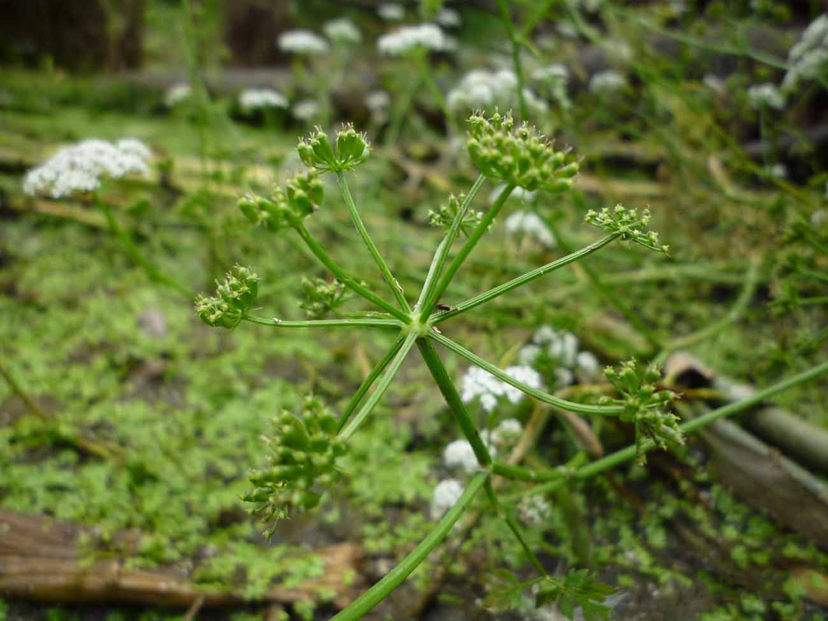
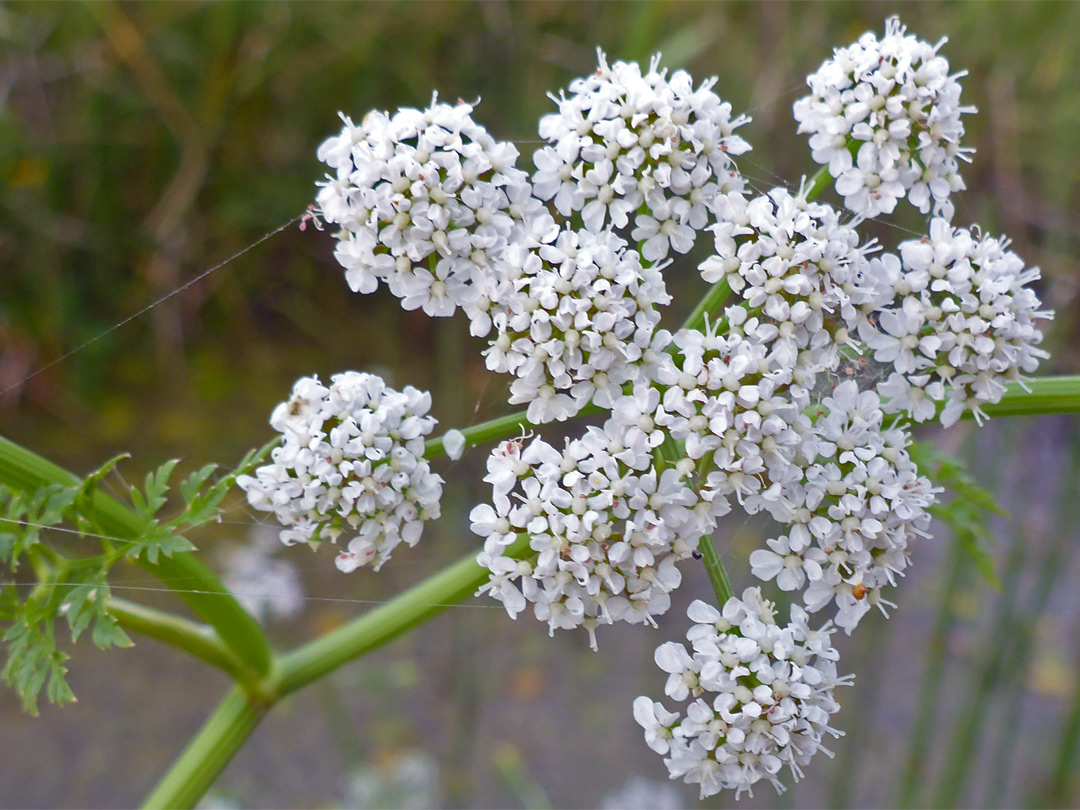
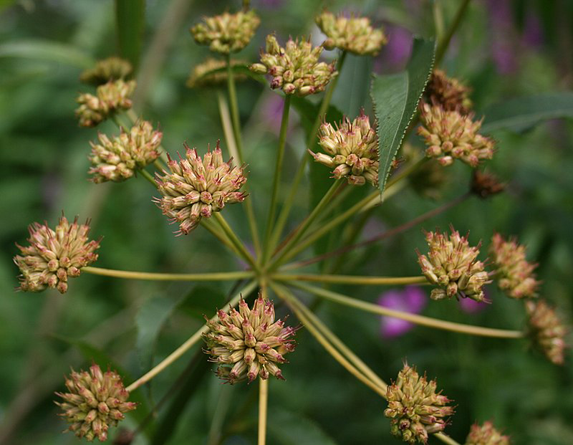
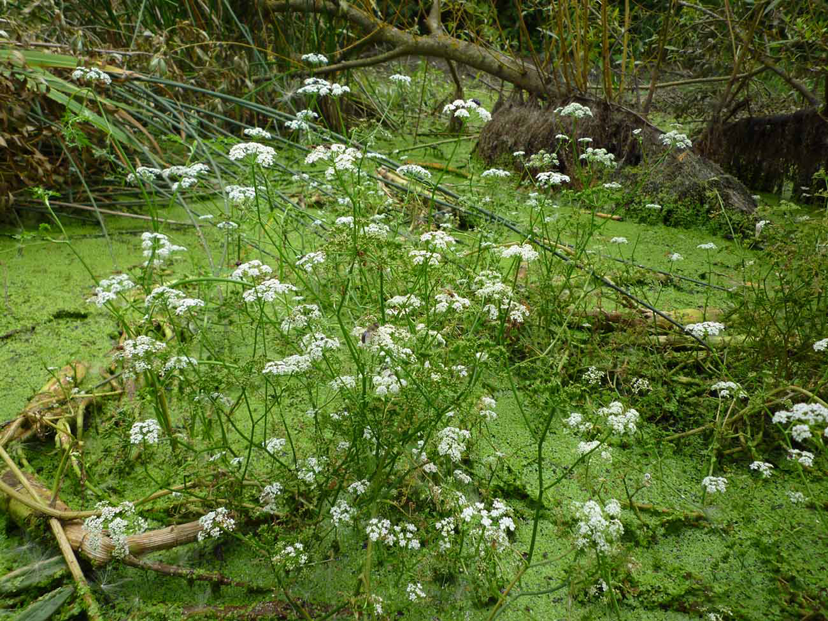
It flowers between June and September in northern Europe, the inflorescence arising from the leaf axils or at the tip of the stem. It consists of a compound umbel of 6–16 smaller rounded umbels about 1–2 cm in diameter, each of which has numerous white flowers. There are no bracts on the main umbel and 4–8 small, lanceolate bracteoles at the base of each of the secondary umbels. Plants are monoecious, with bisexual and male flowers in most umbels. Each flower has 5 sepals, 5 unequal petals with the outer ones slightly larger, 5 stamens and 2 styles. After flowering, the rays (stalks of the individual umbels) and pedicels (stalks to the individual flowers) do not thicken, and the umbels do not become flat-topped in fruit.
Fruit
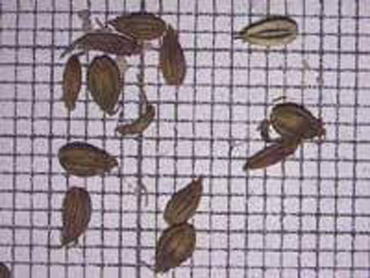
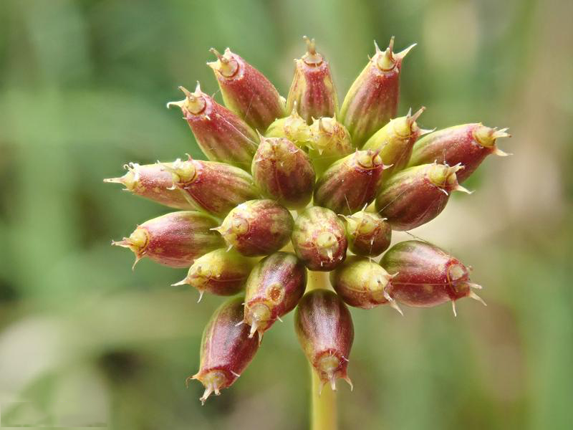
Fertile flowers are followed by fruits that are 3–5.5 mm long, ovoid, with prominent ridges. On maturity, each fruit splits into two (1-seeded) mericarps. Normally fruit spreads by water or animals.
Traditional uses and benefits of Water fennel
- The fruit is antiperiodic, diaphoretic, diuretic, expectorant and pectoral.
- Ethno-botanists used to treat various medical conditions, such as chronic pectoral affections, dyspepsia, intermittent fevers, obstinate ulcers etc.
- Homeopathic remedy is made from the fruits.
- Fruit of water fennel was used for bronchitis and digestive disorders.
- In the past the herb was used for intermittent fevers, such as malaria, and as a diaphoretic to promote sweat and so lower the temperature of the body during a fever.
- The roots were sometimes pulverized and used to treat piles but if the root is ingested by accident it could prove fatal.
- It is recommended in the form of herbal tea for the treatment of chronic thoracic diseases.
- Roots are used in the form of poultice which is applied externally to the skin against various skin diseases.
- In homeopathy the fruit’s extract is used for the treatment of bronchitis and cough.
- People take water fennel for coughs, intestinal gas, and water retention.
Dosing
The appropriate dose of water fennel depends on several factors such as the user’s age, health, and several other conditions. At this time there is not enough scientific information to determine an appropriate range of doses for water fennel. Keep in mind that natural products are not always necessarily safe and dosages can be important. Be sure to follow relevant directions on product labels and consult your pharmacist or physician or other healthcare professional before using.
Precautions
- All parts of the plant are poisonous.
- This plant should be used with great caution, and only under the supervision of an experienced practitioner.
- It is said to contain the alleged ‘psychotroph’ myristicine.
- High doses may cause dizziness, nausea, intoxication, stomach irritation, failure of circulation, cerebral disturbance and other narcotic effects.
- The fresh plant leaves are injurious to cattle.
- The fruits are reputed to cause drunkenness and narcotic symptoms, and it can easily be confused with other, more deadly species such as hemlock water-dropwort.
- The use of herb preparations is not recommended without seeking advice from your physician or pharmacist.
- The substances they contain may interact with the subscribed drugs that the patient already takes, thus eliminating their therapeutic efficacy or inducing toxicity.
- They may also burden further weakened vital functions of the body thus exposing the patient to increased morbidity and life threatened conditions.
References:
https://www.itis.gov/servlet/SingleRpt/SingleRpt?search_topic=TSN&search_value=29564#null
https://pfaf.org/user/Plant.aspx?LatinName=Oenanthe+aquatica
https://www.missouribotanicalgarden.org/PlantFinder/PlantFinderDetails.aspx?taxonid=275996
https://en.wikipedia.org/wiki/Oenanthe_aquatica
http://www.theplantlist.org/tpl1.1/record/kew-2391299
http://www.worldfloraonline.org/taxon/wfo-0000385414
https://gd.eppo.int/taxon/OENAQ
http://www.naturalmedicinalherbs.net/herbs/o/oenanthe-aquatica=water-dropwort.php
http://mediplantepirus.med.uoi.gr/pharmacology_en/plant_details.php?id=392
https://plants.usda.gov/home/plantProfile?symbol=OEAQ