

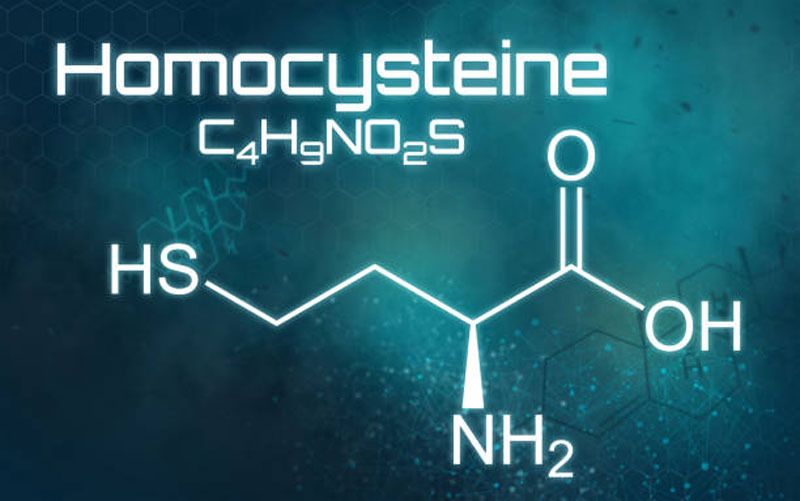
 At the outset, you should understand that homocysteine is the resulting amino acid when the proteins in your body are broken down. When your homocysteine level spikes, it can result in blood clots or arterial damage. This condition is called hyperhomocysteinemia.
Typically, your homocysteine levels will increase if you have deficient folate or vitamin B-12 in your system. In some cases, it could also mean that you have an MTHFR mutation, which affects 40% of the population. This can easily be detected with a home MTHFR Test Kit.
A normal level means you have fewer than 15 micromoles per liter in the blood.
When you say high levels of homocysteine, however, it is divided into three classifications:
- Moderate — when you have 15-30 micromoles per liter
- Intermediate — when you have 30-100 micromoles per liter
- Severe — when it is higher than 100 micromoles per liter
What is MTHFR?
The MTHFR or Methylenetetrahydrofolate reductase is an enzyme with several variants. The MTHFR helps process the amino acids, specifically converting homocysteine to methionine. The MTHFR plays a crucial role in balancing out your homocysteine levels.
If there is a mutation and it cannot perform its function correctly, the result would be a buildup of homocysteine in your body. This is called homocystinuria, which affects 1 in every 200,000 people.
The MTHFR Test Kit will accurately detect the two most common variants of the Methylenetetrahydrofolate reductase, which are the C677T and A1298C. Of the two options, the most common form is the C677T. In fact, a few studies are surrounding the prevalence of A1298C.
Women with two copies of C677T are prone to give birth to kids with neural tube defects, which have no known cure.
Symptoms of High levels of Homocysteine
Children are more likely to manifest symptoms compared to adults. For instance, if you have deficient vitamin B-12, you may expect the following symptoms:
- Weakness
- Pallid skin
- Mouth sores
- Tingling sensation on the extremities
- Mood changes
- Dizziness
If you have folate deficiency, you can expect the following symptoms:
- Fatigue
- Mouth sores
- Growth problems
- Swelling tongue
Other symptoms include:
- Shortness of breath
- Muscle weakness
- Irregular heartbeat
- Unexplained weight loss
- Yellowish skin
- Mental fatigue
- Confusion
Likely Causes of High Levels of Homocysteine
There are several likely reasons why your body cannot process homocysteine properly. As already mentioned, vitamin-B and folate deficiency is the most common cause. However, there are other risk factors, as well, to include:
- Kidney disease
- The maintenance medication that you take
- Genes
- Low levels of thyroid hormone
- Psoriasis
If you are not careful, it will lead to a host of medical complications that can sometimes be fatal. For instance, unchecked high levels of homocysteine can lead to heart attack, stroke, Alzheimer’s disease, osteoporosis, blood clot, coronary disease, dementia, and atherosclerosis.
It is important to rule out MTHFR as the likely cause of the high levels of homocysteine. Unlike before, when you need to have your blood drawn in the lab, you can order an MTHFR Test Kit and do the procedure in the comfort of your home.
The process is also non-invasive since it just requires your saliva instead of blood. More importantly, you can conduct a test on your kids without too much resistance.