Health Benefits
    Facebook Twitter Instagram
    Tuesday, March 24
    Facebook Twitter Pinterest
    Health Benefits
    • Home
    • Dental Health
    • Mental Health
    • Weight Loss
    • Health Wiki
    • Nutrition
    • Healthy Recipe
    • BMI Calculator
    Health Benefits
    Home»Poultry & Seafoods»Whitefish facts and nutrition value
    Poultry & Seafoods

    Whitefish facts and nutrition value

    By s mJanuary 24, 2017Updated:July 13, 2018No Comments5 Mins Read
    Facebook Twitter Pinterest LinkedIn Tumblr Email

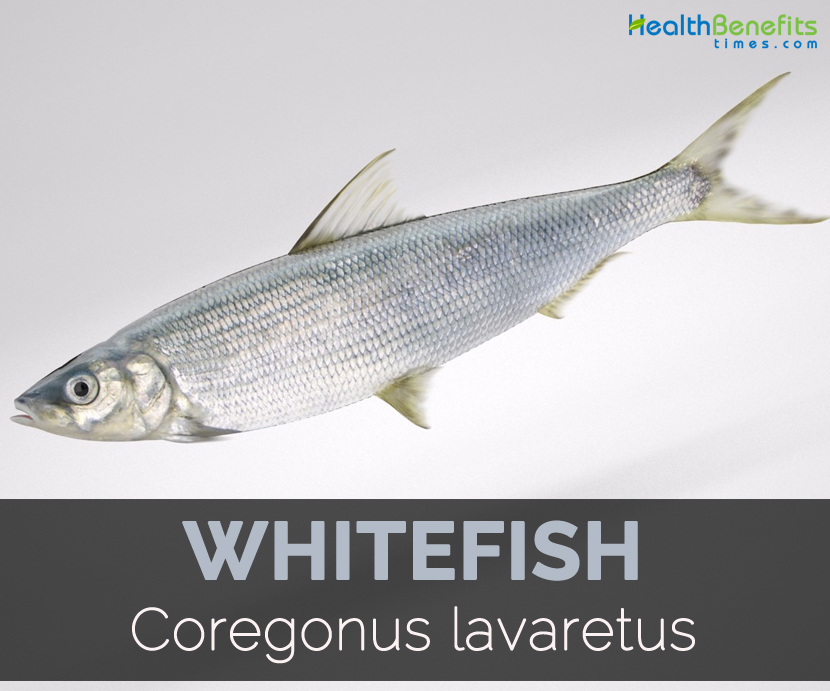
    European Whitefish or Common Whitefish (Coregonus lavaretus) is the freshwater species of whitefish that is native to Swiss French border. Other vernacular names used for this fish includes Bratfisch, Breitfisch, Kaiserfisch, Knöpfling, Maräne, Meermaraene, Ostseeschnäpel, Peipusmaraene, Rindling, Sandgangfisch, Sig, Chudski sig, Lavereto, Lavarello, Coregone and others. It belongs to the subfamily Coregoninae and family Salmonidae. It has short snout which is tapered. Their coloration is typically from bluish green to brownish with dark grey and white fins. European whitefish reach a weight of 2 kg (4.4 lb) measuring the body above 55 cm (22 inches) long. It feeds on crustaceans, large insect larvae, molluscs, small fish, fingernail clams, opossum shrimp, snails and midge larvae. The breeding usually takes place in between September to November.

    History

    It is found in deep and oligo mesotrophic lakes. It is extensively found in Central, Northwest Europe and Siberia. It is native to Swiss French border and is also found in Lake Aiguebelette and Lake Bourget as well as Lake Geneva.

    Nutritional value

    One fillet of 154 g covers 100.24 g of moisture, 265 calories, 37.68 g of protein, 11.57 g of total lipid fat and 2.22 g of ash. It also offers 1.737 g of DV of Isoleucine, 3.462 g of DV of Lysine, 0.422 g of DV of tryptophan, 1.652 g of DV of threonine, 1.942 g of DV of valine, 1.11 g of DV of histidine, 3.063 g of DV of leucine, 533 mg of DV of phosphorus, 37.68 g of DV of protein, 1.48  µg of DV of vitamin B12, 24.9 µg of DV of selenium, 0.533 mg of DV of vitamin B6, 5.923 mg of DV of vitamin B3, 11.57 g of DV of total lipid fat, 1.332 mg of DV of vitamin B5, 0.263 mg of DV of thiamine, 0.237 mg of DV of riboflavin, 1.96 mg of DV of zinc, 0.142 mg of DV of copper, 65 mg of DV of magnesium and 625 mg of DV of potassium.

    Health Benefits of Whitefish

    Whitefish is loaded with high content of protein, Vitamin B, selenium, iodine and has low concentration of fat. It is also an excellent source of omega-3 fatty acids. Due to various nutrients present in whitefish it provides ample health benefits if added to the diet. Seafood have numerous benefits if consumed in limited amounts.

    1. Stronger bones

    Phosphorus plays a vital role in the growth and formation of strong bones to sustain the wear and tear. It promotes the enamel of tooth and gum health. It provides relief from the conditions such as osteoporosis. It is also shown that phosphorus is related to prevent from the cardiovascular problems as well. (1) (2)

    1. Rejuvenate cells

    Healthy body is essential for the contribution of tissues and cells. The body needs the continuous formation of tissues and cells such as hair, skin and nails. The decreased cells should be replaced with the new ones. Protein assists in the reformation of tissues as well as cells. (3) (4)

    1. Cure anemia

    Vitamin B12 is essential for the treatment of megaloblastic and pernicious anemia. It also restore the normality of blood and Intrinsic factor. (5)

    1. Enzyme functions

    Vitamin B6 is essential for the various enzyme functions properly. The relation between enzymes and Vitamin B6 is vital for the proper functions of nervous system, immunity and relief from arthritis. (6)

    1. Digestive health

    Vitamin B3 supports the functions of digestive health, proper function of nerves, promote appetite and skin health. (7)

    1. Reduce stress

    Pantothenic acid effectively lowers stress as well as mental conditions such as depression and anxiety. It promotes the fitness of mind. It also regulates the hormones that are the cause for these problems. (8)

    1. Enhance memory

    Thiamin promotes the memory as well as the concentration power. It helps to manage the conditions such as Bell’s palsy and multiple sclerosis. It assist in the positive effect as well as healthy mental attitude. (9)

    1. Reproductive health

    Vitamin B2 is substantial for the development and growth of reproductive organs and tissue growth such as eyes, connective tissue, skin, nervous system, mucous membranes and immune system. Moreover, it promotes the health of nails, skin and hair. (10)

    1. Slows down aging

    Copper helps to counteract the free radicals and protect cell membranes. Free radicals has negative effect on organs and could result in wrinkles, cancer, age spots, kidney problems and macular degeneration. (11)

    1. Heart health

    Magnesium prevents the chances of irregular heartbeats and muscle stress. It soothes nerves and assist digestive process by preventing the conditions such as cramps, vomiting, abdominal pain, indigestion, constipation and flatulence. The deficiency of magnesium could lead to heart conditions which could be harmful. (12)

    Precautions                                                                                                 

    • Allergic people should avoid it.
    • It should be consumed in limited amounts.

    How to Eat         

    • It is used to make fishsticks, lutefisk, gefilte fish and surimi.
    • It is usually baked, fried, grilled, broiled and poached.
    • It is added for making soups and various recipes.

    References:

    https://www.itis.gov/servlet/SingleRpt/SingleRpt?search_topic=TSN&search_value=161950#null

    72%
    72%
    Awesome

    Comments

    comments

    Poultry & Seafoods W
    Share. Facebook Twitter Pinterest LinkedIn Tumblr Email
    Previous ArticleGreen Turtle facts
    Next Article Red Wine facts and health benefits

    Related Posts

    Traditional uses and benefits of Wild Marigold

    March 21, 2024

    Health benefits of Winged Pea

    November 10, 2023

    Health benefits of Weeping lovegrass

    October 31, 2023

    Comments are closed.


    Facts of Whitefish

    Whitefish facts and nutrition value Quick Facts
    Name: Whitefish facts and nutrition value
    Scientific Name: Coregonus lavaretus
    Origin It is native to Swiss French border and is also found in Lake Aiguebelette and Lake Bourget as well as Lake Geneva.
    Colors Bluish green, brownish
    Shapes Tapered body, elongated, Length: 55 cm (22 inches)
    Flesh colors Dry, white
    Calories 265 Kcal./cup
    Major nutrients Isoleucine (103.89%)
    Lysine (103.53%)
    Tryptophan (95.91%)
    Threonine (93.86%)
    Valine (91.95%)
    Health benefits Stronger bones, Rejuvenate cells, Cure anemia, Enzyme functions, Digestive health
    Name Whitefish facts and nutrition value
    Scientific Name Coregonus lavaretus
    Native It is found in deep and oligo mesotrophic lakes. It is extensively found in Central, Northwest Europe and Siberia. It is native to Swiss French border and is also found in Lake Aiguebelette and Lake Bourget as well as Lake Geneva.
    Common/English Name European whitefish, Maraena whitefish, Maraene, Common whitefish, Lavaret
    Name in Other Languages Czech: Síh severní;
    German: Bratfisch, Breitfisch, Kaiserfisch, Knöpfling, Maräne, Meermaraene, Ostseeschnäpel, Peipusmaraene, Rindling, Sandgangfisch, Schaalsee Maräne, Seemaraene, Selentermaräne, Silberfelchen, Wandermaräne;
    Mandarin Chinese: Shuāi bái guī (衰白鮭);
    Polish: Sieja miedwienska;
    Russian: seya (сея), Sig;
    Swedish: Älvsik;
    Bulgarian: chudski sig (Чудски сиг);
    Danish: helt;
    Dutch: Oostzeehouting, grote marene;
    French: lavoret, lavaret du Bourget, lavaret, corégone Lavaret;
    Italian: lavereto, lavarello, coregone;
    Lithuanian: sykas;
    Modern Greek: Korígonos (Κορήγωνος);
    Norwegian: Bokmål, sik;
    Polish: sieja pospolita, sieja;
    Romanian: coregon;
    Slovenian: velika ozimica;
    Spanish: lavareto;
    Swedish: lavaretsik;
    Turkish: labalık, kbalık;
    Ukrainian: syh (сиг);
    Welsh: powan
    Feed on Crustaceans, large insect larvae, molluscs, small fish, fingernail clams, opossum shrimp, snails, midge larvae
    Shape & size Tapered body, elongated, Length: 55 cm (22 inches)
    Snout Short, tapered
    Weight 2 kg (4.4 lb)
    Color Bluish green, brownish
    Flanks Silvery
    Belly White
    Fins Dark grey, white
    Flesh color Dry, white
    Breeding September to November
    Flavor/aroma Mild
    Major Nutritions Isoleucine 1.737 g (103.89%)
    Lysine 3.462 g (103.53%)
    Tryptophan 0.422 g (95.91%)
    Threonine 1.652 g (93.86%)
    Valine 1.942 g (91.95%)
    Histidine 1.11 g (90.10%)
    Leucine 3.063 g (82.87%)
    Phosphorus, P 533 mg (76.14%)
    Protein 37.68 g (75.36%)
    Vitamin B-12 (Cobalamine) 1.48 µg (61.67%)
    Health Benefits
    • Stronger bones
    • Rejuvenate cells
    • Cure anemia
    • Enzyme functions
    • Digestive health
    • Reduce stress
    • Enhance memory
    • Reproductive health
    • Slows down aging
    • Heart health
    Calories in 1 fillet (154 gm) 265 Kcal.

    Whitefish Scientific Classification

    Scientific Name: Coregonus lavaretus

    Rank Scientific Name & (Common Name)
    Kingdom Animalia
    Subkingdom Bilateria
    Infrakingdom Deuterostomia
    Phylum Chordata
    Subphylum Vertebrata
    Infraphylum Gnathostomata
    Superorder Protacanthopterygii
    Order Salmoniformes
    Family Salmonidae
    Subfamily Coregoninae
    Genus Coregonus
    Species Coregonus lavaretus
    Superclass Osteichthyes
    Class Actinopterygii
    Sub Class Neopterygii
    Infraclass Teleostei

    [wonderplugin_tabs id=”284″]

    Categories
    • Beverages (78)
    • Dairy (28)
    • Dental Health (15)
    • Equipment (5)
    • Essential OIls (196)
    • Facts (3,000)
    • Foods (259)
    • Fruits (524)
    • Giveaway (1)
    • Grains and Cereals (38)
    • Health & Beauty (761)
    • Herbs and Spices (1,250)
    • Medicines (9)
    • Mental Health (19)
    • Nutritional value (27)
    • Nuts and seeds (73)
    • Oils (81)
    • Pets (4)
    • Poultry & Seafoods (67)
    • Pulses and Beans (17)
    • Reviews (25)
    • supplement (2)
    • Vegetables (306)
    • Weight Loss (23)

    Science backed health benefits of Basil

    Science Backed Health Benefits of Yellow Beans

    Science Backed Health Benefits of Oat Bran

    Science Backed Health Benefits of Yardlong beans (Vigna unguiculata subsp. sesquipedalis)

    Science Backed Health Benefits of Apple Cider Vinegar

    Science Backed Health Benefits of Pigeon peas (Cajanus cajan)

    ABOUT
    Home
    About us
    Contact us
    Privacy Policy
    Terms & conditions
    Disclaimer
    Direct Communication
    e-mail: mail.healthbenefit@gmail.com
    Whatsapp: +977-9841146511
    Viber: +977-9841146511
    Useful
    Health Wiki
    Nutrition
    Facebook Twitter Pinterest
    © 2026 www.healthbenefitstimes.com All rights reserved.

    Type above and press Enter to search. Press Esc to cancel.

    ×

    Log In

    Forgot Password?

    Not registered yet? Create an Account