

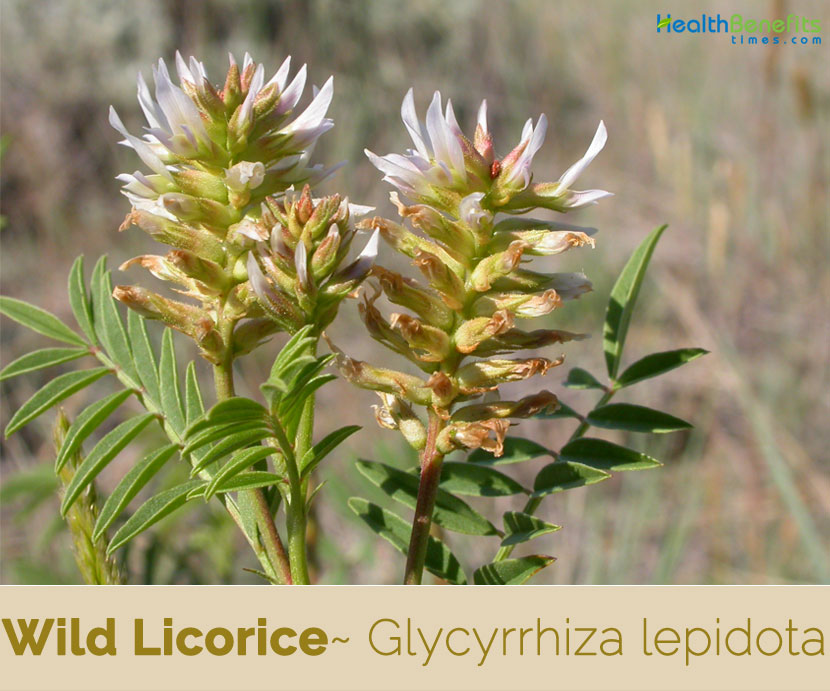
| Wild Licorice Quick Facts | |
|---|---|
| Name: | Wild Licorice |
| Scientific Name: | Glycyrrhiza lepidota |
| Origin | Western North America from central Canada south through the United States to California, Texas and Virginia |
| Colors | Green when young turning to coppery brown and then dark brown as they mature |
| Shapes | Oblong green pod, white at the base, often pink towards the tip, about ½ to 1 inch long |
| Taste | Sweet, bitter |
| Health benefits | Beneficial for coughs, diarrhea, chest pains, fever in children, stomach aches, earaches, toothaches, insomnia, sore throats, flu, food poisoning, sores, herpes and abscesses |
| Name | Wild Licorice OR American Liquorice |
|---|---|
| Scientific Name | Glycyrrhiza lepidota |
| Native | Temperate regions of western North America from central Canada south through the United States to California, Texas and Virginia, but absent from the southeastern states. It occurs from Ontario west to British Columbia, south to California, and east to Arkansas |
| Common Names | American Licorice, American liquorice, Wild Licorice, Licorice, American wild licorice, dessert root |
| Name in Other Languages | Arabic: Erqsws manqat alharashf (عرقسوس منقط الحراشف) English: American Licorice, American liquorice, Wild Licorice, Licorice, American wild licorice, dessert root French: Réglisse sauvage German: Amerikanisches Süssholz Hebrew: שוש אמריקאי Navaho: Ałtaʼneetsʼéhiitsʼóóz Upper Sorbian: Ameriski słódnik |
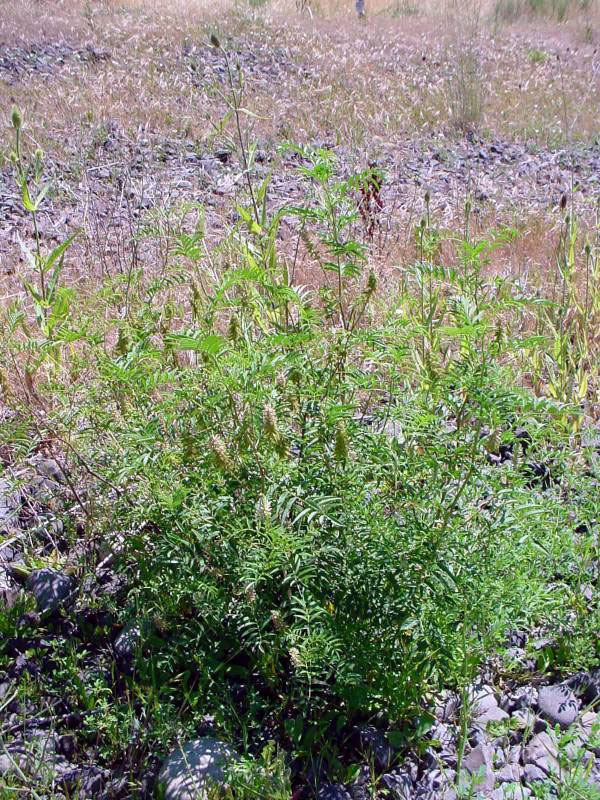
| Plant Growth Habit | Long-lived rhizomatous perennial, leguminous forb |
| Growing Climates | Cultivated ground, waste places, roadsides, prairies, gravelly river bottoms, moist mountain, fields, meadows, borrow ditches, terraces, seeps, stream banks, wet meadows, floodplains, lakeshores, riparian corridors, lakeshores, along irrigation canals |
| Soil | Requires a deep well cultivated fertile moisture-retentive soil for good root production. It grows best on loam, sandy loam, and clayey loam soils, but occurs on gravelly substrates as well |
| Plant Size | 1 to 4 feet (0.3-1.2 m) tall |
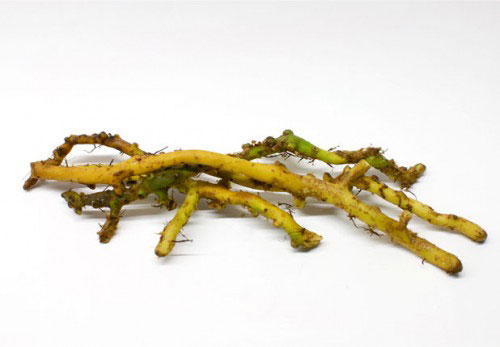
| Root | Extensive system of deep, fleshy roots |
| Rhizomes | Many-branched and may grow up to several feet long |
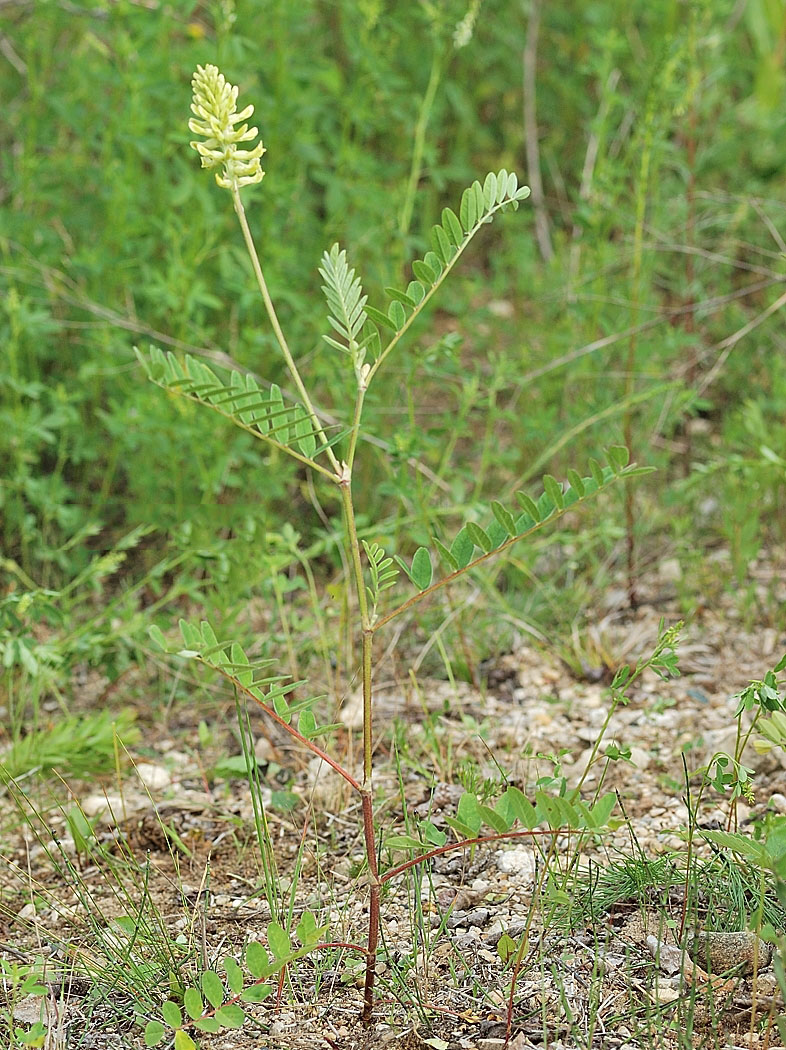
| Stem | Erect or ascending, 1 to several, mostly unbranched, glabrous or minutely hairy, ribbed when dry |
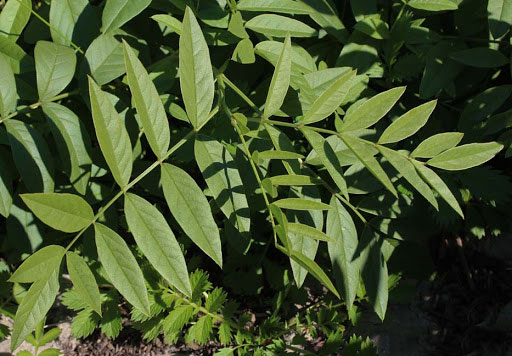
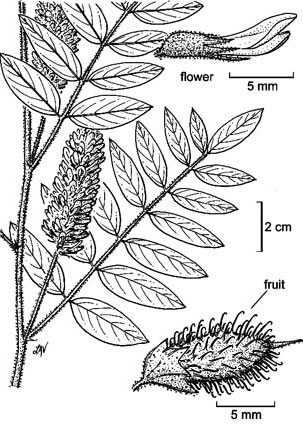
| Leaf | 0.8 to 2.8 inches (2-7 cm) long and 0.16 to 0.8 inch (4-20 mm) wide and are pinnately compound |
| Flowering season | July to August |
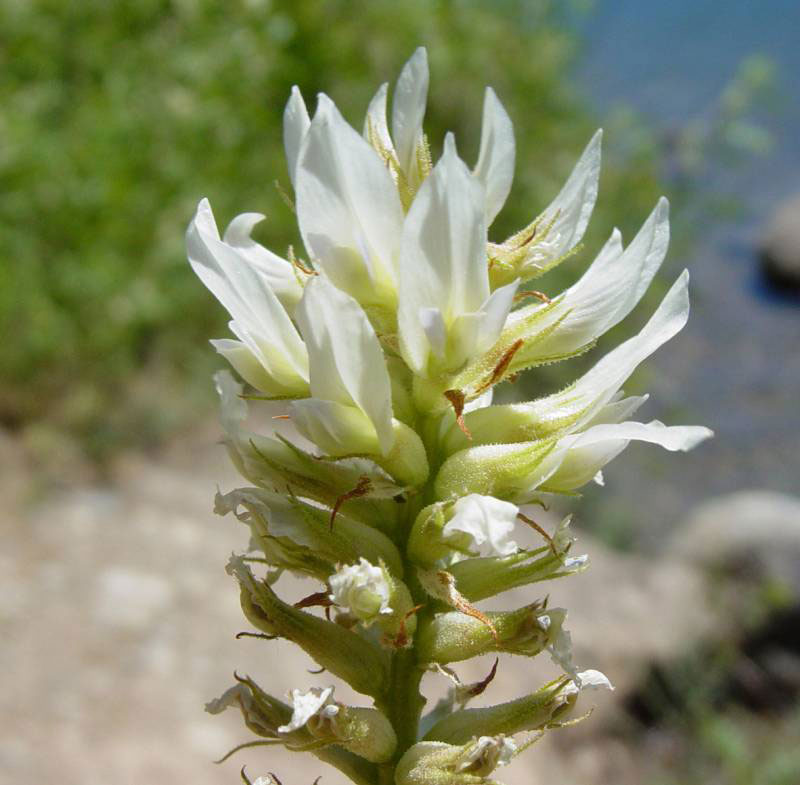
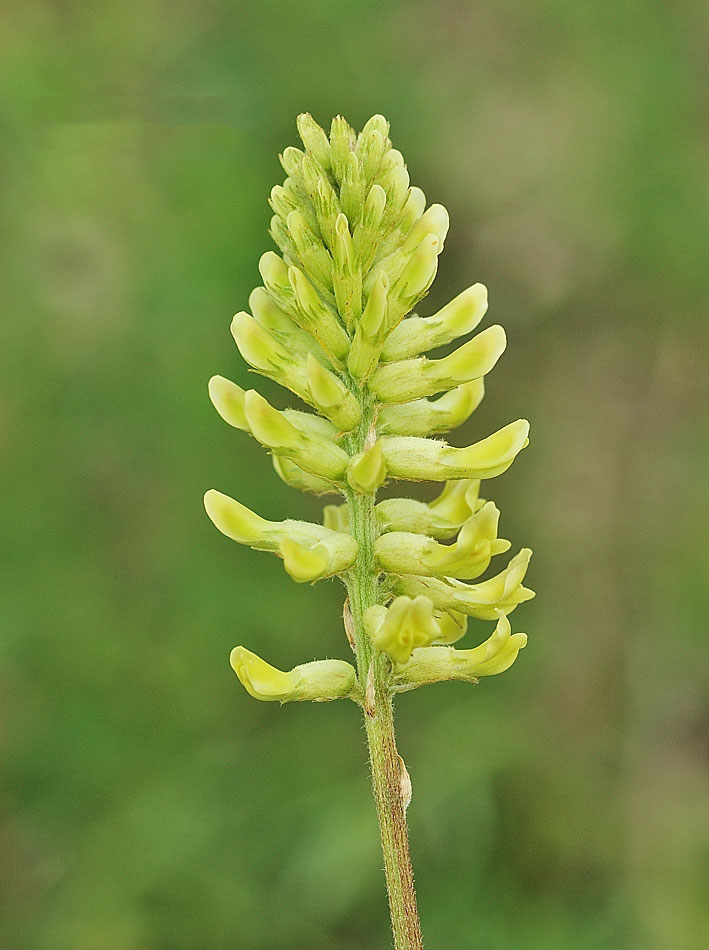
| Flower | Flowers are white, cream, or pale yellow, about ½-inch long, pea-shaped with a long, erect upper petal |
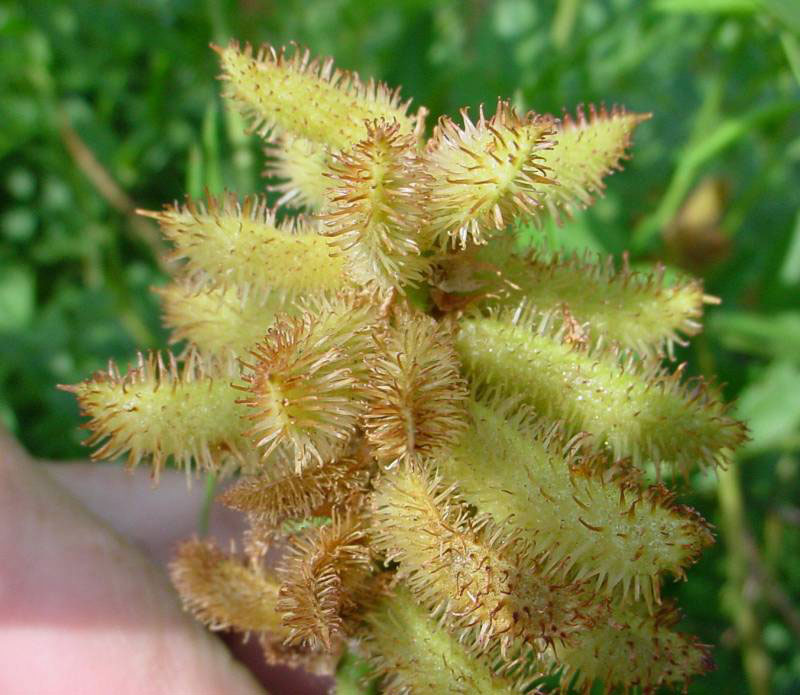
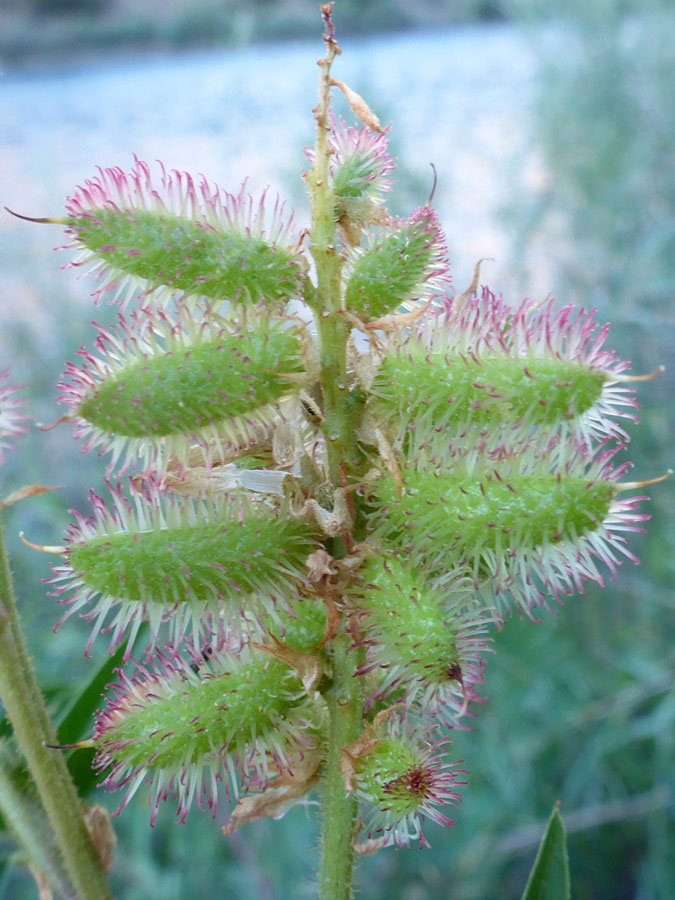
| Fruit Shape & Size | Oblong pod, white at the base, often pink towards the tip, about ½ to 1 inch long, densely covered with hooked prickles |
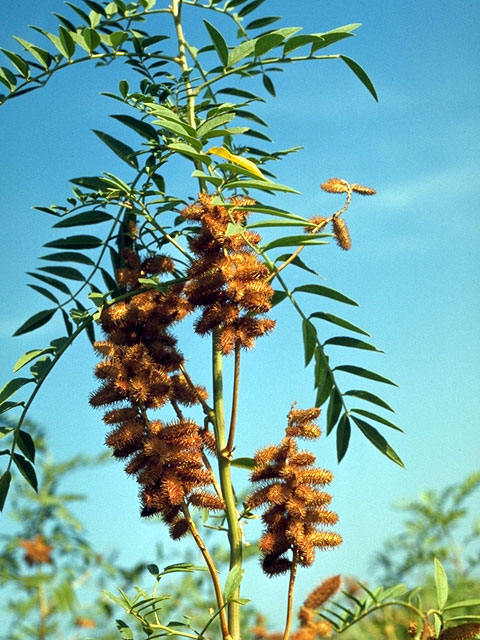
| Fruit Color | Green when young turning to coppery brown and then dark brown as they mature |
| Seed | 0.08 to 0.12 inch (2-3 mm) long, green to reddish-brown, smooth and bean shaped. |
| Propagation | By Seed and Rhizomes |
| Taste | Sweet, bitter |
| Plant Parts Used | Leaves, root |
| Season | August to September |
Plant Description
Wild Licorice is a long-lived rhizomatous perennial, leguminous forb normally growing about 1 to 4 feet (0.3-1.2 m) tall and has long tough brown roots which are said to be sweet and were used as food and for medicinal purposes by Native Americans. After eating a roasted root in 1806, Meriwether Lewis described an “agreeable flavor not unlike the sweet pittaitoe.” The plant is found growing in cultivated ground, waste places, roadsides, prairies, gravelly river bottoms, moist mountain, fields, meadows, borrow ditches, terraces, seeps, stream banks, wet meadows, floodplains, lakeshores, riparian corridors, lakeshores and along irrigation canals. The plant requires a deep well cultivated fertile moisture-retentive soil for good root production. It grows best on loam, sandy loam, and clayey loam soils, but occurs on gravelly substrates as well. The plant has extensive system of deep, fleshy roots. Rhizomes are many-branched and may grow up to several feet long. Stems are erect or ascending, 1 to several, mostly unbranched, glabrous or minutely hairy, ribbed when dry.
Leaves
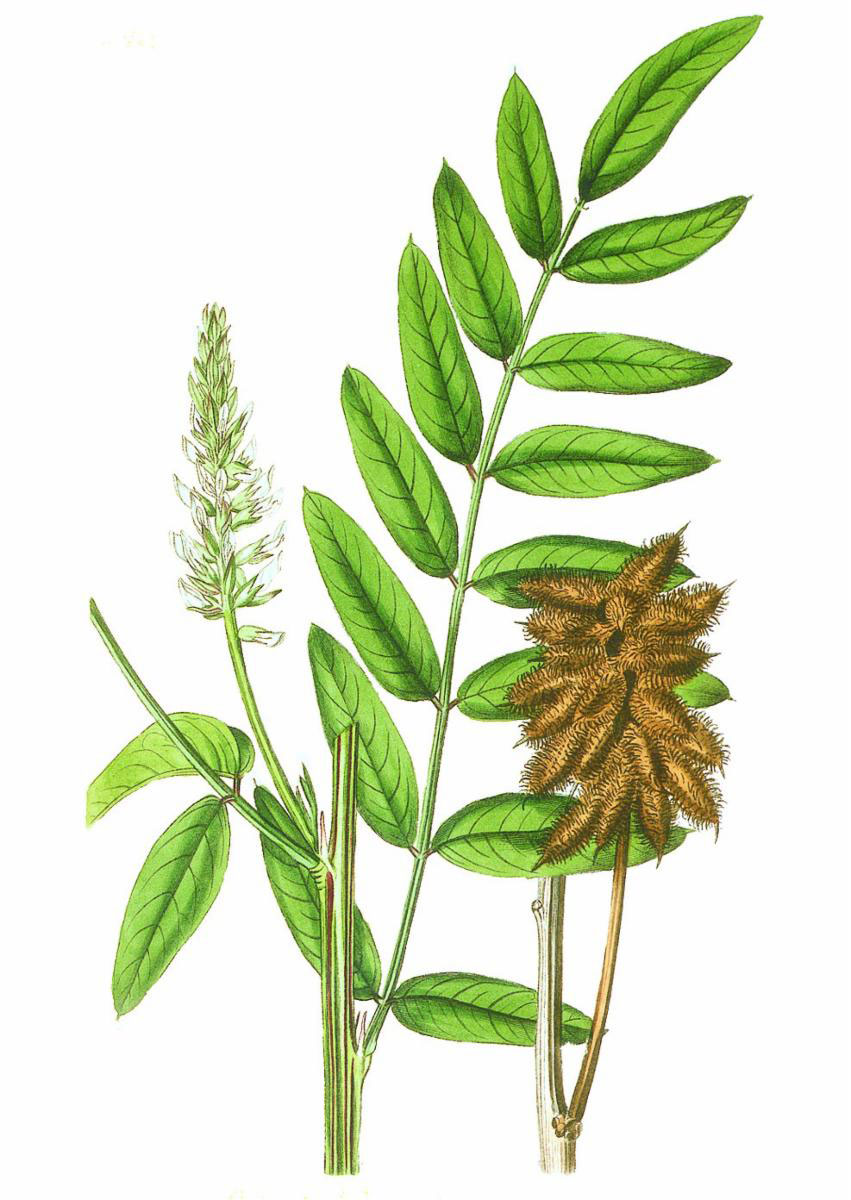
The leaves measure from 0.8 to 2.8 inches (2-7 cm) long and 0.16 to 0.8 inch (4-20 mm) wide and are pinnately compound in groups of 11 to 19 lanceolate to oblong leaflets. Leaflets are up to 1½ inches long and ½ wide, tapering to pointed or blunt tip, rounded or slightly tapered at the base, stalk less or nearly so, and often fold up some from the central vein especially when young. Edges are tooth less; surfaces are hairless but gland-dotted, especially on the underside.
Flower
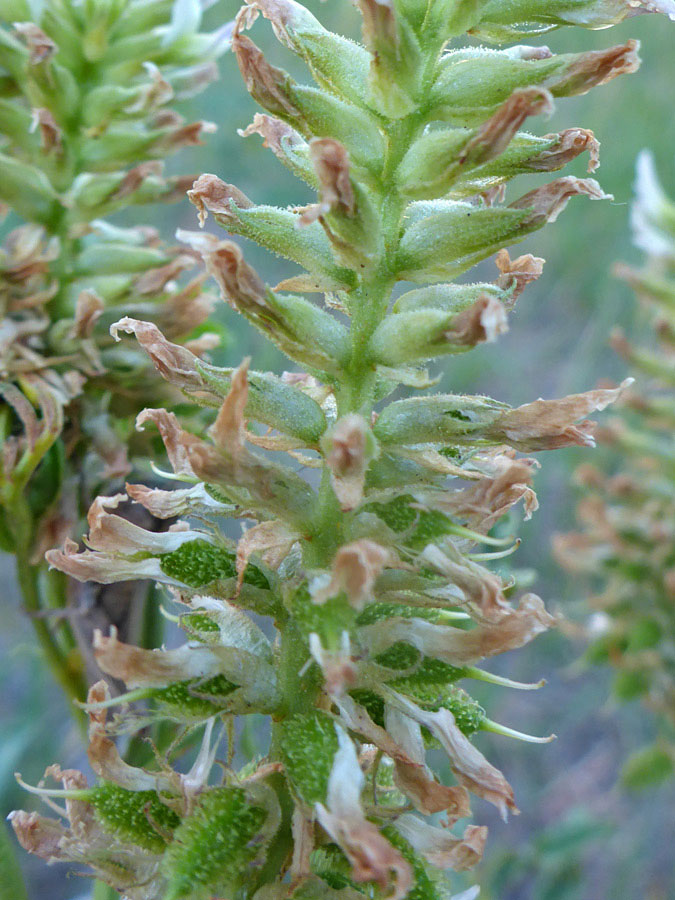
The flowers are spike clusters, cone-shaped to cylindrical, 1 to 2 inches long arising from leaf axils. Flowers are white, cream, or pale yellow, about ½-inch long, pea-shaped with a long, erect upper petal. The cluster and its stalk are shorter than the subtending leaf. Flowering normally takes place in between July to August.
Fruit
Each flower is replaced by an oblong green pod, white at the base, often pink towards the tip, about ½ to 1 inch long. Pods are covered with many stout, hooked brown spines which form a burr and contain a few seeds. This hooked pod assists the plant in dispersal since they stick to animal fur and are moved to new growing sites. As the pods ripen the color changes to coppery brown and then dark brown. The pods remain through the winter. Seeds are 0.08 to 0.12 inch (2-3 mm) long, green to reddish-brown, smooth and bean shaped.
Traditional uses and benefits of Wild Licorice
- American licorice was widely used medicinally by a number of native North American Indian tribes who used it in the treatment of a range of diseases.
- All parts of the body are medicinal, but the roots are the most active part.
- An infusion of the root is used to speed the delivery of the placenta after childbirth, it is also used to treat coughs, diarrhea, chest pains, and fevers in children, stomach aches etc.
- It is also used as a wash or poultice on swellings.
- The mashed leaves are used as a poultice on sores.
- The leaves have been placed in the shoes to absorb moisture.
- The Lakota used American licorice as a fever remedy for children.
- Steeped leaves were used for earaches, and the roots were chewed and held in the mouth to relieve toothaches and sore throats.
- The roots were also eaten for nourishment.
- Medicinal tea from the peeled dry roots is used to treat an upset stomach or diarrhea.
- The Lakota’s used the root of the plant as a medicine for the flu.
- The Dakota’s steeped licorice leaves in boiling water to make a topical medicine for an earache.
- The Blackfeet made a tea from the root to relieve coughs, chest pain, and sore throat.
- Wild licorice leaf poultices were an excellent remedy for sores on people and on horses.
- It has traditionally been used as a treatment for coughs, sore throats, toothaches and earaches.
- It has been used for thousands of years in China as a treatment for stomachache, insomnia, food poisoning, sores, herpes and abscesses.
- The Cheyenne’s drank medicinal tea made from the peeled, dry roots of the plant for diarrhea and upset stomach.
- The juice from chewing raw roots was swallowed to strengthen the voice of singers.
- Native Americans used a liquid made from the roots to treat stomachaches, sore throats, and coughs.
- Early settlers used a decoction from the roots to treat fevers in nursing Mothers.
- The dried root is often used for chewing, as it is excellent for teething children and also as a tooth cleaner.
- A tea made from the roots is an excellent thirst quencher.
Culinary Uses
- Root is consumed raw or cooked.
- They can be used as a flavoring in other foods and can also be chewed raw as a masticatory, making an excellent tooth cleaner and also very good for teething children.
- Tender young shoots can be eaten raw in the spring.
- Wild licorice has a much narrower range of uses, e.g. as a flavoring for root beer and chewing tobacco.
- Wild Licorice root can be used raw as a flavoring.
- The source of licorice powder that is extracted and used in sweets, baked goods, ice cream, soft drinks etc., it is also used medicinally.
- The powdered root is also used as a sweetener in other herb teas.
Precautions
- Very young growth can be poisonous to animals.
- When used over a long period or in large quantities it can raise the blood pressure.
- A gross overdose of the root can cause edema, high blood pressure and congestive heart failure.
References:
https://www.itis.gov/servlet/SingleRpt/SingleRpt?search_topic=TSN&search_value=26719#null
https://npgsweb.ars-grin.gov/gringlobal/taxon/taxonomydetail?id=17822
https://pfaf.org/user/Plant.aspx?LatinName=Glycyrrhiza+lepidota
https://plants.usda.gov/core/profile?symbol=GLLE3
https://www.fs.fed.us/database/feis/plants/forb/glylep/all.html
https://en.wikipedia.org/wiki/Glycyrrhiza_lepidota
https://www.inhs.illinois.edu/data/plantdb/detail/1081
https://gd.eppo.int/taxon/GYCLE
http://www.theplantlist.org/tpl1.1/search?q=Glycyrrhiza+lepidota
https://plants.usda.gov/factsheet/pdf/fs_glle3.pdf
http://temperate.theferns.info/plant/Glycyrrhiza+lepidota
https://www.minnesotawildflowers.info/flower/wild-licorice