

- Forest bathing is the mindful practice of immersing yourself in nature to engage the senses and promote relaxation.
- It helps calm the mind by reducing stress, anxiety, and mental fatigue through deep sensory connection with natural surroundings.
- Backed by science, forest bathing enhances emotional well-being and fosters clarity, peace, and overall mental resilience.
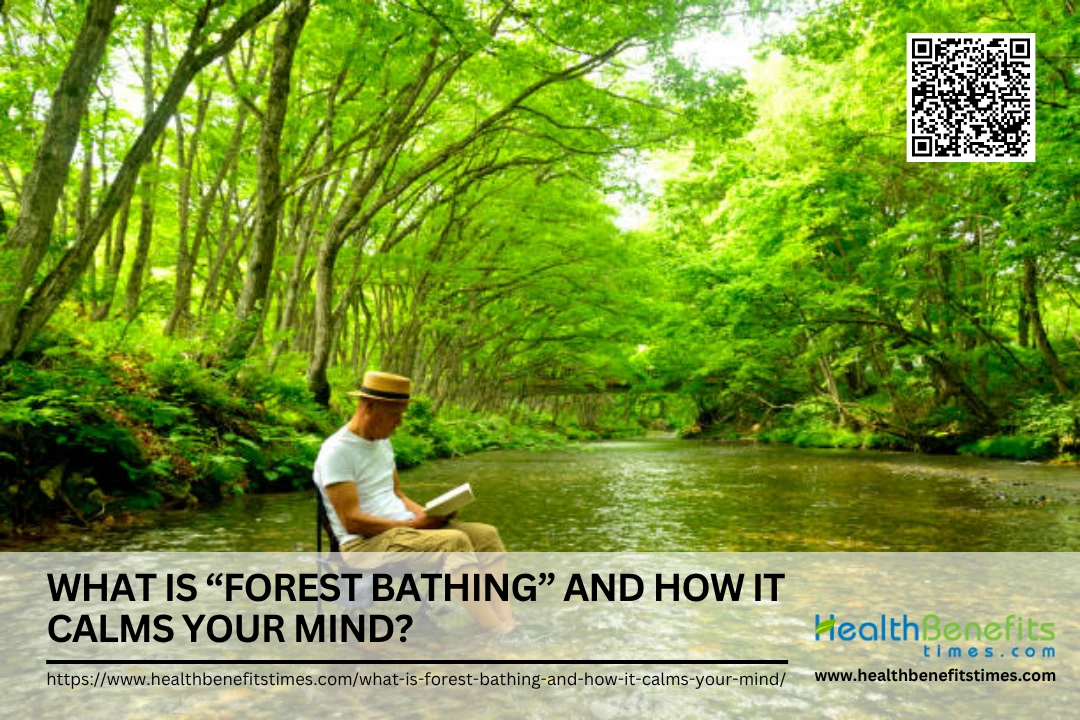
Forest bathing, or Shinrin-yoku, is a nature therapy practice involving mindful immersion in a forest environment to engage the senses and promote mental and physical well-being. Forest bathing has been defined as a “nature-based intervention” that focuses on slowing down, engaging the five senses, and being present within forested surroundings. As modern life becomes increasingly urban and digitally saturated, people are turning to nature-based practices to restore their mental health and emotional balance. Forest bathing, a therapeutic method originating in Japan, has gained international recognition for its calming effects on the mind and body. By simply walking slowly through a forest and consciously tuning into the sounds, smells, sights, and textures, participants can significantly reduce stress and improve psychological resilience. According to a recent study on forest therapy in student populations, even brief exposure to forest environments can enhance emotional regulation and lower symptoms of anxiety. Additional research demonstrates that forest exposure activates parasympathetic nervous system responses, reducing cortisol levels and promoting relaxation. Moreover, natural compounds released by trees—known as phytoncides—are shown to boost mood and enhance immune function, offering both mental and physiological benefits.
What Is Forest Bathing?
Forest bathing, or Shinrin-yoku, originated in Japan in the 1980s as a response to rising urban stress and lifestyle-related illnesses. The term was first coined by the Japanese Ministry of Agriculture, Forestry, and Fisheries to encourage people to reconnect with nature for their overall well-being. It literally translates to “taking in the forest atmosphere” through all five senses, and it soon became integrated into preventive health programs across Japan. Studies such as this pilot research on post-COVID mental health and broader urban greening research have helped validate its therapeutic relevance across different populations. (1) (2) The practice has since spread globally and is now incorporated into public health systems, wellness tourism, and clinical psychology.
At its core, forest bathing is not about hiking or exercising but about mindful immersion in nature. The key principles include moving slowly, staying present, activating the senses, and disconnecting from technology. Research highlights how visual and olfactory exposure to forests significantly reduces stress markers, and phytoncide-rich environments are linked to improved immune function. (3) Additional studies have shown forest bathing lowers cortisol, stabilizes heart rate, enhances mood regulation in students, and even supports rehabilitation in vulnerable populations. (4) (5) (6) (7) These effects collectively underscore why forest bathing is now viewed as a credible nature-based intervention for mental and physical health.
Comparison: Contrast with hiking, jogging, or other outdoor activities
Here is a comparative table that highlights the differences between forest bathing and other outdoor activities like hiking, jogging, and general nature walks:
| Aspect | Forest Bathing (Shinrin-yoku) | Hiking | Jogging | General Nature Walk |
| Primary Goal | Mindfulness, stress reduction, sensory awareness | Physical endurance, exploration | Cardiovascular fitness | Casual recreation, light exercise |
| Pace | Very slow, often includes pauses to sit or observe | Moderate to fast, with elevation changes | Fast, rhythmic pace | Slow to moderate |
| Focus | Inner calm, sensory engagement, present moment | Terrain navigation, physical challenge | Breathing, stamina, running form | Enjoyment, mild exercise |
| Technology Use | Discouraged (no phones, trackers, etc.) | Often used for navigation or tracking | Common (fitness apps, music, watches) | Sometimes used (photos, maps) |
| Mental Health Benefits | Scientifically linked to reduced cortisol, anxiety, and depression | Some stress relief but not mindfulness-focused | Endorphin boost, but less meditative | Can improve mood, less studied impact |
| Social Aspect | Usually done solo or silently in a group | Often done in groups or solo | Commonly solo or in pairs | Often with family/friends |
| Environmental Interaction | Deep engagement with sights, sounds, smells, textures | Primarily visual and physical | Mostly visual and physical | Visual and some auditory engagement |
| Guidance Needed? | May be guided by a trained forest therapist | Not required | Not required | Not required |
| Scientific Recognition | Supported as a nature-based intervention in stress and wellness studies | Some health and wellness studies | Backed by cardiovascular and fitness research | Limited scientific study as therapeutic tool |
The Science behind It: How It Calms the Mind
Forest bathing, or Shinrin-yoku, is a mindful practice of immersing yourself in nature. Backed by science, it reduces stress, lowers cortisol, and enhances mental clarity through sensory and physiological engagement.
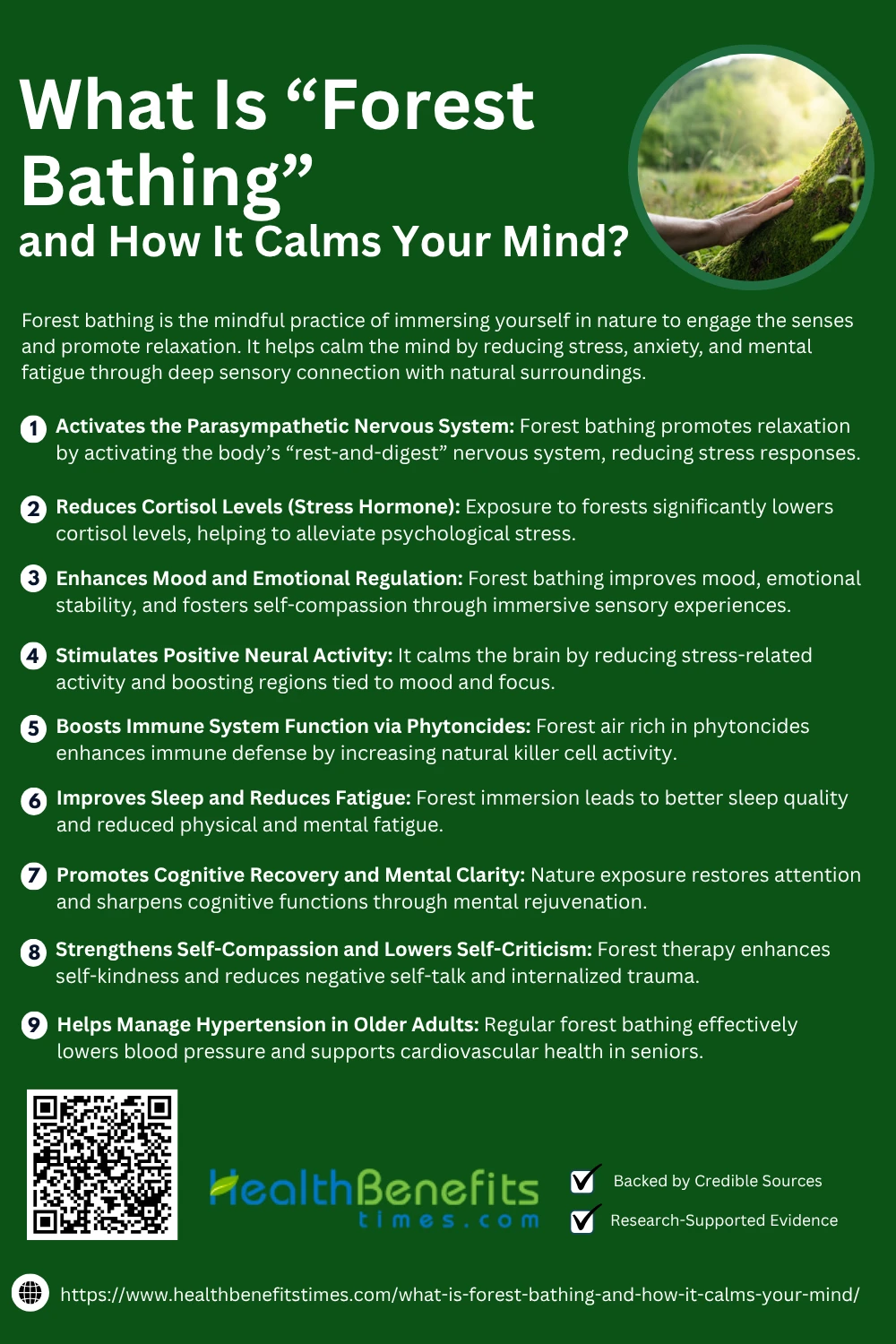 1. Activates the Parasympathetic Nervous System
Forest bathing significantly enhances parasympathetic nervous system (PNS) activity, which promotes a “rest-and-digest” physiological state essential for mental recovery. Visual and olfactory exposure to forest stimuli has been shown to lower heart rate variability and increase vagal tone, both markers of PNS activation. (3) Studies on guided forest therapy confirm its capacity to calm autonomic responses and balance nervous system activity. (8) (9) Additional evidence suggests forest stimuli reduce sympathetic arousal and boost emotional regulation through vagal engagement. (10) (11)
2. Reduces Cortisol Levels (Stress Hormone)
Forest bathing has been shown to significantly reduce cortisol, a primary biomarker of psychological stress. Engaging in natural environments leads to marked reductions in salivary cortisol levels, indicating physiological stress recovery. (12) Controlled trials confirm that forest walking reduces cortisol more than urban walking. (5) Biophilic exposure in natural settings elicits hormonal relaxation and promotes mood stability. (13) (14) A systematic review also supports forest bathing’s influence on stress biomarkers across age groups. (15)
3. Enhances Mood and Emotional Regulation
Forest bathing has consistently been shown to enhance mood and emotional stability through sensory immersion and mindfulness. Participants report decreased anxiety and increased positive affect following even brief exposure to forested environments. (9) The practice fosters emotional resilience in youth and students and aids recovery in long-COVID patients. (2) (1) Self-regulation and self-compassion also improve during guided forest walks. (10) Multisensory elements of forests have even been integrated into therapeutic interventions for mood disorders. (16)
4. Stimulates Positive Neural Activity
Forest bathing activates neural circuits that enhance emotional stability and attentional control. Research shows it decreases amygdala activity, which is involved in processing stress. (17) A one-hour walk in a natural setting significantly reduced neural activity in this stress-related region. Simultaneously, positive effects have been observed in the prefrontal cortex, a region tied to mood and executive function. (18) Participants exposed to forest environments showed increased frontal lobe activation. (16) Green exposure also correlates with higher frequency oscillations linked to calm, reflective states. (19) These findings support the neural benefits of forest immersion as both therapeutic and preventative.
5. Boosts Immune System Function via Phytoncides
Forest bathing strengthens the immune system by increasing the activity of natural killer (NK) cells, key to defending against infections and tumors. This is largely due to phytoncides—antimicrobial volatile organic compounds emitted by trees. A 2024 meta-analysis confirmed increased NK cell count after forest exposure. (20) Additional studies show that forest air enhances lymphocyte activity and modulates immune markers positively. (5) (21) Other research reveals forest therapy increases interleukin-6 regulation and improves mucosal immunity. (2) (14)
6. Improves Sleep and Reduces Fatigue
Forest bathing is linked to better sleep quality and reduced fatigue through its calming sensory and hormonal effects. Elderly participants showed improved restfulness and decreased sleep latency after forest sessions. (11) Other studies observed reduced occupational fatigue in various workgroups and lowered burnout-related exhaustion. (22) (23) Forest exposure is also effective for long-COVID fatigue recovery and enhancing relaxation and mood-regulated sleep. (10) (2)
7. Promotes Cognitive Recovery and Mental Clarity
Forest bathing restores attention and cognitive capacity through exposure to calming natural stimuli. It supports Attention Restoration Theory (ART) by reducing directed mental effort and promoting involuntary attention, leading to clearer thinking and focus. (24) Studies in students and elderly show enhanced mental clarity and reduced mental fatigue. (4) (1) Forest silence improves perceived time flow and relaxation, while green exposure boosts executive function and neural connectivity linked to memory. (10) (25)
8. Strengthens Self-Compassion and Lowers Self-Criticism
Forest bathing has a therapeutic impact on self-perception, enhancing self-compassion and reducing critical inner dialogue. A 2024 systematic review confirmed its efficacy in lowering self-judgment and increasing self-protection behaviors. (10) Research among university populations revealed improved self-kindness and emotional regulation. (1) Green immersion improves reflective processing, reduces shame, and supports recovery from internalized trauma. (22) (26) Forest sessions also correlate with increases in self-acceptance and emotional safety. (27)
9. Helps Manage Hypertension in Older Adults
Forest bathing has demonstrated significant benefits for managing hypertension, particularly among the elderly. Immersive forest experiences reduce both systolic and diastolic blood pressure through enhanced parasympathetic activity and reduced stress. (11) Studies show measurable improvements in hypertensive patients after repeated sessions and confirm positive cardiovascular effects from forest air and scenery. (28) (29) Further trials note forest therapy’s ability to stabilize blood pressure across age groups and improve outcomes in geriatric patients with chronic hypertension. (30) (4)
How to Try Forest Bathing
Trying forest bathing is simple and rewarding. It involves immersing yourself in nature, engaging your senses, and slowing down. No special gear—just mindful presence in a peaceful, natural environment.
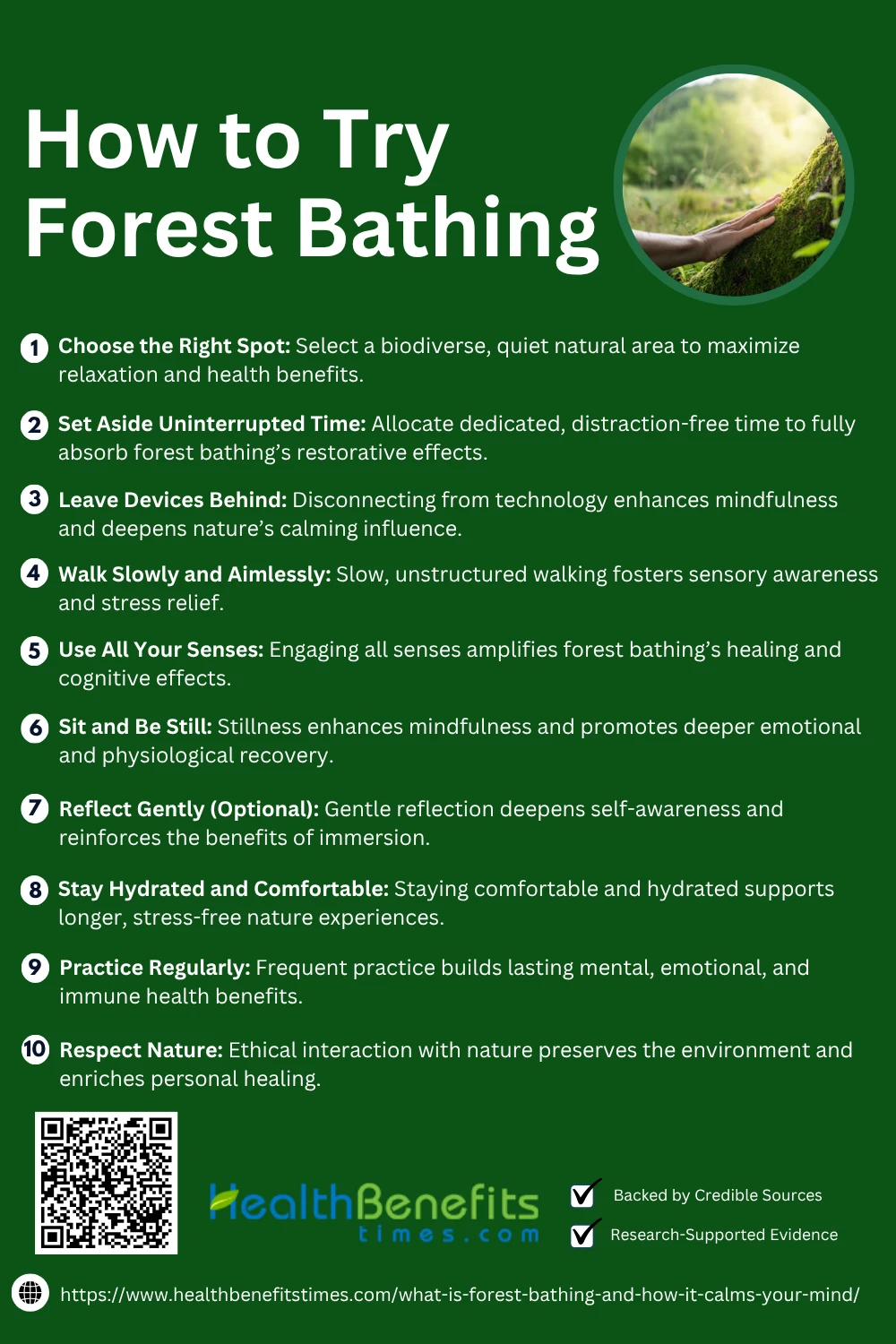 1. Choose the Right Spot
Choosing an appropriate natural setting enhances the physiological and psychological benefits of forest bathing. Research shows that biodiverse, tranquil forests promote greater reductions in cortisol and heart rate. (31) Dense canopies and natural sounds are vital for relaxation. Even urban green spaces offer measurable effects when carefully selected.
2. Set Aside Uninterrupted Time
Dedicating undisturbed time enhances forest bathing’s restorative effects. A study suggests that at least 120 minutes weekly in nature correlates with improved well-being. (32) Uninterrupted immersion allows deeper sensory engagement and parasympathetic activation. (33) Even short, focused exposure improves attention and mood.
3. Leave Devices Behind
Disconnecting from digital devices enhances mindfulness and strengthens the restorative impact of nature. Studies show that reduced screen exposure boosts mental clarity during forest immersion. (34) Digital detox also supports lower sympathetic nervous system activity. Attention restoration occurs more effectively without tech distractions.
4. Walk Slowly and Aimlessly
Slow, aimless walking amplifies sensory engagement and encourages present-moment awareness. Research confirms it leads to improved mood and reduced anxiety compared to structured exercise. Such unhurried movement promotes deeper physiological relaxation. (35) The open-ended wandering aligns with the meditative essence of forest bathing.
5. Use All Your Senses
Engaging all five senses during forest bathing enhances therapeutic effects. Scent exposure from trees improves immune function through phytoncides. (31) Auditory cues like birdsong reduce stress and anxiety. Visual immersion in greenery also boosts attention and cognitive recovery.
6. Sit and Be Still
Sitting in stillness during forest bathing deepens parasympathetic activation and emotional regulation. Research shows stationary immersion leads to lower cortisol levels than walking alone. (36) Quiet observation fosters mindfulness and enhanced sensory detail. Longer sitting intervals are linked to stronger physiological restoration.
7. Reflect Gently (Optional)
Gentle reflection after forest bathing enhances self-awareness and emotional balance. Journaling or sketching consolidates nature’s calming effects, aiding cognitive integration. (37) Reflective practices amplify perceived restoration and resilience. Even short mindfulness-based reflection improves psychological flexibility post-immersion.
8. Stay Hydrated and Comfortable
Staying hydrated and dressed appropriately enhances the experience and prevents physical stress. Dehydration can impair cognitive function during prolonged exposure. (38) Comfortable attire reduces thermal stress and supports physiological relaxation. Proper preparation increases engagement and time spent in nature, amplifying forest therapy benefits. (32)
9. Practice Regularly
Consistent forest bathing maximizes its long-term benefits. Weekly or bi-weekly exposure sustains reduced anxiety and elevated immune markers. (31) Routine visits deepen the physiological response, including lowered blood pressure and heart rate. (39) Regularity builds emotional resilience and cognitive clarity over time.
10. Respect Nature
Respecting natural environments ensures the sustainability of forest bathing practices. Leaving no trace protects biodiversity and ecological integrity. (40) Ethical engagement with nature enhances the sense of connection and responsibility. Responsible behavior reinforces the therapeutic loop between human well-being and environmental stewardship.
Forest Bathing vs Other Mindfulness Techniques
Here is a detailed comparison table showing how Forest Bathing (Shinrin-yoku) contrasts and overlaps with Meditation, Yoga, and Mindfulness-Based Stress Reduction (MBSR) across multiple dimensions:
| Feature / Aspect | Forest Bathing | Meditation | Yoga | Mindfulness-Based Stress Reduction (MBSR) |
| Primary Environment | Natural outdoor settings (forests, parks) | Indoor or quiet setting (can be anywhere) | Usually indoor (studio/home), some outdoor variants | Indoor (group/class-based) with some outdoor elements |
| Physical Activity Level | Light walking or stillness | Mostly sedentary (sitting or lying) | Moderate to intense movement | Mostly sedentary, some light movement (e.g., walking meditation) |
| Sensory Engagement | All five senses actively used | Primarily inward attention (breath, thoughts) | Kinesthetic focus (movement, breath) | Mental focus with some attention to body and breath |
| Guidance Needed | Optional; often self-guided or minimally guided | Can be guided or self-led | Often instructor-led (especially beginners) | Typically instructor-led (structured 8-week program) |
| Philosophical/Spiritual Origins | Japanese wellness tradition | Buddhist, Hindu, and secular adaptations | Rooted in Hinduism and Buddhism | Secular, based on mindfulness and cognitive therapy |
| Health Benefits (Proven) | Reduced cortisol, lowered BP, improved immunity | Stress reduction, attention improvement | Flexibility, strength, stress reduction | Reduced anxiety, chronic pain relief |
| Tools/Equipment Required | None | Optional (cushion, timer) | Mat, props (optional) | Course materials, handouts, cushion optional |
| Duration/Time Commitment | Flexible (20–120+ minutes recommended weekly) | 10–60 minutes/day or more | 30–90 minutes/session | 8-week program, weekly 2.5 hr classes + home practice |
| Social or Solo | Can be solo or group | Usually solo | Group or solo | Group setting with home solo practice |
| Scientific Research Support | Growing body of evidence, particularly from Japan | Extensive studies across neuroscience and psychology | Strong body of physiological and mental health research | Widely studied in clinical and academic settings |
Conclusion
Forest bathing is more than just a walk in the woods—it’s a mindful practice that reconnects you with nature and brings profound mental and emotional benefits. By immersing yourself in a forest environment, you engage your senses, quiet your thoughts, and allow your mind to unwind from the constant buzz of modern life. Supported by scientific research, forest bathing has been shown to reduce stress, improve mood, and enhance overall well-being. Whether in a remote forest or a city park, taking time to simply be in nature can offer healing, clarity, and a refreshing mental reset for today’s fast-paced world.