

- The 3-3-3 Anxiety Trick is a grounding technique that involves identifying 3 things you see, hear, and physically move to calm anxiety.
- This method helps interrupt racing thoughts by shifting focus to the present moment.
- Backed by cognitive-behavioral principles, it engages the senses and activates the body’s relaxation response.

Anxiety is defined as a psychological and physiological state characterized by feelings of tension, worried thoughts, and physical changes such as increased blood pressure and restlessness, often triggered by perceived threats or stressors. Among the growing arsenal of techniques aimed at managing anxiety, the 3-3-3 Trick stands out as a remarkably simple and accessible grounding method. It involves observing three things you see, naming three sounds you hear, and moving three parts of your body to help reset your attention and calm your nervous system. This trick is rooted in principles from cognitive behavioral therapy (CBT) and mindfulness, which emphasize sensory redirection and attentional control during emotional distress. Recent psychological literature suggests that such techniques can interrupt the feedback loop of anxious rumination by anchoring awareness in the present moment, reducing activation in brain regions like the amygdala.
What Is the 3-3-3 Anxiety Trick?
The 3-3-3 anxiety trick is a simple, fast-acting mental exercise that helps individuals ground themselves during moments of heightened anxiety. It involves three steps: first, look around and name three things you can see; second, listen and identify three distinct sounds you can hear; and third, move three parts of your body, such as your fingers, shoulders, or feet. This technique redirects focus away from anxious thoughts and back into the present moment, using sensory input and bodily awareness to regain control. According to Jasubhai (2023), such sensory grounding methods are particularly effective in interrupting spirals of anxious thinking. (1)
As a grounding technique, the 3-3-3 rule is rooted in cognitive behavioral therapy (CBT), which emphasizes real-time coping strategies for emotional regulation. It aligns with evidence-based interventions shown to reduce symptoms of anxiety and increase attentional control through structured, sensory-based mindfulness exercises. (2) (2)
How Does It Work? The Science behind Grounding Techniques
Grounding techniques work by redirecting attention from distressing internal experiences to external sensory input, thereby activating neural circuits involved in emotional regulation. This approach is central to cognitive behavioral therapy and mindfulness-based strategies. Neuroimaging research shows grounding may reduce amygdala reactivity and enhance prefrontal regulation (O’Dea, 2019). (3) Studies also support its use in mind-body therapies, computational CBT, and trauma-based interventions. (4) (5) (6)
Psychological Benefits of the 3-3-3 Trick
The 3-3-3 trick offers more than momentary relief—it provides lasting psychological benefits. By anchoring your focus, it helps reduce anxiety, enhance awareness, and regain emotional control swiftly.
 1. Immediate Anxiety Relief
The 3-3-3 trick provides immediate relief during anxious episodes by shifting focus to external stimuli, calming the nervous system. This technique activates the parasympathetic response, reducing cortisol and physiological arousal. (7) CBT practices emphasize grounding as a rapid emotional regulation tool. (8) Mindfulness-based breathing stabilizes heart rate variability. (9) Sensory focus interrupts panic escalation. (10) Grounding also bypasses cognitive overload. (11)
2. Enhanced Present-Moment Awareness
Present-moment awareness is crucial in managing anxiety, and the 3-3-3 rule fosters mindfulness by redirecting attention to sensory input. This grounding aligns with metacognitive practices that reduce anxious anticipation. (7) Cognitive behavioral models integrate present-focus as a core intervention. (8) Enhanced awareness diminishes catastrophic thinking. (10) Mindfulness enhances attention stability. (11) Grounding practices also buffer against ruminative loops. (9)
3. Cognitive Disruption of Anxious Thought Loops
The 3-3-3 technique interrupts anxious thought spirals by shifting mental focus from internal rumination to external stimuli. This method breaks the repetitive loop of negative thinking—central to anxiety disorders. (12) Mindfulness practices in CBT reduce cognitive reactivity and rumination. (13) Verbal thought disruption enhances self-awareness. (14) Grounding helps regulate prefrontal engagement during stress. (15) Cognitive defusion techniques support disengaging from maladaptive loops. (16)
4. Strengthening Psychological Flexibility
By repeatedly redirecting attention, the 3-3-3 rule builds psychological flexibility—our ability to adaptively respond to stress and change. It trains the brain to shift focus away from distressing thoughts and accept present-moment experience. CBT-based defusion methods promote emotional adaptability. Grounding reduces resistance to discomfort, increasing acceptance capacity. (17) Repeated practice rewires attention pathways. It also enhances recovery from intrusive thoughts.
5. Accessible Self-Help for Adolescents and Adults
The 3-3-3 grounding technique is highly accessible, offering immediate anxiety relief without requiring clinical supervision. It’s widely adopted in educational and home settings for teens and adults alike. (15) It complements self-help CBT practices through simplicity and low entry barriers. (17) Its adaptability supports behavioral goals in youth therapy. Mindfulness integration reinforces its value in non-clinical spaces. It also aligns with self-guided CBT programs.
6. Reduces overthinking and rumination
The 3-3-3 technique effectively interrupts repetitive thought cycles by anchoring attention in the present moment. This shift disrupts mental rumination, a core contributor to anxiety and depression. (12) Grounding techniques reduce cognitive preoccupation. Mindfulness interventions used in CBT target repetitive worry. ACT-based practices promote awareness over rumination. (16) Simple grounding resets attention from internal loops.
7. Improves control over emotional reactions
The 3-3-3 trick, a simple grounding technique involving identifying three things you see, hear, and feel, is increasingly recognized as a cognitive strategy to manage emotional overwhelm and stress. This method promotes emotional regulation by redirecting attention and engaging sensory processing, enhancing self-awareness and reducing reactivity. Studies on emotion regulation in sports contexts affirm that attentional redirection boosts control over anxiety and arousal. (18) Neurodevelopmental findings show such techniques activate prefrontal regulation mechanisms, crucial in children and adolescents. (19) Reappraisal-based strategies, like the 3-3-3 trick, were shown to reduce loss aversion in high-stress contexts, mimicking professional decision-making processes. (20) Finally, mindfulness training combined with structured play improved children’s emotional control and executive function, further validating attention-based grounding interventions. (21)
When and How to Use It Effectively
Knowing when and how to apply the 3-3-3 anxiety trick can make it more effective. It’s a practical tool to calm your mind during stress, panic, or overwhelming thoughts.
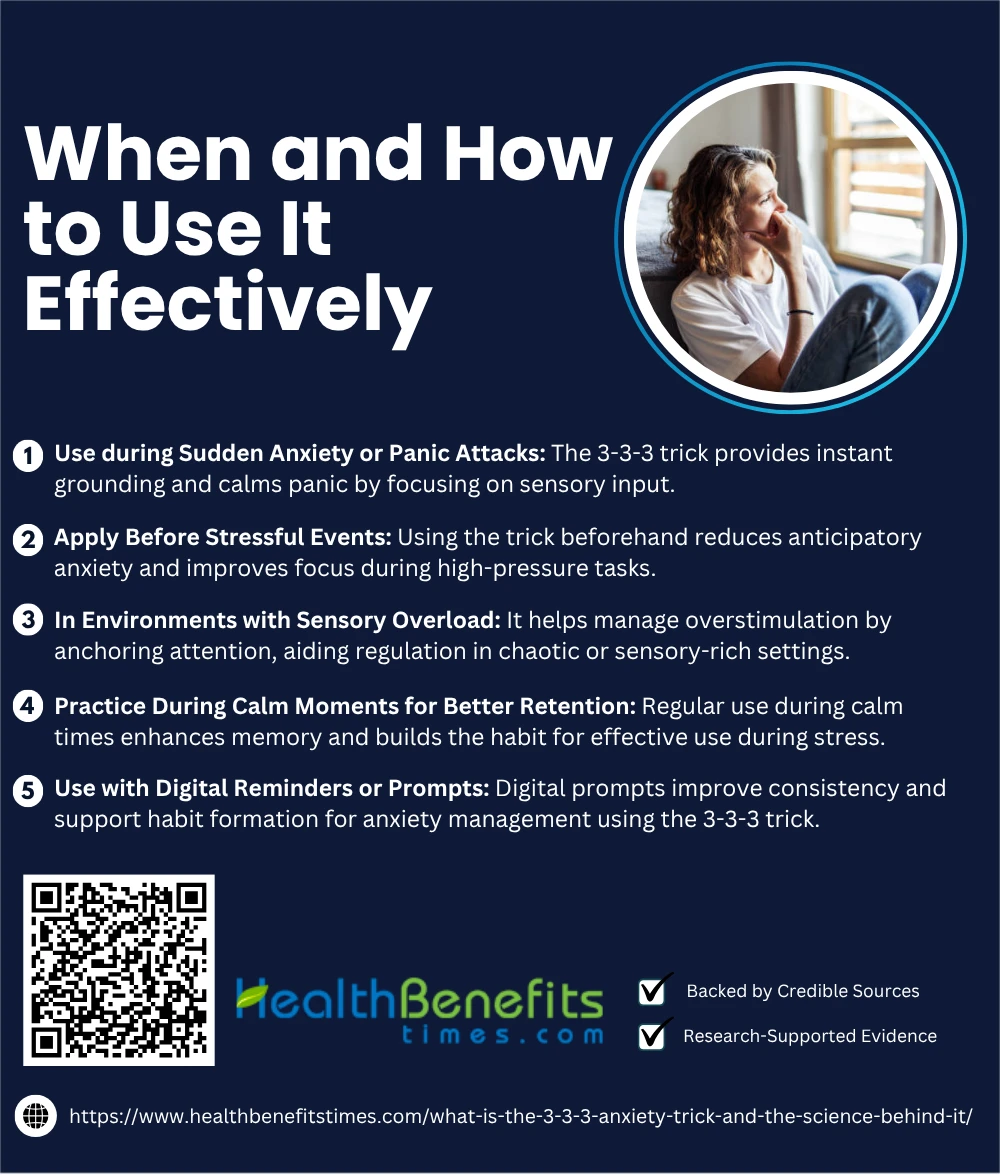 1. Use during Sudden Anxiety or Panic Attacks
The 3-3-3 anxiety trick—naming three things you see, hear, and move—provides immediate sensory grounding during acute panic. Its simplicity aligns with mindfulness practices shown to ease panic disorders. (22) Cognitive-behavioral strategies confirm its calming effect. (9) Grounding reduces perceived threat levels. It activates cognitive control in crises. (23)
2. Apply Before Stressful Events (e.g., Exams or Presentations)
Used proactively, the 3-3-3 rule calms anticipatory anxiety before stressful tasks like exams or speeches. (1) It enhances focus by anchoring attention in the present. (24) Self-regulation via grounding techniques improves emotional readiness. Pre-task grounding also supports test performance and mood stability.
3. In Environments with Sensory Overload
The 3-3-3 anxiety trick helps mitigate stress in sensory-rich settings by anchoring attention to the present moment. It supports cognitive calm amid overstimulation, aligning with sensory-friendly learning approaches. (25) Grounding techniques aid individuals with sensory sensitivities, improve regulation, and enhance environmental adaptability. (26) (27) (28)
4. Practice During Calm Moments for Better Retention
Practicing the 3-3-3 trick during calm periods enhances retention by reinforcing present-moment awareness and reducing latent cognitive tension. This parallels findings in mindfulness-enhanced learning, anxiety-moderated skill retention, and optimized attentional states, yielding measurable memory improvements. (29)
5. Use with Digital Reminders or Prompts
Integrating digital prompts with the 3-3-3 anxiety trick improves consistency and real-time stress management. App-based interventions using reminders show measurable anxiety reduction. (30) Personalized nudges enhance self-awareness and habit formation. (31) E-coaching systems amplify mindfulness via reminders, while persuasive design in apps supports lasting mental wellness habits. (32) (33)
Common Misconceptions and Limitations
While the 3-3-3 anxiety trick is helpful, it’s not a cure-all. Understanding its limitations and common misconceptions ensures realistic expectations and encourages seeking professional help when necessary.
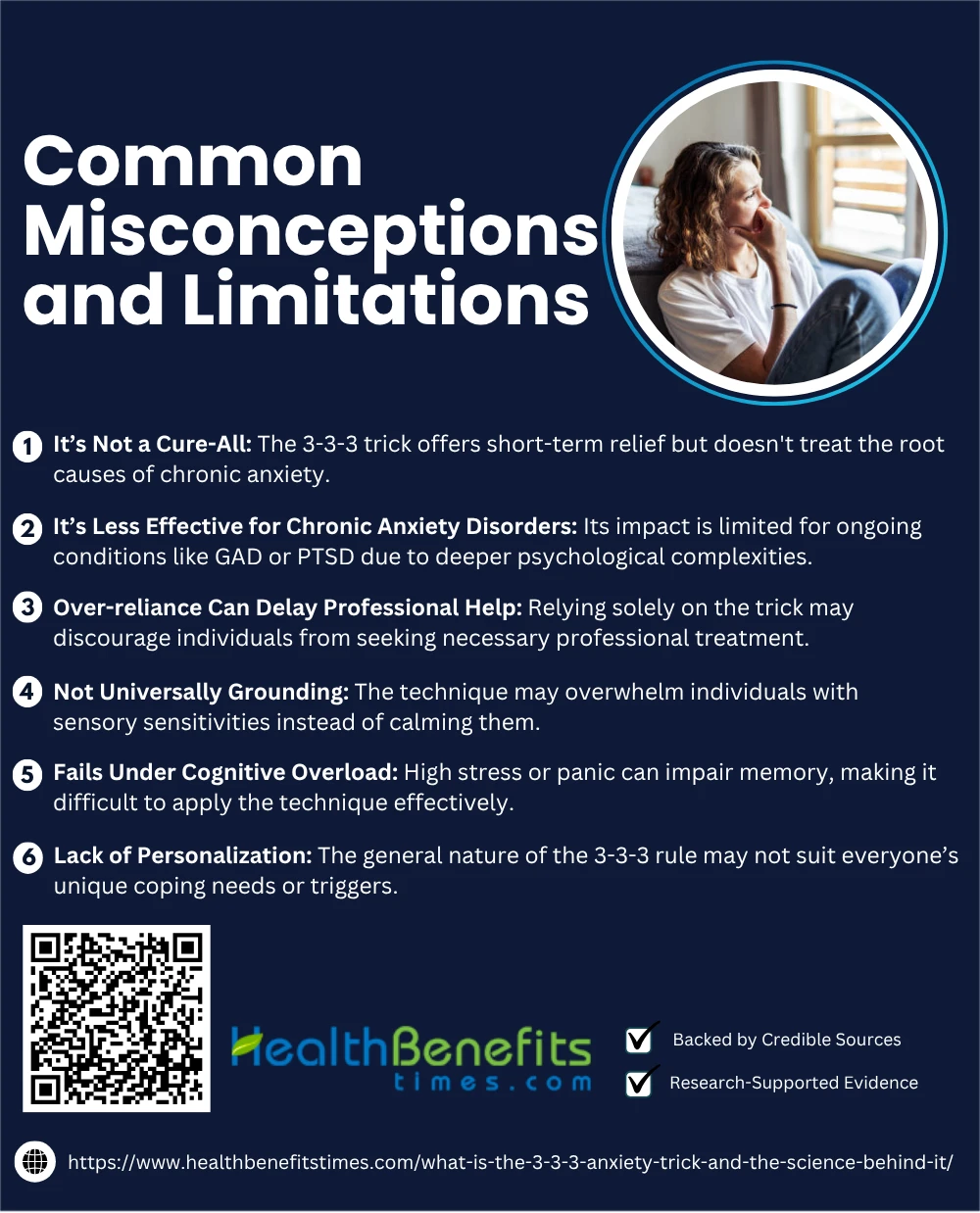 1. It’s Not a Cure-All
The 3-3-3 technique is often mistakenly seen as a standalone solution to anxiety, but it merely offers short-term relief rather than treating the underlying cause. It is a grounding tool—like mindfulness—that can momentarily distract from distressing thoughts but does not alter maladaptive cognitive patterns or emotional responses that fuel chronic anxiety. In clinical settings, experts caution that such tricks should be seen as entry points into more comprehensive therapy, not a replacement for evidence-based interventions like CBT or medication. (34)
2. It’s Less Effective for Chronic Anxiety Disorders
While the 3-3-3 rule is effective during acute moments of situational stress, it has limited efficacy in chronic conditions like Generalized Anxiety Disorder (GAD), PTSD, or panic disorder. Individuals suffering from persistent anxiety may not experience relief through this tool alone due to deeper neurochemical and behavioral patterns. A 1998 study on anxiety reduction techniques emphasized that while such tricks offer surface-level calm, they often fall short for individuals who experience recurring intrusive thoughts or trauma responses. (35)
3. Over-reliance Can Delay Professional Help
One of the most concerning limitations is the risk of over-relying on the 3-3-3 technique and delaying access to professional care. Because it appears deceptively simple and effective at times, users might falsely believe that they are “managing” their condition, avoiding counseling or therapy. Research in medical anthropology illustrates how behavioral “tricks” can foster therapeutic misconceptions, giving users the illusion of control without engaging in deeper, evidence-based work to manage anxiety sustainably. (36)
4. Not Universally Grounding
Contrary to popular belief, grounding through the senses may not be helpful for everyone. Individuals with sensory processing issues or heightened sensory sensitivity (e.g., people with autism, ADHD, or trauma responses) may find the trick overwhelming rather than calming. Instead of anchoring the mind, focusing on the senses could amplify discomfort or trigger negative associations. Research on misaligned interventions in mental health supports this caution, particularly when techniques do not consider sensory vulnerabilities. (37)
5. Fails Under Cognitive Overload
During intense anxiety or panic attacks, the brain may enter a fight-or-flight state, impairing memory and executive functioning. In such moments, the user may forget the 3-3-3 steps or be unable to follow through cognitively. Studies on test anxiety and cognitive overload have shown that under heightened arousal, even simple routines may be abandoned. This limitation undercuts the idea that the trick is always “easy” or “available” during emergencies. (38)
6. Lack of Personalization
The 3-3-3 rule is generalized and does not account for individual coping styles or specific triggers. For example, some may benefit more from internal cognitive strategies (like thought reframing), while others may require physical movement or structured breathing. Personalized interventions are increasingly recognized as more effective for long-term anxiety regulation. A recent study on formative psychological assessments highlights that a one-size-fits-all method may ignore critical variations in emotional processing and resilience levels. (39)
Complementary Practices to Boost Its Effectiveness
To enhance the effectiveness of the 3-3-3 anxiety trick, it helps to combine it with complementary practices like deep breathing, mindfulness, or physical activity for more comprehensive anxiety relief.
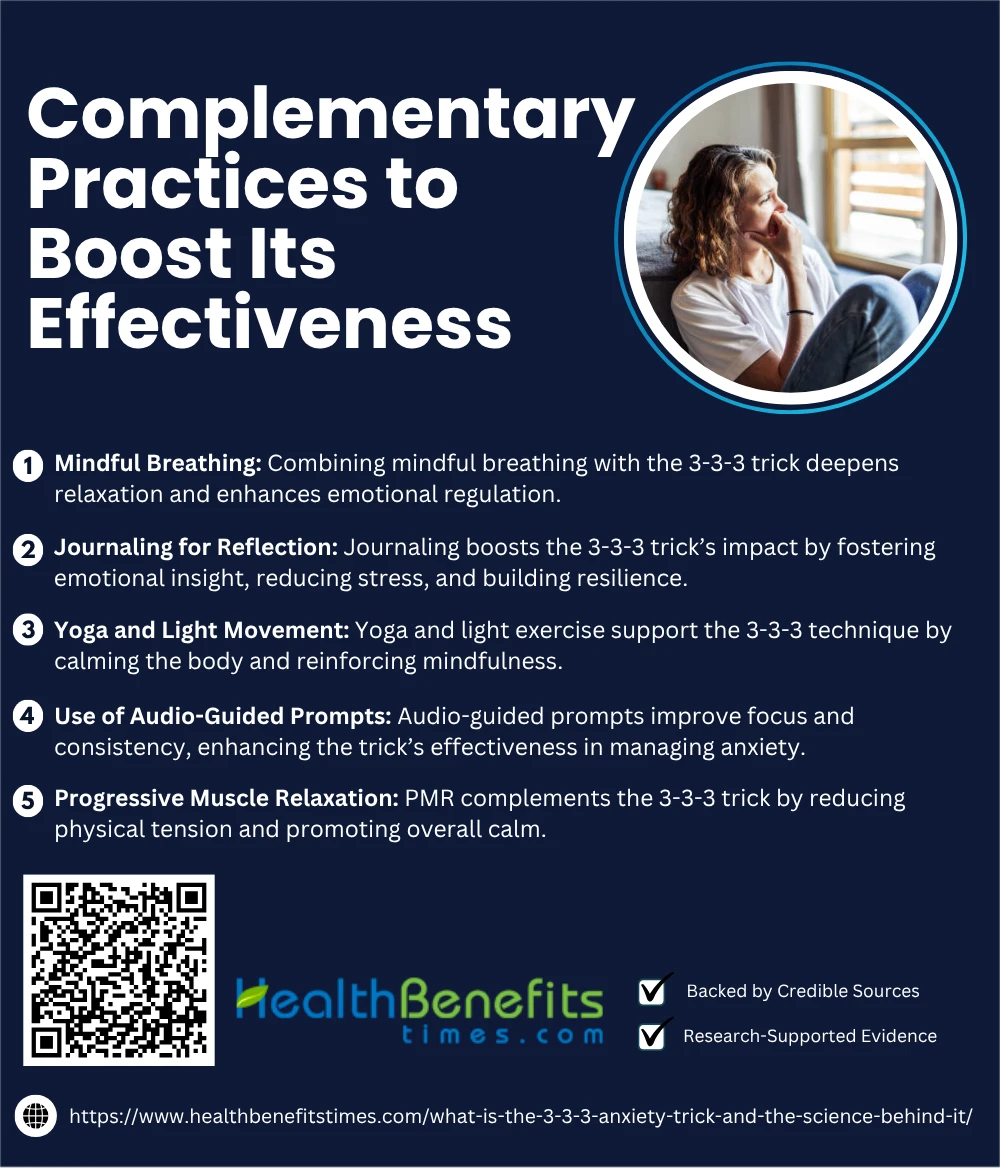 1. Mindful Breathing
Mindful breathing amplifies the effectiveness of the 3-3-3 anxiety trick by calming the nervous system and anchoring awareness. Deep, rhythmic breathing reduces physiological arousal, supporting grounding techniques like 3-3-3 in managing acute stress. (40) When combined, these practices improve focus, boost mindfulness, and promote emotional regulation across populations. (41) (42) (43)
2. Journaling for Reflection
Journaling complements the 3-3-3 technique by promoting cognitive restructuring and emotional release. Expressive writing fosters insight, reduces anxiety, and improves mental resilience. (44) Gratitude journaling boosts emotional well-being and reduces stress in students. (45) Daily journaling enhances self-compassion and mindful awareness, while structured journaling shows significant anxiety reduction in classroom interventions. (46) (47)
3. Yoga and Light Movement
Integrating yoga and light physical movement can enhance the calming effect of the 3-3-3 anxiety technique by promoting parasympathetic activation and mindfulness. Studies show that yoga reduces stress and improves emotional regulation. Light aerobic activity elevates mood and reduces anxiety sensitivity. Additionally, yoga’s breath control complements grounding techniques, and regular movement supports behavioral activation models of anxiety relief. (48) (49)
4. Use of Audio-Guided Prompts
Audio-guided prompts effectively enhance the 3-3-3 anxiety method by supporting attention redirection and emotional regulation. Research highlights that guided mindfulness sessions help reduce anxiety levels significantly. (50) Such prompts increase adherence to therapeutic techniques. (51) Incorporating audio interventions in behavioral therapy yields sustained stress reduction, while app-based guided sessions improve user engagement and symptom relief. (52) (53)
5. Progressive muscle relaxation
Progressive muscle relaxation (PMR) enhances the calming benefits of the 3-3-3 anxiety trick by lowering muscular tension and sympathetic nervous system activation. PMR has demonstrated effectiveness in reducing stress-related symptoms and enhancing self-regulation. Combined with grounding, PMR improves focus and calmness during distress. PMR also aids in sleep regulation and anxiety sensitivity, and is widely endorsed in anxiety therapy programs.
Conclusion
The 3-3-3 anxiety trick is a simple yet powerful grounding technique that can help manage anxiety in real-time by reconnecting you with your surroundings. Rooted in mindfulness and supported by cognitive-behavioral principles, it works by interrupting anxious thought patterns and engaging your senses. While it offers quick relief, it’s not a substitute for long-term mental health care or therapy. Understanding how and when to use it, along with integrating complementary practices, can maximize its benefits. Whether you’re facing a moment of panic or daily stress, the 3-3-3 trick is a practical tool to regain control and calm your mind.