

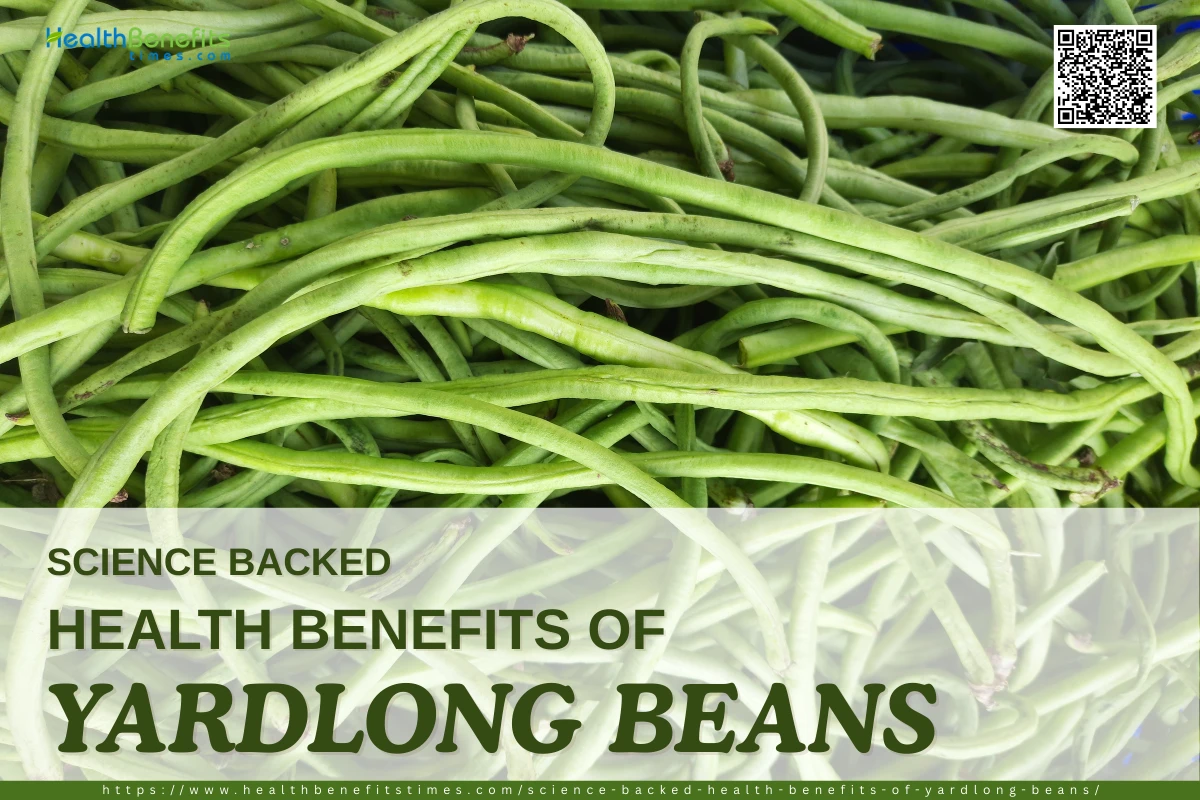
Yardlong beans (Vigna unguiculata subsp. sesquipedalis), also known as long beans, snake beans, or Chinese long beans, are a vigorous climbing legume widely cultivated across South and Southeast Asia, China, and parts of Africa. Despite their name, the slender, flexible pods typically grow to about 30–45 cm (12–18 inches), though some varieties can reach nearly a meter in length. They thrive in warm, humid climates and grow rapidly, often ready for harvest within 60–80 days of planting. The beans have a slightly more dense and chewy texture compared to common green beans, with a flavor that is mildly sweet and subtly nutty. They are a staple in stir-fries, curries, soups, and salads, and pair well with garlic, chili, and fermented sauces. Nutritionally, yardlong beans are a good source of protein, dietary fiber, vitamin C, and folate, making them a valued crop for both sustenance and culinary versatility.
Nutritional Profile of Yardlong beans (Vigna unguiculata subsp. sesquipedalis)
Based on the provided document, here are the top 16 nutrients found in Yardlong beans, mature seeds, cooked, boiled, without salt.
Serving Size: 100g
| Nutrients | Amount | DV% |
| Folate | 146 µg | 37% |
| Copper | 0.225 mg | 25% |
| Magnesium | 98 mg | 23% |
| Manganese | 0.487 mg | 21% |
| Thiamin (B1) | 0.212 mg | 18% |
| Protein | 8.29 g | 17% |
| Iron | 2.64 mg | 15% |
| Phosphorus | 181 mg | 14% |
| Fiber | 3.8 g | 14% |
| Zinc | 1.08 mg | 10% |
| Potassium | 315 mg | 7% |
| Vitamin B-6 | 0.095 mg | 6% |
| Selenium | 2.8 µg | 5% |
| Riboflavin (B2) | 0.064 mg | 5% |
| Niacin (B3) | 0.551 mg | 3% |
| Calcium | 42 mg | 3% |
Percent Daily Values (%DV) are based on a 2,000-calorie diet. Individual nutritional needs may vary depending on age, gender, activity level, and overall health.
Source: usda.gov
Science Backed Health Benefits of Yardlong beans (Vigna unguiculata subsp. sesquipedalis)
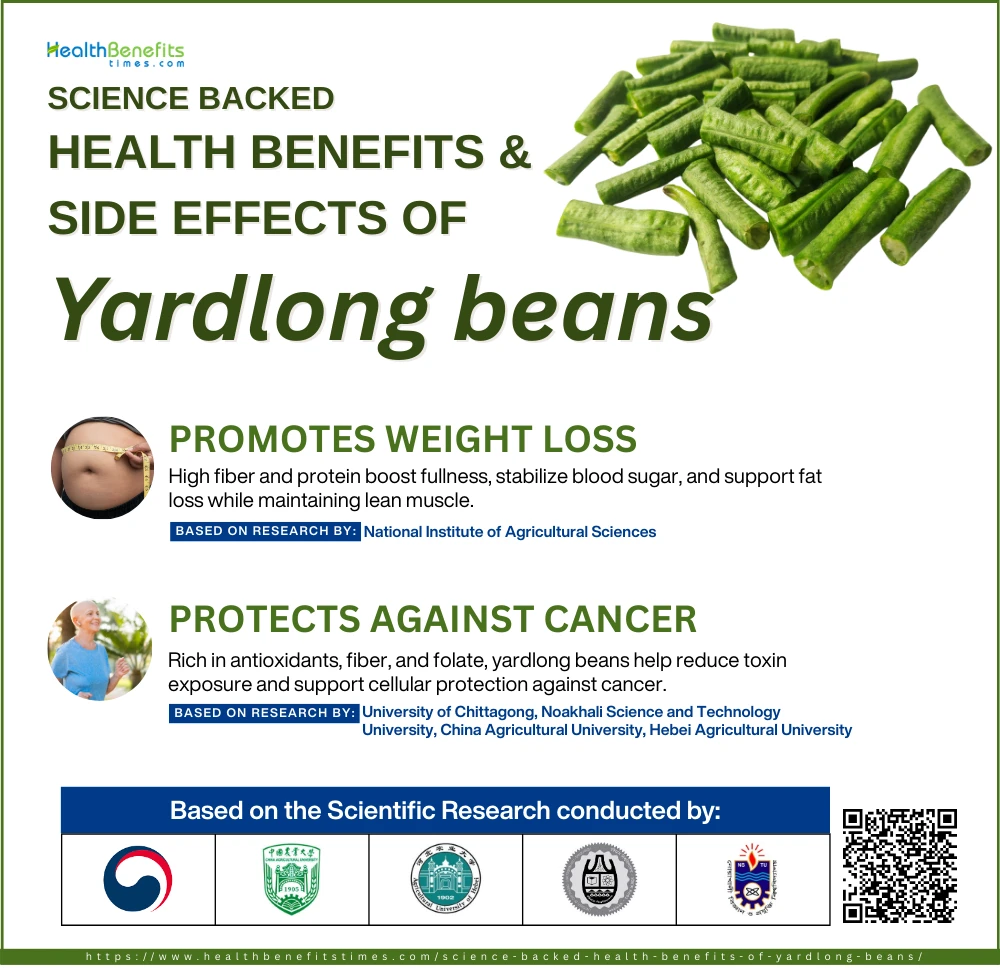
#1. Promotes Weight Loss
Effective body weight management relies fundamentally on metabolic homeostasis and the regulation of caloric absorption. High dietary fiber plays a pivotal role in this physiological process; it aids digestion and stabilizes blood glucose levels, thereby preventing the rapid insulin spikes that often trigger adipose tissue accumulation. When ingested, the significant concentration of plant-based protein facilitates satiety and muscle preservation, while the inherently low total fat content ensures a minimal caloric load during consumption. Consequently, these specific nutritional properties allow such legumes to function as a therapeutic dietary component for individuals aiming to prevent obesity or manage cholesterol levels. The synergistic effect of these nutrients supports a sustainable caloric deficit without compromising essential nourishment. 1
What Research Says:
- According to a comprehensive study involving 35 accessions by the National Agro-biodiversity Center, these legumes exhibit a dietary fiber content ranging significantly from 16.71% to 23.49%, establishing their efficacy in metabolic health interventions. 1
- Biochemical analysis confirms a notably low total fat content, ranging between 0.59% and 2.00%, which provides a statistically significant basis for their inclusion in weight management protocols. 1
- Research identifies specific cultivars, such as Tanjingeun, which demonstrate superior crude fiber profiles, while high protein levels (reaching up to 28.11%) in varieties like THA-JSH-2008-81021 offer the essential amino acids necessary for maintaining lean body mass during weight reduction. 1
2. Protects Against Cancer
Malignancy arises when cellular mechanisms fail, often exacerbated by oxidative stress and prolonged exposure to toxins, yet specific dietary interventions can create a powerful biological defense. Potent antioxidants, particularly Vitamin C, found abundantly in certain vegetables, strengthen the body’s immune defenses and maintain blood vessel integrity, offering protection against neoplastic changes. Furthermore, dietary fiber acts as a critical mechanical and biochemical shield for the gastrointestinal tract; it protects the colon mucosa by binding to carcinogenic compounds and accelerating their expulsion from the body, thereby reducing the time healthy tissue is exposed to ingested toxins. Additionally, adequate intake of folate is essential for DNA synthesis, with deficiencies inversely correlated to cancer risk (201). 2 Consequently, the nutritional profile of these legumes helps mitigate the risks of developing colon, prostate, and stomach cancers when integrated into a balanced diet. 2 3
What Research Says:
- According to investigations conducted at the Bangladesh Agricultural Research Institute (BARI), the high nutritional value of specific cultivars offers distinct anti-cancer effects through significant concentrations of bioactive substances (202). 3
- Research data indicates that the abundant Vitamin C (ranging from 18.20 to 20.22 mg) and crude fiber content (1.23 to 1.85 g/100 g) in varieties like VS-32 and BARI Barboti-1 are key factors in preventing non-communicable diseases, including specific cancers (201). 2
- Scientific literature cited within the study highlights that colon cancer risk is inversely correlated with folic acid consumption, noting that these legumes provide significant quantities of this essential nutrient (58.75–67.31 µg) (201). 2
- Based on proximate composition analyses, researchers recommend these cultivars as a nutritional source to assist in treating and preventing coronary heart disease, intestinal disorders, and malignancies such as prostate and stomach cancer (202). 3
Health Risks and Precautions of Yardlong beans (Vigna unguiculata subsp. sesquipedalis)
No Side Effects Found
Comments
This article is based on Scientific Research Conducted by following Research Organization:
- Multivariate Analysis of Biochemical Properties Reveals Diversity among Yardlong Beans of Different Origins–National Institute of Agricultural Sciences, South Korea
- Evaluation of the Quality of Yard-Long Bean (Vigna unguiculata sub sp. sesquipedalis L.) Cultivars to Meet the Nutritional Security of Increasing Population–China Agricultural University, China, Hebei Agricultural University, China
- Nutritional Properties of Yard Long Bean Cultivars in Bangladesh–University of Chittagong, Bangladesh, Noakhali Science and Technology University, Bangladesh