

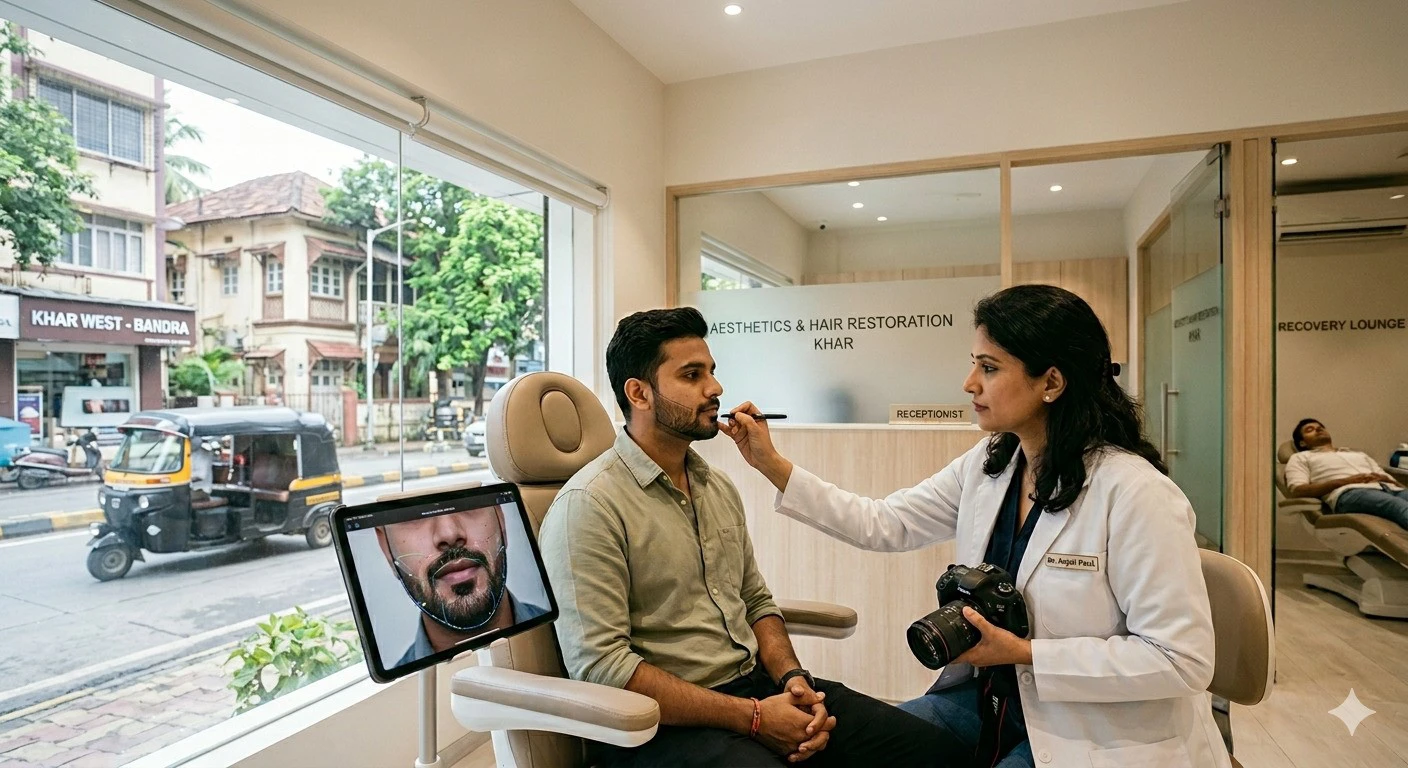
Many men consider a beard transplant after years of patchy growth, uneven density, or simply the absence of facial hair that never came in fully. The decision is rarely impulsive. Most people spend time wondering whether the procedure is right for them, what the results will actually look like, and how long recovery takes before they can return to normal life. If you are based in or around Khar, Mumbai, and are exploring this option, here is a straightforward guide to help you understand how beard transplants work and what to realistically expect.
What Causes Uneven or Absent Beard Growth
Beard growth is controlled by a combination of genetics, hormonal activity, and hair follicle density in the facial region. In many men, follicles in certain areas of the face are either absent or produce only fine, sparse hairs. This is not a medical problem in most cases — it is simply a variation in how facial hair develops.
Common reasons men seek beard transplants include:
- Patchy growth in the cheeks, jawline, or chin
- Scarring from acne, burns, or previous surgery that disrupted follicle activity
- Congenital absence of hair in specific facial zones
- Desire to create or define a beard shape that is not achievable through natural growth
Understanding the underlying reason for sparse growth matters because it influences how the procedure is planned and what kind of density is realistic to achieve.
How a Beard Transplant Actually Works
A beard transplant uses the same foundational technique as scalp hair restoration — follicular unit extraction, or FUE. Individual hair follicles are harvested from a donor area, typically the back of the scalp, and implanted into the facial skin at a precise angle and depth.
The critical difference between scalp transplants and beard transplants lies in the angle of implantation. Facial hair grows almost parallel to the skin surface, at very shallow angles. This makes beard transplants technically demanding. The surgeon must replicate the natural direction of growth across different facial zones — the mustache, chin, cheeks, and sideburns each have distinct growth patterns.
The procedure is typically performed under local anaesthesia and takes several hours depending on the number of grafts required. Most beard transplants involve anywhere from 500 to 2500 grafts, depending on coverage goals and the area being treated.
Assessing Suitability Before Proceeding
Not every person is an equally suitable candidate for a beard transplant. A proper evaluation looks at several factors before a plan is made.
- Donor hair quality and availability on the scalp
- Skin condition in the facial area, particularly if scarring is present
- Realistic expectations about density — transplanted hair can improve coverage but may not replicate a naturally full beard in all cases
- Overall health and any medications that may affect healing or hair growth
Men with very limited scalp donor hair may need a different approach. In some cases, body hair can be used, though the texture and behaviour of body hair differs from scalp hair, and results may vary. An honest pre-procedure assessment helps avoid mismatched expectations.
Beard Design and the Role of Facial Aesthetics
One aspect that is often underestimated is how much thought goes into design before a single graft is placed. A well-executed beard transplant is not just about filling in patches — it involves designing a shape that complements the individual’s facial structure.
Clinics like Kibo Clinics focus on evaluating facial proportions, natural hairline patterns, and the patient’s desired outcome before creating a treatment plan. The goal is to produce a result that looks like it belongs — not one that appears artificially uniform or overly dense in certain areas.
Design decisions include where the beard border starts, how the cheek line is shaped, and how density is distributed across zones to create a natural gradient.
Recovery and What to Expect After the Procedure
Recovery from a beard transplant is generally manageable, though it requires some patience. The first few days involve mild swelling and small crusts around each implanted follicle. These typically resolve within a week.
The transplanted hairs will shed within two to four weeks after the procedure. This is a normal and expected part of the hair growth cycle — the follicles are still intact beneath the skin. New hair growth usually begins around three to four months, with more visible density appearing between six and nine months. Full results are typically assessed at the twelve-month mark.
During recovery, direct sun exposure, shaving over the transplanted area, and vigorous physical activity should be avoided for a period advised by the treating doctor.
Final Thoughts
A beard transplant can be a well-suited option for men dealing with patchy growth, scarring, or absent facial hair — provided expectations are grounded and the procedure is planned carefully. The outcome depends significantly on follicle quality, design precision, and post-procedure care rather than the procedure alone. Taking the time to understand the process, ask the right questions during a consultation, and set realistic timelines leads to a far more satisfying experience than approaching it as a quick fix.