

 What Is Methamphetamine Addiction?
Walking away from methamphetamine is one of the hardest things you’ll ever face but it’s absolutely possible. Methamphetamine, commonly called meth, crystal, or ice, is a powerful synthetic stimulant that hijacks your brain’s reward system by flooding it with dopamine a chemical messenger tied to pleasure, motivation, and reinforcement. Over time, your brain becomes dependent on the drug to feel even basic levels of happiness, making quitting feel nearly unbearable without support.
You might have started using meth recreationally, or perhaps it crept into your life through stress, peer pressure, or self-medication. Whatever the path, repeated use can quickly lead to methamphetamine use disorder a chronic, relapsing condition recognized in the Diagnostic and Statistical Manual of Mental Disorders (DSM-5). The hallmark of this disorder is compulsive drug-seeking behavior despite devastating consequences to your health, relationships, and livelihood. Understanding what you’re dealing with is the first real step toward reclaiming your life.
Globally, methamphetamine remains one of the most widely used synthetic drugs, with the United Nations Office on Drugs and Crime reporting continued increases in seizures and use across multiple regions. 1 In the United States alone, approximately 2.5 million people aged 12 and older reported using methamphetamine in the past year according to national survey data. These numbers make it clear you are far from alone in this struggle.
Methamphetamine (Meth) Addiction Facts
| Category | Details |
| Symptoms 2
|
|
| Causes 3
|
|
| Types of Use 4
|
|
| How It Spreads
|
|
| Age Group 5 |
|
| Higher Risk Factors
|
|
| Diagnosis 6
|
|
| Treatment & Medications 7
|
|
| Prevention 8
|
|
| Withdrawal Timeline
|
|
| Overdose Risk |
|
Natural Remedies to Quit Methamphetamine (Meth) Addiction
Nobody is claiming that a cup of herbal tea will single-handedly free you from meth addiction. These natural approaches work best alongside professional treatment not as a replacement for it. That said, many of these remedies have genuine evidence behind them, and they may give your brain and body the extra support needed during recovery.
1. Regular Physical Exercise
Getting your body moving is one of the most powerful natural tools available to you. Aerobic exercise running, swimming, cycling has been shown to increase dopamine receptor availability in the brain, which is precisely what meth depletes. Even 30 minutes of moderate exercise several times a week can reduce cravings, improve your mood, and help restore healthy sleep patterns. Your body craves natural reward exercise delivers it.
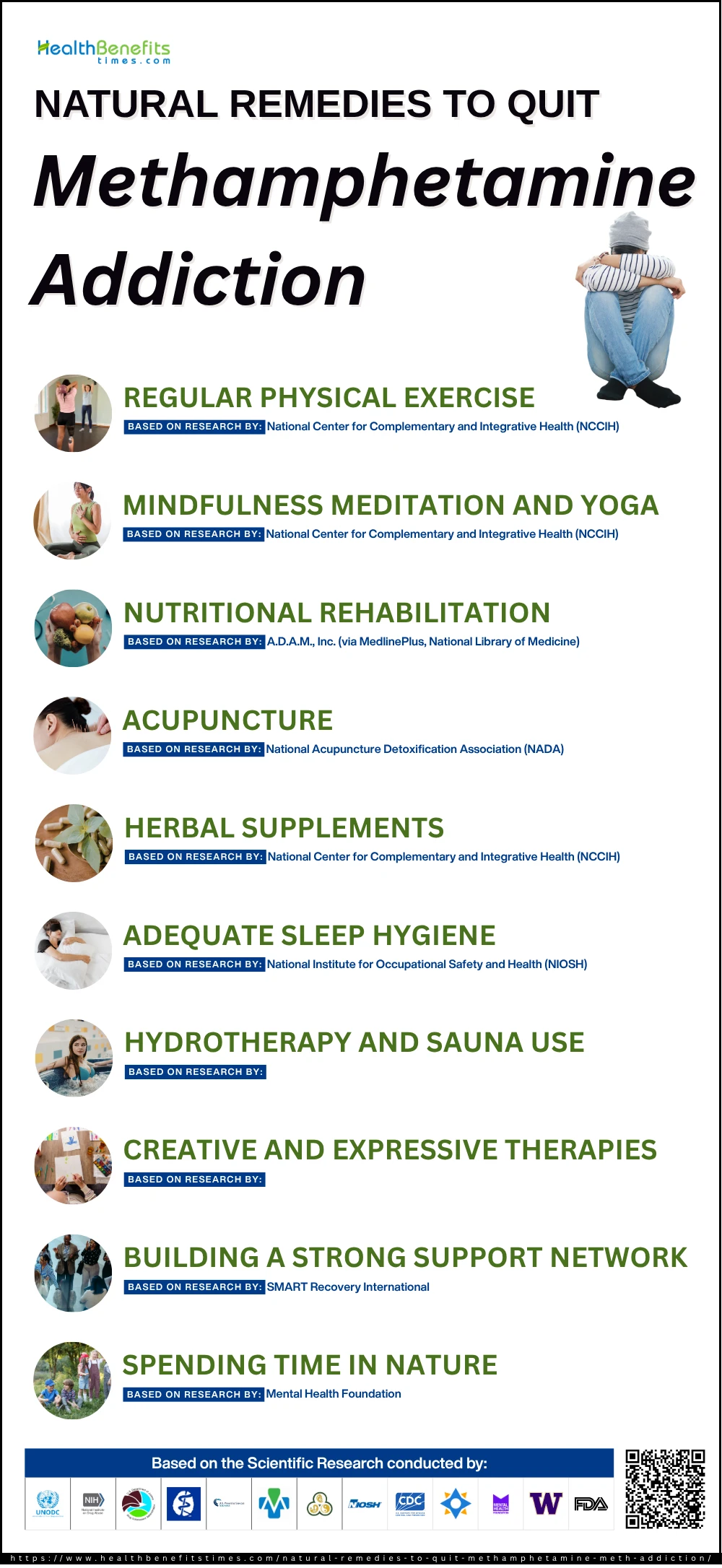 2. Mindfulness Meditation and Yoga
Sitting still with your own thoughts might sound terrifying early in recovery, but mindfulness-based practices can rewire the way you respond to stress and cravings. Mindfulness-Based Relapse Prevention (MBRP) teaches you to observe cravings without acting on them a skill that becomes stronger with practice. Yoga adds a physical dimension that helps reduce cortisol your body’s primary stress hormone while improving emotional regulation. 9
3. Nutritional Rehabilitation
Meth often strips your body of essential nutrients. During active use, you likely ate very little, leading to deficiencies in B vitamins, magnesium, zinc, and amino acids all critical for brain function and neurotransmitter production. 10 Rebuilding your diet with whole grains, lean proteins, leafy greens, and healthy fats gives your brain the raw materials it needs to heal. Foods rich in tyrosine such as eggs, cheese, and legumes support dopamine synthesis naturally.
4. Acupuncture
Plenty of people in recovery swear by acupuncture, and the science is starting to back them up. The NADA (National Acupuncture Detoxification Association) protocol which targets five specific points on the ear has been used in addiction treatment settings for decades. 11 While more rigorous clinical trials are needed, many treatment centers incorporate it to ease anxiety, insomnia, and cravings during detox.
5. Herbal Supplements
Certain herbal remedies may offer modest support during withdrawal. Ashwagandha (Withania somnifera) has adaptogenic properties that help your body manage stress and may reduce anxiety associated with withdrawal. 12 Kudzu root (Pueraria lobata) has been studied for its potential to reduce substance cravings, though evidence remains preliminary. Passionflower may help with insomnia and restlessness, which are common during early recovery. 13 Always consult a healthcare provider before starting any supplement.
6. Adequate Sleep Hygiene
Your sleep cycle takes a brutal hit during and after meth use. Establishing consistent sleep habits going to bed at the same time, limiting screen exposure at night, keeping your room dark and cool can accelerate neurological healing. 14 Deep, restorative sleep is when your brain repairs damaged neural pathways and clears toxins. Prioritizing seven to nine hours nightly is not optional during recovery it’s essential.
7. Hydrotherapy and Sauna Use
Some recovery programs use sauna therapy as a detoxification aid, working on the principle that sweating can assist in eliminating stored toxins. While the scientific consensus on sweat-based detox is nuanced, regular sauna use has well-documented benefits for cardiovascular health, stress reduction, and mood improvement. Alternating hot and cold water exposure (contrast hydrotherapy) may also boost circulation and support immune function.
8. Creative and Expressive Therapies
Picking up a paintbrush, writing in a journal, or learning a musical instrument might not seem like medicine but for many people in recovery, creative outlets become lifelines. Art therapy and music therapy have been recognized by SAMHSA as evidence-based practices for substance use treatment. These activities engage your brain’s reward circuitry in healthy ways, offer emotional expression without words, and rebuild your sense of identity beyond addiction.
9. Building a Strong Support Network
No remedy works in isolation. Connecting with others who understand your experience through peer support groups like Crystal Meth Anonymous or SMART Recovery provides accountability and belonging. 15 Human connection itself is neurobiologically healing; positive social interaction naturally raises oxytocin and serotonin levels, both of which are depleted during chronic meth use.
10. Spending Time in Nature
There’s something about being outdoors that quiets the noise inside your head. Nature-based therapy, sometimes called ecotherapy, has shown benefits for mood, anxiety, and overall mental well-being. 16 Whether it’s a daily walk in a park, hiking, or simply sitting by a body of water, exposure to natural environments reduces cortisol levels and provides sensory stimulation that doesn’t involve substance use.
Precautions Before Using Natural Remedies
Before you dive into any of these approaches, there are some important things to keep in mind.
First, natural does not automatically mean safe. Herbal supplements can interact with prescription medications, and some carry their own side effects especially if you’re using high doses or unregulated products. 17 St. John’s Wort, for instance, interacts dangerously with many common medications.
Second, you should never attempt to detox from heavy meth use entirely on your own. Withdrawal can bring severe depression and, in some cases, suicidal thoughts. Medical supervision during early recovery can be the difference between life and death. If you’re experiencing thoughts of self-harm, reach out to the 988 Suicide & Crisis Lifeline by calling or texting 988.
Third, be skeptical of any product or program that promises a quick or effortless cure. Recovery from methamphetamine use disorder is a long-term process that typically requires multiple forms of support behavioral therapy, medical evaluation, peer connection, lifestyle changes, and patience.
Finally, always tell your doctor about any natural remedies you’re using. Transparency with your treatment team ensures everything works together rather than against each other.
When to Seek Professional Help
Sometimes, the bravest thing you can do is admit you need more than natural remedies alone. If you’re experiencing severe withdrawal symptoms, persistent psychosis, suicidal ideation, or repeated relapse despite your best efforts, professional treatment is critical. Inpatient rehabilitation programs, intensive outpatient programs, and medically assisted approaches can provide the structure and safety you need during the most vulnerable phases of recovery.
Your healthcare provider can also screen for co-occurring conditions like depression, anxiety, or PTSD which frequently fuel the cycle of addiction and must be treated simultaneously for lasting recovery. 18
The Road Ahead
Recovery is rarely a straight line. There will be setbacks, hard days, and moments when the pull of old habits feels overwhelming. But every hour, every day that you choose differently reshapes your brain a little more. Neuroplasticity your brain’s ability to form new connections and pathways means that healing is biologically real and ongoing. 19
You don’t have to figure this out alone, and you don’t have to be perfect. Start with one step move your body, eat a real meal, call someone you trust, or schedule that appointment you’ve been putting off. Stack those small choices, and over time, they become the foundation of a life you never thought you could have again.
Disclaimer: This article is for informational purposes only and is not a substitute for professional medical advice, diagnosis, or treatment. Always seek the guidance of a qualified healthcare provider with any questions about a medical condition or treatment.
Comments
This article is based on Scientific Research Conducted by following Research Organization:
- World Drug Report 2023–United Nations Office on Drugs and Crime (UNODC), United Nations
- Methamphetamine–National Institute on Drug Abuse (NIDA), United States
- Prevention–National Institute on Drug Abuse (NIDA), United States
- Methamphetamine–Drug Enforcement Administration (DEA), United States
- Trends & Statistics–National Institute on Drug Abuse (NIDA), United States
- Addiction and Substance Use Disorders–American Psychiatric Association (APA), United States
- Methamphetamine–National Institute on Drug Abuse (NIDA), United States
- Unhealthy Drug Use: Screening–U.S. Preventive Services Task Force (USPSTF), United States
- Yoga: Effectiveness and Safety–National Center for Complementary and Integrative Health (NCCIH), United States
- Substance use recovery and diet–A.D.A.M., Inc. (via MedlinePlus, National Library of Medicine), United States
- NADA 2026 International Conference–National Acupuncture Detoxification Association (NADA), United States
- Ashwagandha–National Center for Complementary and Integrative Health (NCCIH), United States
- Passionflower–National Center for Complementary and Integrative Health (NCCIH), United States
- NIOSH Training for Nurses on Shift Work and Long Work Hours–National Institute for Occupational Safety and Health (NIOSH), United States
- What is SMART Recovery?–SMART Recovery International, United States
- Nature and mental health–Mental Health Foundation, United Kingdom
- Dietary Supplements–U.S. Food and Drug Administration (FDA), United States
- Co-Occurring Disorders and Health Conditions–National Institute on Drug Abuse (NIDA), United States
- Neuroplasticity and Clinical Practice: Building Brain Power for Health–University of Washington, United States