

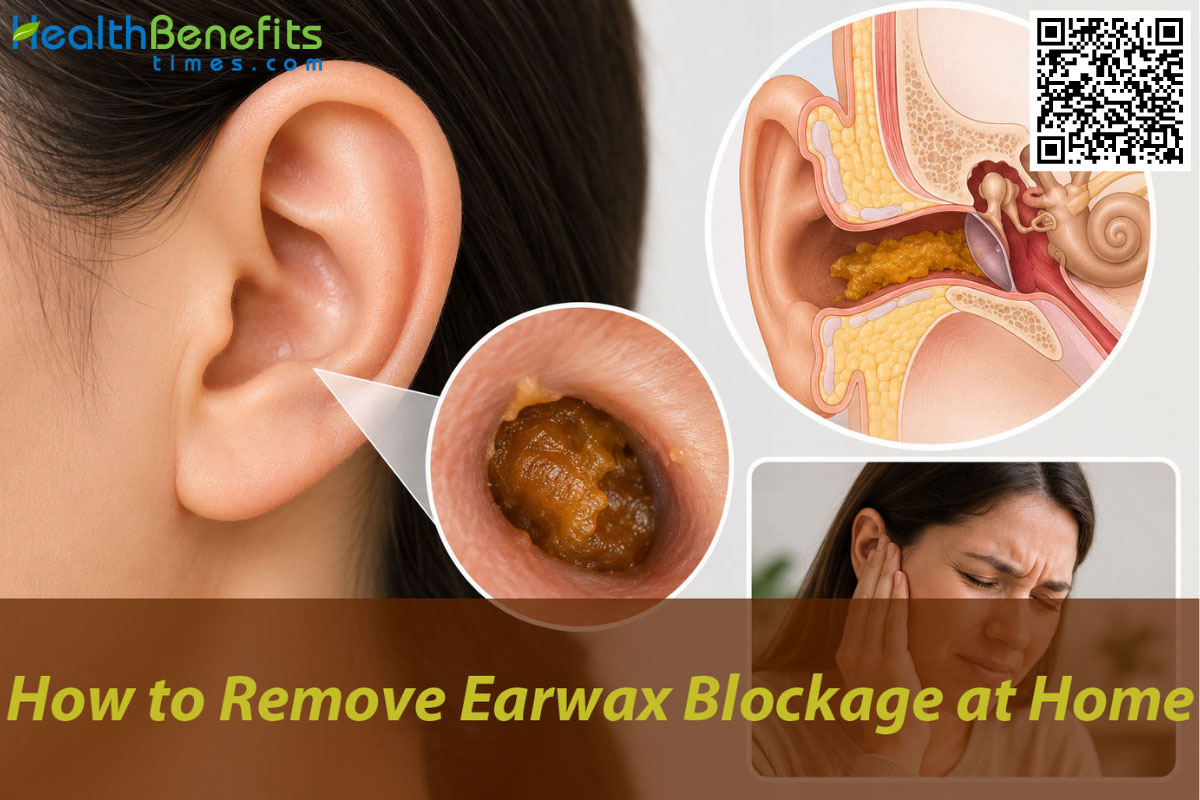
Earwax blockage, medically known as cerumen impaction, occurs when earwax accumulates in the ear canal to the point that it causes symptoms or prevents a proper examination of the ear 1. Earwax is a naturally occurring, beneficial substance designed to protect, clean, and lubricate the ear canal by trapping dirt and repelling water. Under normal circumstances, the body naturally moves this wax outward. However, a blockage develops when the wax is produced faster than the body can eliminate it, or when it is accidentally pushed too deeply into the canal—often by cotton swabs, hearing aids, or earplugs. When impaction occurs, it can lead to uncomfortable symptoms such as a feeling of fullness, temporary hearing loss, mild to severe earaches, ringing in the ears (tinnitus), or dizziness 2. It is a highly common and easily treatable condition, but it requires safe removal methods rather than at-home probing. 3, 4.
Causes of Earwax Blockage
The biological and environmental triggers that lead to an earwax blockage are multifaceted, often combining natural anatomical changes with disruptive everyday habits. Understanding the origin of this buildup is essential for preventing future occurrences.
1. Failure of the Epithelial Conveyor Mechanism
Skin inside the human ear canal behaves in a highly unique manner, naturally migrating outward from the center of the eardrum toward the external opening at a rate similar to the growth of a fingernail. Whenever this physiological conveyor belt slows down due to dermatological conditions, metabolic changes, or advancing age, old wax is no longer expelled efficiently and begins to accumulate in stagnant pools 5.
2. Mechanical Packing via Foreign Objects
Routinely placing foreign materials into the ear such as cotton-tipped swabs, acoustic earbuds, industrial earplugs, or medical hearing aids acts as a physical barricade against the outward flow of wax. Instead of allowing cerumen to exit the body, these objects forcefully push the sticky substance deep into the narrow, bony portion of the inner canal, tightly compacting it against the eardrum while simultaneously triggering the ceruminous glands to overproduce wax as a stress response 6.
3. Age-Related Glandular Atrophy
Physiological aging inevitably brings structural changes to the cerumen-producing glands located in the outer third of the ear canal. These microscopic glands progressively shrink and diminish in number over the decades, leading to a significant reduction in the lubricating lipids that keep earwax soft. Consequently, the wax produced becomes excessively dry, brittle, and highly resistant to the ear’s natural outward transportation system.
4. Structural and Anatomical Bottlenecks
Certain individuals are born with, or develop, physical variations in their ear canals that physically trap migrating debris. Narrow ear canals, sharply angled (tortuous) pathways, or the presence of benign bony growths known as osteomas and exostoses act as internal hurdles. Earwax easily becomes snagged on these structural irregularities, creating a foundational plug that gathers more debris over time until a total occlusion forms 7.
5. Genetic Phenotype Predispositions
Human biology dictates the consistency of earwax through variations in the ABCC11 gene, which determines whether an individual produces a “wet” (sticky and dark) or “dry” (flaky and light) phenotype. Populations that produce the dry phenotype, or individuals who inherently secrete a high volume of dense, lipid-heavy wet wax, may find that their specific cerumen consistency is fundamentally more prone to clumping and impaction within the canal 8.
Symptoms of Earwax Blockage
When an accumulation of cerumen disrupts the delicate sensory environment of the auditory canal, it triggers a cascade of localized and sometimes systemic physical sensations. These indicators can emerge gradually over months or appear suddenly following water exposure.
- Conductive Hearing Loss: The physical mass of the earwax blocks sound waves from effectively traveling through the air to vibrate the tympanic membrane, resulting in a noticeable, often frustrating muffling of environmental noises and human speech.
- Aural Fullness: Patients frequently report a profound, highly uncomfortable sensation that the affected ear is completely stuffed, plugged, or heavy, similar to the feeling of retained water after swimming 9.
- Otalgia (Ear Pain): As the hardened wax plug expands especially if it absorbs moisture from a shower it exerts rigid physical pressure against the highly sensitive, nerve-dense skin of the ear canal and the eardrum, causing a dull ache or sharp pain 10.
- Tinnitus: The disruption of normal sound transmission and the pressure against the tympanic membrane can cause the auditory system to generate phantom noises, typically perceived as a persistent ringing, buzzing, or hissing sound in the affected ear.
- Reflex Coughing: The ear canal is innervated by the auricular branch of the vagus nerve (often called Arnold’s nerve). When compacted earwax stimulates this specific nerve pathway, it can inexplicably trigger a chronic, dry throat tickle or reflex cough that resists standard respiratory treatments 11.
- Dizziness or Vertigo: Severe blockages that rest directly against the tympanic membrane can transmit abnormal pressure changes to the vestibular organs in the inner ear, occasionally resulting in temporary sensations of imbalance, spatial disorientation, or mild vertigo.
Earwax Blockage Facts
The clinical landscape of cerumen impaction involves a broad spectrum of epidemiological and biological data. The following table systematically organizes the core facts required to understand the scope and nature of this condition.
| Category | Clinical Facts and Details |
| Symptoms |
|
| Causes |
|
| Types of Earwax Blockage |
|
| How it Spreads |
|
| Age Group |
|
| You might be at a higher risk for exposure of this disease if you: |
|
| How doctors diagnose |
|
| Other facts |
|
How to Remove Earwax Blockage at Home
When you find yourself dealing with the muffled hearing and discomfort of a wax impaction, turning to safe, scientifically supported home remedies is your best first step. You can often clear the obstruction by using gentle chemical softening combined with mild mechanical flushing, provided your eardrum is completely healthy and intact.
1. Administering Oil-Based Cerumenolytics
You can safely utilize natural, pharmacy-grade lipids such as olive oil, mineral oil, or sweet almond oil to rehydrate and lubricate a stubborn, dry plug of wax. To apply this method, you must lie down on a comfortable surface with the affected ear facing the ceiling. Using a clean glass dropper, instill two to three drops of room-temperature oil directly into the ear canal. You should remain in this lateral, resting position for approximately five to ten minutes, allowing gravity to pull the oil deep into the microscopic cracks of the hardened cerumen. Once the time has elapsed, slowly sit up and use a clean tissue to catch any excess oil that drains out. You should repeat this gentle process three to four times a day for up to five days to achieve maximum softening 15.
Note: This method is commonly used for its natural remedial benefits, as pure oils safely lubricate the delicate skin of the canal, reduce internal friction, and encourage the mass to seamlessly flake away without causing chemical irritation.
2. Applying Water-Based Softening Drops
If natural oils do not provide relief, you can turn to over-the-counter water-based solutions containing active ingredients like hydrogen peroxide, carbamide peroxide, or sodium bicarbonate. These liquid solutions are chemically designed to break down the dense keratin bonds holding the dead skin cells and wax together. You should tilt your head to the side and instill the recommended number of drops. You will likely hear a distinct bubbling, fizzing, or crackling sound; this is the normal effervescent action of oxygen being released to actively dismantle the wax matrix. Keep your head tilted for several minutes to allow the chemical reaction to complete before letting the liquid drain onto a towel 16.
Note: Water-based solutions are applied for their rapid medicinal benefits, utilizing active chemical effervescence to swiftly dissolve the structural integrity of dense, stubborn impactions..
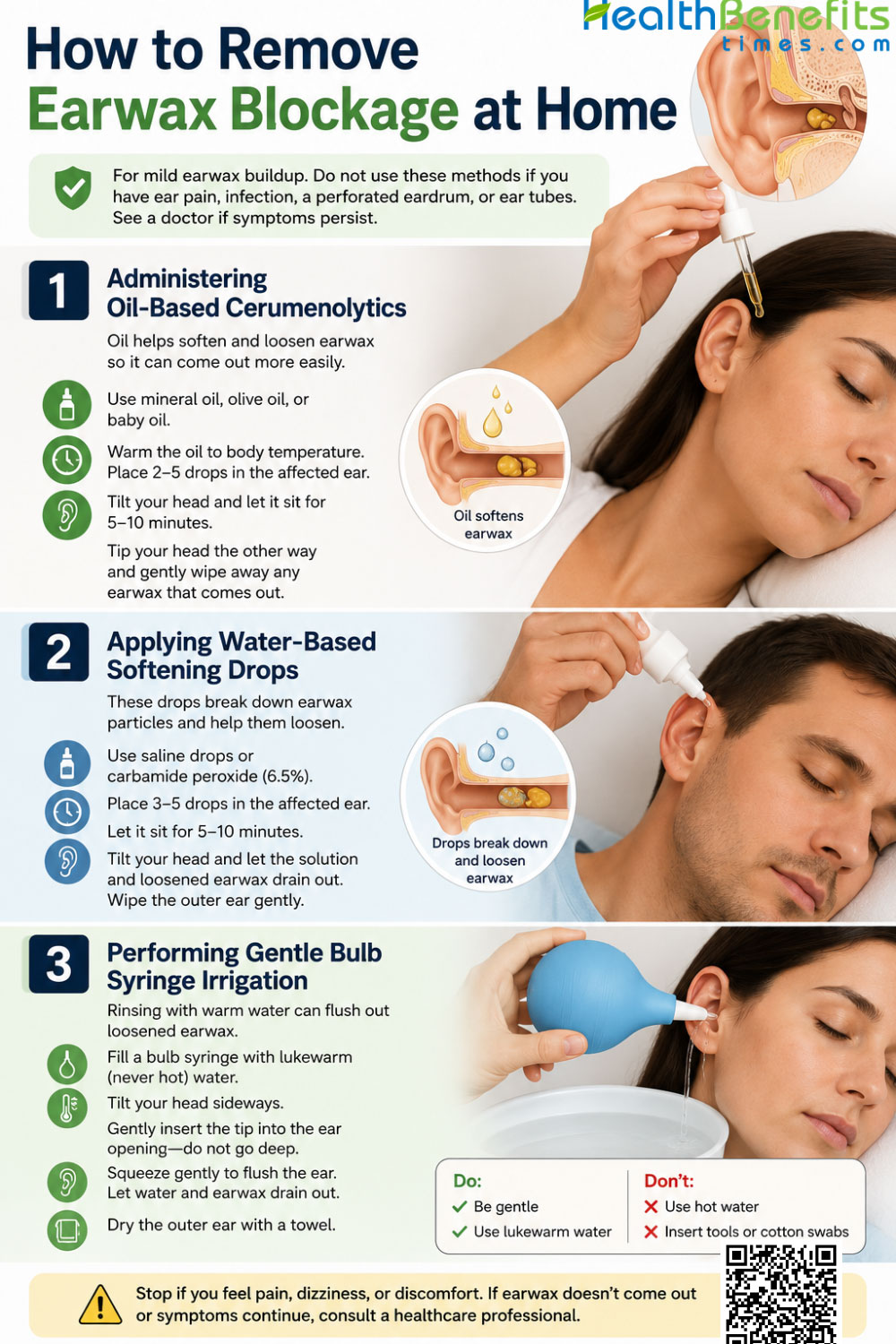
3. Performing Gentle Bulb Syringe Irrigation
Once you have spent several days successfully softening the wax with drops, you can actively wash it out using a medical-grade rubber bulb syringe. It is absolutely vital that you fill the bulb syringe with water that is precisely at body temperature; water that is too hot or too cold will trigger severe dizziness. You should stand over a sink, tilt your head slightly, and gently pull your outer ear upward and backward to straighten the natural curve of the ear canal. Place the tip of the syringe just at the entrance of the canal never deep inside and gently squeeze the bulb to direct a steady, low-pressure stream of water against the canal wall, allowing the water to tumble back out and carry the dislodged wax into the sink 17.
Note: Bulb syringe irrigation is commonly utilized as an effective mechanical remedy, providing a controlled, hydrodynamic water flow that safely physically washes out pre-softened cerumen without exerting dangerous pressure on the eardrum.
Is there any exercise or physical activities for Earwax Blockage
Your body possesses a built-in mechanical pump designed to assist in the continuous expulsion of earwax. By engaging in specific physical movements that activate the anatomy surrounding the ear, you can actively support and accelerate the natural migration of debris out of your auditory system.
1. Active Mastication (Chewing) Therapy
You can easily harness the power of your temporomandibular joint (TMJ), which is located immediately adjacent to the flexible, cartilaginous outer portion of your ear canal. By engaging in vigorous, prolonged chewing, the condyle of your jawbone continuously massages the front wall of the ear canal. This internal physical manipulation acts like a conveyor belt, systematically stimulating the epithelial lining and slowly propelling trapped wax toward the outer opening of the ear. Research demonstrates that a lack of chewing directly correlates to higher rates of impaction 18.
Note: To do this, simply chew a piece of sugar-free gum or consume crunchy, fibrous foods for twenty to thirty minutes daily, focusing on wide, active jaw movements to maximize the internal massage of the auditory canal.
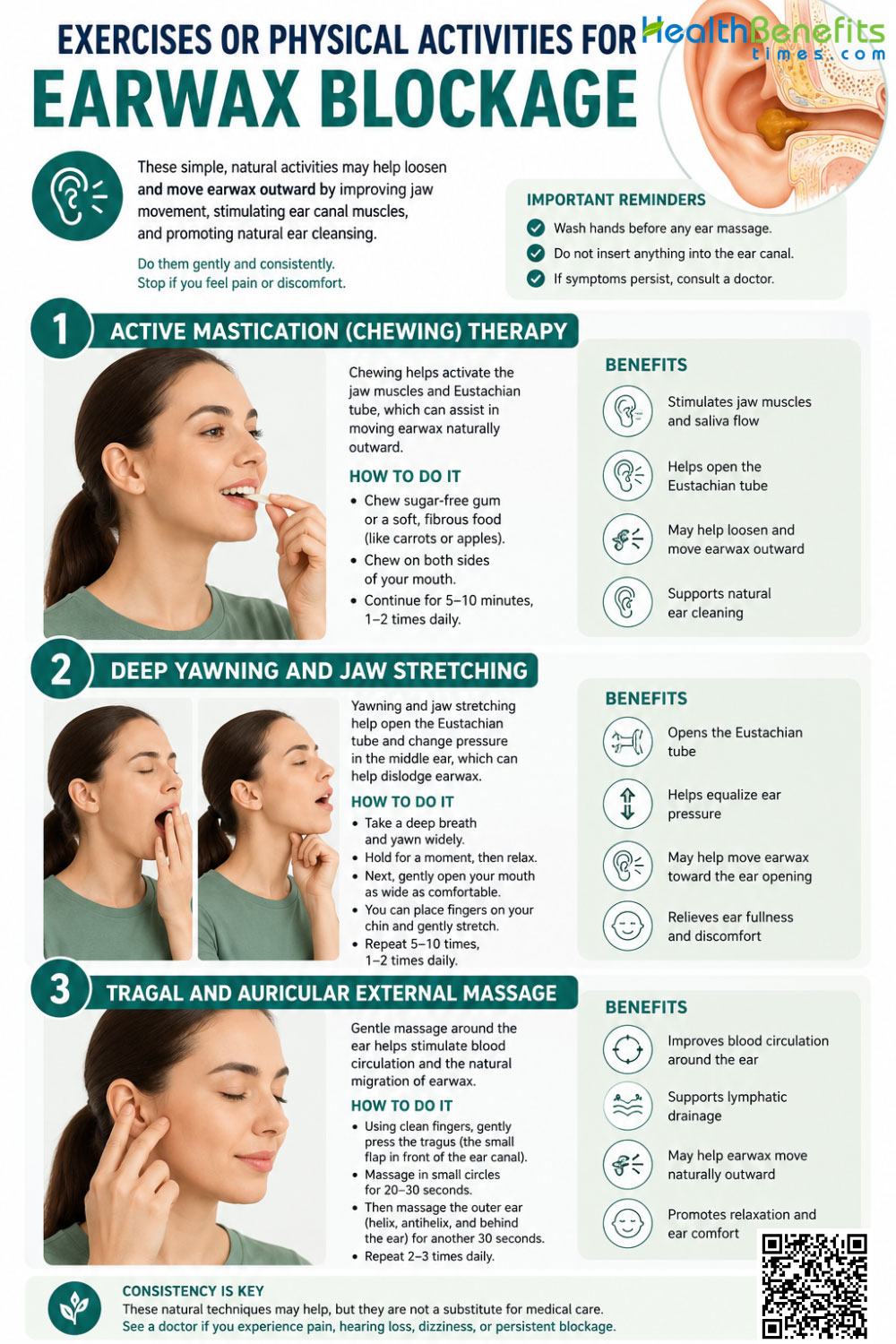
2. Deep Yawning and Jaw Stretching
You can intentionally manipulate the anatomical shape of your outer ear canal by performing extreme, sustained jaw stretches. Because the outer third of your ear canal is supported by flexible cartilage rather than rigid bone, opening your mouth as wide as humanly possible physically stretches and temporarily widens the canal’s diameter. This stretching action can break the sticky surface tension between a hardened wax plug and the surrounding skin, successfully dislodging the impaction so it can be naturally cleared.
Note: To do this, open your mouth as wide as comfortably possible, closely mimicking the action of an exaggerated, deep yawn, hold the intense stretch for ten to fifteen seconds, and repeat the process five times in a row.
3. Tragal and Auricular External Massage
You can manually assist the breakdown of a blockage by physically manipulating the outer cartilage structures of the ear. The tragus is the small, firm flap of cartilage situated directly in front of the ear canal’s entrance. By applying focused external pressure and vibration to this area, you transmit gentle mechanical waves down into the enclosed canal, which can help shake loose wax that has stubbornly adhered to the epithelial walls 19.
Note: To do this, place your index finger directly over the tragus, apply gentle inward pressure, and massage in small circles while simultaneously opening and closing your mouth for approximately one full minute.
Foods to Avoid and Activities to Avoid
When you are biologically prone to recurrent cerumen impactions, your daily lifestyle choices play a monumental role in either preventing or exacerbating the condition. You must be deeply mindful of dietary constraints and physical habits that actively hinder your ear’s self-cleaning abilities.
Foods to Avoid When You Suffer from Earwax Blockage
1. Pureed and Liquid-Only Diets
You should minimize your reliance on meal replacement shakes, smoothies, and heavily pureed foods if you struggle with earwax. Because the physical act of chewing is biologically required to propel earwax out of the canal, a diet entirely lacking in solid, textured foods starves the ear canal of the mechanical massage necessary for natural clearance.

2. Overly Processed, Soft Foods
You must avoid diets consisting solely of soft breads, pastas, and tenderized meats. Without the robust, rigorous jaw articulation required to break down crunchy vegetables, tough proteins, and nuts, your temporomandibular joint fails to provide the kinetic energy needed to push debris out of the auditory pathway.
3. Excessive Dairy and Refined Sugars (Anecdotal Precaution)
While clinical literature focuses heavily on the mechanical aspects of eating, some patients find that highly inflammatory diets rich in excessive refined sugars can alter the baseline properties of their bodily secretions. To maintain optimal glandular health, you should aim for a balanced, low-inflammation diet.
Activities to Avoid When You Suffer from Earwax Blockage
1. Inserting Cotton-Tipped Swabs
You must absolutely ban the use of cotton swabs inside your ears. While they seem like the perfect cleaning tool, they actually act as a blunt ramrod, forcefully pushing fresh wax out of the outer cartilage area and ramming it deep into the narrow, bony inner canal where your body is entirely incapable of removing it 4.
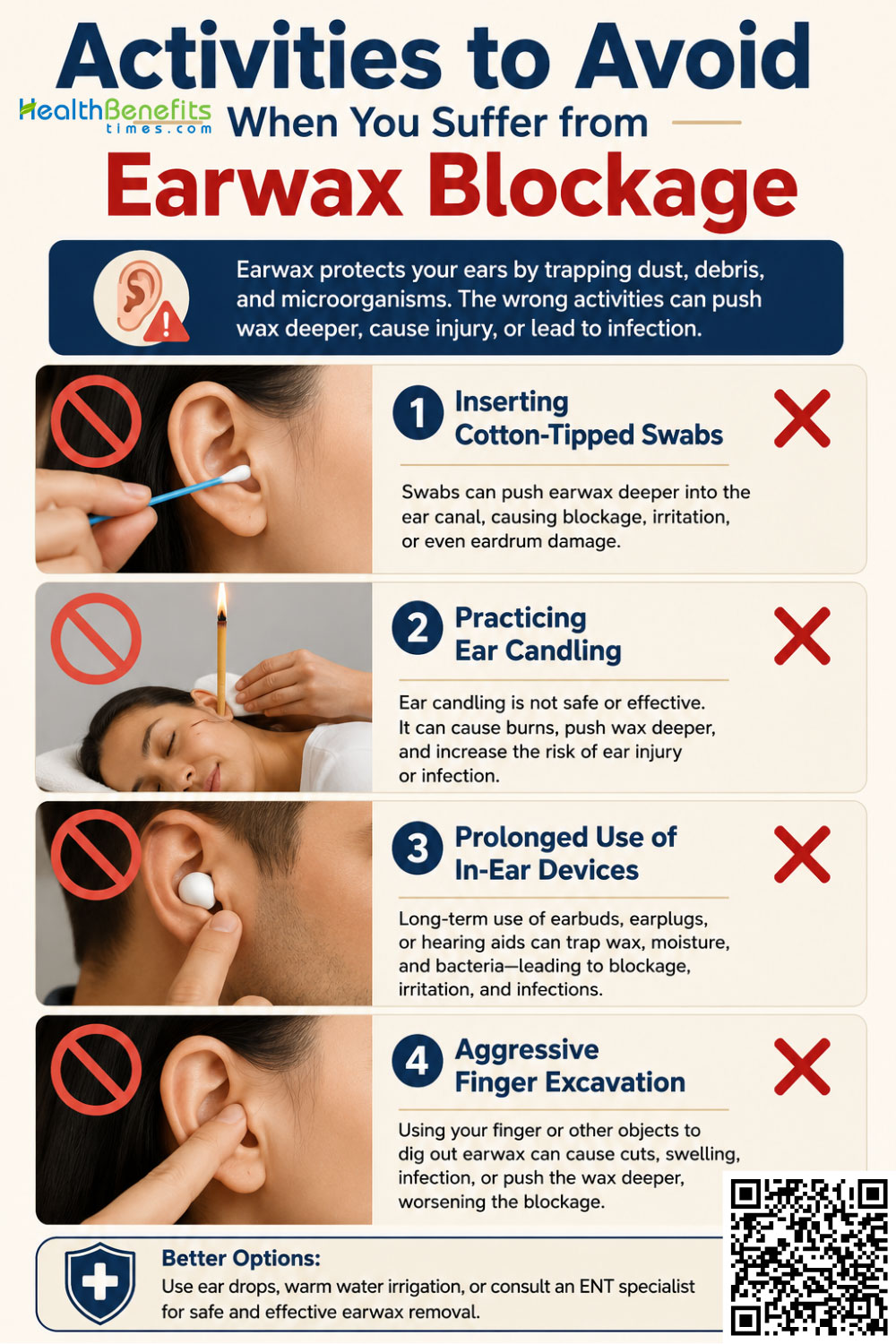
2. Practicing Ear Candling
You must avoid the dangerous alternative therapy known as ear candling. Inserting a hollow, wax-coated fabric cone into your ear and lighting it on fire does not create a magical vacuum to suck out debris; instead, it exposes you to severe risks of facial burns, scorched hair, and hot candle wax dripping directly onto and permanently damaging your eardrum.
3. Prolonged Use of In-Ear Devices
You should avoid wearing noise-canceling earbuds, foam earplugs, or non-essential hearing protection for uninterrupted hours. Keeping these devices tightly wedged in your ears traps dark, humid moisture, physically blocks the natural exit route of migrating wax, and stimulates the ear canal lining to overproduce cerumen as an inflammatory response 11.
4. Aggressive Finger Excavation
You must resist the urge to dig out a blockage using your fingernail, a hairpin, or a paperclip. Blindly scratching the inside of your ear easily inflicts microscopic lacerations on the incredibly fragile skin, creating a perfect entry point for aggressive, painful bacterial infections.
Myths and Misconceptions
The realm of ear hygiene is deeply saturated with cultural myths, anecdotal fallacies, and heavily marketed misinformation. Disentangling scientific truth from persistent fiction is essential for protecting your long-term hearing health.
| Myth | Reality |
| Cotton swabs are the safest and most effective way to dry and clean your ears. | Cotton swabs completely derail the ear’s natural self-cleaning process. They forcefully pack cerumen deep against the tympanic membrane, significantly worsening impactions and carrying a high risk of permanent eardrum perforation. |
| Earwax is just dirty, unhygienic buildup that indicates you do not bathe properly. | Cerumen is a vital, naturally produced biological barrier. It acts as an acidic, antibacterial, and antifungal shield that moisturizes the canal, traps environmental dust, and prevents foreign insects from invading the auditory system. |
| Ear candling is an ancient, proven holistic method to draw out toxins and deep wax. | The scientific and medical communities strongly warn against ear candling. Controlled studies prove it creates zero suction or “chimney effect,” and the brown debris found inside the candle afterward is simply the melted remnants of the device itself. |
| You should aggressively wash the inside of your ears with soap and hot water every day. | The internal ear canal is entirely self-cleaning. Introducing harsh soaps strips away the natural lipid barrier, dangerously elevates the canal’s pH level, and traps moisture, creating an ideal breeding ground for painful bacterial infections. |
| Any temperature of water works fine if you are trying to flush out an earwax plug at home. | Water used for home irrigation must be precisely calibrated to body temperature. Flushing the ear with water that is notably too hot or too cold triggers a violent caloric stimulation of the vestibular system, resulting in severe, debilitating vertigo and nausea. |
Special Considerations
The anatomy and physiological behavior of the external auditory canal differ vastly depending on a person’s age, metabolic state, and underlying medical history. Generalized advice for resolving earwax impaction must be meticulously tailored when applied to highly vulnerable populations.
1. Children
The pediatric ear canal is exponentially smaller, softer, and narrower than that of an adult, making it remarkably susceptible to accidental trauma. Parents must never insert swabs, curettes, or even their fingers into a child’s ear to retrieve wax. In the vast majority of pediatric cases, the earwax will naturally migrate out on its own without any intervention. Over-the-counter softening drops or home irrigation kits should only be utilized under the direct, specific instructions of a pediatrician, as young children lack the verbal capacity to accurately communicate if a procedure is causing them hidden pain or if they are suffering from an undiagnosed eardrum perforation 22.
2. Pregnancy
While the physiological state of pregnancy induces massive systemic hormonal and cardiovascular shifts, it does not drastically alter the fundamental composition or clearance mechanisms of earwax. However, pregnant individuals experiencing symptomatic blockages should prioritize natural, gentle cerumenolytics like pharmacy-grade olive oil. It is highly advisable to avoid aggressive chemical drops or poorly regulated commercial ear flush kits during gestation, as maintaining overall bodily comfort and strictly avoiding unnecessary stress or localized infections is the primary clinical goal.
3. Chronic Conditions
Individuals enduring chronic metabolic diseases such as diabetes mellitus, or those living in immunocompromised states, must exercise extreme clinical caution. Diabetic patients naturally produce cerumen with a notably higher baseline pH, making their ear canals uniquely hospitable to aggressive bacterial and fungal colonization. Even minor microscopic scratches from a home removal attempt, or trapped microscopic moisture from an irrigation bulb, can rapidly escalate into malignant otitis externa a severe, bone-destroying infection of the temporal skull base that requires aggressive intravenous antibiotics.
4. Elderly
Geriatric populations carry the absolute highest statistical burden of symptomatic cerumen impaction. As individuals transition into their later decades, the ceruminous glands progressively atrophy, resulting in a severe lack of lubricating lipids and the persistent production of dry, stubborn, rock-hard wax. Furthermore, the hair follicles lining the auditory canal become significantly coarser and longer, acting as a dense physical net that traps migrating debris. Elderly individuals often require routine, professional otoscopic monitoring, as chronically untreated blockages reliably lead to severe conductive hearing loss, which cascades into increased social isolation, depression, and accelerated cognitive decline 23.
Precaution Before Use of Natural Remedies
Before you decide to dissolve or flush an earwax blockage using any home-based method, you must critically evaluate your ear for underlying medical contraindications. Ignoring these vital clinical precautions can easily result in permanent auditory damage or severe infection.
- 1. Verify the Complete Integrity of Your Eardrum: You must be absolutely certain that you do not have a perforated eardrum or a history of surgically implanted myringotomy tubes. If there is any structural hole in the tympanic membrane, introducing drops, oils, or water will bypass the protective barrier and flood the sterile middle ear space, causing agonizing pain and deep-seated infections.
- 2. Exclude the Presence of Active Ear Infections: You must avoid all softening drops and irrigation if your ear is currently experiencing active dermatitis, intense itching, or if you suspect you have “swimmer’s ear” (otitis externa). Pouring chemical cerumenolytics into an actively inflamed, swollen, or microbially infected ear canal will cause intense burning, severely exacerbate tissue swelling, and vastly complicate the natural healing process 24.
- 3. Calibrate Fluid Temperature Precisely: You must ensure that any water utilized for an ear flush is completely lukewarm, matching your internal core body temperature as closely as possible. Squirting liquid that is even slightly cold or overly hot into the canal will trigger a violent caloric reflex in your inner ear’s vestibular system, leading to sudden, debilitating dizziness and potential vomiting 25.
- 4. Assess for Potential Topical Allergies: You must ensure you do not have an underlying hypersensitivity to the ingredients before utilizing natural oils to soften your earwax. For instance, if you suffer from a known, severe tree nut allergy, you must strictly avoid applying almond oil or arachis (peanut) oil drops to your ear canal to prevent triggering a localized or potentially systemic allergic reaction.
When to See a Doctor
While conservative home management successfully resolves the majority of mild to moderate cerumen accumulations, certain clinical red flags dictate that the blockage has dangerously exceeded the boundaries of safe self-care. You must immediately abandon all home remedies and seek prompt professional medical evaluation if you encounter any of the following warning signs.
- 1. You Experience Sudden Pain or Bleeding: You should never consider the onset of sharp, stabbing pain or the visible drainage of fresh blood or purulent pus from the ear canal to be a normal symptom of simple earwax. These alarming signs strongly suggest a newly ruptured eardrum, a severe deep-canal laceration, or an advanced bacterial infection requiring immediate otolaryngological intervention.
- 2. You Suffer from Sudden, Profound Hearing Loss: You must recognize that while a gradual, gentle muffling of sound is expected with earwax buildup, a sudden, total loss of hearing in one ear, or a complete inability to perceive environmental noises, demands urgent clinical assessment to rule out sudden sensorineural hearing loss, which is classified as a time-sensitive medical emergency.
- 3. Your Home Treatments Fail After Five Days: You should cease all home interventions if you have diligently applied softening drops and attempted gentle bulb irrigation for nearly a week without any noticeable symptomatic relief. Continuing to introduce unsterile moisture into a persistently blocked ear drastically increases your risk of secondary fungal or bacterial colonization 26.
- 4. You Develop Intense Vertigo or Dizziness: You must seek a professional assessment if your ear feels heavily blocked and the room suddenly begins to violently spin. This indicates that the impacted mass of wax may be exerting dangerous mechanical pressure directly onto the tympanic membrane, thereby disrupting your delicate inner-ear vestibular system.
- 5. You Possess a Complex Otologic History: You should bypass home treatments entirely if you have previously undergone major ear surgeries (like a mastoidectomy), possess a known anatomical abnormality such as a severely narrowed ear canal, or suffer from a history of chronic recurrent ear diseases. Your unique, altered anatomy makes standard water irrigation inherently dangerous, necessitating specialized, visually guided microsuction by a trained specialist.