

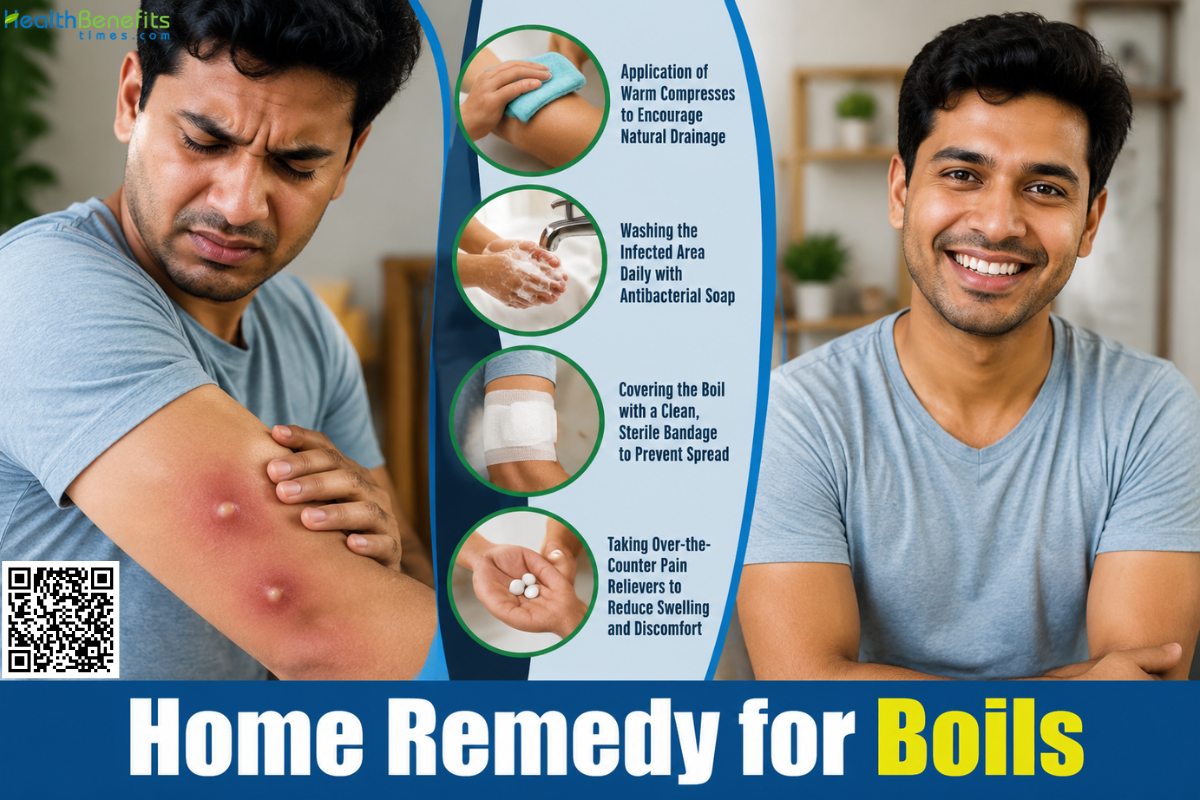
A boil, medically known as a furuncle, is a painful, pus-filled bump that forms under the skin due to a bacterial infection in a hair follicle and its surrounding tissue. Most boils are caused by Staphylococcus aureus, a common bacteria found on the skin’s surface 1. The infection begins as a tender, red, swollen lump that gradually fills with pus and dead tissue, worsening in pressure and pain as it expands 2. Boils frequently appear on body areas prone to sweat and friction, including the face, neck, armpits, thighs, and buttocks. If several boils develop close together and merge beneath the skin, they form a deeper, severe infection known as a carbuncle 3. While small boils may drain and heal independently, clinical guidelines strongly warn against squeezing them at home, as this can push bacteria into the bloodstream and trigger severe systemic complications.
Causes of Boils
1. Bacterial Infection
The primary cause of a boil is an infection by Staphylococcus aureus bacteria, which normally reside harmlessly on the skin’s surface but can trigger severe inflammation when they penetrate a hair follicle.
2. Skin Trauma
Infection-causing bacteria typically enter the deeper layers of the skin through minor injuries, including cuts, abrasions, insect bites, or microscopic tears caused by shaving.
3. Friction and Sweat
Continuous physical rubbing from tight clothing, especially in areas prone to heavy sweating, irritates and breaks down the skin barrier around hair follicles, creating an ideal environment for bacterial colonization.
4. Compromised Immune System
Underlying chronic conditions that weaken the immune response, particularly diabetes mellitus, chronic kidney disease, or HIV, make the body highly susceptible to recurrent boils because it cannot efficiently neutralize invading skin bacteria.
5. Direct Contact and Contamination
The staph bacteria responsible for boils can spread through direct physical contact with an infected individual or by sharing contaminated personal hygiene items, such as towels, bed linens, and razors.
6. Bacterial Carriage
Certain individuals persistently carry Staphylococcus aureus bacteria in their nasal passages or skin folds without showing immediate symptoms; this persistent colonization acts as a continuous source of bacteria that can migrate to other body parts and cause recurrent boils 4.
Symptoms of Boils
1. Red, Swollen Nodule
A boil typically begins as a hard, tender, and distinctly red bump under the skin, usually starting at less than an inch in diameter before expanding.
2. Pus Accumulation and Expansion
Over several days, the lump grows larger, softer, and increasingly painful as white blood cells, bacteria, and dead tissue collect inside the cavity to form pus.
3. Yellow-White Tip Formation
A visible yellow or white center, frequently referred to as a “head,” develops at the peak of the swollen bump as the trapped pus presses tightly against the surface of the skin.
4. Rupture and Drainage
As internal pressure builds, the skin over the white tip eventually breaks open naturally, allowing the pus to drain and leading to an immediate reduction in localized pain.
5. Surrounding Skin Inflammation
The healthy skin immediately surrounding the central infected hair follicle often becomes warm to the touch, slightly swollen, and red as the body’s immune system responds to the bacteria.
6. Systemic Signs (Severe Infections)
While a single small boil rarely causes illness throughout the body, larger infections or clusters of boils (carbuncles) can trigger generalized symptoms, including a low-grade fever, physical fatigue, and swollen lymph nodes near the affected area.
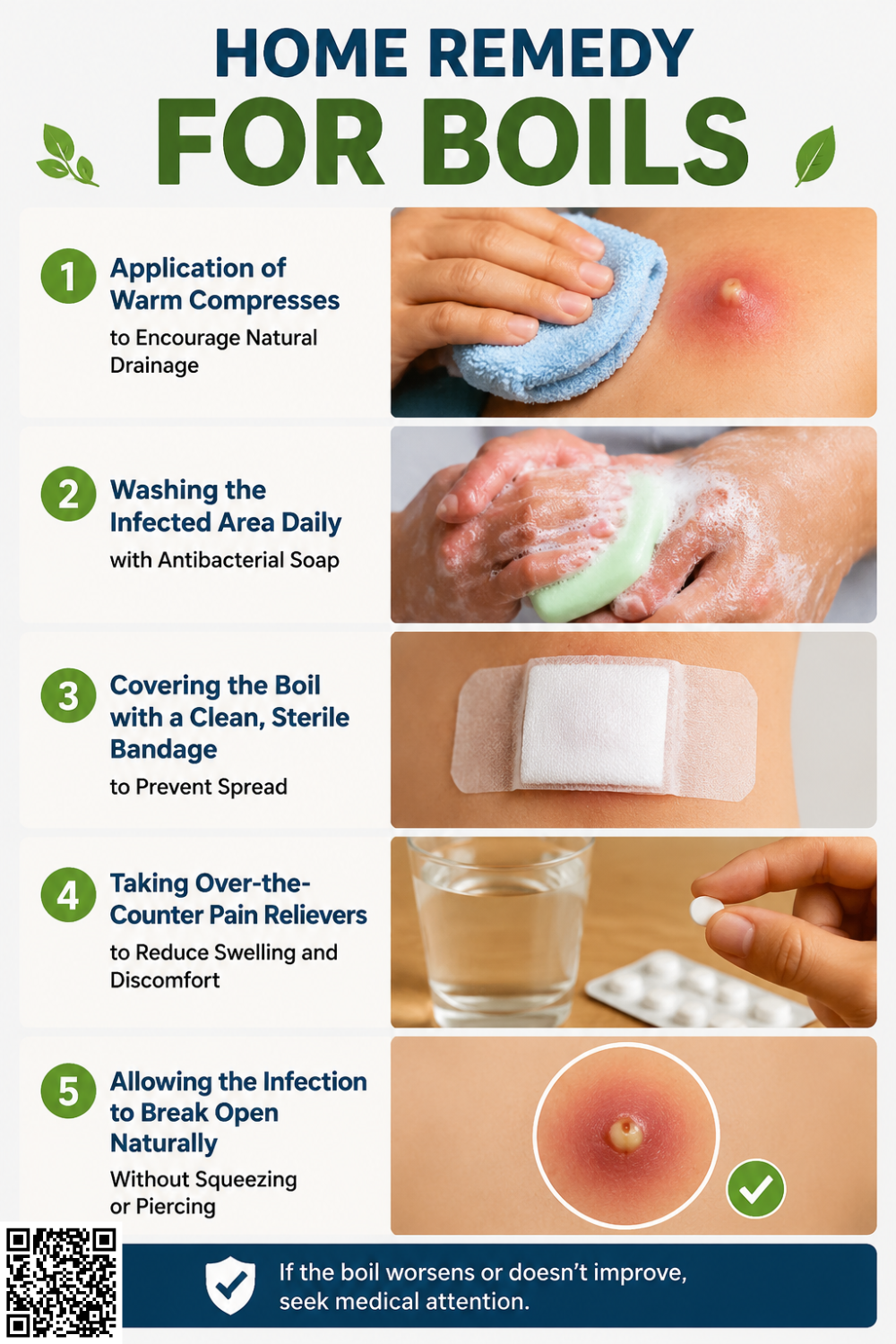 Home Remedies for Boils
1. Application of Warm Compresses to Encourage Natural Drainage
How it may help
Applying moist heat increases blood flow to the infected skin, delivering white blood cells and infection-fighting antibodies to the site. This localized warmth speeds up the formation of a visible pus-filled head, helping the boil rupture and drain naturally without the need for physical squeezing.
What research says
Clinical management guidelines identify warm, moist compresses as the primary and most effective at-home treatment for uncomplicated skin abscesses. Medical protocols state that consistent heat application successfully promotes spontaneous drainage and resolves small infections without requiring surgical incision or systemic antibiotic therapy.
How to use it safely
Soak a clean washcloth in warm water and press it gently against the boil for 10 to 15 minutes, repeating three to four times daily. Always wash your hands thoroughly before and after touching the area to prevent spreading the bacteria.
Potential precautions or side effects
Test the water temperature to avoid skin burns. Never reuse a washcloth without laundering it in hot water first, as this will spread the bacterial infection.
2. Washing the Infected Area Daily with Antibacterial Soap
How it may help
Washing the boil and surrounding skin with antibacterial soap removes excess oil and bacteria from the skin’s surface. This daily cleansing prevents the infection from worsening, limits the spread of staph bacteria to healthy hair follicles, and safely clears away any pus after the boil naturally drains 5.
What research says
Clinical guidelines for managing staphylococcal infections recommend washing active skin abscesses with antibacterial soap. Medical evidence indicates that using antibacterial cleansers on recurrent boils and carbuncles effectively reduces the bacterial load on the skin, helping prevent the infection from spreading to adjacent areas 6.
How to use it safely
Gently wash the boil and surrounding skin with antibacterial soap and warm water once or twice daily. Do not scrub the bump harshly, which can rupture the skin prematurely. Always wash your hands thoroughly before and after touching the infected area to prevent cross-contamination.
Potential precautions or side effects
Frequent use of antibacterial soap can cause excessive skin dryness and irritation. If severe itching, redness, or peeling develops around the boil, discontinue use and consult a physician.
3. Covering the Boil with a Clean, Sterile Bandage to Prevent Spread
How it may help
Covering an active boil creates a physical barrier that prevents external friction from prematurely rupturing the skin. More importantly, when the boil naturally opens, a sterile dressing absorbs the infectious pus, directly preventing the bacteria from spreading to surrounding healthy skin, clothing, or other individuals.
What research says
Public health guidelines for managing staphylococcal skin infections stress the importance of wound coverage. The Centers for Disease Control and Prevention (CDC) concludes that keeping draining skin abscesses completely covered with clean, dry bandages significantly reduces the environmental transmission of both standard staph bacteria and methicillin-resistant Staphylococcus aureus (MRSA) 7.
How to use it safely
Place a sterile, non-stick gauze pad or adhesive bandage entirely over the boil after washing the area. Change the bandage at least once daily, or immediately if it becomes wet or soiled with drainage. Always wash your hands before and after changing the dressing.
Potential precautions or side effects
Adhesive bandages may cause skin irritation or allergic reactions in sensitive individuals. Gently remove the tape to avoid tearing the surrounding healthy skin.
4. Taking Over-the-Counter Pain Relievers to Reduce Swelling and Discomfort
How it may help
Over-the-counter pain medications, such as acetaminophen and ibuprofen, help manage the intense localized pain caused by a growing boil. Nonsteroidal anti-inflammatory drugs (NSAIDs) like ibuprofen provide the additional benefit of actively reducing surrounding tissue swelling while the infection heals 8.
What research says
Medical guidelines for managing skin abscesses support the use of oral analgesics as a standard supportive therapy. Clinical protocols confirm that short-term use of over-the-counter pain relievers successfully mitigates symptoms of inflammation and discomfort until the boil naturally ruptures.
How to use it safely
Take these medications exactly as directed on the manufacturer’s package label. Do not exceed the maximum recommended daily dosage. If you have underlying health conditions, consult a physician or pharmacist before starting over-the-counter pain relievers.
Potential precautions or side effects
Excessive ibuprofen use can cause stomach ulcers or kidney issues, while taking too much acetaminophen can lead to severe, potentially fatal liver damage.
5. Allowing the Infection to Break Open Naturally Without Squeezing or Piercing
How it may help
Allowing a boil to drain spontaneously ensures the body safely walls off the infection. Not popping or squeezing the bump prevents forcing bacteria deeper into skin tissues or blood vessels, avoiding the risk of severe infections spreading to nearby healthy areas or internal organs.
What research says
Clinical guidelines firmly instruct against manual squeezing or cutting a boil at home 9. Medical evidence warns that applying physical pressure can rupture the internal barrier, pushing bacteria into the bloodstream and potentially causing life-threatening complications like blood poisoning or brain infections.
How to use it safely
Support the natural draining process by applying warm, moist washcloths to the area for 10 to 15 minutes multiple times a day. Once the boil breaks on its own, gently wash the opening, apply a sterile bandage, and continue using warm compresses to help empty the pus.
Potential precautions or side effects
If the boil does not naturally open within a week, worsens in pain, or is located on your face or spine, you must seek immediate professional medical treatment.
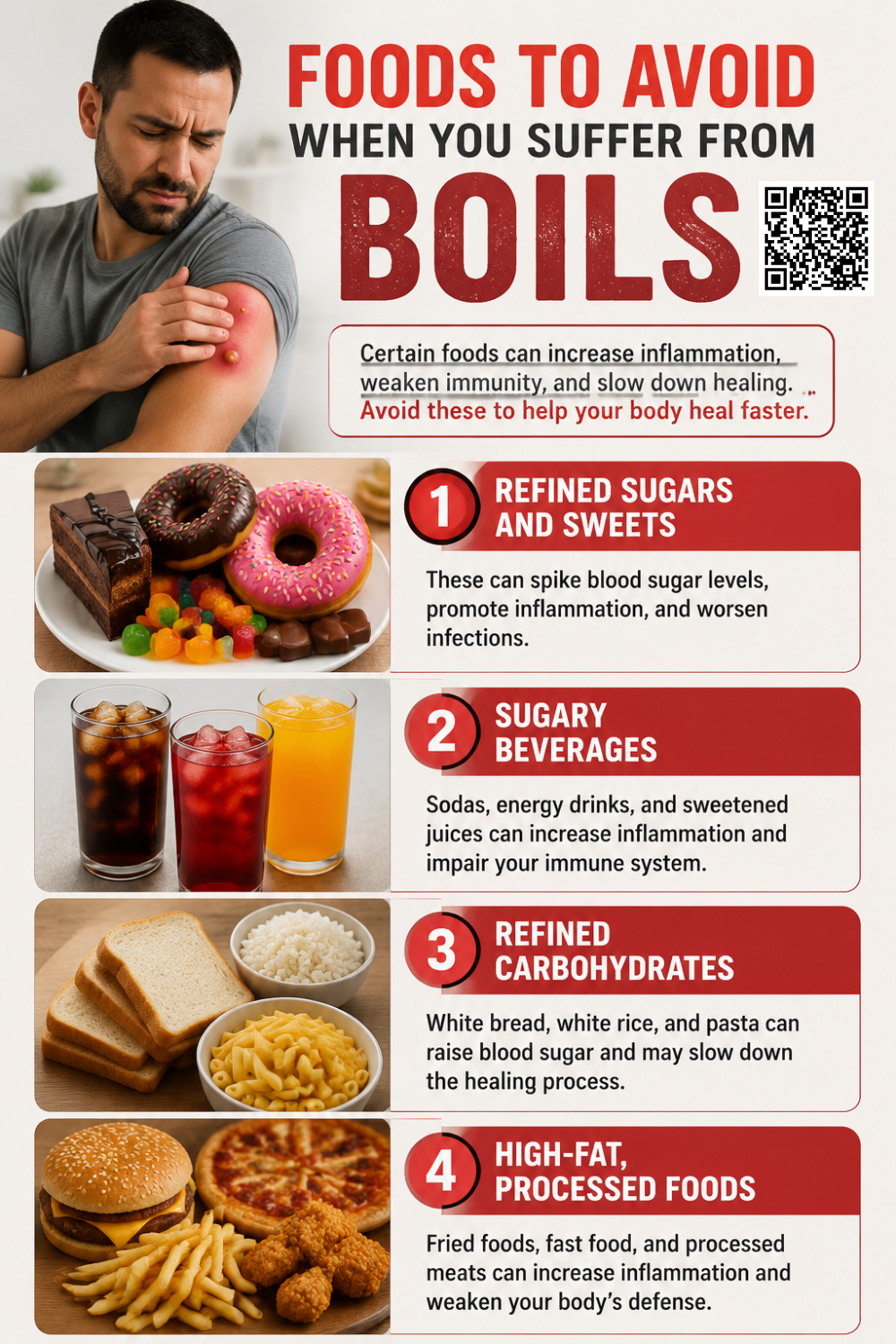 Foods to Avoid When You suffer from Boils
1. Refined Sugars and Sweets
Excessive sugar intake spikes blood glucose levels, which clinically impairs neutrophils, the essential white blood cells responsible for targeting and destroying the bacteria that cause boils 10.
2. Sugary Beverages
Sodas and sweetened drinks cause rapid hyperglycemia. This elevated blood sugar severely compromises wound healing and reduces the immune system’s ability to clear staphylococcal skin infections 11.
3. Refined Carbohydrates
Foods like white bread digest rapidly into glucose. The resulting high blood sugar promotes systemic inflammation, delaying the natural drainage and healing process of cutaneous abscesses 12.
4. High-Fat, Processed Foods
Diets rich in saturated fats and refined ingredients exacerbate skin inflammation, creating a biological environment that hinders the immune system from efficiently neutralizing active bacterial infections 13.
When To See a Doctor When You Suffer From Boils
1. Location on the Face or Spine
Infections on the face or spine carry a high risk of spreading to the brain or spinal cord, requiring immediate clinical evaluation and specialized antibiotic treatment.
2. Development of a Fever
The onset of a fever indicates the localized bacterial infection may have entered the bloodstream, necessitating prompt medical intervention to prevent severe systemic complications.
3. No Improvement After One Week
If a boil does not naturally drain or improve after a week of home care, a physician must perform a safe, sterile incision to release the trapped pus.
4. Appearance of Red Streaks
Red streaks radiating from the boil signal that the infection is aggressively spreading into surrounding healthy tissues or the lymphatic system, requiring urgent medical care.
5. Compromised Immune System or Diabetes
Individuals with diabetes or weakened immune systems must seek medical care for boils, as their bodies cannot effectively fight the staphylococcal infection without prescription antibiotics.