

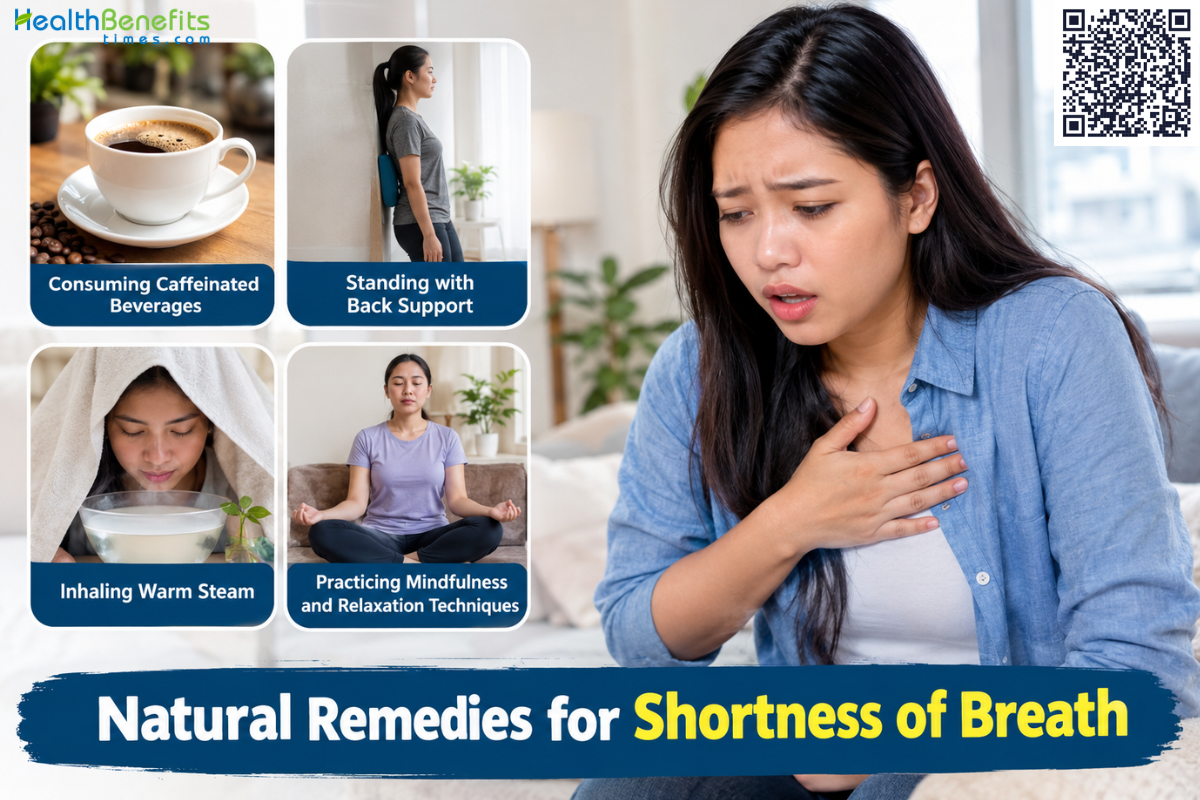
Shortness of breath, medically known as dyspnea, is the uncomfortable sensation of being unable to get enough air into the lungs. It often presents as chest tightness, a feeling of suffocation, or a sudden need to work harder to breathe 1. Most cases stem from underlying heart or lung conditions, such as asthma, chronic obstructive pulmonary disease (COPD), heart failure, or pneumonia, because these specific organs are responsible for circulating and delivering oxygen throughout the body 2. While mild breathing changes are entirely expected during intense physical exertion or at high altitudes, sudden or severe breathing difficulty while resting is considered a critical medical event. If you experience unexpected shortness of breath accompanied by chest pain, lightheadedness, or nausea, seek immediate emergency medical care to rule out life-threatening conditions 3.
Causes of Shortness of Breath
- Asthma: A chronic condition where the airways become narrow, swell, and produce excess mucus, making it difficult for air to flow smoothly in and out of the lungs 4.
- Chronic Obstructive Pulmonary Disease (COPD): A group of progressive lung diseases, including emphysema and chronic bronchitis, that cause long-term breathing problems and poor airflow due to damaged lung tissue 5.
- Heart Failure: A condition where the heart cannot pump blood effectively, causing fluid to back up into the lungs and obstruct normal oxygen exchange 6.
- Pneumonia: An infection that inflames the air sacs in one or both lungs, causing them to fill with fluid or pus and severely limiting the amount of oxygen that can reach the bloodstream 7.
- Pulmonary Embolism: A sudden and potentially life-threatening blockage in a lung artery, typically caused by a blood clot that has traveled from the leg, which instantly restricts blood flow and breathing 8.
- Heart Attack: A reduction or complete blockage of blood flow to the heart muscle, which can present as severe breathing difficulties even if classic chest pain is absent 9.
- Anemia: A deficiency of healthy red blood cells, meaning the body cannot transport enough oxygen to its organs and tissues, often leading to rapid breathing and fatigue during physical activity 10.
- Anaphylaxis: A severe, life-threatening allergic reaction to triggers like food, medication, or insect stings that causes the throat and airways to swell shut rapidly 11.
- Anxiety and Panic Disorders: Extreme psychological stress that triggers a “fight or flight” response, often leading to rapid, shallow breathing (hyperventilation) and a false sensation of suffocation despite the heart and lungs functioning normally 12.
Symptoms of Shortness of Breath
- Feeling of suffocation: An intense sensation of not being able to draw enough air into the lungs, often described by patients as air hunger, smothering, or gasping for breath 1.
- Chest tightness: A feeling of heavy pressure, squeezing, or a restrictive band around the chest that makes expanding the lungs physically uncomfortable or difficult 4.
- Rapid, shallow breathing: A noticeable increase in breathing rate, known clinically as tachypnea, where breaths are quick, rushed, and do not fully inflate the lungs 13.
- Wheezing: A high-pitched whistling, squeaking, or rattling sound produced when air is forced through narrowed or inflamed breathing passages, most commonly heard during exhalation 14.
- Straining of chest and neck muscles: The visible, forceful use of extra muscles in the neck, shoulders, and between the ribs to pull air into the body, which indicates severe respiratory distress 15.
- Inability to lie flat: A condition called orthopnea, where breathing becomes significantly harder when lying down. If you experience this, you may find yourself needing to sit upright or sleep propped up on several pillows to breathe comfortably 16.
- Bluish tint to lips or fingertips: A critical warning sign known as cyanosis, which indicates dangerously low oxygen levels in the blood. If you notice bluish skin, lips, or nail beds, seek immediate emergency medical care 17.
Natural Remedies for Shortness of Breath (mild, non-emergency)
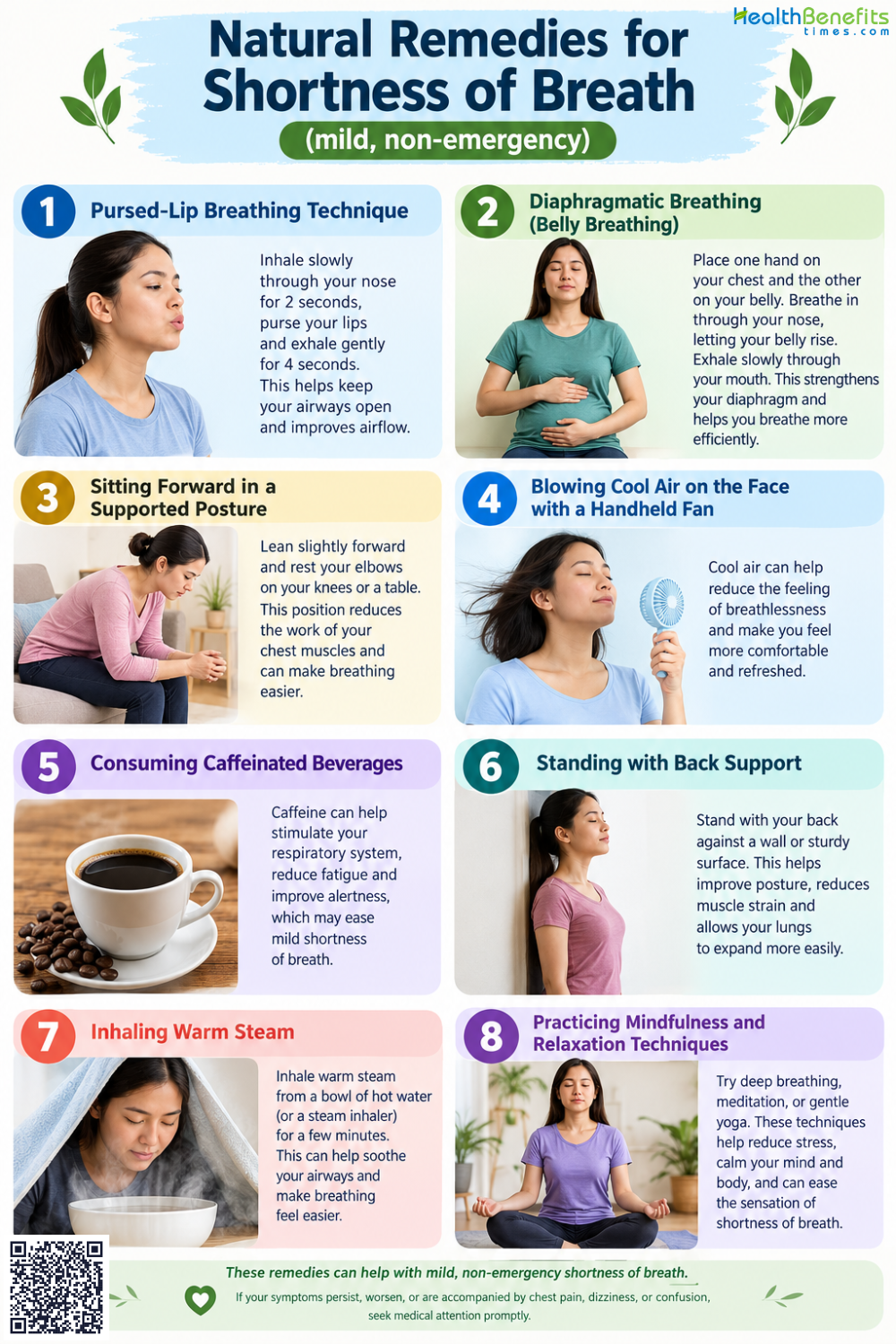
1. Pursed-Lip Breathing Technique
How it may help
This technique creates a small amount of backpressure inside the airways, which helps keep them open longer during exhalation 18. By slowing down the breathing rate, it reduces the physical work required to breathe and allows trapped, stale air to exit the lungs while facilitating better oxygen exchange 18.
What research says
Clinical evidence demonstrates that this breathing method effectively relieves respiratory distress and improves overall gas exchange in the lungs 18. Studies conclude that it successfully reduces carbon dioxide retention and can significantly increase a patient’s physical tolerance and exercise capacity when managing chronic respiratory conditions 19.
How to use it safely
Relax your neck and shoulder muscles while sitting comfortably. Inhale slowly through your nose for two counts, feeling your abdomen expand. Next, pucker your lips as if blowing out a candle, and exhale gently and continuously for four or more counts without forcing the air out 20.
Potential precautions or side effects
Do not force the air out or hold your breath, as this can negatively disrupt normal airflow. Stop immediately if you experience worsening dizziness, lightheadedness, or increased chest discomfort 21.
2. Diaphragmatic Breathing (Belly Breathing)
How it may help
Diaphragmatic breathing engages the primary muscle of respiration to maximize lung efficiency. By actively pulling the diaphragm downward during inhalation, it allows the lower lungs to fully expand. This process slows the overall breathing rate, decreases the physical effort required to breathe, and effectively lowers the body’s oxygen demand 22.
What research says
Clinical research confirms that diaphragmatic breathing significantly improves pulmonary function and blood oxygenation levels. Studies conclude that consistent practice successfully reduces the resting respiratory rate and alleviates the physical sensations of shortness of breath, particularly in patients with mild respiratory impairment or stress-induced breathing difficulties 22.
How to use it safely
Sit comfortably or lie flat. Place one hand on your upper chest and the other on your stomach. Inhale slowly through your nose, ensuring your stomach rises outward against your hand while keeping your chest still. Exhale gently through your mouth as your stomach naturally falls inward 21.
Potential precautions or side effects
This technique requires extra effort initially and may cause temporary lightheadedness or muscle fatigue. Stop immediately if you experience increased shortness of breath, severe dizziness, or chest pain during practice 21.
3. Sitting Forward in a Supported Posture
How it may help
Sitting forward in a supported posture, clinically known as the tripod position, optimizes respiratory mechanics. By leaning forward and supporting the upper body, the chest cavity expands more efficiently. This mechanical adjustment relieves physical pressure on the diaphragm muscle, significantly reducing the effort required to breathe and easing mild discomfort 23.
What research says
Clinical evidence confirms that adopting a forward-leaning posture actively improves lung function during respiratory distress. Research concludes that this specific position effectively increases diaphragm efficiency and oxygen intake, successfully reducing the physical sensation of severe breathlessness in patients managing chronic lung conditions like COPD 24.
How to use it safely
Sit securely on a stable chair with both feet flat on the floor. Lean your chest forward slightly and rest your elbows or forearms comfortably on your knees or a nearby table. Keep your neck and shoulders completely relaxed while breathing slowly 25.
Potential precautions or side effects
Maintaining this posture for extended periods may cause lower back or neck strain. Stop immediately if leaning forward causes dizziness, sudden chest pain, or increases breathing difficulties 1.
4. Blowing Cool Air on the Face with a Handheld Fan
How it may help
Directing a cool stream of air onto the face, specifically around the nose and mouth, actively stimulates the trigeminal nerve. This facial nerve sends vital sensory signals directly to the brain, which successfully alters the central nervous system’s perception of breathlessness, thereby rapidly decreasing the uncomfortable physical sensation of air hunger 26.
What research says
Clinical studies confirm that using a handheld fan is a highly effective, non-pharmacological intervention for relieving mild respiratory distress. Research concludes that this straightforward airflow stimulation significantly reduces breathlessness and improves overall breathing comfort, particularly in patients managing chronic obstructive pulmonary disease or other advanced illnesses 26.
How to use it safely
Hold a small, battery-operated handheld fan approximately six inches away from your face. Direct the cool stream of air straight toward your nose and mouth. Breathe normally and remain relaxed while allowing the continuous airflow to gently sweep across your skin for several minutes 27.
Potential precautions or side effects
Avoid this technique if you have a contagious respiratory infection, because fans actively spread airborne pathogens. Discontinue use immediately if the airflow causes unexpected anxiety or suddenly worsens breathing 28.
5. Consuming Caffeinated Beverages
How it may help
Caffeine is chemically similar to a common medication called theophylline, which is traditionally used to treat breathing problems. When consumed, caffeine naturally relaxes the tight muscles surrounding the lung airways. This widening of the airways allows more air to flow easily in and out, safely reducing the physical effort needed to breathe 29.
What research says
Clinical studies conclude that caffeine provides a modest but measurable improvement in overall airway function for up to four hours after consumption. Research confirms that caffeine successfully reduces airway resistance, temporarily increasing lung capacity and effectively relieving mild breathing difficulties associated with chronic conditions like asthma 30.
How to use it safely
Drink one standard cup of brewed black coffee or strongly steeped black tea when you experience mild breathing discomfort. Sip the beverage slowly while resting in a seated position. Never use caffeinated drinks to replace prescribed rescue inhalers during severe breathing attacks 31.
Potential precautions or side effects
Excessive caffeine consumption can cause a rapid heart rate, muscle jitters, and anxiety, which may worsen breathing discomfort. Avoid this remedy if you have a known underlying heart condition 32.
6. Standing with Back Support
How it may help
Standing with your back fully supported against a flat wall physically stabilizes the chest and shoulder muscles. This upright posture reduces the workload on your primary breathing muscles. It allows the lungs to expand freely and effectively eases the uncomfortable sensation of mild breathlessness 24.
What research says
Clinical studies indicate that supported standing significantly improves respiratory mechanics. Research concludes that utilizing proper body positioning effectively reduces the physical effort required to breathe. This posture rapidly relieves mild respiratory distress and improves overall lung capacity in individuals managing chronic breathing difficulties 24.
How to use it safely
Lean your back and hips firmly against a sturdy wall. Place your feet shoulder-width apart, positioned slightly away from the baseboard. Relax your shoulders, let your arms hang loosely, and focus on taking slow, controlled breaths until your normal breathing pattern returns 33.
Potential precautions or side effects
Avoid this standing posture if you feel dizzy or lightheaded, to prevent dangerous falls. If breathing worsens while standing, sit down immediately and seek emergency medical care 1.
7. Inhaling Warm Steam
How it may help
Inhaling warm steam introduces heated moisture directly into the respiratory tract. This soothing humidity actively thins and loosens thick mucus trapped inside the lungs and nasal passages. By clearing these natural airway blockages, steam therapy directly reduces airway irritation and significantly decreases the physical effort required to breathe comfortably during mild respiratory infections 34.
What research says
Clinical studies indicate that steam inhalation effectively provides temporary symptomatic relief for acute respiratory conditions. Research concludes that heated moisture significantly improves the body’s natural ability to clear mucus from the upper airways. While it does not cure underlying infections, it successfully alleviates the physical sensation of mild breathlessness and improves overall respiratory comfort 34.
How to use it safely
Fill a heat-safe bowl with hot, steaming water. Lean over the bowl, keeping your face at least ten inches above the water to prevent accidental skin burns. Drape a towel over your head to trap the moisture, and take slow, deep breaths for several minutes 35.
Potential precautions or side effects
Never use violently boiling water, to prevent severe facial burns. Stop immediately if the heated steam triggers coughing spasms or worsens your breathing, particularly if you have asthma 34.
8. Practicing Mindfulness and Relaxation Techniques
How it may help
Anxiety frequently worsens breathing difficulties by triggering rapid, shallow breaths. Mindfulness and relaxation techniques actively calm the central nervous system, effectively interrupting the physiological cycle of panic and hyperventilation. By intentionally relaxing tense muscles, these methods slow the heart rate, decrease oxygen demand, and naturally restore a controlled breathing pattern 36.
What research says
Clinical research confirms that psychological distress intensifies the physical sensation of breathlessness. Studies conclude that mindfulness interventions significantly reduce anxiety-induced hyperventilation and improve subjective respiratory comfort. Consistent practice successfully decreases the emotional distress associated with breathing challenges, particularly in patients managing chronic respiratory diseases 37.
How to use it safely
Sit in a quiet, comfortable environment and close your eyes. Focus your complete attention on the natural, gentle rhythm of your breath. Slowly tense and then consciously relax each muscle group in your body, starting from your toes and gradually moving upward toward your neck 36.
Potential precautions or side effects
Never use relaxation techniques to delay necessary medical intervention. Stop practicing and seek immediate emergency care if your shortness of breath suddenly worsens or if you develop chest pain 38.
Foods to Avoid When You Suffer from Shortness of Breath (mild, non-emergency)
1. High-Sodium Foods
High salt intake causes fluid retention. This increased fluid volume restricts pulmonary function and actively worsens breathing difficulties in patients with existing cardiovascular or respiratory diseases 39.
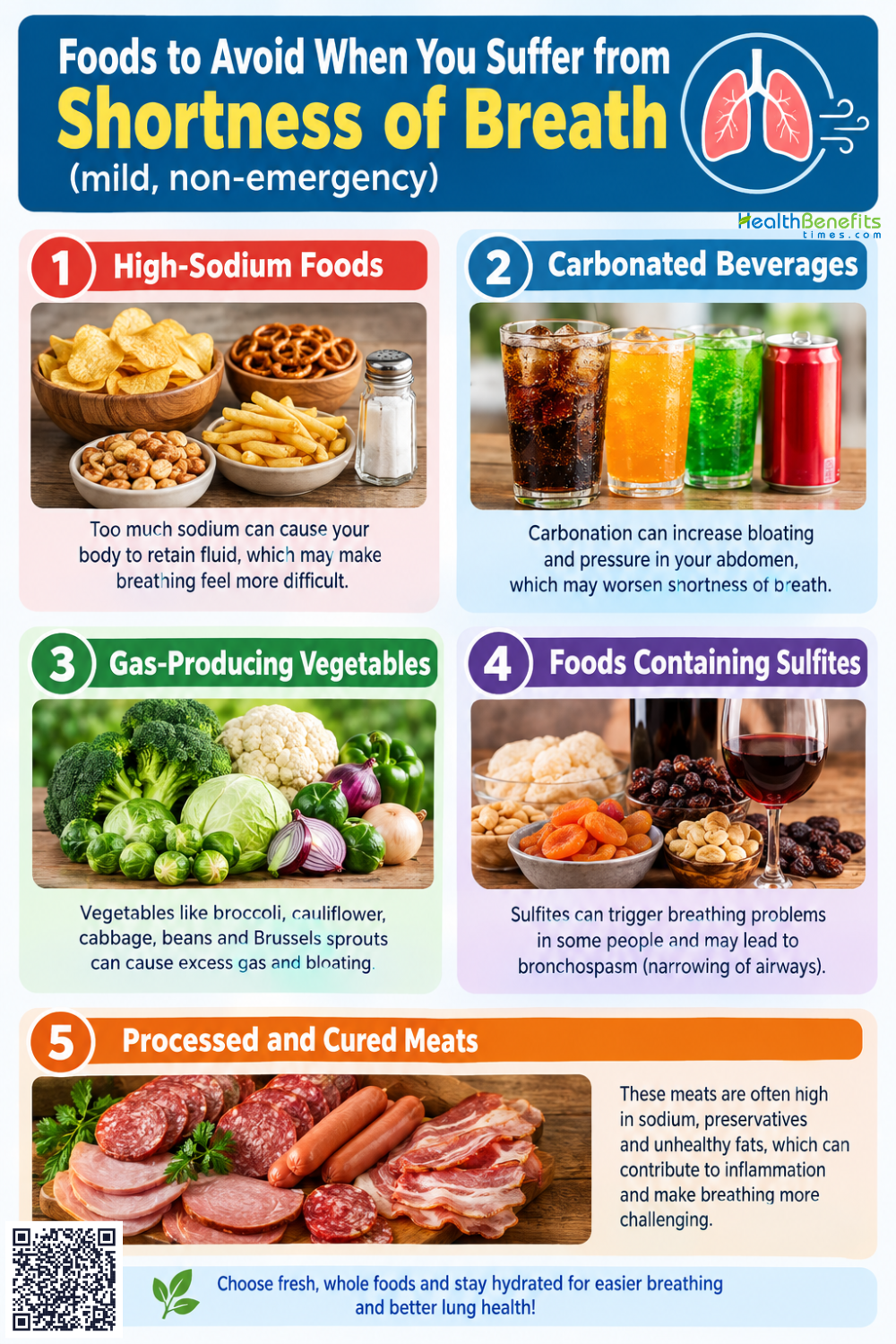
2. Carbonated Beverages
Sodas and sparkling waters introduce gas into the stomach. This bloating physically pushes against the diaphragm, preventing full lung expansion and exacerbating breathlessness 40.
3. Gas-Producing Vegetables
Digesting beans, broccoli, and cabbage creates intestinal gas. Severe abdominal bloating restricts downward diaphragm mobility, physically preventing the lungs from expanding to their full capacity 41.
4. Foods Containing Sulfites
Chemical preservatives in dried fruits and wine provoke respiratory reactions. Sulfites directly irritate lung airways, quickly causing chest tightness and breathlessness in sensitive individuals 42.
5. Processed and Cured Meats
Nitrates in bacon and deli meats negatively impact respiratory health. Clinical evidence associates high consumption of these preservatives with decreased lung function and worsened breathlessness 43.
When to See a Doctor When You Struggle from Shortness of Breath (mild, non-emergency)
1. Unexplained or Persistent Breathlessness
Make a doctor’s appointment if mild shortness of breath occurs without a known cause and persists for several weeks without resolving on its own 38.
2. Worsening with Routine Activities
Consult a physician if you notice progressive difficulty breathing while performing everyday tasks, such as walking up a single flight of stairs or doing light chores 38.
3. Difficulty Breathing When Lying Flat
Seek medical evaluation if you must prop yourself up with multiple pillows to breathe comfortably while sleeping, as this frequently indicates fluid accumulation in the lungs 16.
4. Swelling in the Ankles and Feet
Schedule a medical exam if breathlessness is accompanied by new swelling in your lower extremities, which strongly suggests a decline in the heart’s pumping ability 6.
5. Accompanied by a Chronic Cough
See a healthcare provider if your mild shortness of breath occurs alongside a persistent cough, daily wheezing, or frequent mucus production lasting longer than three weeks 44.