

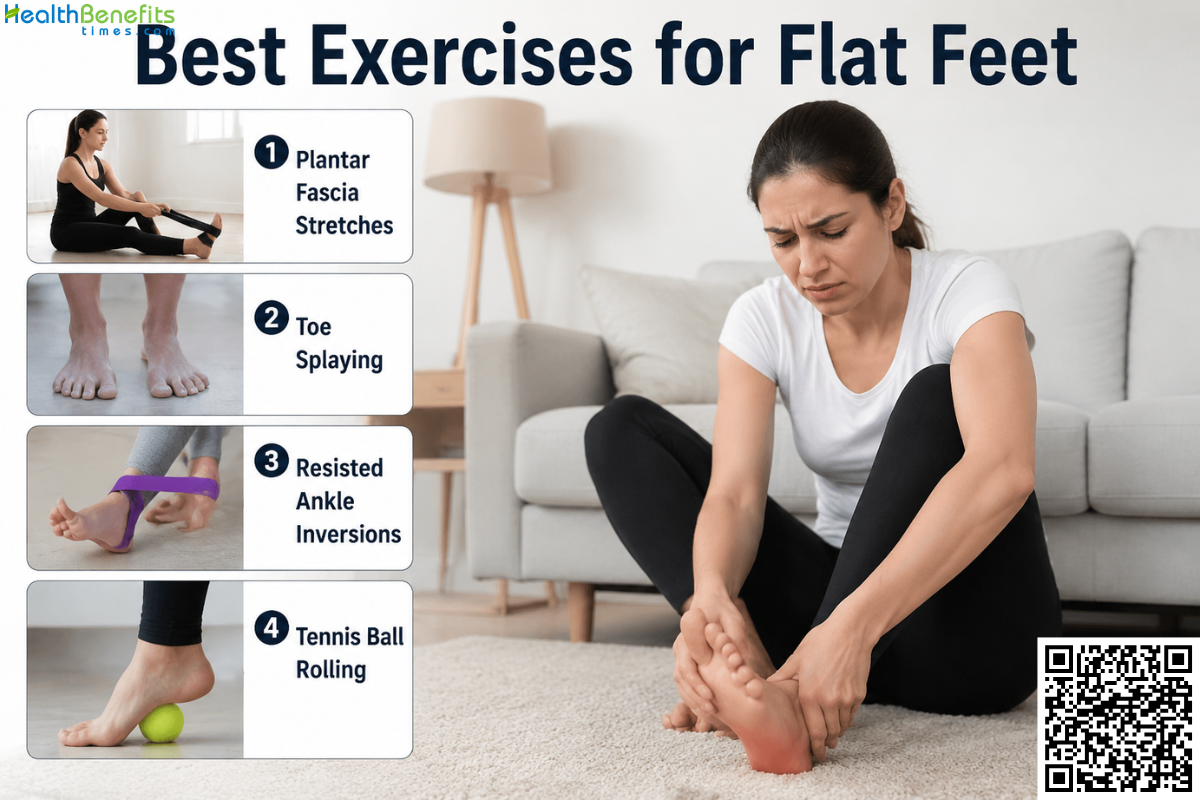
Flat feet, clinically known as pes planus, is a common condition characterized by the partial or complete collapse of the foot’s inner arch. When a person with flat feet stands, the entire sole comes into direct contact with the floor. This structural trait is normal in infants and toddlers because the arches do not fully develop until around ages seven to ten 1. Conversely, flat feet can develop in adulthood due to tendon dysfunction, obesity, or joint wear and tear 2. While often painless, the absence of a supportive arch permanently alters the body’s natural alignment and weight distribution. Over time, this shift increases strain on the lower body, raising the risk of joint wear and aching pain in the feet, ankles, knees, or lower back 3. When symptoms arise, clinical management prioritizes conservative treatments, using custom shoe inserts, physical therapy, and supportive footwear to restore stability and relieve discomfort 4.
Causes of Flat Feet
- Tendon Damage or Weakness: The posterior tibial tendon connects the calf muscle to the inside of the foot and serves as the primary support for the arch. If this tendon becomes inflamed, stretched, or torn due to age or overuse, the arch gradually collapses. This condition is the most frequent cause of flat feet developed in adulthood 5.
- Genetics and Childhood Development: Many cases of flat feet are inherited. In some individuals, the structural tissues remain abnormally loose, or the arch simply fails to form properly during normal childhood growth, resulting in a lifelong flat foot structure 1.
- Bone Fractures and Foot Trauma: Direct physical injuries, such as broken bones or dislocated joints in the midfoot or ankle, can permanently alter the physical alignment and structural integrity required to hold the arch upright 6.
- Inflammatory Arthritis: Systemic joint diseases, particularly rheumatoid arthritis, attack the protective lining of the joints. This chronic inflammation destroys the vital cartilage and ligaments that hold the foot bones in place, eventually causing the arch structure to fall 7.
- Nerve and Muscle Disorders: Medical conditions that disrupt brain-to-muscle communication, such as cerebral palsy, spina bifida, or muscular dystrophy, create severe muscle imbalances. These imbalances prevent the foot muscles from properly supporting the skeletal arch 1.
- Excess Body Weight and Pregnancy: Carrying significant excess weight, whether through obesity or during pregnancy, places chronic, amplified strain on the feet. This heavy downward pressure continually stretches the supporting ligaments until the arch gives way 8.
Symptoms of Flat Feet
- Foot and Ankle Pain: The most common symptom is an aching or sharp pain located in the foot’s arch, the heel, or along the inner side of the ankle. This discomfort typically worsens during weight-bearing activities like prolonged standing, walking, or running 1.
- Rapid Foot Fatigue: Individuals frequently experience tired, heavy, or aching feet much faster than those with normal arches, especially after physical exertion or spending a long day standing 4.
- Inner Ankle Swelling: Noticeable swelling or localized inflammation can develop along the inside of the ankle. This is often a direct clinical sign that the posterior tibial tendon, which supports the arch, is strained or damaged 5.
- Altered Walking Mechanics (Overpronation): The ankles may visibly roll inward when standing or moving. This structural shift alters a person’s natural gait, makes balancing more difficult, and typically causes the inside heels of shoes to wear down rapidly and unevenly 1.
- Secondary Joint Pain: Because the absence of a supportive arch disrupts the normal alignment of the legs, the resulting imbalance alters how the body absorbs physical shock. Over time, this poor alignment can trigger radiating aches and chronic pain in the knees, hips, and lower back 1.
Best Exercises for Flat Feet
1. Short Foot Exercises
How it may help
The short foot exercise specifically targets and strengthens the small, deep muscles within the bottom of the foot. By contracting these inner muscles, the exercise actively lifts the fallen arch without curling the toes, helping to restore structural support and improve foot alignment during daily movements 9.
What research says
Clinical studies demonstrate that short foot exercises effectively increase arch height and improve overall balance in individuals with flat feet. Research concludes that performing this specific movement is significantly more effective at strengthening the inner foot muscles and reducing arch collapse than traditional toe-curling exercises 10.
How to use it safely
Sit barefoot in a chair with your feet flat on the floor. Slide the ball of your foot backward toward your heel to raise your arch. Keep your toes completely flat and relaxed on the ground. Hold the lifted position for five seconds, then gently release.
Potential precautions or side effects
You may experience mild foot cramping when first learning this movement. Stop the exercise immediately if you feel sharp or worsening pain in your arch, heel, or ankle.
2. Standing Heel Raises
How it may help
Standing heel raises specifically target and strengthen the posterior tibial tendon and calf muscles. Because this tendon acts as the primary active support for the foot’s inner arch, strengthening it provides vital structural stability. This movement effectively helps correct ankle weakness and improves overall alignment during walking 11.
What research says
Clinical studies demonstrate that progressive heel raises, particularly those emphasizing the slow downward phase, significantly improve tendon capacity. Research concludes that these specific tendon-loading exercises successfully decrease inner foot pain, increase arch stability, and restore functional mobility in individuals with adult-acquired flat feet 12.
How to use it safely
Stand near a sturdy wall or chair for physical balance. Position your feet shoulder-width apart. Slowly push upward onto the balls of your feet, hold the lifted position briefly, and carefully lower your heels to the floor. Focus entirely on smooth, controlled movements.
Potential precautions or side effects
Stop the exercise if you feel sharp pain in the heel or Achilles tendon. Overworking these tissues too quickly may cause painful calf cramping or localized tendon inflammation.
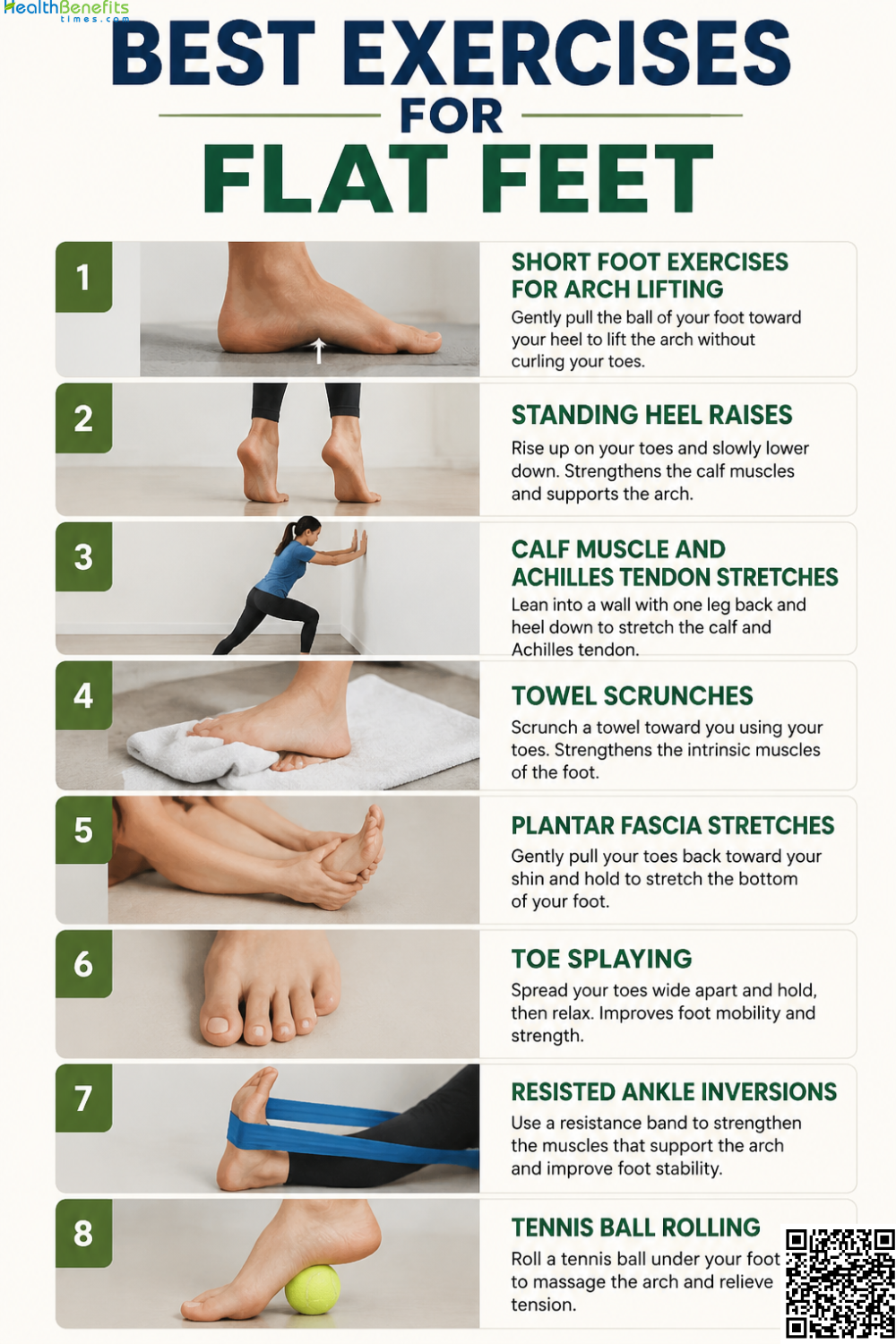
3. Calf Muscle and Achilles Tendon Stretches
How it may help
Tight calf muscles and a rigid Achilles tendon pull upward on the heel bone, forcing the inner arch to collapse during movement. Stretching these tissues reduces mechanical tension. This restored flexibility prevents the heel from rolling inward and lessens the daily physical strain on the arch structure 13.
What research says
Clinical evidence confirms that an abnormally tight Achilles tendon is a primary contributor to adult-acquired flat feet. Research concludes that consistent calf stretching significantly increases ankle joint flexibility, effectively relieving arch pain and reducing the abnormal structural forces placed on the midfoot during physical activity 1.
How to use it safely
Stand facing a wall with your hands pressed against it. Step one leg backward, keeping that knee completely straight and your heel firmly on the floor. Gently lean your hips forward until you feel a stretch in your lower leg. Hold the position for thirty seconds.
Potential precautions or side effects
Never bounce while stretching, as this can cause small muscle tears. Stop immediately if you feel sharp pain directly in the heel or along the back of your ankle.
4. Towel Scrunches
How it may help
Towel scrunches strengthen the intrinsic muscles located along the bottom of the foot. Activating these deep muscles helps stabilize the toes and reinforces the arch structure. By improving muscle endurance, this exercise lessens the physical strain placed on the foot’s supportive ligaments, helping to maintain natural alignment 14.
What research says
Clinical studies indicate that traditional towel curling effectively engages the flexor muscles of the toes and the inner arch. Research concludes that these intrinsic muscle exercises significantly improve foot stability, enhance arch support, and reduce overall lower limb fatigue in patients experiencing structural arch collapse 9.
How to use it safely
Sit in a chair and place a small towel flat on a smooth floor. Position your bare foot on the towel’s edge. Use your toes to firmly grip and pull the fabric toward your heel. Hold briefly, release, and repeat until the towel is fully gathered.
Potential precautions or side effects
Overworking the toe muscles can cause severe foot cramping or arch spasms. Stop the exercise immediately if you experience sharp pain or prolonged discomfort in the sole or toes.
5. Plantar Fascia Stretches
How it may help
The plantar fascia is a thick tissue band connecting the heel to the toes. In flat feet, this supportive tissue often becomes tight. Stretching the plantar fascia relieves physical tension, improves flexibility, and reduces the chronic strain that causes aching heels and arch discomfort 15.
What research says
Clinical studies show that specifically stretching the plantar fascia significantly relieves chronic heel and arch pain. Research concludes that maintaining flexibility in this tissue restores proper weight distribution and improves daily walking ability for patients experiencing severe foot strain caused by flattened arches 16.
How to use it safely
Sit down and cross your affected foot over your opposite knee. Use your hand to gently pull your toes backward toward your shin until you feel a firm stretch along the bottom of your foot. Hold the position for thirty seconds, then release slowly.
Potential precautions or side effects
Avoid pulling your toes aggressively, as extreme overstretching can tear the connective tissue. Stop immediately if you feel a sharp, sudden snapping sensation or intense heel pain.
6. Toe Splaying
How it may help
Toe splaying targets the abductor hallucis, a critical deep muscle running along the inner edge of the foot. By actively spreading the toes apart, this exercise strengthens the primary muscular support system that physically holds up the arch, improving overall foot stability and alignment 17.
What research says
Clinical evidence demonstrates that strengthening the abductor hallucis muscle through toe abduction exercises significantly increases medial arch height. Research concludes that these specific movements effectively reduce arch collapse, improve structural balance, and mitigate the faulty walking patterns commonly caused by flexible flat feet 18.
How to use it safely
Sit comfortably in a chair with your bare feet resting flat on the ground. Actively spread all your toes as far apart as possible without lifting your heel or the ball of your foot. Hold the widened position for five seconds, then relax.
Potential precautions or side effects
You may experience mild cramping in the sole when first attempting this movement. Stop immediately if you feel sharp pain in the inner arch or the big toe joint.
7. Resisted Ankle Inversions
How it may help
Resisted ankle inversions actively strengthen the posterior tibial tendon, the primary support structure for the inner arch. By using a resistance band to pull the foot inward against tension, this exercise builds muscle strength. This targeted conditioning helps prevent the foot from rolling inward, reducing overall structural strain 5.
What research says
Clinical studies demonstrate that strengthening exercises targeting the posterior tibial tendon significantly improve arch stability and reduce inner ankle pain. Research concludes that structured resistance training effectively increases tendon capacity and muscle endurance, successfully correcting the structural collapse associated with adult-acquired flat feet 19.
How to use it safely
Sit on the floor with your legs extended. Secure a resistance band around your affected foot and anchor the other end outward. Keeping your heel grounded, slowly rotate your foot inward against the tension. Hold briefly, then return to the start with controlled motion.
Potential precautions or side effects
Avoid using excessively heavy resistance bands, as this can severely overstrain the ankle joint. Stop immediately if you experience sharp pain along the inner ankle or calf muscle.
8. Tennis Ball Rolling
How it may help
Rolling a tennis ball under the foot acts as a self-massage technique that targets the tight plantar fascia and deep muscles. Applying firm, controlled pressure loosens these rigid tissues, improves local circulation, and relieves the chronic arch and heel stiffness commonly caused by flat feet 20.
What research says
Clinical research indicates that self-myofascial release using a massage ball effectively reduces tissue stiffness and increases joint flexibility. Studies conclude that this direct pressure therapy significantly decreases bottom-of-foot pain, enhances range of motion, and improves daily functional mobility in patients experiencing severe arch strain 21.
How to use it safely
Sit comfortably in a chair and place a tennis ball under the arch of your bare foot. Gently roll the ball back and forth from your heel to the base of your toes. Apply steady downward pressure, continuing the massage for two to three minutes per foot.
Potential precautions or side effects
Avoid pressing too hard, which can bruise the tissue. Stop immediately if you experience sharp, shooting pain or if the ball rolls directly over a swollen, inflamed joint.
Foods to Avoid When You Suffer from Flat Feet
1. Refined Sugars
Consuming excess sugar triggers systemic inflammation by releasing pro-inflammatory cytokines, which worsens joint swelling and exacerbates the pain associated with strained foot tendons 22.
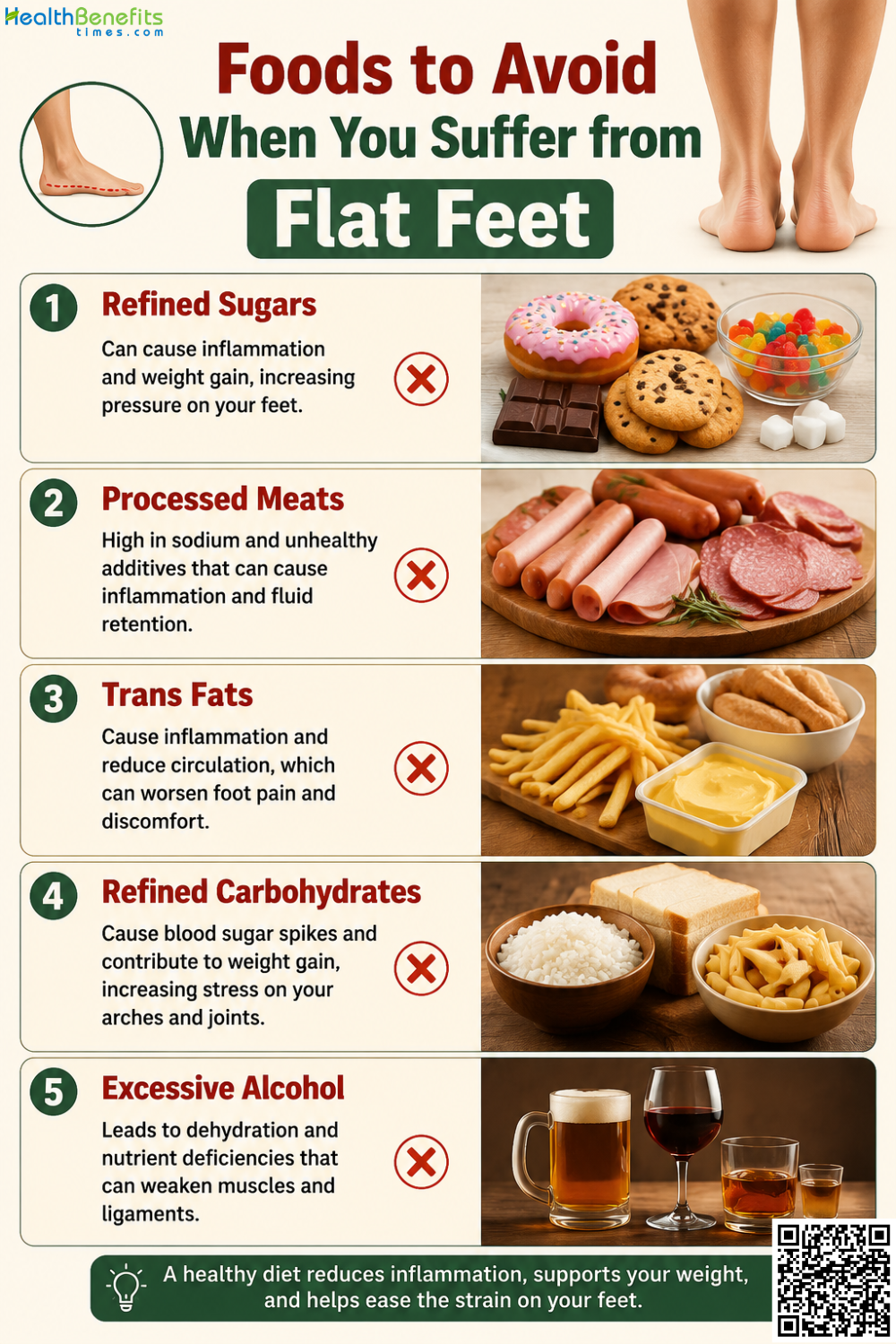
2. Processed Meats
These meats contain inflammatory compounds that increase systemic tissue stress, significantly worsening chronic inflammation and pain in the weight-bearing joints of flat feet 23.
3. Trans Fats
Found in many fried foods, trans fats strongly promote systemic inflammation. This biochemical response aggravates existing tendonitis and accelerates joint wear in structurally unsupported arches 24.
4. Refined Carbohydrates
White flour products rapidly spike blood sugar and contribute to obesity. Excess body weight places severe mechanical strain on weakened arches, accelerating structural collapse 8.
5. Excessive Alcohol
Heavy alcohol intake increases systemic inflammation and impairs cellular repair, directly hindering the body’s ability to heal the damaged or strained connective tissues supporting the arch 25.
When to see a Doctor when you struggle from Flat Feet
- Persistent Pain: Consult a physician if you experience chronic foot, ankle, or lower back pain that does not improve with rest, supportive footwear, or physical therapy 1.
- Sudden Arch Collapse: Seek medical evaluation if your arch falls abruptly or develops only on one side, as this indicates a potentially severe posterior tibial tendon tear 5.
- Severe Stiffness or Rigidity: Schedule a clinical examination if your foot feels abnormally stiff. A rigid flat foot often signals underlying bone fusions or joint arthritis requiring specialized intervention 1.
- Neurological Symptoms: See a doctor immediately if you develop numbness, tingling, or physical weakness in your foot, as structural collapse can severely compress nearby nerve pathways 3.
- Difficulty Walking: Obtain a medical assessment if structural changes in your feet cause a noticeable limp, frequent loss of balance, or an inability to perform daily standing activities 4.