

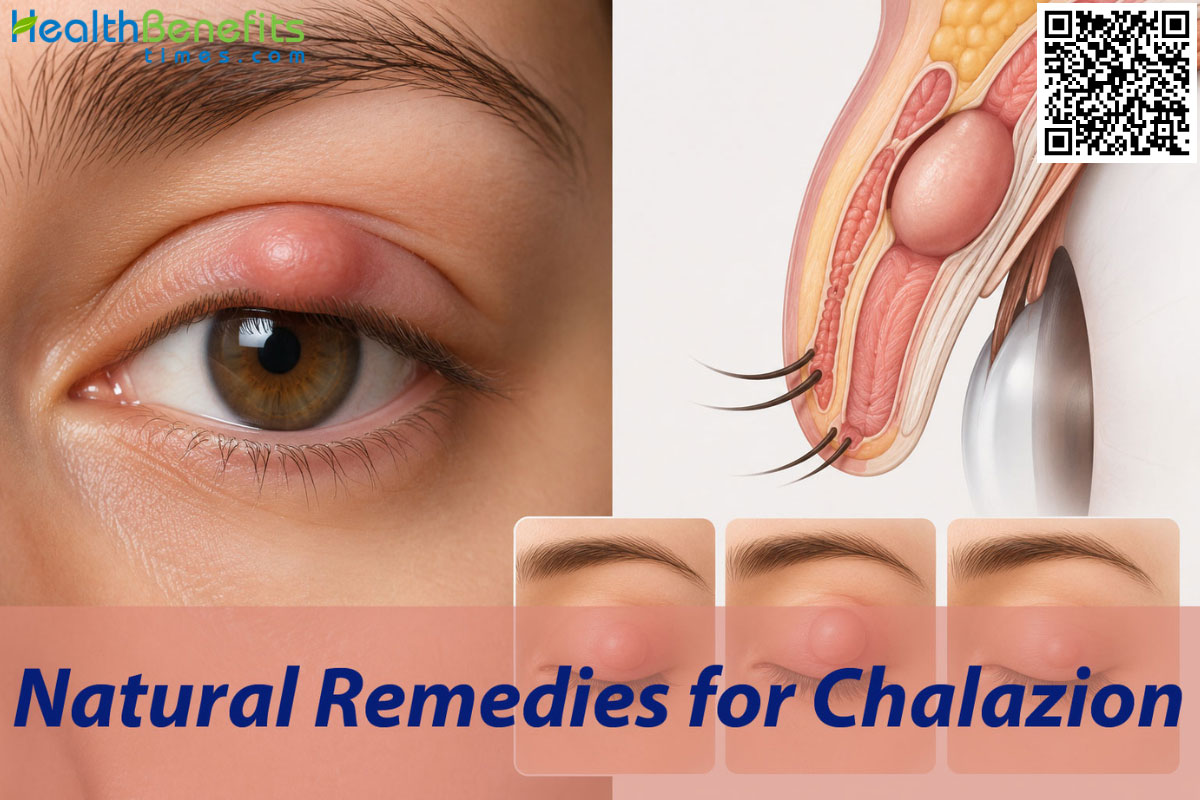
A chalazion is a slow-growing, typically painless, localized swelling or lump that safely forms on either the upper or lower eyelid. This benign cyst develops when one of the meibomian glands, the tiny, specialized glands located at the edge of the eyelid that are responsible for producing the essential oily layer of your tear film becomes physically blocked. When these thick, oily secretions cannot properly drain onto the surface of the eye, they back up and leak into the surrounding delicate eyelid tissue. This internal leakage triggers an inflammatory response, leading the body to wall off the trapped oil and construct a small, hardened nodule medically known as a granuloma. Unlike a common stye, which is an active bacterial infection causing immediate, sharp pain at the eyelash base, a chalazion usually begins as a mildly tender swollen area that quickly evolves into a firm, painless bump. While mostly harmless, a large chalazion can press against the cornea, temporarily distorting your vision. 1. 2. 3.
Causes of Chalazion
Understanding the biological origins of eyelid swelling is essential for determining the most effective course of action. The development of a chalazion is rarely a spontaneous event; rather, it is usually linked to underlying functional, environmental, or systemic factors that compromise glandular outflow.
1. Meibomian Gland Dysfunction (MGD)
The structural foundation of the eyelid relies heavily on the meibomian glands, which produce the lipid layer of the tear film. MGD is a chronic and diffuse abnormality characterized by terminal duct obstruction and qualitative or quantitative changes in glandular secretion 4. When the delicate oils produced by these glands thicken from the consistency of olive oil to that of a solid wax or toothpaste, the excretory ducts become completely blocked. This high-delivery state of abnormal lipids directly leads to the formation of deep lipogranulomas.
2. Acne Rosacea and Ocular Rosacea
This systemic inflammatory skin condition frequently extends its reach to the eyes, creating an environment highly conducive to glandular blockages. In individuals suffering from ocular rosacea, meibomian gland hypersecretion occurs alongside a noticeable shift in the meibum’s consistency, rendering it turbid and heavily prone to plugging the microscopic excretory ducts 5. The chronic inflammation associated with this condition continuously degrades the ocular surface, making recurrent chalazia a common and frustrating consequence.
3. Seborrheic Dermatitis
A persistent inflammatory skin disorder involving areas rich in sebaceous glands, which can trigger a high-delivery state of abnormal lipids at the eyelid margin 6. People with seborrheic dermatitis often experience excessive flaking and cellular turnover along the lash line. These microscopic skin flakes frequently fall into the gland orifices, creating a mechanical barrier that prevents the normal excretion of sebum, ultimately resulting in a superficial or deep chalazion.
4. Demodex Mite Infestation
Microscopic parasitic mites known as Demodex folliculorum and Demodex brevis naturally reside in human hair follicles and sebaceous glands. However, when these populations overproliferate, they can physically block the meibomian orifices with their bodies and waste products 7. Furthermore, the bacteria carried on the surface of these mites can trigger severe, localized inflammatory cascades that incite the granulomatous response characteristic of persistent eyelid nodules.
5. Dietary Imbalances and Nutritional Deficits
Systemic health heavily dictates localized glandular function, meaning poor dietary habits directly impact the eyes. Excessive consumption of saturated fats, simple carbohydrates, processed meats, and sugary beverages alters the body’s baseline lipid profile and promotes widespread metabolic inflammation 8. A diet lacking in essential omega-3 fatty acids often results in the production of thick, highly viscous meibum that easily solidifies within the eyelid.
6. Gut Microbiome Dysbiosis
Emerging clinical evidence continues to highlight a strong “gut-eye axis,” revealing that an imbalance in intestinal flora fundamentally alters systemic immune responses. Disruption of the gut microbiome reduces the production of beneficial short-chain fatty acids, thereby increasing the likelihood of chronic, unchecked inflammation throughout the body, including the delicate tissues of the eyelids 9.
7. Inadequate Eyelid Hygiene and Cosmetic Residue
Daily environmental exposures leave behind a microscopic layer of debris on the ocular adnexa. The accumulation of dead skin cells, dried natural tears, airborne dust, and residual cosmetic products especially waterproof mascara and heavy eyeliner can create stubborn mechanical blockages right over the gland openings. Without routine cleansing, this debris hardens and acts as a physical plug, forcing the newly produced oils to back up into the tarsal plate and form a cyst.
Symptoms of Chalazion
Recognizing the specific physical signs of this condition helps to clearly distinguish it from other active ocular infections or malignant lesions. The clinical presentation remains highly consistent across most demographics, offering a predictable timeline of progression.
- The gradual emergence of a distinct, rounded, and typically painless nodule on either the upper or lower eyelid, which may take several days to become fully localized.
- A firm, sometimes rubbery mass that can be palpated deep within the tarsal plate of the eyelid, feeling distinctly separate from the loose surface skin.
- Mild, localized redness and diffuse swelling during the very early stages of glandular blockage, which eventually subsides within a few days to leave only the solid, uninflamed lump.
- Increased tearing or epiphora, resulting from the compromised lipid layer of the tear film failing to prevent rapid tear evaporation.
- A feeling of mild heaviness or fatigue in the affected eyelid due to the added physical weight and mass of the encapsulated cyst.
- Blurred or temporarily distorted vision, which occurs only if the lipogranuloma grows large enough to press directly against the curvature of the cornea, thereby inducing temporary mechanical astigmatism.
- A complete absence of acute, severe pain upon touching or pressing the lesion, a hallmark characteristic that distinguishes it clinically from an active, infected hordeolum (stye).
- Occasional light sensitivity (photophobia) if the internal surface of the eyelid becomes rough and rubs uncomfortably against the conjunctiva during normal blinking.
Chalazion Facts
Gathering reliable data on eyelid lesions provides a clearer perspective on how common, predictable, and manageable they truly are. The following table synthesizes the most pertinent clinical facts regarding the condition to provide a comprehensive overview.
| Feature | Detailed Facts |
| Symptoms |
|
| Causes |
|
| Types of Chalazion |
|
| How does it spread? |
|
| Age Group |
|
| Risk Factors |
|
| How doctors diagnose |
|
| Other facts |
|
Natural Remedies for Chalazion
Taking proactive steps to manage a blocked eyelid gland requires consistency, patience, and a dedicated focus on localized hygiene. When managing a chalazion, the primary objective revolves around naturally softening the hardened oils trapped inside the gland, reducing the surrounding granulomatous inflammation, and encouraging the body’s innate lymphatic drainage system to clear away the cellular debris.
1. Warm, Moist Compresses
Applying sustained, therapeutic heat is universally recognized by the medical community as the most critical first-line intervention for any blocked meibomian gland. The lipids produced by healthy eyelid glands normally exhibit the clear, fluid consistency of olive oil. However, when a chalazion forms, these internal oils have pathologically solidified into a thick, cloudy, wax-like substance. By applying a localized warm compress, the temperature of the eyelid tissue is raised above the melting point of this trapped meibum typically requiring temperatures just above 40°C thereby thoroughly liquefying the stubborn blockage. Clinical evaluations examining therapeutic interventions have shown that applying a moist-heat generating eye mask for at least 10 minutes significantly improves tear break-up time and facilitates essential glandular drainage 13. It is highly recommended to rely on commercially available microwavable masks filled with silica beads or self-heating eye masks rather than basic wet washcloths, as the latter rapidly lose their thermal energy to the surrounding air and consistently fail to maintain the necessary therapeutic temperature deep within the tarsal plate.
Note: You apply the warmed mask directly over your gently closed eyelids for 10 to 15 minutes, repeating this soothing process three to four times a day until the hard lump fully subsides.
2. Eyelid Margin Cleansing with Diluted Baby Shampoo
Maintaining an exceptionally pristine environment exactly along the lash line prevents the continuous accumulation of dead skin cells, dried tears, and environmental debris that can further plug the vulnerable glandular orifices. Using a very mild, tear-free surfactant, such as carefully diluted baby shampoo, helps break down the crusts and surface tension of external oxidized oils without aggressively irritating the delicate conjunctival tissues or disrupting the tear film. Rigorous clinical trials comparing the efficacy of diluted baby shampoo to expensive commercial eyelid cleansers have demonstrated that both methods significantly reduce ocular irritability and rapidly resolve uncomfortable symptoms in patients dealing with meibomian gland dysfunction 14. The goal behind this remedy is never to scrub the eyelid skin aggressively, but rather to gently sweep away the microscopic biofilm resting exactly at the root of the eyelashes where the tiny glands open to the surface.
Note: You use a clean cotton swab or a soft, lint-free cloth dipped in the diluted soapy mixture to gently sweep back and forth across the base of your eyelashes twice a day.

3. Application of Diluted Tea Tree Oil
When chronic eyelid inflammation is intrinsically linked to an overpopulation of microscopic Demodex mites, tea tree oil serves as a highly effective natural remedy due to its potent antiparasitic, antibacterial, and antifungal biochemical properties. The primary active compound found in tea tree oil, terpinen-4-ol, has been shown clinically to rapidly eradicate these mites, thereby removing the physical blockages they create and drastically reducing the severe localized inflammation that invariably leads to recurrent chalazia 15. Because pure, undiluted essential oils are exceptionally toxic and can cause immediate chemical burns to the ocular surface, it is vital to only use specially formulated, commercially available eyelid wipes pre-impregnated with a low concentration of tea tree oil, or to very carefully dilute the pure oil heavily with a neutral, safe carrier oil.
Note: You carefully wipe the closed eyelid margins with the diluted solution or pre-moistened wipe just once daily, ensuring the volatile liquid absolutely does not enter the eye itself.
4. Castor Oil Therapy
Rich in a highly unique and beneficial fatty acid called ricinoleic acid, castor oil possesses notable natural anti-inflammatory and profound moisturizing capabilities. When applied topically to the eyelid, it gently penetrates the outer epidermal layers of the skin to soothe the granulomatous inflammation immediately surrounding the blocked meibomian gland. Furthermore, low-concentration castor oil applications have been extensively documented to improve overall tear stability, remarkably facilitate the ease of meibum expression, and prevent rapid, uncomfortable tear evaporation 16. It effectively acts as a reliable external lipid barrier, offering immense symptomatic relief from the dry, scratchy, foreign-body sensation that almost always accompanies severe eyelid swelling.
Note: You apply a tiny, single drop of pure, cold-pressed, hexane-free castor oil to a clean cotton swab and lightly dab it onto the outer skin of the closed eyelid directly over the chalazion right before going to sleep.
5. Omega-3 Fatty Acid Supplementation
Addressing a resilient chalazion from the inside out involves deliberately modifying the actual chemical composition of the oils your body continuously produces. Omega-3 fatty acids, commonly abundant in wild-caught fish oil, flaxseed, and algae, possess powerful systemic anti-inflammatory properties that directly and positively influence meibomian gland output. By increasing the dietary intake of these essential polyunsaturated fats, the body reduces pro-inflammatory arachidonic acid pathways, and the meibum naturally shifts from a thick, turbid consistency back to a thinner, healthier, more fluid state, making it far less likely to ever become trapped inside the narrow ducts. Controlled clinical studies reveal that consistent oral omega-3 supplementation significantly improves tear stability and reduces eyelid margin inflammation over a comprehensive three-month evaluation period 17.
Note: You seamlessly consume these beneficial fats daily by eating fatty fish like salmon, generously adding chia seeds to your meals, or taking a high-quality nutritional supplement.
6. Probiotic Supplementation for the Gut-Eye Axis
Surprisingly, intestinal health plays an absolutely vital role in determining precisely how the human body handles inflammation on the distant surface of the eyes. The complex gut microbiome constantly regulates systemic immune responses, and diligently correcting an imbalance in intestinal flora can effectively halt the chronic inflammatory feedback loops that predictably lead to recurrent blocked glands. Recent clinical interventions have documented a considerable, measurable difference in the time taken for the complete resolution of chalazia in individuals who supplement their daily diets with specific probiotic strains, such as Streptococcus thermophilus and Lactococcus lactis, compared to those relying solely on topical therapies 18. By purposefully fostering a healthy, diverse digestive tract, localized inflammation across the skin and glandular tissues of the face is inherently calmed.
Note: You ingest a high-quality, broad-spectrum daily probiotic capsule or significantly increase your routine intake of natural fermented foods like yogurt, kefir, and sauerkraut to support comprehensive systemic healing.
Is there any exercise or physical activities for Chalazion?
Incorporating specific, targeted physical movements of the eyelids is just as important as utilizing localized heat or dietary adjustments. The meibomian glands function much like tiny tubes of toothpaste; they absolutely require regular, rhythmic mechanical pressure from the surrounding anatomical muscles to successfully push the oil out onto the surface of the eye.
1. Targeted Eyelid Massage
Once a thoroughly applied warm compress has successfully melted the hardened, waxy lipids trapped deeply inside the chalazion, deliberate mechanical manipulation is necessary to physically expel the newly liquefied fluid from the gland. Without targeted physical massage immediately following the application of heat, the oil will simply cool down within minutes and harden once again within the duct, leaving the stubborn bump completely unchanged. To correctly perform this therapy, gentle, directional pressure must be applied to mimic the natural, vertical outflow of the gland’s anatomy.
Note: You do this immediately after a 10-minute warm compress by using a clean, warm fingertip to roll firmly from the base of the swollen eyelid toward the eyelash line for about 30 to 60 seconds.
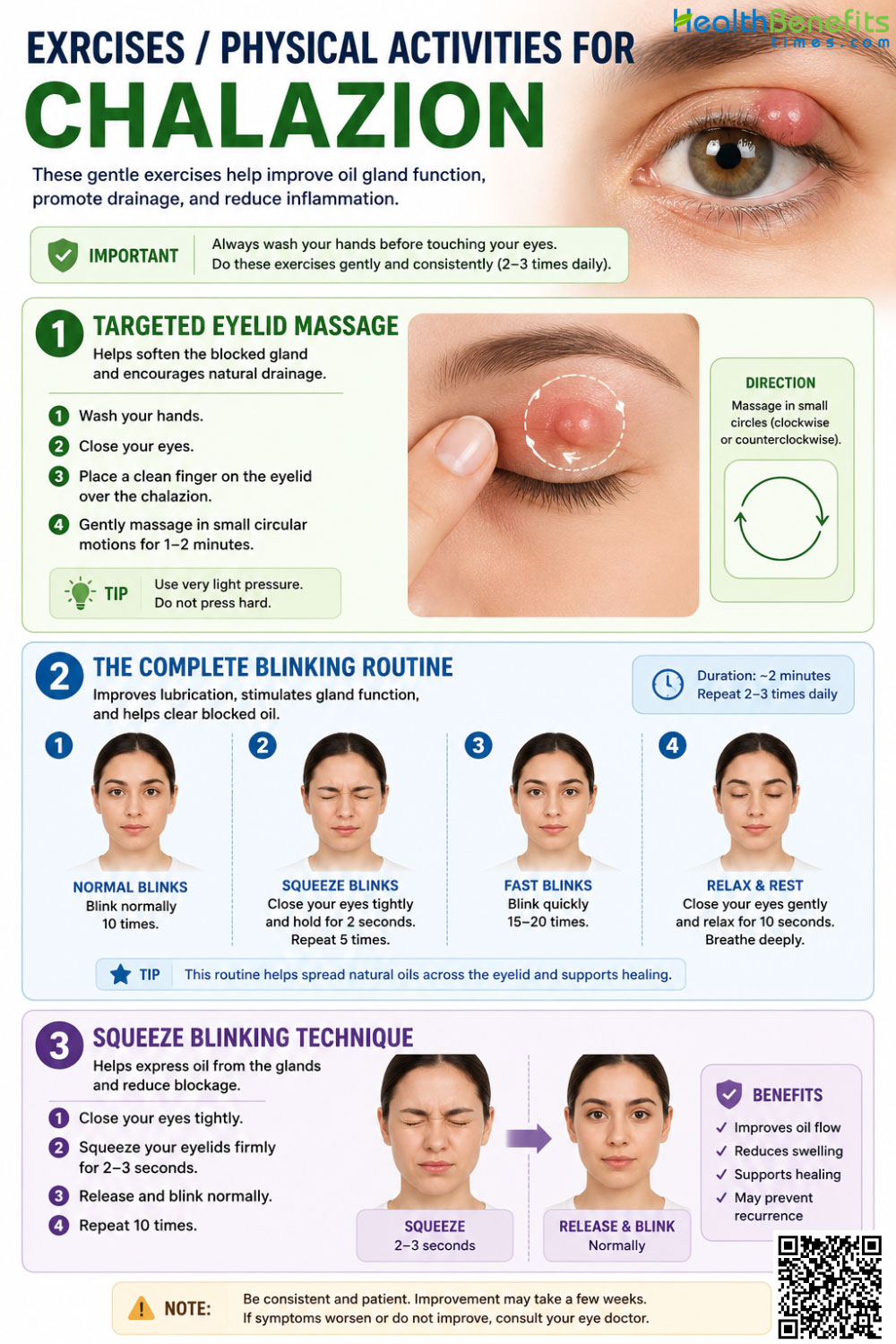
2. The Complete Blinking Routine
Modern digital lifestyles severely disrupt natural biological rhythms, particularly the subconscious blink rate. When individuals stare intently at a computer or smartphone screen, the blink rate drops drastically, and the blinks that are executed are often “partial,” meaning the upper eyelid never fully touches the lower eyelid. This chronic lack of complete mechanical contact deprives the meibomian glands of the crucial physical pumping action required to excrete oil, inevitably leading to severe stagnation and blockage. Actively and consciously retraining blinking habits significantly improves overall tear film stability and dramatically reduces vague ocular discomfort 19.
Note: You perform this exercise by pausing every 20 minutes to consciously and fully close your eyes for a steady count of two, ensuring the upper and lower lids make complete contact, and repeating this sequence five to ten times.
3. Squeeze Blinking Technique
Taking the concept of the complete blink a step further, the squeeze blink specifically targets the muscle of Riolan, a small, highly specialized band of muscle fibers located immediately near the eyelid margin. By intentionally and firmly engaging this specific muscle, a higher degree of physical pressure is exerted directly against the meibomian glands, effectively and forcefully squeezing out sluggish, thickened oils before they ever have the chance to crystallize into a solid chalazion. Clinical research clearly indicates that dedicating time to this highly specific exercise reduces the visible signs of eyelid disease and decreases the number of incomplete blinks over time 20.
Note: You gently close your eyes, then consciously squeeze the eyelids together slightly more firmly than usual (without aggressively straining your facial muscles), hold the squeeze for two seconds, completely relax, and repeat 5 times in a row.
Foods and Activities to Avoid
Curating the daily environment and scrutinizing dietary intake can drastically reduce the physiological burdens placed upon the delicate eyelid glands. When suffering from an active chalazion, or if prone to developing them repeatedly, deliberately eliminating known inflammatory triggers is a highly necessary step for comprehensive, long-term recovery.
Foods to Avoid
1. Simple Carbohydrates
Common foods like white bread, refined pasta, and sugary pastries rapidly break down in the digestive system, causing incredibly steep spikes in blood sugar. This sudden systemic glycemic stress promotes widespread vascular inflammation, which can aggressively exacerbate pre-existing glandular swelling and delay natural tissue healing.
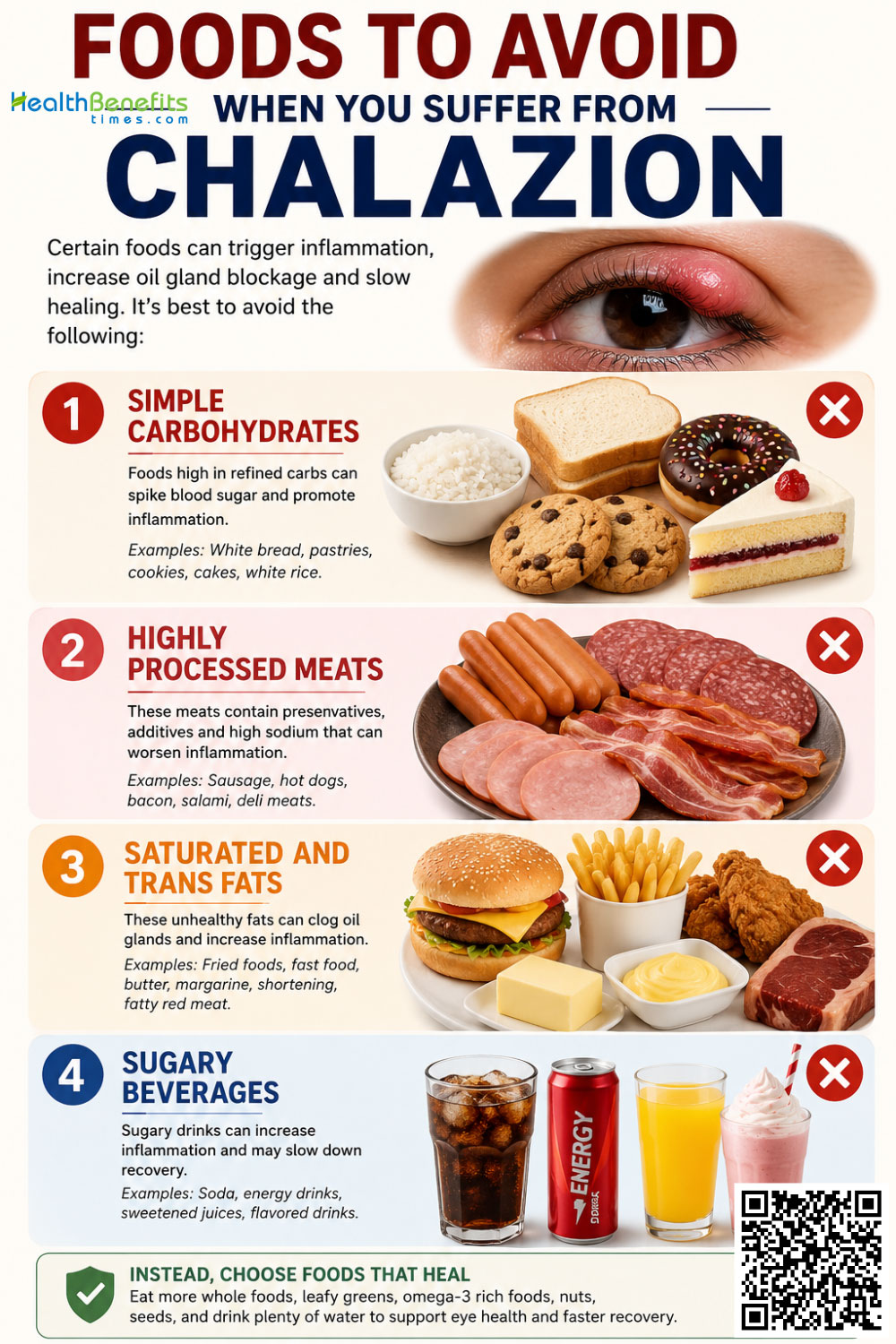
2. Highly Processed Meats
Grocery staples such as hot dogs, bacon, and cured deli meats are exceptionally high in sodium and artificial chemical preservatives. These compounds impair delicate microvascular circulation and readily promote fluid retention and tissue edema (swelling) specifically in the thin tissues surrounding the eyes.
3. Saturated and Trans Fats
Deep-fried foods and heavy, saturated fats found in whole-fat dairy and butter negatively alter the lipid profile of the blood. These unhealthy fats are unfortunately incorporated directly into the sebum produced by the meibomian glands, ultimately making the ocular oil significantly thicker, stickier, and highly prone to forming solid, unyielding blockages.
4. Sugary Beverages
Carbonated sodas, energy drinks, and artificially sweetened fruit juices contribute massively to microbiome dysbiosis and cellular insulin resistance, both of which are tightly and irrevocably linked to recurrent skin conditions and chronic glandular inflammation.
Activities to Avoid
1. Wearing Heavy Eye Makeup
Cosmetic products like mascara, waterproof eyeliner, and powdery eyeshadow easily flake off throughout the day and settle directly into the meibomian gland orifices. During an active chalazion phase, makeup introduces foreign, irritating debris and potential bacterial pathogens to an area that is already highly compromised.
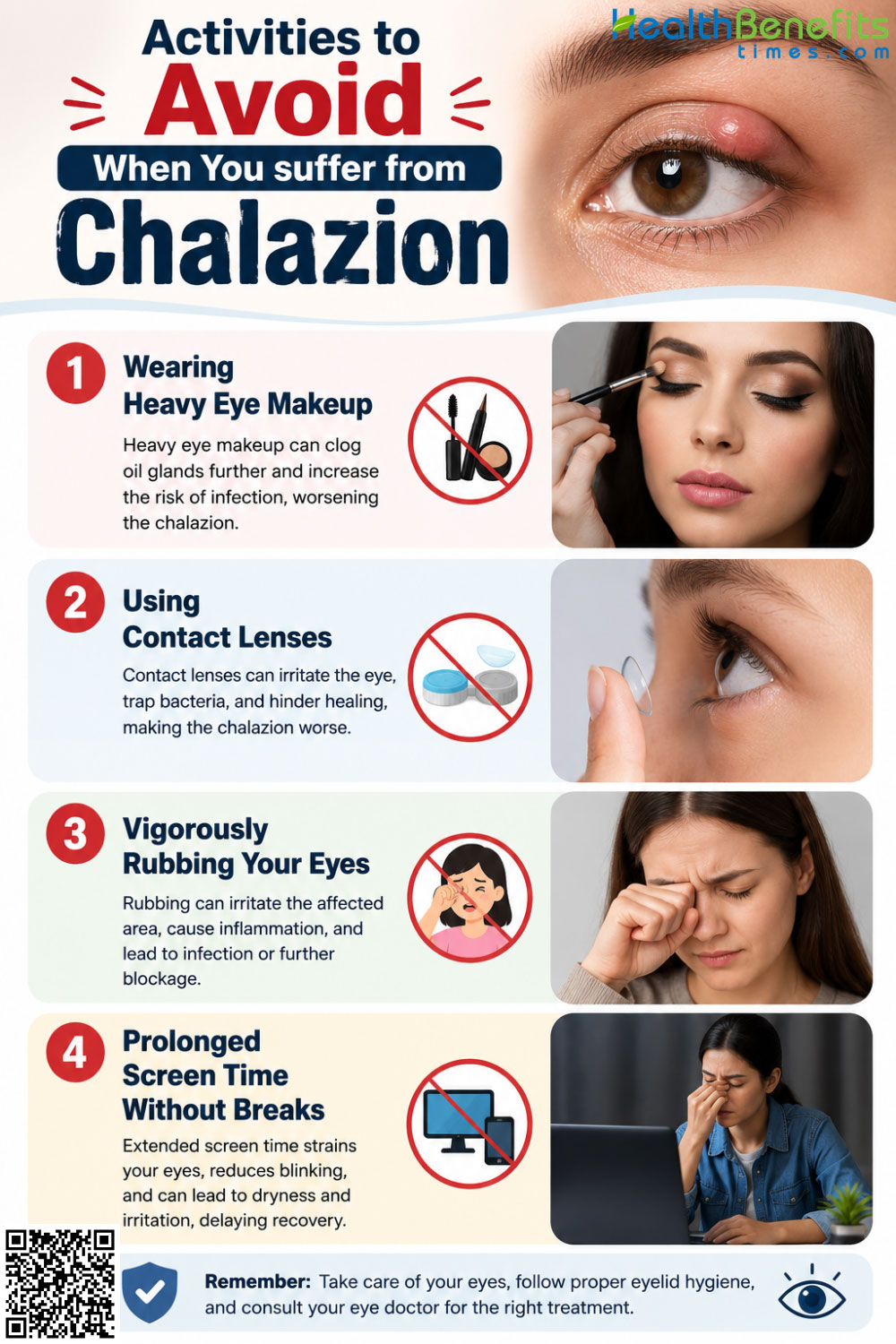
2. Using Contact Lenses
Both hard and soft contact lenses naturally harbor microscopic biofilms and environmental bacteria. The daily process of inserting and removing them also requires significant mechanical manipulation of the eyelid, which can physically irritate the encysted mass and inadvertently introduce dangerous pathogens to the inflamed tissue.
3. Vigorously Rubbing Your Eyes
Rubbing the eyes is a reflexive habit that introduces billions of bacteria from the fingers while simultaneously applying chaotic, blunt physical trauma to the delicate eyelid tissues. This friction can easily cause the sterile, contained lipogranuloma to rupture internally or become secondarily infected.
4. Prolonged Screen Time Without Breaks
Staring continuously at digital monitors actively suppresses the brain’s natural blink reflex, allowing the fragile tear film to rapidly evaporate and the crucial glandular oils to stagnate, cool, and eventually solidify entirely within the narrow ducts.
Myths and Misconceptions
Dispelling common falsehoods is absolutely crucial in ocular health, as misguided attempts to independently cure eyelid bumps often result in serious tissue damage, permanent scarring, or dangerous secondary infections. The table below outlines the most prevalent and harmful misunderstandings regarding this specific condition.
| Myth | Reality |
| “You should aggressively pop or squeeze the lump like a common pimple.” | A chalazion is a deep, thickly encapsulated mass of inflammatory tissue (a lipogranuloma), not a superficial, fluid-filled pocket of liquid pus. Attempting to forcefully pop it will severely traumatize the eyelid stroma, spread the localized inflammation into surrounding healthy tissues, and potentially cause permanent, disfiguring scarring. |
| “A chalazion is highly contagious and can easily spread to family members.” | Because it is fundamentally and inherently a sterile, non-infectious blockage of a natural oil gland rather than a bacterial or viral infection, it is completely biologically impossible to transmit it to another person through casual contact or shared spaces. |
| “Applying a hot tea bag is the absolute best way to heal the bump quickly.” | While steeped tea bags indeed provide initial warmth, they rapidly lose their therapeutic heat within 1 to 2 minutes—falling far short of the sustained 10-15 minutes strictly required to melt the trapped meibum. Furthermore, boiling hot tea bags can easily inflict severe, blistering thermal burns on the incredibly delicate, millimeter-thick eyelid skin. |
| “If the lump doesn’t hurt, you don’t need to bother treating it.” | Although it is characteristically painless, completely ignoring a chalazion allows the waxy blockage to slowly harden into a permanent, calcified, fibrous cyst. Without timely, consistent warm compresses and massage, surgical excision in an operating room eventually becomes the only viable option for its removal. |
| “Only adults get chalazia, and it is strictly due to poor personal hygiene.” | Children frequently and predictably develop chalazia, often as a direct result of underlying pediatric blepharokeratoconjunctivitis or simple, natural physiological changes occurring within their rapidly growing immune and glandular systems, entirely independent of their daily hygiene routines. |
Special Considerations
Acknowledging how vast physiological differences alter the natural progression of eyelid diseases ensures that highly vulnerable populations receive safe, tailored, and appropriate care.
1. Children
The pediatric demographic faces highly unique ocular challenges, as young children are incredibly prone to aggressive eye rubbing and generally exhibit much poorer hand hygiene than adults. In this specific age group, recurrent chalaziosis can occasionally be a glaring symptom of an underlying condition known as pediatric blepharokeratoconjunctivitis. Because surgical excision requires general anesthesia in young children which carries inherent and severe systemic risks conservative management utilizing continuous warm compresses is paramount. Interestingly, modifying the intestinal microbiome with specific oral probiotics has shown remarkable, undeniable efficacy in fundamentally altering the clinical course and prompting the complete resolution of chalazia in children without ever requiring invasive surgical procedures 18.
2. Pregnancy
Profound hormonal fluctuations experienced during pregnancy dramatically and systematically impact systemic sebum production and total body water retention, frequently leading to notably thicker meibomian secretions and a significantly increased likelihood of obstructed eyelid glands. Because systemic absorption of certain potent oral supplements or high-concentration essential oils can effortlessly cross the placental barrier, pregnant individuals must exercise extreme caution. Daily management should strictly favor external, purely mechanical therapies such as sterile warm compresses, gentle finger massage, and safe, basic eyelid hygiene utilizing mild surfactants while strictly avoiding the ingestion of unregulated herbal anti-inflammatories.
3. Chronic Conditions
Patients currently navigating chronic, lifelong systemic conditions such as diabetes mellitus, advanced rosacea, or severe seborrheic dermatitis possess a deeply rooted, biological predisposition to glandular dysfunction. In these specific clinical populations, a chalazion is rarely an isolated incident but rather a localized, frustrating flare-up of a much broader systemic issue. Their meibomian glands are often already structurally compromised or partially atrophied. Therefore, managing the underlying systemic condition through strict glycemic control or aggressive dermatological interventions is an absolute prerequisite; without achieving systemic control, natural topical remedies will only ever provide fleeting, temporary relief from recurrent, stubborn cysts.
4. Elderly
Advancing age unfortunately brings about significant physiological and anatomical changes to the ocular adnexa, including the natural, progressive atrophy (shrinkage) of meibomian glands and the extreme thinning of the epidermal layers of the eyelid. When actively treating chalazia in the elderly population, extreme caution must be utilized regarding external temperature application. The delicate, almost parchment-like skin of an older adult is highly susceptible to devastating thermal injury, meaning warm compresses must be carefully and routinely tested on the wrist prior to ocular application to prevent secondary burn wounds 21. Furthermore, repeated chalazia in the elderly warrant heightened clinical suspicion, as highly malignant sebaceous gland carcinomas can easily and deceptively masquerade as benign chronic chalazia in this specific age bracket.
Precaution Before Use of Natural Remedies
Exercising extreme clinical prudence before applying any foreign substance to the immediate vicinity of your eye is completely non-negotiable. When attempting to manage a chalazion at home, you must prioritize the integrity of your cornea and the surrounding fragile skin above all else to prevent permanent visual impairment.
- Always Test the Temperature: Before applying any heated mask, towel, or compress to your eyes, you must firmly hold it against the highly sensitive skin of your inner wrist for several continuous seconds. If it feels uncomfortably hot or stinging on your wrist, it will undoubtedly cause severe thermal burns to your much thinner eyelids.
- Never Use Undiluted Essential Oils: Pure tea tree oil or other highly concentrated botanical plant extracts are heavily toxic to the corneal epithelium. You must ensure any oil used anywhere near the eye is specifically formulated and tested for ophthalmic use, or heavily diluted in a recognized, safe carrier oil.
- Maintain Strict Hand Hygiene: You must thoroughly and meticulously wash your hands with antibacterial soap and warm water immediately before and after touching your eyelids, performing a manual massage, or applying a wet compress to prevent the rapid introduction of secondary, blinding bacterial infections.
- Remove All Contact Lenses: You must absolutely take out your hard or soft contact lenses before beginning any routine involving heat, massage, or topical oils. Tap water, thick oils, and heavy physical pressure can warp the lenses, trap dangerous amoebas directly against your cornea, or scratch the delicate ocular surface.
- Conduct a Patch Test: If you are trying a new topical remedy like pure castor oil or a commercial eyelid wipe for the very first time, you should dab a tiny amount on your jawline or inner arm and wait a full 24 hours to ensure you do not suffer a severe allergic contact dermatitis reaction before applying it near your globe.
When to See a Doctor
While conservative home therapies boast excellent, proven success rates, recognizing the precise moment when professional medical intervention becomes mandatory can literally save your vision and prevent chronic, irreversible complications. You should immediately schedule an urgent evaluation with a board-certified ophthalmologist or optometrist if you begin to experience any of the following clinical red flags:
- Sudden Changes in Visual Acuity: If the localized lump grows large enough to physically push against the curvature of the eyeball, causing blurred, distorted, or double vision that does not clear with a simple, rapid blink.
- Complete Lack of Resolution After One Month: If you have diligently and correctly applied therapeutic warm compresses and massages multiple times daily for over 4 continuous weeks without any noticeable reduction in the size or firmness of the nodule.
- Signs of Active, Spreading Infection: If the entire affected eyelid suddenly becomes massively swollen, turns deep crimson red, feels feverishly hot to the touch, or becomes excruciatingly painful, strongly indicating the rapid development of a secondary bacterial infection or dangerous preseptal cellulitis.
- Unexplained Loss of Eyelashes: If the eyelashes directly over or immediately adjacent to the chalazion begin to spontaneously fall out (a condition known as madarosis), which can be a highly reliable clinical indicator of a much more serious underlying pathology, including localized malignancy.
- Frequent Recurrence in the Exact Same Location: If a chalazion repeatedly drains, heals, and then stubbornly reforms in the exact same spot on the tarsal plate over several months, as this highly suspicious behavior necessitates a prompt surgical biopsy to conclusively rule out sebaceous gland carcinoma.