

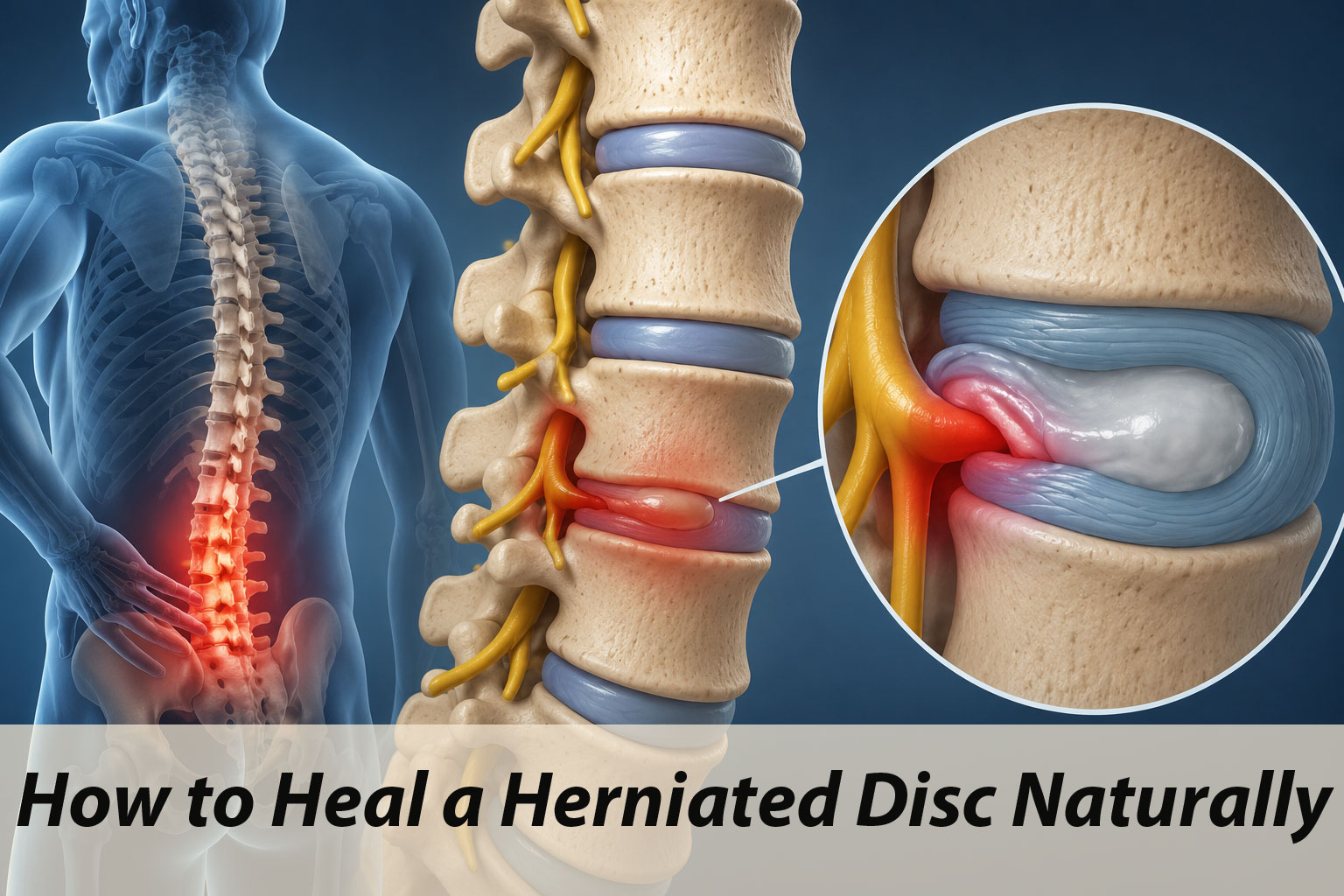
A herniated disc, frequently referred to as a slipped or ruptured disc, occurs when the soft, jelly-like center of a spinal disc protrudes through a tear in its tough exterior ring 1. These flexible discs sit between the individual bones of the spine, functioning as essential shock absorbers. When a disc’s outer shell weakens, the displaced inner material can intrude into the spinal canal and press against nearby nerves. This physical compression, combined with the release of inflammatory chemicals from the disc core, frequently results in localized back or neck pain. It also commonly causes radiating pain, numbness, tingling, or muscle weakness that travels down the arms or legs. The condition is most often driven by natural, age-related degeneration, which causes the discs to lose moisture and become less resilient, making them highly susceptible to injury from heavy lifting or sudden trauma 2.
Causes of Herniated Disc
- Age-related wear and tear (disc degeneration), characterized by the progressive dehydration, structural collapse, and loss of elasticity in the intervertebral discs.
- Repetitive mechanical stress, frequently associated with occupational hazards that involve prolonged static flexion, repetitive heavy lifting, bending, or twisting.
- Acute physical trauma or injury to the spine, such as a fall or sudden impact that causes axial overloading on a healthy disc.
- Improper lifting mechanics, particularly utilizing the back muscles instead of the legs to elevate heavy objects.
- Genetic predisposition, including a family history of intervertebral disc degeneration or inherited disorders of collagen structure.
- Congenital spinal anomalies, such as shortened pedicles or vertebral body fusion defects.
- Connective tissue disorders that weaken the collagenous ring (annulus fibrosus) surrounding the spinal disc.
- Excess body weight or obesity, which applies continuous, increased mechanical strain on the lower back and spinal discs.
- Smoking and tobacco use, which impair oxygen supply to the intervertebral discs and accelerate cellular senescence and tissue degeneration. 1, 3, 4, 5, 6
Symptoms of Herniated Disc
- Localized back or neck pain (axial pain) that often worsens with movement, prolonged sitting, or mechanical stress.
- Radiculopathy, characterized by sharp, burning, or radiating pain traveling down the arms (cervical herniation) or the buttocks and legs (lumbar herniation/sciatica).
- Sensory disturbances, including numbness, tingling, or paresthesias in the shoulders, arms, hands, legs, or feet.
- Motor weakness in the affected extremities, leading to difficulties with lifting, gripping, walking, or causing conditions like foot drop.
- Diminished or absent deep tendon reflexes (such as the biceps, triceps, patellar, or Achilles reflexes).
- Exacerbation of pain or neurological symptoms when coughing, sneezing, straining, or bending forward.
- Muscle spasms, tension, and localized point tenderness in the cervical or lumbar spine region.
- Electric-shock-like sensations radiating down the spine or into the extremities, which can sometimes be triggered by neck flexion (Lhermitte sign).
- Gait disturbances, loss of balance, clumsiness, or spasticity if the herniation severely compresses the spinal cord (myelopathy).
- Bowel and bladder dysfunction, such as urinary retention or fecal incontinence, indicating severe nerve compression (e.g., cauda equina syndrome).
- Sexual dysfunction, which may occasionally present in cases involving severe compression of the lower sacral nerve roots. 1,7,2,3
How to Heal a Herniated Disc Naturally
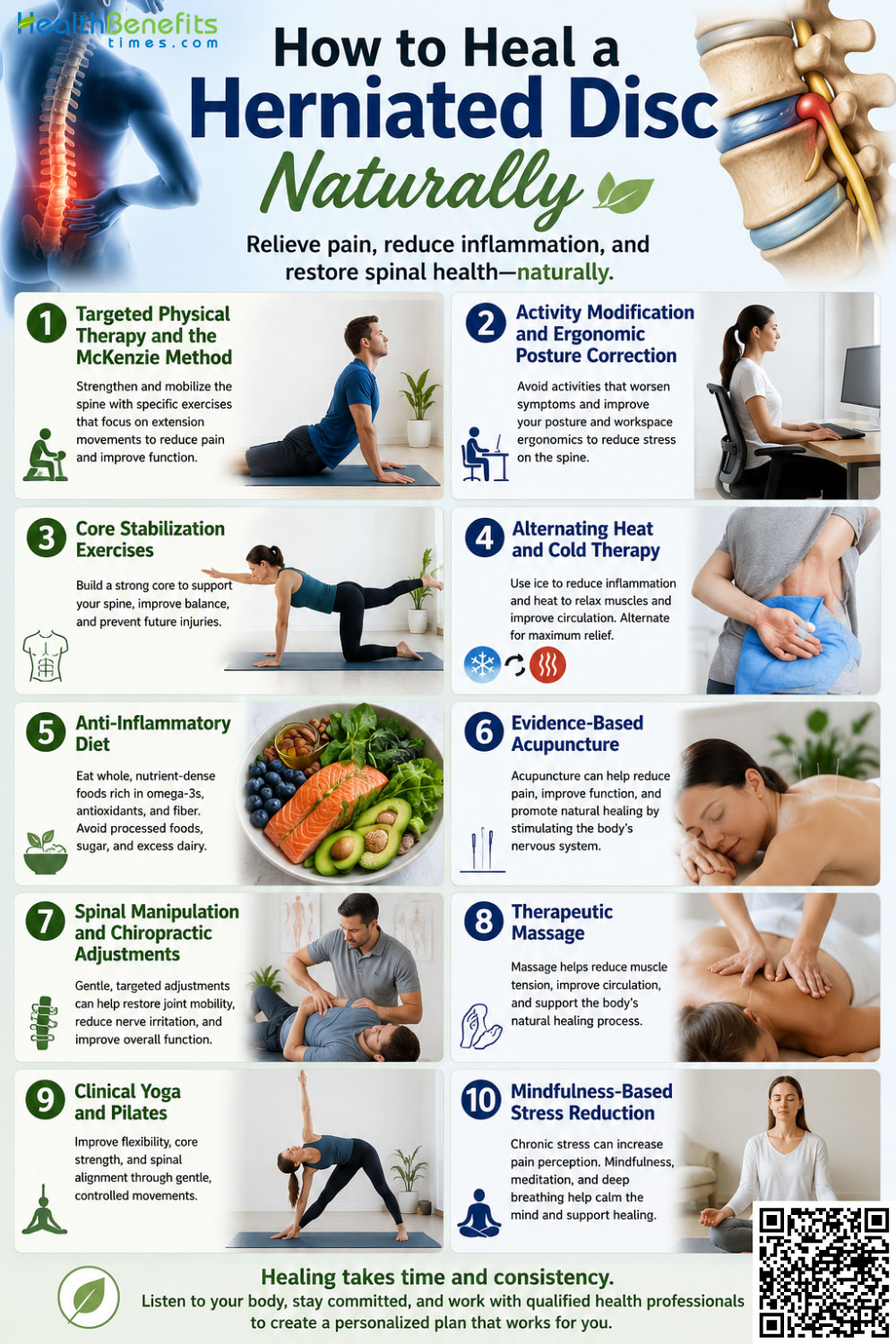
1. Targeted Physical Therapy and the McKenzie Method
How it may help
Targeted physical therapy focuses on strengthening core muscles to support the spine and relieve pressure on spinal nerves. 1 The McKenzie Method utilizes specific extension exercises to push the bulging disc material back toward its center, reducing nerve compression and moving pain away from the legs and into the lower back where it is easier to manage. 8
What research says
Studies demonstrate that the McKenzie Method significantly decreases radiating leg pain and improves daily function in patients with lumbar disc herniation. 9 Clinical evidence shows that these specific extension exercises provide rapid symptom relief and lower the likelihood of needing spinal surgery compared to standard resting or general stretching routines. 10
How to use it safely
Work directly with a certified physical therapist who can tailor the exercises to your specific injury. 11 Start with gentle, guided movements and immediately stop any exercise that worsens pain radiating down your leg. Always perform these movements on a firm surface while maintaining steady, relaxed breathing.
Potential precautions or side effects
Improper technique can worsen nerve compression or trigger severe muscle spasms. Avoid these exercises if you experience sudden numbness, loss of bowel control, or increasing weakness in your legs. 12
2. Activity Modification and Ergonomic Posture Correction
How it may help
Activity modification temporarily restricts movements that increase spinal pressure, such as heavy lifting or twisting, allowing the damaged disc tissue to heal. 1 Ergonomic posture correction aligns the spine in a neutral position, which significantly reduces the mechanical load on intervertebral discs during prolonged sitting or standing. 13
What research says
Clinical evidence indicates that limiting forward bending and eliminating heavy lifting during the acute phase reduces nerve root inflammation and accelerates recovery. 14 Furthermore, research demonstrates that utilizing ergonomic chairs and maintaining neutral spinal alignment significantly decreases chronic lower back pain and lowers the risk of future disc herniations. 15
How to use it safely
Adjust your workspace by keeping your monitor at eye level and using a chair with firm lower back support. 16 Take frequent breaks to stand. When lifting, always bend your knees, keep the item close to your body, and avoid twisting. 17
Potential precautions or side effects
Prolonged bed rest causes muscle weakness and delays recovery. 18 Adjusting to new ergonomic postures may also cause temporary, mild muscle fatigue as your core adapts.
3. Core Stabilization Exercises
How it may help
Core stabilization exercises strengthen the deep abdominal and back muscles that function as a natural brace for the vertebral column. 1 By increasing spinal stiffness and improving control, these exercises reduce the mechanical stress placed on damaged discs and prevent excessive spinal movement that could further irritate nerves. 19
What research says
Clinical studies confirm that targeted core stability training effectively reduces long-term lower back pain and improves overall functional movement in individuals with herniated discs. 20 Research consistently shows that combining stabilization exercises with standard care leads to better patient outcomes compared to physical activity alone. 21
How to use it safely
Begin with gentle isometric exercises like “dead bugs” or the “bird-dog” while focusing on keeping your spine neutral and your core muscles tight. 22 Ensure all movements are slow and controlled; prioritize quality of engagement over speed or intensity to protect your spinal structures.
Potential precautions or side effects
Avoid intense sit-ups or crunches, as these movements significantly increase intradiscal pressure. Stop immediately if you experience sharp pain or radiating sensations in your legs. 23
4. Alternating Heat and Cold Therapy
How it may help
Cold therapy helps constrict blood vessels to reduce local swelling and numbs painful nerve endings during the acute injury phase. 16 Heat therapy increases blood flow to the area, which promotes muscle relaxation and improves tissue elasticity, thereby reducing the painful spasms often associated with disc displacement. 19
What research says
Clinical findings suggest that cryotherapy is effective for managing acute inflammatory pain following spinal trauma. 23 Research indicates that thermotherapy provides significant, temporary relief for chronic musculoskeletal back pain by modulating pain signals and improving the metabolic environment of deep muscle tissues. 14
How to use it safely
Apply ice packs wrapped in a thin towel for 15 to 20 minutes to prevent skin damage, allowing the skin to return to normal temperature between applications. 17 When using heat, ensure the source is warm, not burning, and limit sessions to 20 minutes to avoid thermal injuries.
Potential precautions or side effects
Never apply heat to areas with acute swelling or numbness, as this may increase inflammation. Prolonged direct contact with ice can cause frostbite or skin nerve damage.
5. Anti-Inflammatory Diet
How it may help
An anti-inflammatory diet reduces systemic inflammatory markers, which can otherwise exacerbate the nerve root irritation caused by a herniated disc. 24 By prioritizing nutrient-dense whole foods, the body can better manage oxidative stress and promote the biochemical environment necessary for the repair of damaged spinal tissues. 25
What research says
Research indicates that diets rich in omega-3 fatty acids and antioxidants significantly lower levels of inflammatory cytokines, which are linked to chronic disc-related pain. 26 Clinical data suggest that reducing processed food intake helps maintain spinal health by mitigating metabolic factors that contribute to accelerated disc degeneration and increased sensitivity to pain. 27
How to use it safely
Increase your intake of leafy greens, fatty fish, berries, and nuts while limiting refined sugars and processed fats. 28 Consult with a healthcare professional or registered dietitian before starting any restrictive diet plan, especially if you have existing health conditions or are taking medications that require specific dietary monitoring.
Potential precautions or side effects
Sudden dietary changes may cause temporary digestive discomfort. Ensure you are not creating nutritional deficiencies; avoid extreme calorie restriction, which can impair the body’s natural healing processes.
6. Acupuncture
How it may help
Acupuncture stimulates specific points on the body to modulate pain pathways and trigger the release of natural pain-relieving chemicals, such as endorphins. 19 By reducing muscle tension and improving local blood circulation, it helps alleviate the nerve irritation and chronic discomfort commonly associated with a herniated disc. 16
What research says
Clinical research indicates that acupuncture provides significant relief from chronic lower back pain and improves physical function in patients with lumbar disc issues. 14 Evidence suggests that it serves as a valuable complementary approach, particularly for those who experience persistent symptoms despite conventional non-surgical management. 21
How to use it safely
Seek treatment only from a licensed and board-certified acupuncturist who follows strict clinical hygiene protocols. 1 Ensure they use single-use, sterile needles to prevent infection. Communicate your specific symptoms clearly during the initial assessment to allow for a tailored treatment plan.
Potential precautions or side effects
Mild bruising, temporary soreness, or slight bleeding at needle sites may occur. Avoid acupuncture if you have a bleeding disorder or are taking blood-thinning medications. 22
7. Spinal Manipulation and Chiropractic Adjustments
How it may help
Spinal manipulation involves controlled, manual force applied to the joints of the spine to improve range of motion and relieve mechanical blockages. 1 By restoring normal joint function, this technique can help decrease the muscle spasms and inflammation surrounding the affected disc, ultimately reducing nerve irritation and related discomfort. 16
What research says
Clinical studies show that spinal manipulation provides effective, short-term pain relief and improved physical function for patients with acute lumbar disc herniation. 19 Research suggests that when performed by trained professionals, it is a safe and helpful component of a comprehensive, non-surgical treatment plan for chronic back pain. 14
How to use it safely
Ensure your practitioner is a licensed professional who performs a thorough physical examination, including a review of your imaging studies, before any treatment begins. 23 Be transparent about all your symptoms, especially if you have numbness, weakness, or significant pain radiating into your legs.
Potential precautions or side effects
Temporary soreness or stiffness may occur after an adjustment. Avoid manipulation if you have severe spinal instability, bone fractures, or signs of progressive neurological deficit like worsening weakness. 22
8. Therapeutic Massage
How it may help
Therapeutic massage relieves the chronic muscle tension and spasms that develop as the body attempts to protect the injured spinal segment. 19 By enhancing local circulation and encouraging muscle relaxation, massage helps decrease pain intensity and improves overall range of motion in the affected spinal region. 16
What research says
Clinical findings indicate that massage therapy is a helpful, low-risk approach for reducing pain and improving function in individuals suffering from persistent low back pain. 29 Research demonstrates that regular massage sessions effectively decrease the use of pain-relieving medications in patients dealing with disc-related structural discomfort. 21
How to use it safely
Seek a licensed massage therapist with specific training in clinical or medical massage. 1 Inform your therapist clearly about your herniated disc diagnosis and any areas of numbness or tingling so they can avoid applying direct pressure to inflamed or sensitive spinal structures.
Potential precautions or side effects
Avoid deep tissue work directly over the site of herniation. Stop if you experience increased radiating pain or skin irritation. 23
9. Clinical Yoga and Pilates
How it may help
Clinical yoga and Pilates utilize controlled movements to improve core strength, spinal flexibility, and posture. 19 By lengthening tight muscles and stabilizing the spine through focused, low-impact exercise, these practices reduce the mechanical pressure on intervertebral discs and alleviate associated nerve pain. 16
What research says
Evidence indicates that structured yoga and Pilates programs significantly improve physical function and reduce chronic low back pain in patients with lumbar disc conditions. 14 Clinical data suggest that these practices are effective tools for long-term pain management and preventing future disability when integrated into a consistent rehabilitation routine. 21
How to use it safely
Work with an instructor trained in therapeutic or clinical modifications to ensure exercises suit your condition. 1 Avoid deep forward folds or extreme twisting movements that increase disc pressure. Focus on maintaining a neutral, supported spine throughout every movement and prioritize steady, controlled breathing.
Potential precautions or side effects
Aggressive stretching or poor form may trigger acute nerve pain. Avoid these activities if you have symptoms of progressive leg weakness or bowel dysfunction. 23
10. Mindfulness-Based Stress Reduction
How it may help
Mindfulness-based stress reduction teaches individuals to observe pain without emotional reaction, which helps break the cycle of anxiety and muscle tension that worsens disc-related discomfort. 19 By calming the nervous system, these practices decrease the body’s perception of pain and help manage the emotional burden of chronic health conditions. 16
What research says
Clinical evidence shows that mindfulness practices significantly lower reported pain intensity and improve daily functioning in patients with chronic back conditions. 14 Research indicates that these programs reduce the need for long-term pain medication and enhance the overall quality of life for those managing persistent spinal symptoms. 21
How to use it safely
Practice short, daily guided meditation or deep-breathing sessions in a quiet, comfortable position that does not strain your back. 1 Join a structured program led by a qualified professional to ensure you learn techniques correctly without causing physical distress during practice.
Potential precautions or side effects
While extremely low-risk, some may experience temporary emotional overwhelm when focusing on sensations. If meditation causes increased anxiety, pause and consult with a trained therapist. 23
Foods to Avoid When You suffer from Herniated Disc
1. High-Sugar Foods
Excess dietary sugar accelerates the accumulation of advanced glycation end products (AGEs), increasing inflammation, promoting cell senescence, and worsening the structural breakdown of intervertebral discs. 27, 25
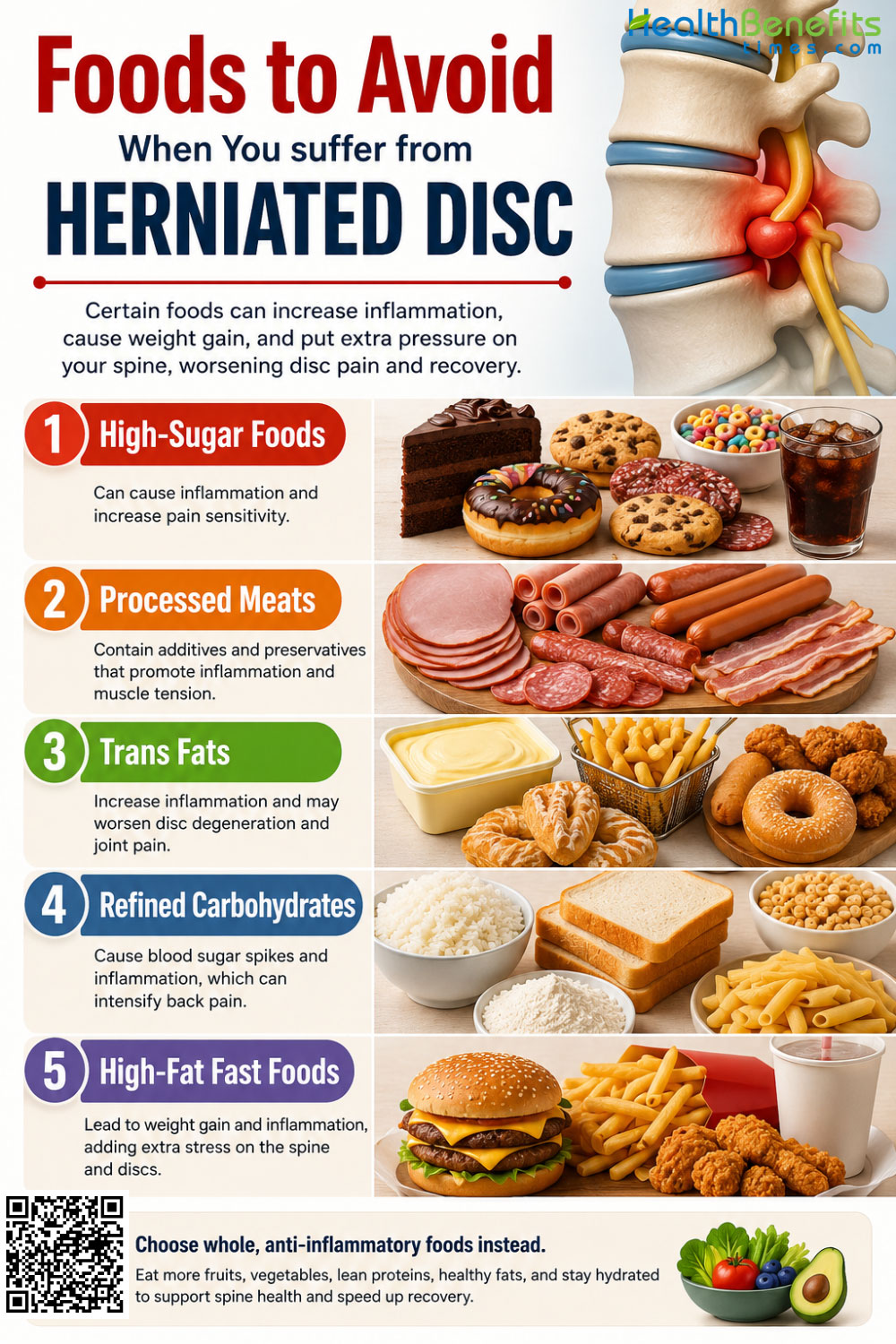
2. Processed Meats
Foods like sausages and deli meats contain compounds that stimulate inflammatory cascades, significantly raising circulating inflammatory markers like C-reactive protein, which can exacerbate chronic pain. 24, 26
3. Trans Fats
Found in many commercial baked or fried goods, trans fats strongly promote systemic inflammation and cellular stress, which impairs immune regulation and worsens metabolic conditions tied to chronic pain. 30, 28
4. Refined Carbohydrates
Foods made with refined flours spike blood glucose rapidly, prompting insulin surges and systemic oxidative stress that drive pro-inflammatory pathways linked to vascular dysfunction and pain. 31, 32
5. High-Fat Fast Foods
Diets extremely high in saturated fats trigger inflammasome activation within the disc’s nucleus pulposus cells, increasing inflammatory cytokine production and driving rapid degradation of the spinal extracellular matrix. 33, 34
When to see Doctor when you have Herniated Disc
1. Loss of Bladder or Bowel Control
Involuntary loss of urinary or fecal control, or severe urinary retention, indicates Cauda Equina Syndrome. This is a neurosurgical emergency requiring immediate decompression to prevent permanent disability. 35, 12
2. Saddle Anesthesia
Numbness, tingling, or diminished sensation in the inner thighs, perineum, or buttocks (the “saddle” area) is a severe red flag indicating nerve root compression requiring emergency evaluation. 36, 37
3. Progressive Motor Weakness
Sudden or worsening weakness in the legs, inability to lift the front of your foot (foot drop), or difficulty walking signals significant nerve compression necessitating urgent surgical consultation. 38, 1
4. Severe, Unrelenting Pain
Excruciating back or radiating leg pain that persists despite conservative treatments, completely limits your daily function, or progressively worsens over time warrants prompt medical intervention and possible imaging. 39, 40
5. Bilateral Sciatica Symptoms
Pain, burning, or tingling that radiates down both legs simultaneously is a critical warning sign of central disc herniation affecting multiple nerve roots, requiring immediate medical attention. 41, 42