

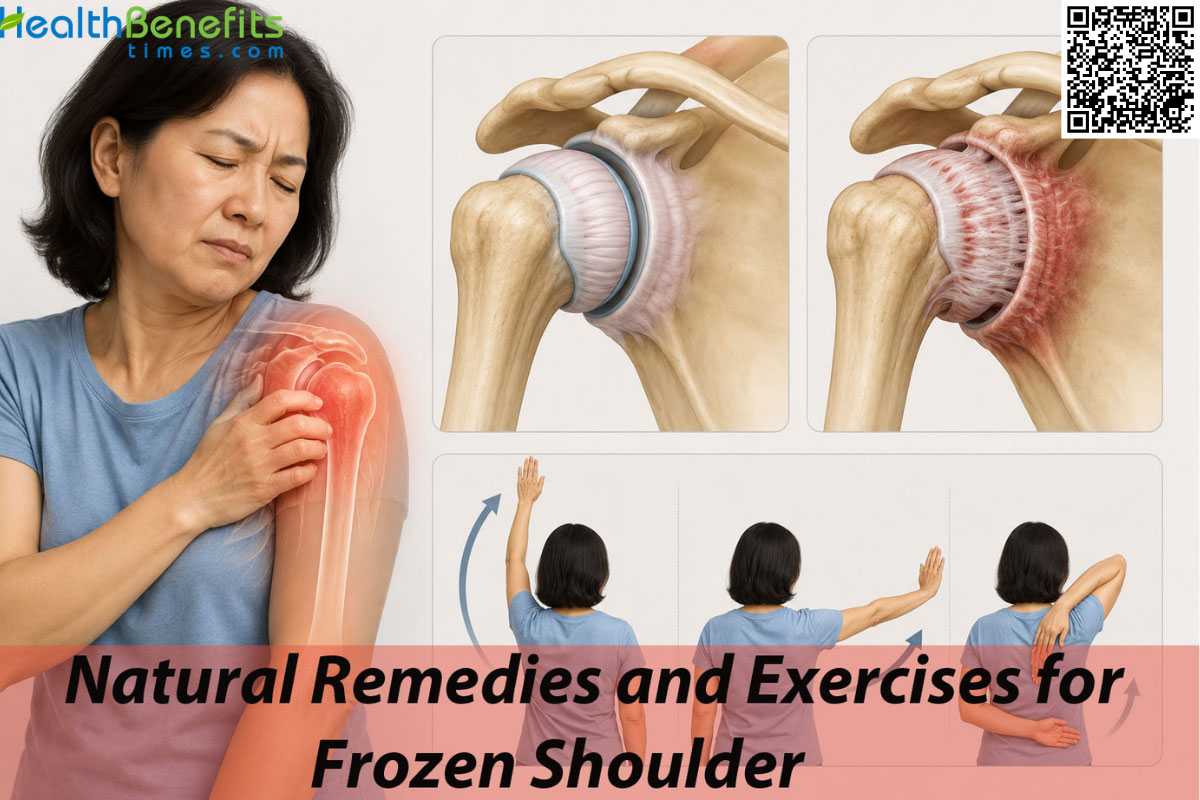
Frozen shoulder, known medically as adhesive capsulitis, is a condition that causes severe pain, stiffness, and a loss of normal movement in the shoulder joint. This problem occurs when the strong, flexible tissue surrounding the shoulder, called the joint capsule, becomes thick, inflamed, and unusually tight. As this tissue stiffens, bands of scar tissue form, and the natural fluid that normally lubricates the joint decreases, making movement extremely difficult. The condition typically develops gradually across three distinct stages freezing, frozen, and thawing and often takes one to three years to completely heal. While the exact cause remains unclear, frozen shoulder most frequently affects adults between the ages of 40 and 60, especially women. It is also significantly more common in individuals with diabetes or those who have had to keep their arm still for a long period after an injury or surgery 1.
Causes of Frozen Shoulder
- Diabetes mellitus
- Prolonged shoulder immobilization or inactivity (such as after a fracture, injury, or stroke)
- Shoulder trauma or injury
- Previous shoulder surgery (including arthroscopy or rotator cuff repair)
- Thyroid diseases
- Hyperlipidemia
- Metabolic syndrome
- Cervical spondylosis
- Connective tissue disorders
- Adrenocorticotropic hormone deficiency
- Genetic predisposition or family history of the condition 2, 3, 4, 5
Symptoms of Frozen Shoulder
- A dull, aching pain localized in the outer shoulder area, which may sometimes extend down the upper arm.
- Progressive stiffness and a severe reduction in both active and passive range of motion.
- Pain that significantly worsens at night, often disrupting normal sleep patterns.
- Sharp pain triggered or intensified by sudden, rapid movements or attempting to reach out.
- Noticeable difficulty performing routine daily activities that require arm movement, such as dressing, reaching overhead, or combing hair. 1, 6, 7
Natural Remedies and Exercises for Frozen Shoulder
1. Physical Therapy and Manual Joint Mobilization
How it may help
Physical therapy and manual joint mobilization target the thickened, stiff joint capsule of a frozen shoulder. These techniques gently stretch restrictive tissue, increase blood flow, and restore normal joint mechanics. By systematically moving the joint through its available range, therapy helps break up scar tissue and reduces the stiffness that limits everyday movement 8.
What research says
Clinical studies confirm that combining therapeutic exercises with mobilization strongly reduces pain while improving shoulder function and range of motion, particularly during the stiffening and thawing phases 9. Evidence shows these physical interventions successfully restore mobility and shorten the overall recovery timeline compared to prolonged joint inactivity 10.
How to use it safely:
You should start physical therapy slowly and always work within your pain limits. Begin with gentle, assisted movements and gradually increase stretching intensity as stiffness improves. Coordinate with a licensed professional who can modify your routine to prevent forcing the joint beyond its current physical capacity 1.
Potential precautions or side effects
Aggressive stretching or intensive mobilization too early can increase inflammation and worsen your pain 11. Stop immediately if you experience sharp, lingering pain after your therapy session.
2. Gentle Range-of-Motion Exercises (Pendulum Stretches)
How it may help
Gentle range-of-motion exercises, such as pendulum swings, help maintain joint mobility and prevent the shoulder capsule from becoming entirely rigid 7. By performing light, unforced movements, these exercises stimulate joint fluid circulation and encourage flexibility in the tight tissues without causing further irritation.
What research says
Clinical evidence demonstrates that engaging in gentle range-of-motion exercises consistently yields significant improvements in shoulder mobility and overall physical function 12. Studies confirm that early, pain-free movement therapies help shorten the duration of the stiffening phase and result in better long-term recovery compared to complete rest 13.
How to use it safely
You should warm up your shoulder with a warm, damp towel before starting. Let your affected arm hang downward and use your body’s momentum to swing it in small circles. Keep the movements gentle and strictly stay within your pain-free limits to avoid straining the joint 14.
Potential precautions or side effects
Avoid pushing past your natural limits, as forcing the joint can cause tissue tearing and severe inflammation 15. If pain sharply increases, you must stop the exercise immediately.
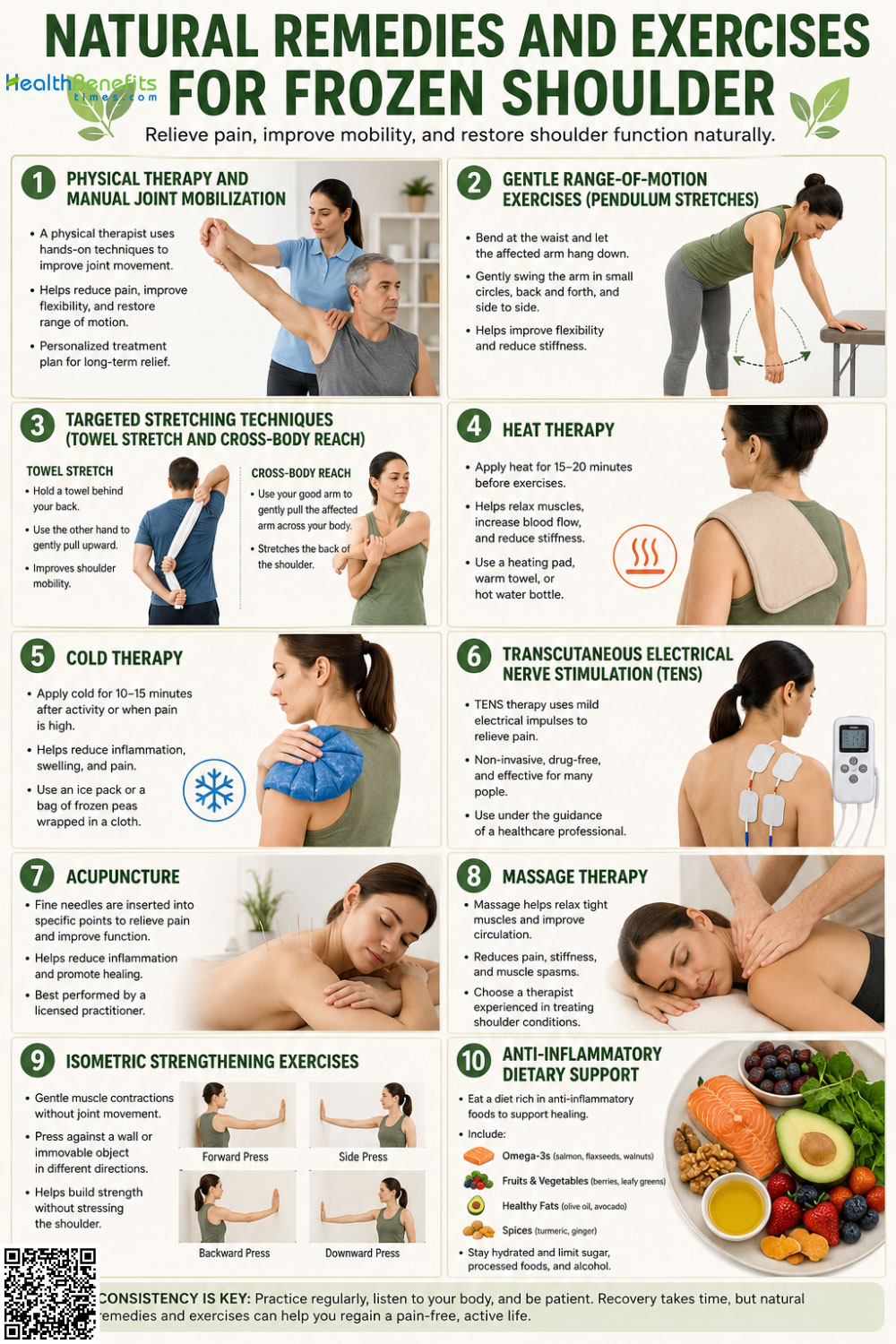
3. Targeted Stretching Techniques (Towel Stretch and Cross-Body Reach)
How it may help
Targeted stretching techniques specifically focus on lengthening the tight, contracted joint capsule and surrounding shoulder muscles. By applying continuous, controlled tension, these focused movements help slowly release fibrotic scar tissue and restore essential elasticity to the joint 16. This mechanical elongation directly counteracts severe joint stiffness and facilitates the return of normal arm mechanics.
What research says
Clinical studies demonstrate that structured four-direction stretching programs significantly improve pain at rest, pain during activity, and overall functional mobility in patients with frozen shoulder 17. Evidence confirms that incorporating both dynamic and static stretching routines successfully increases the critical ranges of motion, particularly for forward elevation and outward shoulder rotation 18.
How to use it safely
You should apply targeted stretches, such as the cross-body reach, using slow and sustained movements without bouncing or jerking the arm 19. Hold each position for several seconds at a point of mild tension, and always ensure you are stretching within a tolerable, pain-free threshold to allow safe joint adaptation 20.
Potential precautions or side effects
You must avoid aggressive or forceful overstretching, as pushing past natural limits can trigger severe joint irritability and worsen inflammation 21. Stop stretching immediately if you experience sharp, lingering pain.
4. Heat Therapy
How it may help
Heat therapy acts as a natural muscle relaxant and vasodilator, expanding blood vessels to increase circulation around the tight shoulder joint 22. The localized warmth helps soften stiff, contracted connective tissues and reduces painful muscle spasms, making the shoulder much easier to stretch during physical therapy 23.
What research says
Clinical evidence indicates that applying superficial heat before shoulder exercises significantly improves the elasticity of the joint capsule and increases overall range of motion 24. Studies also confirm that thermal interventions successfully decrease perceived pain levels and prepare fibrotic tissues for stretching, leading to faster rehabilitation outcomes 25.
How to use it safely
You should apply a warm, damp towel or a commercially available heating pad to your shoulder for 15 to 20 minutes before beginning your daily stretches 7. Always place a thin cloth between the heat source and your skin to prevent accidental burns 26.
Potential precautions or side effects
You must avoid using heat therapy if your shoulder is actively swollen or red, as this worsens inflammation 27. Never fall asleep while using an active heating pad.
5. Cold Therapy
How it may help
Cold therapy constricts blood vessels and reduces blood flow to the affected shoulder joint 28. This process significantly decreases acute inflammation and temporarily numbs local nerve endings, providing immediate relief from sharp pain 29. It is particularly effective for soothing an irritated joint capsule following stretching exercises 30.
What research says
Clinical evidence demonstrates that localized cold therapy successfully minimizes pain and joint swelling during the active, inflammatory phases of a frozen shoulder 31. Studies confirm that applying cold packs immediately after physical therapy significantly improves patient comfort and enhances overall tolerance for ongoing joint mobilization treatments 32.
How to use it safely
You should wrap a reusable ice pack or a bag of crushed ice in a thin towel before applying it to your shoulder 7. Limit each cold application to 15 to 20 minutes to prevent tissue damage, and primarily use it immediately after completing your daily exercises 33.
Potential precautions or side effects
Prolonged or direct ice application causes frostbite, skin irritation, and nerve damage 34. You must avoid cold therapy if you have impaired circulation or cold sensitivity conditions 35.
6. Transcutaneous Electrical Nerve Stimulation (TENS)
How it may help
Transcutaneous Electrical Nerve Stimulation (TENS) delivers mild electrical impulses through the skin to the nerve fibers beneath. This gentle current blocks pain signals from reaching the brain and stimulates the body’s natural production of endorphins 36. By reducing shoulder discomfort, TENS makes it easier to perform essential stretching exercises 37.
What research says
Clinical evidence demonstrates that adding TENS therapy to a standard physical therapy program significantly reduces pain levels in patients with frozen shoulder 38. Studies confirm that electrical nerve stimulation improves overall joint function and enhances patient tolerance for guided range-of-motion exercises during the highly painful freezing stage 39.
How to use it safely
You should place the adhesive electrodes on clean, dry skin around the painful areas of your shoulder 40. Always start with the lowest intensity setting and gradually increase it until you feel a mild, tingling sensation without causing muscle twitching or sharp discomfort 41.
Potential precautions or side effects
Mild skin irritation from the adhesive pads is the primary side effect 42. You must strictly avoid TENS therapy if you have a pacemaker or severe cardiovascular disease 43.
7. Acupuncture
How it may help
Acupuncture involves inserting extremely thin needles into specific points on the body to stimulate the nervous system 44. This process encourages the release of natural pain-relieving chemicals, such as endorphins, while increasing local blood circulation to the stiff shoulder joint 45. The improved blood flow helps relax tight muscles and reduces tissue inflammation.
What research says
Clinical evidence demonstrates that acupuncture significantly reduces shoulder pain and improves mobility when used alongside standard physical therapy 46. Research confirms that patients receiving acupuncture experience faster relief from nighttime joint aches and show measurable improvements in their active range of motion compared to those using exercise alone 47.
How to use it safely
You should only receive treatment from a certified, licensed acupuncturist to ensure proper technique and safety 48. Always verify that your practitioner uses sterile, single-use, disposable needles to completely eliminate the risk of infections during your shoulder therapy 49.
Potential precautions or side effects
You may experience minor bruising, temporary soreness, or slight bleeding at the needle sites 50. You must avoid acupuncture if you have bleeding disorders or active skin infections.
8. Massage Therapy
How it may help
Deep tissue and friction massage techniques target the severely tight muscles surrounding the shoulder joint capsule. By applying localized pressure, massage therapy increases blood circulation and relieves painful muscle spasms 51. This muscular relaxation indirectly reduces tension on the frozen joint, making stretching exercises significantly easier and more effective 52.
What research says
Clinical evidence demonstrates that incorporating therapeutic massage into a standard physical therapy regimen significantly decreases localized shoulder pain 53. Research confirms that patients receiving soft tissue mobilization experience measurable improvements in their active range of motion and overall functional recovery compared to those using exercise alone 54.
How to use it safely
You should seek treatment from a licensed massage therapist who specializes in orthopedic or rehabilitative techniques 55. Always communicate your exact pain limits during the session, and strictly request gentle strokes if the joint feels highly inflamed or irritated 56.
Potential precautions or side effects
You might experience temporary muscle soreness or mild bruising after a treatment session 57. You must avoid massage directly over active skin infections or recently injured tissues.
9. Isometric Strengthening Exercises
How it may help
Isometric exercises involve contracting muscles without moving the affected joint. This technique helps preserve essential muscle strength and prevents severe muscle wasting while the shoulder remains physically stiff 58. By engaging the rotator cuff statically, these exercises stabilize the joint structure without aggravating the sensitive, inflamed capsule 59.
What research says
Clinical evidence demonstrates that incorporating isometric strengthening into early rehabilitation significantly preserves rotator cuff strength and minimizes shoulder dysfunction 60. Studies confirm that static muscle contractions safely reduce perceived pain levels and prepare the weakened muscles for more advanced, dynamic movements as the joint gradually thaws 61.
How to use it safely
You should perform these exercises by gently pushing your arm against a solid surface, like a wall, without moving your shoulder 14. Hold each muscle contraction for five seconds, then release. Always keep your pushing force moderate and completely pain-free to prevent joint irritation 62.
Potential precautions or side effects
You must avoid applying maximum force during these static contractions, as pushing too hard triggers severe muscle spasms and directly worsens existing joint inflammation 63.
10. Anti-Inflammatory Dietary Support
How it may help
An anti-inflammatory diet reduces chronic swelling throughout the body, which can ease pressure inside the highly restricted shoulder capsule 64. Consuming foods rich in omega-3 fatty acids and antioxidants directly lowers inflammatory markers in the blood, creating a healthier environment for stiff joint tissues to heal naturally 65.
What research says
Clinical evidence demonstrates that diets high in anti-inflammatory nutrients, such as the Mediterranean diet, significantly lower systemic joint pain 66. Studies confirm that patients who successfully manage underlying metabolic conditions like diabetes through proper nutrition experience fewer musculoskeletal complications and faster overall recovery from adhesive capsulitis 67.
How to use it safely
You should incorporate natural, whole foods like fatty fish, leafy green vegetables, nuts, and fresh berries into your daily meals 68. Work with a healthcare provider to stabilize your blood sugar safely, as proper glucose control is essential to prevent further tissue damage 69.
Potential precautions or side effects
You must avoid extreme, unverified diets that can cause severe nutritional deficiencies 70. Taking high doses of certain anti-inflammatory supplements, such as concentrated fish oil, can dangerously increase your bleeding risk 71.
Foods to Avoid When You Suffer from Frozen Shoulder
1. Added Sugars and Sweets
Consuming high amounts of refined sugar spikes blood glucose levels, worsening joint inflammation and tissue stiffness, particularly in diabetic patients prone to this condition. 72, 73
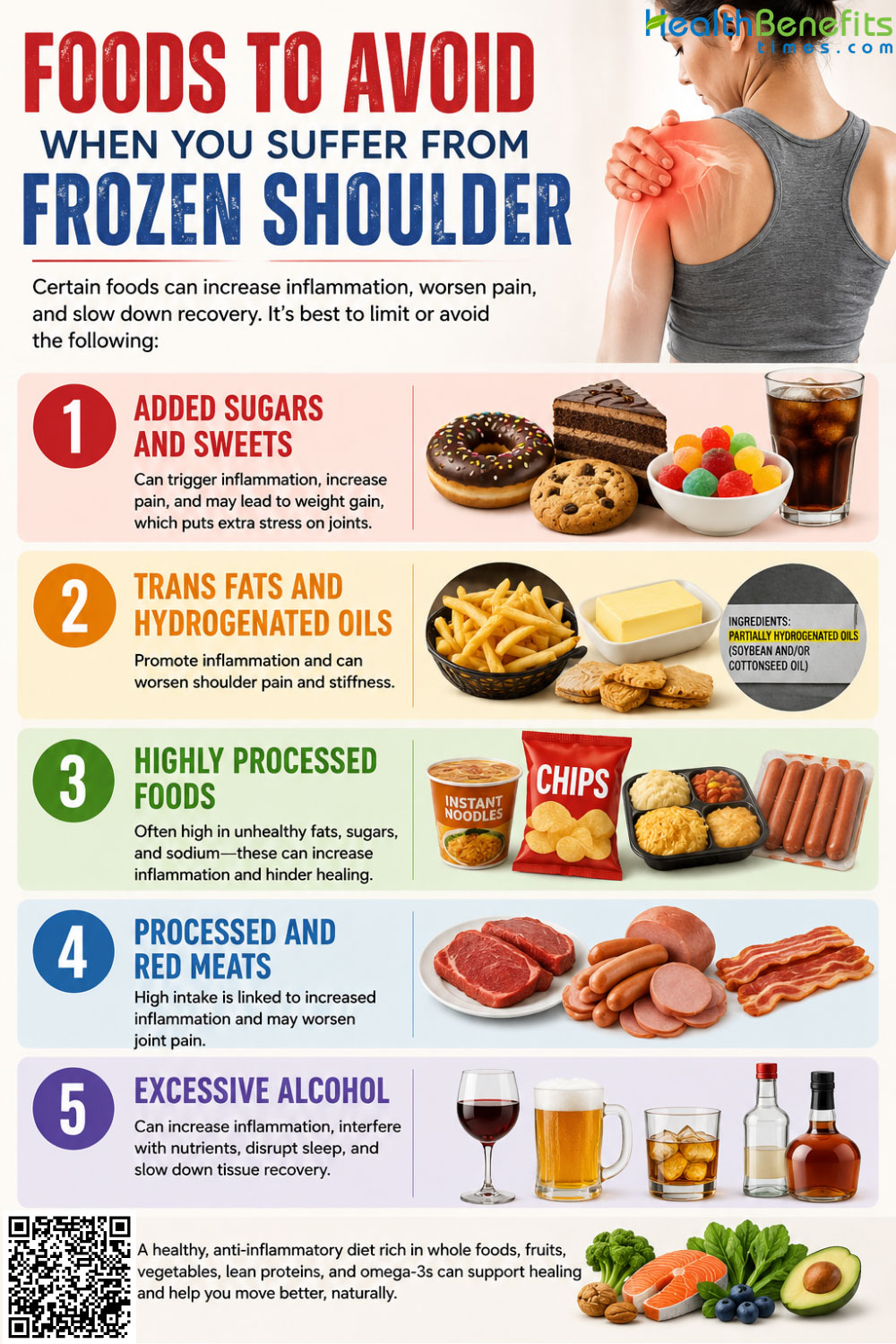
2. Trans Fats and Hydrogenated Oils
Artificial trans fats strongly trigger systemic inflammation throughout the body, aggravating sensitive joint capsules and delaying the natural healing process of the shoulder.74, 75
3. Highly Processed Foods
Packaged snacks and fast food contain chemical additives and advanced glycation end products that promote cellular oxidative stress and severe joint inflammation.76, 77
4. Processed and Red Meats
Processed meats are high in saturated fats and pro-inflammatory compounds, which can significantly increase swelling and persistent pain within the affected shoulder joint. 78, 79
5. Excessive Alcohol
Heavy alcohol consumption disrupts standard immune responses and elevates inflammatory markers in the blood, potentially worsening tissue tightness and severe shoulder discomfort.80, 81
When To See a Doctor When You Have Frozen Shoulder
1. Severe Night Pain
Seek medical help if shoulder pain becomes excruciating and consistently disrupts your sleep, as severe night pain often indicates significant joint inflammation requiring professional intervention. 1, 82
2. Severe Loss of Motion
See a doctor if you completely lose the ability to move your arm away from your body or cannot perform basic daily tasks like dressing or reaching. 83, 84
3. No Improvement After Weeks
Consult a healthcare provider if your shoulder stiffness and aching do not improve after several weeks of gentle home exercises, rest, and over-the-counter pain medications. 85, 86
4. Signs of Infection
Get immediate medical attention if your painful shoulder becomes red, swollen, or unusually warm to the touch, especially if you also develop a sudden fever or chills. 87, 88
5. Numbness or Weakness
Visit a doctor promptly if you experience sudden numbness, tingling, or severe weakness in your arm, which may indicate nerve compression or a torn rotator cuff. 89, 90