

Hair fall, clinically known as alopecia, is the partial or complete loss of hair from the scalp or body. It is completely normal for an average person to shed between 50 and 100 hairs each day as part of the natural hair growth cycle. This continuous biological process involves phases of active growth, resting, and shedding. Because healthy hair follicles constantly produce new strands to replace the ones that drop out, daily shedding usually goes unnoticed. Medical hair loss becomes a concern when this delicate cycle is disrupted. If hair sheds at a significantly faster rate than it is replaced, or if the hair follicles shrink and stop producing new strands, noticeable thinning or baldness occurs. This disruption can be temporary or permanent and is commonly triggered by genetic traits, hormonal imbalances, severe physical or emotional stress, and specific nutritional deficiencies. 1, 2
Causes of Hair Fall
- Genetics: A hereditary condition, often called pattern baldness, that occurs gradually with aging and follows predictable structural patterns.
- Hormonal Changes: Significant shifts in hormone levels due to pregnancy, childbirth, menopause, or thyroid disorders can alter the hair growth cycle.
- Physical and Emotional Stress: High fever, major surgery, severe injury, or intense emotional distress can shock hair roots, shifting them prematurely into a resting phase that results in noticeable shedding months later.
- Nutritional Deficiencies: Insufficient intake of vital nutrients—particularly iron, zinc, protein, and vitamin D—deprives hair cells of the elements required for normal growth.
- Medical Conditions and Autoimmune Disorders: Conditions such as alopecia areata, where the body’s immune system mistakenly attacks healthy hair follicles, as well as scalp infections, can lead to localized hair loss.
- Medications and Medical Treatments: Certain drugs prescribed for cancer, high blood pressure, arthritis, depression, or heart issues, as well as an excessive intake of vitamin A, can cause hair thinning as a side effect.
- Hairstyles and Scalp Pulling: Consistently wearing tight hairstyles like braids, ponytails, or extensions causes continuous tension on the hair roots, which can damage the follicles. 3, 1, 4, 5
Symptoms of Hair Fall
- Gradual thinning on top of the head: Progressive thinning at the crown or a receding hairline, which is the most common presentation of pattern hair loss.
- Circular or patchy bald spots: Smooth, isolated areas of hair loss that can suddenly appear on the scalp, beard, or eyebrows without scarring.
- Sudden loosening and excessive shedding: Diffuse hair loss where handfuls of hair fall out during washing or combing, typically triggered by physical or emotional shock.
- Full-body hair loss: Rapid progression of hair loss that affects the entire scalp (alopecia totalis) or all body hair, including eyelashes and eyebrows (alopecia universalis).
- Scaly patches and erythema: Red, scaling patches on the scalp accompanied by broken hairs or “black dots,” which often indicate a fungal infection like ringworm.
- Scalp discomfort: Sensations of itching, burning, pain, or tenderness localized to the areas of hair loss, often associated with inflammatory or scarring alopecia.
- Nail abnormalities: Changes in the nails such as fine pitting, rough longitudinal ridges (trachyonychia), red spotting, or brittleness, which can accompany autoimmune-related hair loss.6, 7, 8, 9, 10
How to Regrow Hair Naturally
1. Correcting Essential Nutrient Deficiencies (Vitamin D, Iron, and Zinc)
How it may help
Vitamins and minerals, particularly iron, zinc, and vitamin D, are critical metabolic components for the rapid cell division required in hair follicle function 11. Restoring these depleted micronutrients provides the necessary biological building blocks to transition hair roots out of the resting phase and back into the active growth cycle 12.
What research says
Clinical evidence demonstrates that individuals experiencing unexplained, persistent hair shedding frequently present with significantly lower serum ferritin and vitamin D levels compared to healthy controls 13. Correcting these specific, medically diagnosed deficiencies through targeted supplementation effectively halts excessive shedding and stimulates new, healthy structural hair regrowth 14.
How to use it safely
You should first obtain a comprehensive blood test to confirm any suspected nutrient deficiency before starting any supplements 3. Work directly with a healthcare provider to establish the correct clinical dosage necessary to safely elevate your nutrient levels without exceeding recommended daily limits 15.
Potential precautions or side effects
Blindly taking excessive amounts of certain nutrients, such as iron, vitamin A, or selenium, can actually induce further hair loss and cause severe systemic toxicity or metabolic imbalances 4.
2. Rosemary Oil
How it may help
Rosemary oil contains active botanical compounds that naturally improve cellular blood circulation when applied directly to the scalp 16. This increased blood flow ensures that hair follicles receive the vital oxygen and structural nutrients required to sustain active hair growth and prevent premature shedding 11.
What research says
Clinical trials demonstrate that regular application of rosemary oil is as effective as standard medical treatments, such as two percent minoxidil, for increasing total hair count in individuals with genetic pattern baldness 17. Furthermore, it significantly reduces cellular inflammation and scalp itching compared to conventional synthetic topical therapies 18.
How to use it safely
You must always dilute highly concentrated rosemary essential oil with a neutral carrier oil, such as jojoba or coconut oil, before applying it to your skin 19. Gently massage the diluted mixture into your scalp and leave it on for a few hours before washing.
Potential precautions or side effects
Applying undiluted rosemary oil can cause severe allergic contact dermatitis, localized irritation, and burning sensations 20. You should immediately discontinue use if redness or swelling occurs on your scalp.
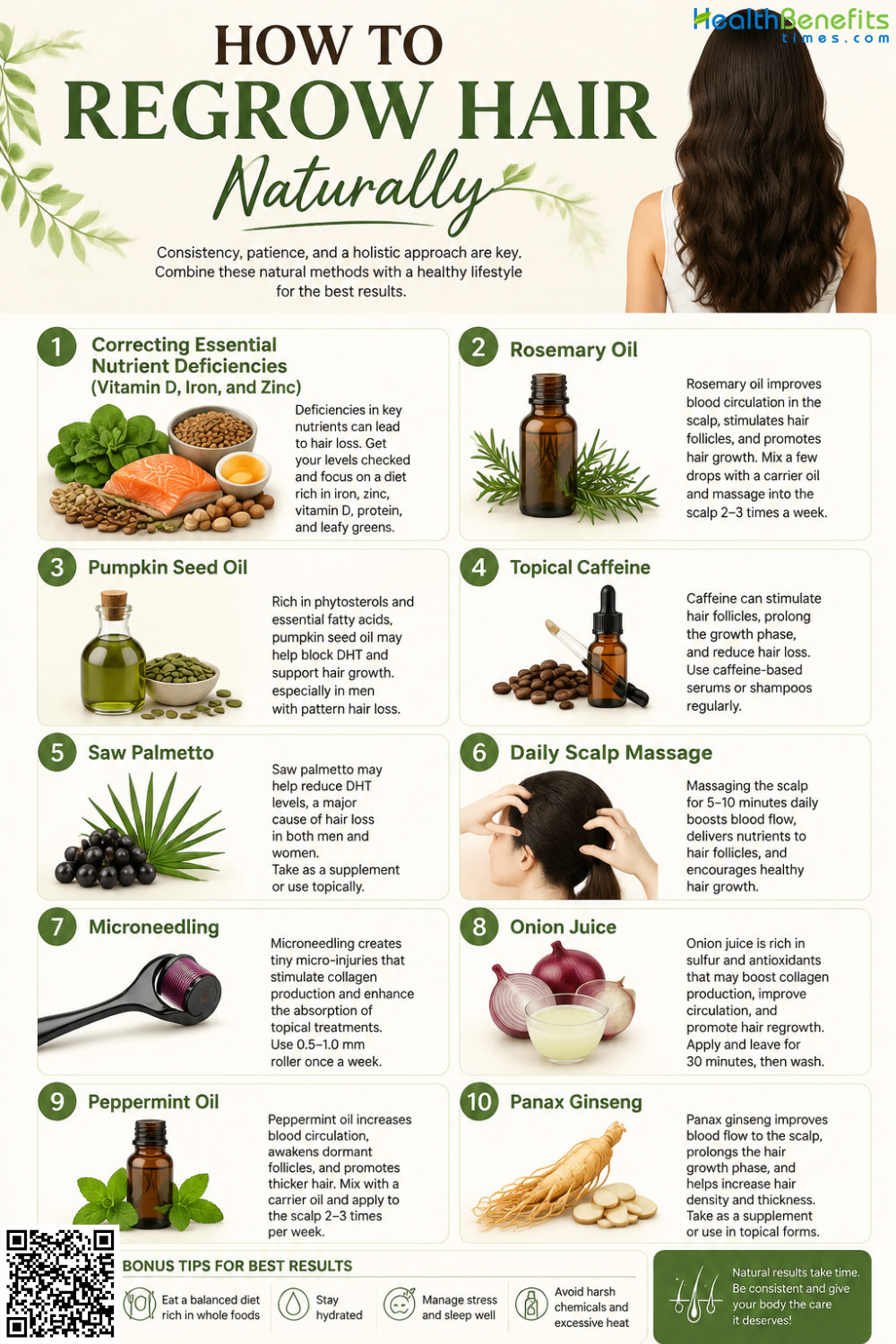
3. Pumpkin Seed Oil
How it may help
Pumpkin seed oil contains beneficial plant compounds that naturally block the 5-alpha reductase enzyme in the body 21. This enzyme converts testosterone into dihydrotestosterone, a primary hormone responsible for shrinking hair follicles 22. By lowering local hormone levels, the oil helps protect vulnerable hair roots and prolongs the active growing phase.
What research says
Clinical studies demonstrate that consuming oral pumpkin seed oil supplements significantly increases hair density and visibly improves scalp coverage in individuals with pattern baldness 23. Additional research concludes that topical application effectively stimulates structural hair regrowth and improves follicle health for women experiencing progressive thinning 24.
How to use it safely
You can take pure pumpkin seed oil orally through dietary capsules or apply the liquid oil directly to your scalp 25. If using it topically, gently massage a few drops into the thinning areas and allow it to sit for several hours before washing your hair.
Potential precautions or side effects
Oral supplements are broadly safe but may occasionally cause mild stomach discomfort or allergic skin reactions 26. You should discontinue use if you experience persistent itching, swelling, or digestive upset.
4. Topical Caffeine
How it may help
Topical caffeine penetrates the scalp barrier directly into the hair follicles, where it stimulates cellular metabolism and energy production 27. This biochemical action actively prolongs the active growing phase of the hair cycle and counteracts the shrinking effects of hormones responsible for genetic baldness 28.
What research says
Clinical evidence indicates that topical caffeine solutions perform as effectively as standard medical treatments, such as five percent minoxidil, for improving hair density and reducing hair shedding in men with pattern baldness 29. Additionally, researchers note that caffeine significantly enhances the overall thickness and structural strength of individual hair strands 30.
How to use it safely
You can easily incorporate topical caffeine by using specially formulated shampoos or concentrated liquid scalp serums 31. When washing your hair, massage the caffeine product directly into your scalp and let it sit for at least two minutes before rinsing to ensure proper absorption 32.
Potential precautions or side effects
While generally safe, applying topical caffeine may occasionally cause minor scalp irritation, redness, or dryness 33. You should discontinue use if these localized skin reactions persist after washing.
5. Saw Palmetto
How it may help
Saw palmetto extract acts as a natural botanical inhibitor of the 5-alpha reductase enzyme in the body 34. By reducing this enzyme’s cellular activity, it lowers the production of dihydrotestosterone, a specific hormone responsible for shrinking hair follicles 35. This regulation protects vulnerable hair roots and sustains the active growth phase.
What research says
Clinical reviews confirm that saw palmetto treatments effectively improve overall hair quality and increase total hair count in patients with genetic pattern baldness 36. Furthermore, evidence demonstrates significant visible improvements in scalp hair density for individuals experiencing hormone-related hair thinning 37.
How to use it safely
You can take saw palmetto as an oral dietary supplement or apply it directly to the scalp as a liquid extract 38. For oral use, standard clinical protocols typically recommend 320 milligrams daily 39. Always consult a healthcare provider to ensure the appropriate dosage for your specific condition.
Potential precautions or side effects
Saw palmetto is generally well-tolerated but may cause mild stomach upset or headaches. You should avoid this botanical supplement if you are taking blood-thinning drugs or specific hormone medications 40.
6. Daily Scalp Massage
How it may help
Daily scalp massage delivers direct mechanical stimulation to the skin, which physically stretches the specialized cells located at the base of each hair follicle 41. This physical tension directly increases localized blood circulation, ensuring that hair roots receive the oxygen and nutrients necessary to produce thicker strands 42.
What research says
Clinical evaluations confirm that consistent daily scalp massage significantly increases overall hair thickness and improves hair loss stability in individuals with genetic pattern baldness 43. Furthermore, evidence shows that these mechanical stretching forces actively stimulate the specific genetic pathways within the follicles responsible for continuous hair growth 44.
How to use it safely
You should use the soft pads of your fingertips to apply gentle, medium-pressure circular movements across your entire scalp. To achieve noticeable clinical results, aim to massage your scalp consistently for at least four to five minutes every single day 45.
Potential precautions or side effects
You must avoid excessive force or pulling on hair strands, which can cause friction-induced breakage 46. Always use clean hands to prevent introducing localized bacterial scalp infections.
7. Microneedling
How it may help
Microneedling involves rolling fine needles over the scalp to create controlled microscopic wounds, which directly triggers the body’s natural healing response 47. This physical process stimulates stem cell production in the dermal papilla and increases blood flow, providing hair follicles with the biological signals required to initiate new growth 48.
What research says
Clinical reviews demonstrate that microneedling significantly increases total hair count and enhances overall scalp density in individuals suffering from genetic pattern baldness 49. Furthermore, evidence concludes that combining this physical therapy with topical hair growth formulations substantially improves the deeper cellular absorption and clinical efficacy of those treatments 50.
How to use it safely
You should strictly utilize sterile devices with needle lengths between 0.5 and 1.5 millimeters for scalp application 51. Thoroughly disinfect the instrument before each session and gently roll it across thinning areas only once every one to three weeks to allow proper tissue healing 52.
Potential precautions or side effects
You must avoid microneedling if you have active scalp infections, open wounds, or inflammatory skin conditions 53. Incorrect technique can cause permanent scarring, severe pain, and localized bacterial infections.
8. Onion Juice
How it may help
Raw onion juice delivers highly concentrated dietary sulfur directly to the scalp, providing the structural building blocks necessary to produce strong keratin proteins 54. Additionally, it contains catalase enzymes that actively neutralize damaging free radicals and reduce cellular inflammation surrounding vulnerable hair follicles 55.
What research says
Clinical evidence confirms that applying crude onion juice significantly induces visible hair regrowth in patients suffering from alopecia areata, a localized autoimmune hair loss condition 56. Researchers note that this botanical therapy provides noticeably faster and denser scalp coverage compared to inactive placebo treatments 57.
How to use it safely
You should extract fresh liquid by blending and straining a raw onion, then apply the crude juice directly to your thinning scalp areas 18. Leave this topical treatment on for fifteen to thirty minutes before thoroughly washing your hair with a mild cleanser 58.
Potential precautions or side effects
You must immediately discontinue use if you experience severe scalp itching or burning, as raw onion juice frequently causes allergic contact dermatitis and localized skin irritation 59.
9. Peppermint Oil
How it may help
Peppermint oil contains menthol, a natural compound that actively widens local blood vessels when applied to the skin 60. This physical expansion significantly increases scalp blood circulation, delivering essential oxygen and structural nutrients directly to the follicles to stimulate the active hair growth phase 18.
What research says
Clinical evaluations indicate that topical peppermint oil significantly increases total follicle count, deepens hair roots, and accelerates overall strand growth 61. Furthermore, evidence demonstrates that this botanical extract stimulates new structural hair production more effectively than certain standard synthetic therapies, without causing systemic side effects 62.
How to use it safely
You must always dilute highly concentrated peppermint essential oil with a safe carrier oil, such as jojoba or coconut oil, before scalp application 63. Massage the diluted mixture gently into your scalp, leave it for five minutes, and then wash your hair completely 19.
Potential precautions or side effects
Applying undiluted peppermint oil directly to your skin can cause severe contact dermatitis, burning sensations, and intense localized irritation 64. You should carefully avoid any contact with your eyes.
10. Panax Ginseng
How it may help
Panax ginseng contains active biological compounds called ginsenosides that directly stimulate the specialized cells within hair follicles 65. These plant extracts actively prevent premature cellular death and prolong the active growing phase of the hair cycle 66. Additionally, ginseng improves localized blood circulation, ensuring roots receive adequate structural nutrients 67.
What research says
Clinical evidence confirms that red ginseng extract significantly promotes structural hair regrowth and increases total scalp hair density in individuals with genetic pattern baldness 68. Furthermore, research concludes that ginsenosides effectively block the specific hormonal pathways that cause hair follicles to shrink and shed prematurely 69.
How to use it safely
You can consume Panax ginseng as a daily oral dietary supplement or apply topical ginseng-infused serums directly to your scalp 70. Always consult a healthcare provider to establish the correct clinical dosage, as standard oral recommendations generally range from one to two grams daily 71.
Potential precautions or side effects
Panax ginseng may cause insomnia, elevated blood pressure, or mild digestive upset 72. You must avoid this supplement if you take prescription blood thinners or specific cardiovascular medications 73.
Foods to Avoid When You suffer from Hair Loss
1. Refined Sugars and Carbohydrates
High sugar intake spikes insulin levels, which triggers androgen hormone production that shrinks hair follicles and accelerates hair thinning. 74 75
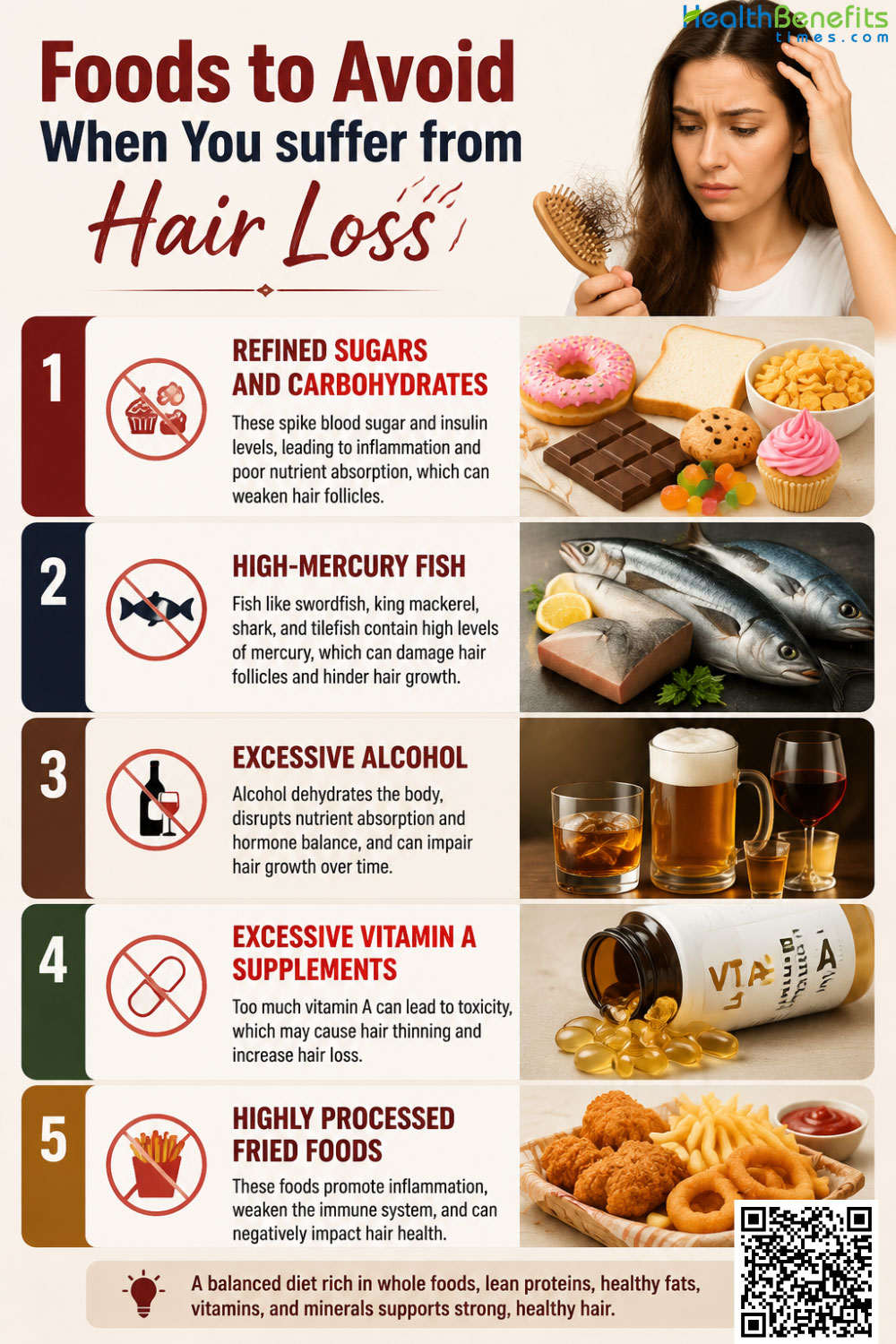
2. High-Mercury Fish
Consuming large predatory fish like swordfish exposes your body to high mercury levels, a heavy metal toxicity known to disrupt keratin production and cause severe hair shedding. 76 77
3. Excessive Alcohol
Heavy alcohol consumption damages the digestive tract, preventing your body from absorbing essential hair-growth nutrients like zinc and iron while simultaneously promoting widespread cellular inflammation. 78 79
4. Excessive Vitamin A Supplements
Consuming overly concentrated vitamin A through high-dose dietary supplements aggressively pushes hair follicles into the shedding phase, causing noticeable diffuse hair loss. 80 81
5. Highly Processed Fried Foods
Deep-fried foods contain unhealthy trans fats that trigger severe systemic inflammation, disrupting the natural hair cycle and damaging the structural integrity of vulnerable hair roots. 82 83
When to see Doctor when you have Hair Loss
1. Sudden or Patchy Shedding
Seek immediate medical evaluation for rapid hair shedding or smooth bald patches, which frequently indicate active autoimmune conditions or severe physical trauma. 84 85
2. Scalp Pain and Scaling
Consult a dermatologist if hair loss accompanies severe itching, burning, redness, or scaly patches, as these strongly suggest active fungal infections or scarring alopecia. 86 87
3. Systemic Health Symptoms
A doctor must assess hair loss occurring alongside unexplained fatigue, sudden weight fluctuations, or fever, which are primary indicators of thyroid disorders or systemic disease. 88 89
4. Loss of Facial Hair
Schedule a clinical examination if hair falls out from your eyebrows or eyelashes, indicating severe systemic medical conditions like alopecia universalis or profound hormonal imbalances. 90 91
5. Hormonal Imbalance Signs
Women experiencing severe hair thinning accompanied by irregular menstrual cycles or cystic acne require clinical evaluation to diagnose and treat underlying endocrine disorders. 92 93