


Post-workout muscle pain, clinically known as delayed onset muscle soreness (DOMS), is a common physical response to new or intense physical activity. It typically emerges hours after exercising and reaches its peak within one to three days. This discomfort is primarily triggered by eccentric movements—exercises where the muscle lengthens under tension, such as running downhill or lowering a heavy weight. On a microscopic level, these strenuous activities cause tiny tears in the muscle fibers and the surrounding connective tissues. To repair this minor damage, the body’s immune system initiates localized inflammation, which sensitizes pain receptors in the muscle and results in the characteristic feelings of stiffness and tenderness. Although it can restrict movement and temporarily reduce muscle strength, DOMS is a normal, mild form of muscle injury indicating that the body is successfully adapting and rebuilding stronger tissues.
Causes of Post-Workout Muscle Pain
1. Microscopic Muscle Tears
Small-scale damage to muscle fibers (Exercise-Induced Muscle Damage) typically caused by eccentric contractions or engaging in unfamiliar physical activities.
2. Delayed Onset Muscle Soreness (DOMS)
A localized inflammatory response to muscle micro-trauma, characterized by pain and stiffness that usually peaks 24 to 72 hours post-exercise.
3. Acute Muscle Strains
Overstretching or macroscopic tearing of muscle tissue due to sudden overexertion, lifting excessive weight, or utilizing improper biomechanical form.
4. Connective Tissue Micro-trauma
Microscopic damage extending to the fascia and connective tissues surrounding the muscle belly during vigorous exertion.
5. Dehydration and Electrolyte Imbalances
Significant depletion of fluids and essential minerals (such as sodium, potassium, calcium, and magnesium) through sweat, leading to post-workout muscle cramps and sustained spasms.
6. Exertional Rhabdomyolysis
A severe condition resulting from extreme physical exertion where skeletal muscle tissue breaks down rapidly, releasing intracellular contents like myoglobin into the bloodstream. 1, 2, 3
Symptoms of Post-Workout Muscle Pain
- Dull, aching muscle pain and discomfort that typically occurs 24 to 48 hours after unaccustomed exercise.
- Muscular tenderness, which often presents gradually and can be particularly localized to the musculotendinous junction.
- Decreased or temporary loss of active and passive range of movement.
- Localized warmth and inflammation in the exercised muscle.
- Formation of a rope-like taut band in the tender area of the affected muscle. 4, 5
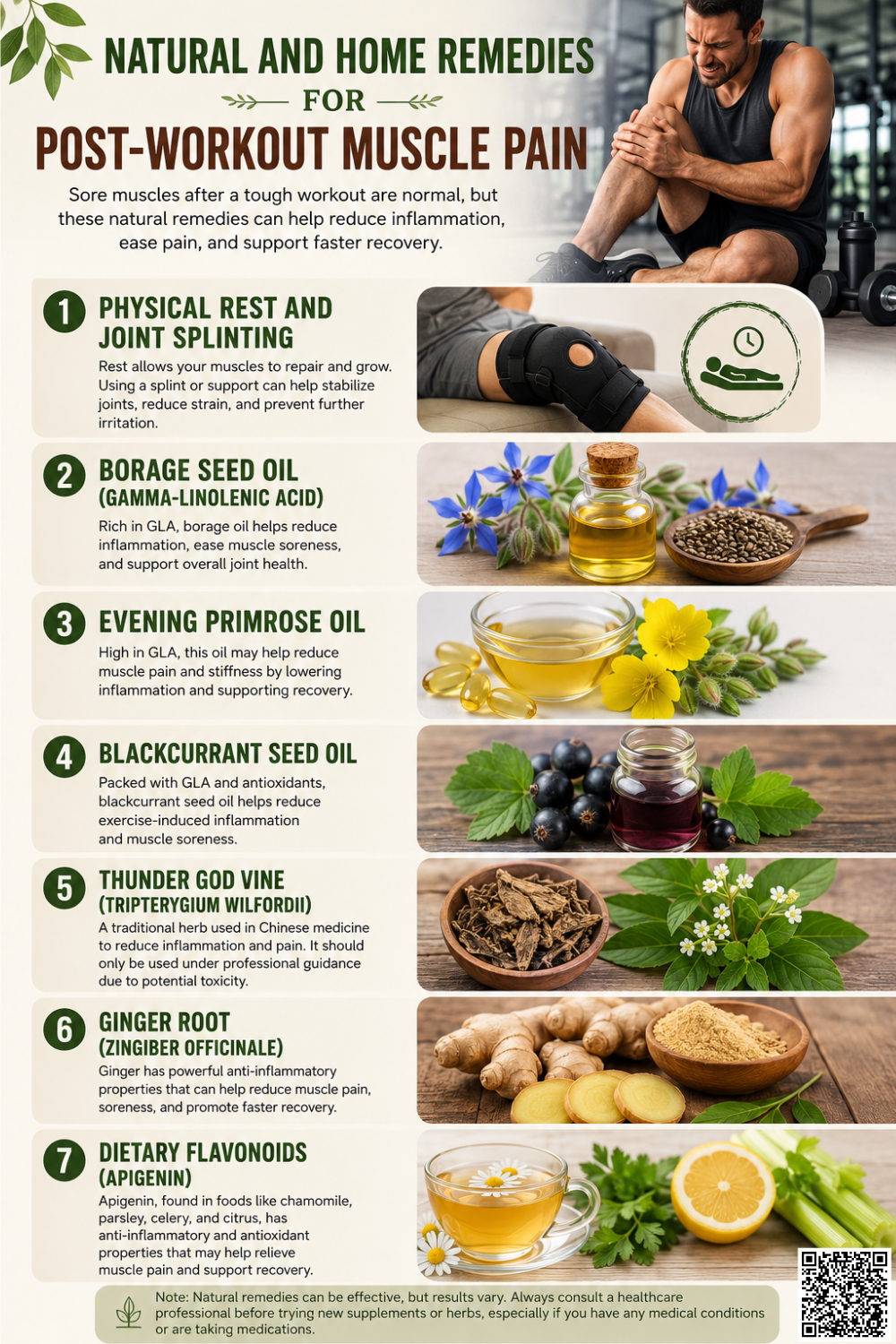 Natural and Home Remedies for Post-Workout Muscle Pain
1. Physical Rest and Joint Splinting
How it may help
Physical rest stops further tissue damage and limits the stress placed on recovering muscle fibers after intense exercise. Providing a brief pause from physical activity prevents the widening of minor muscle tears 6. Splinting can temporarily support severely fatigued muscles, holding joints in a safe position to reduce painful movements while early tissue healing begins 7.
What research says
Medical evidence indicates that sufficient rest intervals attenuate harmful intracellular calcium buildup, which directly drives structural muscle damage and inflammation following heavy strain 8. Additionally, clinical evaluations confirm that post-exercise muscle soreness naturally peaks and subsides within 72 hours, meaning adequate rest facilitates complete tissue recovery without the need for complex medical treatments 9.
How to use it safely
If you experience severe post-workout soreness, you should implement longer rest intervals between training sessions to prevent severe muscle micro-trauma 10. When utilizing a brace or splint, apply it loosely enough to maintain healthy blood flow, and use it only for short periods during the most painful recovery days.
Potential precautions or side effects
Prolonged joint immobilization causes serious complications, including rapid muscle atrophy and tissue fibrosis 11. You must avoid extended splinting to prevent permanent flexibility loss and joint stiffness 12.
2. Borage Seed Oil (Gamma-Linolenic Acid)
How it may help
Borage seed oil provides a rich source of gamma-linolenic acid (GLA), an omega-6 fatty acid that your body converts into anti-inflammatory compounds. By increasing dihomo-gamma-linolenic acid in immune cells, it reduces the synthesis of inflammatory mediators, easing the tissue swelling associated with intense muscle exertion 13.
What research says
Clinical evidence demonstrates that GLA supplementation successfully attenuates inflammatory responses by suppressing tumor necrosis factor-alpha and other pro-inflammatory cytokines 14. Furthermore, studies indicate that GLA exerts direct immunomodulatory effects that decrease structural joint tenderness and muscle soreness, facilitating faster tissue recovery after physical stress 15 16.
How to use it safely
For general muscle recovery, you can consume standardized borage oil capsules containing 1 to 3 grams daily alongside meals to enhance absorption. Always select high-quality supplements explicitly labeled as free of pyrrolizidine alkaloids to prevent accidental liver toxicity during prolonged use 17.
Potential precautions or side effects
Uncertified borage oil may contain trace pyrrolizidine alkaloids, which inherently cause severe hepatotoxicity 18. You should avoid borage supplements if you take anticoagulant medications or are currently pregnant.
3. Evening Primrose Oil
How it may help
Evening primrose oil contains gamma-linolenic acid, an essential fatty acid recognized for its anti-inflammatory properties 19. The body synthesizes this lipid into prostaglandins, which actively suppress tissue inflammation 20. By mitigating this cascade, the oil theoretically assists in decreasing the severity of delayed-onset muscle soreness following strenuous exercise.
What research says
Current scientific evidence evaluating evening primrose oil for exercise-induced muscle damage remains inconclusive. A systematic review of clinical trials found highly heterogeneous results regarding its efficacy for inflammatory diseases 21. While it manages certain chronic conditions, robust clinical validation for post-workout recovery is currently lacking.
How to use it safely
To maximize absorption and minimize stomach discomfort, you should consume evening primrose oil capsules alongside meals. Clinical studies frequently utilize oral doses up to 3,000 milligrams daily for pain management protocols 22. However, you must consult a medical professional to establish an appropriately safe regimen for your needs.
Potential precautions or side effects
This supplement is generally safe but occasionally induces minor adverse reactions, including gastrointestinal upset and headaches 23. You should exercise caution if taking blood thinners or managing seizure disorders.
4. Blackcurrant Seed Oil
How it may help
Blackcurrant seed oil contains high levels of gamma-linolenic acid, an omega-6 fatty acid widely recognized for its powerful anti-inflammatory effects. When metabolized in the body, this specific fat helps block the chemical pathways that cause tissue swelling. By suppressing this natural inflammatory response, the oil theoretically reduces the intensity of muscle aches after intense physical activity.
What research says
Current scientific literature primarily highlights this oil’s success in treating chronic inflammatory conditions rather than acute exercise recovery. Clinical trials show that gamma-linolenic acid supplementation significantly lowers pain levels and joint tenderness in patients with rheumatoid arthritis 24. However, direct medical research confirming its ability to soothe delayed-onset muscle soreness remains limited.
How to use it safely
You can take blackcurrant seed oil as a daily capsule supplement. To improve absorption and prevent an upset stomach, you should always consume it alongside a meal. Medical studies evaluating its anti-inflammatory benefits frequently use daily doses ranging up to 3,000 milligrams 25. Always consult your doctor to determine a safe dosage.
Potential precautions or side effects
This oil is generally well-tolerated but occasionally causes minor stomach discomfort or soft stools. Because it actively influences fat metabolism and cellular function, you should exercise caution if you have underlying liver conditions 26.
5. Thunder God Vine (Tripterygium wilfordii)
How it may help
Thunder God Vine contains bioactive compounds, specifically triptolide and celastrol, which possess powerful anti-inflammatory and immunosuppressive properties 27. These chemical components actively block cellular pathways that cause tissue swelling and immune activation 28. By severely limiting localized inflammation, the plant extract theoretically decreases the physical discomfort associated with acute muscle fiber damage.
What research says
Current medical research primarily focuses on this plant’s efficacy for chronic autoimmune conditions rather than routine exercise recovery. Clinical trials confirm that specific oral extracts significantly decrease joint tenderness and disease activity in patients with rheumatoid arthritis 29. However, reliable scientific evidence demonstrating its effectiveness for delayed-onset muscle soreness remains currently unavailable 30.
How to use it safely
You must only use carefully processed, standardized oral extracts obtained through professional medical providers. Because the plant has an exceptionally narrow therapeutic window, you should strictly avoid preparing it at home. You must consult a doctor before use, as improperly prepared leaves, roots, and flowers are highly toxic 31.
Potential precautions or side effects
This herb frequently causes serious adverse reactions, including severe diarrhea, liver toxicity, and significant kidney damage 32. You must strictly avoid it during pregnancy due to proven birth defect risks 33.
6. Ginger Root (Zingiber officinale)
How it may help
Ginger root contains active chemical compounds, primarily gingerols and shogaols, which provide strong anti-inflammatory properties 34. These plant substances actively block specific enzymes responsible for producing inflammatory molecules throughout the body 35. By limiting this localized immune response, ginger theoretically decreases swelling and discomfort associated with acute muscle fiber damage.
What research says
Clinical studies confirm that consuming ginger daily produces significant reductions in delayed-onset muscle pain following strenuous workouts 36. Scientific evidence also demonstrates that dietary ginger supplementation effectively lowers overall muscle soreness in athletes undergoing intense training regimens 37. These findings validate its reliable use as a natural pain reliever.
How to use it safely
You can consume ginger as a fresh root, powder, or standardized oral capsule. To safely manage exercise recovery, you should take up to two grams daily alongside a meal to minimize stomach upset 38. You must always consult a medical professional before beginning any new supplementation.
Potential precautions or side effects
Ginger occasionally causes mild adverse reactions, including heartburn, diarrhea, and mouth irritation 39. You must seek professional medical advice before use if you currently take prescription blood-thinning medications.
7. Dietary Flavonoids (Apigenin)
How it may help
Dietary flavonoids, specifically apigenin, function as potent antioxidants that actively neutralize harmful free radicals generated during strenuous physical activity 40. This natural plant compound suppresses pro-inflammatory cytokines and reduces oxidative stress within stressed muscle tissues. By minimizing these cellular damage pathways, apigenin theoretically decreases delayed-onset muscle soreness and accelerates tissue repair.
What research says
Scientific studies demonstrate that apigenin supplementation effectively mitigates both age-related and stress-induced muscle degradation by inhibiting hyperactive cellular apoptosis 41. Clinical investigations indicate that this flavonoid promotes skeletal muscle hypertrophy and significantly improves overall muscle function and recovery metrics, highlighting its distinct potential as a therapeutic tissue-preserving agent 42.
How to use it safely
You can obtain apigenin naturally by consuming parsley, celery, chamomile tea, and citrus fruits 43. For concentrated supplementation, you can utilize oral capsules. You should typically consume up to 400 milligrams daily, ideally alongside dietary fats to enhance cellular absorption, after consulting a licensed medical professional.
Potential precautions or side effects
While generally considered safe, high doses occasionally induce mild stomach discomfort or unexpected liver enzyme fluctuations 44. You must consult your physician before use if taking blood-thinning medications.
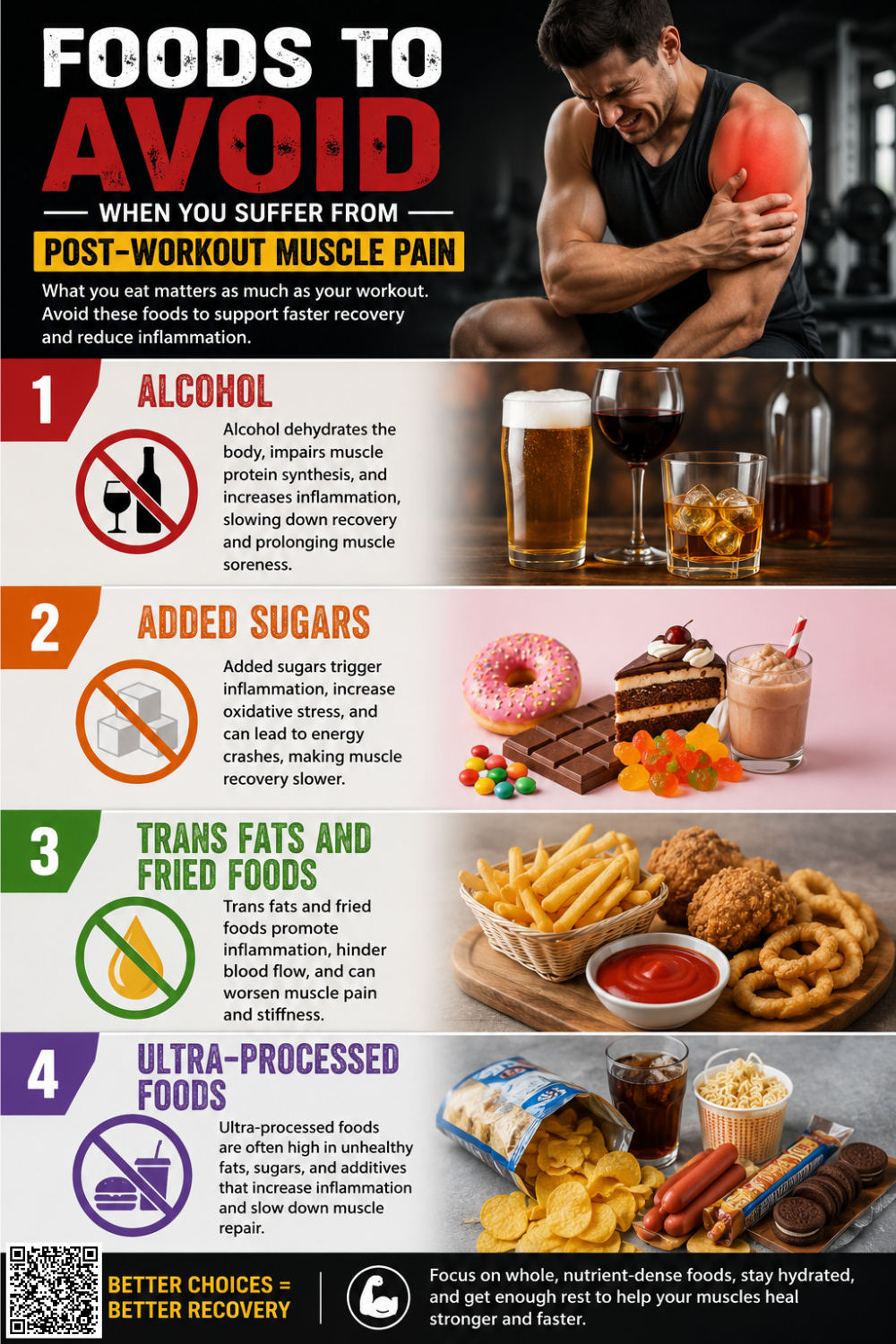 Foods to Avoid When You suffer from Post-Workout Muscle Pain
1. Alcohol
Alcohol impairs muscle protein synthesis, suppresses anabolic responses, and reduces recovery efficiency after resistance exercise. It exacerbates post-workout muscle pain and disrupts the physiological healing process. 45, 46, 47
2. Added Sugars
Consuming dietary simple sugars spikes blood glucose, triggering systemic inflammation and muscle injury. This weakens pro-resolving cellular responses, ultimately aggravating delayed-onset muscle soreness. 48, 49, 50
3. Trans Fats and Fried Foods
Artificial trans fats found in fried items aggressively promote systemic inflammation by elevating bad cholesterol and inducing apoptosis. They disrupt anti-inflammatory pathways necessary for muscle repair. 51, 52
4. Ultra-Processed Foods
Formulations high in sodium, unhealthy fats, and industrial additives create a pro-inflammatory gut environment. These foods prolong metabolic dysregulation, delaying efficient cellular repair mechanisms required for muscle recovery. 53, 54
When To see Doctor when you have Post-Workout Muscle Pain
1. Dark or Tea-Colored Urine
This can indicate rhabdomyolysis, a dangerous condition where rapid muscle breakdown releases damaging proteins into your bloodstream, potentially causing acute kidney failure. 55, 56
2. Severe, Disproportionate Pain
Normal soreness is dull and aching. Seek medical help if you experience agonizing, sharp, or sudden pain that feels significantly worse than typical workout fatigue. 57
3. Extreme Swelling and Numbness
Unrelenting swelling, tingling, numbness, or loss of a pulse in the affected limb are medical emergencies often warning of acute compartment syndrome. 58, 59
4. Pain Persisting Beyond a Week
Standard delayed onset muscle soreness typically resolves within a few days. Muscular discomfort lasting longer may suggest underlying structural injuries requiring medical evaluation. 60, 61
5. Systemic Symptoms like Fever
Experiencing fever, severe fatigue, nausea, or chills alongside intense muscle pain represents a major red flag for severe systemic distress or infection. 62, 63