

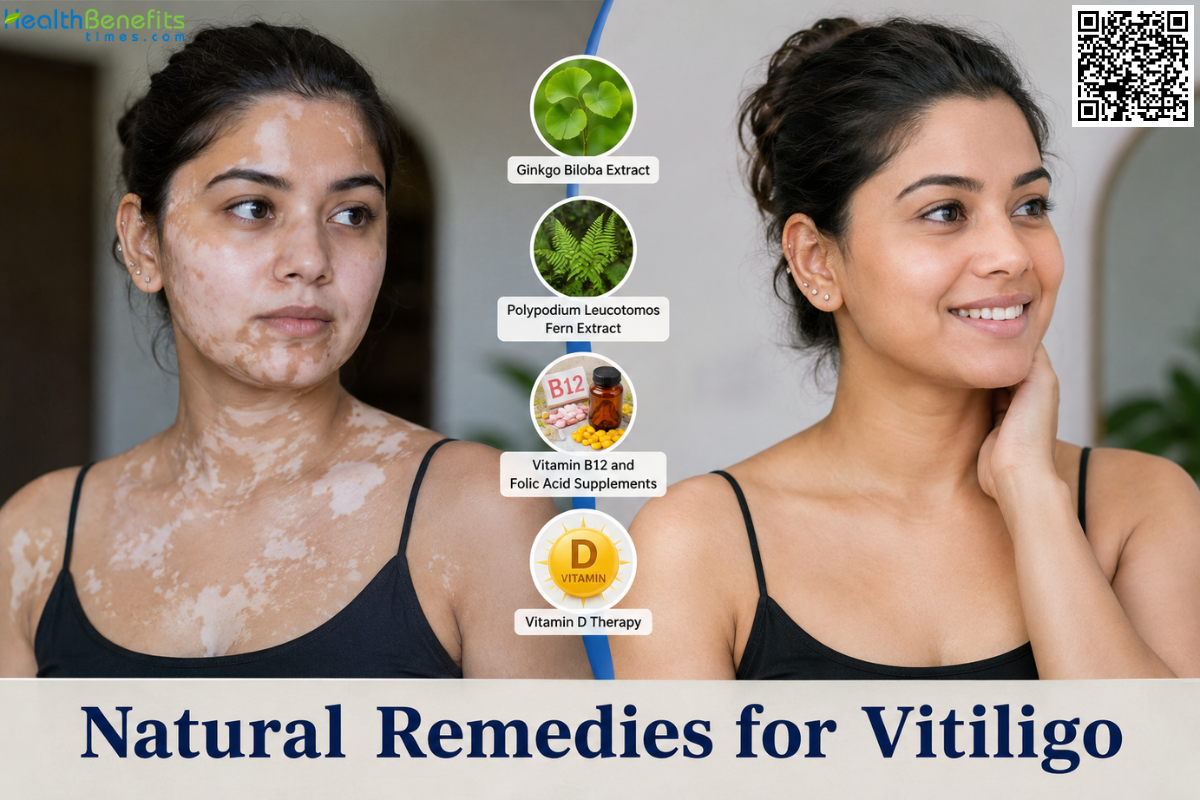
Vitiligo is a chronic autoimmune skin disorder characterized by the progressive loss of melanocytes, the specialized cells responsible for producing skin color. This cell destruction leads to the formation of distinct, non-scaly white patches on the skin. The condition can affect any area of the body, frequently appearing first on the hands, feet, or face. Current clinical research identifies a complex interaction of genetic factors, environmental stress, and an overactive immune system—specifically CD8+ T cells—as the primary drivers of this disease. Although vitiligo is not contagious or life-threatening, the absence of melanin removes the skin’s natural defense against ultraviolet radiation, significantly increasing the risk of severe sunburns. Furthermore, the highly visible nature of these depigmented patches often causes significant emotional distress, profoundly affecting a person’s quality of life.
Causes of Vitiligo
1. Autoimmune System Dysfunction
The primary cause of vitiligo is an autoimmune response where the body’s immune system mistakenly targets and destroys melanocytes, the specialized cells responsible for producing skin color 1. Specific white blood cells directly attack these pigment-producing cells, causing the skin to lose its natural color and form distinct white patches.
2. Genetic Predisposition
Inherited traits play a major role in a person’s risk of developing vitiligo, as the condition frequently runs in families and shares genetic roots with other autoimmune disorders like thyroid disease. Research has identified multiple genetic variations that disrupt normal immune system regulation, increasing an individual’s underlying vulnerability to melanocyte destruction 2.
3. Oxidative Stress
An unhealthy accumulation of reactive oxygen species—unstable molecules that damage cellular structures—directly contributes to the onset of vitiligo 3. When the skin’s natural antioxidant defenses fail to neutralize these free radicals, the resulting cellular toxicity causes pigment-producing cells to die prematurely 4.
4. Environmental Triggers
External stressors act as catalysts that activate the disease in individuals who already possess a genetic susceptibility. Specific events such as severe sunburns, exposure to industrial phenolic chemicals, extreme emotional stress, or physical skin trauma—known clinically as the Koebner phenomenon—can initiate the localized immune attack that leads to pigment loss 5.
Symptoms of Vitiligo
1. Depigmented Skin Patches
The primary physical sign of vitiligo is the progressive development of distinct, chalky-white patches on the skin where pigment-producing cells have been destroyed 6. These flat, non-scaly lesions frequently appear first on sun-exposed areas such as the hands, feet, and face, particularly around the mouth and eyes 7.
2. Premature Hair Whitening (Leukotrichia)
Individuals often experience a loss of color in the hair follicles located within the affected skin patches, causing the hair on the scalp, eyebrows, eyelashes, or beard to turn white or gray prematurely 8. This symptom clinically indicates that the autoimmune destruction has extended deeply into the hair follicle’s stem cell reservoirs.
3. Symmetrical Lesion Distribution
In non-segmental vitiligo, which is the most common form of the disorder, the depigmented patches typically spread in a mirrored, symmetrical pattern, affecting identical locations on both the left and right sides of the body simultaneously 9.
4. Localized Itching (Pruritus)
While vitiligo lesions are predominantly painless and do not cause physical discomfort, up to 20% of patients report experiencing mild, localized itching in the skin immediately preceding or during an active phase of depigmentation, which is directly attributed to the underlying inflammatory immune response.
5. Trauma-Induced Pigment Loss (Koebner Phenomenon)
People with active vitiligo frequently develop new white patches in specific areas where the skin has recently sustained physical trauma, such as cuts, abrasions, severe sunburns, or chronic friction from tight clothing.
6. Mucous Membrane Depigmentation
The loss of natural pigment can extend beyond the external skin layers, occasionally resulting in the visible lightening or complete color loss of the mucosal tissues that line the inside of the mouth, nose, and genital regions.
7. Inflammatory or Multi-Shaded Borders
During highly active phases of the disease, the edges of the white patches may occasionally become red and inflamed, or they may display a gradient of several different color shades between the purely white center and the normal surrounding skin, known clinically as trichrome vitiligo.
8. Heightened Photosensitivity
Because the affected skin completely lacks melanin—the biological pigment responsible for absorbing harmful ultraviolet radiation—the white patches exhibit a significantly increased sensitivity to sunlight and are exceptionally vulnerable to severe sunburns.
Natural Remedies for Vitiligo
1. Ginkgo Biloba Extract
How it may help
Ginkgo biloba extract possesses strong antioxidant and anti-inflammatory properties that help protect skin cells from damage 10. By reducing oxidative stress and blocking inflammatory proteins, the plant extract prevents the immune system from destroying the specific cells responsible for producing natural skin pigment 11.
What research says
Clinical trials indicate that Ginkgo biloba extract can successfully halt the progression of vitiligo and promote natural color restoration, particularly for slow-spreading facial patches. Evidence shows it significantly reduces the overall severity of the disease and prevents the continuous loss of skin color when taken consistently 12.
How to use it safely
To use this extract safely, you should take standardized oral doses of 40 to 60 milligrams, two to three times daily, as recommended by a healthcare provider. Always consult your doctor before starting therapy to ensure proper dosing and avoid dangerous interactions with your current medications 13.
Potential precautions or side effects
Ginkgo biloba may cause mild stomach upset, restlessness, and an increased bleeding risk, particularly when combined with blood-thinning medications. Taking unusually high doses can worsen gastrointestinal distress.
2. Polypodium Leucotomos Fern Extract
How it may help
Polypodium leucotomos extract provides potent antioxidant and immunomodulatory benefits that protect the skin from severe cellular damage 14. By neutralizing harmful free radicals and reducing inflammatory responses, this tropical fern extract helps prevent the immune system from attacking the specific cells responsible for natural skin pigmentation 15.
What research says
Clinical trials indicate that combining oral Polypodium leucotomos extract with narrowband ultraviolet B (NB-UVB) phototherapy significantly increases repigmentation rates in vitiligo patients compared to using light therapy alone 16. The supplement effectively enhances the restoration of skin color while simultaneously protecting surrounding healthy skin from cumulative ultraviolet damage.
How to use it safely
You should take 240 to 480 milligrams of standardized oral extract one to two times daily, typically before sun exposure or clinical phototherapy sessions. Always consult your dermatologist before starting this supplement to ensure proper dosing and verify it safely complements your existing treatment regimen 17.
Potential precautions or side effects
This natural extract is exceptionally well-tolerated and safe for routine daily use, though you may occasionally experience mild, temporary stomach upset or minor skin itching 18.
3. Vitamin B12 and Folic Acid Supplements
How it may help
Vitamin B12 and folic acid are essential nutrients that regulate homocysteine metabolism 19. Deficiencies cause elevated homocysteine levels, triggering oxidative stress that destroys the specific cells responsible for skin color. Replenishing these vitamins lowers cellular toxicity, protecting pigment-producing cells and encouraging normal melanin production.
What research says
Clinical trials reveal that taking oral vitamin B12 and folic acid, particularly when combined with controlled sun exposure, significantly halts the progression of vitiligo 20. Studies show this therapy combination induces noticeable skin repigmentation, functioning far more effectively than either vitamin supplementation or sunlight exposure alone.
How to use it safely
You should undergo blood tests to confirm a baseline deficiency before starting oral supplementation 21. Because these vitamins require ultraviolet light to effectively stimulate repigmentation, work closely with a dermatologist to establish a safe, medically supervised schedule for concurrent sunlight exposure or clinical phototherapy sessions.
Potential precautions or side effects
These oral vitamins are exceptionally safe. However, the required concurrent sun exposure heavily increases your risk of severe sunburns and skin damage unless strictly monitored by a doctor.
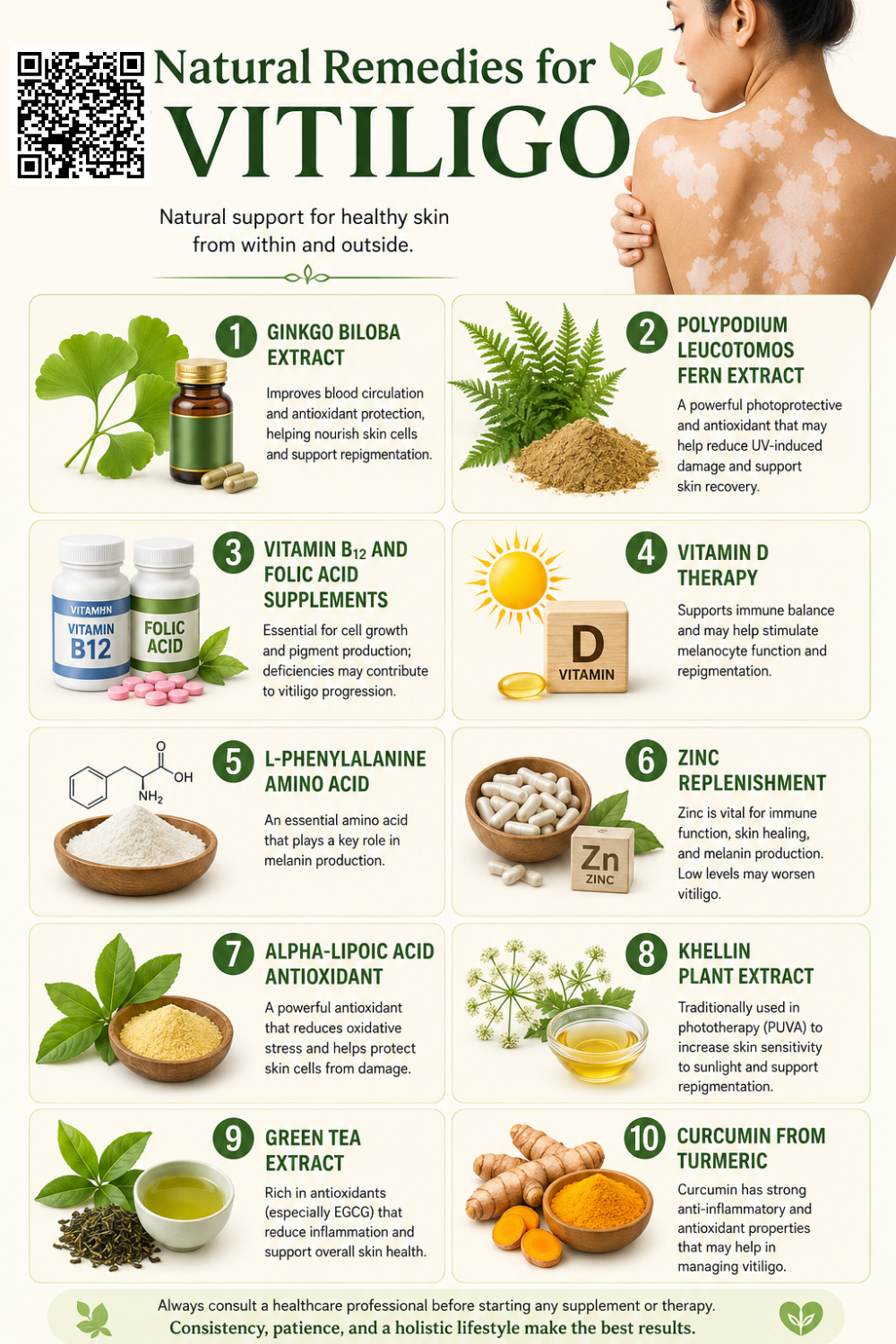 4. Vitamin D Therapy
How it may help
Vitamin D modulates the immune system by suppressing the overactive cellular responses that mistakenly destroy pigment-producing skin cells 22. It directly stimulates melanocyte survival, enhances natural melanin production, and protects skin barrier integrity, creating an ideal biological environment for color restoration.
What research says
Clinical research consistently links low serum vitamin D levels with active, spreading vitiligo 23. Studies reveal that correcting this deficiency through oral supplementation, especially when combined with phototherapy or topical medications, significantly stabilizes the disease and induces substantially higher degrees of skin repigmentation than standard treatments alone 24.
How to use it safely
You should undergo a clinical blood test to measure your baseline 25-hydroxyvitamin D levels before beginning supplementation 25. Work closely with a physician to determine the correct daily oral dosage of cholecalciferol needed to safely resolve your specific deficiency alongside other treatments.
Potential precautions or side effects
Taking excessively high, unmonitored doses can cause vitamin D toxicity, resulting in dangerous calcium buildup in the blood, severe nausea, physical weakness, and potential kidney damage.
5. L-Phenylalanine Amino Acid
How it may help
L-phenylalanine is an essential amino acid that serves as a direct biological building block for melanin production 26. Supplementing this amino acid helps correct defective cellular pathways in the skin, providing pigment-producing cells with the raw materials needed to manufacture natural color and reverse localized depigmentation 27.
What research says
Clinical trials confirm that taking oral L-phenylalanine, particularly when combined with carefully controlled ultraviolet light or sunlight, significantly stimulates repigmentation in vitiligo patients 28. Studies demonstrate that this combined therapy produces substantial color restoration, functioning exceptionally well on facial patches without causing biochemical abnormalities 29.
How to use it safely
Healthcare providers generally recommend taking standardized oral doses—often 50 milligrams per kilogram of body weight—alongside concurrent ultraviolet therapy 30. Because this supplement relies on ultraviolet light to activate melanin synthesis, you must coordinate your dosing and sun exposure strictly under a dermatologist’s clinical supervision 31.
Potential precautions or side effects
While L-phenylalanine itself is highly safe with minimal adverse effects, the required concurrent ultraviolet light therapy drastically increases your risk of severe sunburns and cumulative skin damage 32.
6. Zinc Replenishment
How it may help
Zinc is an essential trace element that protects pigment-producing skin cells from premature death by neutralizing harmful oxidative stress 33. Additionally, it acts as a crucial biological building block for melanin production and helps suppress the inflammatory immune proteins that mistakenly attack healthy skin tissues 34.
What research says
Clinical meta-analyses consistently reveal that individuals with generalized vitiligo possess significantly lower serum zinc levels compared to healthy individuals, with severe deficiencies directly correlating to more extensive skin depigmentation 35. Studies conclude that targeted zinc supplementation safely and effectively enhances color restoration when integrated into standard clinical treatment protocols 36.
How to use it safely
You should obtain a clinical blood test to accurately measure your baseline serum zinc levels before starting supplementation, as dosing relies heavily on your specific deficit 37. Always take standardized oral zinc supplements alongside meals to maximize absorption and closely follow your dermatologist’s prescribed therapeutic regimen.
Potential precautions or side effects
Taking zinc on an empty stomach frequently causes mild nausea and gastrointestinal upset. Furthermore, prolonged consumption of excessively high doses can dangerously deplete your body’s natural copper levels.
7. Alpha-Lipoic Acid Antioxidant
How it may help
Alpha-lipoic acid is a highly potent antioxidant that protects skin cells by neutralizing harmful free radicals and significantly reducing cellular oxidative stress 38. By preventing oxidative damage and promoting the synthesis of protective enzymes, it helps stop the immune system from destroying the specific cells that produce natural skin pigment.
What research says
Clinical trials show that taking oral alpha-lipoic acid, especially combined with vitamins C and E and narrowband ultraviolet B phototherapy, significantly improves treatment success 39. Studies demonstrate this antioxidant combination successfully reduces disease-associated oxidative stress and encourages substantially more skin repigmentation than undergoing clinical light therapy alone.
How to use it safely
You should take oral alpha-lipoic acid as a daily supplement—often between 300 to 600 milligrams—alongside clinical phototherapy or dermatologist-prescribed treatments. Always consult your physician before starting this supplement to establish the correct dosage and ensure it safely complements your current medical regimen.
Potential precautions or side effects
Alpha-lipoic acid is generally safe, but taking large unmonitored doses can occasionally cause mild nausea, temporary skin rashes, or an unexpected drop in your blood sugar levels.
8. Khellin Plant Extract
How it may help
Khellin is a naturally occurring plant compound that activates when exposed to ultraviolet light 40. By stimulating cellular proliferation and boosting melanin production, this extract encourages surviving pigment-producing cells to multiply and migrate, ultimately helping restore natural color to depigmented skin patches 41.
What research says
Clinical trials show that combining khellin with artificial ultraviolet A light—a treatment known as KUVA—effectively promotes significant skin repigmentation. Studies demonstrate that applying liposome-encapsulated khellin topically alongside light therapy achieves substantial color restoration on the face and body, functioning comparably to traditional photochemotherapy 42.
How to use it safely
You should only use khellin topically or orally under strict dermatological supervision, as the extract requires highly controlled ultraviolet A radiation or precise sunlight exposure to activate properly. Work with your doctor to establish an exact phototherapy schedule to safely maximize repigmentation 43.
Potential precautions or side effects
Oral khellin frequently causes nausea and elevated liver enzymes, requiring routine medical monitoring 44. Topical applications are generally safer but occasionally cause mild skin redness and sun sensitivity.
9. Green Tea Extract
How it may help
Green tea extract contains epigallocatechin-3-gallate (EGCG), a highly potent antioxidant and anti-inflammatory compound 45. It protects pigment-producing cells from severe oxidative damage by neutralizing harmful free radicals 46. Furthermore, EGCG suppresses specific immune pathways, preventing inflammatory T-cells from mistakenly attacking and destroying the skin’s natural melanocytes 47.
What research says
Clinical trials demonstrate that applying topical EGCG significantly halts disease progression and successfully promotes localized skin repigmentation 48. Research shows the extract effectively reduces the overall area of depigmented patches, functioning comparably to standard topical prescriptions while simultaneously increasing the survival rate of existing pigment cells.
How to use it safely
You can utilize this extract through topical applications or oral supplements. Dermatologists generally recommend applying clinical creams containing a 5% EGCG concentration directly to affected skin patches twice daily. Always consult your physician before consuming oral supplements to ensure safe dosing alongside your current medications 49.
Potential precautions or side effects
Topical application is exceptionally safe with minimal adverse reactions, though mild skin irritation occasionally occurs. Consuming excessively high, unmonitored doses of oral extract frequently causes bothersome gastrointestinal discomfort.
10. Curcumin from Turmeric
How it may help
Curcumin, the primary active compound in turmeric, possesses highly potent antioxidant and anti-inflammatory properties that protect pigment-producing cells from structural damage 50. It directly neutralizes harmful oxidative stress and suppresses specific inflammatory immune markers, preventing the targeted destruction of the skin’s natural melanocytes 51.
What research says
Clinical trials demonstrate that applying topical tetrahydrocurcuminoid cream—a specialized turmeric extract—alongside narrowband ultraviolet B (NB-UVB) phototherapy significantly increases skin repigmentation 52. Studies show this combination therapy produces faster and more substantial color restoration in vitiligo patients compared to undergoing standard clinical light therapy alone.
How to use it safely
You can use specialized topical creams containing tetrahydrocurcuminoids directly on affected skin areas, ideally synchronized with dermatologist-supervised phototherapy sessions. If taking oral curcumin supplements, always consult your physician first to establish an appropriate daily dosage and prevent interactions with your current medications 53.
Potential precautions or side effects
Topical turmeric is generally well-tolerated, though it occasionally causes minor skin irritation or temporary yellow staining. High oral doses frequently trigger mild gastrointestinal upset or nausea.
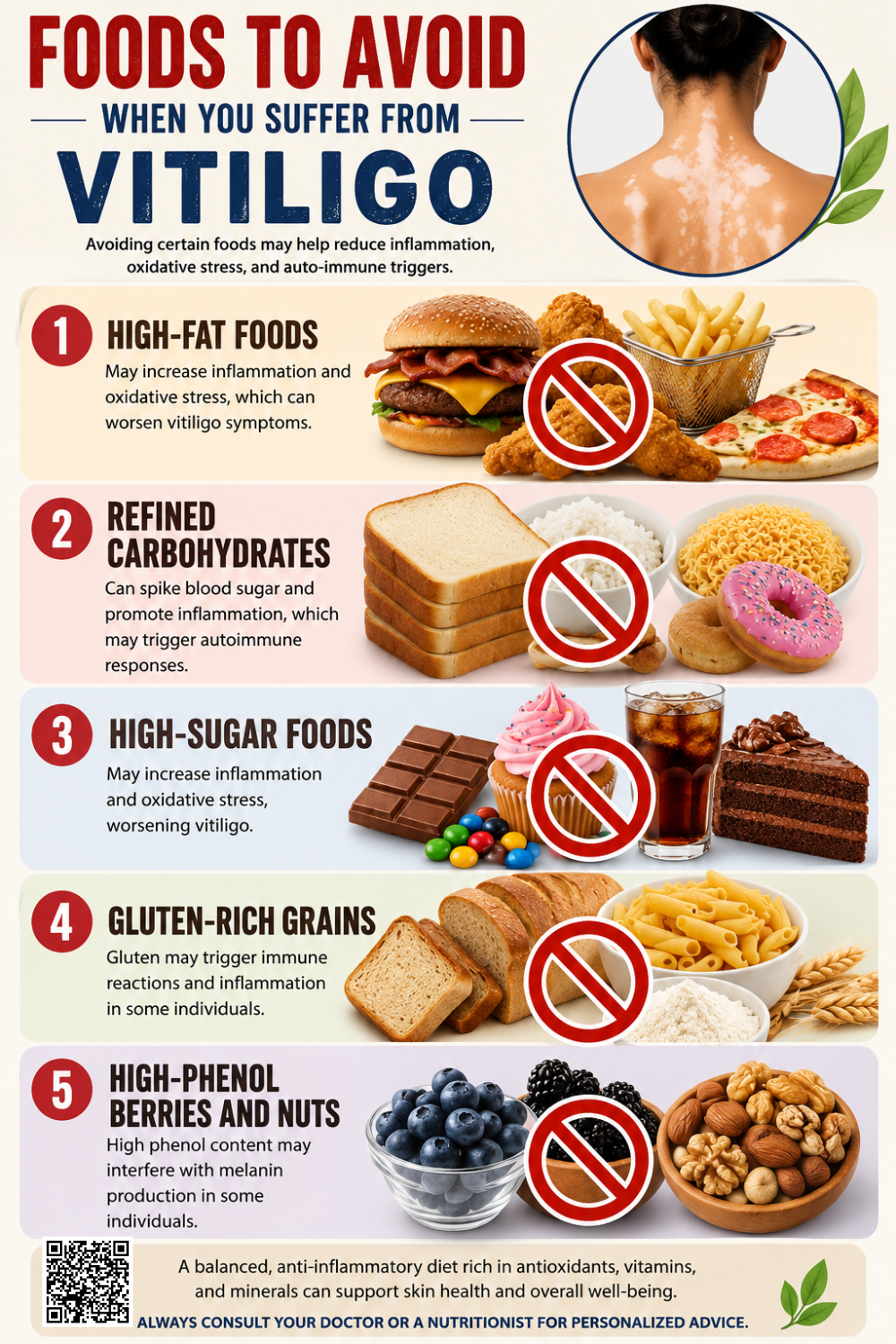 Foods to Avoid When You suffer from Vitiligo
1. High-Fat Foods
A diet high in saturated fats can increase oxidative stress and negatively alter immune function, which may worsen vitiligo symptoms.
2. Refined Carbohydrates
Processed grains rapidly increase blood sugar levels, leading to the creation of harmful molecules that can damage pigment-producing cells.
3. High-Sugar Foods
Excessive sugar consumption triggers widespread inflammation and alters immune cell behavior, creating a poor environment for skin pigment restoration.
4. Gluten-Rich Grains
Wheat, barley, and rye can provoke autoimmune inflammation. Eliminating gluten is particularly beneficial for those with overlapping celiac disease.
5. High-Phenol Berries and Nuts
Certain plant foods rich in phenolic compounds might exacerbate depigmentation, as specific phenol-based chemicals have been linked to cellular toxicity.
When To see Doctor when you suffer from Vitiligo
1. Rapidly Spreading Patches
Consult a dermatologist if you notice white skin patches enlarging quickly or appearing over previously injured skin, as early intervention can effectively halt disease progression.
2. Signs of Emotional Distress
Seek medical help if your skin changes trigger anxiety, depression, or social withdrawal. Proper psychological support is a critical component of comprehensive vitiligo care.
3. Symptoms of Endocrine Dysfunction
Schedule a medical evaluation since vitiligo is closely linked to autoimmune thyroid diseases. A physician can perform essential screening tests to monitor your overall health.