

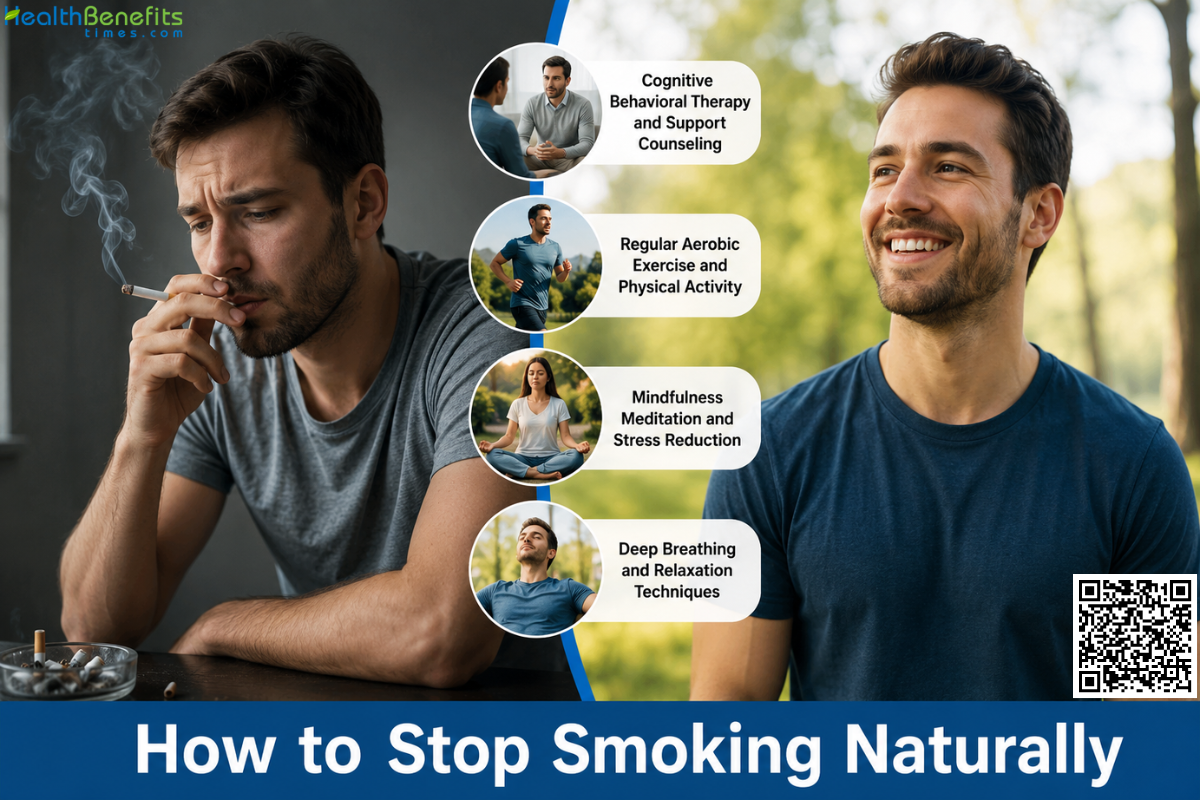
Smoking is the practice of burning a substance, most commonly tobacco, to inhale and exhale its smoke. Tobacco smoke contains thousands of toxic chemicals and carcinogens that severely damage the body. The primary addictive component in tobacco is nicotine, a chemical that rapidly alters brain function by triggering the release of dopamine, leading to intense physical dependence and making cessation highly difficult 1. Globally, smoking is recognized as a leading cause of preventable disease and premature death 2. Prolonged tobacco use damages nearly every organ in the human body. It is a primary risk factor for chronic respiratory illnesses, such as chronic obstructive pulmonary disease (COPD), and significantly increases the likelihood of developing severe cardiovascular conditions, including heart attacks and strokes 3. Furthermore, regular tobacco use directly causes at least 15 different types of cancer, most notably lung cancer, as inhaled toxins trigger dangerous cellular mutations over time 4.
Causes of Smoking
1. Nicotine Dependence
The primary biological cause for continued smoking is addiction to nicotine. Nicotine rapidly alters brain chemistry by releasing dopamine, creating a cycle of temporary pleasure followed by intense physical and mental withdrawal symptoms that force the individual to keep smoking.
2. Psychological Triggers and Stress
Many individuals rely on smoking as an unhealthy coping mechanism to manage stress, anxiety, or depressive symptoms. Over time, the brain learns to associate the physical ritual of smoking with a temporary distraction from negative emotions, creating a strong psychological reliance 5.
3. Social Influences and Peer Pressure
Social dynamics are a leading cause of smoking initiation, particularly among teenagers and young adults. The desire for social acceptance, combined with direct peer pressure and the normalization of tobacco use within certain groups, heavily influences people to start smoking 6.
4. Familial and Environmental Exposure
Growing up in a household where parents, older siblings, or primary caregivers smoke drastically increases the likelihood that a person will adopt the habit. Early and frequent exposure normalizes the behavior, making tobacco use appear as a standard, everyday activity 7.
5. Media Representation and Advertising
Exposure to targeted tobacco industry marketing and product placement encourages smoking initiation. The depiction of smoking as glamorous, rebellious, or socially attractive in movies, television, and digital media has been proven to directly increase the rate at which young people start using tobacco products 8.
Symptoms of Smoking
1. Chronic Cough
Often referred to as a “smoker’s cough,” this persistent coughing occurs because tobacco smoke damages the tiny, hair-like structures in the lungs that normally sweep away dirt and mucus. Without these structures working properly, the body must rely on constant coughing to clear the airways.
2. Shortness of Breath
Inhaling tobacco smoke inflames lung tissue and introduces carbon monoxide into the bloodstream. This toxic gas takes the place of oxygen in red blood cells, reducing the amount of oxygen delivered to muscles and organs and causing early fatigue during physical activity 9.
3. Frequent Respiratory Infections
Smoking weakens the body’s immune system and damages the protective lining of the respiratory tract. This makes individuals significantly more vulnerable to frequent and severe infections, such as colds, the flu, bronchitis, and pneumonia 10.
4. Diminished Sense of Taste and Smell
The harmful chemicals found in cigarette smoke dull and damage the sensory receptors located in the nasal passages and on the tongue. This leads to a noticeable reduction in the ability to accurately smell odors and taste food 11.
4. Dental Issues and Skin Discoloration
The tar and nicotine present in tobacco products deeply stain teeth and fingernails, turning them yellow or brown. Furthermore, smoking reduces saliva production, which creates an environment for bacteria to thrive, leading to chronic bad breath and a high risk of severe gum disease 12.
5. Nicotine Withdrawal Symptoms
Because the brain becomes dependent on nicotine, going without smoking for even a few hours triggers physical and psychological withdrawal. This presents as intense cravings, irritability, anxiety, headaches, and difficulty concentrating 13.
 How to Stop Smoking Naturally
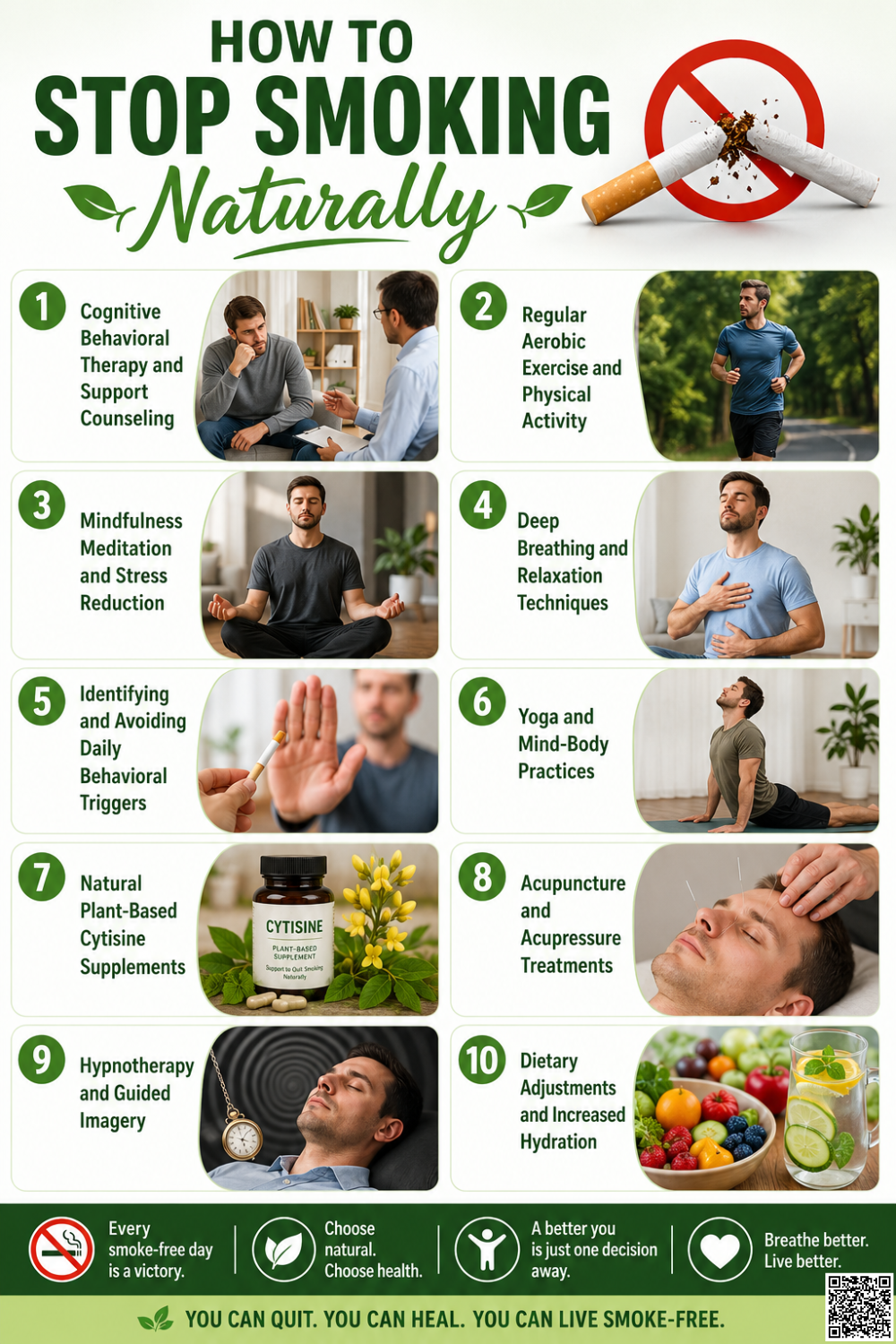
1. Cognitive Behavioral Therapy and Support Counseling
How it may help
Cognitive Behavioral Therapy (CBT) and support counseling assist individuals by identifying the psychological triggers that lead to nicotine cravings. These behavioral therapies teach practical coping skills and problem-solving strategies, allowing individuals to manage daily stress and break the deeply ingrained habits associated with tobacco use.
What research says
Clinical research concludes that combining behavioral counseling with quit attempts significantly increases the likelihood of long-term smoking cessation success compared to quitting unassisted 14. Studies confirm that intensive CBT interventions directly reduce relapse rates by helping patients actively restructure their thoughts surrounding nicotine dependence 15.
How to use it safely
To use this approach effectively, seek guidance from a licensed mental health professional or a certified tobacco treatment specialist. You can participate in individual sessions, group therapy, or use established national quitlines to receive evidence-based support tailored directly to your lifestyle and personal triggers.
Potential precautions or side effects
Behavioral counseling has no physical side effects. However, it requires active participation and emotional vulnerability, which may cause temporary mental fatigue when confronting stressful personal habits or triggers.
2. Regular Aerobic Exercise and Physical Activity
How it may help
Engaging in regular aerobic exercise helps reduce nicotine cravings and withdrawal symptoms by releasing endorphins, the body’s natural mood-elevating chemicals. Physical activity serves as a healthy distraction, limits stress, and mimics the chemical rewards previously provided by nicotine, making the quitting process more manageable.
What research says
Clinical evidence demonstrates that acute bouts of moderate aerobic exercise significantly reduce the intensity of cigarette cravings and tobacco withdrawal symptoms 16. Research confirms that even brief periods of physical activity can temporarily delay the urge to smoke and help prevent weight gain associated with quitting 17.
How to use it safely
When beginning an exercise routine, start slowly with low-impact activities like brisk walking, cycling, or swimming. Aim for at least thirty minutes of moderate physical activity most days of the week. Always consult your healthcare provider before starting a new fitness program if you have underlying medical conditions.
Potential precautions or side effects
Sudden, intense exercise can lead to muscle strains, joint pain, or cardiovascular stress. Individuals with smoking-related lung or heart damage should avoid vigorous workouts without prior medical clearance.
3. Mindfulness Meditation and Stress Reduction
How it may help
Mindfulness meditation teaches individuals to observe their cravings and negative emotions without immediately reacting to them. By cultivating focused awareness, this practice reduces the psychological stress that often triggers tobacco use. It helps individuals detach from the urge to smoke, making it easier to overcome intense withdrawal periods naturally.
What research says
Clinical trials demonstrate that mindfulness training significantly reduces smoking behavior and decreases craving intensity compared to standard behavioral therapies 18. Research confirms that integrating mindfulness techniques alters brain activity related to addiction, leading to higher long-term abstinence rates and improved emotional regulation during the quitting process 19.
How to use it safely
To integrate this practice safely, begin with brief, ten-minute daily sessions focusing on your breath. You can utilize guided meditation resources from certified instructors or mental health professionals. Sit quietly and acknowledge cravings as passing thoughts rather than immediate commands that must be acted upon.
Potential precautions or side effects
Mindfulness is highly safe, but deep introspection may occasionally trigger underlying anxiety. If you experience unexpected emotional distress during meditation, pause the practice and consult a mental health professional.
4. Deep Breathing and Relaxation Techniques
How it may help
Deep breathing techniques help manage acute nicotine cravings by stimulating the body’s relaxation response. This process lowers the heart rate, reduces muscle tension, and calms the nervous system. By mimicking the deep inhalation of smoking without harmful toxins, these exercises provide immediate physical relief during intense urges to use tobacco.
What research says
Clinical studies confirm that engaging in controlled deep breathing exercises significantly reduces acute tobacco withdrawal symptoms and the intensity of cigarette cravings 20. Research indicates that these simple relaxation techniques effectively lower negative emotions and nervous tension, making them a practical behavioral substitute for the physical act of smoking.
How to use it safely
When a craving strikes, sit comfortably and inhale slowly through your nose, expanding your stomach. Hold the breath for a few seconds, then exhale gently through your mouth. Repeat this cycle for three to five minutes until the physical urge to smoke begins to fade.
Potential precautions or side effects
Deep breathing is highly safe, but breathing too rapidly can cause hyperventilation or lightheadedness. If you begin to feel dizzy, return to your normal breathing pattern until the sensation passes.
5. Identifying and Avoiding Daily Behavioral Triggers
How it may help
Identifying and avoiding daily behavioral triggers breaks the learned mental connections between specific routines and the urge to use tobacco. By anticipating situations that prompt cravings—such as drinking coffee or experiencing stress—individuals can proactively change their habits and prevent sudden urges before they begin.
What research says
Clinical evidence demonstrates that avoiding behavioral cues significantly reduces the frequency of nicotine cravings during early withdrawal 21. Public health guidelines confirm that developing practical strategies to manage or completely avoid high-risk situations directly lowers the risk of relapse and improves long-term cessation success 22.
How to use it safely
Keep a daily journal to track when, where, and why your cravings occur. Once you identify your primary triggers, develop a concrete plan to alter your routine. For example, if you normally smoke while driving, change your route or listen to an engaging podcast for distraction.
Potential precautions or side effects
While trigger avoidance is highly safe, completely avoiding social environments to escape peer pressure or alcohol use may lead to temporary social isolation during the early stages of quitting.
6. Yoga and Mind-Body Practices
How it may help
Yoga and mind-body practices combine physical postures, controlled breathing, and meditation to relieve stress and reduce physical tension. This holistic approach helps individuals manage the anxiety and restlessness associated with nicotine withdrawal while improving mood and self-control, making it easier to resist sudden cravings for tobacco.
What research says
Clinical trials indicate that integrating yoga into a cessation program significantly decreases cigarette cravings and perceived stress. Research concludes that regular yoga practice improves long-term abstinence rates and enhances overall mental well-being for individuals attempting to quit smoking compared to standard wellness education alone 23.
How to use it safely
Begin with gentle, beginner-friendly yoga classes led by a certified instructor to learn proper form. Practice two to three times a week. Focus on restorative or Hatha yoga styles, paying close attention to your body’s limits and avoiding overstretching to prevent physical strain.
Potential precautions or side effects
Incorrect postures can cause muscle strains or joint injuries. Individuals with existing physical limitations, back problems, or cardiovascular conditions should consult a doctor before starting a new yoga routine.
7. Natural Plant-Based Cytisine Supplements
How it may help
Cytisine is a natural plant extract that works by mimicking the effects of nicotine in the brain. It attaches to the same neural receptors, tricking the body into feeling satisfied. This process significantly reduces intense withdrawal symptoms and blocks the pleasurable effects of smoking if a person relapses.
What research says
Clinical trials demonstrate that cytisine is highly effective for smoking cessation, significantly increasing the chances of quitting compared to a placebo. Research concludes it is often more successful than traditional nicotine replacement therapies at reducing relapse rates, offering a viable natural alternative for long-term tobacco abstinence 24.
How to use it safely
Because cytisine alters brain chemistry similarly to prescription medications, you should only use it under medical supervision. Typically, you take the supplement following a strict, tapering 25-day dosing schedule. Always consult your doctor before starting this treatment, especially if you take other medications.
Potential precautions or side effects
Common side effects include nausea, dry mouth, sleep disturbances, and mild stomach upset. Do not use cytisine if you are pregnant, breastfeeding, or have severe heart conditions 25.
8. Acupuncture and Acupressure Treatments
How it may help
Acupuncture and acupressure involve stimulating specific points on the body, commonly on the ear, to encourage the release of natural pain-relieving chemicals called endorphins. This stimulation helps relax the nervous system, reducing the intense stress, irritability, and physical nicotine cravings associated with tobacco withdrawal.
What research says
Clinical reviews conclude that while acupuncture may not guarantee long-term smoking cessation better than standard treatments, it can provide effective short-term relief from intense nicotine cravings and withdrawal symptoms 26. Patients often report temporary reductions in anxiety and a decreased physical desire to smoke immediately following sessions.
How to use it safely
To safely explore this option, you must seek treatment exclusively from a licensed, certified acupuncturist who follows strict hygiene protocols, including the use of sterile, single-use needles. For the best results, use these treatments alongside proven behavioral counseling rather than as a standalone cure.
Potential precautions or side effects
Side effects are generally mild and may include temporary soreness, minor bruising, or slight bleeding at the needle sites. Unsterile needles present a severe risk of dangerous bloodborne infections.
9. Hypnotherapy and Guided Imagery
How it may help
Hypnotherapy induces a state of deep relaxation and heightened focus, allowing individuals to mentally detach from their tobacco addiction. By pairing this with guided imagery—visualizing a healthy, smoke-free life—these therapies help rewrite subconscious behavioral patterns, reducing the psychological urge to smoke and improving overall self-control.
What research says
Clinical reviews indicate that while hypnotherapy is widely used, definitive evidence proving it is more effective than standard behavioral counseling remains inconclusive 27. However, research suggests that when used as a supplementary tool, it can help certain individuals effectively manage withdrawal anxiety and successfully maintain long-term abstinence.
How to use it safely
To safely utilize this approach, you must seek treatment exclusively from a licensed healthcare provider trained in clinical hypnotherapy, such as a psychologist or psychiatrist. Avoid uncertified practitioners, and combine these sessions with established behavioral support for the highest chance of quitting successfully.
Potential precautions or side effects
Clinical hypnotherapy is generally safe, though it can occasionally cause temporary headaches, dizziness, or mild anxiety. It is not recommended for individuals with severe psychiatric conditions like schizophrenia.
10. Dietary Adjustments and Increased Hydration
How it may help
Making specific dietary adjustments and increasing water intake directly combat nicotine withdrawal. Drinking water flushes out toxins, reduces dry mouth, and provides a physical distraction. Furthermore, consuming foods like fruits, vegetables, and dairy products can temporarily alter the palate, making the taste of cigarette smoke noticeably less appealing.
What research says
Clinical studies demonstrate that individuals who consume high amounts of fruits and vegetables are significantly more likely to maintain long-term tobacco abstinence 28. Research confirms that diets rich in produce and dairy worsen the palatability of cigarettes, whereas alcohol, coffee, and meat actively enhance tobacco flavor, triggering cravings.
How to use it safely
Keep a reusable water bottle nearby to sip constantly when cravings strike. Substitute the hand-to-mouth habit of smoking by snacking on crunchy, low-calorie vegetables like raw carrots or celery. Simultaneously, limit your intake of alcohol and caffeinated beverages, which strongly trigger the psychological urge to smoke.
Potential precautions or side effects
Replacing cigarettes with high-calorie snacks or junk food can lead to unintended, rapid weight gain. Focus strictly on hydration and nutrient-dense foods to safely support the quitting process.
 Foods and Drinks to Avoid When Quitting Smoking
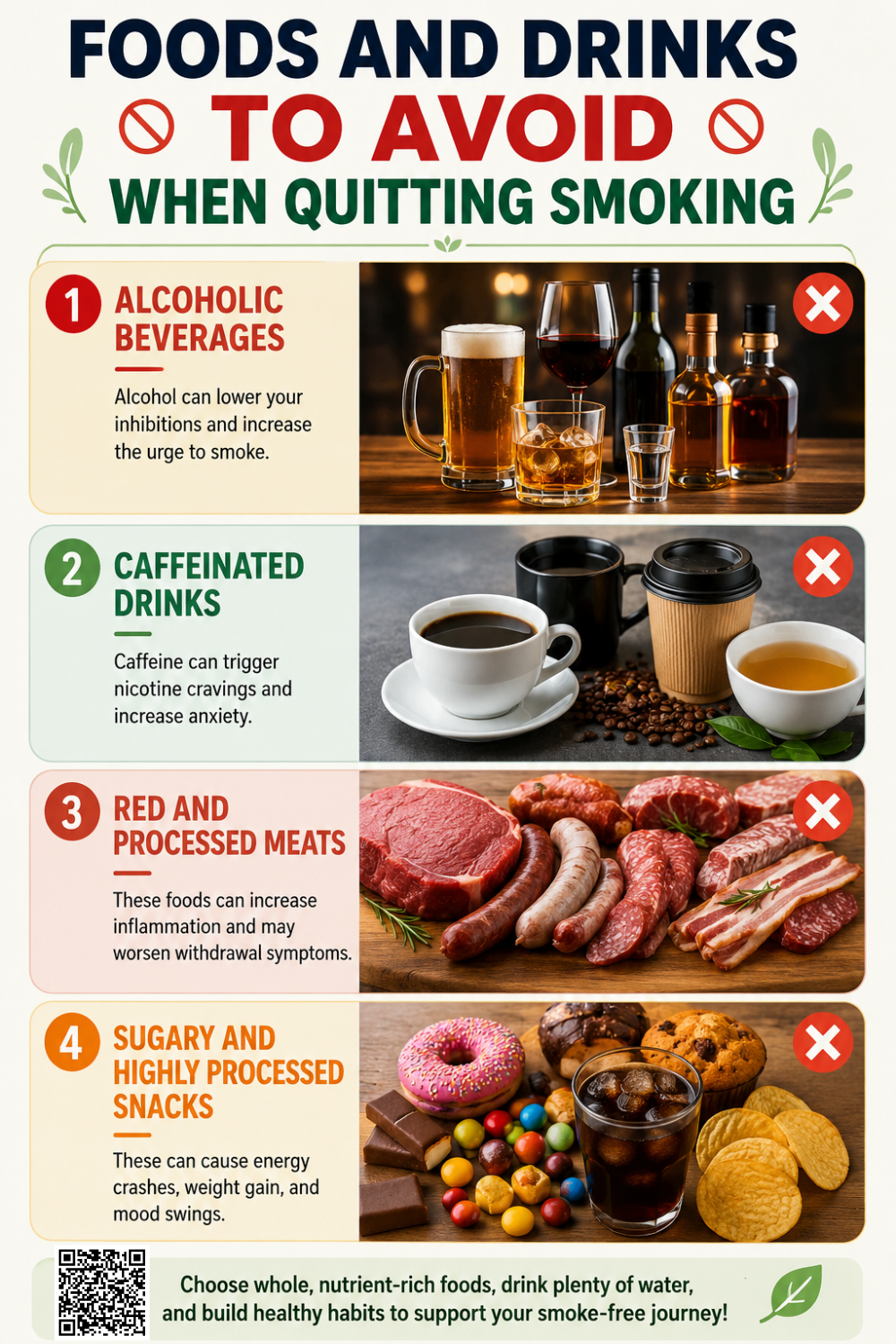
1. Alcoholic Beverages
Drinking alcohol is strongly associated with smoking relapse because it lowers inhibitions and is frequently combined with tobacco use, making it a primary trigger for cravings 29.
2. Caffeinated Drinks
Coffee and tea often act as ingrained behavioral triggers for smokers; their consumption is frequently associated with the habit, which can intensify the psychological urge to smoke.
3. Red and Processed Meats
Evidence indicates that the consumption of red and processed meats can enhance the flavor profile of cigarettes, making tobacco use appear more satisfying and increasing the likelihood of smoking.
4. Sugary and Highly Processed Snacks
Relying on refined snacks as a replacement for nicotine often leads to excessive weight gain and fails to satisfy oral fixations, undermining healthy recovery efforts during the quitting process.