


Hand, foot, and mouth disease (HFMD) is a common and highly contagious viral illness. It primarily affects infants and children younger than five years of age, although anyone can become infected 1. The condition is most frequently caused by pathogens within the enterovirus family, particularly Coxsackievirus A16 2. An infection typically begins with a mild fever and feeling unwell, which soon progresses to painful, blistering sores in the mouth and a characteristic skin rash presenting as flat or raised red spots on the palms of the hands and soles of the feet 3. The virus spreads rapidly through direct contact with an infected person’s respiratory droplets, saliva, blister fluid, or feces 2. While the symptoms can cause discomfort, HFMD is generally not a severe illness and typically resolves on its own within seven to ten days without specialized medical treatment 1.
Causes of Hand, Foot, and Mouth Disease (HFMD)
- Enteroviruses: The disease is fundamentally caused by an infection from a specific group of pathogens known as enteroviruses 4.
- Coxsackievirus A16: This particular viral strain is the most frequent and primary cause of the illness worldwide, typically resulting in a standard, mild infection that resolves without medical intervention 4.
- Enterovirus A71 (EV-A71): This virus is another major causative agent of the disease, notably responsible for large-scale outbreaks in the Asia-Pacific region, and it carries a higher risk of causing severe neurological complications involving the brain and spinal cord 4.
- Coxsackievirus A6: Over the past decade, this specific strain has emerged as a significant new cause of the illness globally, and it often produces atypical presentations with more widespread and severe skin rashes 4.
- Coxsackievirus A10: While seen less frequently than other strains, this virus is a recognized cause of the infection and has been clinically linked to more severe disease outcomes in patients 4.
Symptoms of Hand, Foot, and Mouth Disease (HFMD)
- Fever and Flu-like Symptoms: The illness frequently begins with a fever, a sore throat, a general feeling of being unwell, and a reduced appetite or a noticeable decrease in eating and drinking 3.
- Painful Mouth Sores: Individuals commonly develop painful sores that typically start as small red spots on the tongue and the inside of the mouth, which soon develop into fluid-filled blisters 3.
- Skin Rash on Hands and Feet: A characteristic rash often emerges, presenting as flat or slightly raised red spots that are usually not itchy, primarily located on the palms of the hands and the soles of the feet 3.
- Widespread Rash Distribution: In addition to the hands and feet, the blistering skin rash can sometimes extend to other areas of the body, including the buttocks, legs, and arms 3.
- Signs of Swallowing Difficulty: Due to the severe discomfort of the mouth sores, infants and young children may exhibit signs of difficulty swallowing, such as excessive drooling or a preference for only consuming cold fluids, which significantly increases the risk of dehydration 3.
Natural Remedies for Hand, Foot, and Mouth Disease (HFMD)
1. Maintaining Hydration
How it may help
Painful blisters in the mouth and throat often make swallowing difficult. Encouraging steady fluid intake prevents dehydration, which is the most common and significant complication of the illness 3. Cool liquids also soothe irritated oral tissues, providing natural pain relief during the healing process.
What research says
Clinical guidelines emphasize that because there is no specific antiviral treatment, supportive care focusing on fluid maintenance is the primary medical recommendation 5. Health authorities identify dehydration as the leading cause for hospital admission in patients with this illness, underscoring the critical need for consistent hydration 4.
How to use it safely
You should offer cool or room-temperature beverages frequently throughout the day. Water and cold milk are excellent choices. Strictly avoid acidic or carbonated drinks, such as orange juice, because these can cause severe burning and worsen the pain of mouth sores 4.
Potential precautions or side effects
Monitor closely for signs of severe dehydration, such as a dry mouth or lack of urine. If the person refuses all fluids, seek immediate medical care for intravenous hydration 4.
2. Eating Cold Foods
How it may help
Consuming cold foods creates a temporary numbing effect inside the mouth, which significantly reduces the pain caused by open sores. The cold temperature also helps decrease tissue swelling in the throat, making it much easier to swallow and maintain necessary fluid intake during the infection.
What research says
Medical guidelines explicitly recommend providing cold foods, such as ice cream or sherbet, to alleviate the severe oral discomfort associated with the virus 5. Clinical protocols emphasize that soothing mouth sores with cold items is a primary strategy to encourage eating and prevent dangerous dehydration 4.
How to use it safely
You should offer smooth, cold items like ice chips, plain ice cream, or milk-based popsicles. Ensure you strictly avoid any cold foods with acidic flavors, such as lemon or orange, because the acid will irritate the open blisters and sharply increase pain 4.
Potential precautions or side effects
Be cautious of choking hazards when giving solid ice cubes to infants and toddlers. Instead, provide crushed ice or soft frozen treats to ensure safe consumption 4.
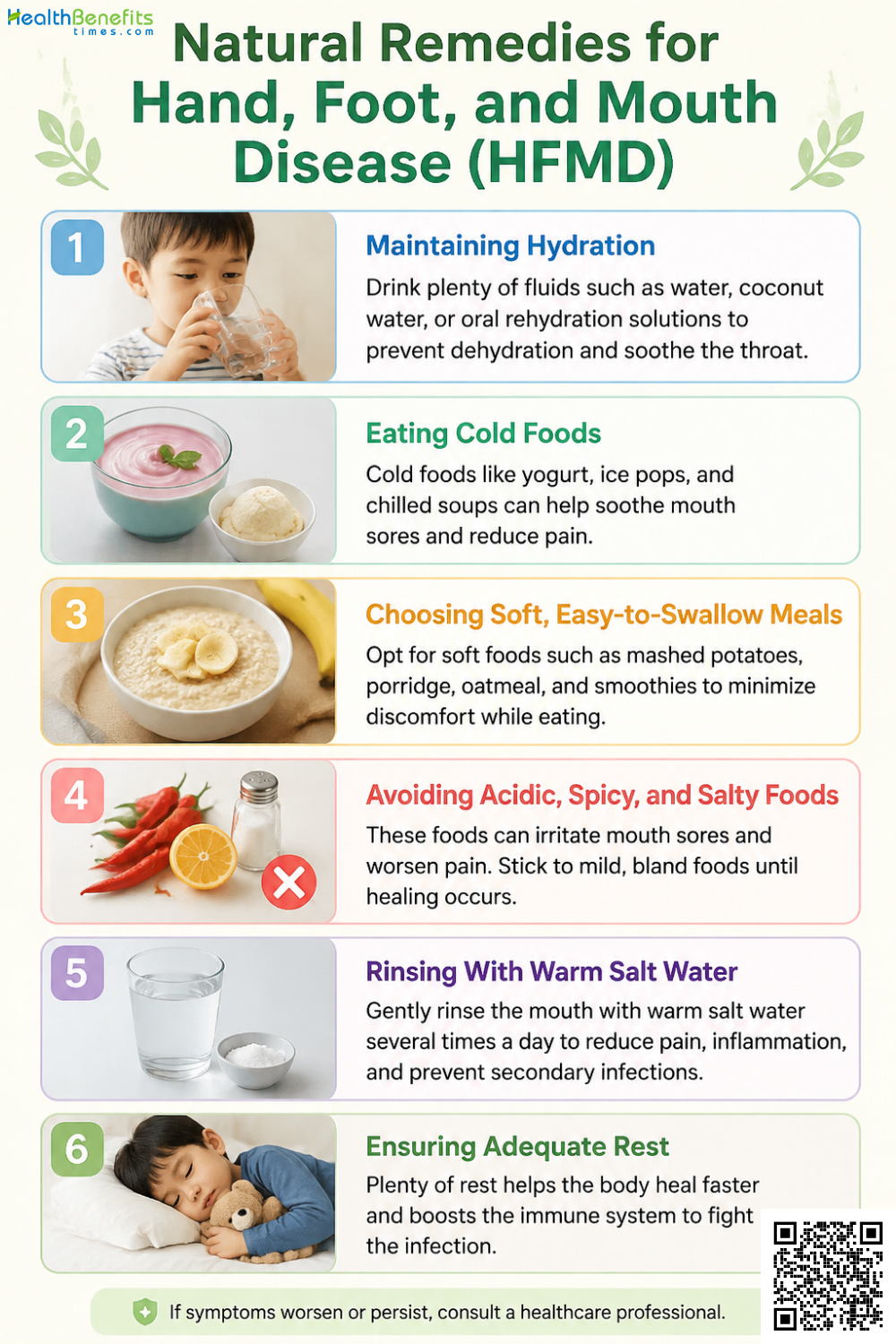
3. Choosing Soft, Easy-to-Swallow Meals
How it may help
Soft meals require minimal chewing, which prevents physical friction against painful mouth and throat blisters. By eliminating the need to break down hard or crunchy textures, these meals significantly reduce irritation during swallowing, helping patients maintain necessary calorie and fluid intake while their oral sores heal.
What research says
Clinical care protocols advise transitioning patients to a soft diet to manage the severe oral discomfort caused by viral blisters 4. Medical authorities stress that modifying food texture is a crucial supportive measure to prevent the painful complications of chewing, which often lead to food refusal and dehydration 5.
How to use it safely
You should prepare smooth, bland meals like mashed potatoes, oatmeal, applesauce, or pureed soups. Ensure all food is served cool or at room temperature, as heat can aggravate open sores. Avoid any sharp, crunchy items like crackers or chips that might scrape the throat 4.
Potential precautions or side effects
Ensure the soft foods provided are not heavily salted or spiced, as these ingredients will severely irritate open mouth blisters and increase oral pain 4.
4. Avoiding Acidic, Spicy, and Salty Foods
How it may help
Acidic, spicy, and heavily salted foods directly irritate the open, raw blisters inside the mouth and throat. Eliminating these harsh ingredients prevents severe burning sensations and sharp pain. This dietary adjustment ensures the patient remains comfortable enough to continue swallowing necessary fluids and soft foods during the healing process.
What research says
Medical guidelines strongly advise against consuming acidic and spicy items to manage the severe oral discomfort associated with the viral infection 5. Clinical protocols highlight that removing irritating foods from the diet is a fundamental strategy to prevent pain-induced fluid refusal and subsequent dehydration 4.
How to use it safely
You should strictly remove citrus fruits, fruit juices, tomato-based products, and spicy seasonings from the diet until all mouth sores heal completely. Replace these with bland, non-acidic alternatives like plain water, milk, or mild broths to ensure safe and pain-free swallowing 4.
Potential precautions or side effects
When eliminating common fruit juices to avoid acid, you must carefully monitor overall fluid intake. Consistently replace them with plain water or oral rehydration solutions to prevent accidental dehydration 4.
5. Rinsing With Warm Salt Water
How it may help
A warm salt water rinse acts as a mild, cleansing saline solution. It helps soothe severe tissue inflammation caused by oral blisters, gently removes cellular debris from open sores, and provides temporary pain relief. This simple measure maintains oral hygiene and creates a favorable environment for the mouth to heal.
What research says
Clinical guidelines classify warm saline rinses as an effective supportive therapy for managing painful oral lesions associated with viral infections 4. Medical authorities recognize that maintaining oral hygiene with gentle rinses alleviates the oral discomfort that typically prevents adequate fluid intake and complicates recovery 5.
How to use it safely
You should dissolve half a teaspoon of standard table salt into eight ounces of warm water. Swish the solution gently around the mouth for a few seconds and then spit it out completely. You can safely repeat this soothing process several times a day 4.
Potential precautions or side effects
You must only use this remedy for older children and adults who can reliably spit out the liquid. Swallowing the salt water mixture can cause stomach upset and vomiting 4.
6. Ensuring Adequate Rest
How it may help
Adequate physical rest conserves the body’s energy, allowing the immune system to focus entirely on clearing the viral infection. Limiting physical activity significantly reduces the severe fatigue and muscle weakness that typically accompany the initial fever, promoting a much smoother and more efficient natural recovery process.
What research says
Because there is no specific antiviral medication for this illness, clinical guidelines rely completely on supportive care to manage symptoms and assist recovery 5. Medical authorities emphasize that keeping the patient at home to rest is a critical intervention to support the immune system and prevent spreading the highly contagious virus to others 4.
How to use it safely
You should keep the infected individual home from school, daycare, or work. Encourage quiet, low-energy activities in a comfortable environment. Ensure the resting area is kept cool to help naturally regulate their body temperature, especially during the first few days when a fever is active 5.
Potential precautions or side effects
While prioritizing rest, you must ensure prolonged sleep does not interfere with regular drinking. Continually wake the patient if necessary to provide fluids and prevent severe dehydration 4.
Foods to Avoid When You Suffer From Hand, Foot, and Mouth Disease (HFMD)
1. Citrus Fruits and Juices
Acidic items like oranges and lemons cause severe burning and instantly irritate open oral blisters, significantly increasing pain and discouraging vital fluid intake 5.
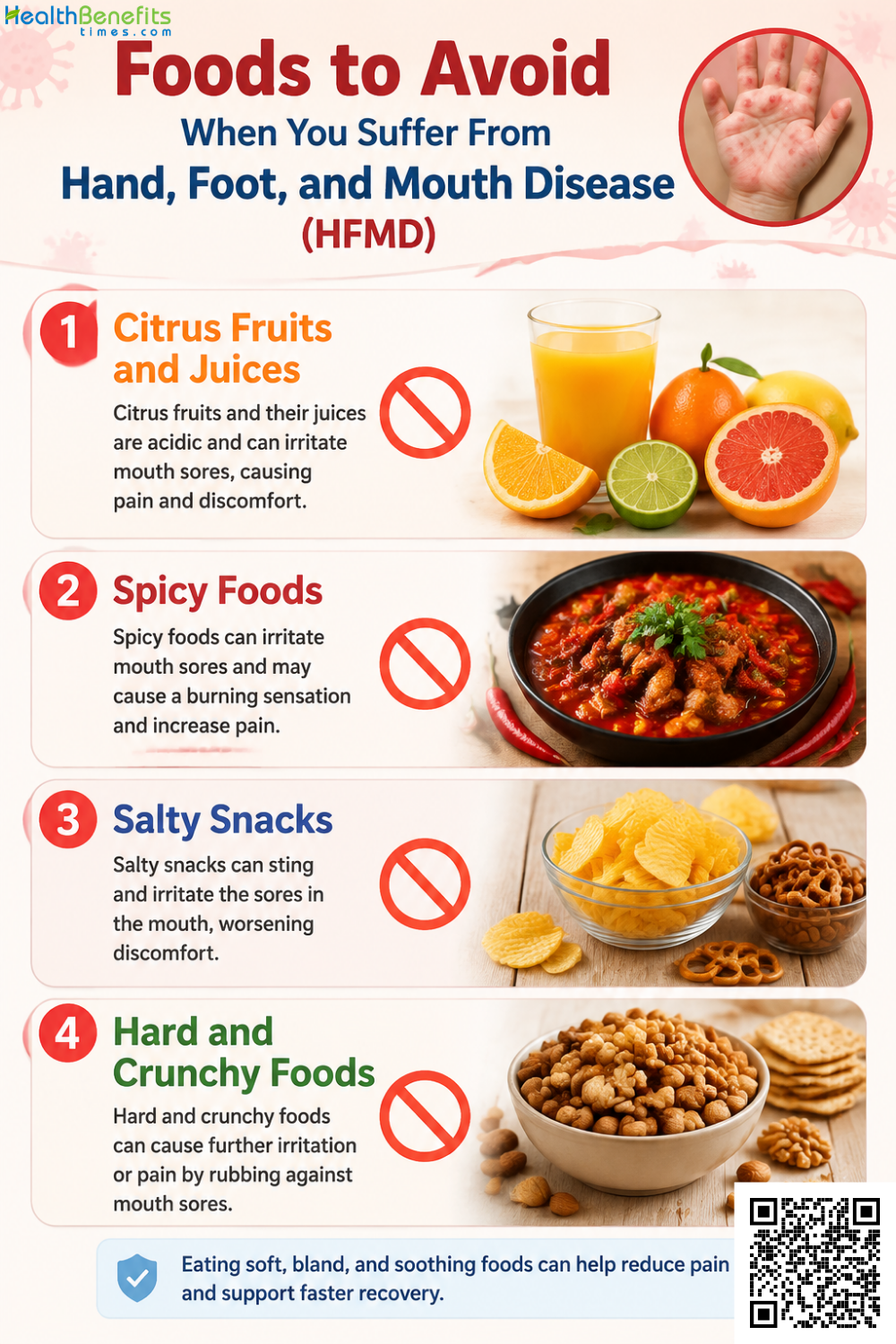
2. Spicy Foods
Meals containing strong spices trigger intense pain when they contact raw mouth sores, leading to unnecessary suffering and significant difficulty during swallowing 4.
3. Salty Snacks
Highly salted items create a harsh environment in the mouth, stinging the sensitive, blistered tissues and causing severe oral discomfort during the active viral infection 4.
4. Hard and Crunchy Foods
Dry crackers, chips, and toast physically scrape against delicate throat blisters during chewing, causing mechanical tissue irritation and worsening the patient’s ability to eat 4.
When to See a Doctor When You Struggle From Hand, Foot, and Mouth Disease (HFMD)
- Signs of Severe Dehydration: You must seek immediate care if you or your child cannot swallow fluids, produce tears, or urinate for eight consecutive hours 3.
- Prolonged or High Fever: Consult a physician if a fever lasts for more than three days, reaches a high temperature, or returns after initially subsiding 3.
- Lack of Improvement: Schedule a clinical evaluation if the painful mouth sores, skin rash, or general illness symptoms do not steadily improve after ten days 3.
- Infants Under Six Months: You should promptly take infants younger than six months to a doctor, as their immature immune systems increase the risk of severe viral complications 3.
- Weakened Immune Systems: Contact a healthcare provider immediately if the infected person has a compromised immune system, which severely limits their body’s ability to fight the virus naturally 3.
- Neurological Warning Signs: Seek emergency medical attention for severe headaches, a stiff neck, extreme sleepiness, or confusion, as these indicate rare but dangerous spinal or brain inflammation 4.