

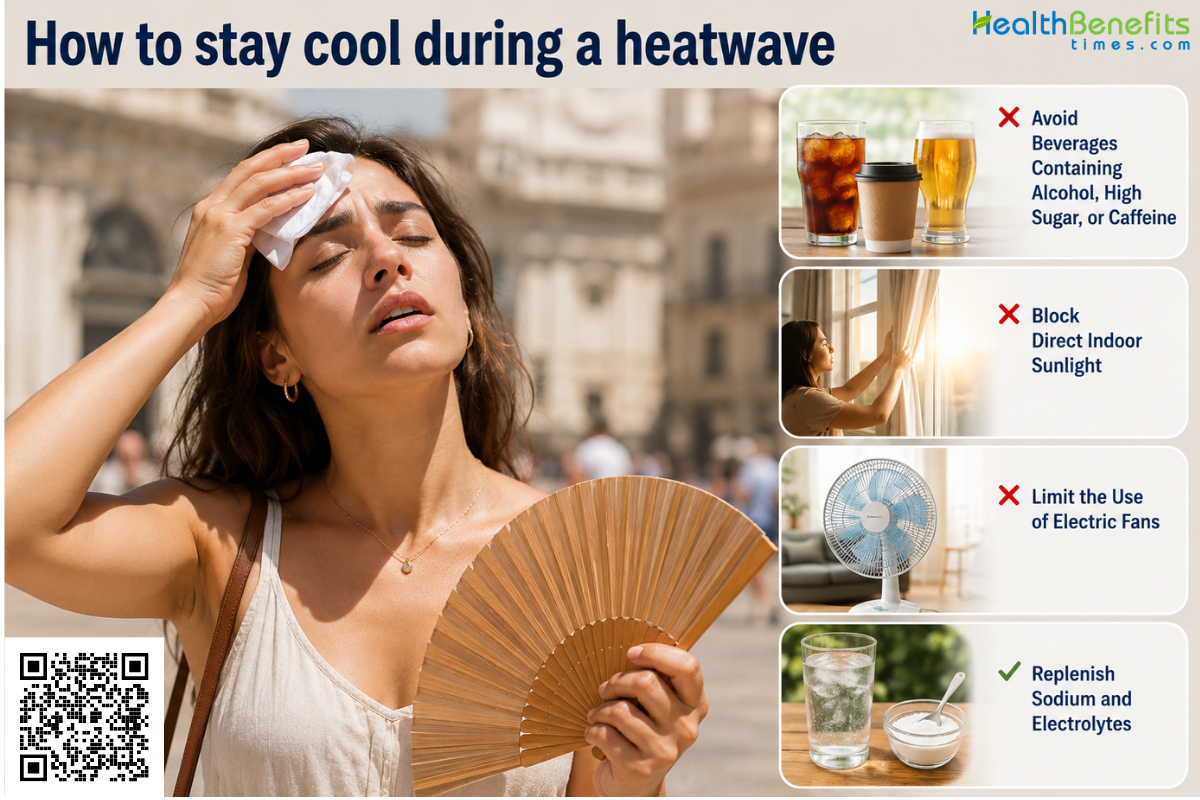
A heatwave is an extended period of exceptionally hot and often humid weather that typically lasts for two or more days. Public health and meteorological organizations define this weather phenomenon not by a single specific temperature, but by daily highs that are significantly hotter than the historical average for a specific geographic location and time of year 1. Because the human body must work much harder to maintain a normal internal temperature under these extreme environmental conditions, prolonged heat exposure can rapidly overwhelm the body’s natural cooling systems 2. Consequently, extreme heat events are recognized as a leading cause of weather-related illness and mortality, frequently triggering severe medical emergencies such as heat exhaustion and life-threatening heat stroke when temperatures remain dangerously high without adequate cooling relief 3.
Causes of heatwave
1. High-Pressure Systems (Heat Domes)
The primary meteorological driver of a heatwave is a massive, stationary area of high atmospheric pressure. This high-pressure system forces air to sink toward the surface, causing the air to compress and heat up rapidly. This sinking motion also suppresses cloud formation, allowing intense, uninterrupted solar radiation to heat the ground for extended periods 4.
2. Jet Stream Stagnation
The jet stream consists of fast-moving winds high in the atmosphere that normally push weather systems steadily across continents. When the jet stream slows down or develops deep, stationary waves, it locks high-pressure systems into a single geographic region, preventing cooler air masses from arriving to dissipate the extreme heat 4.
3. Climate Change
Global climate warming elevates baseline atmospheric temperatures. Because the foundational starting temperature is higher, natural weather patterns that would historically cause a standard hot day now easily cross the threshold into extreme, dangerous temperatures, dramatically increasing the frequency, duration, and intensity of heatwaves globally 5.
4. Urban Heat Island Effect
Highly developed metropolitan areas severely amplify heatwave severity due to dense concentrations of concrete, asphalt, and buildings. These synthetic materials absorb massive amounts of solar energy during the day and trap it, significantly limiting nighttime cooling and sustaining dangerous heat levels in cities compared to surrounding rural landscapes 6.
5. Depleted Soil Moisture
During normal weather conditions, solar energy evaporates water from soil and plant life, a process that naturally cools the immediate air. When an area experiences drought or prolonged dry spells, the lack of ground moisture means solar energy is entirely converted into direct air heating, drastically worsening temperature spikes during a high-pressure event 7.
Symptoms of heatwave
1. Excessive Sweating and Skin Changes
A primary initial symptom of prolonged heat exposure is uncontrollable, heavy sweating, which often leaves the skin feeling unusually cold, pale, and clammy 8.
2. Physical Fatigue and Muscle Pain
Individuals frequently experience severe physical tiredness, generalized weakness, and painful muscle spasms or cramps, most commonly in the abdomen, arms, or legs 8.
3. Neurological and Gastrointestinal Distress
Mild brain and digestive system impairment from heat exhaustion frequently causes episodes of light-headedness, fainting spells, throbbing headaches, and sudden nausea or vomiting 8.
4. Cardiovascular Strain
Because the heart must work significantly harder to pump blood toward the skin for cooling, an individual will often exhibit a fast but notably weak pulse, accompanied by rapid, shallow breathing {% archive.cdc.gov/www_cdc_gov/media/pressrel/r010713.htm %}.
5. Dangerous Core Temperature Rise
If extreme heat exposure progresses to life-threatening heat stroke, the body’s internal temperature regulation completely fails, causing core temperatures to rapidly spike to 103°F (39.4°C) or higher within ten to fifteen minutes 8.
6. Cessation of Sweating
Unlike the heavy sweating seen during early heat exhaustion, a hallmark symptom of classic, severe heat stroke is that the skin becomes completely dry, excessively hot, and noticeably red because the body has lost the physical ability to sweat 9.
7. Critical Neurological Failure
Direct thermal injury to the brain triggers severe neurological symptoms, which rapidly manifest as profound confusion, noticeably slurred speech, sudden physical seizures, or a total loss of consciousness and coma 8.
How to stay cool during a heatwave
1. Relocate to Air-Conditioned Environments or Public Cooling Centers
How it may help
Air conditioning is the most effective way to prevent heat-related illness. It rapidly cools the surrounding air and significantly reduces indoor humidity. This environment allows the human body to efficiently release excess heat and lower its internal temperature, preventing dangerous medical emergencies like heat stroke 10.
What research says
Public health research consistently identifies air conditioning as the strongest protective factor against heat-related illness and death. Clinical data shows that spending even a few hours a day in an air-conditioned environment during a severe heatwave dramatically lowers the body’s core temperature and significantly reduces overall mortality risk 10.
How to use it safely
If you lack home cooling, spend at least several hours daily in an air-conditioned public space, such as a shopping mall, library, or designated community cooling center 10. Keep your home air conditioning filters clean to ensure the system operates efficiently.
Potential precautions or side effects
Do not rely on electric fans as your primary cooling method when indoor temperatures exceed 90°F (32°C), as blowing hot air can dangerously accelerate heat stress 10.
2. Increase Frequent Water Consumption
How it may help
The human body primarily cools itself through the evaporation of sweat. Increasing water intake during extreme heat replenishes the fluids lost to heavy sweating. This continuous hydration ensures the body’s natural cooling mechanisms remain functional, preventing internal temperatures from rising to dangerous levels and averting severe heat-related illnesses 10.
What research says
Clinical guidelines conclude that thirst is an unreliable indicator of hydration status during extreme heat events. Research demonstrates that by the time a person feels thirsty, they are already significantly dehydrated, which rapidly impairs cardiovascular function and reduces the body’s physiological ability to safely dissipate heat 10.
How to use it safely
Drink plenty of fluids constantly throughout the day, regardless of your activity level, and do not wait until you feel thirsty to drink 10. Keep a water bottle accessible at all times and consume water at regular, frequent intervals during peak temperature hours.
Potential precautions or side effects
If your doctor generally limits your fluid intake or prescribes water pills, consult them before increasing your consumption to avoid dangerous complications like fluid overload or severe electrolyte imbalances 10.
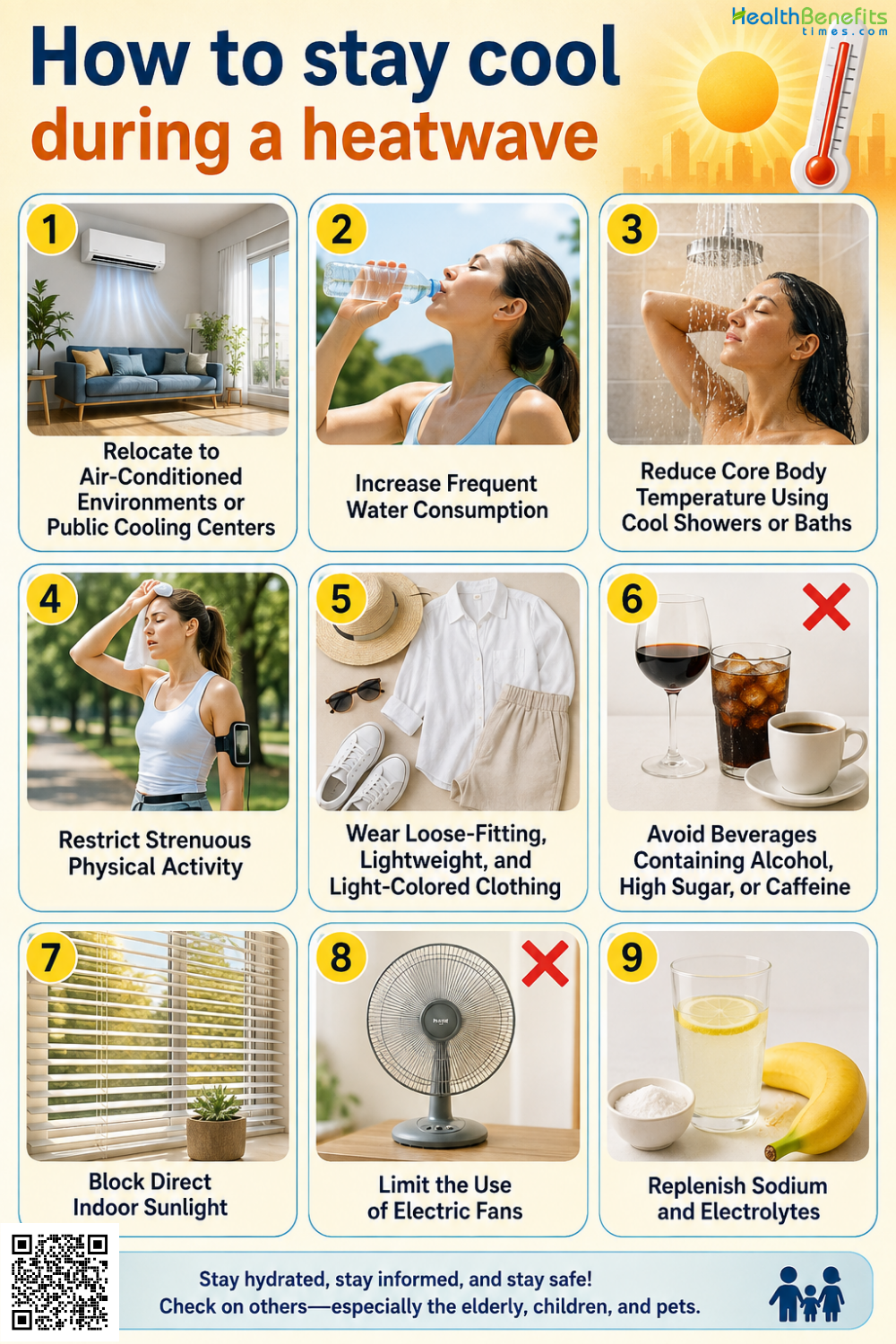
3. Reduce Core Body Temperature Using Cool Showers or Baths
How it may help
Applying cool water directly to the skin facilitates rapid heat transfer from the body to the water. This process immediately lowers surface temperatures and cools the blood circulating near the skin, effectively reducing the body’s internal core temperature and providing fast relief from severe heat stress 10.
What research says
Public health and clinical protocols indicate that cold-water application is one of the most rapid and effective interventions for lowering elevated core body temperatures. Medical evidence confirms that cooling the skin significantly reduces the physiological strain on the cardiovascular system during extreme heat exposure 11.
How to use it safely
Take cool showers or baths frequently throughout the day when you feel dangerously hot 10. Alternatively, use cold compresses, damp sponges, or wet towels applied directly to your neck, wrists, and forehead to safely draw heat away from your body 11.
Potential precautions or side effects
Avoid using freezing cold water, as sudden temperature drops can trigger violent shivering, which counterproductively generates internal body heat, or cause dangerous cardiovascular shock in vulnerable individuals 10.
4. Restrict Strenuous Physical Activity
How it may help
Physical exertion causes muscles to generate significant internal heat, forcing the body to work harder to maintain a safe temperature. Restricting strenuous activity minimizes this internal heat production, reducing the physical strain on the cardiovascular system and preventing the body’s cooling mechanisms from becoming overwhelmed 10.
What research says
Clinical studies indicate that intense physical exertion during extreme temperatures drastically increases the risk of exertional heat stroke and cardiovascular failure. Research concludes that modifying activity schedules to cooler periods of the day significantly lowers the incidence of severe heat-related medical emergencies among outdoor workers and athletes 11.
How to use it safely
Limit outdoor exercise and heavy labor to the early morning or late evening when temperatures are lowest. If you must work outside, pace your activity, start slowly, and take frequent rest breaks in shaded or air-conditioned areas to allow your body time to recover 10.
Potential precautions or side effects
Stop all physical activity immediately if you experience a pounding heart, shortness of breath, lightheadedness, or sudden weakness, as these are critical warning signs of severe heat exhaustion 10.
5. Wear Loose-Fitting, Lightweight, and Light-Colored Clothing
How it may help
Light-colored clothing effectively reflects solar radiation away from the body, minimizing external heat absorption. Furthermore, lightweight, loosely woven fabrics permit adequate air circulation across the skin. This airflow is essential for the rapid evaporation of sweat, which is the primary mechanism the body uses to cool its internal temperature 10.
What research says
Public health guidelines confirm that restrictive, dark, or heavy clothing traps metabolic heat and moisture against the skin, drastically increasing the risk of heat-related illness. Clinical evidence supports that optimizing clothing choices significantly improves the efficiency of the body’s natural evaporative cooling process and reduces overall physiological heat strain 11.
How to use it safely
Choose breathable natural fibers like cotton or linen instead of tight synthetic materials. When venturing outdoors, always pair your protective summer clothing with a wide-brimmed hat and sunglasses to further shield your head, neck, and face from direct, intense sun exposure 10.
Potential precautions or side effects
Because extremely thin fabrics may still allow ultraviolet rays to penetrate, apply broad-spectrum sunscreen underneath to prevent severe sunburn, which damages skin and heavily impairs its ability to sweat 10.
6. Avoid Beverages Containing Alcohol, High Sugar, or Caffeine
How it may help
Avoiding alcohol, caffeine, and highly sugared beverages prevents accelerated fluid loss. Alcohol and caffeine act as diuretics, prompting the kidneys to excrete more water. Eliminating these drinks preserves the body’s internal fluid reserves, ensuring adequate water remains available for the critical sweating process needed to cool the skin 10.
What research says
Clinical guidelines conclude that consuming alcohol or heavily caffeinated beverages during extreme heat actively promotes dangerous dehydration by increasing urinary output. Furthermore, research indicates that beverages with high sugar content impair rapid water absorption in the digestive tract, severely hindering the body’s ability to replace fluids lost to heavy sweating 10.
How to use it safely
Replace sodas, energy drinks, and alcoholic beverages entirely with plain water or naturally decaffeinated options. If you routinely consume caffeinated drinks, limit your daily intake significantly and ensure you drink extra plain water to safely compensate for the expected additional fluid loss 10.
Potential precautions or side effects
Avoid consuming extremely cold or freezing beverages, as they can cause severe stomach cramps and temporary digestive discomfort when ingested rapidly during severe heat stress 10.
7. Block Direct Indoor Sunlight
How it may help
Blocking direct sunlight prevents solar radiation from passing through glass and warming the interior surfaces of a building. Covering windows halts this greenhouse effect, significantly lowering indoor ambient temperatures and reducing the physical strain on the body’s natural cooling mechanisms during prolonged extreme heat 10.
What research says
Public health guidelines state that preventing indoor solar heat gain is a highly effective method for maintaining safe environments during a heatwave. Evidence confirms that covering sun-facing windows with insulated drapes, shutters, or reflective materials drastically reduces internal heat accumulation, thereby lowering the risk of severe heat-related illnesses 11.
How to use it safely
Close all windows, heavy curtains, and blinds that face the sun during the hottest daylight hours. For extra protection, place temporary window reflectors, such as cardboard covered with aluminum foil, directly against the glass to reflect solar heat back outside 10.
Potential precautions or side effects
Remember to open windows during cooler night and early morning hours to allow fresh air circulation, as sealing a home completely can degrade indoor air quality over time 11.
8. Limit the Use of Electric Fans
How it may help
Limiting electric fan usage when indoor temperatures exceed the high 90s Fahrenheit (around 35 degrees Celsius) prevents accelerated heat absorption. Because fans circulate existing hot air without actually cooling the room, stopping their use in extreme heat prevents the rapid transfer of dangerous environmental heat directly onto the skin 10.
What research says
Public health evidence demonstrates that electric fans provide safe comfort only at lower temperatures. Clinical guidelines state that when ambient air temperatures surpass normal human body temperatures, forced air movement from fans actively increases thermal stress and completely fails to prevent life-threatening medical emergencies like heat stroke 11.
How to use it safely
Turn off electric fans immediately once your indoor room temperature rises above 90 degrees Fahrenheit (32 degrees Celsius) 10. Instead of relying on moving air, lower your internal temperature by taking a cool shower, applying wet towels, or moving to an air-conditioned building 11.
Potential precautions or side effects
Never depend solely on a fan to keep you safe in extreme heat, as circulating overly hot air rapidly accelerates life-threatening dehydration and severe heat exhaustion 10.
9. Replenish Sodium and Electrolytes
How it may help
When the body sweats heavily during extreme heat, it loses significant amounts of essential salt and vital minerals known as electrolytes. Replenishing these specific minerals restores internal fluid balance, maintains healthy cardiovascular function, and prevents painful muscle spasms commonly associated with severe heat stress 10.
What research says
Clinical guidelines confirm that heavy sweating rapidly depletes sodium levels, and replacing fluids exclusively with plain water can dangerously dilute remaining blood sodium. Medical evidence concludes that consuming electrolyte-enhanced solutions effectively prevents this chemical imbalance, ensuring cellular hydration and averting severe heat-related physical exhaustion 10.
How to use it safely
If you are sweating heavily during strenuous activity, drink a commercially prepared sports beverage or natural fruit juice to replace lost minerals. Alternatively, continue eating normal, well-balanced meals and lightly salted snacks throughout the day to naturally restore essential electrolyte levels 10.
Potential precautions or side effects
If you follow a strict low-salt diet for medical conditions, you must consult your doctor before consuming specialized sports drinks or deliberately increasing your daily sodium intake 10.
Foods to Avoid When You suffer from heatwave
1. Alcoholic Beverages
Alcohol acts as a diuretic, forcing the body to excrete more water through urine. This rapidly accelerates dangerous dehydration during extreme heat exposure 10.
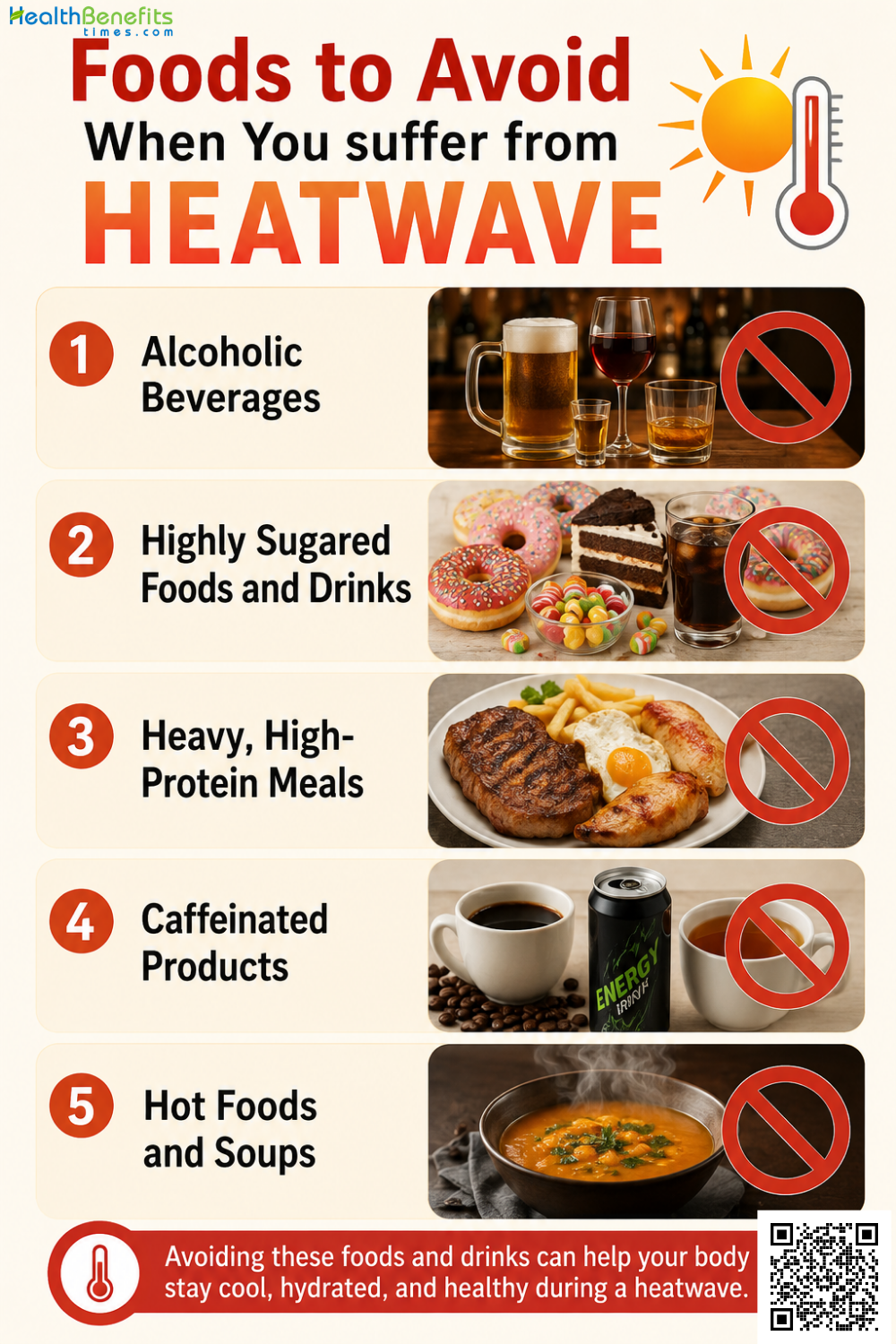
2. Highly Sugared Foods and Drinks
Consuming excess sugar severely impairs the digestive tract’s ability to rapidly absorb water into the bloodstream, hindering the critical fluid replacement needed for sweating 10.
3. Heavy, High-Protein Meals
Digesting dense, high-protein foods requires significant metabolic energy. This biological process generates substantial internal body heat, unnecessarily increasing physiological thermal strain during a heatwave 10.
4. Caffeinated Products
Caffeine actively stimulates the kidneys to increase urine production, which counterproductively depletes the vital internal fluid reserves required for the body’s natural evaporative cooling mechanisms 10.
5. Hot Foods and Soups
Consuming physically hot meals directly transfers thermal energy into the digestive tract, actively adding unnecessary internal heat to a body already struggling to remain cool 10.
When to see Doctor when you struggle from heatwave
Seek immediate emergency medical care if you experience severe symptoms during a heatwave, as these clinical signs indicate a dangerous progression from heat exhaustion to life-threatening heat stroke.
1. Altered Mental State
Seek emergency medical care immediately if you observe profound confusion, noticeably slurred speech, delirium, or sudden unresponsiveness, as these indicate severe neurological impairment 12.
2. Dangerously High Temperature
Go to an emergency room if your internal core body temperature rapidly spikes to 103°F (39.4°C) or higher, representing a critical failure of internal thermal regulation 12.
3. Hot, Red, and Dry Skin
Consult a doctor immediately if your skin becomes excessively hot, visibly red, and completely dry, indicating your body has dangerously lost the physical ability to sweat 12.
4. Severe Nausea and Vomiting
Seek prompt medical assistance if you experience sudden, uncontrollable vomiting or severe nausea that prevents you from keeping oral fluids down to safely rehydrate 12.
5. Loss of Consciousness
Call for emergency medical help instantly if you experience fainting or a total loss of consciousness, which signifies a life-threatening cardiovascular and neurological crisis 12.
6. Unrelenting Mild Symptoms
Contact a healthcare professional if milder symptoms of heat exhaustion, such as heavy sweating, painful muscle cramps, or weakness, last longer than one hour despite cooling efforts 12.