


Swimmer’s ear, clinically termed otitis externa, is an inflammatory condition affecting the external auditory canal, which is the pathway extending from the outer ear to the eardrum. This condition typically arises when moisture becomes trapped in the ear canal, creating an environment that promotes the growth of bacteria or, less frequently, fungi. While commonly associated with swimming in pools or natural bodies of water, any source of prolonged wetness—such as showering, high humidity, or perspiration—can disrupt the ear’s protective barriers and increase infection risk. Additionally, mechanical trauma to the canal, often caused by using cotton-tipped swabs or other foreign objects, can damage the skin lining and further facilitate infection. Characterized by redness, swelling, and discomfort, this condition requires proper medical evaluation to prevent the infection from spreading or becoming chronic. 1, 2, 3
Causes of Swimmer’s Ear
1. Excessive Moisture Exposure
Prolonged contact with water, particularly from swimming or frequent bathing, can wash away the protective wax (cerumen) in the ear canal and disrupt the skin’s acidic balance. This creates a moist environment that enables the rapid overgrowth of bacteria or fungi.
2. Mechanical Trauma
The use of cotton swabs, fingernails, or other objects to clean or scratch the ear canal often creates microscopic abrasions in the thin, delicate skin. These small breaks allow pathogens to bypass the skin’s natural defenses and establish an infection. 4
3. Irritation and Chemical Exposure
Contact with substances such as hairspray, soaps, or perfumes can irritate the sensitive skin of the ear canal. This irritation can lead to inflammation or dermatitis, further compromising the integrity of the canal lining and increasing susceptibility to infection.
4. Existing Dermatological Conditions
Chronic skin conditions like eczema, psoriasis, or seborrheic dermatitis can affect the health of the ear canal skin. By causing dryness, scaling, or cracking, these conditions reduce the skin’s ability to act as a barrier against microbial entry.
Symptoms of Swimmer’s Ear
1. Ear Pain and Sensitivity
Discomfort in the ear is frequently the primary indicator. This pain often intensifies when pulling on the outer ear or applying pressure to the tragus, the small cartilage flap located in front of the ear canal opening.
2. Itching and Irritation
A persistent sensation of itchiness within the ear canal is a common early symptom, often preceding more severe inflammation or pain.
3. Inflammation and Redness
The skin lining the ear canal may become visibly red and swollen. In more pronounced cases, this swelling can narrow the canal, potentially leading to a sensation of fullness or blockage.
4. Discharge
Patients may experience drainage from the affected ear, which can range from clear and odorless to thick, cloudy, or pus-like, depending on the severity and type of infection.
5. Reduced Hearing
If the canal becomes significantly swollen or filled with debris and fluid, temporary hearing loss or a muffled sensation in the affected ear often occurs.
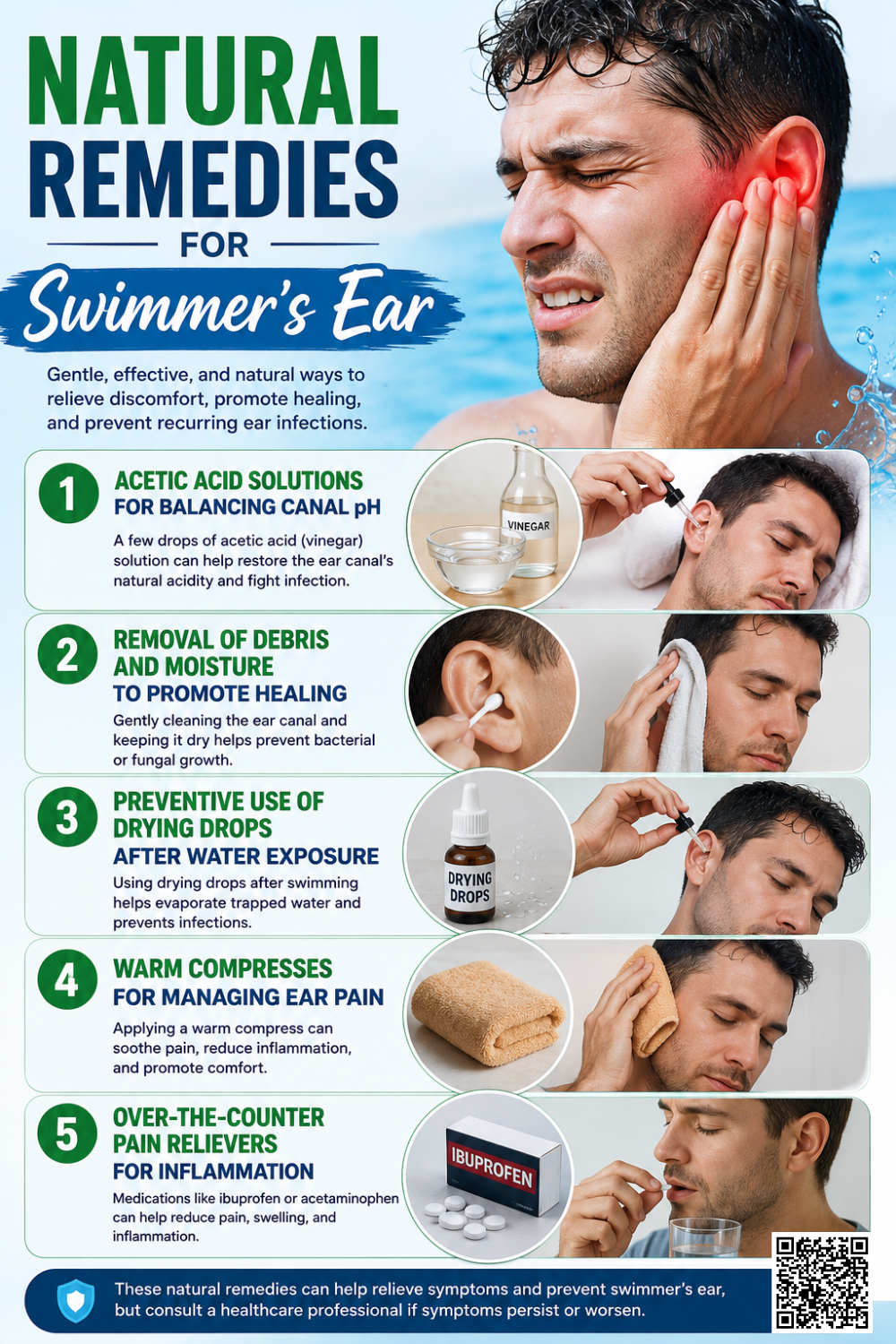 Natural Remedies for Swimmer’s Ear
1. Acetic Acid Solutions for Balancing Canal pH
How it may help
Acetic acid solutions help treat swimmer’s ear by restoring the natural acidic environment of the ear canal. This acidity prevents the growth of bacteria and fungi that thrive in moist, alkaline conditions. By inhibiting these organisms, the solution helps reduce inflammation and supports the natural healing process of the canal lining.
What research says
Clinical research indicates that acetic acid is highly effective in treating mild cases of acute otitis externa. It acts as an antimicrobial agent that successfully resolves infection in the majority of patients. It is considered a standard, evidence-based treatment for uncomplicated cases of external ear canal inflammation. 5
How to use it safely
Apply the solution only as directed by a healthcare professional, typically using a clean dropper to place a few drops into the affected ear while lying on your side. Remain in this position for several minutes to allow the liquid to fully reach the canal lining before draining.
Potential precautions or side effects
Avoid using these drops if you have a perforated eardrum or ear tubes. Potential side effects include temporary stinging, burning, or irritation within the ear canal.
2. Removal of Debris and Moisture to Promote Healing
How it may help
Keeping the ear canal clean and dry is essential, as stagnant moisture and accumulated debris create an ideal environment for bacteria to multiply. Removing these elements restores the ear’s natural ventilation, reduces tissue inflammation, and eliminates the conditions necessary for infection to persist.
How research says
Clinical consensus emphasizes that thorough aural cleansing is a fundamental component of effective treatment. Removing discharge and blockage allows therapeutic ear drops to reach the infected skin directly. Experts confirm that proper debridement significantly accelerates recovery time and improves the overall efficacy of topical medications.
How to use it safely
Gently pat the outer ear dry with a soft cloth after swimming or bathing. To remove internal debris, consult a doctor for professional cleaning. Avoid inserting any objects into the ear canal, as this can push debris deeper or cause accidental injury.
Potential precautions or side effects
Do not attempt to clear the canal if you suspect a perforated eardrum. Avoid aggressive scrubbing, which may cause abrasions and worsen inflammation.
3. Preventive Use of Drying Drops After Water Exposure
How it may help
Drying drops help control swimmer’s ear by rapidly evaporating residual moisture trapped in the ear canal after water exposure. By reducing this moisture, the solution denies bacteria and fungi the environment they need to multiply. This proactive measure preserves the protective skin barrier and prevents the onset of inflammation before an infection can establish itself.
What research says
Research indicates that the use of ear-drying solutions is a highly effective preventive strategy for individuals frequently exposed to water. Clinical guidelines support the use of these drops immediately following swimming to significantly reduce the incidence of external ear canal infections by maintaining a dry, hostile environment for microbial growth.
How to use it safely
Immediately after swimming or bathing, place a few drops of the solution into the ear. Gently tilt your head to ensure the liquid reaches the entire canal, then tip your head back to let the excess drain out. Follow the specific product instructions regarding the number of drops required.
Potential precautions or side effects
Do not use these drops if you have a perforated eardrum, ear tubes, or current ear pain. Excessive use may cause skin dryness or irritation.
4. Warm Compresses for Managing Ear Pain
How it may help
A warm compress helps manage the discomfort associated with swimmer’s ear by promoting local blood circulation and relaxing tense tissues around the ear. The gentle heat can soothe inflamed skin and provide temporary relief from the sharp or throbbing pain often caused by swelling within the restricted space of the ear canal.
What research says
Medical literature recognizes the application of superficial heat as a safe, non-pharmacological method for symptom management in various inflammatory conditions. While heat does not treat the underlying bacterial infection, clinical practice supports its use as an adjunctive measure to improve patient comfort and reduce reliance on oral pain medications during the healing process.
How to use it safely
Place a clean, warm (not hot) cloth against the outer ear for 10 to 15 minutes. Ensure the compress is comfortably warm to the touch to prevent injury. You may repeat this application several times throughout the day as needed to maintain consistent comfort.
Potential precautions or side effects
Ensure the compress is not excessively hot to avoid thermal skin burns. Discontinue use if you notice increased swelling or skin irritation around the ear.
5. Over-the-Counter Pain Relievers for Inflammation
How it may help
Nonsteroidal anti-inflammatory drugs (NSAIDs) assist in controlling the discomfort of swimmer’s ear by inhibiting the production of chemicals that drive pain and tissue swelling. By reducing local inflammation within the ear canal, these medications help alleviate the intense throbbing sensation and pressure often associated with the condition, thereby improving overall patient comfort during recovery.
What research says
Clinical guidelines for managing acute otitis externa consistently recommend oral analgesics as a primary adjunct to topical therapy. Research confirms that these medications are effective in providing rapid symptomatic relief for patients experiencing moderate to severe pain. Expert consensus highlights their role in managing the inflammatory process while topical treatments address the underlying infection.
How to use it safely
Always take these medications exactly as directed on the product label or by a healthcare provider. Do not exceed the recommended dose or frequency. Ensure you are aware of the appropriate dosage for your age and weight before starting any new medication to ensure safe and effective pain management.
Potential precautions or side effects
Consult a doctor if you have underlying health conditions, such as stomach ulcers or kidney issues. Stop use immediately if you experience allergic reactions or digestive discomfort.
 Foods to Avoid When You Suffer from Swimmer’s Ear
1. Highly Processed Sugars
Excess sugar intake can increase systemic inflammation, potentially hindering the body’s natural ability to combat infections. Limit candy, soda, and processed snacks to support immune function. 6
2. Trans Fats and Fried Foods
Consuming trans fats found in many fried and fast foods is strongly associated with increased inflammatory markers in the body, which may prolong localized discomfort. 7
3. Refined Carbohydrates
Items such as white bread, pasta, and pastries can cause rapid spikes in blood sugar, contributing to an inflammatory environment that may impede the efficient resolution of ear infections. 8
4. Excessive Alcohol
Alcohol consumption can lead to dehydration and impair immune system performance. Maintaining adequate hydration is crucial for general health and managing the body’s inflammatory response during illness. 9
When to See a Doctor for Swimmer’s Ear
1. Severe or Worsening Pain
If discomfort becomes intense or does not improve after 48 to 72 hours of home care, seek professional assessment to rule out complications.
2. Significant Hearing Loss
A noticeable decrease in hearing or a persistent feeling of blockage in the ear canal requires clinical examination to ensure the canal is not obstructed.
3. Fever or Systemic Symptoms
The development of a fever, dizziness, or pain spreading to the neck and face may indicate that the infection is moving beyond the ear canal.
4. Discharge or Swelling Progression
If you observe thick, foul-smelling discharge or swelling so severe that it prevents the application of prescribed ear drops, professional intervention is required.
5. Underlying Health Conditions
Individuals with diabetes or weakened immune systems should consult a doctor immediately upon recognizing symptoms, as they are at higher risk for severe infections.