

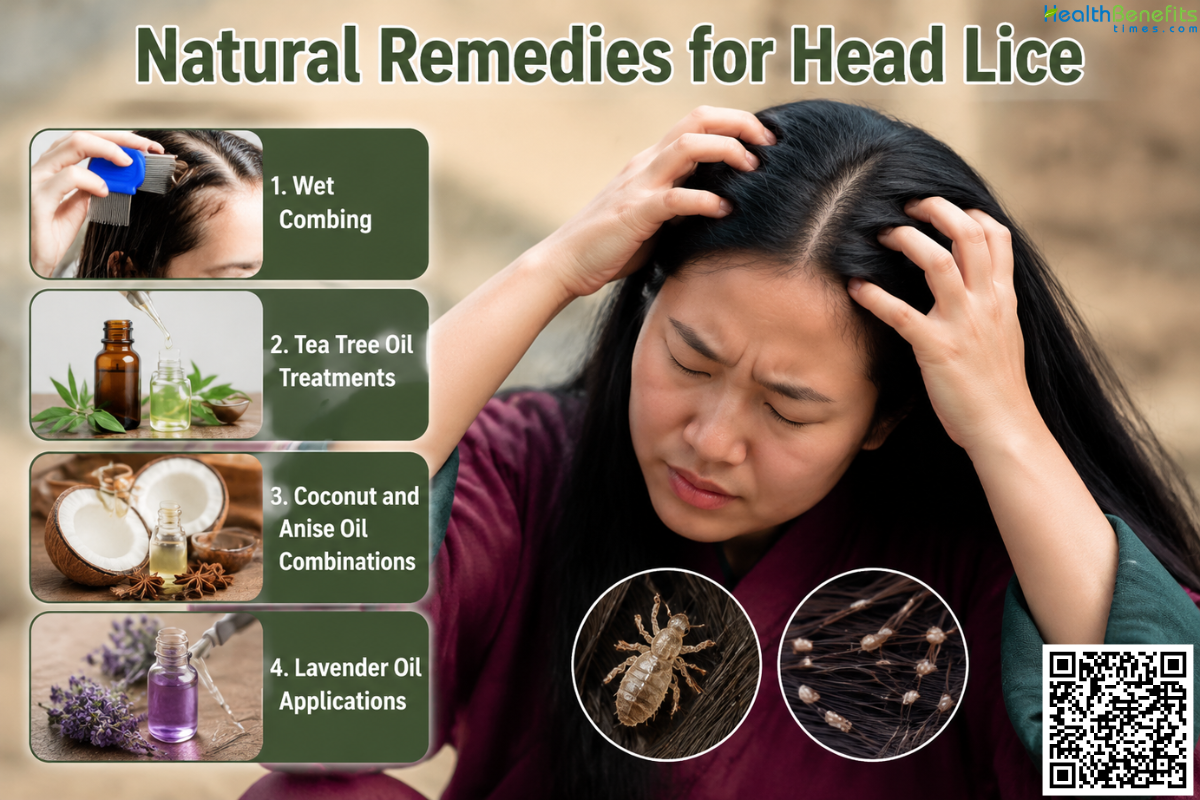
Head lice (Pediculus humanus capitis) are tiny, wingless parasitic insects that live on the human scalp and feed exclusively on human blood. While they are a widespread nuisance that primarily affects children between the ages of 3 and 11, head lice are not physically dangerous and do not transmit diseases 1. An infestation occurs regardless of a person’s cleanliness or hygiene habits, spreading almost entirely through direct head-to-head contact 2. An adult louse is approximately the size of a sesame seed, whereas their eggs, known as nits, are microscopic ovals that firmly cement themselves to the base of hair shafts and often masquerade as stubborn dandruff 3. The most common symptom is intense itching caused by an allergic skin reaction to the insect’s bites, though some individuals may remain completely asymptomatic during a light or early infestation 4.
Causes of Head Lice
Head lice infestations are caused by parasitic insects known as Pediculus humanus capitis, which live exclusively on the human scalp and feed on blood 5. These wingless insects cannot jump, hop, or fly, meaning their transmission depends entirely on physical movement from one host to another 5.
The primary causes and pathways of transmission include:
- Direct Head-to-Head Contact: The most common cause of infestation is direct physical contact involving hair. This frequently occurs during close play, school activities, sports, or family interactions where hairs touch.
- Indirect Sharing of Personal Items: While less frequent, lice can occasionally transfer via shared objects that come into contact with the hair, such as hats, scarves, hair brushes, combs, hair accessories, and headphones.
- Proximity of Stored Clothing: Infestations can spread when garments are stored closely together, such as hanging coats or hats on shared hooks or side-by-side lockers in schools.
- Shared Fabric Surfaces: Lying on bedding, pillows, or upholstered furniture recently used by an infested individual can occasionally facilitate transmission.
Symptoms of Head Lice
- Tickling or a crawling sensation felt in the hair or on the scalp caused by active insect movement 4
- Intense itching on the scalp, which is an allergic skin reaction triggered by the proteins in louse saliva from feeding 1
- Visible red bump rashes or small irritated sores on the scalp, neck, and shoulders resulting from persistent scratching 2
- Finding small, whitish or yellowish-brown oval eggs, known as nits, firmly cemented to the base of hair shafts near the skin 3
- Irritability, sleeping difficulties, or restlessness because the insects and itching are more active and disruptive during nighttime hours 2
Natural Remedies for Head Lice
1. Wet Combing
How it may help
Wet combing physically removes live lice and their unhatched eggs from the hair. Applying water and conditioner temporarily immobilizes the insects, making them easier to catch and preventing them from moving away. This mechanical approach stops the infestation cycle without relying on active chemical ingredients.
What research says
Research confirms that systematic wet combing is a safe and moderately effective non-chemical treatment. Clinical evaluations show that consistent wet combing over multiple weeks successfully eliminates infestations, although it typically has a lower overall cure rate compared to targeted topical medications 2.
How to use it safely
Wash your hair and apply a generous amount of conditioner. Use a fine-toothed lice comb to stroke evenly from the scalp down to the hair ends. Wipe the comb on a tissue after every pass. Repeat this every three to four days for at least two weeks 6.
Potential precautions or side effects
This method is incredibly safe but highly time-consuming. Aggressive combing may cause temporary scalp irritation, discomfort, or hair breakage. Always comb gently and patiently to prevent pulling the hair.
2. Tea Tree Oil Treatments
How it may help
Tea tree oil contains natural insecticidal compounds that disrupt the nervous system of insects. When applied to the scalp, it acts as a toxic agent to adult head lice. It also has properties that can penetrate the shell of lice eggs, potentially preventing them from hatching and stopping the infestation.
What research says
Clinical studies demonstrate that tea tree oil, particularly when combined with lavender oil, effectively kills live lice and significantly reduces egg hatching rates. Researchers conclude that it is a promising alternative therapy for head lice, especially in cases where lice have developed resistance to standard chemical treatments 7.
How to use it safely
Never apply pure tea tree oil directly to your skin. Mix a few drops of the essential oil with a carrier oil, such as coconut or olive oil. Massage this diluted mixture thoroughly into your scalp and hair, leave it for 30 minutes, and then wash it out.
Potential precautions or side effects
Tea tree oil can cause allergic skin reactions or contact dermatitis. It is toxic if swallowed. Discontinue use immediately if you experience redness, swelling, or intense burning 8.
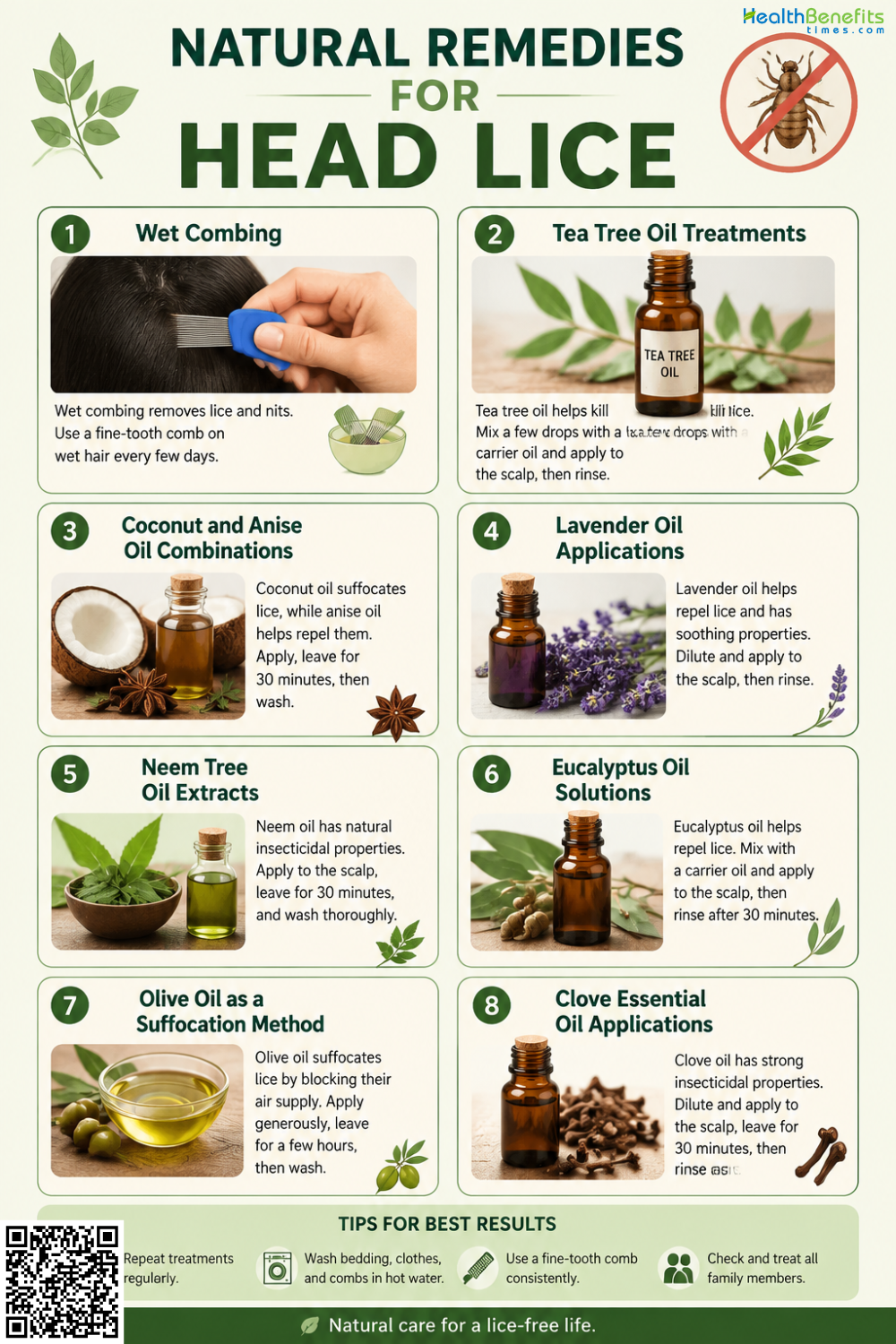
3. Coconut and Anise Oil Combinations
How it may help
A combination of coconut and anise oil acts mechanically rather than chemically to eliminate head lice. The thick, oily mixture coats the exterior of the lice and their eggs, effectively blocking their respiratory spiracles. This suffocates the insects and prevents eggs from hatching, stopping the active infestation without using neurotoxic pesticides.
What research says
Clinical trials demonstrate that a coconut and anise oil spray is highly effective against head lice. In one randomized controlled trial, the natural spray successfully cured 82 percent of active infestations, proving significantly more effective than standard permethrin lotion, which had a cure rate of only 42 percent due to growing pesticide resistance 9.
How to use it safely
Apply a formulated coconut and anise oil solution evenly across your dry hair until the scalp is fully saturated. Leave the mixture on for the time specified by the manufacturer before washing it out thoroughly with shampoo. Repeat this application after nine days to target any newly hatched eggs.
Potential precautions or side effects
This natural remedy is generally safe but can occasionally cause mild contact dermatitis or stinging irritation, particularly if your scalp is already scratched or broken from severe itching.
4. Lavender Oil Applications
How it may help
Lavender essential oil contains natural botanical compounds that act as a neurotoxin to parasitic insects. When applied directly to the scalp, these active ingredients can paralyze and kill adult head lice. It may also help loosen the stubborn glue that cements lice eggs to the hair shafts.
What research says
Clinical research indicates that lavender oil is highly effective when combined with tea tree oil. Trials conclude that this specific botanical mixture kills virtually all active head lice, achieving a significantly higher cure rate than standard chemical treatments that frequently fail due to growing pesticide resistance 7.
How to use it safely
Never apply pure lavender oil directly to your scalp. Dilute two to three drops of the essential oil into a carrier oil, like olive or coconut oil. Massage the mixture into your hair, let it sit for twenty minutes, and then wash it out with shampoo.
Potential precautions or side effects
Lavender oil may cause allergic contact dermatitis or mild scalp irritation. Apply only externally. Never swallow this essential oil, as it is highly toxic if ingested 10.
5. Neem Tree Oil Extracts
How it may help
Neem tree oil extracts contain active natural compounds, such as azadirachtin, which act as powerful insecticidal agents. When applied to the scalp, these compounds disrupt the normal life cycle and feeding habits of parasites. The oil also helps coat and suffocate live insects while interfering with the development of unhatched eggs.
What research says
Clinical studies demonstrate that specialized shampoos and treatments containing neem seed extracts are highly effective at eliminating active head lice and preventing eggs from hatching. Researchers conclude that neem-based formulas serve as a successful, natural alternative for managing infestations, especially when standard chemical treatments fail due to drug resistance.
How to use it safely
Apply a formulated neem oil shampoo or diluted extract evenly throughout your dry or damp hair and scalp. Massage the product thoroughly to ensure complete coverage, leave it on for the specific duration recommended by the product instructions, and rinse thoroughly with warm water.
Potential precautions or side effects
Neem oil is generally well-tolerated, but it can occasionally cause localized skin irritation, redness, or a mild burning sensation on sensitive scalps. Avoid contact with eyes and do not ingest.
Eucalyptus Oil Solutions
How it may help
Eucalyptus oil contains active botanical compounds that act as a natural insecticide and paralyze parasitic insects. When applied to the scalp, its strong vapors and chemical properties disrupt the nervous system of live head lice, causing them to suffocate or die while reducing the viability of unhatched eggs.
What research says
Clinical trials demonstrate that specialized treatments containing eucalyptus oil are highly effective at eliminating head lice. Researchers conclude that eucalyptus-based formulas provide a successful alternative therapy, showing high cure rates and strong performance against strains that have developed resistance to standard chemical insecticides 11.
How to use it safely
Never apply pure eucalyptus oil directly to your skin. Mix a few drops of the essential oil with a preferred carrier oil, such as olive or coconut oil. Massage the diluted solution evenly into your scalp, cover your hair with a cap for 20 minutes, and rinse thoroughly.
Potential precautions or side effects
Eucalyptus oil can cause skin irritation, redness, or allergic contact dermatitis. It is strictly for external use and is toxic if swallowed.
6. Olive Oil as a Suffocation Method
How it may help
Olive oil acts mechanically by coating the hair and scalp to block the respiratory openings of adult head lice. This thick barrier immobilizes the insects and restricts their oxygen intake, causing them to suffocate over an extended period while helping to loosen the sticky bond of unhatched eggs.
What research says
Clinical studies indicate that occlusive agents like olive oil provide a safe, non-toxic physical approach to managing infestations. While researchers note that oil occlusion alone has a variable cure rate compared to specialized neurotoxic formulas, it remains a useful mechanical adjunct therapy when paired with thorough combing 12.
How to use it safely
Apply a generous amount of plain olive oil directly to dry hair until the scalp and strands are fully saturated. Put on a shower cap and leave it undisturbed for several hours. Afterward, wash the hair thoroughly with regular shampoo and comb out the loosened insects.
Potential precautions or side effects
Olive oil is generally very safe and non-irritating. However, it can make hair greasy and difficult to wash out completely, and it may cause minor temporary slip hazards during application.
7. Clove Essential Oil Applications
How it may help
Clove essential oil contains strong natural chemical compounds, such as eugenol, which act as powerful insecticidal agents against parasites. When applied to the scalp, these active components target the nervous system of adult head lice, rapidly paralyzing and killing them while helping to disrupt the viability of unhatched eggs.
What research says
Clinical evaluations demonstrate that clove oil exhibits high toxicity against parasitic insects and achieves rapid mortality rates in laboratory bioassays 13. Researchers conclude that diluted clove oil solutions successfully eliminate a high percentage of active head lice within short contact periods, showing strong potential as an alternative topical treatment 12.
How to use it safely
Never apply pure clove oil directly to your skin. Dilute a few drops of the essential oil with a safe carrier oil, such as coconut or olive oil. Massage the mixture gently into your scalp, leave it on for a brief period, and wash it out thoroughly with shampoo.
Potential precautions or side effects
Clove oil is potent and can cause severe skin irritation, burning sensations, or allergic contact dermatitis. Always perform a patch test first. Never ingest the oil, as it is toxic if swallowed.
When to See a Doctor When You Struggle From Head Lice
1. Persistent Infestation After Treatment
Consult a healthcare provider if over-the-counter treatments or home remedies fail to eliminate live lice after two full courses of proper application 14.
2. Severe Scalp Infection or Open Wounds
Seek medical evaluation immediately if excessive scratching leads to broken skin, pus, swelling, or tender areas indicating a secondary bacterial infection 1.
3. Unexplained Reactions or Allergic Symptoms
Visit a doctor if you experience severe skin irritation, persistent burning, or allergic reactions following the application of chemical treatments or essential oils 2.