

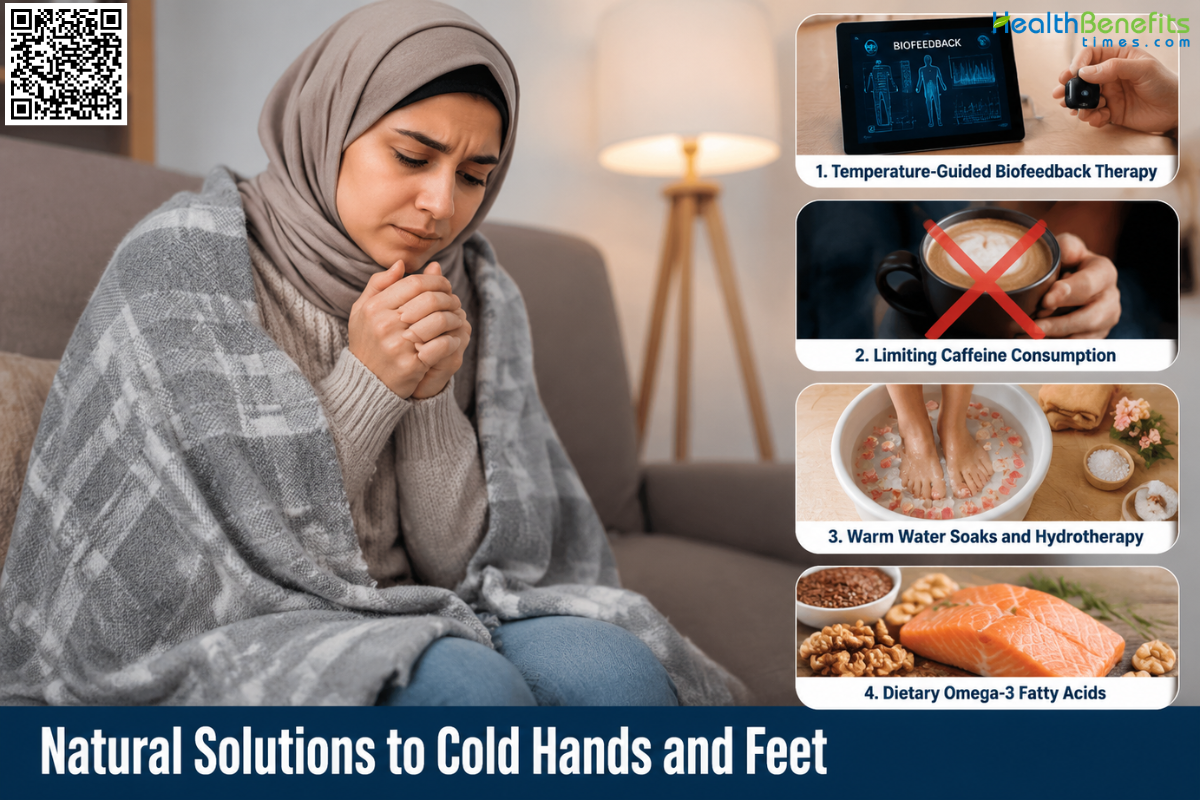
Having cold hands and feet is a common condition where the extremities feel noticeably colder than the rest of the body. Most often, this is a normal physiological response to cooler environments. When exposed to cold temperatures, the body naturally narrows the small blood vessels in the hands and feet to redirect blood flow and preserve heat for vital internal organs 1. While this temporary restriction of blood flow is entirely harmless, persistent or extreme coldness may point to an underlying medical issue. Chronic cold extremities can result from poor circulation, nerve damage, underactive thyroid, or Raynaud’s phenomenon, a disorder that causes blood vessels to severely overreact to cold temperatures or emotional stress 2. Understanding whether this coldness is a natural environmental reaction or a persistent symptom is essential for determining if a deeper circulatory or neurological problem exists.
Causes of Cold Hands and Feet
- Cold Environment Response: The body naturally narrows blood vessels in the skin and extremities when exposed to cold temperatures to preserve core body heat and protect vital organs. 1
- Raynaud’s Phenomenon: A circulatory condition where the small blood vessels in the fingers and toes go into temporary spasms, severely restricting blood flow in response to cold exposure or emotional stress. 2
- Peripheral Artery Disease (PAD): A vascular disease characterized by the buildup of fatty plaques in the arteries (atherosclerosis), which narrows the blood vessels and reduces essential blood flow to the limbs, particularly the legs and feet. 3
- Hypothyroidism: An endocrine disorder where an underactive thyroid gland fails to produce enough thyroid hormones, resulting in a slowed metabolism and a decreased ability to generate normal body heat. 4
- Anemia: A blood disorder caused by a lack of healthy red blood cells or insufficient hemoglobin, which impairs the delivery of oxygen-rich blood to the body’s tissues and extremities. 5
- Diabetes and Peripheral Neuropathy: Prolonged high blood sugar can damage both the circulatory system and the peripheral nerves; this nerve damage (neuropathy) disrupts sensory signals, often causing a false sensation of coldness, pain, or numbness in the hands and feet. 6
Symptoms of Cold Hands and Feet
- Skin Color Changes: The skin on the fingers and toes may noticeably change color, often turning pale white and then bluish when exposed to cold, and becoming flushed or red as they warm up and blood flow is restored. 7
- Numbness and Loss of Sensation: A temporary loss of feeling or a distinct numbness in the extremities during cold exposure, which can make it difficult to feel touch or changes in temperature. 8
- Tingling and Throbbing Pain: A stinging, tingling, or “pins and needles” sensation, often accompanied by aching or throbbing pain, which typically occurs as the hands and feet begin to warm up and circulation returns. 7
- Delayed Wound Healing: Minor cuts, scrapes, or sores on the hands, lower legs, or feet that heal very slowly or fail to heal completely, which is a strong indicator of chronically poor blood circulation to the extremities. 9
Natural Solutions to Cold Hands and Feet
1. Regular Cardiovascular Exercise
How it may help
Cardiovascular exercise increases the heart rate, pumping blood more efficiently throughout the body. This movement forces blood vessels to widen, naturally improving circulation and delivering warming, oxygen-rich blood directly to the furthest extremities, such as the fingers and toes.
What research says
Clinical guidelines confirm that regular physical activity improves limb blood flow and stimulates the growth of new, small blood vessels. This adaptation significantly reduces symptoms of poor circulation and improves overall vascular health in the extremities 10.
How to use it safely
You should begin with low-impact activities like brisk walking, cycling, or swimming for 30 minutes daily. Gradually increase your intensity over time. Always wear appropriately insulated clothing and proper footwear if you choose to exercise outdoors in colder weather.
Potential precautions or side effects
Overtraining can cause muscle strain or joint pain. If you experience chest pain, dizziness, or severe leg cramping during physical activity, stop immediately and seek a prompt medical evaluation.
2. Smoking Cessation
How it may help
Nicotine found in tobacco products actively forces blood vessels to constrict and narrow. Quitting smoking stops this chemical-induced narrowing, allowing blood vessels to relax and open to their normal size. This directly restores proper blood flow and warmth to the hands and feet.
What research says
Clinical guidelines emphasize that smoking cessation is a primary, highly effective intervention for circulatory issues like Raynaud’s phenomenon. Stopping tobacco use prevents nicotine-induced blood vessel spasms and halts the progression of plaque buildup in arteries, significantly improving blood circulation to the extremities 11.
How to use it safely
You should consult a healthcare provider to create a personalized quitting plan. Utilize FDA-approved nicotine replacement therapies, such as patches or gums, and behavioral counseling to safely manage cravings and effectively transition away from tobacco dependence.
Potential precautions or side effects
Nicotine withdrawal can cause temporary irritability, headaches, anxiety, and increased appetite. If you use prescription cessation medications, monitor for any unusual mood changes and report them to your doctor.
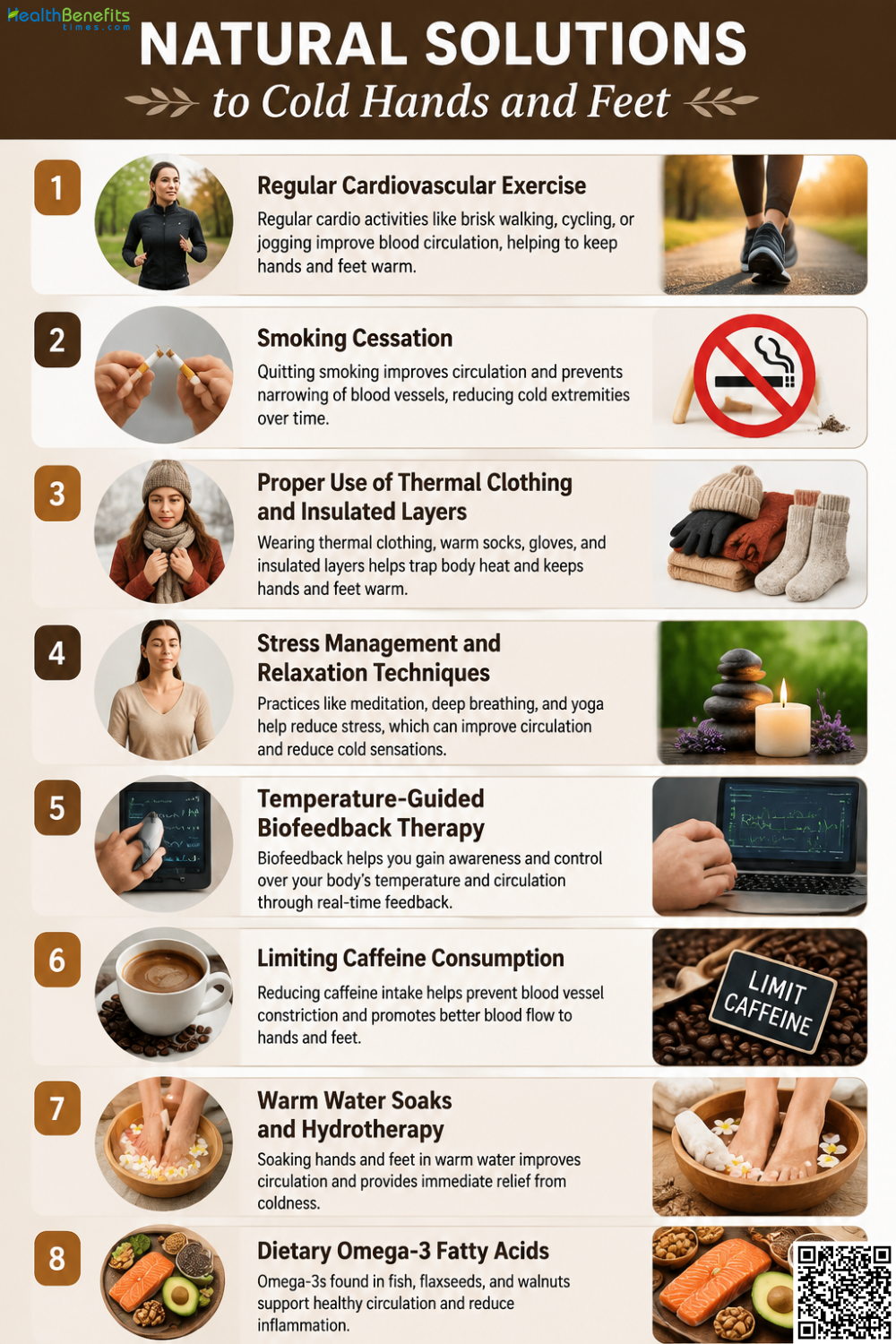
3. Proper Use of Thermal Clothing and Insulated Layers
How it may help
Thermal clothing and insulated layers work by trapping body heat close to the skin, creating a warm microclimate. This maintains core body temperature. When the core stays warm, the body continues to circulate blood to the hands and feet instead of restricting blood flow to preserve central heat.
What research says
Studies confirm that adding insulated layers effectively reduces environmental heat loss and prevents cold-induced narrowing of blood vessels 12. Research concludes that preserving core body temperature through strategic layering is the primary physiological mechanism required to maintain adequate blood circulation to the extremities in cold environments.
How to use it safely
Dress using a three-part system: a moisture-wicking base layer, an insulating middle layer, and a wind-resistant outer shell. Ensure your clothing, gloves, and socks are not too tight, as restrictive items can compress blood vessels and physically block warm blood circulation to your hands and feet.
Potential precautions or side effects
The main risk is overheating and excessive sweating. Damp clothing rapidly draws heat away from the body, which can paradoxically increase the risk of chilling and cold extremities.
4. Stress Management and Relaxation Techniques
How it may help
Chronic stress activates the body’s fight-or-flight response, releasing stress hormones like adrenaline. This causes blood vessels in the extremities to rapidly narrow, redirecting warm blood to core organs. Relaxation techniques counter this physical response, promoting blood vessel expansion and restoring natural, warm blood circulation to the hands and feet.
What research says
Clinical evidence demonstrates that managing psychological stress lowers sympathetic nervous system activity, which directly prevents the severe narrowing of peripheral blood vessels 13. Research confirms that regular relaxation practices, such as biofeedback and deep breathing, effectively increase skin temperature in the extremities by restoring normal peripheral blood flow.
How to use it safely
Incorporate proven methods like deep abdominal breathing, mindfulness meditation, or progressive muscle relaxation into your routine. Practice these techniques in a quiet, warm room for ten to twenty minutes daily. Consistency is essential to effectively train your nervous system to maintain relaxed, open blood vessels.
Potential precautions or side effects
Relaxation techniques are inherently safe. However, individuals with naturally low blood pressure may occasionally experience mild dizziness if they stand up too quickly following a deep relaxation session.
5. Temperature-Guided Biofeedback Therapy
How it may help
Temperature-guided biofeedback uses electronic sensors to monitor skin temperature. By watching these live measurements, patients learn mental techniques to intentionally relax the nervous system and expand blood vessels. This conscious control allows individuals to voluntarily increase warm blood flow to their hands and feet, effectively reversing coldness.
What research says
Clinical trials show thermal biofeedback effectively treats chronic cold extremities, including Raynaud’s phenomenon, by training the central nervous system to regulate peripheral blood flow 14. Medical reviews conclude patients can consistently maintain elevated finger temperatures long after formal training ends 15.
How to use it safely
Work with a licensed biofeedback therapist for initial training to ensure correct technique. Once you master the method, you can safely use portable thermal sensors for home practice. Ensure you practice in a quiet, distraction-free environment to effectively encourage blood vessel expansion.
Potential precautions or side effects
This therapy is non-invasive and universally safe. You may experience mild mental fatigue during the initial learning stages, but physical side effects do not occur with this temperature-monitoring practice.
6. Limiting Caffeine Consumption
How it may help
Caffeine acts as a vasoconstrictor, meaning it forces blood vessels to narrow. This restricts blood flow to the extremities, temporarily trapping heat in the body’s core. Reducing caffeine intake allows these peripheral blood vessels to remain relaxed and open, promoting natural, warm blood circulation to the hands and feet.
What research says
Clinical research confirms that caffeine stimulates the nervous system, which causes peripheral blood vessels to tightly constrict 16. Studies conclude that caffeine significantly impairs the body’s natural ability to expand blood vessels during cold exposure, resulting in noticeably lower maximum skin temperatures in the fingers.
How to use it safely
Gradually reduce your caffeine intake over several weeks to avoid physical withdrawal symptoms like fatigue. Replace highly caffeinated beverages like coffee or energy drinks with decaffeinated alternatives, herbal teas, or warm water to stay hydrated and support healthy blood circulation.
Potential precautions or side effects
Abruptly stopping caffeine can trigger temporary withdrawal headaches, irritability, and poor concentration. Always taper your consumption slowly over time rather than quitting completely overnight.
7. Warm Water Soaks and Hydrotherapy
How it may help
Warm water soaks and hydrotherapy directly transfer heat to the skin, which immediately triggers local blood vessels to expand. This rapid widening restores warm blood flow to chilled hands and feet, temporarily overriding the body’s natural reflex to restrict peripheral circulation in cold environments.
What research says
Clinical evidence shows that immersing extremities in warm water significantly increases local skin temperature and stimulates immediate blood vessel expansion 17. Research confirms that targeted hydrotherapy reliably improves peripheral circulation, allowing oxygen-rich, warm blood to reach the hands and feet without disrupting core body temperature.
How to use it safely
Fill a basin with warm, but never scalding, water. Aim for a temperature between 90 and 100 degrees Fahrenheit. Soak your hands or feet for ten to fifteen minutes. Thoroughly dry your skin immediately afterward and wear insulated socks or gloves to retain the heat.
Potential precautions or side effects
Never use excessively hot water, as numb extremities can easily sustain severe burns. Always test the water temperature first. If you have nerve damage or diabetes, consult a doctor beforehand.
8. Dietary Omega-3 Fatty Acids
How it may help
Dietary omega-3 fatty acids enhance blood circulation by reducing systemic inflammation and relaxing the inner lining of blood vessels. This prevents blood cells from clumping, ensuring that warm, oxygenated blood flows smoothly through the small vessels in the extremities to maintain normal skin temperatures.
What research says
Clinical trials demonstrate that regular consumption of omega-3 fatty acids improves blood vessel expansion and overall circulatory health 18. Researchers conclude that fish oil supplementation significantly increases peripheral blood flow and helps maintain higher skin temperatures in the extremities during cold exposure.
How to use it safely
Consume two servings of fatty fish, such as salmon or mackerel, each week. If you choose to use over-the-counter fish oil supplements, always consult your healthcare provider first to determine the correct daily dosage and ensure it is appropriate for your specific health needs.
Potential precautions or side effects
High doses of omega-3 supplements can increase the risk of bleeding and cause minor digestive upset. Exercise extreme caution if you currently take prescription blood thinners.
Foods to Avoid When You Suffer from Cold Hands and Feet
1. Caffeinated Beverages
Caffeine is a stimulant that narrows blood vessels, directly reducing warm blood circulation to the extremities and decreasing skin temperature in the fingers and toes 16.
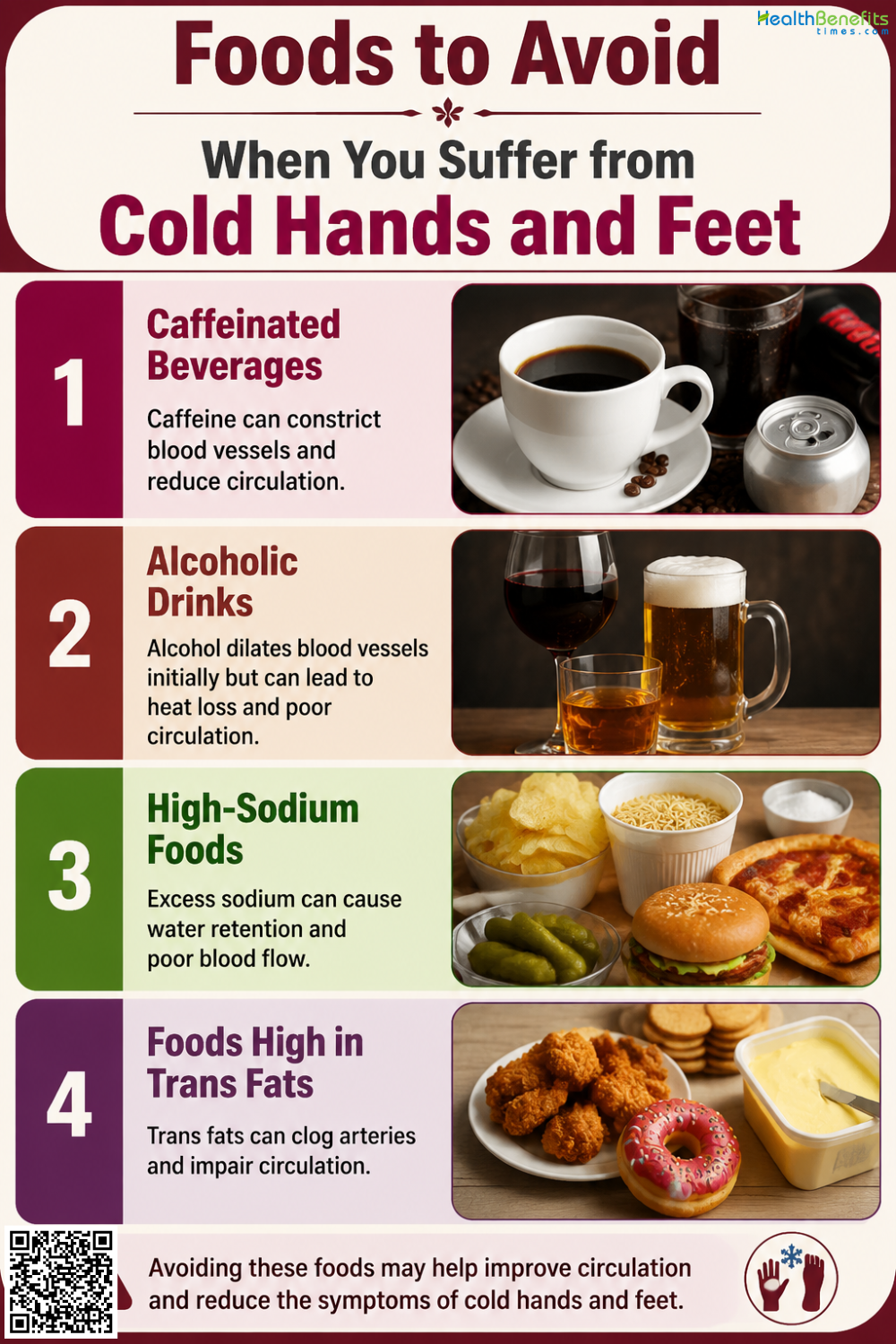
2. Alcoholic Drinks
Alcohol initially expands blood vessels, causing rapid heat loss. This eventually forces peripheral blood vessels to tightly constrict and chill the extremities to preserve core temperature 19.
3. High-Sodium Foods
Excessive salt intake stiffens blood vessel walls and impairs proper circulation. This reduces the body’s ability to efficiently pump warm blood to the hands and feet 20.
4. Foods High in Trans Fats
Artificial trans fats damage the inner lining of blood vessels and promote arterial plaque. This permanently narrows arteries and severely restricts peripheral blood flow to the extremities 21.
When to see Doctor when you struggle from Cold Hands and Feet
1. Color Changes in Skin
Seek medical care if your fingers or toes turn pale, blue, and then red. This sequence indicates Raynaud’s phenomenon or similar vascular disorders 22.
2. Non-Healing Sores
Consult a doctor if you develop open sores or ulcers on your extremities. This suggests severe blood flow restriction requiring immediate clinical intervention 23.
3. Asymmetrical Coldness
Immediate medical evaluation is required if only one hand or foot becomes cold. Unilateral coldness strongly suggests an acute arterial blockage or blood clot 24.
4. Severe Pain or Numbness
Visit a healthcare provider if coldness is accompanied by intense pain, prolonged tingling, or complete loss of sensation, which may indicate nerve damage 8.
5. Accompanying Systemic Symptoms
See a physician if cold extremities occur alongside weight changes, joint pain, or chronic fatigue. These symptoms often indicate underlying autoimmune or thyroid diseases 4.