


Morning sickness, clinically defined as nausea and vomiting of pregnancy (NVP), is a widespread medical condition experienced by expectant mothers. Despite its restrictive name, these symptoms can arise at any time during the day or night and affect approximately 80% of all pregnancies 1. The condition typically begins between the fourth and ninth weeks of gestation and spontaneously resolves for most individuals by the sixteenth week 1. Medical experts primarily attribute this nausea to rapid hormonal changes, specifically the elevated levels of human chorionic gonadotropin (hCG), estrogen, and progesterone in early pregnancy 2. While mild to moderate symptoms do not pose a threat to the developing fetus, an exceptionally severe form known as hyperemesis gravidarum can cause dangerous dehydration and weight loss, necessitating professional medical intervention 1.
Causes of Morning Sickness
1. Elevated Human Chorionic Gonadotropin (hCG)
The rapid rise of the hCG hormone, produced by the placenta immediately after implantation, directly correlates with the onset and peak severity of early pregnancy nausea 3.
2. Surging Estrogen Levels
A dramatic increase in circulating maternal estrogen during the first trimester alters stomach acidity and motility, strongly contributing to the development of gastrointestinal distress and vomiting 3.
3. Progesterone-Induced Digestive Slowing
High levels of progesterone relax the smooth muscle tissues throughout the digestive tract, which delays gastric emptying and causes food to remain in the stomach for extended periods, triggering feelings of nausea 3.
4. Growth Differentiation Factor 15 (GDF15) Production
The placenta secretes a specific hormone called GDF15 that acts directly on the nausea-regulating centers in the maternal brain stem, serving as a primary chemical driver of morning sickness severity 4.
5. Heightened Olfactory Sensitivity
Pregnancy hormones frequently amplify olfactory receptor sensitivity, causing everyday environmental smells and standard food odors to overstimulate the nervous system and immediately induce nausea 5.
6. Helicobacter Pylori Infection
Pregnant individuals carrying an active Helicobacter pylori bacterial infection in their stomach lining face a significantly higher risk of experiencing prolonged and severe morning sickness 6.
Symptoms of Morning Sickness
The physical signs of morning sickness typically emerge during the first trimester of pregnancy. The condition presents through a range of gastrointestinal and systemic symptoms.
- Persistent Nausea: The primary symptom is a profound, unsettled stomach that creates the urge to vomit 7. This feeling of sickness can happen at any time of the day or night, ranging from temporary discomfort to constant queasiness 1.
- Vomiting and Dry Heaves: Many individuals experience episodes of active vomiting or retching. Retching, also known as dry heaves, involves the physical body movements of vomiting without bringing up any stomach contents 1. While most pregnant individuals feel nauseous, active vomiting only affects about one-third of them 8.
- Sensitivity to Triggers: Symptoms are frequently worsened by specific environmental factors. Sudden exposure to strong odors, particular food textures, or cooking smells can instantly trigger or worsen both nausea and vomiting 7.
- Signs of Severe Morning Sickness (Hyperemesis Gravidarum): Up to 3% of pregnancies involve an extreme form of morning sickness that requires medical treatment 1. This severe variation is marked by dangerous physical changes:
- Inability to Retain Nourishment: Experiencing continuous vomiting that prevents the body from holding down any food or liquids 8.
- Signs of Dehydration: Urinating very rarely, producing almost no urine, or passing urine that is dark and heavily concentrated 8.
- Physical Instability: Feeling dizzy, becoming lightheaded, fainting upon standing, or having a rapidly racing heartbeat 7.
- Unhealthy Weight Loss: Losing more than 5% of original body weight before pregnancy due to the constant loss of fluids and nutrients 7.
Natural Remedies For Morning Sickness
1. Ginger Root Supplements and Teas
How it may help
Ginger contains active compounds, such as gingerols and shogaols, which interact directly with the stomach and central nervous system. These natural plant chemicals help speed up the emptying of the stomach and block nausea signals in the brain, reducing the constant urge to vomit during early pregnancy 9.
What research says
Clinical trials confirm that ginger is a highly effective, non-drug option for reducing morning sickness. Research shows that consuming ginger significantly improves nausea when compared to a placebo. Furthermore, studies indicate that ginger works just as well as standard vitamin B6 treatments for relieving pregnancy-related stomach discomfort 10.
How to use it safely
You can safely take up to 1,000 milligrams of ginger per day to manage nausea 11. For the best results, divide this total amount into smaller doses taken two to four times throughout your day. You can consume it through standardized capsules, teas, or fresh grated root.
Potential precautions or side effects
While generally safe, you might experience mild side effects like heartburn, gas, or a slight stomachache 10. Always consult your doctor before starting any new daily supplement during pregnancy.
2. Vitamin B6 Supplementation
How it may help
Vitamin B6, also known as pyridoxine, plays a vital role in a baby’s developing brain and nervous system. While the exact biological mechanism remains unclear, clinical evidence demonstrates that it effectively calms an unsettled stomach and reduces nausea triggers during early pregnancy 1.
What research says
Extensive medical research confirms that Vitamin B6 significantly reduces the severity of pregnancy-related nausea. Because of its high safety profile and proven effectiveness, major medical organizations designate this vitamin as a standard, first-line treatment for managing mild to moderate morning sickness 12.
How to use it safely
You can safely take 10 to 25 milligrams of Vitamin B6 every six to eight hours to manage daily nausea 1. Do not exceed 200 milligrams per day. Always check your prenatal vitamin’s current B6 content and consult your healthcare provider before adding extra supplements.
Potential precautions or side effects
Vitamin B6 is highly safe at recommended doses. However, taking excessively high amounts can cause nerve damage, resulting in temporary numbness or tingling in your hands and feet 13.
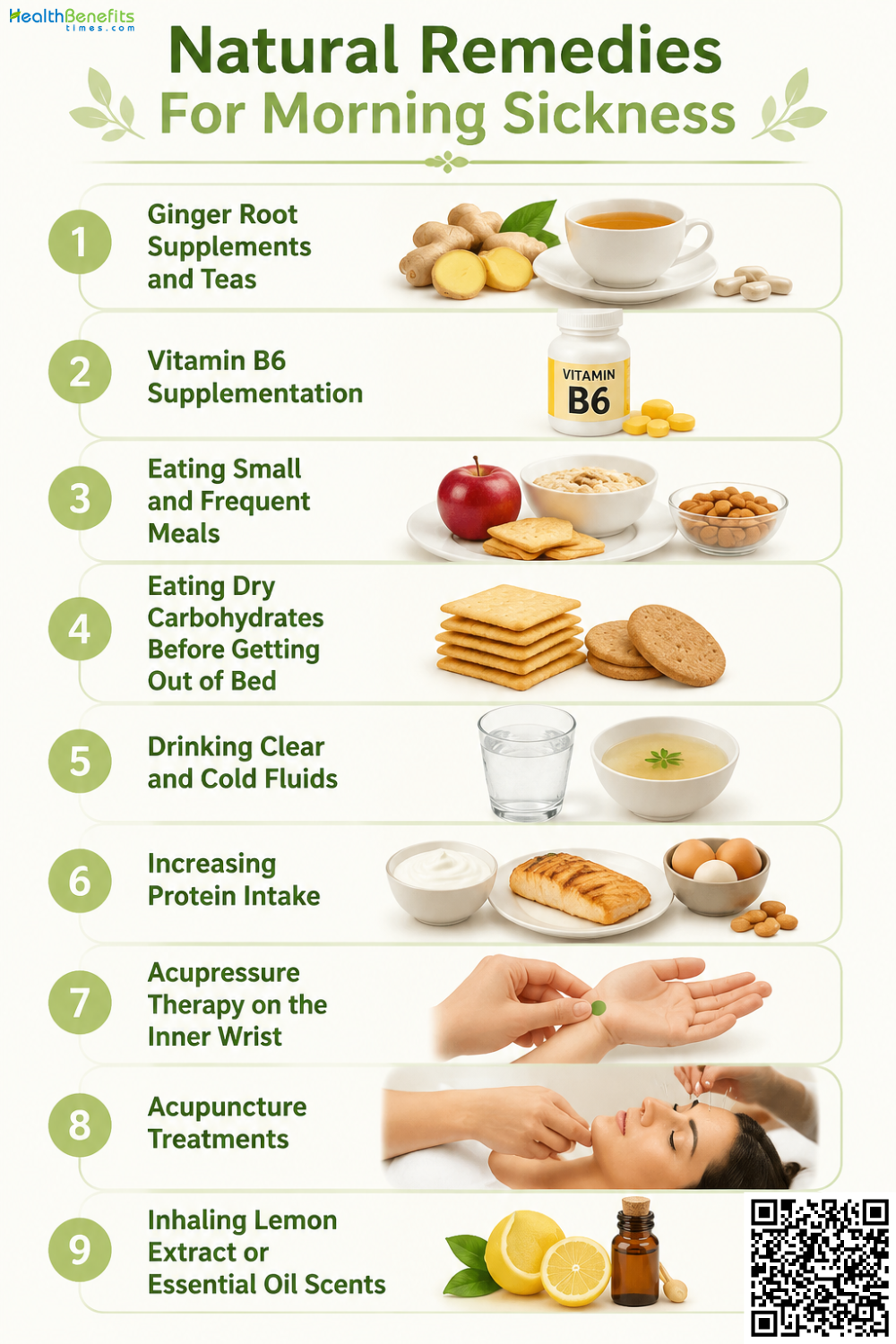
3. Eating Small and Frequent Meals
How it may help
Consuming small, frequent meals prevents the stomach from becoming completely empty, a physical state that heavily triggers nausea. This eating pattern also stops the stomach from overfilling, which reduces painful acid buildup, simplifies digestion, and keeps blood sugar levels perfectly stable throughout the day 14.
What research says
Clinical guidelines establish dietary adjustments as the primary first-line treatment for pregnancy-related nausea. Medical consensus concludes that eating frequent, smaller food portions significantly reduces vomiting episodes and gastrointestinal distress, offering a safe, non-medical foundation for care before attempting prescription medications 3.
How to use it safely
Replace your three large daily meals with five or six smaller portions to keep your stomach continually settled. Focus on bland, easy-to-digest items that are high in protein and low in fat, ensuring you never let yourself become completely hungry 14.
Potential precautions or side effects
Avoid overeating during these small meals, as a stretched stomach quickly triggers acid reflux and worsens vomiting. Steer clear of greasy, spicy, or heavily processed food options 3.
4. Eating Dry Carbohydrates before Getting Out of Bed
How it may help
An empty stomach overnight accumulates digestive acids, which heavily triggers morning nausea. Consuming dry, bland carbohydrates immediately upon waking absorbs these excess stomach acids. This simple action also gently elevates low morning blood sugar, stopping nausea signals before physical movement begins 14.
What research says
Medical guidelines universally endorse dietary modifications as the safest first-step treatment for pregnancy nausea. Clinical evidence confirms that consuming bland, dry carbohydrates early in the morning significantly decreases the frequency of vomiting episodes and delays the onset of daily gastric distress without requiring medication 3.
How to use it safely
Keep a small container of plain saltine crackers or dry cereals on your nightstand. Eat two or three pieces immediately upon waking. Rest quietly in bed for 15 to 20 minutes to allow digestion to begin before slowly standing up 15.
Potential precautions or side effects
Avoid heavily processed or sugary carbohydrates, such as sweet pastries. These items can rapidly spike blood sugar and quickly worsen stomach irritation or trigger acid reflux 14.
5. Drinking Clear and Cold Fluids
How it may help
Cold, clear liquids produce minimal odor and leave no lingering taste, which reduces sensory triggers for nausea. Furthermore, cold temperatures are gentler on a highly sensitive stomach lining, while staying hydrated directly prevents dehydration, a condition that severely worsens the cycle of nausea and vomiting 14.
What research says
Medical guidelines emphasize adequate hydration as a critical defense against severe pregnancy nausea. Clinical evidence supports that consuming cold, clear, or mildly carbonated beverages significantly decreases stomach distress and is a fundamental non-medical strategy to manage nausea while preventing the dangerous complication of fluid loss 3.
How to use it safely
Sip cold water, clear broths, or sports drinks slowly throughout the day. To prevent your stomach from becoming overly full, drink your fluids primarily between your meals rather than consuming large amounts while you are eating solid foods 14.
Potential precautions or side effects
Avoid rapidly gulping large volumes of liquid, as a suddenly stretched stomach will trigger immediate vomiting. Steer clear of heavily caffeinated, sugary, or highly acidic beverages 14.
6. Increasing Protein Intake
How it may help
Protein-rich foods help stabilize normal gastric rhythms and steady the stomach’s electrical activity. This digestive stabilization directly prevents abnormal stomach muscle movements—known as dysrhythmias—that heavily trigger nausea 16. Additionally, protein digests slowly, preventing rapid blood sugar drops that can suddenly induce sickness 17.
What research says
Clinical studies demonstrate that consuming protein-predominant meals reduces nausea and abnormal stomach activity significantly better than meals made up of equivalent calories from carbohydrates or fats 16. Consequently, medical guidelines endorse increasing dietary protein as an effective, evidence-based lifestyle intervention to safely manage early pregnancy nausea 18.
How to use it safely
Incorporate simple, easily digestible protein into every snack and meal 1. Opt for small portions of plain yogurt, hard-boiled eggs, nuts, or mild cheeses throughout your day. For optimal results, consume these gentle protein sources slowly alongside small amounts of complex carbohydrates 8.
Potential precautions or side effects
Avoid heavily seasoned, fried, or highly processed meats. High fat content and strong spices delay stomach emptying, which can quickly trigger severe acid reflux and worsen your baseline nausea 18.
7. Acupressure Therapy on the Inner Wrist
How it may help
Applying physical pressure to the P6 point, located on the inner wrist, stimulates the underlying median nerve. This gentle nerve stimulation is believed to interrupt the transmission of nausea signals sent between the stomach and the brain, helping to calm the digestive system 19.
What research says
Clinical trials indicate that stimulating the P6 wrist point can significantly decrease the severity of nausea during early pregnancy 20. While it may not completely stop active vomiting episodes, medical guidelines recognize acupressure as a safe, non-invasive option that provides noticeable relief without requiring medication 3.
How to use it safely
Locate the pressure point by measuring three finger-widths down from your inner wrist crease, directly between the two central tendons. Apply firm, steady pressure with your thumb for a few minutes on each wrist, or wear specialized acupressure wristbands throughout the day 1.
Potential precautions or side effects
Acupressure is exceptionally safe. The only minor side effects include temporary skin redness, mild tenderness, or slight swelling on the wrist if pressure bands are worn excessively tight 21.
8. Acupuncture Treatments
How it may help
Acupuncture involves inserting hair-thin needles into specific body points, most notably on the inner wrist. This professional technique stimulates sensory nerves under the skin. This targeted nerve stimulation signals the brain to release natural chemicals that alter how the body processes incoming nausea signals from the stomach 21.
What research says
Clinical trials indicate that targeted acupuncture safely reduces the intensity of nausea during early pregnancy. Research concludes that pregnant individuals receiving professional acupuncture experience less frequent dry heaves and shorter bouts of nausea compared to those receiving no treatment, making it a viable non-drug therapy 22.
How to use it safely
You should only receive treatment from a licensed, certified acupuncturist who has verifiable experience working with pregnant individuals 1. Attend scheduled sessions as directed by your practitioner, and always ensure they use properly sterilized, single-use disposable needles for your safety.
Potential precautions or side effects
Minor side effects include temporary soreness, slight bruising, or light bleeding at the needle sites 22. Your practitioner must carefully avoid specific acupuncture points known to stimulate uterine contractions.
9. Inhaling Lemon Extract or Essential Oil Scents
How it may help
Inhaling fresh lemon scent directly stimulates the olfactory system in the brain. This pleasant citrus aroma successfully overrides foul environmental smells that typically trigger vomiting. The sensory input from lemon aromatherapy also acts as a mild distraction to the nervous system, temporarily blocking sudden nausea signals 23.
What research says
Clinical trials confirm that inhaling lemon essential oil is an effective, non-pharmacological treatment for pregnancy-related nausea. Studies show that pregnant individuals who inhale lemon scent experience a rapid and significant decrease in overall nausea intensity and vomiting frequency compared to those exposed to neutral placebos 23.
How to use it safely
Place one or two drops of pure lemon essential oil or fresh lemon extract onto a clean cotton ball. Hold it near your nose and take deep breaths as soon as nausea begins 24. Never ingest essential oils orally during pregnancy.
Potential precautions or side effects
Overuse of highly concentrated aromas can occasionally trigger headaches. Avoid applying undiluted essential oils directly to your bare skin, as they can cause severe topical irritation or allergic reactions 23.
Foods to Avoid When You Suffer from Morning Sickness
Certain dietary choices can irritate the gastrointestinal tract and trigger nausea during pregnancy.
1. High-Fat and Fried Foods
These foods delay stomach emptying and require excess stomach acid for digestion. This slowed digestive process significantly increases the frequency of severe nausea and acid reflux episodes 14.
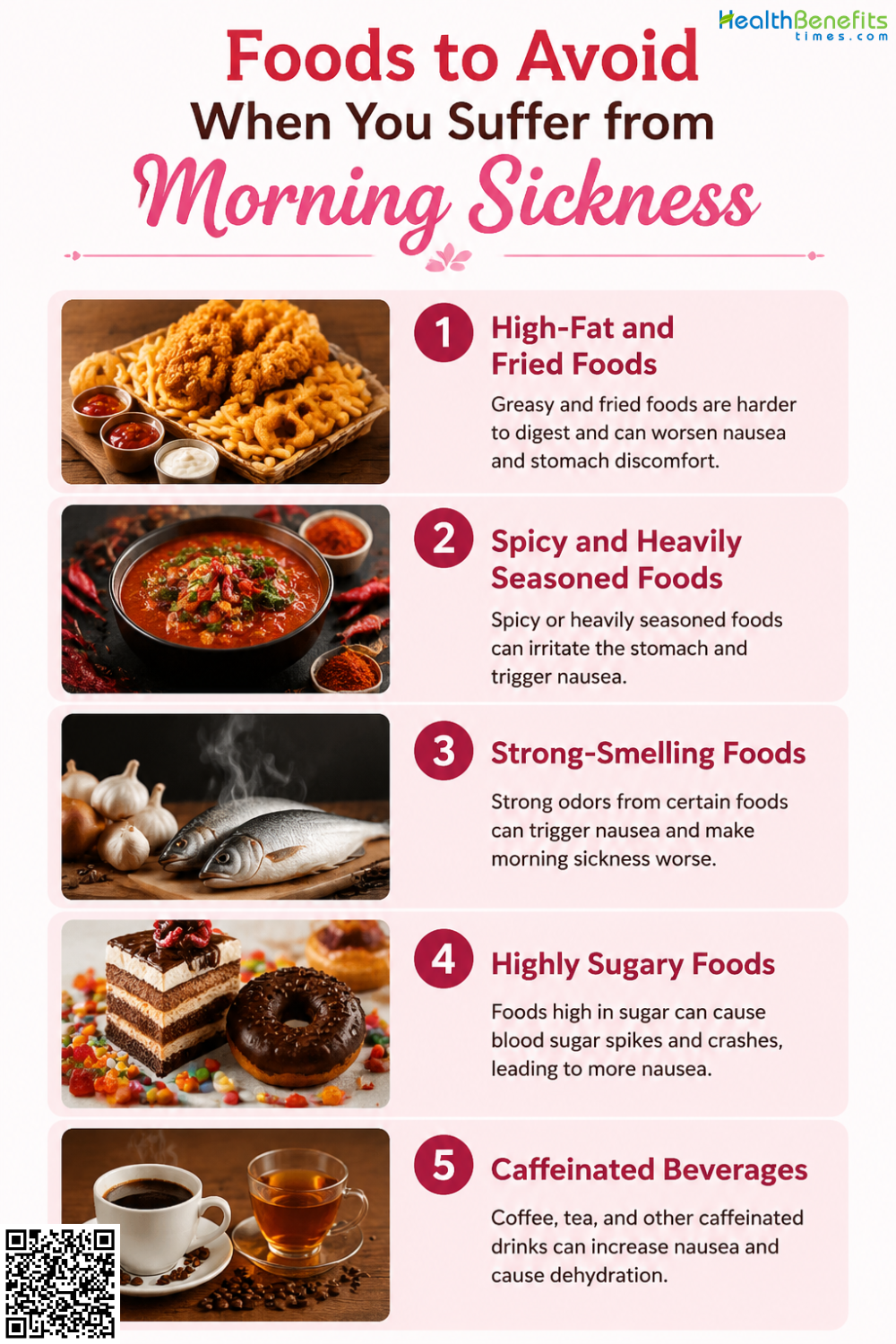
2. Spicy and Heavily Seasoned Foods
Intense spices directly irritate the sensitive gastrointestinal lining. Consuming these foods quickly triggers severe heartburn, stomach pain, and rapid vomiting responses in pregnant individuals 3.
3. Strong-Smelling Foods
Intense food odors directly stimulate the brain’s olfactory system and vomiting center. Avoid hot foods like fish or onions, which immediately provoke sudden waves of extreme sickness 15.
4. Highly Sugary Foods
Foods heavy in refined sugars cause rapid, unstable blood glucose spikes followed by sharp drops. This metabolic instability directly induces systemic nausea and worsens daily stomach discomfort 14.
5. Caffeinated Beverages
Coffee and other caffeinated drinks actively stimulate excessive stomach acid production. Additionally, their diuretic effect accelerates dehydration, a condition that severely intensifies pregnancy-related nausea and vomiting 14.
When to See a Doctor When You Struggle From Morning Sickness
While routine nausea is common, certain severe symptoms require immediate medical evaluation to prevent dangerous complications for both the pregnant individual and the developing fetus.
1. Inability to Retain Fluids
Seek immediate care if you cannot keep any liquids down for a 24-hour period, as this poses a severe risk of dangerous dehydration 8.
2. Signs of Severe Dehydration
Consult a physician if you experience dizziness upon standing, a rapidly racing heartbeat, or if you pass very little, darkly colored urine 7.
3. Significant Weight Loss
Medical intervention is necessary if continuous vomiting causes you to lose five percent or more of your total body weight measured before the pregnancy began 7.
4. Vomiting Blood
Emergency medical attention is required if your vomit contains blood or dark material resembling coffee grounds, which indicates potential gastrointestinal tearing or bleeding 8.
5. Severe Abdominal Pain
Contact a healthcare provider immediately if your nausea and vomiting are accompanied by intense abdominal cramping, severe pelvic pain, or a high fever 8.