


Childhood obesity is a complex, chronic medical condition characterized by an abnormal or excessive accumulation of body fat that poses a risk to a child’s health 1. Clinically, it is diagnosed when a child’s Body Mass Index (BMI) sits at or above the 95th percentile for their age and sex, according to standardized growth charts 2. This condition results from a persistent energy imbalance where caloric intake exceeds the calories expended, strongly influenced by genetic, environmental, and behavioral factors 1. Childhood obesity is not merely a cosmetic concern; it significantly elevates the risk of developing early-onset complications such as type 2 diabetes, asthma, sleep apnea, and bone and joint problems 3. Furthermore, children affected by obesity are highly likely to remain obese into adulthood, increasing their lifelong susceptibility to cardiovascular disease, stroke, and certain cancers 3.
Causes of Childhood Obesity
1. Unhealthy Dietary Habits
The primary driver of weight gain is a persistent imbalance where a child consumes more calories than their body uses, largely due to a widespread shift toward highly processed, calorie-dense foods 1. Diets heavily reliant on fast food, unhealthy fats, and added sugars—especially from sugar-sweetened beverages—provide excessive energy while lacking essential vitamins and minerals 4.
2. Physical Inactivity and Sedentary Lifestyles
Modern daily routines have drastically lowered the amount of time children spend engaging in physical movement 1. An increase in screen time, the rising popularity of video games, and a growing reliance on motorized transportation prevent children from burning off consumed calories, directly fueling abnormal weight gain 4.
3. Genetics and Biological Susceptibility
A child’s genetic makeup plays a substantial role in determining how their body regulates appetite, expends energy, and stores fat 5. While genetics do not make obesity inevitable, children born to overweight or obese parents have a much higher biological risk of developing the condition when exposed to unhealthy environments 4.
4. Socioeconomic and Environmental Barriers
A family’s income and physical surroundings heavily influence a child’s health and lifestyle habits 4. Children from lower-income backgrounds face higher risks because their families often have limited access to fresh, nutritious foods, leading to a reliance on cheaper, heavily processed alternatives 6. Furthermore, unsafe neighborhoods and a lack of accessible local parks frequently restrict a child’s ability to play and exercise safely outdoors 4.
5. Prenatal and Early Infancy Factors
The risk for childhood obesity can be influenced by circumstances before birth or during the first few months of life. Maternal obesity during pregnancy, excessive weight gain during gestation, the absence of breastfeeding, and introducing solid foods too early are strongly tied to a higher likelihood of a child developing obesity in later years 4.
6. Psychological Stress and Poor Sleep
Chronic stress and mental health challenges, such as anxiety or depression, can trigger emotional eating, where a child routinely consumes high-calorie comfort foods as a coping mechanism 4. Additionally, inadequate or poor-quality sleep disrupts the body’s natural hormone balance, which can artificially increase a child’s appetite and further elevate their risk for weight gain 7.
Symptoms of Childhood Obesity
1. Excessive Body Fat Accumulation
The most fundamental physical sign of obesity is a visible accumulation of excess body fat, which healthcare providers officially diagnose when a child’s Body Mass Index (BMI) registers at or above the 95th percentile on standardized pediatric growth charts 5.
2. Darkened Skin Patches
Children with obesity often develop thickened, dark, and velvety patches of skin, most commonly found in the folds of the neck, armpits, or groin area, which act as a key clinical warning sign that the body is struggling to process insulin effectively and may be at risk for type 2 diabetes 5.
3. Breathing Difficulties and Disrupted Sleep
The extra weight around the chest and neck can restrict lung capacity and block airways, causing children to become easily winded during mild exercise and frequently leading to obstructive sleep apnea, a condition marked by heavy snoring, interrupted breathing at night, and severe fatigue during the day 8.
4. Joint and Bone Pain
The mechanical strain of carrying excess weight puts severe stress on a child’s growing skeletal system, frequently resulting in chronic pain, swelling, and physical limitations in weight-bearing areas, particularly the knees, hips, and lower back 5.
5. Early Onset of Puberty
Excess body fat can alter the body’s natural hormone production, which sometimes triggers physical development and the onset of puberty at a significantly younger age than is medically typical 5.
6. Emotional and Psychological Distress
Beyond physical signs, childhood obesity commonly presents with significant mental health symptoms, as affected children are highly vulnerable to depression, severe anxiety, and a diminished sense of self-worth, frequently resulting in them withdrawing from social interactions and school activities 4.
Natural Remedies for Childhood Obesity
1. Replacing Sugary Drinks with Plain Water
How it may help
Sugary beverages like sodas and fruit juices provide high amounts of empty calories that fail to trigger a sense of fullness, leading to excessive daily energy intake. Replacing these high-calorie beverages with plain water eliminates this unnecessary caloric surplus, directly supporting healthy weight management by preventing the accumulation of excess body fat 9.
What research says
Clinical research confirms that consuming sugar-sweetened beverages is strongly linked to excessive weight gain in youth. Public health authorities conclude that systematically replacing these sugary drinks with plain water significantly reduces overall caloric intake, effectively lowering a child’s risk of developing childhood obesity and related long-term metabolic conditions 10.
How to use it safely
To make this transition easier for your child, gradually replace sodas and juices with water during daily meals and snack times. If they resist plain water, you can safely add slices of fresh fruits, like lemons or berries, to provide natural flavor without introducing any hidden sugars.
Potential precautions or side effects
Drinking plain water has no adverse side effects, but ensure your local tap water supply is clean and properly filtered to prevent exposure to environmental contaminants such as lead 11.
2. Increasing Daily Intake of Fresh Fruits and Vegetables
How it may help
Fresh fruits and vegetables are naturally low in calories but highly rich in dietary fiber and water. This combination helps children feel fuller for longer periods, naturally reducing their intake of calorie-dense, heavily processed foods and preventing the energy surplus that leads to abnormal weight gain 12.
What research says
Public health research consistently concludes that diets rich in whole fruits and vegetables are strongly associated with a lower risk of childhood obesity. Health authorities emphasize that dietary fiber stabilizes blood sugar and delays stomach emptying, which effectively curbs excessive appetite and supports healthy weight maintenance 13.
How to use it safely
Always wash produce thoroughly under running water to remove harmful bacteria and potential pesticide residue 14. To maximize nutritional benefits, serve whole fruits with their edible skins intact instead of fruit juices, and aim to fill half of your child’s plate with vegetables during meals.
Potential precautions or side effects
Rapidly increasing dietary fiber may cause temporary digestive bloating. Always cut hard, round produce—like whole grapes or raw carrots—into small pieces to prevent choking in younger children 15.
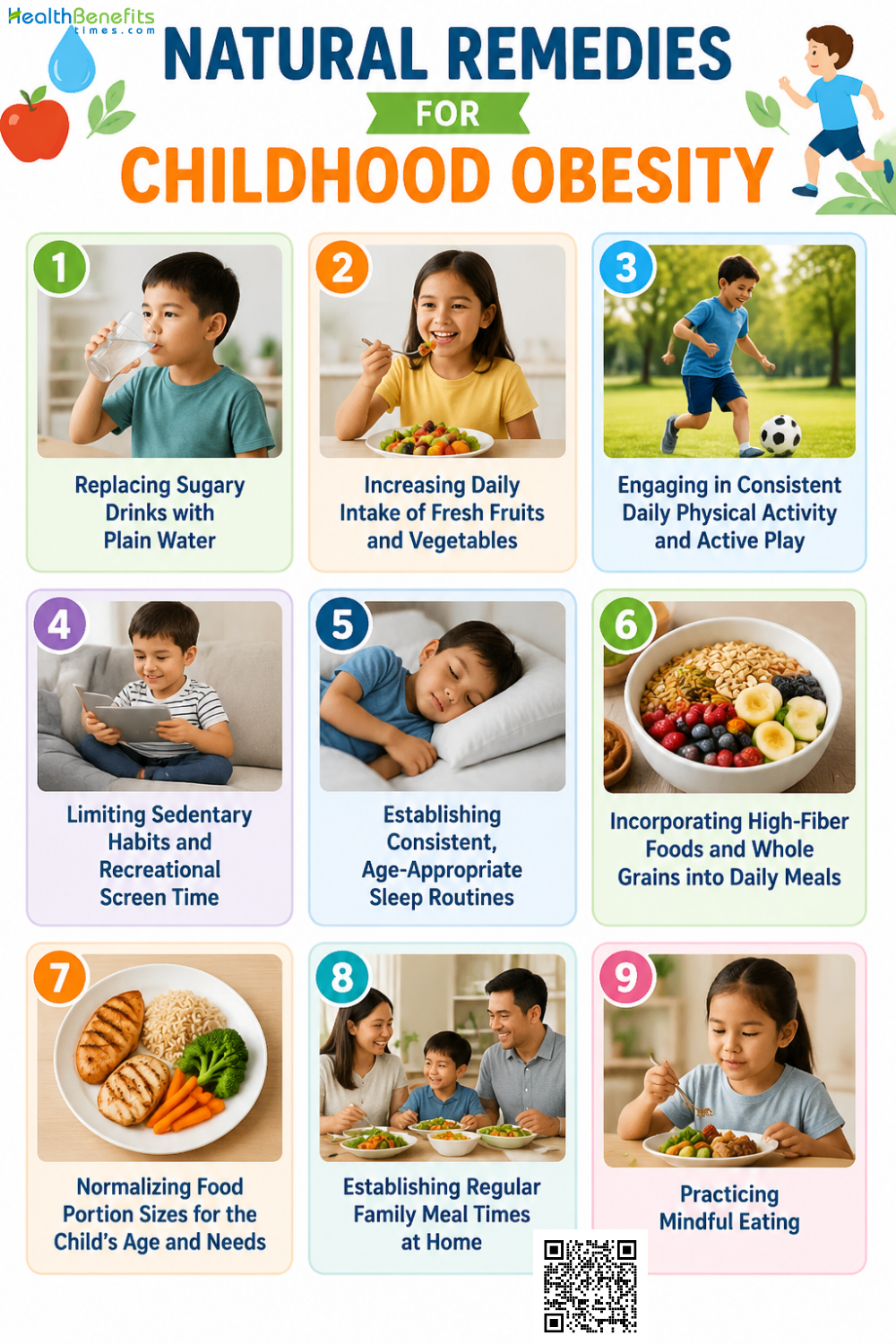
3. Engaging in Consistent Daily Physical Activity and Active Play
How it may help
Physical activity increases daily energy expenditure, successfully offsetting caloric intake to prevent excess fat storage. Regular active play also builds stronger muscles, improves cardiorespiratory fitness, and naturally regulates body weight, directly aiding in the prevention and management of childhood obesity 16.
What research says
Public health research concludes that a lack of physical activity is a fundamental cause of childhood overweight status. Regular moderate-to-vigorous exercise successfully reduces body fat percentages in youth while significantly lowering their lifelong risk of developing type 2 diabetes and cardiovascular disease 1.
How to use it safely
Encourage your child to participate in at least 60 minutes of enjoyable, age-appropriate physical activity daily, such as brisk walking, running, or playing sports. To ensure safety, provide adequate water and verify they wear proper protective gear, like helmets and well-fitting athletic shoes 17.
Potential precautions or side effects
To prevent physical injuries like sprains, ensure your child warms up before vigorous play. Supervise outdoor activities closely during extreme heat to avoid severe dehydration or heat exhaustion 18.
4. Limiting Sedentary Habits and Recreational Screen Time
How it may help
Prolonged screen time directly displaces active physical play, significantly reducing a child’s daily energy expenditure. Furthermore, sedentary screen viewing frequently encourages mindless snacking on high-calorie foods and exposes children to junk food advertising, directly contributing to the caloric surplus that causes excessive weight gain 19.
What research says
Clinical research conclusively links excessive recreational screen time to higher body mass index and increased obesity rates in youth. Public health authorities affirm that limiting sedentary screen behavior effectively reduces unhealthy dietary intake and encourages physical movement, serving as a critical clinical intervention for successful weight management 20.
How to use it safely
Establish firm household rules limiting non-educational screen time to a maximum of two hours per day 19. To encourage better habits, consistently remove televisions or smart devices from your child’s bedroom and establish tech-free zones during daily family meals 3.
Potential precautions or side effects
Abruptly removing devices may cause temporary frustration or behavioral resistance. Ensure you replace screen time with engaging, active family activities rather than simply restricting their entertainment 19.
5. Establishing Consistent, Age-Appropriate Sleep Routines
How it may help
Inadequate sleep disrupts the natural balance of hunger-regulating hormones, artificially increasing appetite and triggering strong cravings for high-calorie foods. Establishing a consistent sleep schedule normalizes these hormones, which directly prevents overeating and provides children with the necessary daytime energy to remain physically active 21.
What research says
Clinical research consistently identifies short sleep duration as a leading, independent risk factor for rapid weight gain in youth. Pediatric health authorities conclude that children lacking sufficient nighttime sleep experience severe metabolic disruptions, making them biologically much more susceptible to developing childhood obesity 21.
How to use it safely
Set a strict, age-appropriate bedtime for your child and enforce it consistently, even on weekends. To encourage deep rest, maintain a cool, dark bedroom environment and completely remove electronic screens at least one hour before sleep to prevent light-induced hormonal disruptions 22.
Potential precautions or side effects
Healthy sleep routines carry no negative side effects. However, immediately consult a pediatrician if your child frequently snores loudly, as this strongly indicates an underlying sleep disorder 8.
6. Incorporating High-Fiber Foods and Whole Grains into Daily Meals
How it may help
Dietary fiber and whole grains take longer to digest, which naturally prolongs a child’s feeling of fullness after meals. This slow digestion stabilizes blood sugar levels and effectively curbs sudden hunger spikes, drastically reducing the urge to overconsume high-calorie, processed snacks that lead to excessive weight gain 23.
What research says
Scientific research consistently shows that children who consume diets rich in whole grains and dietary fiber maintain significantly lower body fat percentages. Clinical experts conclude that replacing refined carbohydrates with high-fiber alternatives actively prevents abnormal fat accumulation and successfully supports long-term metabolic health and weight management in youth 23.
How to use it safely
To safely introduce more fiber, gradually replace refined items—like white bread and regular pasta—with whole-wheat alternatives, brown rice, and oats. Always encourage your child to drink plenty of water throughout the day to help their body properly process the additional dietary fiber 24.
Potential precautions or side effects
Adding fiber too rapidly can cause temporary digestive discomfort, including gas, stomach cramps, and bloating. To prevent this, increase high-fiber foods slowly over several weeks alongside adequate water intake 24.
7. Normalizing Food Portion Sizes for the Child’s Age and Needs
How it may help
Serving age-appropriate portion sizes prevents children from consuming excess calories during meals. By aligning food amounts with a child’s actual energy requirements, this practice stops overeating, helps regulate appetite signals, and directly supports healthy weight control 25.
What research says
Pediatric nutrition research consistently demonstrates that oversized food portions are a primary driver of excessive energy intake in youth. Clinical experts conclude that controlling and reducing meal portions significantly lowers the risk of childhood obesity by matching energy consumption to physical needs 26.
How to use it safely
Serve meals on smaller plates and use measuring cups or visual cues—such as comparing meat portions to a deck of cards—to accurately gauge correct serving sizes 25. Avoid forcing your child to finish everything on their plate to help them recognize natural feelings of fullness 12.
Potential precautions or side effects
Never restrict food so severely that it inhibits normal physical growth. Always consult a pediatrician to ensure portion adjustments match your child’s specific developmental needs 12.
8. Establishing Regular Family Meal Times at Home
How it may help
Eating together as a family creates a structured environment that encourages slower, more mindful eating and discourages mindless snacking. This routine allows parents to monitor food choices, model healthy eating habits, and prevent excessive calorie consumption, which collectively aids in managing childhood obesity 27.
What research says
Public health research consistently demonstrates that frequent family meals are strongly associated with a lower risk of overweight status in youth. Clinical studies conclude that structured home meals lead to healthier dietary choices, higher consumption of nutritious foods, and better weight control among children 27.
How to use it safely
Gather your family to eat together around a dining table at predictable times each day 27. To maximize the benefit, completely turn off televisions, phones, and all other electronic screens during these meal times to keep everyone focused on eating and conversation 3.
Potential precautions or side effects
Family meals carry no adverse side effects, but ensure conversations remain positive and relaxed to prevent mealtime stress or anxiety 27.
9. Practicing Mindful Eating
How it may help
Mindful eating encourages children to pay full attention to their food, chew slowly, and tune into internal body signals. By focusing on taste and hunger cues, children easily recognize when they are full, which naturally prevents overeating and lowers excess caloric intake 28.
What research says
Clinical research indicates that eating while distracted disrupts a child’s natural ability to sense fullness. Public health studies conclude that teaching mindful eating habits significantly reduces emotional and binge eating behaviors, effectively helping youth maintain a healthy body weight 28.
How to use it safely
Teach your child to put their fork down between bites and chew thoroughly before taking the next mouthful 28. Always turn off all electronic devices during meals so your child remains completely focused on their food 3.
Potential precautions or side effects
Mindful eating practices have no negative side effects, but avoid turning mealtime into a rigid, stressful environment that causes anxiety 28.
Foods to Avoid When Managing Childhood Obesity
1. Sugar-Sweetened Beverages
Soda, sweet teas, and fruit punches deliver massive amounts of liquid sugar that bypass fullness cues, driving rapid weight gain 9.
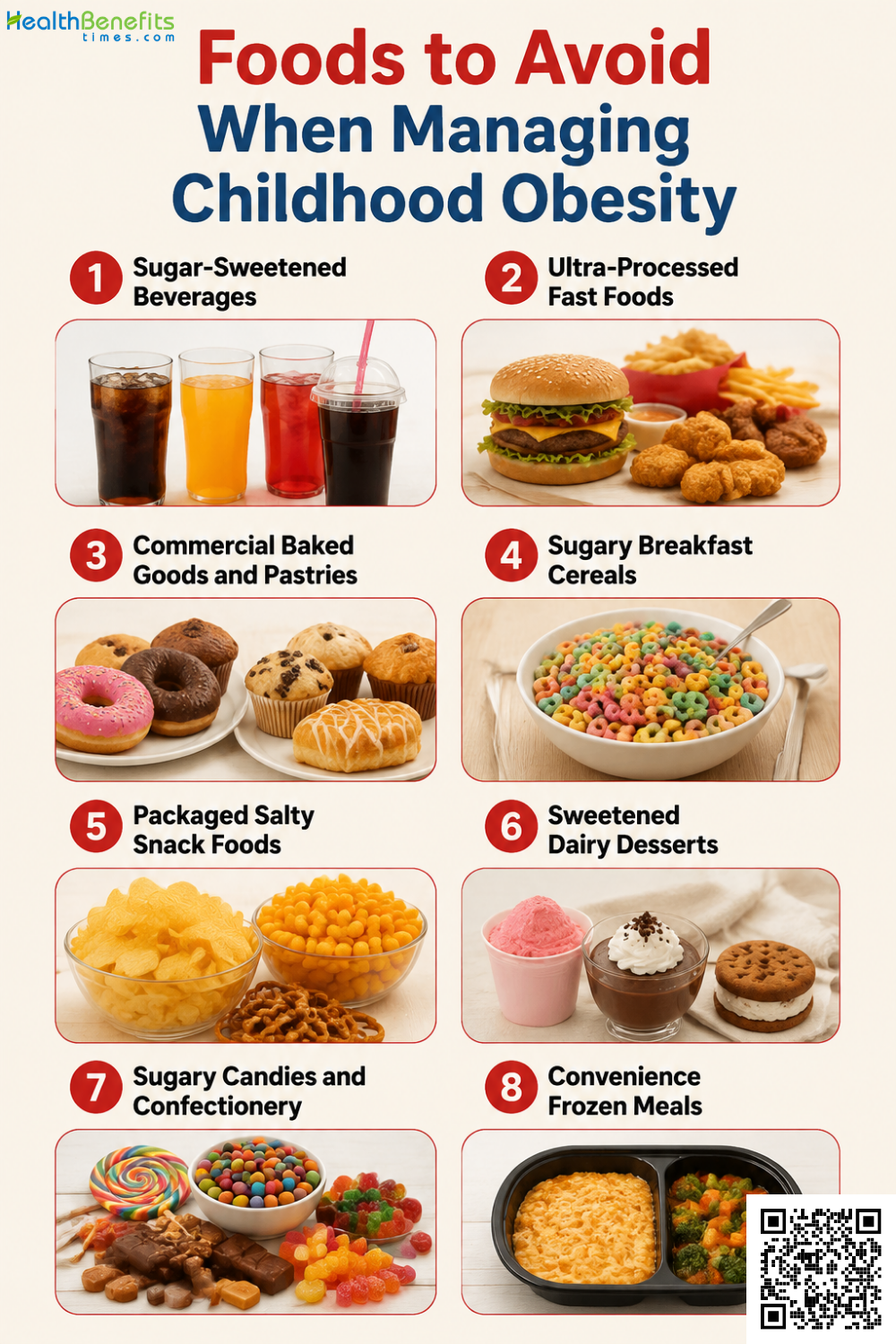
2. Ultra-Processed Fast Foods
Burgers, fries, and deep-fried items provide excessive calories, unhealthy fats, and sodium while lacking critical nutrients 4.
3. Commercial Baked Goods and Pastries
Cookies, cakes, and doughnuts contain concentrated amounts of refined flour, solid fats, and added sugars that promote fat accumulation 13.
4. Sugary Breakfast Cereals
Many boxed cereals marketed to children are heavily coated in refined sugars, causing blood sugar spikes and early hunger 23.
5. Packaged Salty Snack Foods
Chips, pretzels, and cheese puffs offer empty calories and encourage overeating due to high levels of salt and flavorings 4.
6. Sweetened Dairy Desserts
Ice cream, flavored yogurts, and milkshakes contain high levels of saturated fats and added sugars that contribute directly to obesity 13.
7. Sugary Candies and Confectionery
Gummies, chocolates, and hard candies provide zero nutritional value and rapid surges of empty energy 13.
8. Convenience Frozen Meals
Pre-made TV dinners and frozen pizzas are typically high in sodium, unhealthy fats, and hidden caloric density 4.
When to See a Doctor Regarding Childhood Obesity
1. Rapid and Unexplained Weight Gain
Consult a physician if your child experiences sudden, excessive weight gain that exceeds normal pediatric growth patterns 2.
2. Severe Breathing Difficulties During Sleep
Seek immediate medical evaluation if your child snores loudly, gasps for air, or stops breathing temporarily while sleeping 8.
3. Development of Dark Skin Patches
Schedule an appointment if you notice thickened, dark velvety skin folds around your child’s neck or armpits 5.
4. Persistent Joint or Bone Pain
Visit a doctor if your child complains of chronic pain, stiffness, or swelling in their hips, knees, or feet 5.
5. Severe Emotional or Behavioral Distress
Consult a healthcare provider if obesity leads to persistent sadness, severe anxiety, or social withdrawal in your child 4.
6. Signs of Early Puberty
Seek professional guidance if your child exhibits physical signs of sexual maturity at a notably premature age 5.