


Chills refer to a physical sensation of coldness, often accompanied by involuntary shivering and skin paleness, occurring either from environmental exposure or illness. Medically, this response is driven by the rapid, repetitive contraction and relaxation of skeletal muscles 1. This specific muscle activity is the body’s natural method of producing internal heat when it encounters a pathogen or a severe temperature drop 2. Because these contractions generate warmth quickly, chills frequently serve as an early clinical sign that predicts a coming fever, reflecting a deliberate increase in the body’s core temperature to fight off infection 2. While mild ailments can trigger this shivering reaction, severe or recurrent chills remain a primary diagnostic symptom for more significant systemic issues, including serious viral or bacterial infections 2.
Causes of Chills
1. Bacterial and Viral Infections
Systemic infections, such as influenza, pneumonia, strep throat, and urinary tract infections, frequently cause the body to raise its core temperature to destroy the invading pathogen, resulting in early shivering and shaking 2.
2. Environmental Cold Exposure
When the body is exposed to low ambient temperatures, it involuntarily contracts and relaxes skeletal muscles to generate internal heat and protect internal organs from a dangerous drop in temperature 2.
3. Parasitic Illnesses
Diseases transmitted by parasites, most notably malaria, disrupt red blood cells and characteristically produce severe, recurring episodes of shaking chills followed by high fevers 3.
4. Hypoglycemia (Low Blood Sugar)
A sudden drop in blood glucose levels deprives cells of essential energy, which triggers an adrenaline-driven stress response that includes sudden chills, shivering, and cold sweats 4.
5. Hypothyroidism (Underactive Thyroid)
When the thyroid gland does not produce enough hormones, the body’s overall metabolism slows down, significantly reducing internal heat production and causing a persistent, unusual sensation of being cold 5.
Symptoms of Chills
1. Involuntary Shivering and Shaking
The most prominent sign of chills is rapid, uncontrollable muscle contractions. This often causes the entire body to shake and the teeth to chatter as the nervous system attempts to generate internal heat to raise the body’s core temperature 2.
2. Goosebumps
Small, raised bumps frequently appear on the skin’s surface. This physical reaction occurs when tiny muscles at the base of hair follicles tighten, causing body hair to stand upright in a biological effort to trap warm air against the skin 2.
3. Fever
Because chills are typically the body’s mechanism to raise its internal temperature in response to an infection, they are frequently accompanied by or immediately followed by a fever, which is defined as a temporary increase in body temperature 6.
4. Cold and Pale Skin
During an episode of chills, the blood vessels near the surface of the skin narrow significantly to keep warm blood closer to the vital internal organs. This process often makes the skin feel physically cold to the touch and appear unusually pale 7.
5. Sweating
Once the body successfully reaches its new, higher target temperature, or when the fever “breaks” and the body attempts to cool down, intense sweating often follows the shivering phase 6.
Natural Remedies for Chills
1. Drinking Warm Fluids
How it may help
Consuming warm fluids helps soothe the body and provides immediate comfort during shivering episodes. Medical guidelines from the Centers for Disease Control and Prevention 8 emphasize that maintaining hydration regulates core temperature. Drinking clear liquids prevents dehydration caused by fever-induced sweating, while the physical warmth directly lessens the involuntary muscle contractions associated with chills 2.
What research says
Clinical studies confirm that hot beverages provide immediate, measurable relief from cold symptoms and shivering by promoting heat conservation. Research published through the National Institutes of Health 9 shows that consuming a hot drink provides rapid physiological relief from chills and fatigue. Furthermore, adequate fluid intake supports immune function by helping the body efficiently clear circulating pathogens 6.
How to use it safely
You should consume warm, clear liquids such as water, broth, or decaffeinated tea throughout the day. The National Library of Medicine 2 recommends taking small, frequent sips rather than drinking large amounts rapidly. Ensure the beverage is comfortably warm, avoiding scalding temperatures that could burn your throat 10.
Potential precautions or side effects
Avoid caffeinated or alcoholic beverages, as these substances promote dehydration and worsen shivering 11. Do not force fluids if you experience severe vomiting, which requires professional medical evaluation 12.
2. Getting Adequate Bed Rest
How it may help
Bed rest allows the body to redirect essential energy toward fighting the underlying infection causing the shivering. According to the Centers for Disease Control and Prevention 8, resting is a primary medical recommendation for fever-related illnesses. Conserving physical energy helps stabilize internal temperature, thereby reducing the severe muscle contractions associated with chills 6 and promoting faster overall recovery.
What research says
Clinical immunology research demonstrates that sleep significantly enhances the body’s defensive responses against pathogens. Studies published by the National Institutes of Health 13 confirm that adequate sleep increases the production of cytokines, which target infection. Sleep deprivation directly suppresses this vital immune function, making it harder to overcome chills 14 and return to normal body temperatures.
How to use it safely
You should remain in bed in a comfortable, well-ventilated room. The National Library of Medicine 2 specifically advises against wrapping yourself in thick blankets while resting. Instead, use a single light sheet to prevent sudden temperature spikes that could dangerously elevate fevers 10 while you sleep.
Potential precautions or side effects
While resting, monitor for disease progression. You must seek immediate emergency medical care 6 if you develop shortness of breath, chest pain, or severe confusion during recovery 15 from your illness.
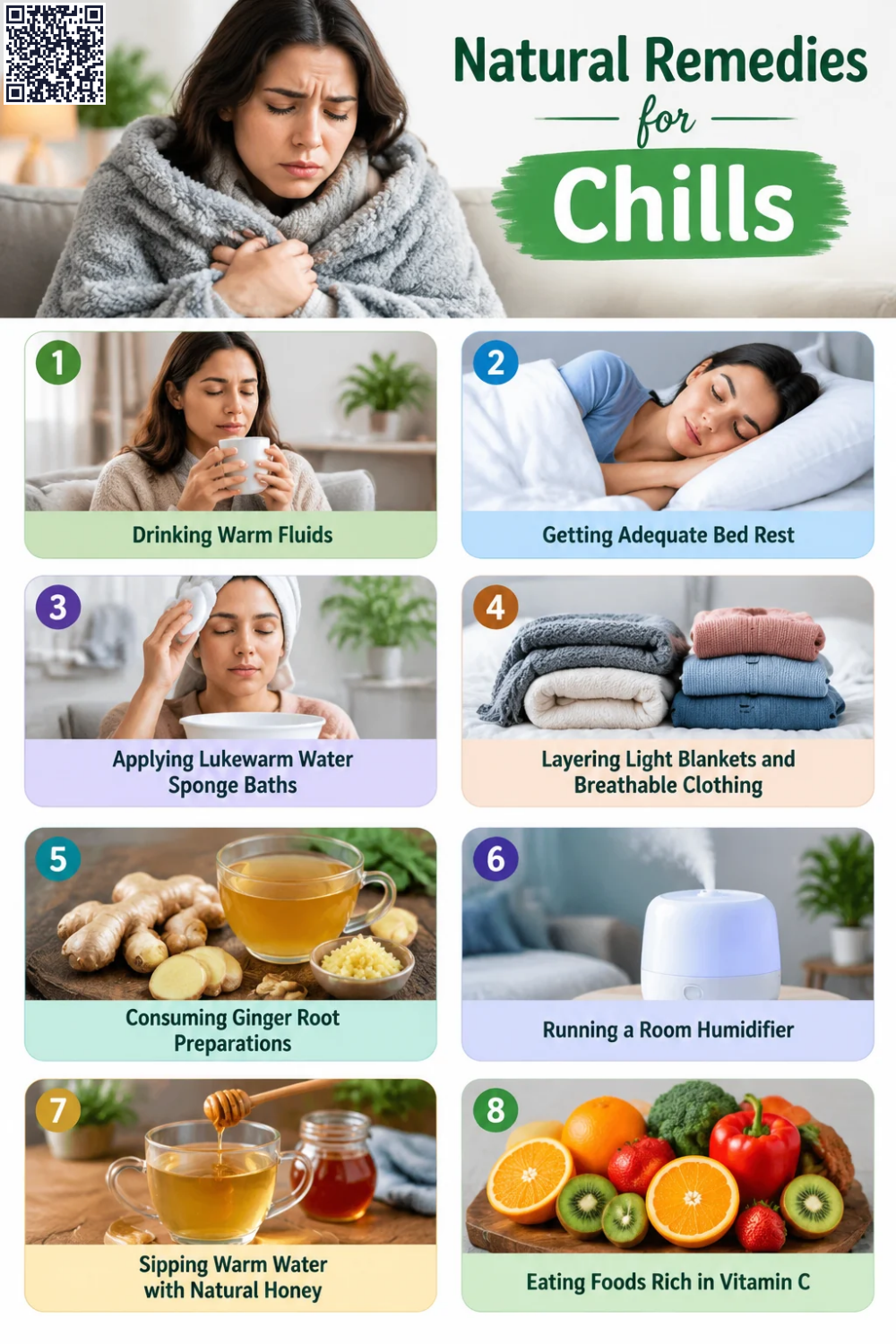
3. Applying Lukewarm Water Sponge Baths
How it may help
Applying a lukewarm sponge bath manages temperature when chills accompany fevers. As tepid water evaporates, it naturally draws away body heat. The National Library of Medicine 6 states this gentle cooling provides physical comfort. By stabilizing temperatures without cold shocks, lukewarm baths reduce the severe shivering 2 triggered during an active infection.
What research says
Clinical studies demonstrate tepid sponging lowers elevated body temperatures safely. Research published by the National Institutes of Health 16 indicates lukewarm water evaporation cools blood vessels rapidly. However, applying cold water directly triggers violent muscle contractions 17, which increases internal heat production and worsens the initial chills rather than providing comfort.
How to use it safely
You must use water that feels slightly warm. The Centers for Disease Control and Prevention 8 advises applying a damp cloth gently across your forehead. If this physical cooling causes new shivering 2, you must immediately stop the bath to prevent sudden core temperature spikes.
Potential precautions or side effects
Never apply cold water or rubbing alcohol to the skin, as these substances induce shivering 2. This dangerous practice forces internal temperatures 10 to rise quickly, causing severe distress.
4. Layering Light Blankets and Breathable Clothing
How it may help
Using light layers provides immediate physical comfort without trapping excessive heat. According to the National Library of Medicine 2, wrapping in heavy blankets worsens the underlying fever that typically accompanies shivering. Breathable clothing allows the body to regulate its temperature naturally 6 as involuntary muscle contractions subside.
What research says
Clinical guidelines emphasize that proper heat dissipation is critical during fever-related shivering. Research published through the National Institutes of Health 10 shows that over-bundling prevents sweat evaporation, leading to dangerous core temperature spikes. Maintaining ambient skin exposure actively supports thermoregulation 16 while the immune system fights circulating pathogens.
How to use it safely
You should dress in single layers of light cotton. The Centers for Disease Control and Prevention 8 advises adding just one thin blanket if shivering begins. You must promptly remove these extra covers 6 once the physical shaking stops or you start sweating.
Potential precautions or side effects
Never use thick quilts, sleeping bags, or electric heating pads. These heavily insulated items quickly induce overheating 2 and can trigger dangerous hyperthermia during an active fever.
5. Consuming Ginger Root Preparations
How it may help
Consuming ginger root generates a mild internal warming effect that helps counteract the physical sensation of shivering. According to the National Institutes of Health 18, ginger contains active compounds that stimulate blood circulation and promote gentle sweating. This natural diaphoretic action actively stabilizes body temperature 19 and relieves the muscular discomfort associated with fever-related chills.
What research says
Clinical evaluations confirm that gingerol, the active component in ginger, possesses potent anti-inflammatory and thermogenic properties. Research published by the National Center for Biotechnology Information 20 concludes that ginger extracts safely elevate internal heat production. Furthermore, these clinical studies demonstrate that ginger significantly reduces systemic inflammation 19, which directly lessens the severity of immune-triggered shivering.
How to use it safely
You can safely prepare a warm tea by steeping freshly sliced ginger root in hot water for ten minutes. The National Center for Complementary and Integrative Health 18 recommends consuming no more than four grams of ginger daily to prevent digestive upset 20 while managing your symptoms.
Potential precautions or side effects
High doses of ginger can cause mild heartburn or diarrhea 18. You should consult a doctor before using ginger if you take prescribed blood-thinning medications 21 to avoid bleeding risks.
6. Running a Room Humidifier
How it may help
Adding moisture to indoor air supports the respiratory system when a viral infection triggers fevers and shivering. The Centers for Disease Control and Prevention 8 explains that humidified air relieves severe nasal congestion. Easing these specific respiratory symptoms helps the body direct its energy toward stabilizing core temperatures 6 and stopping involuntary muscle contractions.
What research says
Clinical studies show that indoor humidity limits the survival of viruses that cause fever and shivering. Research from the National Institutes of Health 22 demonstrates that proper moisture levels rapidly deactivate airborne influenza particles. Well-hydrated nasal tissues also create a stronger physical barrier against pathogens 23, thereby reducing the overall severity of the infection driving the chills.
How to use it safely
You should run a cool-mist humidifier in your bedroom to avoid accidental burns. The Environmental Protection Agency 24 advises washing the water tank daily and using distilled water. You must maintain indoor humidity between thirty and fifty percent 25 to ensure comfortable breathing without creating excess indoor condensation.
Potential precautions or side effects
You must avoid operating dirty humidifiers, which quickly spread harmful mold spores 26 into the room. Inhaling this contaminated mist triggers severe lung inflammation 27 and worsens underlying illness.
7. Sipping Warm Water with Natural Honey
How it may help
Consuming warm water mixed with natural honey delivers physical warmth and energy during shivering episodes. The heated liquid raises internal body temperatures, safely suppressing the involuntary muscle contractions 2 characteristic of fever-induced chills. Furthermore, the simple sugars in honey supply easily digestible calories that actively fuel the immune system’s defensive response 28 against the primary underlying infection.
What research says
Clinical studies verify that honey possesses potent antimicrobial and anti-inflammatory properties that aid disease recovery. Research published by the National Institutes of Health 29 demonstrates that honey significantly reduces systemic inflammation and fights respiratory pathogens. Additionally, drinking heated fluids actively promotes heat conservation and successfully stops clinical shivering 9 during the early stages of a fever.
How to use it safely
You should dissolve one tablespoon of pure, natural honey into a glass of comfortably warm water. The Centers for Disease Control and Prevention 8 suggests sipping this fluid slowly to maintain steady hydration. You must ensure the water is warm rather than boiling 10 to prevent accidental thermal burns inside your mouth and throat.
Potential precautions or side effects
You must strictly avoid giving honey to infants under one year old due to severe botulism risks 30. Individuals with diabetes should closely monitor their daily blood sugar levels 31 carefully.
8. Eating Foods Rich in Vitamin C
How it may help
Consuming foods rich in vitamin C strengthens the immune system to actively fight the underlying infections causing fever and shivering. This essential nutrient protects cellular function during metabolic stress, allowing white blood cells to efficiently target invading pathogens 32 before involuntary muscle contractions 2 become severe.
What research says
Clinical evaluations demonstrate that adequate vitamin C concentrations significantly enhance systemic immune responses against viral illnesses. Research published by the National Institutes of Health 33 concludes that this vitamin actively reduces the severity and duration of respiratory tract infections, directly limiting the intense fever and shivering 6 that accompany these diseases.
How to use it safely
You should incorporate fresh, vitamin-rich foods like citrus fruits, tomatoes, and bell peppers into your daily diet. The Office of Dietary Supplements 32 recommends an average daily intake of 75 to 90 milligrams for adults to safely support healing without requiring high-dose synthetic supplements 33.
Potential precautions or side effects
Consuming excessive amounts of vitamin C triggers gastrointestinal distress, including stomach cramps and severe diarrhea 32. Individuals prone to kidney stones should strictly avoid exceeding recommended limits 34.
Foods to Avoid When You Suffer from Chills
When experiencing chills, certain foods and beverages can worsen dehydration, increase inflammation, or trigger stronger shivering reflexes.
1. Alcoholic Beverages
Alcohol severely dehydrates the body and suppresses immune function, making it harder to regulate core temperatures during fevers and worsening involuntary shivering 11.
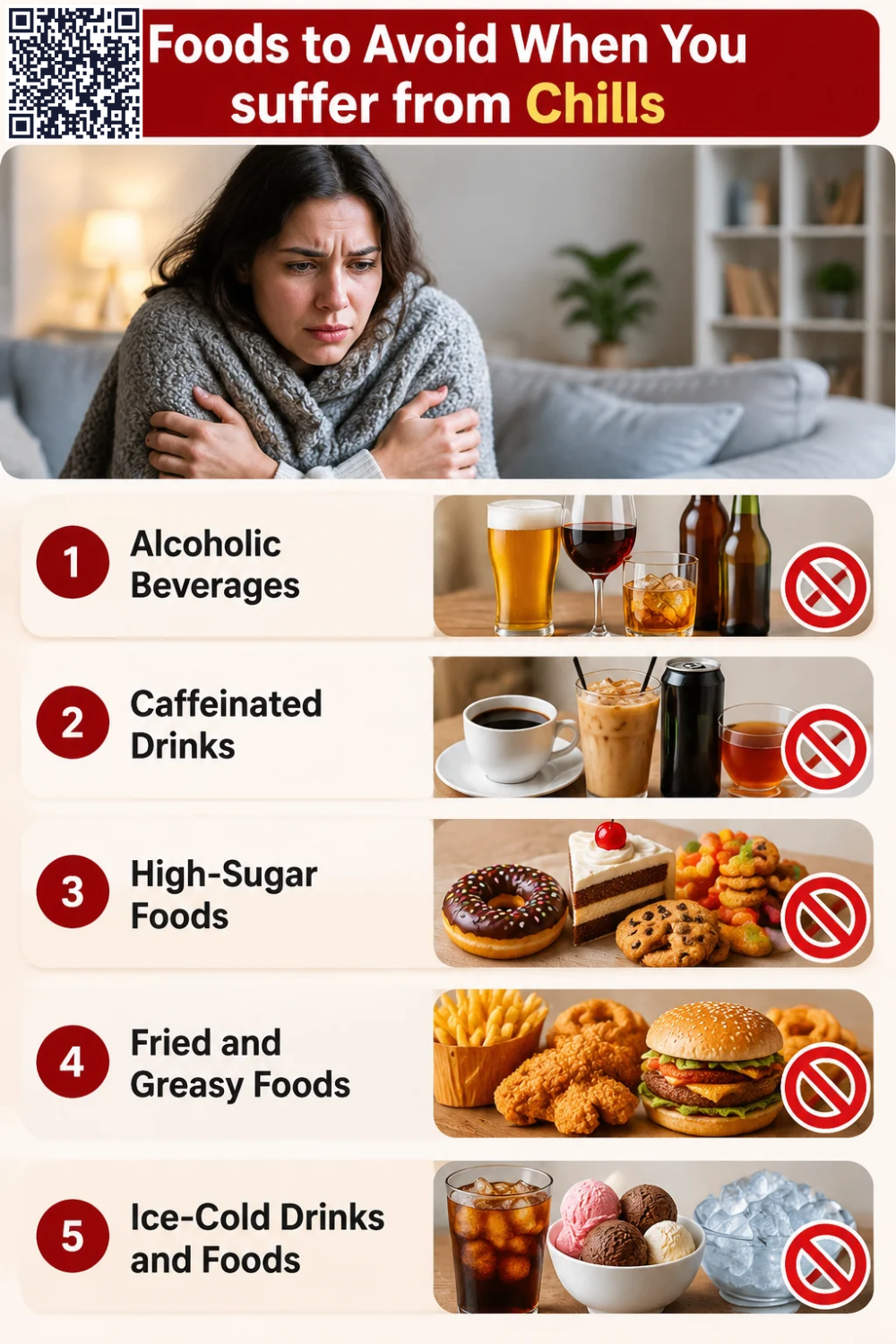
2. Caffeinated Drinks
Coffee and energy drinks act as mild diuretics that deplete essential bodily fluids. This rapid dehydration directly intensifies fever symptoms and prolongs chills 35.
3. High-Sugar Foods
Excessive sugar intake actively suppresses white blood cell activity and increases systemic inflammation, weakening the body’s primary defense against the infections causing the chills 36.
4. Fried and Greasy Foods
Heavy, high-fat foods require significant energy to digest. This digestion process diverts crucial metabolic resources away from fighting pathogens and stabilizing body temperature 37.
5. Ice-Cold Drinks and Foods
Consuming iced foods directly lowers internal temperatures. This sudden thermal drop forces the nervous system to generate heat, triggering violent shivering and worsening chills 17.
When to See a Doctor When You Struggle From Chills
While chills often accompany minor illnesses, certain accompanying symptoms require immediate medical evaluation. Seek professional care if you experience the following warning signs.
1. High or Persistent Fever
Seek emergency care if chills occur alongside a fever exceeding 103 degrees Fahrenheit, or if any fever persists for longer than 48 hours 2.
2. Stiff Neck and Severe Headache
Immediate medical attention is required if shivering is accompanied by a stiff neck and extreme headache, which are primary indicators of meningitis 38.
3. Difficulty Breathing or Chest Pain
You must visit a doctor promptly if chills present with chest pain, a severe cough, or shortness of breath, indicating serious respiratory infections 15.
4. Severe Confusion or Sluggishness
Seek urgent medical help if the person experiencing chills becomes unusually confused, extremely lethargic, or unresponsive, which are critical signs of severe systemic infection 39.
5. Painful or Burning Urination
Consult a physician if your chills occur alongside lower abdominal pain or a burning sensation during urination, strongly suggesting a serious kidney infection 40.